How to Remove Rust from Deep Cast Iron Stockpots and Chili Pots
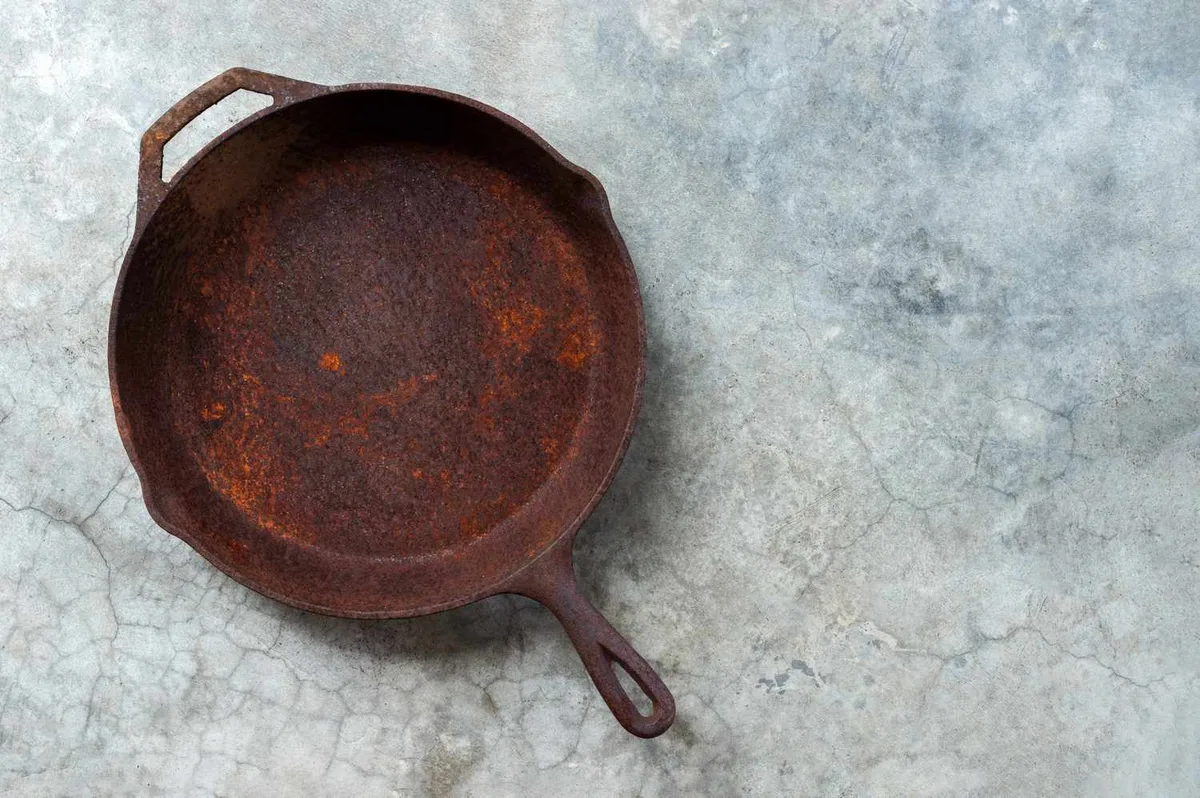
If you’re here because you found a rusty pot in the back of a cabinet, don’t worry. How to get rust off cast iron pot depends on how much rust you’re dealing with and whether your pot is bare or enameled. That’s the whole game.
The right diagnosis saves you an hour of scrubbing and keeps the original surface intact.
Our research across cast iron care guides and manufacturer specifications points to two simple truths. First, bare iron rusts because the protective seasoning has failed. Enameled iron rusts only where the enamel has chipped.
Second, as of 2026, the internet still recommends a universal vinegar soak, which is a terrible idea. Most seasoning oils create that protective layer at 400°F to 500°F, so heat management matters. Let’s sort it out.
Quick Answer
Scrub off loose rust with steel wool. For light rust, a dry scrub is enough. For heavy rust, soak in 50/50 white vinegar and water for 30 minutes max.
Rinse, dry fast, then reseason with oil at 450°F. Don’t use vinegar on enameled surfaces.
Image source: Web (Bing) / southernliving.com (Web image (fair-use with source credit))
So You Found a Rusty Cast Iron Pot? Let’s Sort It Out
Rust isn’t a death sentence. It’s a surface chemistry problem. Bare cast iron rusts when moisture reaches the iron beneath the seasoning.
Enameled cast iron rusts when the glass-like coating chips or cracks. Those two situations need completely different fixes.
Before you buy anything, ask three questions.
- Is the cooking surface glossy and enameled, or rough and matte?
- Is the rust a light brown powder or an orange crust?
- Can you feel pits under your fingertip?
Your answers steer everything that follows. Skip this step and you risk stripping good seasoning, etching the metal, or ruining an enameled pot that only needed a gentle clean.
Step 1: Check Your Pot: Bare Cast Iron or Enameled?
Look at the cooking surface first. Bare cast iron is matte, textured, and usually dark gray or black. Enameled cast iron has a smooth, shiny coating, often white, cream, or colored.
If the outside is glossy or colored, treat the whole pot as enameled.
Check the rim too. Bare iron rims feel rough and look uncoated. Enameled rims are smooth and covered in the same glossy finish.
If you see chips or cracks in that coating, note them. Rust on enameled iron only grows where the enamel is missing.
One warning: a chip in enamel isn’t just a cosmetic issue. The raw iron underneath can rust, and the damaged coating may continue to flake. You can clean the rust, but you can’t repair the enamel safely at home.
That pot may be on its way out.
Step 2: Pick Your Rust Removal Path Based on Severity
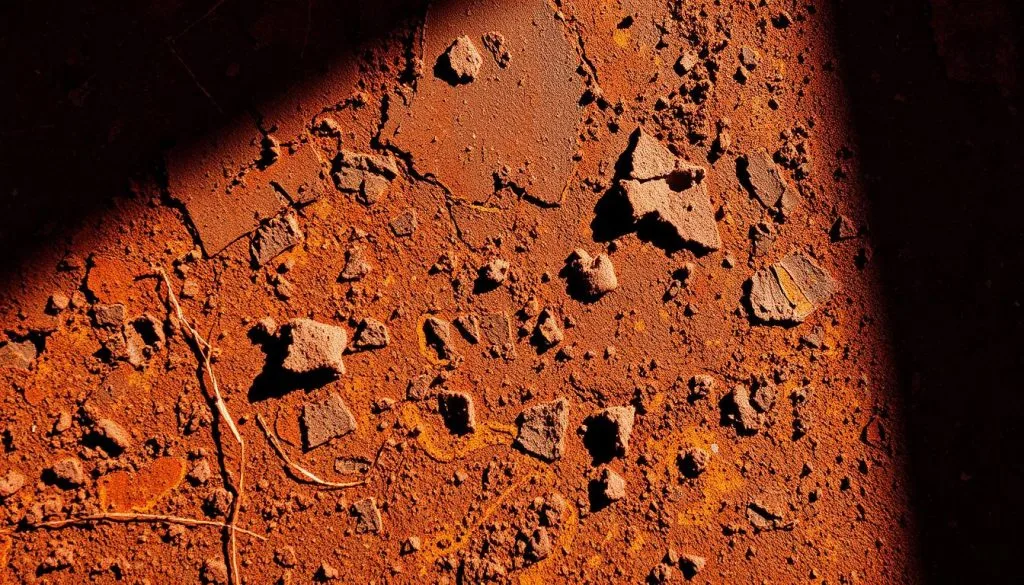
Image source: Web (Bing) / cookwareninja.com (Web image (fair-use with source credit))
Match the rust to the right method below. Using a heavy method on light rust wastes time and unnecessarily removes seasoning. Using a light method on deep rust leaves pits open to rust again.
| Rust Type | What It Looks Like | Best Removal Method |
|---|---|---|
| Light surface rust | Thin brownish powder, surface feels smooth | Dry scrub with 0000 steel wool or a chainmail scrubber |
| Moderate rust | Rough orange patches, no visible pits | 50/50 white vinegar and water soak, 20 to 30 minutes, then scrub |
| Deep pitted rust | Flaking orange crust, visible pits | Repeated vinegar soaks or electrolysis |
| Enameled cast iron | Rust at chips, cracks, or on the exposed rim | Baking soda paste or Barkeeper’s Friend with a nylon brush |
Light Surface Rust (Brownish Powder, Wipes Off)
Use 0000 steel wool while the pot is dry. Rub in small circles until the orange color disappears. Wipe with a dry cloth.
You don’t need vinegar or water. Add moisture and you’ll chase flash rust instead.
Moderate Rust (Rough Patches, Stubborn Spots)
Mix 50/50 white vinegar and water. Soak the pot for 20 to 30 minutes, then scrub with steel wool. Soaking longer lets the acid etch the iron and leaves pits that hold future rust.
Repeat if needed, but always rinse thoroughly between rounds.
Deep Pitted Rust (Flaking, Orange Crust)
Deep rust needs multiple soak cycles or electrolysis. Electrolysis uses a low-voltage electrical current to convert rust back into iron. It’s the only method that cleans out pits without removing sound metal.
A lye bath strips old seasoning, not rust, so don’t mix up the two.
Enameled Cast Iron (Chipped Rim or Interior Rust)
Never use vinegar or steel wool on enamel. The acid dulls the coating, and metal abrasive scratches the glass surface. Make a paste with baking soda and water, or use Barkeeper’s Friend with a nylon brush.
Rinse well and dry immediately.
Step 3: Dry It Fast and Stop Flash Rust Before It Starts
Flash rust is the sneaky failure. You clean off every trace of rust, set the pot down, and ten minutes later it’s orange again. That’s because bare iron oxidizes almost instantly when wet.
Drying and oiling have to happen as one motion.
After rinsing, dry the pot with a lint-free cloth. Then set it on a stove burner over low heat for about five minutes. This drives moisture out of the porous iron.
Skip that step and your seasoning oil won’t bond properly later.
Choosing what to dry with matters too. Paper towels leave lint behind, and that lint bakes into the seasoning layer. Use a clean cotton cloth or an old t-shirt.
Once the pot is warm, apply a very thin layer of canola or grapeseed oil. Wipe it on, then wipe it off like you didn’t mean it. That thin film polymerizes into a tough, nonstick coating.
A thick coat turns sticky and makes the whole reseasoning job messier.
A thin coat gives you a solid base. For a pot that will actually hold up, you'll want to build a few more layers in the oven.
Step 4: Reseason in the Oven: Oil, Temperature, and Timing
Reseasoning is where a clean pot becomes nonstick again. Heat transforms oil into a hard, dark polymer layer. It's also the step people rush, and the result is a sticky pan that attracts dust.
Set your oven to 400°F to 500°F. Oils polymerize best in that window. Canola and grapeseed oil are the most forgiving choices.
Flaxseed oil gives a harder, glossier finish, but its smoke point sits around 225°F, so you'll need a longer bake at a lower temperature.
Apply one thin coat of oil with a clean cotton cloth. Then wipe the pot again with a dry cloth. You can't wipe too much off.
The goal is a barely-there film, not a greasy sheen.
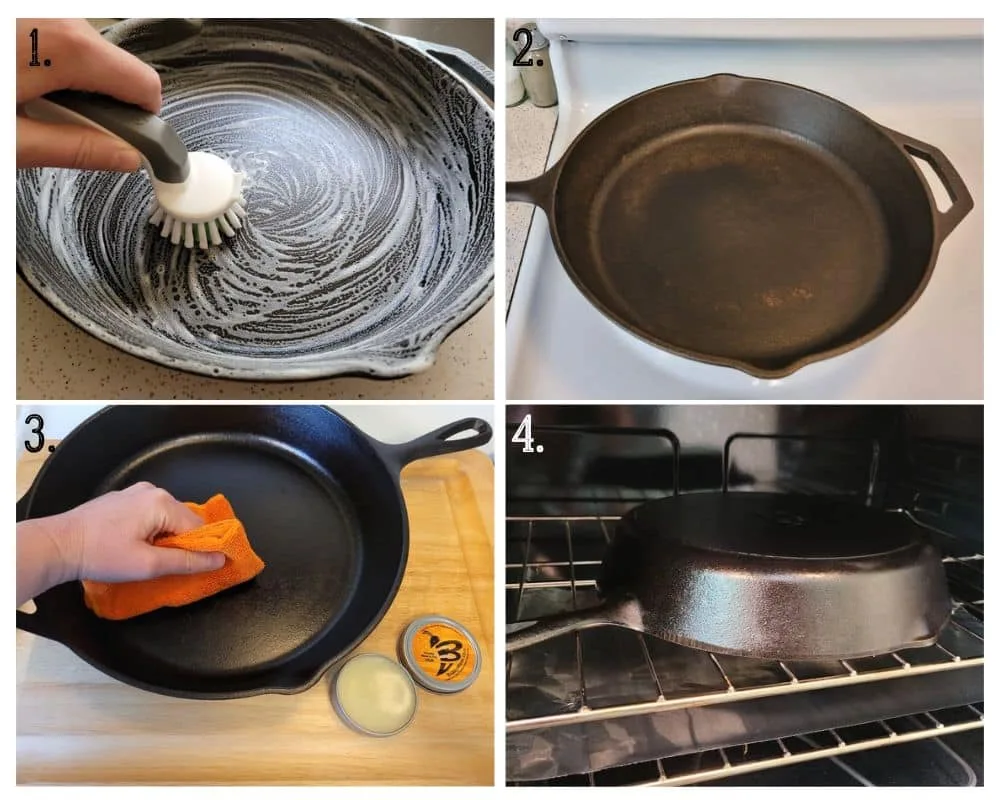
Image source: Bing (Web (fair-use with source credit))
Place the pot upside down on the center rack. Put foil on the lower rack to catch drips. Bake for one hour at temperature.
Then turn the oven off and let the pot cool completely inside.
Repeat the coat-and-bake cycle two to four times for a heavy restoration. One cycle handles light surface rust. Each cycle adds thickness and deepens that dark, satin finish.
Manufacturer specifications from Lodge confirm this approach: thin oil, high heat, and patience between coats.
Done right, the surface becomes slick, dark, and water-resistant. That's the protective layer that keeps rust from ever coming back.
Common Mistakes That Turn a 30-Minute Fix Into a Weekend Project
The biggest mistake is soaking too long in vinegar. Vinegar dissolves rust, but it also etches the iron underneath. Twenty to thirty minutes is the ceiling.
Beyond that, you're creating pits that hold moisture and rust again faster.
Another one is using steel wool on enameled pots. Metal scratches the glass coating and leaves more places for rust to start. Use a nylon brush or baking soda paste instead.
If you've already scrubbed an enameled pot with steel wool, inspect for scratches. Those scratches trap food and moisture.
Skipping the drying step is a classic. Bare iron flash rusts the moment water hits it. Dry it on a warm stovetop after every wash, not just after rust removal.
And don't skip the "wipe off excess oil" step. A thick oil coat looks protective but bakes into a gummy, sticky mess. Wipe it off like you're trying to remove every trace.
Quick Answers: FAQs About Cast Iron Rust
Can I use vinegar on enameled cast iron?
No. Vinegar is an acid that dulls the enamel and damages the glossy coating. For enameled cast iron, use a baking soda and water paste or Barkeeper's Friend with a nylon brush.
Those remove rust without harming the surface.
How long should I soak rusted cast iron in vinegar?
No more than 30 minutes per soak. A 50/50 white vinegar and water mixture loosens rust quickly. Soaking longer lets the acid attack the sound iron underneath.
If rust remains after 30 minutes, scrub and repeat the soak.
Why does my cast iron rust again right after cleaning?
Flash rust happens when bare iron stays wet. After rinsing, dry the pot immediately with a cloth, then heat it on the stovetop to drive out trapped moisture. Apply a thin oil layer before it cools.
Skip those steps and rust returns within minutes.
Is it safe to cook food in a pot that had rust?
Once you remove the rust and reseason properly, the cooking surface is safe. Rust itself is iron oxide, not a toxin. But it can make food taste metallic and stains your dish.
Cleaning and reseasoning eliminates the issue.
The 2-Minute Maintenance Routine That Keeps Rust Away for Good
The best fix is prevention. After every use, wash the pot with warm water and a soft brush. For stuck food, simmer water in the pot for a few minutes.
Skip the dishwasher entirely.
Dry the pot on a burner over low heat for five minutes. Every drop of water must evaporate before oil goes on. Warm iron also absorbs oil better, so you get a smoother, more durable layer.
Apply a dime-sized drop of canola oil. Wipe it over the whole pot, inside and out, then wipe it off with a clean cloth. You want a sheen, not a greasy film.
Store the pot uncovered in a dry cabinet.
If you cook with it weekly, reseason once every month or two. A quick oven bake at 450°F for an hour refreshes the layer and keeps rust out. Follow this routine and your cast iron pot will outlive every other pan you own.

Similar Posts