How to Clean a Rusty Cast Iron Pan Fast
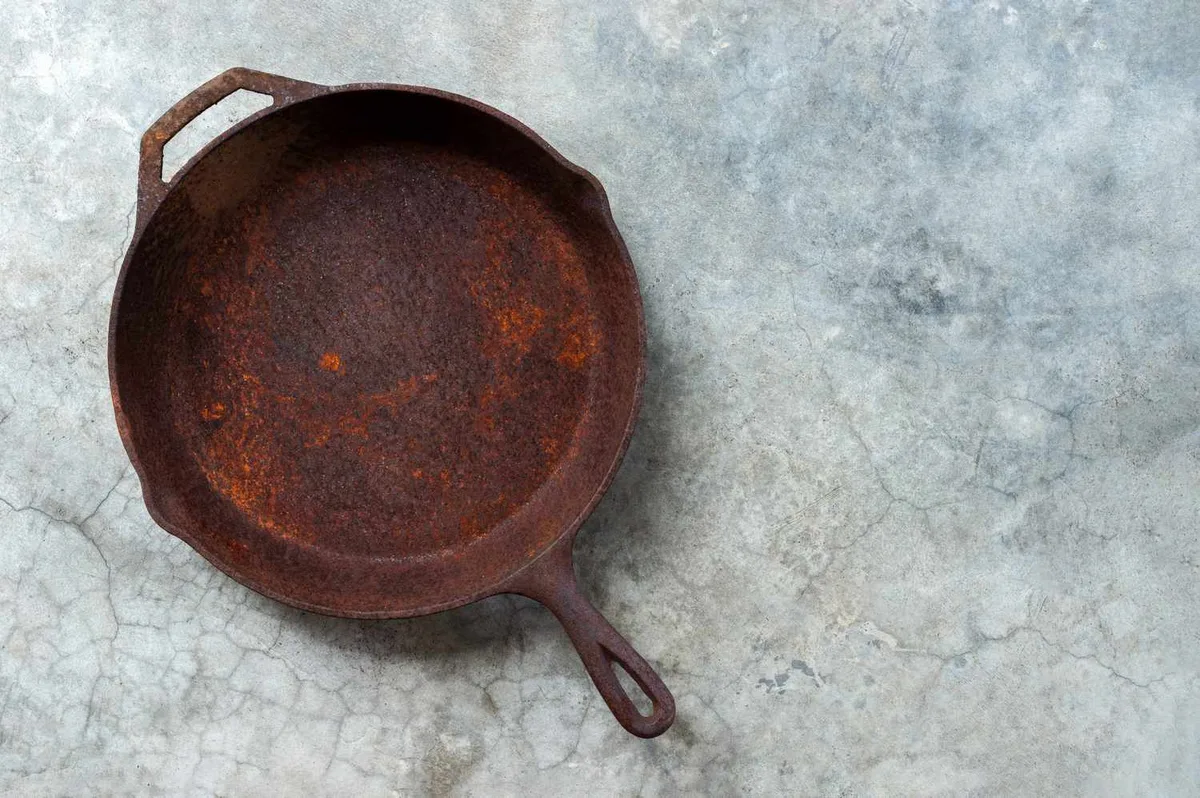
If you're wondering how to clean a rusty cast iron pan, the short answer is: yes, it's fixable, and you probably have what you need in your kitchen already. Rust looks scary, but with the right approach, you can bring that pan back to life.
Manufacturer specifications from major cast iron brands indicate that a 1:1 vinegar and water soak can remove light surface rust in as little as 10 to 15 minutes. Leave it longer than two hours though, and you risk pitting the iron. That's why the first step isn't grabbing a scrubber, it's taking a close look.
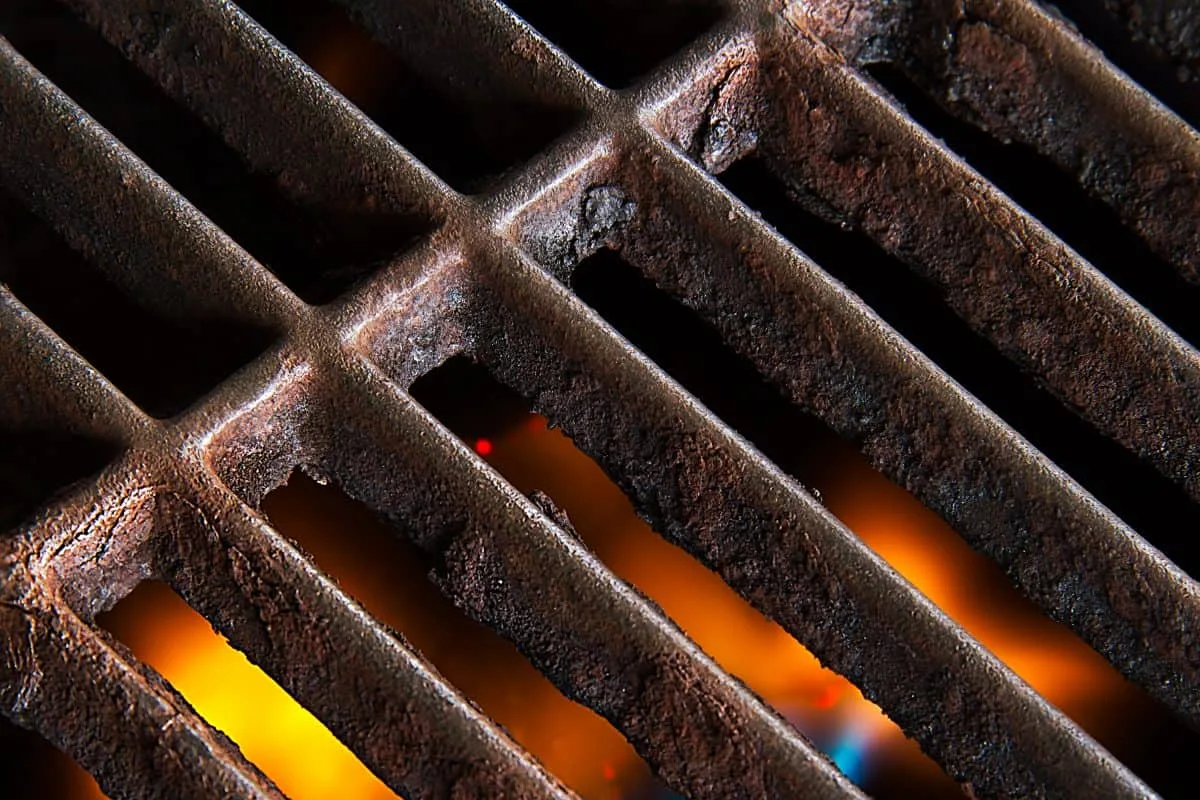
Image source: Bing (Web (fair-use with source credit))
Quick Answer
Assess the rust first. For light surface rust, scrub with steel wool or coarse salt. For deeper rust, use a 1:1 vinegar and water soak.
Dry the pan immediately on a hot stove. Then apply a thin layer of oil and bake at 450°F. That's the core process for how to clean a rusty cast iron pan.
First, Take a Good Look at That Rust
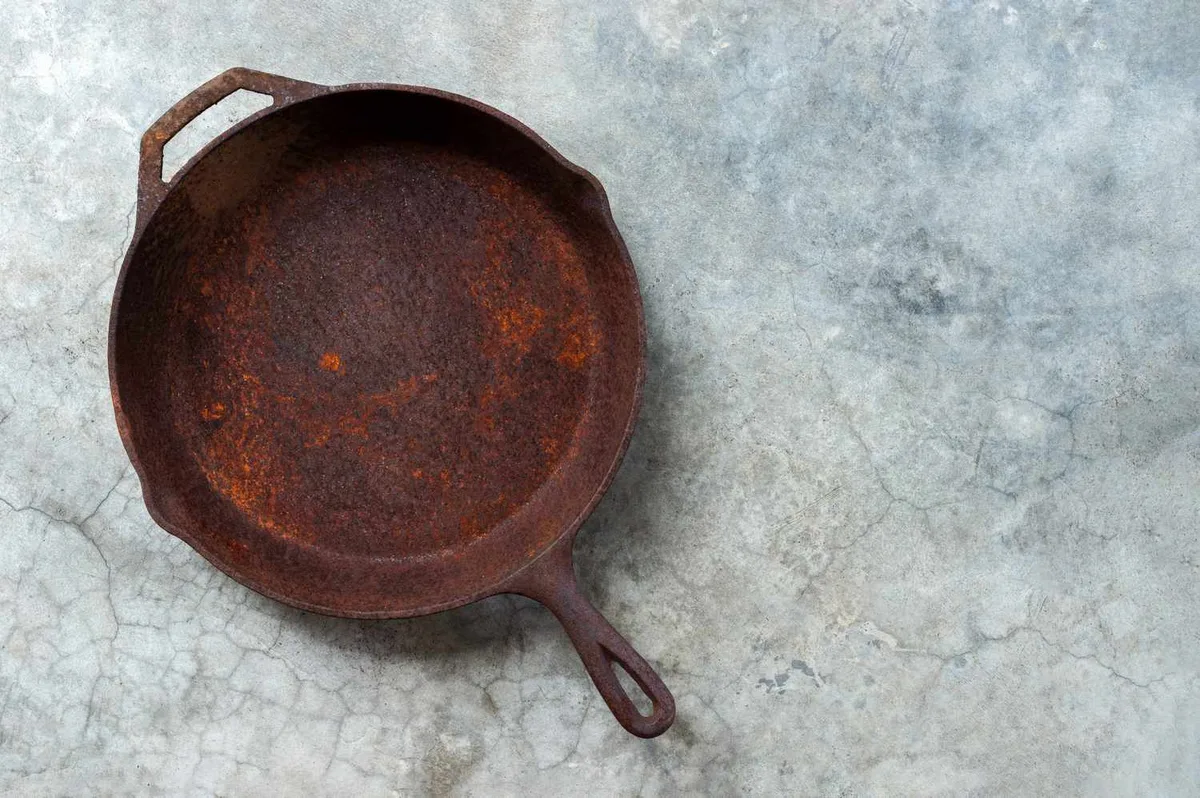
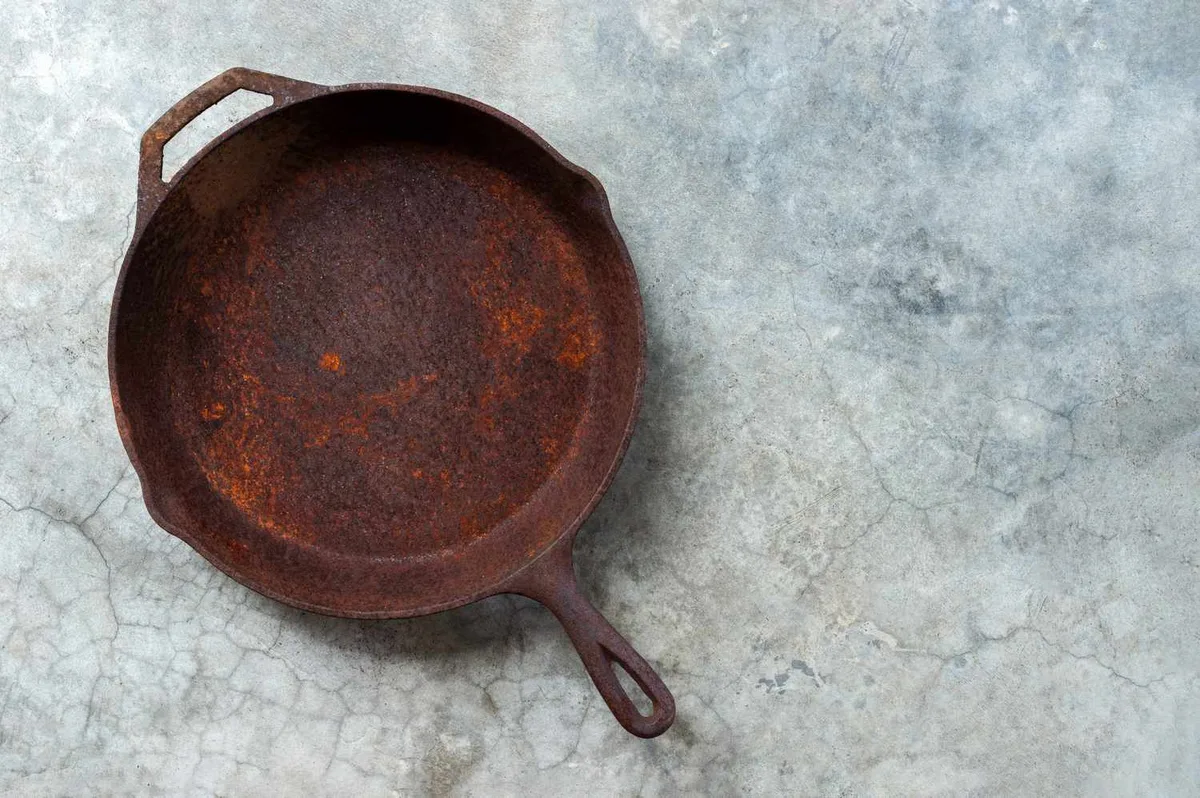
Before you do anything, put that pan under good light. The method you choose depends entirely on how bad the rust is and whether the seasoning is still intact.
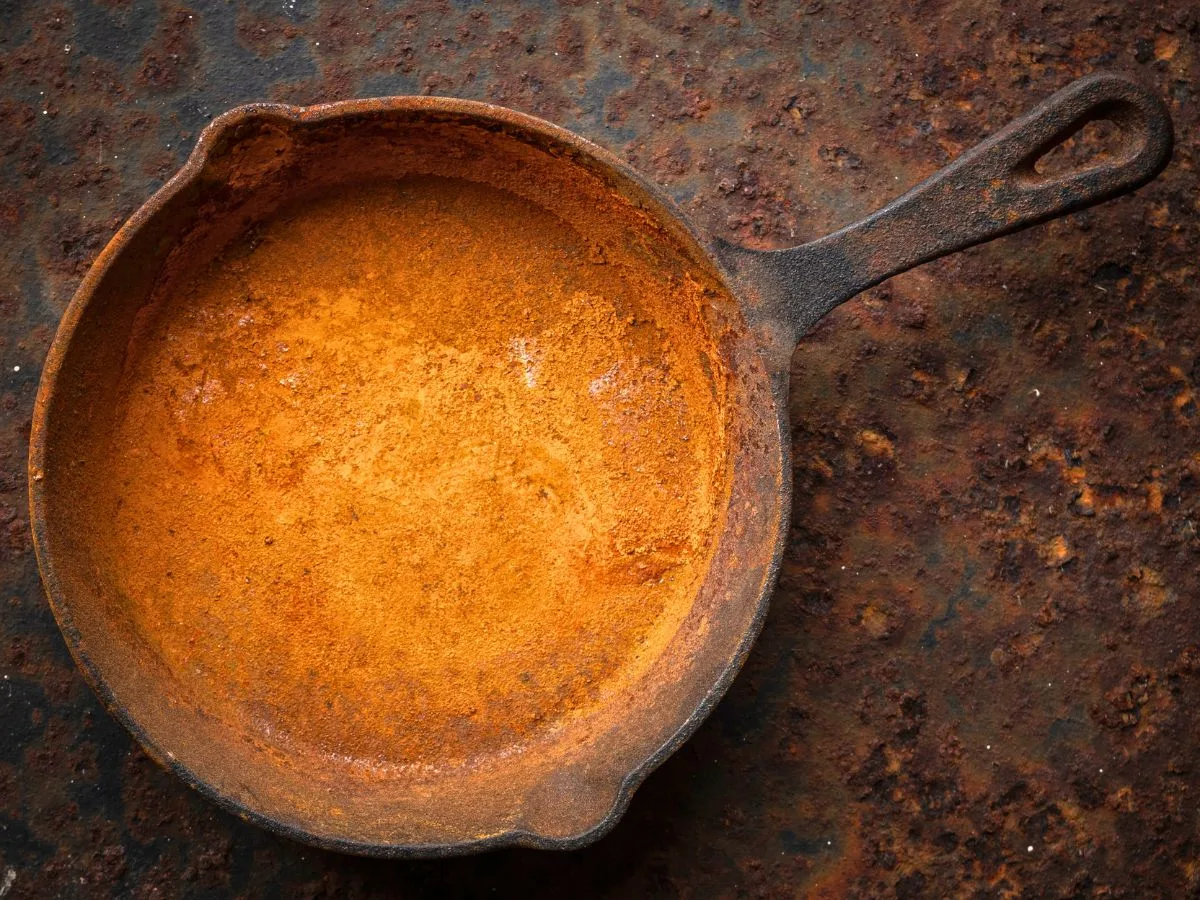
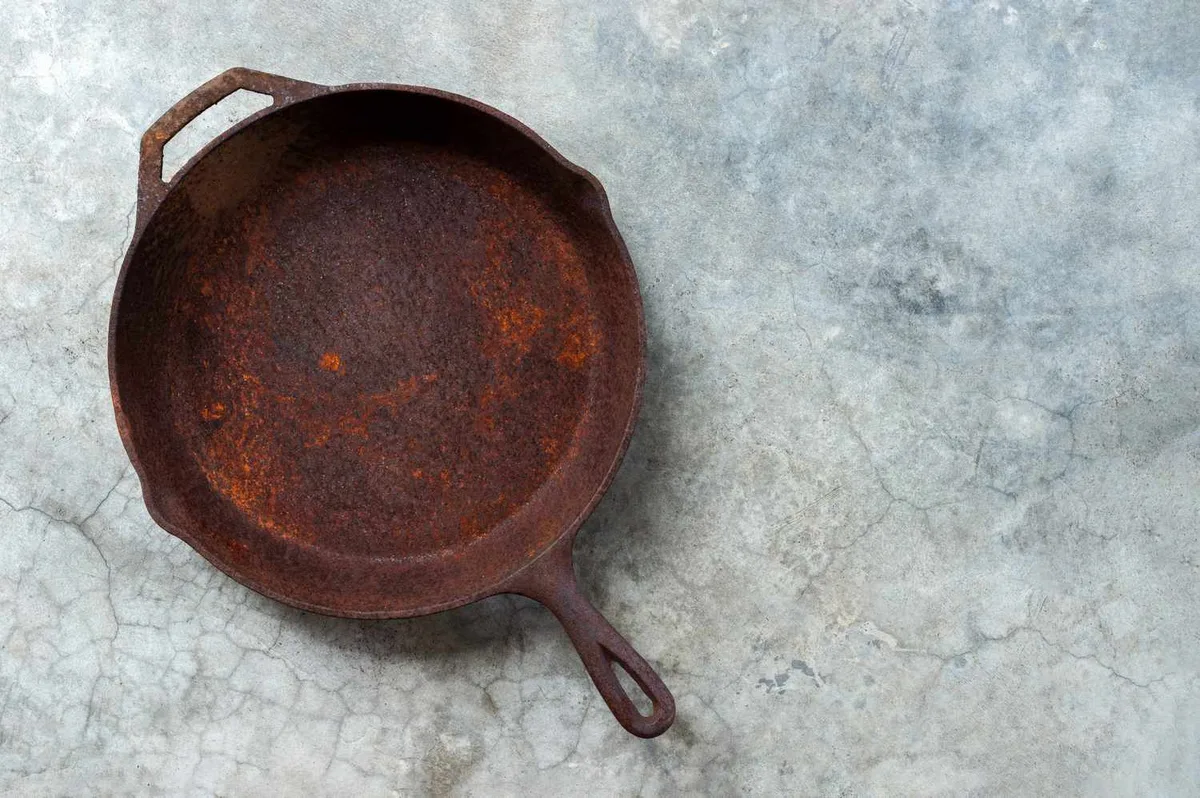
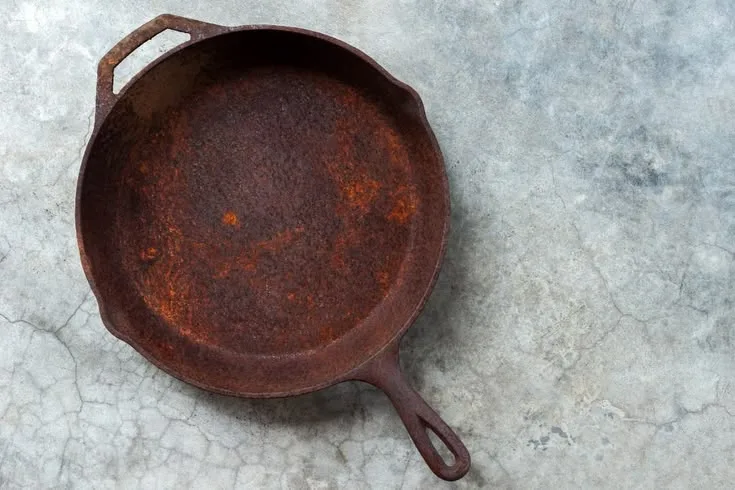
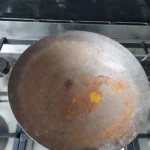
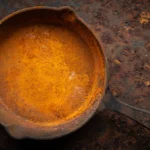
If you're seeing orange dust and the pan's black seasoning layer is mostly smooth underneath, you've got light surface rust. This is the easiest fix. A quick scrub and re-oil usually does the job in under 15 minutes.
If the rust is flaky, raised, or covering large patches where bare metal shows, you're dealing with heavy rust. Same goes if the seasoning is flaking off or feels rough to the touch. That pan needs a full strip and re-season.
The third scenario is a pan with deep pitting, actual divots or craters in the iron. This comes from long-term moisture exposure or an over-long vinegar soak from a past attempt. Pitted pans can still be restored for cooking, but they'll never be smooth again.
You need to decide if that's acceptable for your cooking style.
Check for cracking or warping too. Run your hand around the rim and across the cooking surface. Cracks mean the pan is done.
There's no safe fix for a cracked cast iron pan, and cooking in one risks heat stress fractures.
Light Surface Rust? The Quick Scrub Fix
This is the method you'll use most often. If the rust is just a light orange dusting on top of mostly intact seasoning, you can skip the heavy chemistry.
Start by rinsing the pan with warm water to remove loose debris. Add a tablespoon of coarse kosher salt to the wet pan and scrub with a dry paper towel or a soft scrub brush. The salt acts as a gentle abrasive that lifts rust without damaging the seasoning underneath.
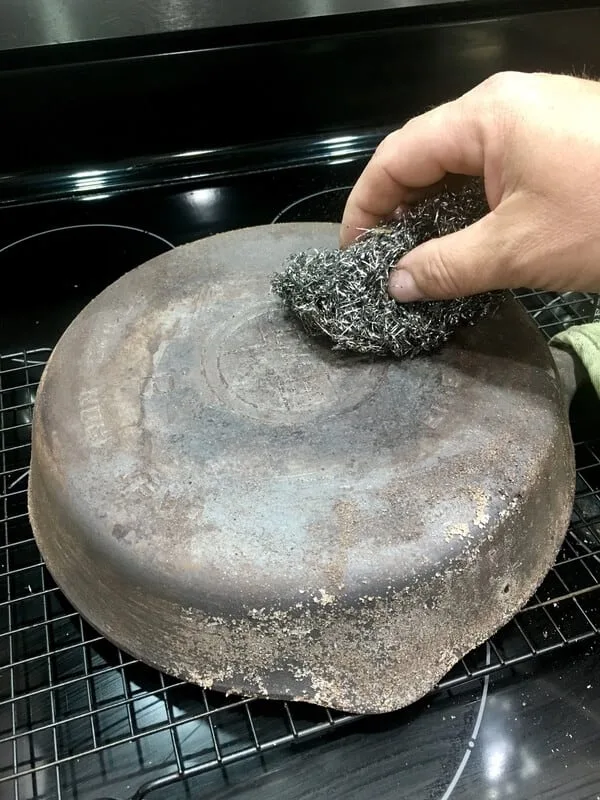
If the salt scrub doesn't get it all, grab a fine-grade steel wool pad. Use grade 0000 or grade 0, these are fine enough to remove rust without gouging the iron. Scrub in small circles.
You'll see the rust come off as grayish residue.
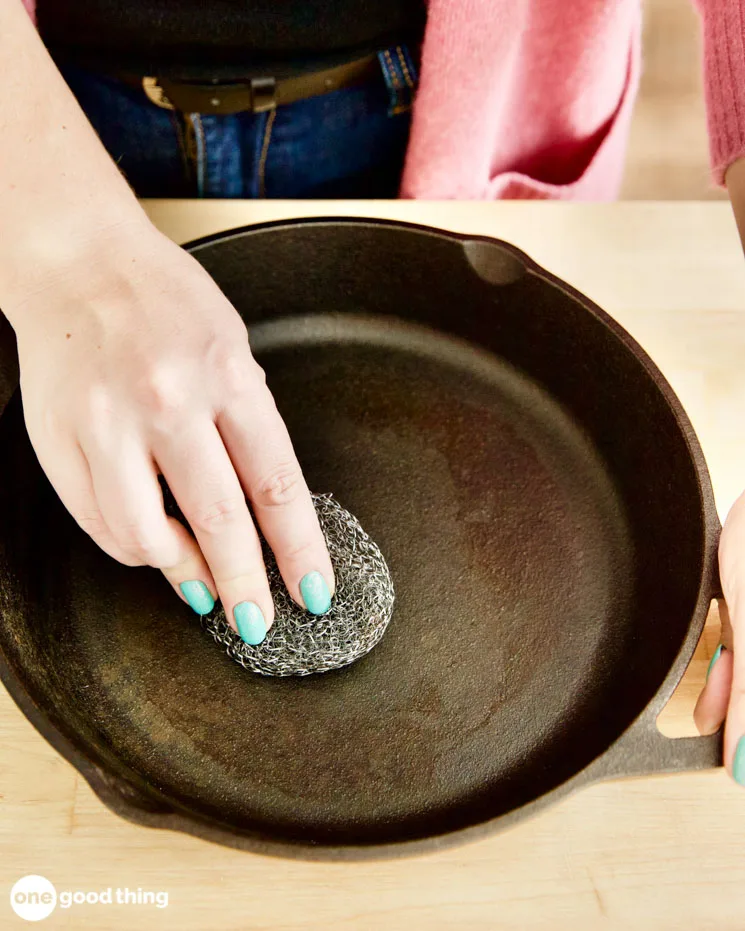
Image source: Bing (Web (fair-use with source credit))
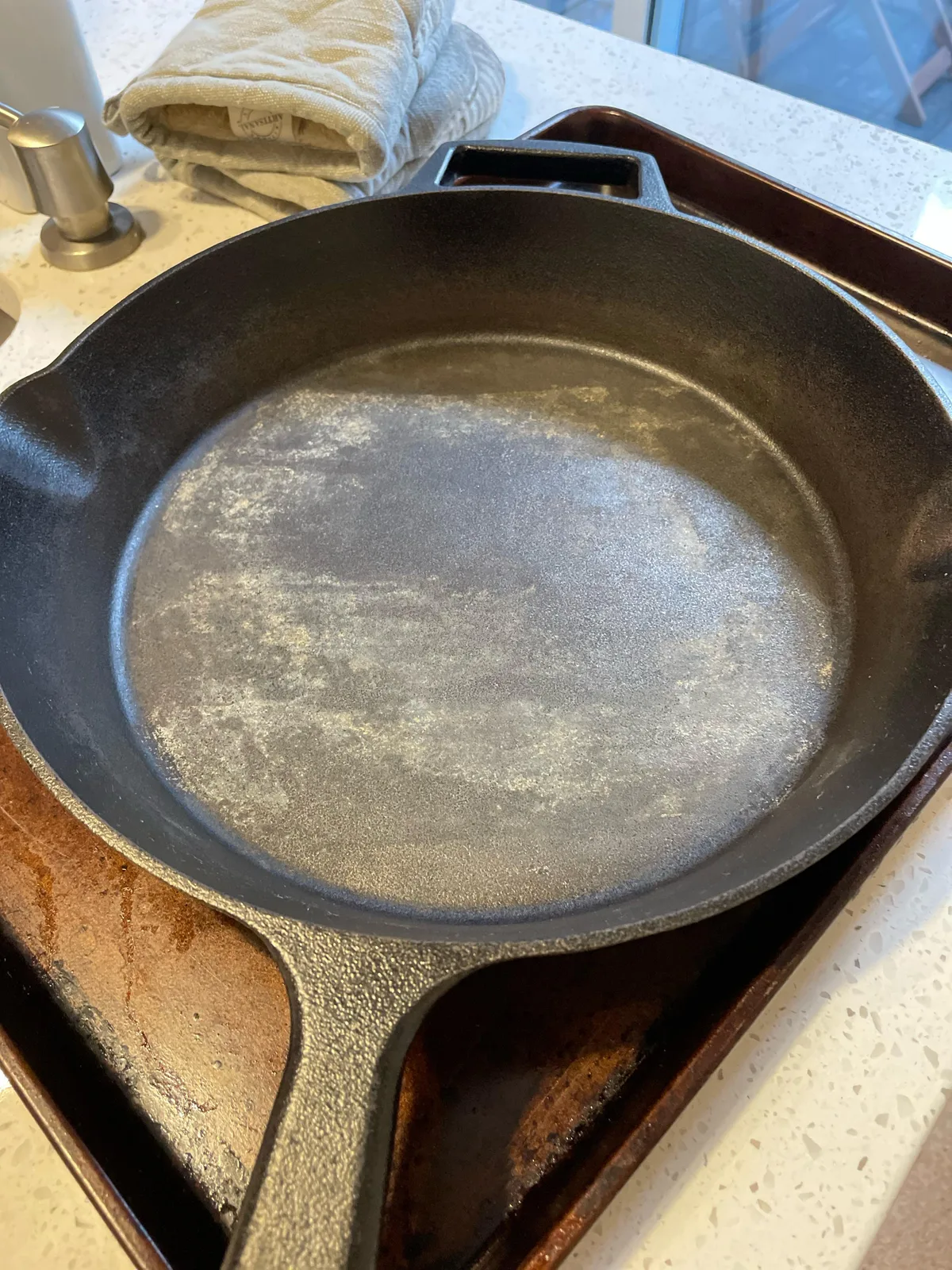
Rinse the pan again and dry it immediately with a lint-free towel. Then place it on a hot burner for one to two minutes to drive off any moisture trapped in the pores. You should see steam rising.
That's good, it means you've dried the metal fully.
Finally, apply a micro-thin layer of oil to the entire cooking surface. Use canola, grapeseed, or vegetable oil. Rub it in like you're trying to remove it, you want a sheen, not a puddle.
Your pan is ready to use or store.
Heavy Rust or Bare Iron? The Full Soak and Strip
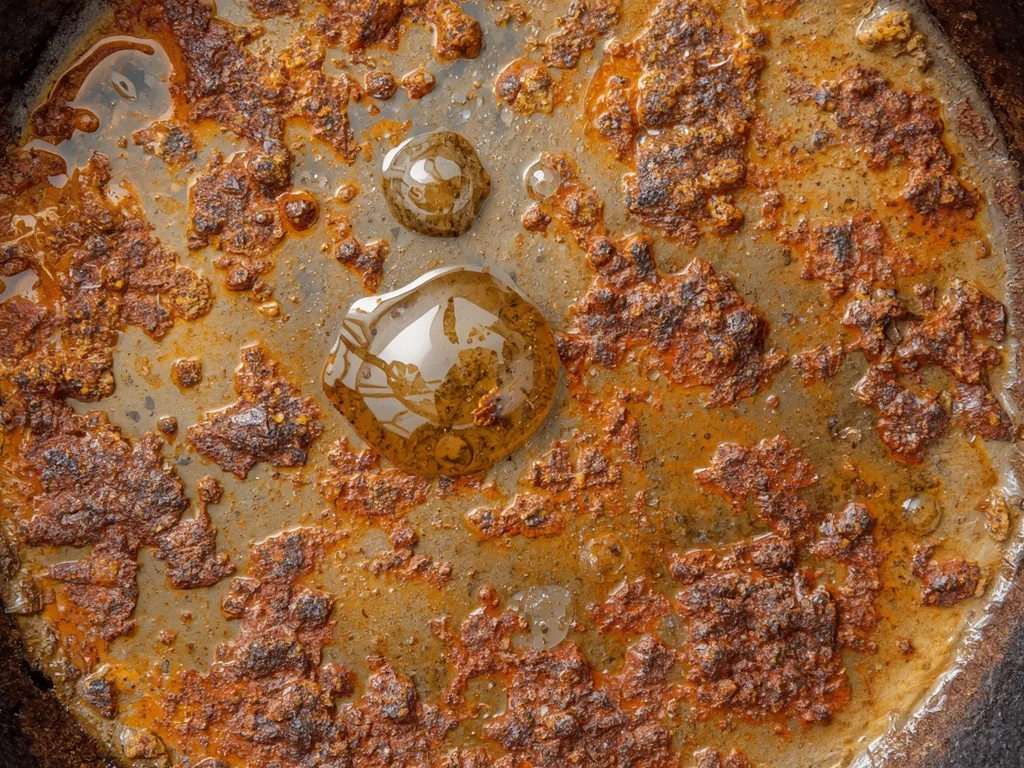
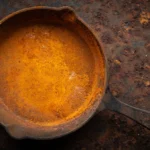
When the rust has eaten through the seasoning or the pan is completely bare orange, a soak is your best bet. You need to dissolve the rust down to clean metal.
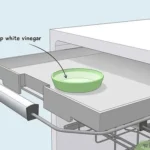
Fill a plastic or glass container large enough to submerge the pan. Mix a 1:1 solution of white vinegar and water. Use standard 5% acidity vinegar, nothing stronger.
Submerge the pan completely.
Set a timer for 15 minutes. Check the pan. If rust flakes off easily when you scrub with steel wool, pull it out.
If not, put it back in for another 15-minute interval. Do not exceed two hours total soak time. Vinegar is acidic enough to etch the iron surface and cause pitting if left too long.
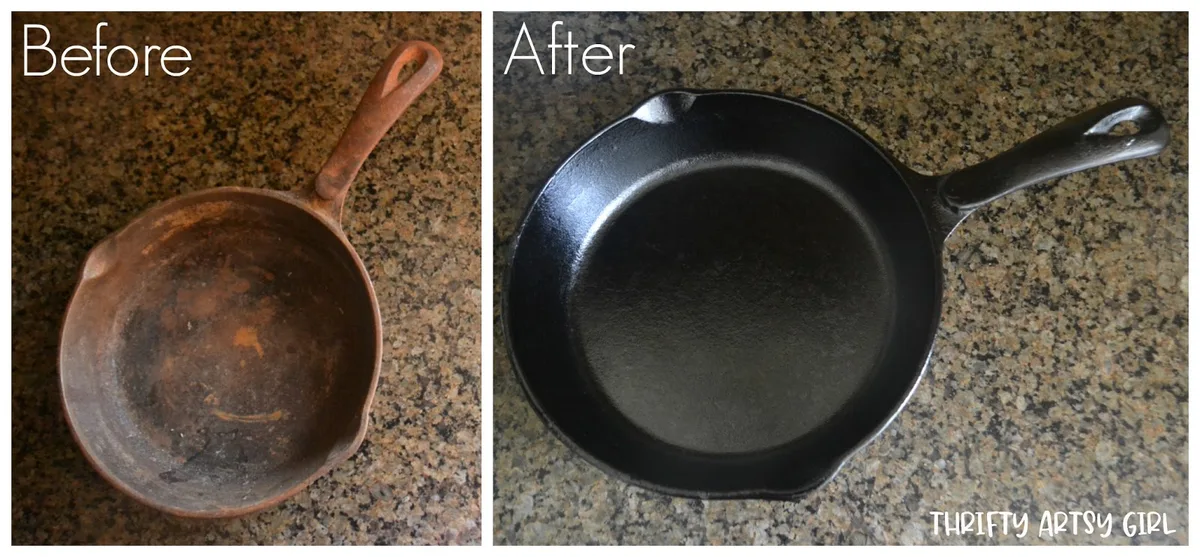
Once the rust is gone, scrub the pan under warm running water with steel wool or a chainmail scrubber. You want to remove all the loose rust particles and any remaining vinegar residue.
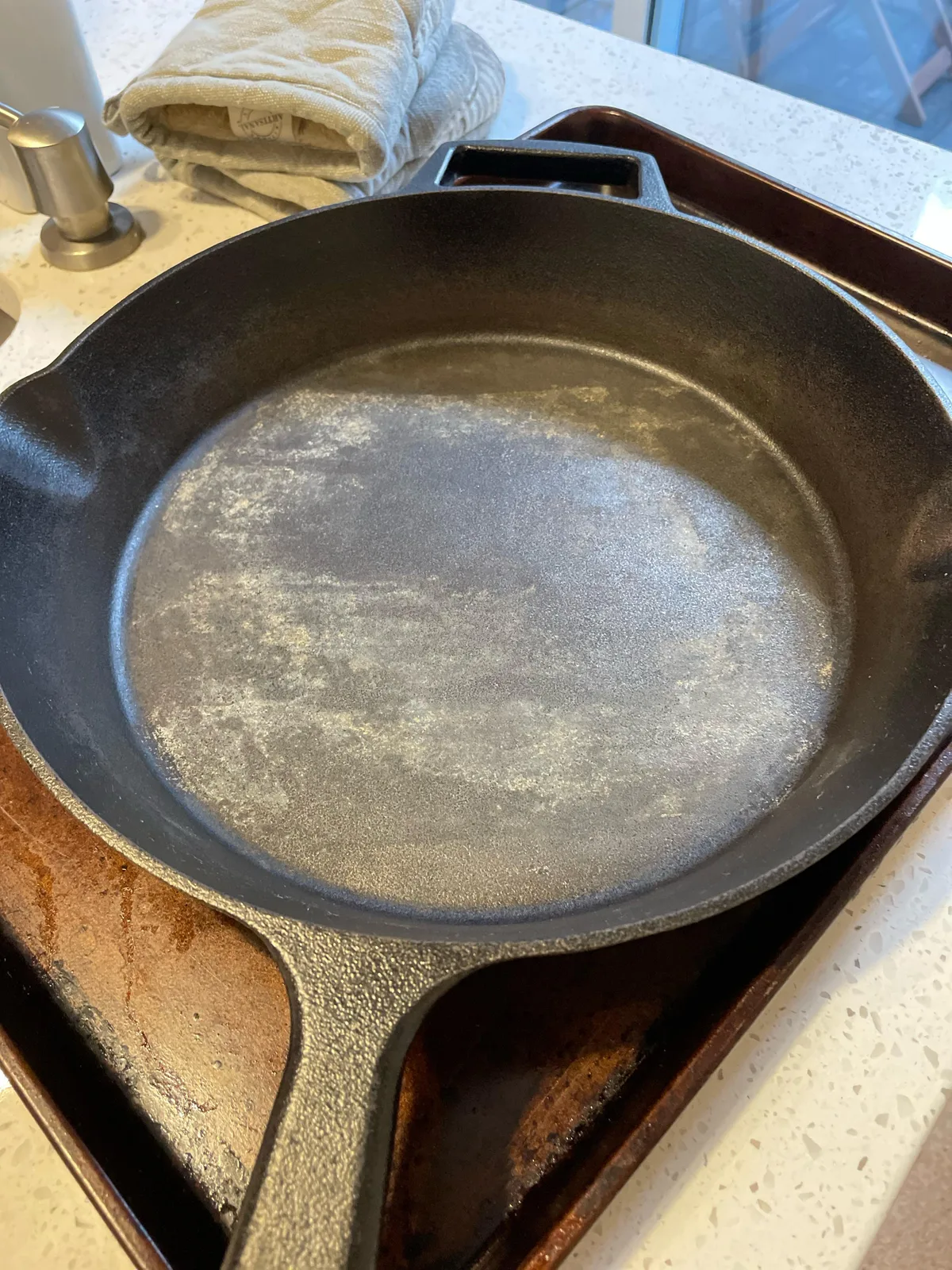
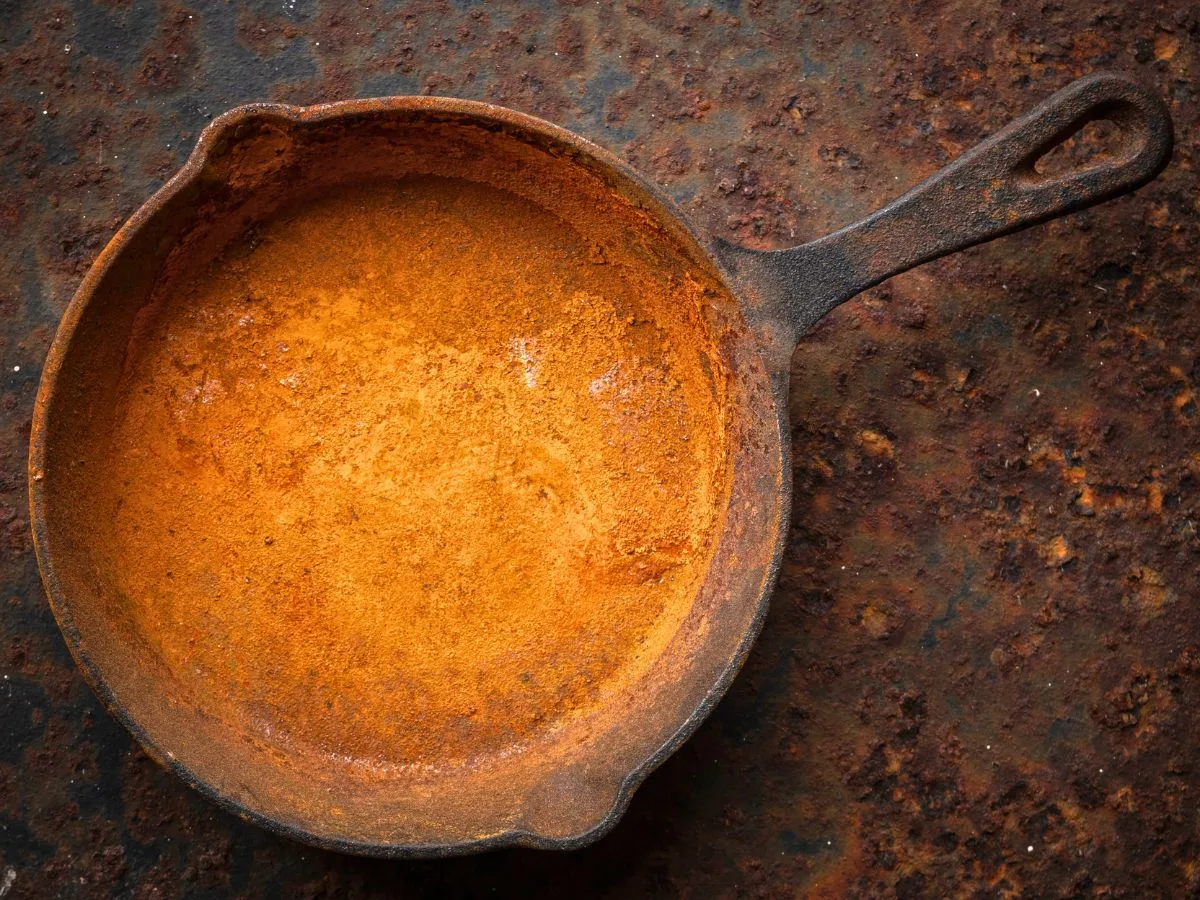
Image source: Bing (Web (fair-use with source credit))
Here's the tricky part: flash rust. Bare iron exposed to air and water oxidizes almost instantly. You'll see orange blush forming as you dry it.
To stop it, dry the pan and immediately rub on a coating of oil while it's still warm.
For pans with old, crusty seasoning under the rust, the kind you find at flea markets, a lye bath or an oven cleaner strip works better than vinegar. Lye dissolves carbonized buildup without harming the iron. Use yellow-cap Easy-Off in a heavy-duty garbage bag overnight.
Wear gloves and eye protection, and work in a well-ventilated area.
Re-Seasoning: How to Get That Nonstick Finish Back
Once the rust is gone and the pan is bare clean iron, you have to rebuild the seasoning. This is the layer of polymerized oil that makes cast iron naturally nonstick and protects it from moisture.
Start by preheating your oven to 450°F. Place a sheet of aluminum foil on the bottom rack to catch drips.
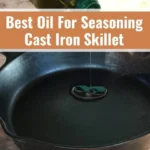
Warm the pan on the stovetop for a minute or two. Then apply a very thin layer of oil to the entire pan, inside, outside, handle, and bottom. Use grapeseed or canola oil for their high smoke points.
Flaxseed oil produces a brittle seasoning that flakes easily, so skip it.
Wipe the oil off with a dry cloth. You should barely see it. Too much oil creates a sticky, gummy finish that never fully hardens.
Place the pan upside down on the oven's top rack. Bake for one hour. After the hour, turn off the oven and let the pan cool inside with the door closed.
This slow cooling helps the oil polymerize evenly.
Repeat this process three to six times for a durable cooking surface. Each coat adds a thin layer of protection. After the third coat, the pan will start to look dark and glossy.
After six, it's tough enough for daily cooking.
| Oil Type | Smoke Point | Best For |
|---|---|---|
| Canola | 400°F | All-purpose seasoning |
| Grapeseed | 420°F | High-temp seasoning |
| Vegetable | 400°F | Budget-friendly coating |
| Flaxseed | 225°F | Avoid — flakes easily |
5 Mistakes That'll Set You Back or Ruin the Pan
Soaking vinegar too long. This is the number one mistake. A soak longer than two hours can etch and pit the iron surface. Set a timer.
Check every 15 minutes. Pull the pan as soon as the rust scrubs off.
Using soap before drying. Soap is fine for cleaning cast iron in normal use. But after a rust removal soak, soap residue can trap moisture and cause flash rust. Rinse with plain water and dry immediately.
Applying too much oil during seasoning. This is the most common reason for a sticky pan. You want a micro-thin layer. Rub oil on, then try to wipe it all off.
The layer that remains is exactly what you need.
Skipping the stovetop dry. Air drying is a guarantee of new rust within minutes. Always dry the pan on a hot burner for one to two minutes after washing. The heat drives moisture out of the iron's porous surface.
Cooking acidic foods too soon. After re-seasoning, the layer is thin and fragile. Avoid tomatoes, citrus, vinegar-based sauces, or wine deglazing for at least a month of regular use. Stick to frying, searing, or roasting fatty foods first.
Keeping Rust Away for Good
Cleaning a rusty cast iron pan stops being a project the moment you change your habits. The pan rusts because moisture sits on bare iron. Remove that moisture, and rust never gets a foothold.
Always dry your pan on a hot burner after washing. A minute or two of heat drives water out of the micro-pores in the iron. You'll see the last bit of moisture steam away.
Then rub in a tiny drop of oil while the pan is still warm. That's the whole secret.
Store your pan in a dry place with no lid on top. A cabinet lid traps humidity, and humid air means flash rust. If you stack pans, place a paper towel between them.
The towel absorbs any residual moisture and protects the seasoning.
Be careful with acidic foods like tomatoes, citrus, vinegar, or wine-based sauces. These strip seasoning and expose bare iron. Wait until your seasoning is well built up, and even then, don't simmer acidic dishes for hours.
It's not a rule, just reality.
Seasonal humidity matters too. In high-humidity climates, you may need to oil your pan before long storage. A pan that sits unused for months in a damp garage will rust.
Check your stored pans every few weeks. If you see a dull orange tint, wipe it off and re-oil. It takes ten seconds.
A final tip: cook fatty foods first in a freshly seasoned pan. Fried eggs, bacon, or seared chicken build seasoning quickly. Save delicate fish and tofu for later, once the nonstick layer has matured.
Frequently Asked Questions
Is it safe to cook on a rusty cast iron pan?
Small amounts of surface rust are not toxic. Your stomach acid easily handles iron oxide. The real problem is texture and health of the seasoning.
Clean off the rust and re-season before cooking. A heavily pitted or flaky pan should be stripped and rebuilt first.
Can I use sandpaper on cast iron rust?
Yes, but only for heavy corrosion on fully bare iron. Start with 80 grit to remove deep rust, then move to 120 and 220 grit for a smoother finish. Sand only the rusted areas.
Never use a power tool on vintage pans, as you'll remove too much metal and reduce the pan's value.
How long should I soak a rusty cast iron pan in vinegar?
Limit each soak to 15 minutes, then scrub. You can repeat in 15 minute intervals. Never exceed two hours total.
Vinegar dissolves rust, but it also etches iron. Higher heat and longer contact mean deeper damage. When in doubt, scrub and re-soak rather than leaving it in the bath.
Does soap ruin cast iron seasoning?
Modern dish soap won't destroy a well-cured seasoning. The polymerized oil layer is not a surface grease that soap strips. You can wash with mild dish soap and water.
Just rinse, dry, and re-oil afterward. The old myth about soap comes from the days of lye-based detergents, which are no longer standard.

Similar Posts