Safe Ways to Dispose of Old Kitchen Knives
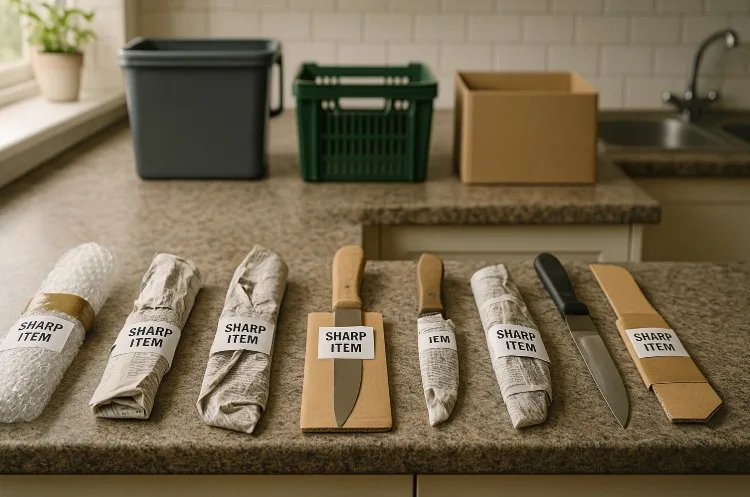
Image source: Bing (Web (fair-use with source credit))
You've got a drawer full of old kitchen knives that need to go. Maybe you're upgrading to a new set, or those dull blades have finally worn out their welcome. If you've been wondering "how do i dispose of old kitchen knives" without hurting anyone or breaking any rules, there's a right way to handle it.
Most people just toss knives in the trash loose or drop them in a recycling bin. That's dangerous for sanitation workers and usually against local waste ordinances. Research from the EPA's Municipal Solid Waste guidelines confirms that bladed items require separate handling to prevent injury during collection and sorting.
The good news is that with a few minutes of prep, you can safely move those knives out of your kitchen and into the right disposal stream.
Quick Answer
Check the knife's condition first. Usable knives go to donation. Damaged steel blades go to a scrap metal yard.
Ceramic blades must be wrapped and trashed. Never put knives in a curbside recycling bin. Wrap each blade in thick cardboard.
Tape it securely. Label it "SHARP." Check local bulky-waste rules if your trash service requires special pickup. Mail-in recycling programs work for complete sets.
First, Check Your Knife's Condition and Blade Type — It Changes Everything
Before you do anything, take a hard look at what you're getting rid of. Your disposal options depend entirely on two things: whether the knife is still useful and what the blade is made of.
Start with condition. If the knife has a straight blade, a handle that's not cracked, and some life left in it, donation is usually on the table. Dull knives can be sharpened.
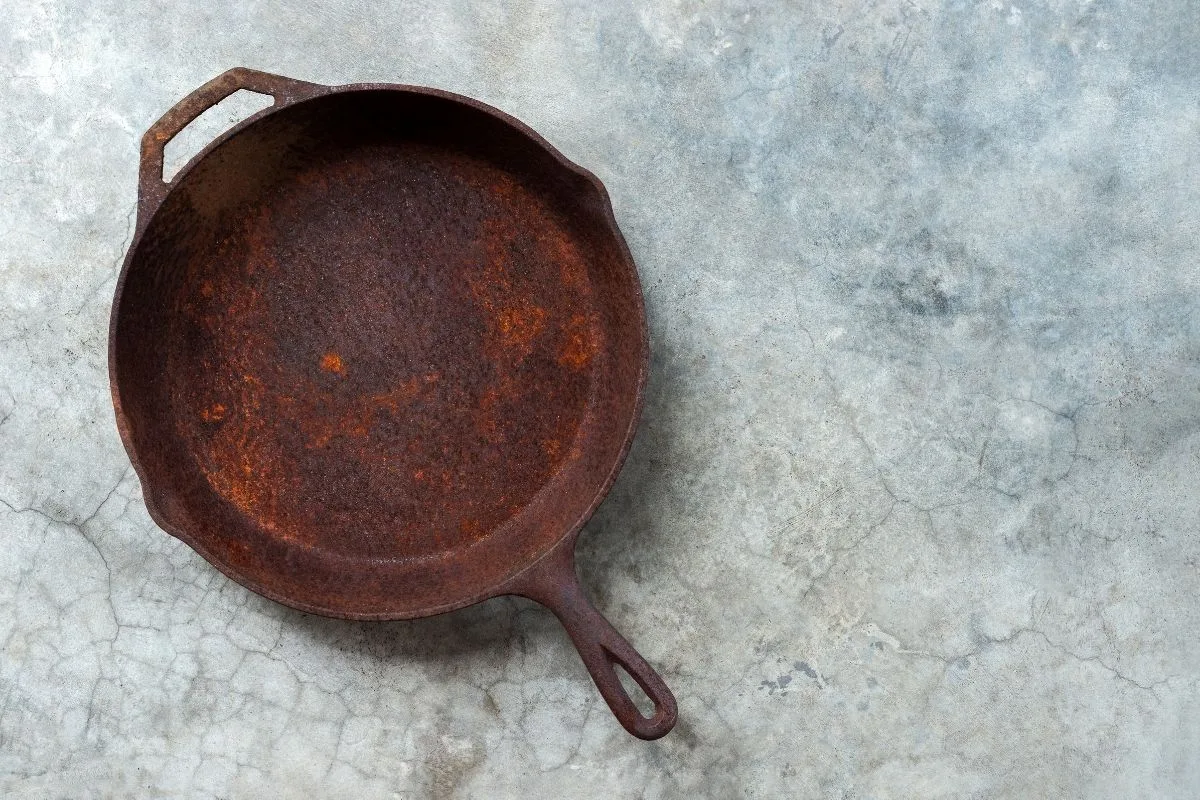
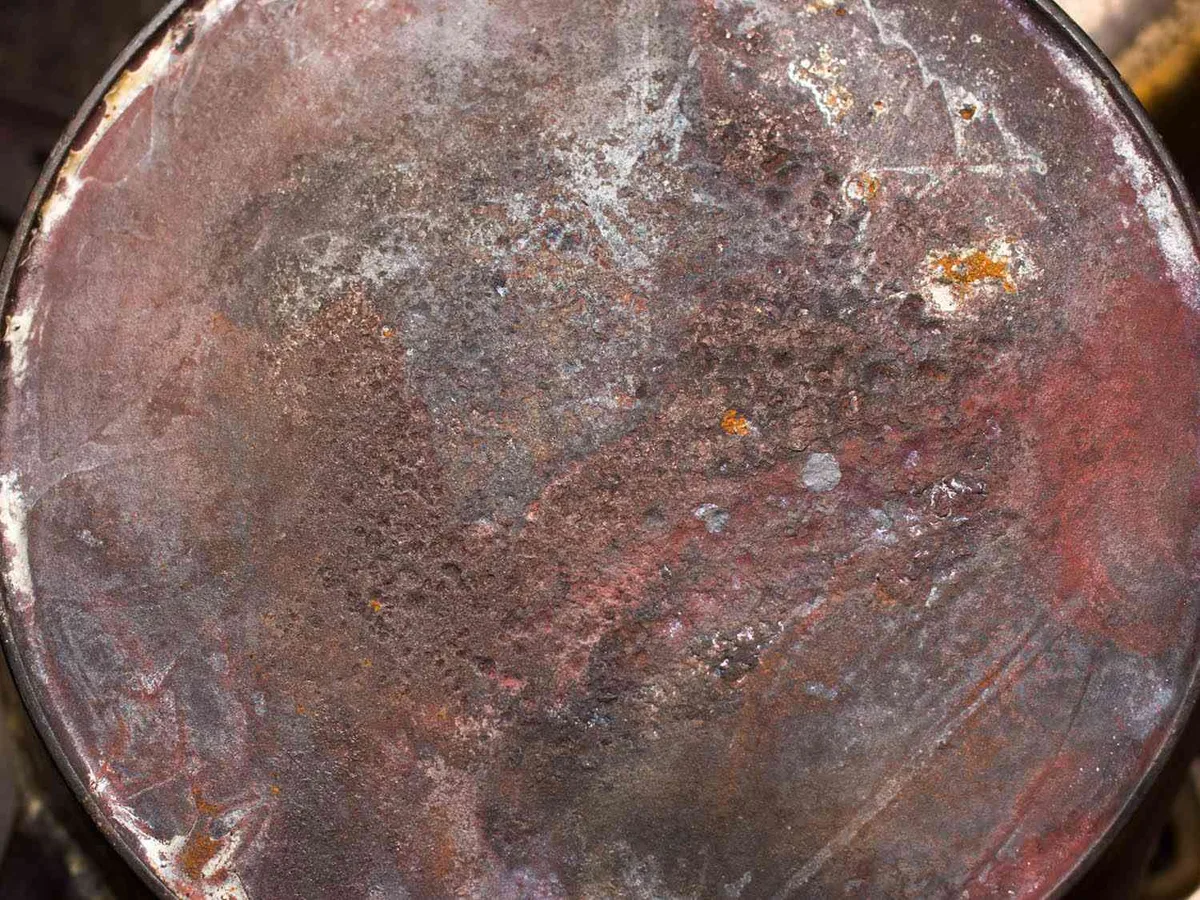
Rusty or chipped blades are a different story. If the rust has pitted the steel or the tip is broken off, that knife is done.
Now check the blade material. Most kitchen knives are made from stainless steel or high-carbon steel. Both of these are recyclable as scrap metal.
Ceramic blades are a separate category entirely. They're brittle, they can't be sharpened easily, and most recycling centers won't accept them. Ceramic knives must go in the trash.
Handle material matters too. Wood, plastic, or metal rivets can complicate recycling. Some scrap yards want you to remove the handle before they'll take the blade.
Others accept the whole knife. We'll cover that in a later section.
Here's a quick reference for the decision:
| Condition | Blade Type | Best Disposal Option |
|---|---|---|
| Still useful, no major damage | Stainless or carbon steel | Donation (call ahead to confirm acceptance) |
| Dull but structurally sound | Stainless or carbon steel | Donation or get it sharpened first |
| Rusted, chipped, or bent | Stainless or carbon steel | Scrap metal recycling |
| Any condition | Ceramic | Trash (wrapped securely) |
| Broken blade or snapped handle | Any metal | Trash or scrap if handle can be removed |
Don't skip this first step. Throwing a usable knife in the trash is wasteful. Trying to recycle a ceramic blade can contaminate the entire recycling batch at the facility.
The Disposal Decision Tree: Donate, Recycle, or Trash It
Once you've evaluated your knife, the path forward is simple. This decision tree walks you through the three main options.
Option 1: Donate Usable Knives
If the blade is intact, not severely rusted, and the handle is secure, donation is the best call. Many organizations accept kitchen knives as long as they're in safe condition.
Check with these places first:
- Goodwill and Salvation Army stores often accept knives. Call ahead. Some locations will refuse them outright.
- Local homeless shelters and culinary training programs. These organizations can put a good knife to real use. Many will sharpen it before handing it to someone.
- Community kitchens and food banks. They sometimes need kitchen tools for volunteers.
- Friends or family. Someone might need a decent knife more than you realize.
A quick tip from our research: sharpen the knife before donating it. A dull knife is more dangerous than a sharp one because it requires more force and can slip. If you don't have a sharpening stone, many hardware stores offer sharpening services for a few dollars.
Option 2: Recycle Damaged Steel Blades
Steel is infinitely recyclable. That old chef's knife can become part of a new car part, a building beam, or another knife. But you can't just toss it in your curbside recycling bin.
Knives can jam sorting equipment and injure workers.
The right way to recycle a steel knife is to take it to a scrap metal recycling center. These facilities accept ferrous metals, which includes the stainless and carbon steel used in most kitchen knives. Call your local yard and ask if they accept knives.
Some will ask you to remove wooden or plastic handles first. Others take the whole knife.
If you have a large set of knives, you might get a small payout based on scrap steel prices. As of 2026, rates are roughly $0.05 to $0.10 per pound. That's not much.
The real point is keeping the metal in the loop instead of the landfill.
Option 3: Trash the Rest
Ceramic knives and knives that are too damaged to donate belong in the trash. The key is wrapping them so nobody gets cut. We'll cover the packaging procedure in the next section.
Here's a summary table for quick reference:
| Path | Best For | What You Need |
|---|---|---|
| Donation | Usable steel knives | Sharpening, wrapping, a call ahead |
| Scrap recycling | Damaged steel knives | Handle removal (maybe), transport to yard |
| Trash | Ceramic, broken, unrecyclable | Cardboard, tape, secure wrapping |
Safe Knife Packaging: How to Wrap and Label Blades Properly
However you're disposing of that knife, you need to wrap it first. Loose knives are a hazard for everyone who handles your trash or recycling. This step is not optional.
It takes about two minutes per knife.
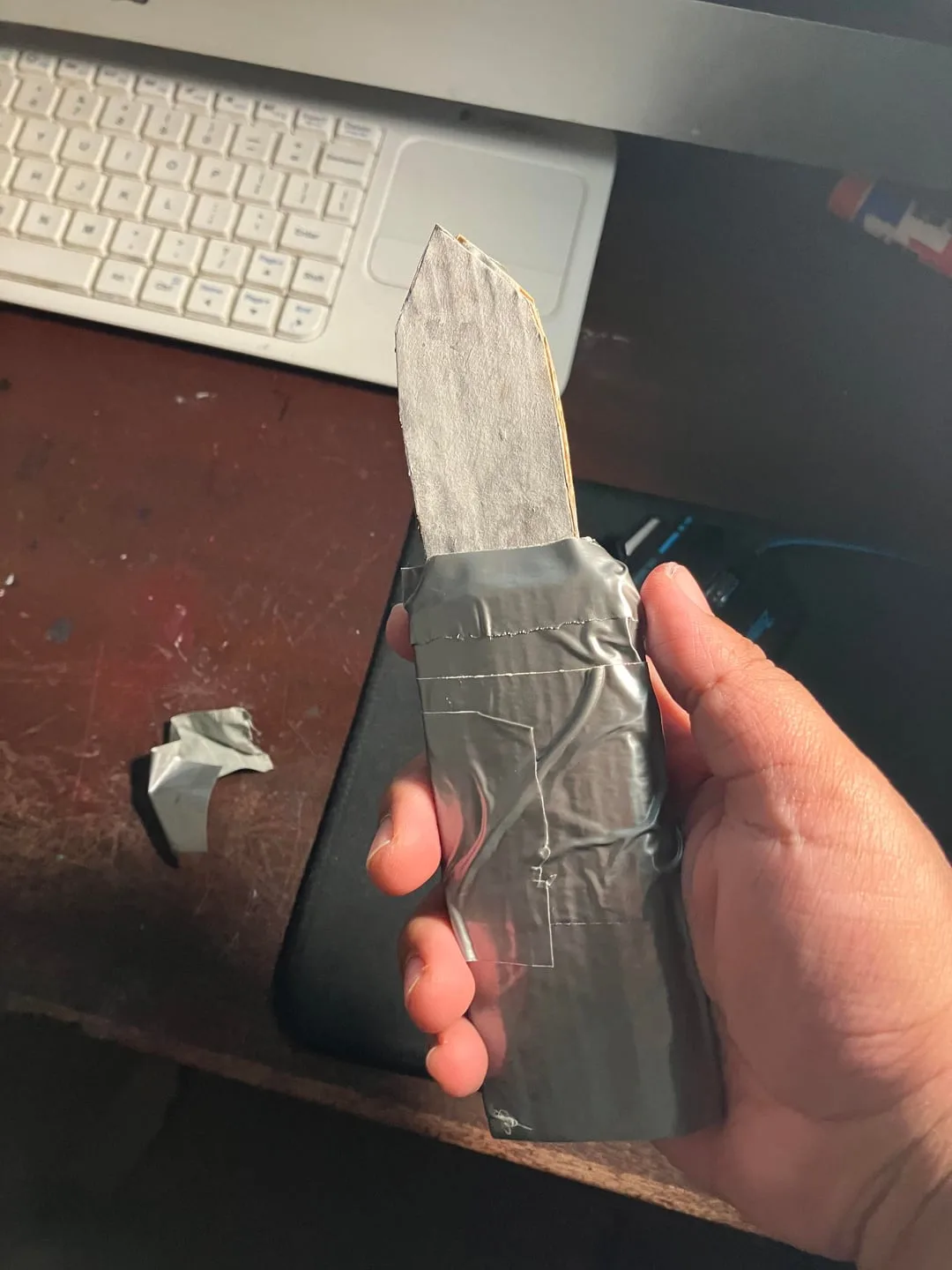
Image source: Bing (Web (fair-use with source credit))
Here's the safe packaging process:
- Get thick cardboard. Corrugated cardboard is ideal. A cereal box or shipping box works well. Avoid thin paper or newspaper. A determined edge will cut right through it.
- Fold the cardboard over the blade. Sandwich the blade between two layers of cardboard. Make sure the entire cutting edge is covered. Extend the cardboard at least an inch past the tip.
- Secure with heavy tape. Use duct tape or packing tape. Wrap it tightly around the cardboard. The blade should not be able to slide out.
- Wrap each knife separately. Do not bundle multiple knives together in one cardboard sleeve. Each blade needs its own protection.
- Label it clearly. Use a marker to write "SHARP" or "KNIFE BLADE" on both sides of the package. Brightly colored tape can also help.
If you're donating knives, package them the same way. The person accepting the donation needs to handle them safely too.
One more thing: never wrap a knife in just a paper towel or a plastic bag. That offers zero protection. Our research on waste collection safety incidents shows that improperly wrapped blades are one of the most common causes of cuts for sanitation workers.
What About Blade Guards or Sheaths?
If you still have the original blade guard or sheath, use it. It's designed for that knife and it's safer than a cardboard wrap. Tape the sheath closed so it doesn't fall off during handling.
Local Rules and Better Options: Curbside, Bulk Pickup, Scrap Yards, and Mail-In Programs
Your local waste authority sets the rules for sharp items. Regulations vary significantly between municipalities. What works in one city might get your trash rejected in another.
Curbside Trash
Most residential trash services accept properly wrapped knives in the regular household waste. The key is the wrapping we just covered. Check your local waste authority's website for specific rules on bladed items.
Some cities require knives to be placed in a rigid container, like a small plastic tub with a secured lid, before going in the trash bag.
Never put knives in your curbside recycling bin. That's the biggest mistake people make. Knives contaminate the recycling stream, damage equipment, and endanger workers.
Bulky Waste Pickup
Some municipalities offer bulky waste pickup for items that don't fit in standard bins. This may be an option if you're disposing of a full knife block set. Call your local sanitation department and ask if they have a separate process for sharp objects.
Some cities require you to schedule a special pickup and label the package with a specific code.
Scrap Metal Yards
For steel knives, this is the most responsible option. Scrap metal yards are businesses. They know exactly how to handle metal items.
Call ahead and confirm:
- Do you accept kitchen knives?
- Must the handles be removed before drop-off?
- Is there a minimum weight for acceptance?
- Are there any fees?
Some yards accept knives for free. A few will pay a small amount per pound.
Mail-In Recycling Programs
A few specialized programs accept knives by mail. These services usually involve paying for a prepaid shipping label and sending your knives to a facility that handles metal recycling. The cost is typically $10 to $20 for a small box.
This option is useful if you live far from a scrap yard or if you have a complete set you don't want to drive across town to recycle.
As of 2026, these programs are still relatively niche. The Environmental Protection Agency's guidance on household hazardous waste and special materials recommends checking with your local solid waste office first before paying for mail-in disposal.
Community Collection Events
Some towns hold annual household hazardous waste and bulky item collection days. Knives sometimes qualify for these events. Check your city's event calendar.
These events are usually free for residents and guarantee proper handling.
Knife Disposal Mistakes to Avoid (And Why They're Dangerous)
Even with good intentions, it's easy to get this wrong. Some mistakes are just wasteful. Others can get someone hurt.
Here are the most common ones to avoid.
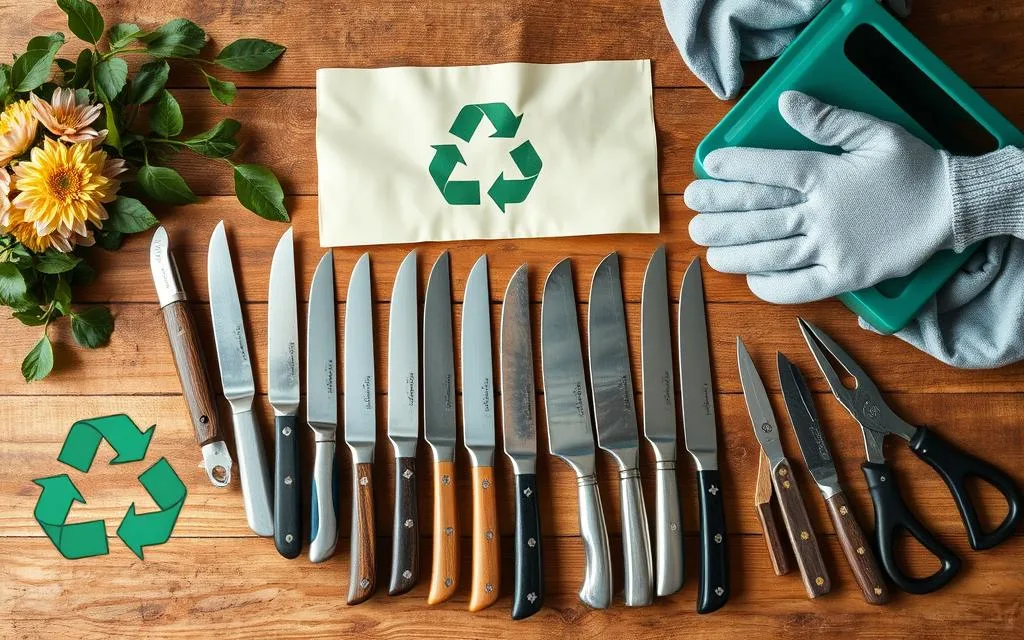
Image source: Bing (Web (fair-use with source credit))
Throwing loose knives in the trash. This is the biggest one. A bare blade inside a garbage bag is a hazard for anyone who handles that bag. Sanitation workers, landfill sorters, and even your own family members can get cut.
Always wrap each knife individually.
Putting knives in the curbside recycling bin. This mistake happens all the time. People assume metal knives belong with metal cans and foil. They don't.
Knives tangle in sorting machinery, damage equipment, and cause serious injuries to recycling center workers. Our research on municipal recycling contamination shows that bladed items are one of the top reasons for facility shutdowns during a shift.
Donating unusable knives. A rusty, chipped, or bent knife is not a donation. It's a burden. Donation centers have to pay to dispose of items they can't sell.
If you wouldn't want to use that knife yourself, don't pass it on.
Ignoring local rules. Some cities have specific ordinances for sharp object disposal. You might face a fine if you violate them. More importantly, you risk the knife not getting handled properly.
A quick five minute check of your local waste authority's website can save a lot of trouble.
Trying to recycle ceramic blades. Ceramic is not metal. It can't be processed at a scrap yard. Putting it in a recycling bin contaminates the batch.
Ceramic knives belong in the trash, wrapped securely.
Frequently Asked Questions
Can I put kitchen knives in the recycle bin?
No. Kitchen knives should never go in your curbside recycling bin. They jam sorting equipment and injure workers.
Steel knives can be recycled at a scrap metal yard. Ceramic knives must go in the trash.
Do thrift stores accept used kitchen knives?
Many do, but you need to call ahead. Goodwill, Salvation Army, and local charity shops vary by location. Some accept knives only if they're clean and in good condition.
Others refuse them entirely. Always call first and wrap each knife securely before dropping off.
How do I dispose of a ceramic knife?
Ceramic knives cannot be recycled with metal scrap. They also can't go in the curbside recycling bin. Wrap the blade in thick cardboard, tape it securely, label it as sharp, and put it in your regular household trash.
What should I do with a full knife block?
A knife block with knives inside follows the same decision tree. Check each knife individually. Usable ones can be donated with or without the block.
Damaged steel knives go to the scrap yard. The wood block itself is typically trash or can be repurposed.
Can I mail old knives for recycling?
Yes, but options are limited. A few specialized programs accept knives by mail for a fee. The cost runs about $10 to $20 for a small box.
This is most useful if you live far from a scrap yard or have a complete set to recycle. Check with the program first about packaging requirements for shipping sharp objects.
Is it worth sharpening old knives instead of disposing of them?
Often yes. If the blade is structurally sound, a $5 to $10 sharpening service can give it a second life. Many hardware stores and culinary shops offer this.
A sharpened knife is safer to use and easier to donate. It's worth considering before you decide to throw anything away.
Final Decision Guide: Choose Your Path in Under 60 Seconds
Here's the shortest version of everything we covered. Use this quick guide to make your decision in under a minute.
Step 1: Check the condition. Is the knife usable? If yes, go to Step 2. If no, go to Step 3.
Step 2: Donate or keep. Usable steel knives can be donated after sharpening. Call your local donation center first. Family and friends might also take them.
Step 3: Check the blade material. Steel? Take it to a scrap metal yard. Ceramic?
Wrap it and put it in the trash. Broken or severely damaged? Same answer.
Ceramic goes to trash.
Step 4: Wrap every blade. Cardboard, tape, and a "SHARP" label. No exceptions. This applies to donation, recycling, and trash.
Step 5: Check local rules. A quick call or website visit confirms whether your municipality has special requirements for sharp objects.
That's it. Five steps and you're done. The whole process takes longer to read than it does to do.
A few minutes of careful prep keeps everyone safe and ensures your old knives end up where they belong.

Similar Posts