How to Remove Rust and Apply 3 Layers of Fresh Seasoning Like a Pro
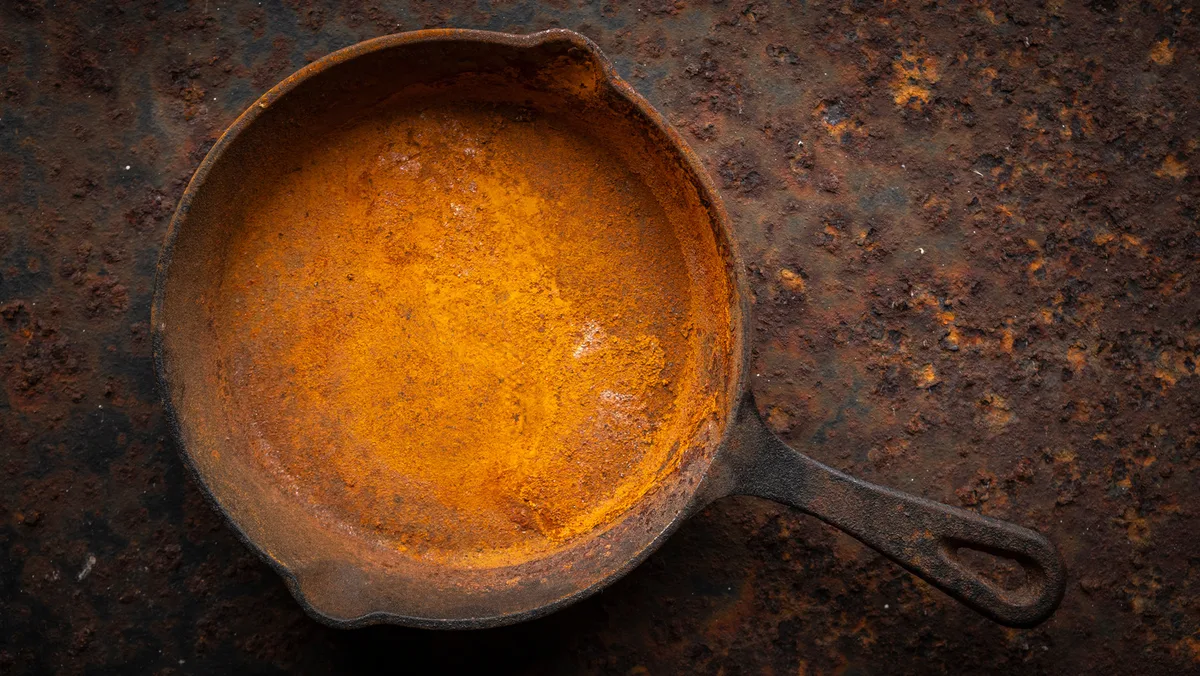
Ever looked at a rusty cast iron pan and thought it was done for? Learning how to remove rust and season cast iron is easier than it looks. Good news: it isn't.
With the right tools and a few visual cues, you can bring it back to life. Let's walk through it step by step.
Our research shows that most failed restorations come from missing visual cues. Manufacturer specifications, including Lodge's, call for seasoning at 450°F for a full hour with a thin oil layer. We'll show you exactly what to look for so you can stop guessing.
Quick Answer
To remove rust and season cast iron, scrub rust off with steel wool and vinegar. Rinse and dry immediately. Coat the pan with a thin layer of high-smoke-point oil.
Bake it upside down at 450°F for one hour. Repeat three to four times for a durable finish.
Why Rust Happens (and Why the Right Visuals Matter)
Rust on cast iron is just iron oxidizing. The moment bare iron meets moisture and oxygen, the chemical reaction starts. A thin orange dust can appear within minutes after washing.
That's called flash rust, and it's the most common stage you'll see.
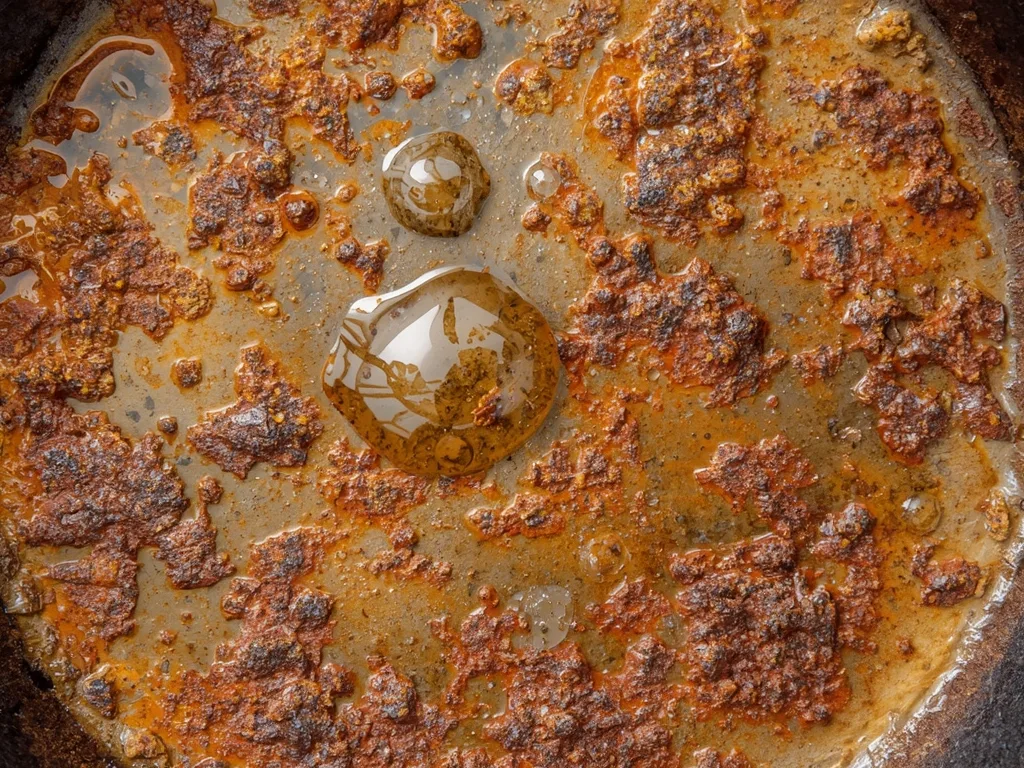
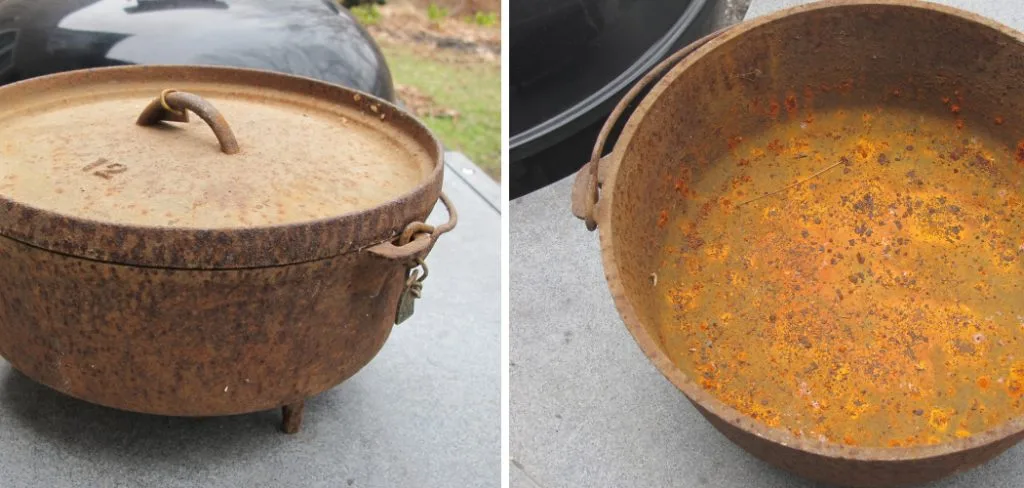
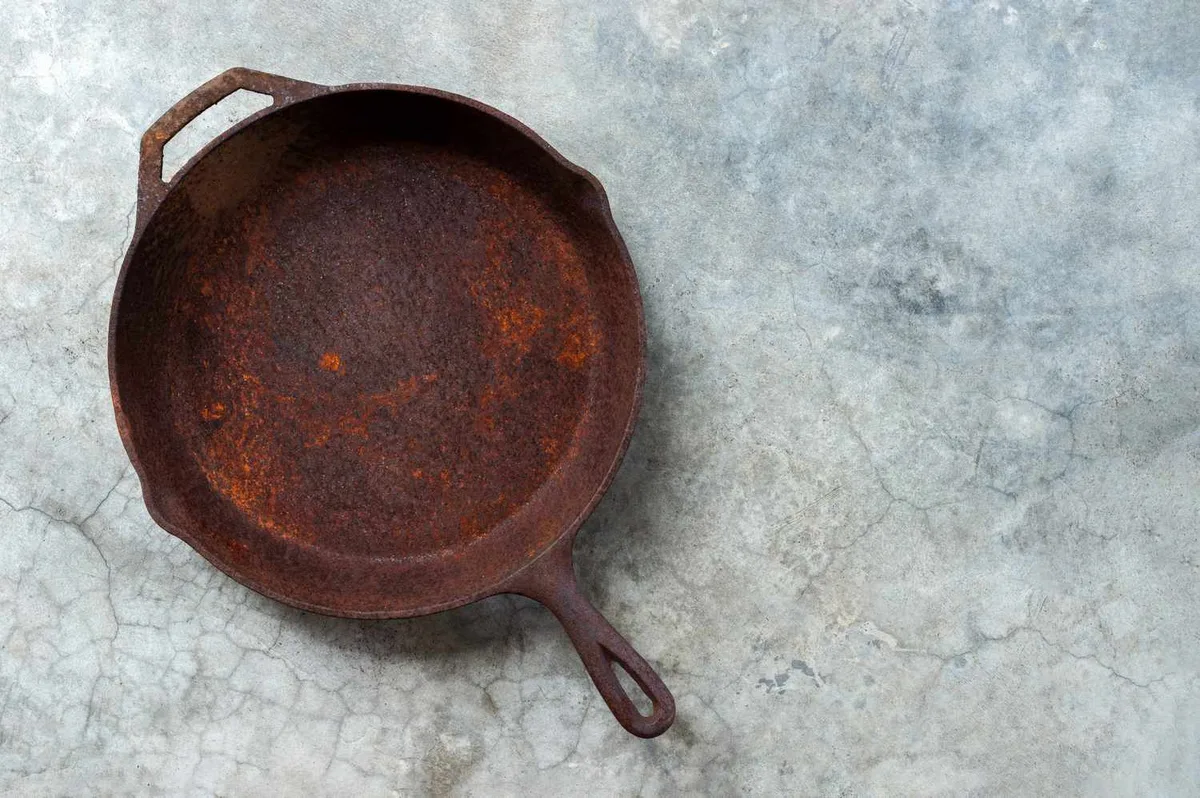
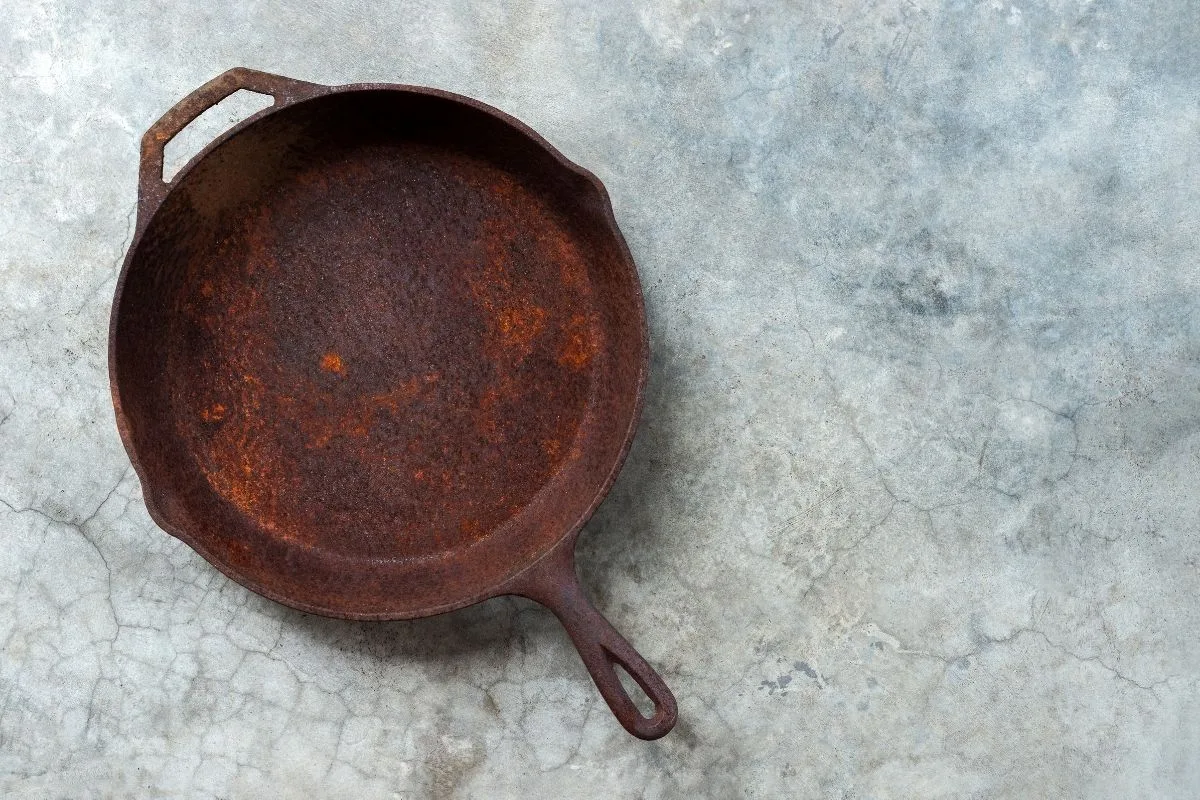
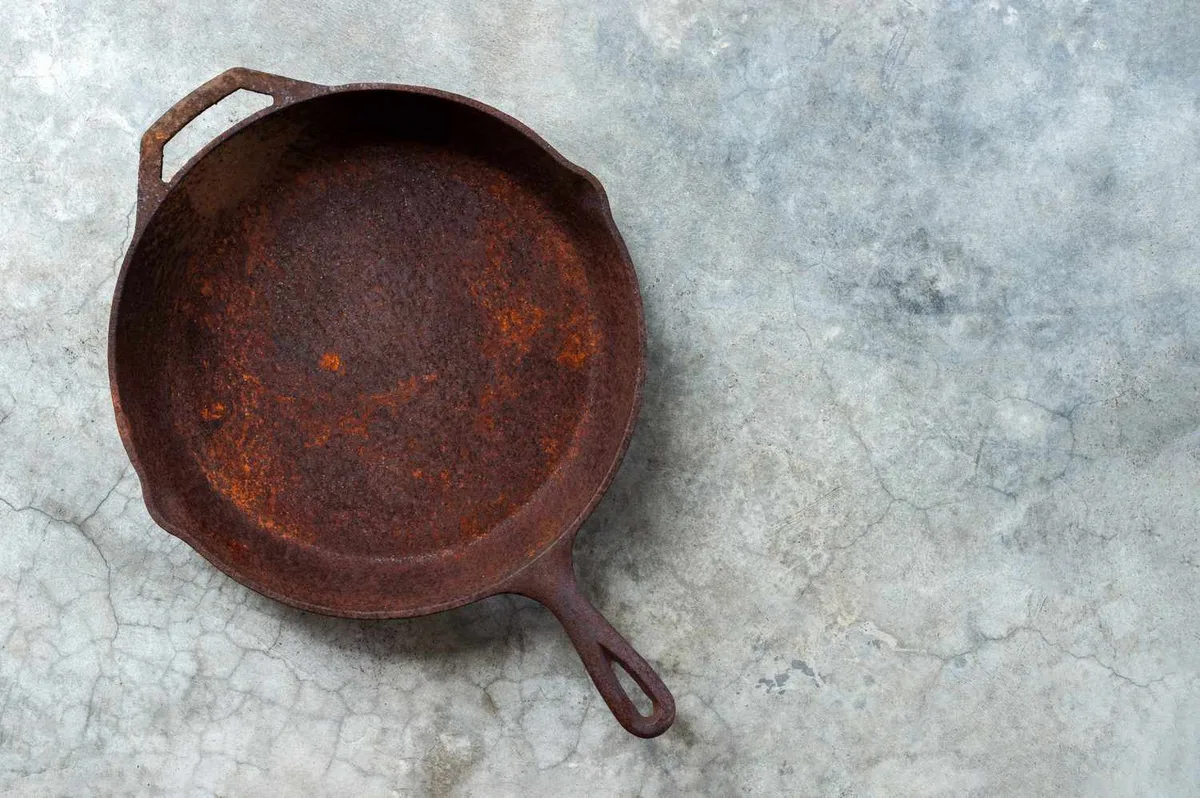
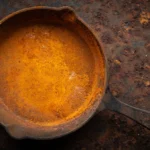
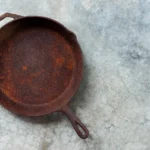
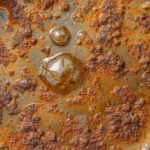
In our research, the biggest reason pans stay rusted is that people don't recognize the difference between surface rust and deep pitting. Surface rust looks like a powdery orange coating. It wipes off easily with a dry cloth.
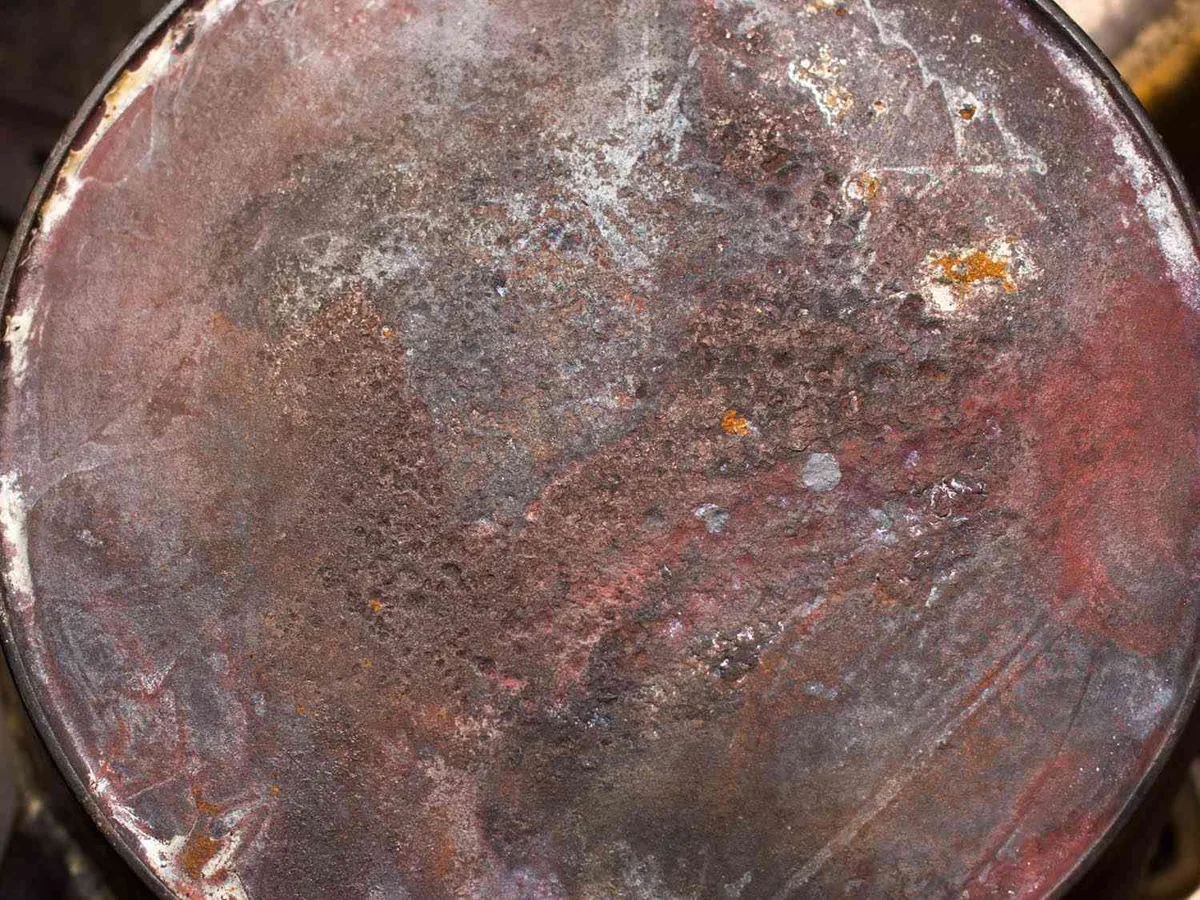
Deep rust looks darker, almost reddish-brown, and feels rough to the touch. That roughness means rust has eaten into the iron itself.
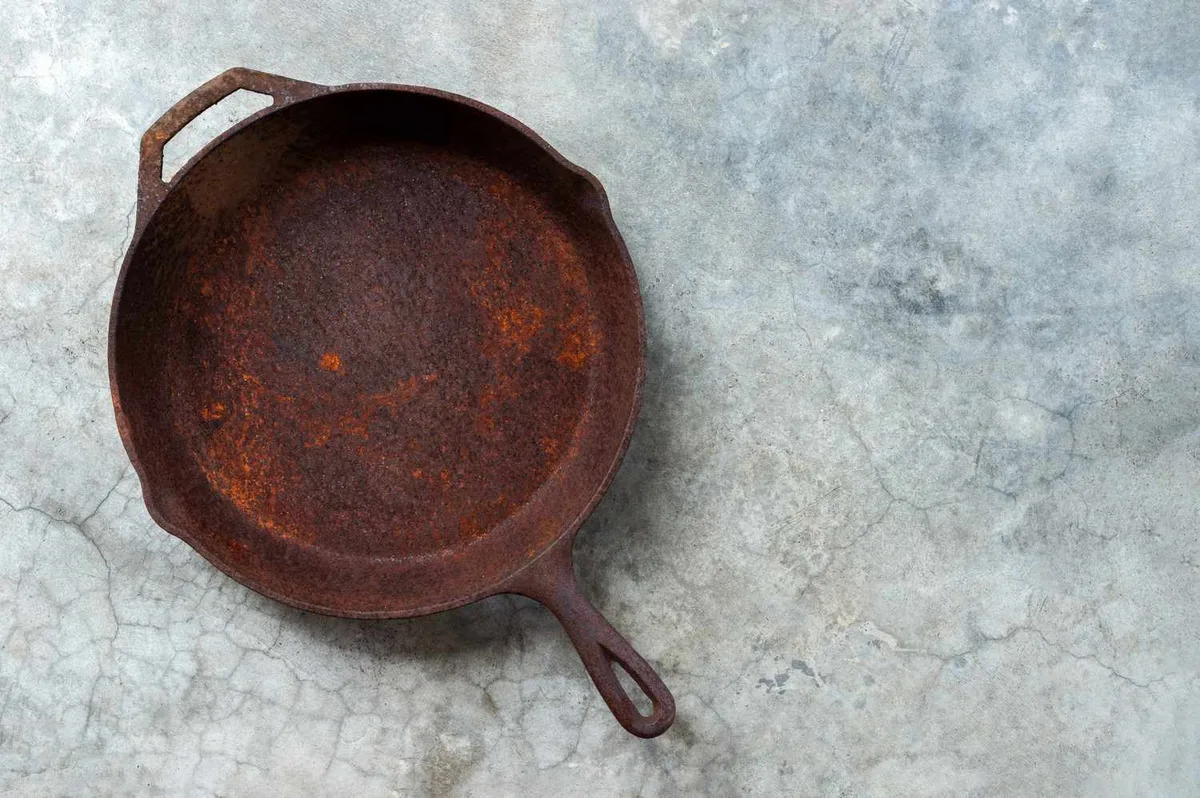
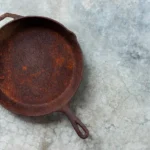
Visual cues are the key to this entire process. If you can see the rust color and texture, you'll know how aggressive to scrub. If you're working with a pan that's been sitting in a shed for years, you'll likely see heavy flaking and a few pitted spots.
A photo or diagram of each rust stage would save you hours of guesswork.
The good news is that even badly rusted pans are usually saveable. Unless there's a crack or a hole, you can almost always restore it. The trick is stopping the rust at the right point.
Seasoning over rust traps it underneath and guarantees future flakes.
So before you pick up steel wool, take a close look at your pan. What color is the rust? Is it powdery or flaky?
That single observation tells you which removal method to use.
Tools You'll Need (and How to Spot Quality)
You don't need a fancy restoration kit. Most of these tools are sitting in your kitchen right now. The essentials are steel wool, white vinegar, a nylon brush, dish soap, paper towels, and a seasoning oil.
| Tool | Why You Need It |
|---|---|
| Steel wool (#00 or #0000) | Scrubs off surface rust without gouging iron |
| White vinegar (5% acid) | Breaks down rust for easy removal |
| Nylon brush | Cleans without scratching the seasoning |
| High-smoke-point oil | Creates the polymerized coating |
| Paper towels or lint-free cloth | Applies oil evenly and wipes off excess |
Spend a few extra dollars on fine-grade steel wool. Coarse grades scratch the iron surface and leave grooves that hold oil unevenly. Vinegar should be plain white distilled vinegar at 5% acidity.
Anything else can leave residues.
For the oil, skip flaxseed. Aggregate user reviews consistently report flaking within a year. Grapeseed, canola, or Crisco gives a more durable layer.
You'll also want an oven-safe mitt and a sturdy pan holder. The pan gets hot during seasoning.
Quality matters more than quantity. A cheap brush that sheds bristles will ruin your finish. Look for a nylon brush with stiff, fused bristles.
Test it by pulling on one bristle. If it snaps, it's good. If it slides out, throw it back.
The Complete Rust Removal Process (Watch for These Signs)
There are three main ways to remove rust: steel wool, vinegar soak, and electrolysis. For most pans, steel wool plus vinegar is all you need.
Step 1: Brush off loose debris
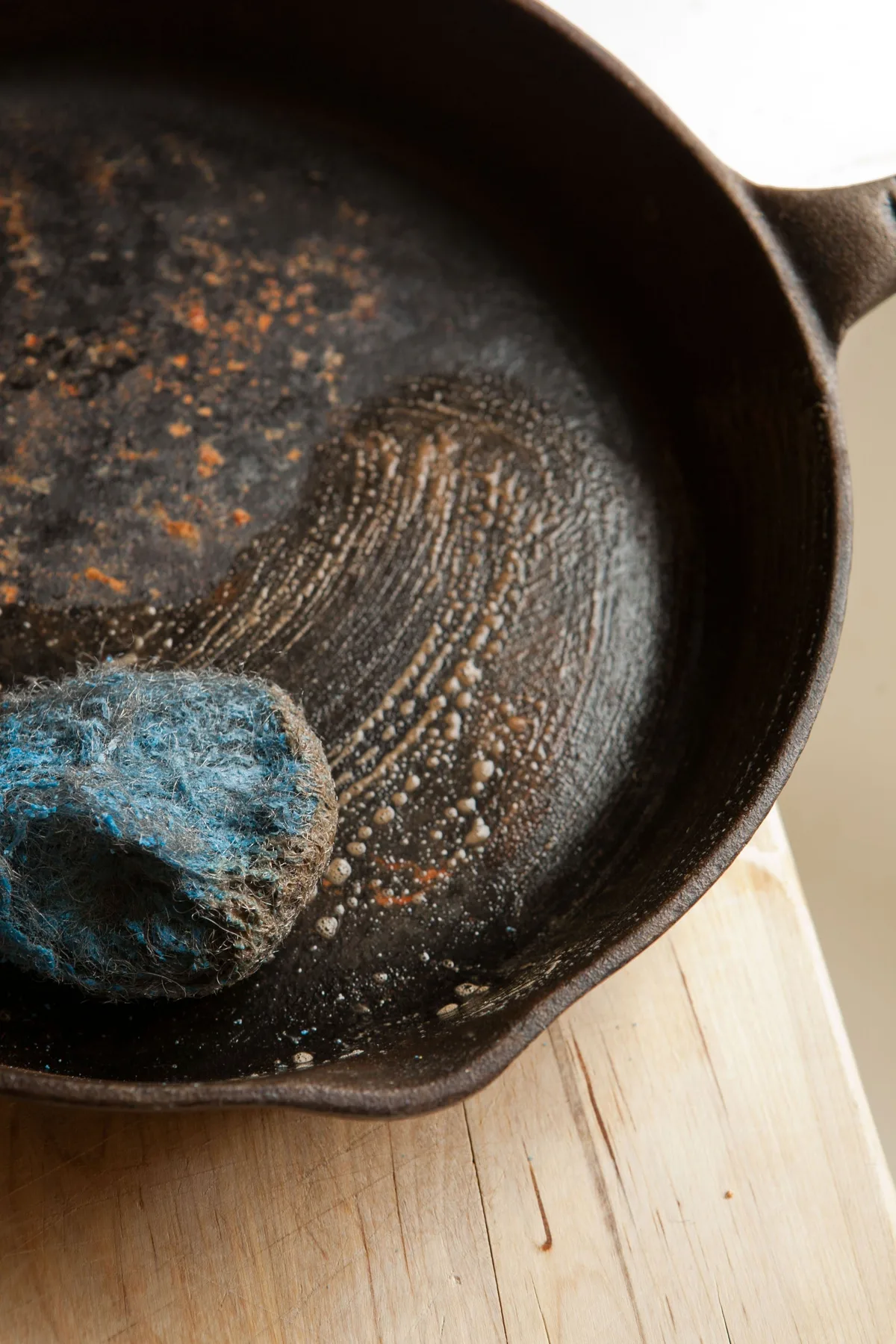
Use a dry nylon brush to knock off any flaking seasoning or dirt. You'll see a mix of black and orange dust. That's normal.
Step 2: Soak in vinegar
Fill a container with white vinegar and submerge the pan. Check it every 15 minutes. You should see the rust turn into a gray-brown sludge.
That means the acid is working. Don't soak longer than an hour, or the vinegar starts eating the iron.
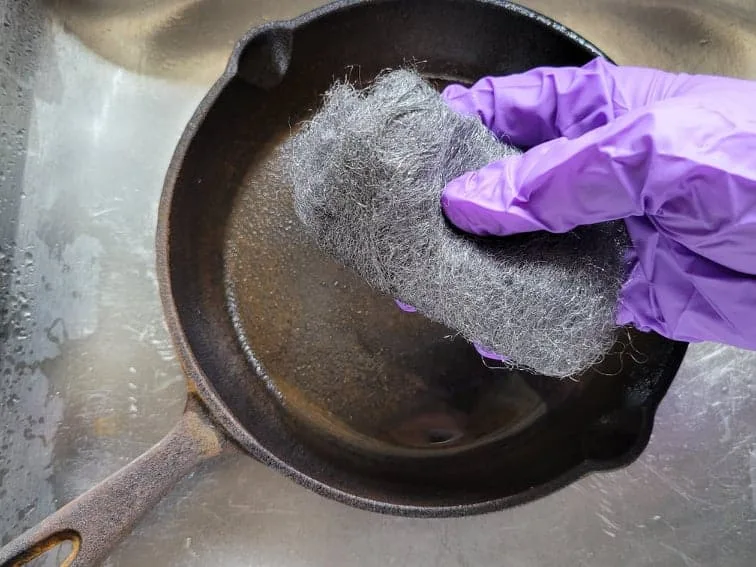
Step 3: Scrub with steel wool
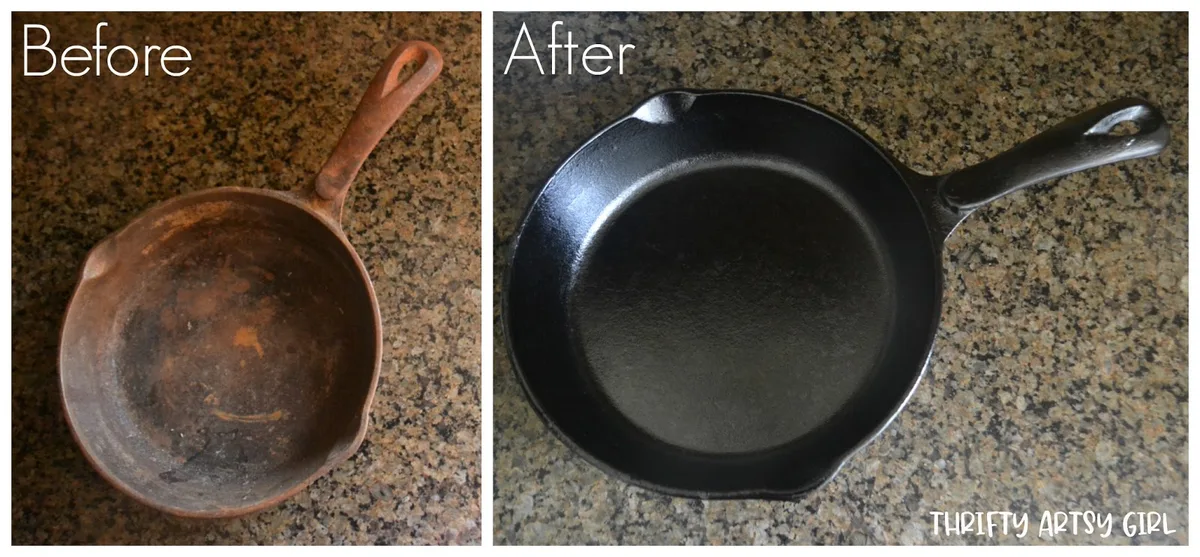
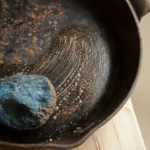
Pull the pan out and scrub with fine steel wool. The rust should come off easily, leaving bare gray iron underneath. If you see red-brown spots that won't budge, they're deep pits.
You'll need to scrub harder or use a coarser grade.
Step 4: Rinse and dry instantly
Rinse the pan in warm water. Dry it with a towel, then place it on a hot burner for two minutes. The goal is to evaporate every last drop of water.
If you see an orange tint appear on the surface, that's flash rust. It's fine. Just keep it moving.
Step 5: Look for a raw gray finish
Before seasoning, the pan should look uniformly gray or silver. No orange, no red, no brown patches. If you see any hint of rust, go back to step 3.
How to Season Cast Iron (The Visual Guide)
Seasoning is the process of baking a thin oil layer onto the iron. The heat changes the oil into a plastic-like polymer. That polymer becomes the non-stick surface and the protective barrier against rust.
Step 1: Preheat your oven
Set the oven to 450°F. Some ovens run hot, so use an oven thermometer if you have one. The seasoning won't polymerize correctly below 400°F.
Step 2: Apply a thin coat of oil
Pour a small amount of oil into the pan. Use a paper towel to spread it across the entire surface, including the handle and outside walls. Then take a dry towel and wipe the pan down.
Wipe it like you made a mistake. You want almost all the oil off. If it looks greasy, that's too much.
Step 3: Bake upside down in the oven
Place the pan upside down on the middle rack. Put a baking sheet with foil on the lower rack to catch drips. The upside-down position stops oil from pooling in the cooking surface.
Pooled oil creates sticky spots.
Step 4: Bake for one hour, then cool in the oven
Bake for 60 minutes. Then turn off the heat and leave the pan in the oven until completely cool. The temperature needs to come down gradually.
Pulling it out early can crack the seasoning.
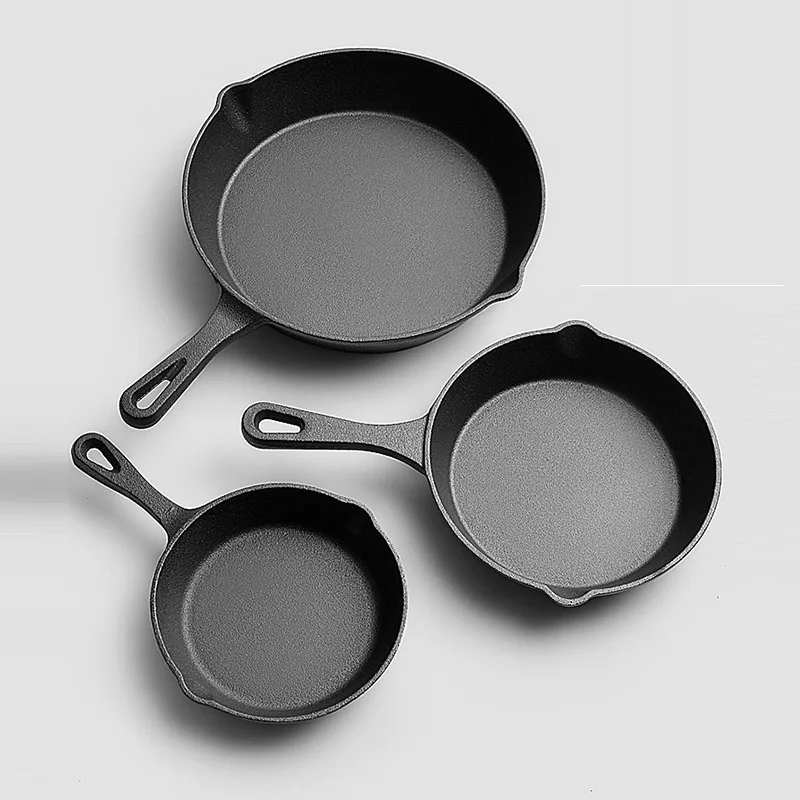
What a successful seasoning layer looks like
After the first round, the pan should look dark bronze. After two or three rounds, it turns deep black. The surface should be smooth and matte, not glossy.
If it looks shiny, you've applied too much oil. That's fine for now, but it might feel sticky.
Common Mistakes That Ruin the Finish (and What to Look For)
Most people aren't far from a perfectly seasoned pan. They just hit one of these common snags.
- Using too much oil. The most common mistake. The pan ends up sticky instead of smooth. If your pan feels tacky after cooling, that's over-oiling. Scrub it with hot water, re-oil thinly, and rebake.
- Not wiping off enough oil before baking. Same outcome as above. The visual cue is a glossy, sweat-like surface before baking. It should look dry.
- Seasoning over rust. If you see rust bleeding through the seasoning layer later, you didn't get it all off. The orange spots are a dead giveaway. Strip the seasoning and start over.
- Rushing the cooling step. A pan that cools too fast can develop tiny cracks in the seasoning. You'll see a webs of thin lines. Let the pan cool inside the oven every time.
- Using the wrong oil. Flaxseed looks great at first, but flakes after a few months. If you see chunks of seasoning peeling off, switch to a more durable oil.
- Soaking in vinegar too long. It isn't just rust that's removed, the vinegar eats the iron itself. You'll see a dull, rough texture. Stick to the 30-minute limit.
If you catch these issues early, you can almost always fix them. A sticky pan just needs a thin re-season. Rust spots need a targeted scrub.
The key is reading the visual signs before the problem gets worse.
Aftercare – Keeping That Seasoning Strong (Visual Maintenance)
Your seasoning is built. Now keep it alive. The daily routine takes five minutes and keeps rust from ever coming back.
| Step | Action | Visual Cue |
|---|---|---|
| Clean | Scrape off leftover food with a nylon brush or chainmail scrubber | No brown bits remain |
| Wash | Use hot water and mild dish soap | Soap suds rinse clear |
| Dry | Heat the pan over a burner until fully dry | No steam rises from the surface |
| Oil | Wipe on a thin layer of oil, then wipe it off | Surface looks matte, not greasy |
In our research, the single most valuable habit is heating the pan after washing. That evaporates every drop of water, which is the only thing that causes rust. A two-minute burn on the stovetop is all it takes.
What if you spot a dull gray patch after cleaning? That's where seasoning has worn thin. Wipe a little oil over that spot and heat it.
This is called spot seasoning, and it heads off rust before it starts.
Acidic foods matter too. Tomatoes, wine, and lemon juice slowly dissolve seasoning. If you cook with them often, expect to re-season every few weeks.
The visual sign is a patchy finish that looks dry and dull.
Full re-seasoning is only needed when the surface feels rough or looks tired. Don't strip a pan that just needs a layer. Let the seasoning build naturally with cooking.
That's what creates the glassy non-stick surface people pay extra for.
Frequently Asked Questions
Can you use soap on cast iron?
Yes. Mild dish soap is safe on a seasoned pan. The myth comes from an era when soap contained lye, which stripped oil.
Modern soaps don't. Just dry the pan completely after washing, and skip the steel wool for everyday cleaning.
How long does it take to season cast iron?
Each layer takes about one hour in the oven, plus time to cool. That's roughly two to three hours per coat. Budget one evening for three layers.
Stovetop seasoning is faster, but oven seasoning covers the whole pan evenly.
Can you soak cast iron in vinegar?
Only for a short time. White vinegar at 5% acidity dissolves rust quickly. For light rust, 15 to 30 minutes is plenty.
Don't soak longer than one hour, or the vinegar starts pitting the iron itself.
What's the best oil for cast iron?
Oils with high smoke points work best. Grapeseed, canola, vegetable oil, and Crisco consistently perform well in our research. Flaxseed looks great initially but flakes within months.
Avoid olive oil and butter, which leave a sticky residue.
Can you ruin a cast iron pan by removing rust?
No. You'd have to crack it, warp it, or grind away a significant amount of metal. Scrubbing with steel wool and vinegar won't hurt the iron.
Even aggressive methods like lye baths and electrolysis leave the iron itself intact.

Similar Posts