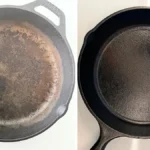
The Complete Restoration Guide for Flea Market and Thrift Store Cast Iron
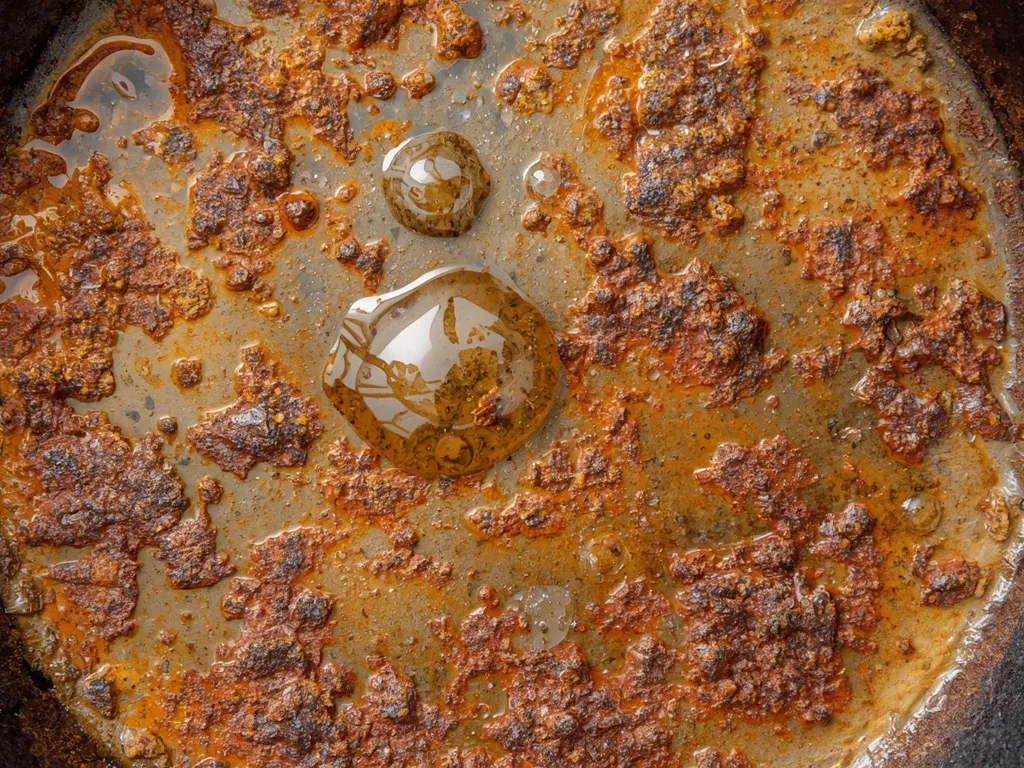
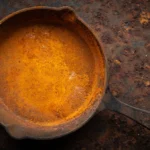
Rusted cast iron looks like a lost cause, but it's not. You can learn how to restore rusted cast iron in under an hour with the right steps. The key is matching the method to the rust depth.
Get that wrong, and you could over-etch the iron or warp a classic pan.
Per expert sources, a 50/50 vinegar-water soak lifts moderate rust in 1 to 2 hours. Electrolysis takes 12 to 24 hours for heavy crust. As of 2026, most homes have what they need.
So before grabbing a wire wheel, let's read the pan.
Image source: Bing (Web (fair-use with source credit))
Before You Start: Read the Rust and the Pan
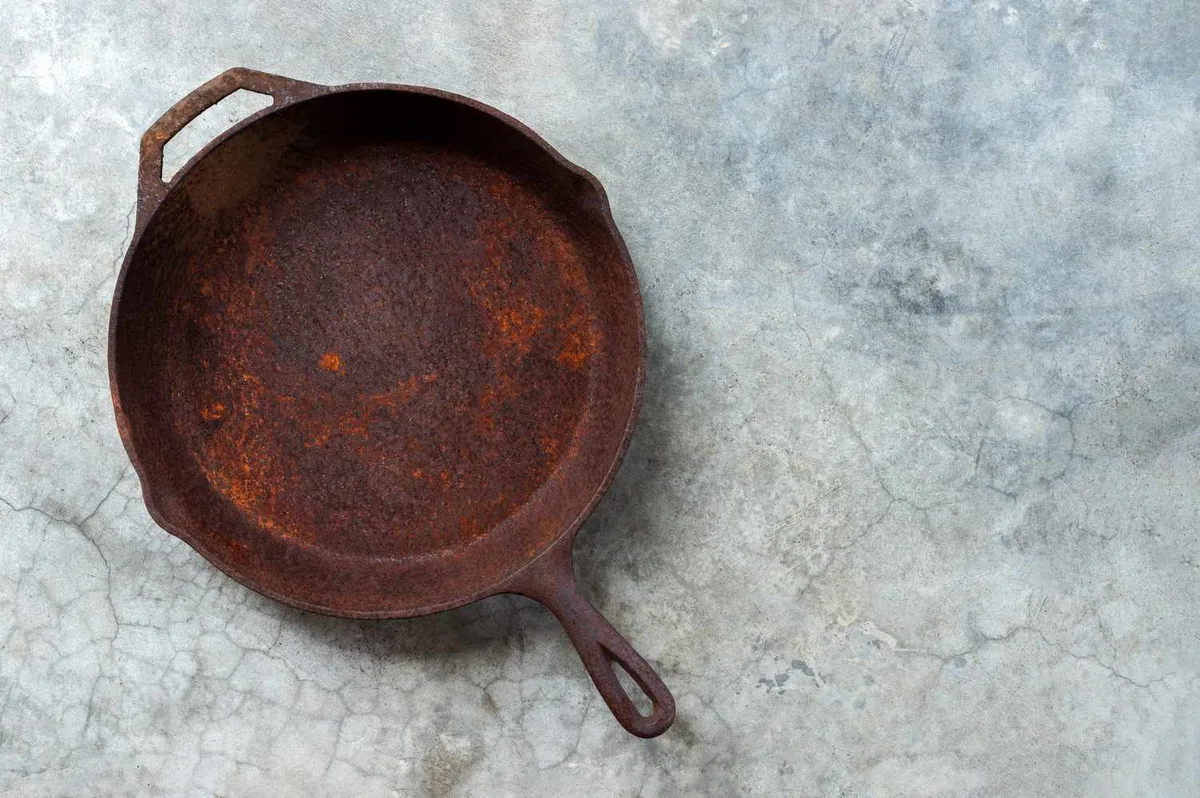
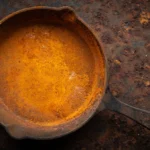
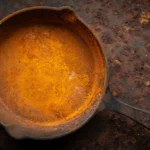
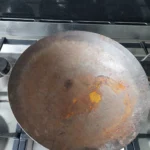
Before you pick any method, look at the iron closely. Run your finger across the surface. Flash rust is that fine orange powder that wipes off onto a paper towel.
If that's all you see, your job is simple.
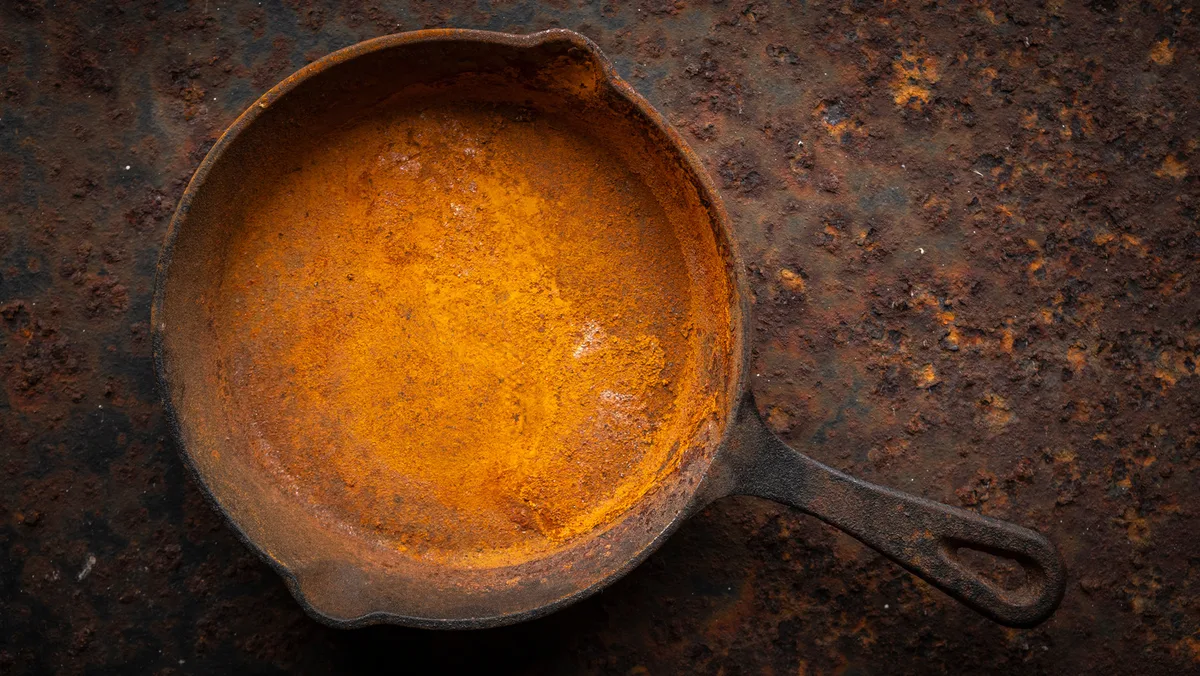
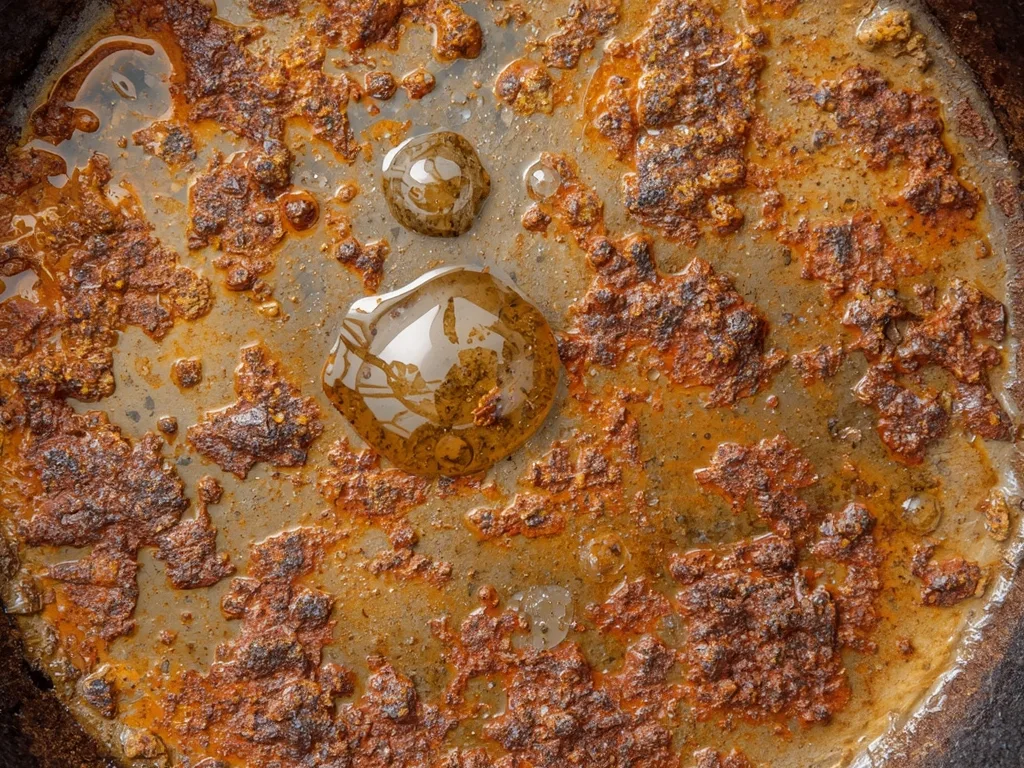
Moderate rust feels rough, leaves flakes on your fingers, and the iron underneath is still solid. Heavy rust forms thick crusty layers, sometimes with visible pits. Your method depends entirely on this call.
| Rust type | What it looks like | Best route |
|---|---|---|
| Flash rust | Orange powder, wipes off | Simple scrub |
| Moderate rust | Rough, flaking, metal solid | Vinegar soak |
| Heavy rust | Crust, pitting, flaking layers | Electrolysis or wire brush |
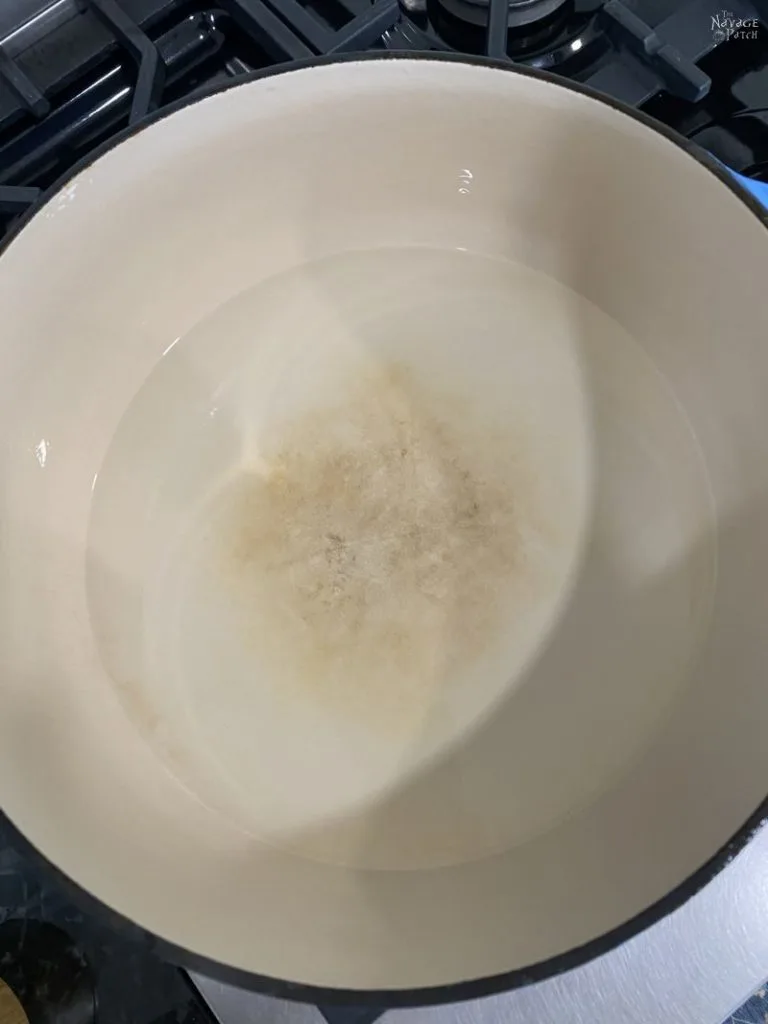
Also check the pan's material. Enameled cast iron, like Le Creuset, cannot be stripped with vinegar or lye. The enamel coating will chip and ruin the pan.
If you see a smooth glassy surface in white or pastel, this guide doesn't apply.
One warning matters more than any step: test old pans for lead before restoring. If the pan was used for melting lead or fishing weights, you could poison yourself. The EPA has guidance on lead safety, and test kits cost under $10.
For vintage pans, remember they're often lighter and more brittle. Use gentler methods like electrolysis or hand scrubbing, never an angle grinder.
Route #1: The Simple Scrub for Flash Rust
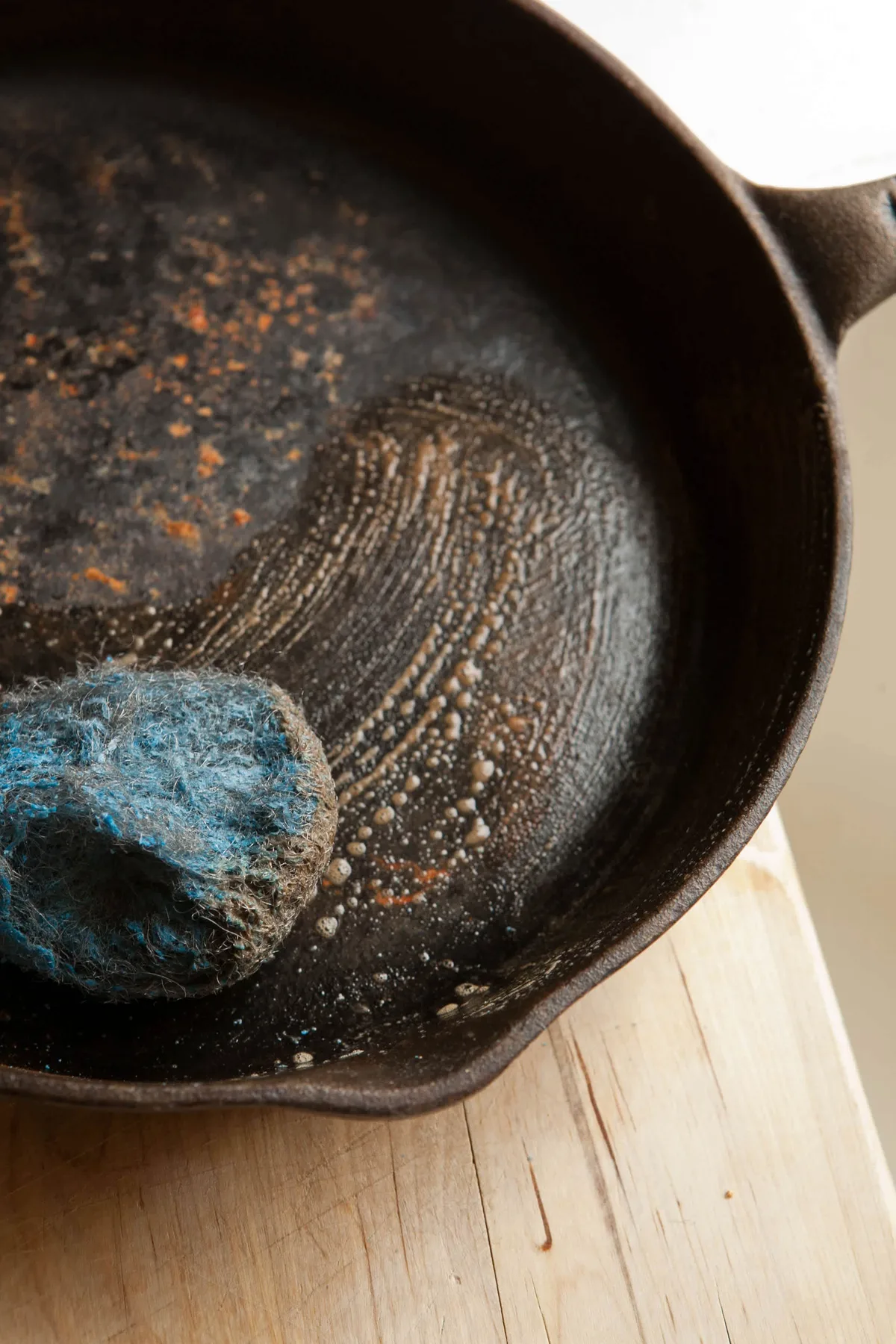
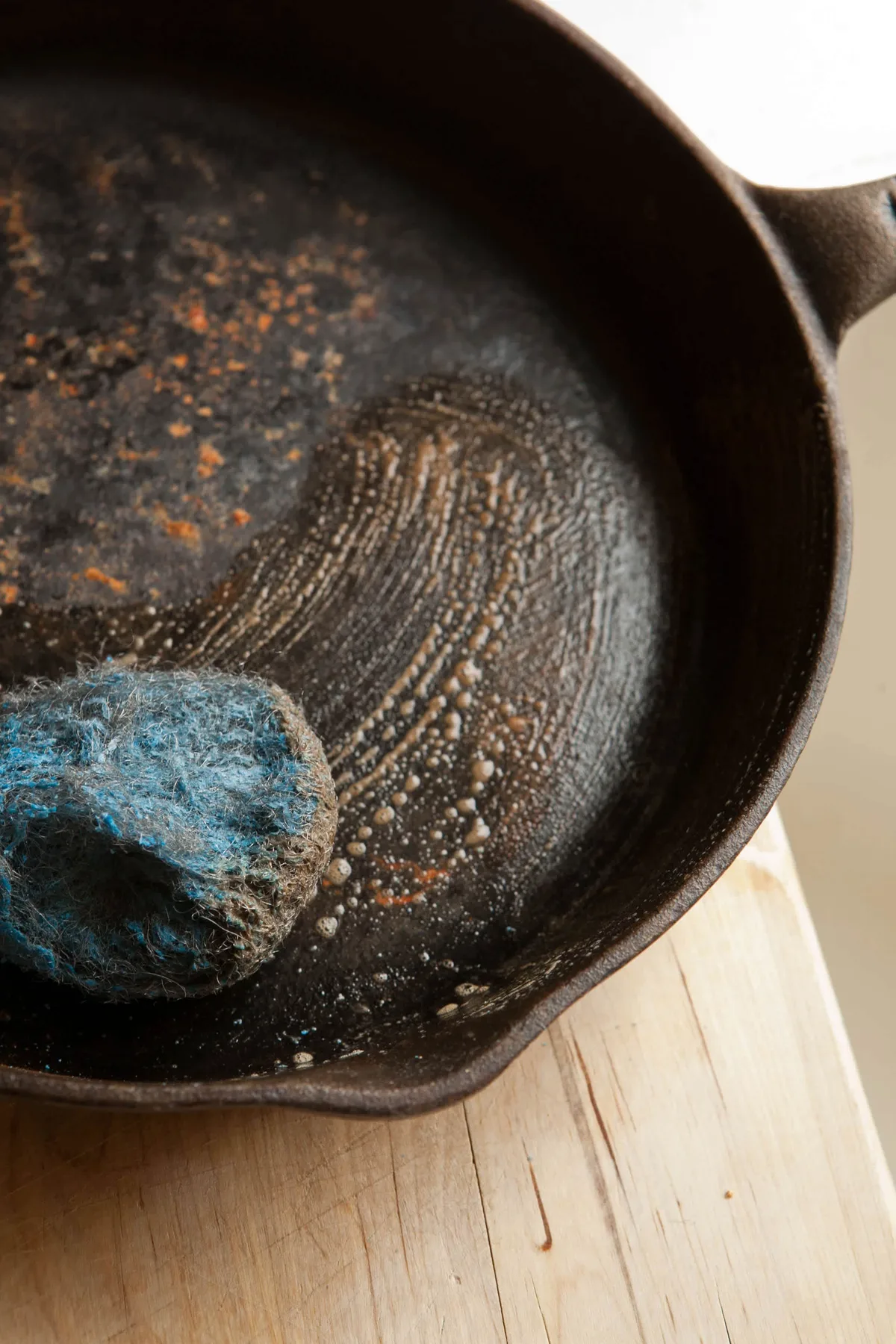
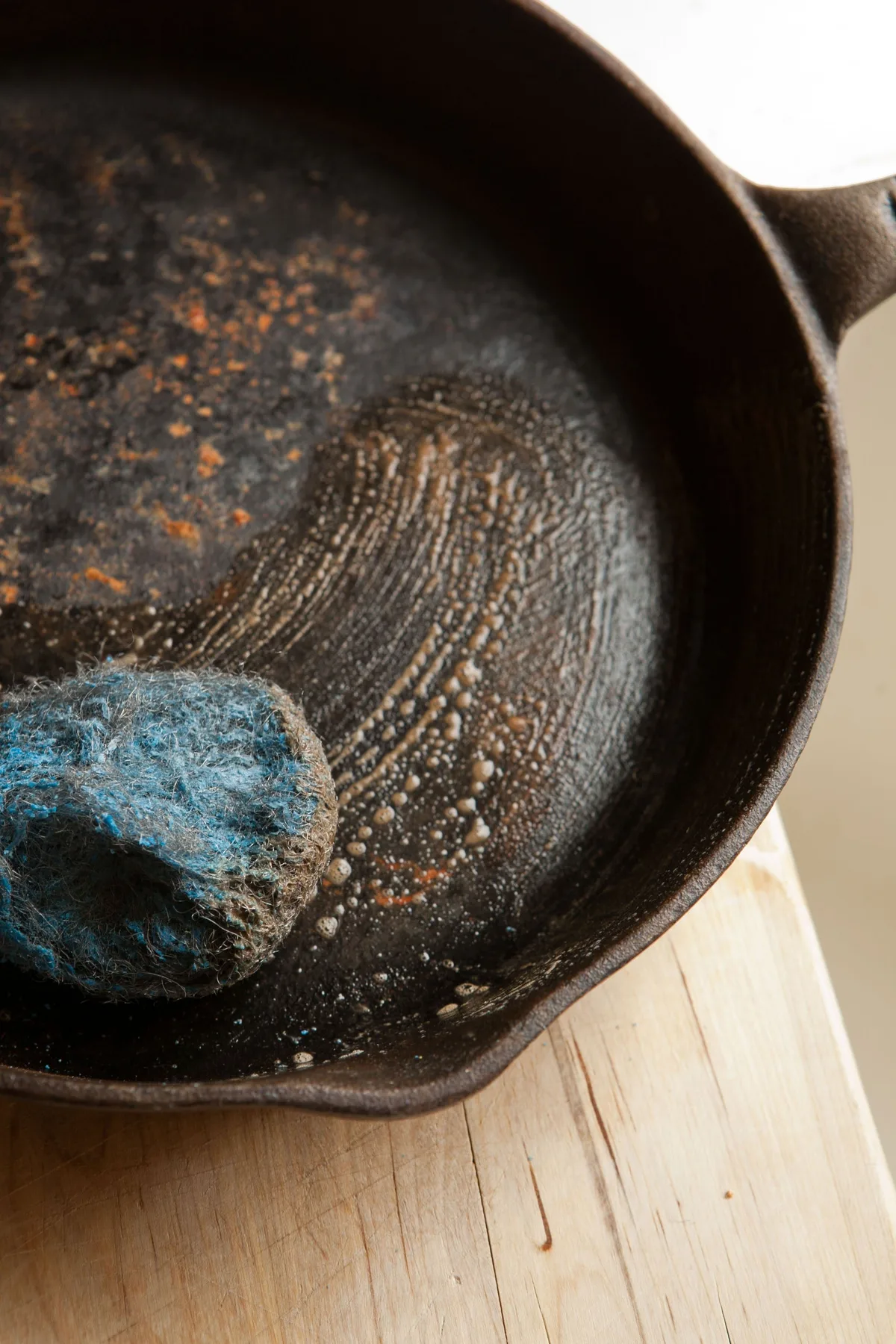
If you've got flash rust, this is the fastest path. You'll need steel wool (grade 0000 or 0), warm water, and mild dish soap. Don't use abrasive cleaners; they'll strip any seasoning that survives.
Instead, focus on the rust itself.
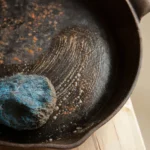
Wet the pan, add a drop of soap, and scrub in circles. The rust will come off as an orange slurry. Rinse thoroughly, then dry immediately.
Here's the catch: flash rust loves water. Air-drying lets fresh orange corrosion appear within minutes.
Follow these steps to lock out moisture:
- Shake off excess water and wipe with a paper towel.
- Place the pan in an oven heated to 200°F for 10 minutes.
- Remove it and rub a very thin layer of cooking oil over the entire surface.
This isn't a full seasoning, just a protective coat until you complete the real re-seasoning later. If the rust disappears but the pan looks gray or bare, you're on track. Use any neutral oil like canola or grapeseed.
Even vegetable oil works. Don't use olive oil or butter; they burn and create sticky spots. For a lightly rusted pan, the whole process takes about 20 minutes.
No special equipment needed.
Route #2: The Vinegar Soak for Moderate Rust
Image source: Bing (Web (fair-use with source credit))
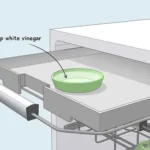
When rust has built up into a rough, flaky layer, scrubbing alone won't cut it. This is where a vinegar soak shines. The formula is simple: 50% white vinegar, 50% water.
Submerge the pan fully in a plastic or glass container, never metal.
The acid dissolves iron oxide, turning it into a loose sludge. Here's the timeline:
- Light rust (rough but no flaking): 30 to 60 minutes
- Moderate rust (flakes and stubborn spots): 1 to 2 hours
- Thin vintage pan: check at 30 minutes
Never soak longer than 2 hours. The acid will start etching bare iron, leaving a rough, pitted surface that makes future seasoning harder. After the soak, scrub the pan under running water to knock off the sludge.
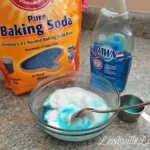
Now the critical step: neutralize the acid. Mix baking soda with water into a paste and rub it all over the pan. Rinse, then dry immediately.
Skipping this leaves vinegar residue that eats into the iron and gives food a metallic taste. Always neutralize, even if you're going straight into seasoning.
Route #3: Electrolysis or Wire Brush for Heavy Crust
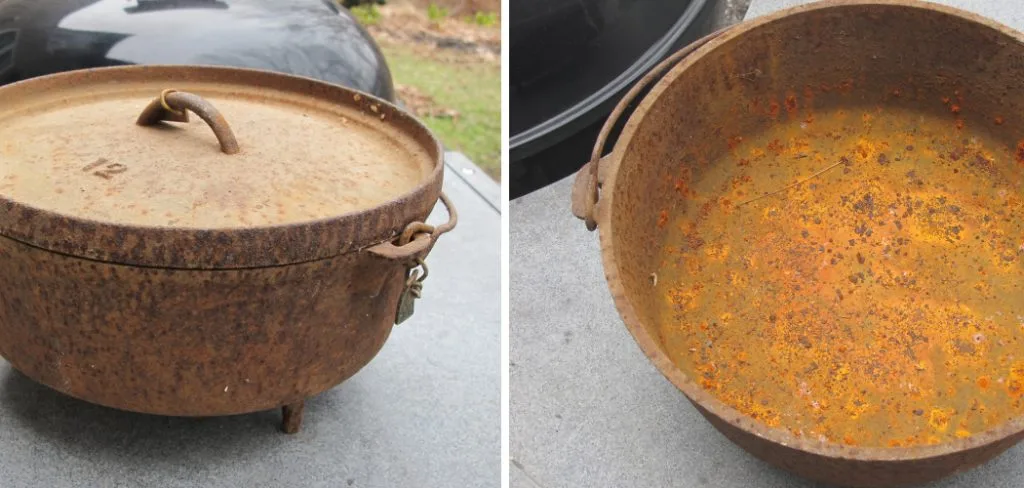
If rust has turned into thick, scaly layers or you can see pits, you need heavy-duty methods. Electrolysis is the gentlest, which is why collectors prefer it. You'll need a 12V battery charger, a piece of stainless steel, a plastic tub, and washing soda.
The setup: fill the tub with water and dissolve a few tablespoons of washing soda. Place the stainless steel outside the bucket, connect it to the positive terminal, and connect the pan to the negative terminal. Submerge both but keep them from touching.
The current converts rust into loose black crumbs that wipe right off.
Safety rules for electrolysis:
- Run the tank outside or in a ventilated garage.
- Hydrogen gas builds up, so never seal the tub.
- Never use copper or aluminum as the anode. Toxic byproducts form.
At 2 to 5 amps, a heavily rusted pan usually needs 12 to 24 hours. Check it periodically. An angle grinder with a wire cup brush is faster but more destructive.
It scars the metal and can ruin a vintage pan's surface. Reserve it for modern pans without collector value. If the pan has deep pits or feels paper-thin, stop.
Some pieces are beyond saving.
Re-Seasoning and Drying: Locking In Your Work
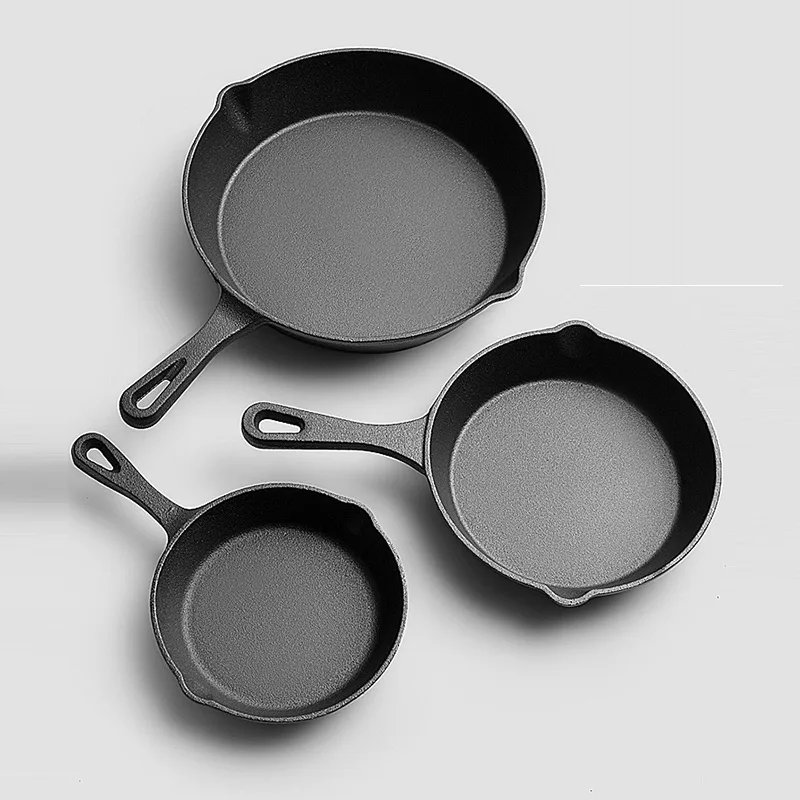
Image source: Bing (Web (fair-use with source credit))
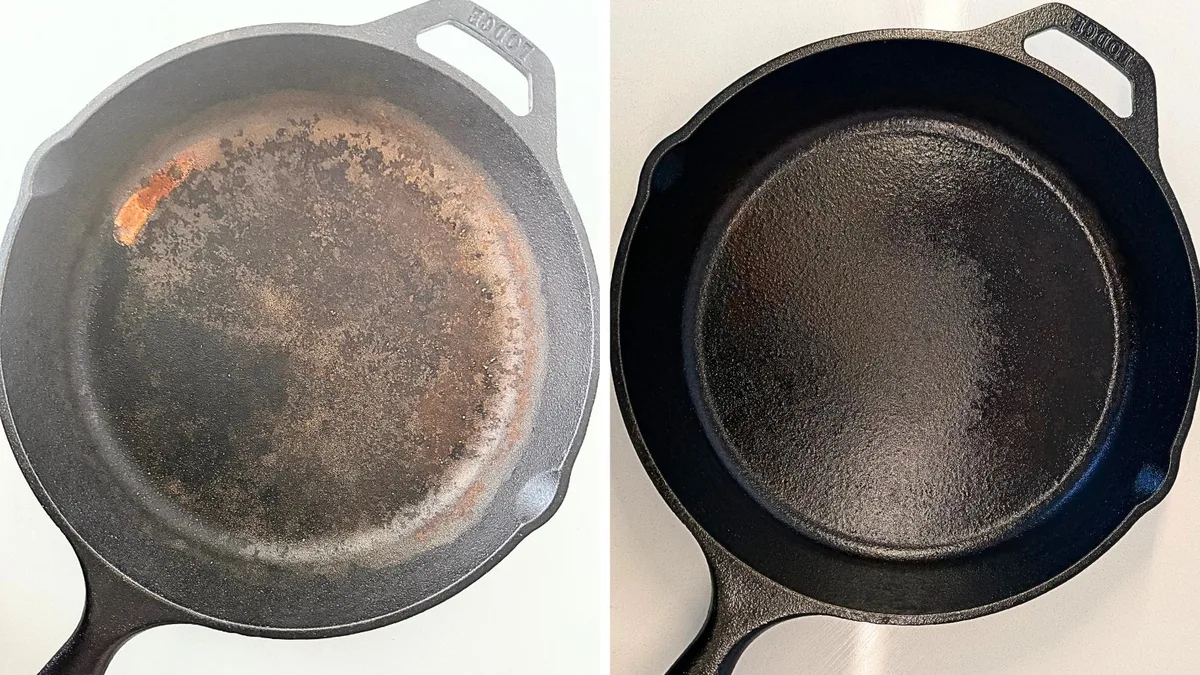
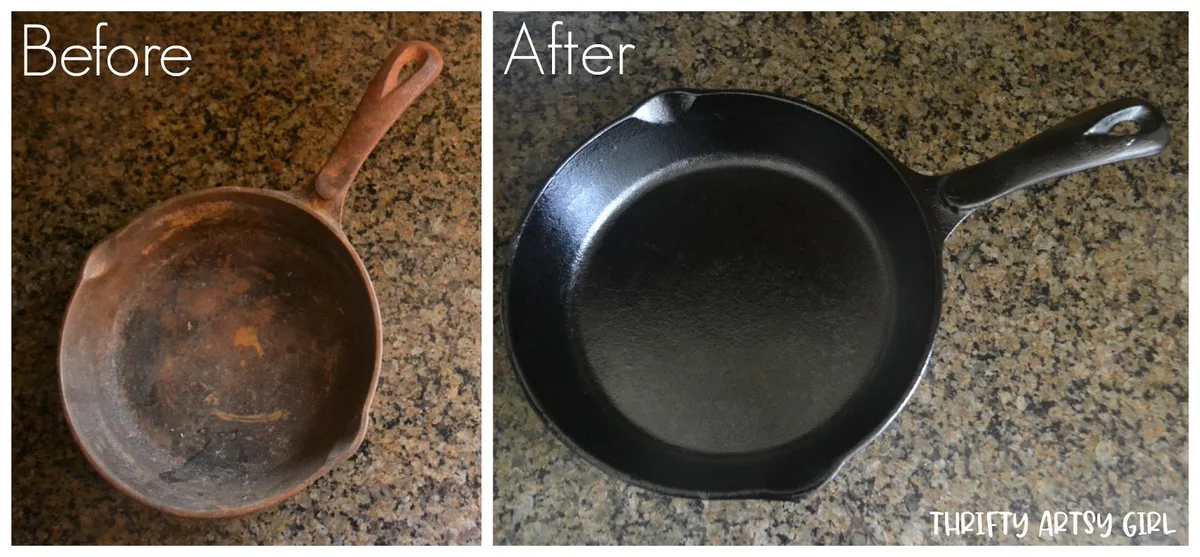
Once the rust is gone, you have one job: prevent flash rust from coming back. The solution is a full re-seasoning, and it starts with drying.
Set your oven to 200°F and place the clean, dry pan inside for 10 minutes. This opens the iron's pores so oil can penetrate. Remove the pan and apply a thin layer of oil.
Here's the trick: wipe the oil on, then try to wipe it all off with a clean paper towel. The barely-there film is exactly what you want. Thick oil turns sticky and gummy.
Seasoning happens at 450°F to 500°F. That temperature is above the smoke point of most oils, triggering polymerization. That's the process that bonds fat into a hard, glassy coating.
Choose your oil carefully:
- Grapeseed oil: high smoke point, durable, hard
- Crisco or canola oil: mid-price, dependable
- Flaxseed oil: very hard but brittle, some flaking
Bake the pan upside down on the middle rack for one hour. Put foil below to catch drips. Turn off the oven and let the pan cool inside.
Repeat the oil-and-bake cycle 3 to 5 times. After that, cook something fatty like bacon to fill any tiny gaps. Test with a fried egg.
If it slides, you're done.
The Mistakes That Ruin Cast Iron Restoration
You can follow every step perfectly and still mess this up. Several common errors turn a 20 minute job into a salvage situation. Here are the ones that trip up most people.
Over-soaking in vinegar. Two hours is the absolute max. Beyond that, acid etches the metal surface into a rough, porous texture. Food sticks to rough iron like glue.
If you accidentally overshoot, the damage is permanent. You can sand it smooth with 120 grit sandpaper, but that removes metal permanently.
Heating an empty pan too fast. Cast iron handles thermal shock poorly. Placing a cold wet pan into a 500°F oven can warp it. Always warm the pan gradually.
Let it sit in the oven while it preheats. The same rule applies to the stovetop. Never blast a cold pan on high heat.
Skipping the baking soda rinse. Vinegar residue is acidic. If it stays on the iron, it slowly eats into the metal and leaves a metallic taste in food. A baking soda paste neutralizes the acid completely.
Rub it on, let it fizz for a minute, rinse, and dry.
Using too much oil during seasoning. This is the most common mistake. Thick oil pools and cures into sticky, uneven patches. Those patches never become nonstick.
The solution is simple. Apply oil, then wipe it off with a clean towel until the pan looks dry. That microscopic layer is all you need.
Ignoring flash rust after cleaning. A clean dry pan can develop orange rust within minutes. If you walk away to answer the phone, you start over. Dry the pan in the oven immediately.
Never let it air dry.
Frequently Asked Questions on Restoring Rusted Cast Iron
How long does a full restoration take?
For flash rust, expect 20 to 30 minutes. A vinegar soak and scrub takes 2 to 3 hours including seasoning. Electrolysis for heavy crust runs 12 to 24 hours plus seasoning time.
Budget a full weekend for severely rusted pans.
Can I use a self-cleaning oven to strip a rusty pan?
Yes, but only for bare cast iron. The high heat burns off all seasoning and rust. However, the thermal shock can warp thin vintage pans.
The oven also damages enamel. Use this method only for modern, thick walled pans.
Which restoration route should I actually take?
Match the method to the rust. Flash rust gets a scrub. Moderate rust gets a vinegar soak.
Heavy crust requires electrolysis or a wire brush for non-collectible pans. When in doubt, choose the gentler option. You can always step up, but you cannot undo over scrubbing.
Can I restore a pan with deep pitting?
Yes, but the pits remain. They become permanent spots where food sticks. You can fill them partially by building thick seasoning layers, but the surface will never be smooth.
Focus on keeping rust from expanding inside the pits.
Does enameled cast iron rust need different treatment?
Enamel cannot be soaked in vinegar or scrubbed with steel wool. The glass coating chips. Instead, use a paste of baking soda and water.
Let it sit for 15 minutes, then scrub gently with a nylon brush. The USDA has guidance on care of enameled cookware.

Similar Posts