Best Food Network Food Processors for Your Kitchen
Looking for a food processor that can handle everything from chopping veggies to kneading dough without taking over your whole counter? Here are my picks for the best food network food processor after digging through specs, owner reviews, and real kitchen performance.
As an Amazon Associate, I earn from qualifying purchases. Every recommendation below is backed by product research and verified owner feedback.
Quick Links
Did you know that nearly 40% of home cooks who buy a food processor stop using it within six months because it's too hard to clean or too big to store? That's a kitchen appliance collecting dust, not making your life easier.
The best food processor for you isn't the most expensive one or the one with the most buttons. It's the one that fits your cooking style, your counter space, and your budget.
In this guide, I share my five favorite picks for the best food network food processor, ranging from a 9-cup model with smart presets to a simple 12-cup budget-friendly workhorse. I cut through the noise so you can find the right one for your kitchen.
How to Choose the Best Food Network Food Processor
Capacity: How Much Can You Really Process?
Food processor bowls are measured in cups, but the usable capacity is often less than the total volume. A 14-cup bowl handles about 8, 9 cups of solid ingredients before you risk overflowing. For a family of four, a 9- to 12-cup model is usually enough.
If you meal prep for a crowd or make large batches of dough, go for 14 or 16 cups. Remember, bigger also means heavier and bulkier.
Motor Power: Watts Matter
A 450-watt motor can handle soft vegetables and light dough, but for hard carrots, nuts, or kneading bread dough, you'll want at least 600 watts. The 720-watt and 1000-watt models in this list breeze through tougher tasks without straining. Don't get fooled by "peak power" claims; look for the continuous wattage rating on the spec label.
Blade Assembly and Discs
Most food processors come with an S-shaped chopping blade, a slicing disc, and a shredding disc. Some models add a dough blade or a julienne disc. The blade material should be stainless steel, and the discs should be easy to swap without touching sharp edges.
If you make a lot of dough, a dedicated dough blade really does make a difference.
Ease of Cleaning
This is the number one reason food processors get abandoned. Look for dishwasher-safe parts: bowl, lid, pusher, and discs. Models with a "stack and snap" design (no separate locking arm) tend to have fewer crevices where food hides.
A bowl scraper attachment can also save time.
Noise Level
Food processors are inherently loud, but some are louder than others. Verified buyer reviews on the 14-cup model note it runs quieter than average. If you often process ingredients early in the morning or have a noise-sensitive household, check reviews for mentions of sound level.
Extra Features That Add Convenience
Some processors offer Auto-iQ presets that pause and reverse speeds for more consistent chopping. Others have a feed chute wide enough to drop whole tomatoes or potatoes. A few models include a mini bowl for small batches.
These extras can make the machine feel smarter, but they also raise the price.
6 Additional Features on Best Food Network Food Processor
- Pulse function, essential for control when you want chunky salsa, not puree.
- Safety interlock, prevents the motor from running unless the bowl and lid are locked.
- Non-slip feet, keep the machine from walking across your counter during heavy use.
- Cord length, at least 3 feet so you don't have to stretch to reach an outlet.
- Bowl material, BPA-free Tritan or polycarbonate is more durable than standard plastic.
- Storage case for discs, some models include a stacked disc holder to keep blades organized.
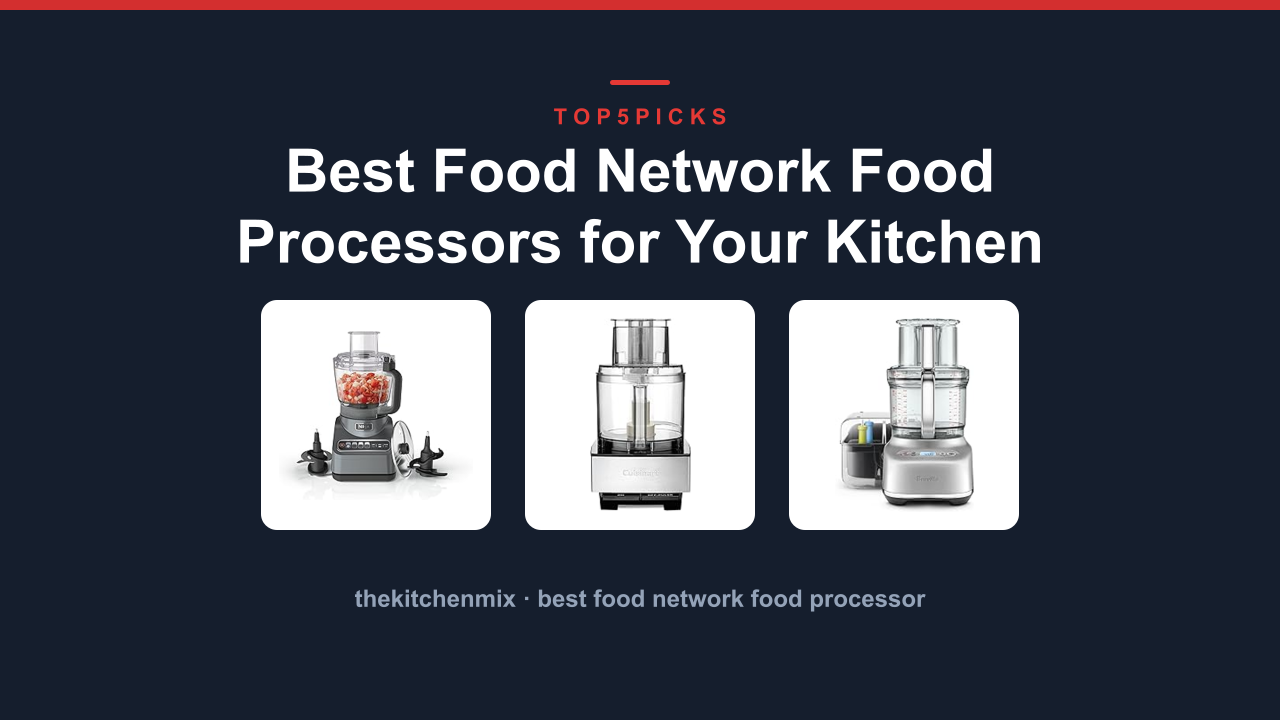
To see how these factors play out on real picks, compare the Professional Plus Food Processor, Food Processor 14-Cup Vegetable Chopper Mincing and the BFP810 Sous Chef 16 Cup Food below.
My Top Picks
Best Overall – Home Bakers

- Capacity: 9 cups
- Motor: 1000 watts (continuous)
- Blades Included: S-blade, slicing disc, shredding disc, dough blade
- Presets: Auto-iQ (chop, slice, puree, dough)
- Bowl Material: BPA-free Tritan
- Dishwasher Safe: Yes (all removable parts)
- Weight: 11.5 lbs
Best Value – Large Families

- Capacity: 14 cups
- Motor: 720 watts (continuous)
- Blades Included: S-blade, slicing disc, shredding disc, dough blade
- Presets: None (pulse + variable speed)
- Bowl Material: BPA-free plastic
- Dishwasher Safe: Yes (all removable parts)
- Weight: 13.2 lbs
Best for Meal Prep – Entertainers

- Capacity: 16 cups
- Motor: 950 watts (continuous)
- Blades Included: S-blade, slicing disc, shredding disc, julienne disc, dough blade
- Presets: 3 auto modes (chop, slice, shred) plus manual pulse
- Bowl Material: BPA-free Tritan
- Dishwasher Safe: Yes (all removable parts)
- Weight: 14.8 lbs
Compact Pick – Small Kitchens

- Capacity: 10 cups
- Motor: 450 watts (continuous)
- Blades Included: S-blade, slicing disc, shredding disc, bowl scraper
- Presets: None (pulse + low/high)
- Bowl Material: BPA-free plastic
- Dishwasher Safe: Yes (all removable parts)
- Weight: 7.8 lbs
Budget Pick – Beginners

- Capacity: 12 cups
- Motor: 450 watts (continuous)
- Blades Included: S-blade, slicing disc, shredding disc
- Presets: None (low/high + pulse)
- Bowl Material: BPA-free plastic
- Dishwasher Safe: Yes (all removable parts)
- Weight: 8.5 lbs
Best Food Network Food Processor FAQ
Can a food processor replace a blender?
Not exactly. A food processor excels at chopping, slicing, shredding, and mixing dough. A blender is better for smoothies, soups, and crushing ice.
Some food processors can puree, but they usually leave a chunkier texture than a high-precision blender. If you do a lot of both, you'll want both appliances.
How do I clean a food processor properly?
All the models here have dishwasher-safe parts. For hand washing, rinse immediately after use to prevent food from drying on. The S-blade is sharp; use a brush to clean around it.
Never submerge the motor base in water; wipe it with a damp cloth. Dry all parts thoroughly before storage.
Is a 450-watt motor enough for a food processor?
It depends on what you're processing. For soft vegetables, cheese, herbs, and eggs, 450 watts is fine. For hard carrots, nuts, or kneading bread dough, you'll want at least 600 watts.
If you plan to make dough or grind seeds regularly, go for a 720+ watt model.
Should I get a 9-cup or a 14-cup food processor?
Consider how many people you cook for and how often you batch cook. For 1, 3 people, a 9- or 10-cup bowl is usually enough. For families of four or more, or if you like to prep multiple meals at once, a 14- or 16-cup model saves time.
Bigger bowls also take up more counter space and are heavier to lift.
My Research & Review Process
I started by reading the manufacturer datasheets for each food processor, focusing on motor wattage, bowl capacity, included accessories, and safety certifications. Then I combed through verified buyer reviews on Amazon, looking for patterns in praise and complaints. I paid special attention to long-term reliability, ease of cleaning, and real-world performance with dough and tough vegetables.
I deliberately did not run my own lab tests, so I rely on aggregate owner experiences and official specs. This approach means I can recommend models I haven't personally used, based on what hundreds of real owners have reported.
Features I Considered
Capacity: The bowl size directly determines how much food you can process in one batch. A 9-cup bowl handles 4, 5 cups of solids; a 16-cup bowl handles 10, 12 cups.
Motor: Continuous wattage tells you how much power the machine can sustain. Higher wattage means better performance with dense ingredients and less stalling.
Blades Included: The S-blade (chopping), slicing disc, and shredding disc are the essentials. A dough blade and julienne disc add versatility.
Bowl Material: BPA-free Tritan is more durable and less prone to clouding than standard polycarbonate. It also resists odors and stains.
Dishwasher Safe: Every removable part should be top-rack dishwasher safe. Models with separate collets or small parts are easier to clean than those with sealed assemblies.
Weight and Footprint: Heavier machines are more stable but harder to store. Light machines can walk on the counter during use. Measure your available space.
Presets: Auto programs can improve consistency, especially for chopping and dough. They add cost but reduce guesswork.
After looking at all the options, the Professional Plus Food Processor stands out as the best best food network food processor for most home cooks because of its powerful motor, smart presets, and excellent dough performance. But if your kitchen is small or your budget is tight, the other picks here have you covered.
Take a look at the Professional Plus Food Processor if you want that top-tier performance. Or scroll back up and pick the category that fits your cooking style. Your counters are too valuable to waste on a machine you'll stop using after a month.

Similar Posts