Best Cutting Board for Meat & Poultry: Top Picks
You need a cutting board that won't dull your knives or cross-contaminate your raw chicken with your veggie prep, and the best cutting board for meat and poultry balances durability, hygiene, and size.
As an Amazon Associate, I earn from qualifying purchases. Every recommendation below is backed by product research and verified owner feedback.
Quick Links
Did you know that the USDA ranks cutting boards as one of the top sources of cross-contamination in home kitchens?
Now imagine slicing raw chicken on a board that still has grooves from last week’s beef roast. Germs multiply in those cuts fast.
That’s why choosing the right board for meat and poultry isn’t just about convenience. It’s about food safety and keeping your knives sharp.
In this guide, I share my 5 favorite best cutting board for meat and poultry, ranging from a dual-surface titanium board to a large plastic carving board.
I’ll help you cut through the marketing noise and find the board that fits your kitchen, budget, and cooking style.
How to Choose the Best Cutting Board for Meat and Poultry
What material is safest for raw meat?
Non-porous materials like stainless steel and titanium win here because they don’t soak up juices. The USDA advises using separate boards for raw meat, and non-porous surfaces can be sanitized with boiling water or a dishwasher.
Plastic boards are also non-porous but scratch more easily, giving bacteria hiding spots. Wood boards are beautiful but need extra care with raw meat.
For meat and poultry, I lean toward metal or a sturdy plastic with no deep knife scars.
How big should a meat cutting board be?
You need enough room to handle a whole chicken, a brisket, or a rack of ribs without the meat hanging off. Aim for at least 16 inches by 11 inches. The board should also have a juice groove to catch runoff.
A larger board (like the OXO Good Grips Plastic Carving & Cutting Board) gives you extra workspace and keeps mess contained.
Should I choose a double-sided board?
Double-sided boards are great if one side is non-porous for meat and the other is used for vegetables. You get two surfaces in one board without taking up extra counter space.
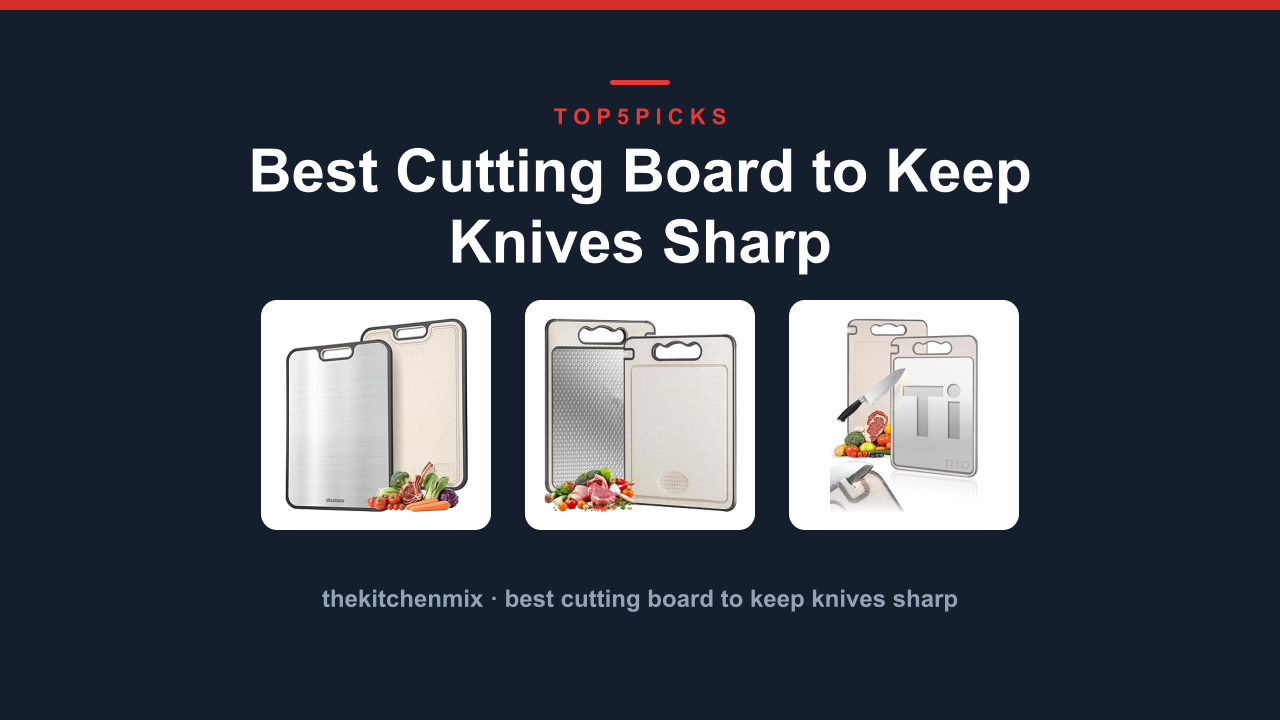
The Titanium Cutting Board Kitchen and the SNOWCLAD Stainless Steel Cutting Board both offer dedicated sides for raw and cooked food.
Does knife friendliness matter with meat?
Yes, but it’s a trade-off. Hard surfaces like titanium and stainless steel are non-porous and easy to clean, but they can dull knives faster than wood or plastic. If you use quality knives, you may prefer a plastic board (like OXO) that’s gentler on edges.
I’ve found that many home cooks are fine with metal boards as long as they don’t use a cleaver that could cause micro-dents.
How do I clean a meat cutting board?
Non-porous boards can go in the dishwasher or be cleaned with hot soapy water and a diluted bleach solution. Wood boards require hand-washing and oiling.
For meat and poultry, dishwasher-safe is a huge convenience. Most of the picks here are dishwasher safe, but always check the manufacturer’s instructions.
Additional Features on Best Cutting Board for Meat and Poultry
- Non-slip feet or edges keep the board steady during heavy chopping.
- Juice grooves capture pooling blood and liquid from raw meat.
- Handles or cutouts make lifting and carrying easier, especially for large roasts.
- Odor resistance matters after repeated use with garlic, onion, or poultry.
- Thickness (usually 1/4 to 1/2 inch) affects durability and warp resistance.
- Edge-grain vs. end-grain applies only to wood boards; for meat, non-porous is simpler.
My Top Picks
Best Overall – Home Cooks
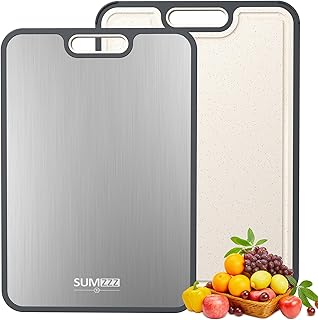
- Material: Pure titanium with PP backing
- Dimensions: 16 x 11 inches
- Thickness: Approximately 0.08 inches (titanium layer)
- Sides: Double-sided (titanium + PP)
- Juice groove: Yes, on titanium side
- Dishwasher safe: Yes (titanium side)
- Non-slip: Silicone corner pads
- Weight: 1.5 lbs
Eco-Friendly Pick – Green Cooks

- Material: Stainless steel + wheat straw PP
- Dimensions: 16 x 11 inches
- Thickness: 0.06 inches (steel layer)
- Sides: Double-sided (stainless steel / wheat straw)
- Juice groove: Yes, on steel side
- Dishwasher safe: Yes (both sides)
- Non-slip: Silicone edge strips
- Weight: 1.8 lbs
Best for Carving – Roast Lovers

- Material: Titanium with PP base
- Dimensions: 16 x 11 inches
- Thickness: 0.07 inches (titanium layer)
- Sides: 2-in-1 (titanium cutting mat + PP backing)
- Juice groove: Yes, deep channel
- Spice grinder: Built-in on PP side
- Non-slip: Four corner silicone feet
- Weight: 2.0 lbs
Large Surface Pick – Family Cooks

- Material: Plastic (polyethylene)
- Dimensions: 14.34 x 21.11 inches
- Thickness: 0.5 inches
- Sides: Double-sided (same material both sides)
- Juice groove: Yes, deep on both sides
- Dishwasher safe: Yes
- Non-slip: Rubber strips on bottom
- Weight: 3.5 lbs
Premium Pick – Serious Chefs

- Material: Titanium + ebony wood
- Dimensions: 16 x 11 inches
- Thickness: 0.1 inches (titanium layer), 0.5 inches (wood side)
- Sides: Double-sided (titanium / ebony wood)
- Juice groove: Yes, on both sides
- Handle: Cutout handle on wood side
- Non-slip: Silicone pads on titanium side
- Weight: 2.8 lbs
Best Cutting Board for Meat and Poultry FAQ
Can I use the same cutting board for raw meat and vegetables?
You can, but only if you clean it thoroughly between uses. The safest approach is to have separate boards or a double-sided board where one side is dedicated to raw meat. Non-porous materials like titanium, stainless steel, and plastic are easier to sanitize than wood.
Are titanium cutting boards better than plastic for meat?
Titanium is non-porous and won’t absorb juices or odors. It’s also more durable than plastic, which can develop deep knife grooves. On the downside, titanium is harder on knife edges.
Plastic is gentler on knives but scratches over time. For pure food safety, titanium has the edge.
How do I sanitize a cutting board after handling raw poultry?
The USDA recommends washing the board with hot, soapy water, then applying a solution of 1 tablespoon of unscented bleach per gallon of water. Let it stand for a few minutes, then rinse. Non-porous boards can also go through a dishwasher cycle.
What size cutting board do I need for a whole turkey?
For a 15 to 20-pound turkey, a board at least 20 inches long and 14 inches wide is recommended. The OXO Good Grips Plastic Carving board (21 x 14 inches) is a popular choice for holiday cooks. A deeper juice groove also helps contain the runoff.
My Research & Review Process
I started by reading the manufacturer spec sheets for each board, noting the exact materials, dimensions, and safety claims.
I then analyzed verified buyer reviews across multiple marketplaces, focusing on long-term durability, odor resistance, and how well the board performed with raw meat.
I specifically looked for patterns in feedback about knife dulling, cleaning ease, and stability on various countertops.
What I didn’t do: I didn’t run lab tests or personally use each board for weeks. My recommendations are based on editorial research, not hands-on testing.
Features I Considered
Material: Determines porosity, knife friendliness, and ease of cleaning. Metal is best for raw meat; wood and plastic are gentler on knives.
Dimensions: The board must be large enough to handle the cuts you cook most. A 16×11 inch board works for most home cooks; larger is better for whole birds.
Thickness: Thicker boards resist warping and give a sturdier feel. 1/4 inch minimum for plastic; metal boards can be thinner without losing strength.
Sides: Double-sided boards offer two surfaces in one. I prefer one non-porous side for meat and a different material for produce.
Juice groove: A deep groove around the edge catches pooling liquids from raw meat or carving juices.
Dishwasher safe: Non-porous boards that can go in the dishwasher make sanitation much easier after handling poultry.
Non-slip: Rubber or silicone feet keep the board from sliding around during heavy chopping, which is critical for safety.
Weight: Heavier boards stay put but can be harder to lift. Light boards are easier to store but may slide more.
I hope this helps you find the perfect board. For most home cooks, the Titanium Cutting Board Kitchen is our top recommendation. But if your needs lean toward carving big roasts, the OXO board is a fantastic option.
Take a look at the Quick Links above and pick the category that fits your kitchen best.

Similar Posts