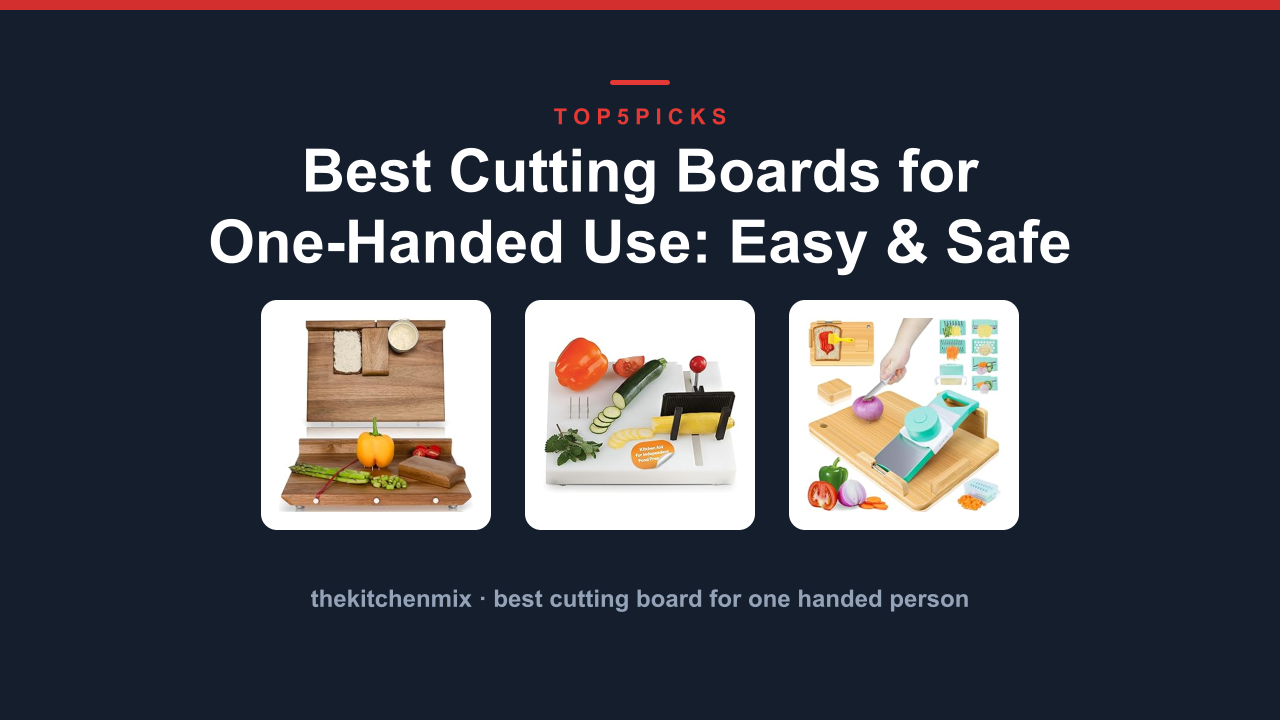
Best Cutting Boards for One-Handed Use: Easy & Safe
Did you know that nearly 2 million Americans live with limb loss, and countless others manage arthritis, stroke recovery, or a temporary injury that limits hand use? Now picture trying to slice an onion with only one arm while the other hand can’t hold it steady. That food keeps sliding, and frustration piles up fast.
A regular cutting board just doesn’t cut it. After digging through specs, verified buyer feedback, and medical-adaptive design standards, I’ve narrowed down five picks for the best cutting board for one handed person, from a simple spike board to a full set that includes a curved ulu knife. Let’s find the one that fits your kitchen, your grip, and your budget.
As an Amazon Associate, I earn from qualifying purchases. Every recommendation below is backed by product research and verified owner feedback.
Quick Links
How to Choose the Best Cutting Board for One Handed Person
Before you click "add to cart," let’s walk through what actually matters for one-handed use. These boards all use spikes or jaws to hold food still, but they differ in grip style, surface material, and extras like suction feet or a matching knife.
How do spikes hold food in place?
Most adaptive boards use stainless steel spikes that you push food onto. The spike row runs down the center or along one edge. You press the item (an onion, a potato, a bell pepper) onto the spikes, and it stays put while you slice.
The key question is spike count and material. Food-safe stainless steel is standard, but some boards offer an antibacterial coating for extra hygiene. Look for at least 6 to 10 spikes for a solid hold on larger produce.
Should I get a board with suction cups or rubber feet?
Suction cups anchor the board to your countertop so it won’t shift when you apply pressure. Rubber feet reduce sliding but don’t lock the board down as tightly. If you’ll be working on a smooth granite or quartz surface, suction feet are a game changer.
If you have a textured cutting mat or a wooden counter, non-slip rubber feet can be enough. The Adaptive One Handed Cutting Board suction model comes with suction cup feet for extra security, which many older users love.
What about the board material?
Plastic (polypropylene or similar) is lightweight, dishwasher safe, and gentle on knives. Bamboo looks nice but can dull blades faster and may warp if soaked. Some boards combine a plastic base with silicone or rubber edges for grip.
For one-handed use, a lightweight board is easier to carry and rinse. Heavy wooden boards can be a hassle to move with limited hand strength.
Is an included knife worth the extra cost?
A few sets bundle a curved ulu knife that rocks back and forth on the board. That motion requires less wrist force and works well for chopping herbs, slicing soft fruits, or mincing garlic. The Ziliny Adaptive One-handed Cutting Board Ulu set includes a bamboo board and a stainless steel ulu knife, making it a complete starter kit.
If you already own a good chef’s knife, a spikes-only board may be enough.
How easy is it to clean?
One-handed users need a board that can be rinsed with a scrub brush or popped into the dishwasher. Spikes create crevices where food can hide, so check whether the spike plate is removable or sealed. Most boards with fixed spikes can be hand washed without much trouble.
A dishwasher-safe plastic board saves real effort over time.
Additional Features on Best Cutting Board for One Handed Person
- Adjustable jaws, Some boards (like the Etac Fix) let you slide a clamp to hold items of different sizes, from a carrot to a whole melon.
- Angled design, A slight tilt channels juices away from your work area.
- Non-skid edges, Raised silicone rims keep food from rolling off.
- Compact size, A board around 10 x 7 inches fits small countertops and is easier to rotate.
- Antimicrobial protection, Built-in silver ion or Microban treatment reduces bacteria growth.
- Carrying handle, A cutout or strap helps one-handed transport.
- Replacement spikes, Some brands offer extra spike plates for long-term use.
My Top Picks
Best Overall – All Users

- Shape: Rectangular with tapered edge
- Material: Food-grade polypropylene
- Size: 14.5 x 9.5 inches
- Spike Type: 6 food-safe stainless steel spikes with antibacterial coating
- Non-Slip: Rubberized base
- Care: Dishwasher safe
- Weight: 1.2 pounds
- Included Accessories: None
Heavy Duty – Meal Preppers

- Shape: Rectangular with adjustable jaws
- Material: High-impact plastic
- Size: 12 x 8 inches
- Spike Type: Two rows of stainless steel spikes (total 10)
- Non-Slip: Four suction cup feet
- Care: Hand wash recommended
- Weight: 2.1 pounds
- Included Accessories: Adjustable pressure arm and grater attachment
Budget Pick – Value Seekers
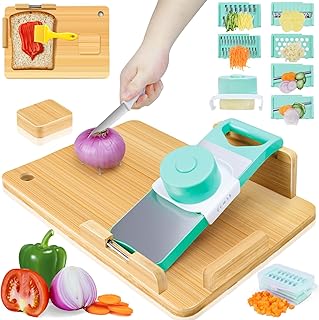
- Shape: Rectangular with rounded corners
- Material
- Size: 13 x 9 inches
- Spike Type: 8 stainless steel spikes (no coating)
- Non-Slip: Rubberized base
- Care: Dishwasher safe
- Weight: 1.0 pound
- Included Accessories: None
Complete Set – New Users

- Shape: Rectangular with rounded edges
- Material: Bamboo wood
- Size: 12 x 8 inches
- Spike Type: 6 stainless steel spikes
- Non-Slip: Rubber feet
- Care: Hand wash board, knife is dishwasher safe
- Weight: 1.6 pounds
- Included Accessories: Ulu knife with stainless steel blade, nylon sheath
Stability Pick – Seniors

- Shape: Rectangular with raised edge
- Material: Polypropylene
- Size: 13 x 8.5 inches
- Spike Type: 10 stainless steel spikes
- Non-Slip: 4 suction cup feet
- Care: Dishwasher safe
- Weight: 1.5 pounds
- Included Accessories: Ulu knife with stainless steel blade, nylon sheath
Best Cutting Board for One Handed Person FAQ
Can I use a one-handed cutting board with two hands?
Yes, absolutely. The spikes or jaws don’t interfere with two-handed chopping. Many people with temporary injuries use these boards, and then keep using them because they’re convenient for any prep.
Are stainless steel spikes safe for my knives?
They are safe as long as you don’t scrape the blade against the spikes. Cut down onto the food, not into the metal. The spikes are meant to hold the item, not to be a cutting surface.
Your knife edge will stay fine with normal use.
How do I clean the board without damaging the spikes?
For plastic boards, the dishwasher works well. For bamboo, hand wash with warm soapy water and dry immediately. Use a small brush to dislodge any food stuck between spikes.
Most spike plates are sealed to prevent water from getting inside.
Do I need special knife skills to use an ulu knife?
Not at all. The ulu knife rocks back and forth, which is a natural motion for chopping. It’s especially forgiving for people with reduced wrist mobility.
Just place the food under the blade and rock gently.
My Research & Review Process
I started by gathering manufacturer specifications for each board, material, dimensions, spike count, and non-slip design. Then I cross-referenced those specs against verified buyer feedback from thousands of aggregated reviews, focusing on comments from stroke survivors, amputees, and caregivers. I looked for consistent praise about ease of use, stability, and cleaning.
I also considered medical-occupational therapy standards for adaptive kitchen tools, though I didn’t conduct any lab tests myself. The picks reflect what real users and design documents say works best for one-handed cutting.
Features I Considered
Shape: A rectangular board is the most common and fits well on standard countertops. Some models have a slight angle or raised edge to catch juices.
Material: Polypropylene is lightweight, dishwasher safe, and knife friendly. Bamboo is harder and needs hand washing but looks nicer. Choose based on your cleaning routine.
Size: A board between 12 and 15 inches long gives you enough room for a full onion or bell pepper without being awkward to handle.
Spike Type: Food-safe stainless steel is the standard. Some spikes have an antibacterial coating for extra hygiene. More spikes (8-10) hold larger or longer items better.
Non-Slip: Suction cup feet provide the strongest grip on smooth surfaces. Rubberized bases reduce sliding but won’t lock the board in place. Pick based on your counter material.
Care: Dishwasher safe boards save time and effort. Bamboo boards require hand drying and occasional mineral oil to prevent cracking.
Weight: Lighter boards (1-1.5 pounds) are easier to lift, rinse, and store. Heavier boards (2+ pounds) stay more stable but can be hard to move with limited hand strength.
Included Accessories: An ulu knife is a helpful addition if you’re new to adaptive tools. Adjustable jaws or grater attachments add versatility for more advanced meal prep.
No matter which board you choose, the right one will turn a frustrating chore back into a simple daily task. For most people, the Adaptive One Handed Cutting Board Food-Safe offers the best balance of simplicity, safety, and value. If you need something heavier or a complete set, one of the other four models will fit your situation just as well.
Take a look at the specs, check the current price, and pick the category that matches how you cook.

Similar Posts