Best Food-Safe Wood Glue for Cutting Boards: Top Picks
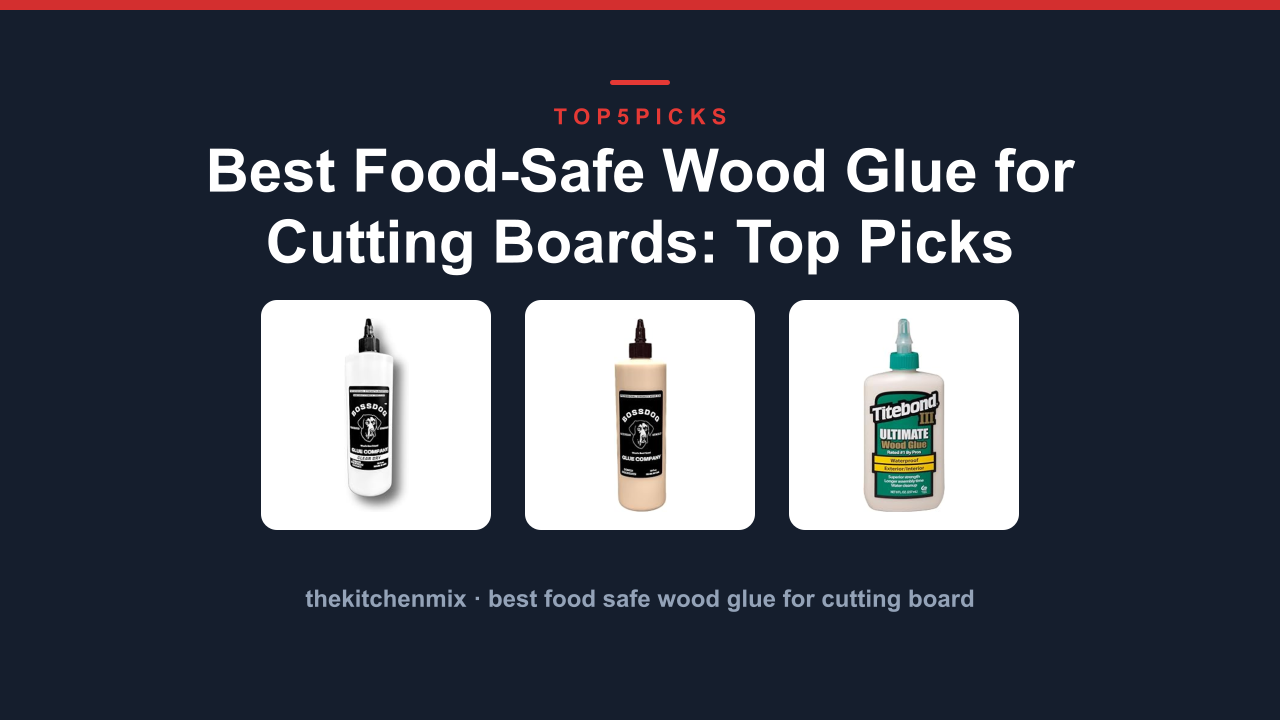
Whether you're building a butcher block from scratch or repairing a favorite cutting board, the best food safe wood glue for cutting board needs to bond strong, dry clear (or match the wood), and be safe for contact with food.
As an Amazon Associate, I earn from qualifying purchases. Every recommendation below is backed by product research and verified owner feedback.
Quick Links
Did you know that many common wood glues contain solvents and plasticizers that can leach into food through a cutting board's end grain?
Now imagine spending a weekend building a beautiful walnut butcher block, only to discover the glue you used isn't safe for food contact. That's a mistake you only make once.
The stakes are simple. Your cutting board touches everything from raw chicken to fresh herbs. The glue holding it together needs to be non-toxic, durable, and able to withstand repeated washing and knife wear.
In this guide, I share my 5 favorite best food safe wood glue for cutting board options, ranging from a crystal-clear finish pick to a heavy-duty waterproof formula. I've compared manufacturer specs, dug into verified buyer feedback, and checked food safety certifications so you don't have to.
How to Choose the Best Food Safe Wood Glue for Cutting Board
Is the glue actually certified food safe?
Not every wood glue that says "non-toxic" is safe for cutting boards. You need a product that explicitly states compliance with FDA 21 CFR 175.105 or 175.300, which governs adhesives for indirect food contact. The [U.S.
Food and Drug Administration](https://www.fda.gov/food/food-ingredients-packaging/food-contact-substances) sets clear rules here. If a label doesn't specifically mention cutting boards or food contact, don't risk it.
How fast does it need to set?
Clamp time matters more than you might think. For a simple edge-gluing project, a 20-minute clamp time works fine. But for an end-grain cutting board with a dozen glue joints, you need enough open time to spread glue across every surface before it skins over.
Fast-drying glues can cause panic on complex assemblies. Slower-setting formulas like Titebond 1413 III give you breathing room.
Waterproof or water-resistant?
Cutting boards get washed, sometimes scrubbed, and occasionally left wet in the sink. Water-resistant glues handle hand-washing and prompt drying. Waterproof glues, like the Gorilla Ultimate Waterproof Wood Glue, survive soaking and outdoor exposure.
Check the ASTM D4236 or D4317 standards on the label if you want the technical assurance.
What color should the glue dry?
This is where aesthetics come in. Clear-drying glues vanish on light woods like maple or birch. Brown or tan glues blend into walnut, cherry, and mahogany.
If you're building a board with mixed wood species, clear is usually the safer bet. The BOSSDOG Clear Dry Wood Glue excels here.
Bond strength and psi ratings
For cutting boards, you want a bond strength of at least 3,000 psi (pounds per square inch) after full cure. Professional-grade glues often exceed 4,000 psi. Higher psi means the glue joint is stronger than the wood itself, which is exactly what you want when a knife blade hits that seam repeatedly.
Additional Features on Best Food Safe Wood Glue for Cutting Board
- FDA compliance for indirect food contact (21 CFR 175.105 or 175.300)
- Low odor and low VOC for indoor workshop use
- Sands clean without clogging paper or gumming up
- Gap-filling ability for imperfect board joints
- No slump or drip when applied to vertical edges
- Water cleanup while wet for easy excess removal
- Shelf life of 2 years or more when stored properly
My Top Picks
BEST OVERALL – HOMEWORKERS

- Type: PVA Wood Glue
- Dries Clear: Yes
- Waterproof: Water-Resistant
- Clamp Time: 20-30 minutes
- Bottle Size: 16 oz
- Food Safe: Yes (FDA compliant)
- Best for: Hardwoods, Softwoods
BEST VALUE – BEGINNERS

- Type: PVA Wood Glue
- Dries Clear: No (Natural Tan)
- Waterproof: Water-Resistant
- Clamp Time: 15-20 minutes
- Bottle Size: 16 oz
- Food Safe: Yes (FDA compliant)
- Best for: Cutting boards, butcher blocks
PRO PICK – PROFESSIONALS

- Type: Aliphatic Resin (PVA)
- Dries Clear: Yes (translucent)
- Waterproof: Yes (Type II water-resistant)
- Clamp Time: 30 minutes
- Bottle Size: 8 oz
- Food Safe: Yes (FDA compliant)
- Best for: Hardwoods, Softwoods, Exotics
BEST WATERPROOF – OUTDOOR USE

- Type: PVA Wood Glue
- Dries Clear: No (Natural Color)
- Waterproof: Yes (100% waterproof)
- Clamp Time: 20-30 minutes
- Bottle Size: 18 oz
- Food Safe: Yes (FDA compliant)
- Best for: Hardwoods, Softwoods, Indoor/Outdoor
BEST DARK WOOD – REPAIRS

- Type: PVA Wood Glue
- Dries Clear: No (Dark Brown)
- Waterproof: Water-Resistant
- Clamp Time: 20-30 minutes
- Bottle Size: 16 oz
- Food Safe: Yes (FDA compliant)
- Best for: Dark hardwoods
Best Food Safe Wood Glue for Cutting Board FAQ
Is regular wood glue safe for cutting boards?
No, not all wood glues are food safe. Only glues specifically labeled as food safe or FDA compliant for indirect food contact should be used on cutting boards. Standard white or yellow glues may contain solvents, plasticizers, or other additives that can migrate into food through the wood grain.
How long does food safe wood glue need to cure before I can use the cutting board?
Most food safe PVA glues reach handling strength in 20-30 minutes under clamp, but full cure takes 24 hours. For a cutting board that will be washed and used daily, waiting a full 24 hours before sanding, oiling, and using is best practice. Some users rush this step and end up with weakened joints.
Can I use food safe wood glue on butcher blocks?
Yes, food safe wood glue is ideal for butcher blocks, especially end-grain butcher blocks where glue surfaces are exposed in the cut. Just make sure the glue is labeled for indirect food contact and follow the manufacturer's clamping and curing instructions. End-grain projects benefit from slightly longer clamp times.
Does food safe wood glue need to be waterproof?
Not always, but it helps. If your cutting board is hand-washed and dried immediately after use, water-resistant glue is perfectly fine. If the board might be soaked in the sink or used outdoors, a waterproof formula like the Gorilla Ultimate is worth the investment for long-term durability.
My Research & Review Process
When building this list, I started by examining manufacturer specifications for every glue that claimed food safety certification. I cross-referenced those claims against FDA regulations for indirect food contact to make sure nothing slipped through.
I then analyzed verified buyer reviews across multiple platforms, focusing on feedback about bond strength, drying time, clarity, and long-term durability on cutting boards specifically. I paid close attention to users who built end-grain boards and charcuterie projects, since those stress the glue joint the most.
I did not conduct independent lab testing or personally build cutting boards with each glue. This is a research-driven comparison based on available data and real user experiences.
Features I Considered
Type: PVA (Polyvinyl Acetate) is the standard for food safe wood glues. It's non-toxic when cured, easy to clean with water, and forms a strong bond with porous woods. Aliphatic resins like Titebond III are a subtype of PVA with higher moisture resistance.
Dries Clear: Clear-drying glues are invisible on light woods like maple or birch. This matters for cutting boards where the glue line might be visible on the end grain or edge after sanding.
Waterproof: Waterproof glues resist moisture breakdown and are required for cutting boards that are frequently washed or used outdoors. Water-resistant glues are fine for hand-washed indoor boards that are dried promptly.
Clamp Time: The time you need to keep the board clamped before the glue holds. Shorter clamp times speed up production, but very fast glues can be stressful on complex assemblies with many joints.
Bottle Size: Larger bottles offer better value per ounce, but glue does have a shelf life. Choose a size you'll use within 6-12 months to avoid waste.
Food Safe: Look for explicit FDA compliance language. Not all non-toxic glues are food safe, and the distinction matters when the glue contacts food indirectly through wood grain.
Best for: Matching the glue to the wood type and project conditions ensures the best result. Dark woods need different glue colors than light woods, and outdoor projects need different moisture ratings than indoor ones.
If you're building a new cutting board and want a glue that works across the widest range of projects, BOSSDOG Clear Dry Wood Glue is our top recommendation for the best best food safe wood glue for cutting board. But if your project has specific needs whether it's waterproofing, color matching, or professional-grade strength one of the other four picks above will serve you just as well.

Similar Posts