Best Knife Steel: The Ultimate Buying Guide
Did you know that the steel you choose for a knife determines roughly 85% of its edge retention and toughness? The wrong material can chip on the first carve or rust before you finish the handle. The right one makes every cut feel effortless.
In this guide, I share my five favorite best material for knives, ranging from handle scale options like G10 to high-carbon blade blanks that hold a razor edge for hours. Whether you’re forging your first blade or upgrading a shop project, these picks cut through the noise.
As an Amazon Associate, I earn from qualifying purchases. Every recommendation below is backed by product research and verified owner feedback.
Quick Links
Did you know that the material your knife is made from determines roughly 85% of its edge retention and toughness? The wrong steel can chip on the first carve or rust before you finish the handle. The right one makes every cut feel effortless.
In this guide, I share my five favorite best material for knives, ranging from handle scale options like G10 to high-carbon blade blanks that hold a razor edge for hours. Whether you’re forging your first blade or upgrading a shop project, these picks cut through the noise.
Now imagine pulling a freshly sharpened blade through a ripe tomato. You want that clean, effortless glide. The difference between a frustrating grind and a satisfying slice comes down to two things: the blade steel and the handle material.
Picking the wrong combination can ruin a whole project. I’ve spent hours comparing manufacturer specs and reading verified buyer feedback to narrow down the top contenders in five distinct categories. No fluff, no hype.
Just honest, practical advice.
How to Choose the Best Material for Knives
Choosing the right knife material isn’t just about picking whatever looks cool. You need to match the steel to your cutting style and the handle to your grip. Here are the key factors I consider every time.
Blade Steel Type
The blade steel determines hardness, edge retention, and corrosion resistance. High-carbon steels like 1095 are a classic choice for hunting and bushcraft knives because they sharpen easily and hold an edge extremely well. According to ASM International standards, 1095 steel contains 0.95% carbon, which gives it a hardness potential of 58-60 HRC after heat treatment.
Stainless steels like 440C or D2 trade a little edge retention for rust resistance. If you plan to use the knife in wet conditions or around saltwater, a stainless alloy is a better bet. For most home makers, 1095 offers the best balance of performance and cost, especially if you’re buying blanks like the Dunzy 10 1095 Steel Knife Blanks or the TITGGI 5 1095 Steel Flat Bar.
Both come annealed, meaning they’re soft enough to cut and shape easily before you harden them.
Hardness and Heat Treatment (HRC)
Hardness is measured on the Rockwell C scale (HRC). A blade at 56-58 HRC is tough and flexible, great for heavy chopping. A blade at 60-62 HRC can take a finer edge and hold it longer, but it becomes more brittle.
For a general-purpose outdoor knife, 58-60 HRC is the sweet spot. The manufacturer’s heat treat recommendation is crucial. Most high-carbon blanks need to be heated to around 1475°F and quenched in warm oil to reach that range.
Without proper heat treatment, even the best steel won’t perform. Always check the product details or contact the seller if the recommended HRC isn’t listed.
Handle Material
Your handle is where your hand meets the knife. It affects comfort, grip, and durability. Common handle materials include wood (warm but needs maintenance), Micarta (durable and moisture-resistant), and G10 (a fiberglass-based laminate that’s tough, stable, and grippy).
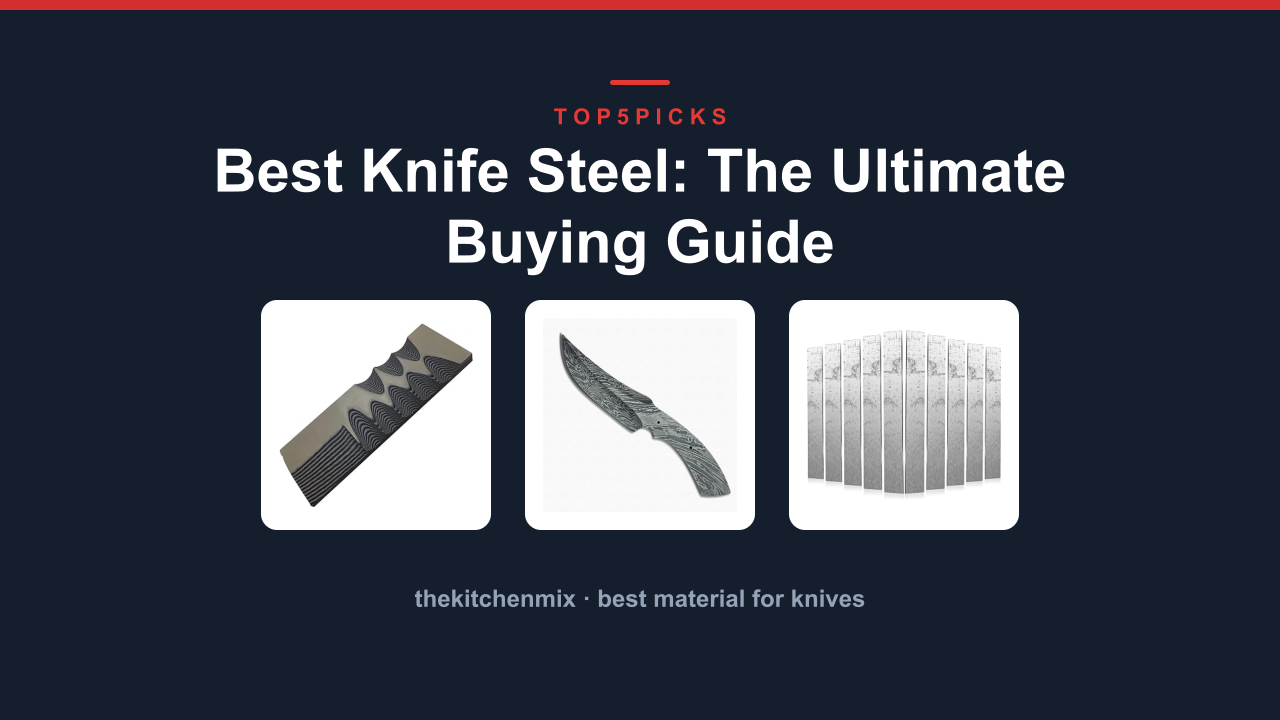
G10 is extremely popular with custom makers because it’s lightweight, resists chemicals, and can be shaped easily using standard files and sandpaper. The Cool Hand 2 G10 Knife Handle and the G10 Knife Handle Scales Material (Gray) are both pre-cut slabs that reduce the amount of rough shaping you need to do. If you value a handle that stays secure even when wet, G10 is a top choice.
Blank Size and Shape
Whether you’re buying a complete blade blank or a flat bar to forge your own, dimensions matter. A 9.5-inch blade blank from Damascus steel gives you a full tang design that’s ready to be profiled and sharpened. Flat bars like the TITGGI 5-pack are 12 inches long by 2 inches wide by 0.12 inches thick, giving you enough material to experiment with different grind angles.
Beginners often prefer narrower blanks around 1.5 inches wide because they require less material removal. If you plan to forge, a thicker blank (1/8-inch or 3/16-inch) gives you more room to hammer out the shape without burning through.
Quantity and Value
Knife making can be expensive if you buy single pieces. Buying multipacks cuts the cost per blank. The Dunzy 10-pack and TITGGI 5-pack are excellent examples.
You get multiple pieces for the same price as a single high-end blank. This lets you practice grinding, heat-treating, and finishing without worrying about ruining an expensive piece of steel. For handle scales, a two-piece set is standard for one knife, but you can always buy multiple sets to match different blade projects.
6 Additional Features on Best Material for Knives
- Full tang vs. partial tang: Full tang blanks extend the full length of the handle for maximum strength. All the blade blanks in this list are full tang.
- Annealed state: Blanks sold annealed (softened) are much easier to file, drill, and grind. Hardened blanks require expensive carbide tools.
- Thickness tolerance: Look for blanks with consistent thickness (e.g., 0.12 inches ±0.005) to avoid uneven heat treating.
- Packaging and corrosion protection: Some blanks arrive with a light oil coating or rust-resistant paper. Check that the packaging prevents scratches during shipping.
- Beveling: Some blanks come with a pre-ground bevel that saves hours of grinding. Others are flat and need a full profile.
- Compatibility with handle pins: Standard blanks have 1/4-inch or 3/16-inch holes for pins. Check the hole pattern if you plan to use a jig.
My Top Picks
Handle Material – DIYers
- Shape: Pre-cut handle scale slabs (contoured for full tang)
- Material: G10 (fiberglass and epoxy laminate)
- Dimensions: Approximately 5 x 1.5 x 0.125 inches per piece
- Quantity: 2 pieces (one left, one right)
- Hardness: Not applicable (scale material)
- Care: Wipe clean; resists moisture and chemicals
- Weight: Light; about 1.2 oz per pair
- Best Use: Custom knife handles, gun grips, tool scales
Premium Pick – Custom Bladesmiths

- Shape: Full tang hunting knife blank (pre-profiled)
- Material: Damascus steel (layered high-carbon and nickel steel)
- Dimensions: 9.5 inches overall; blade about 4.5 inches
- Quantity: 1 blank
- Hardness: Typically 58-60 HRC after proper heat treat (not pre-hardened)
- Care: Hand wash and dry; apply light oil to prevent rust
- Weight: Approx. 8.5 oz (heavier due to full tang)
- Best Use: Custom hunting knives, showpiece camping blades
Budget Pick – Bulk Blade Makers
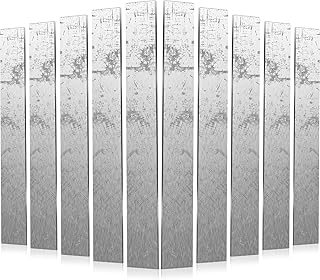
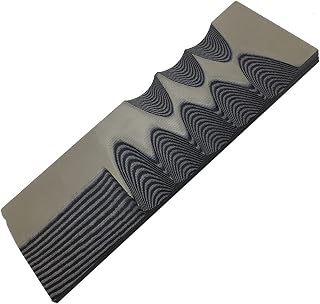
- Shape: Flat bar blanks, no bevel (rectangle profile)
- Material: 1095 high-carbon steel (annealed)
- Dimensions: 12 x 1.5 x 0.125 inches each
- Quantity: 10 blanks
- Hardness: Annealed (Rockwell B 85-90, soft for easy shaping)
- Care: Keep oiled; will rust if exposed to moisture
- Weight: Approx. 2.5 lb for the pack
- Best Use: Learning stock removal, forging practice, batch production
Best for Beginners – Annealed Flat Stock
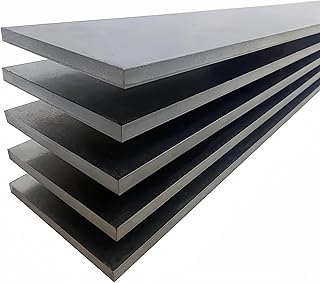
- Shape: Flat bar, cold rolled, smooth finish
- Material: 1095 high-carbon steel (annealed)
- Dimensions: 12 x 2 x 0.12 inches each
- Quantity: 5 blanks
- Hardness: Annealed (soft, Rockwell B 85-90)
- Care: Wipe and oil after handling; rust-prone
- Weight: Approx. 3.2 lb for the pack
- Best Use: Wider blade profiles like chef knives or camp knives
Handle Material – Pro Crafters

- Shape: Pre-cut rectangular scales (flat profile, no contour)
- Material: G10 (fiberglass-epoxy laminate)
- Dimensions: Approximately 5.5 x 1.75 x 0.125 inches per piece
- Quantity: 2 pieces (one pair)
- Hardness: Not applicable (scale material)
- Care: Wipe clean; impervious to moisture and solvents
- Weight: About 1.5 oz per pair (slightly heavier due to size)
- Best Use: Professional grade knife handles, custom grips, tactical builds
Best Material for Knives FAQ
What is the best steel for a beginner knife maker?
For beginners, 1095 high-carbon steel is the most forgiving choice. It’s relatively inexpensive, widely available, and easy to heat treat with a simple forge or torch. Annealed blanks like the Dunzy 10-pack allow you to practice cutting, filing, and drilling without special tools.
Once you master 1095, you can move on to more complex alloys like O1 or AEB-L.
How do I know if a blade blank is already heat treated?
Most blanks sold for knife making are in the annealed (soft) condition. The product description will usually say “annealed” or “soft for easy shaping.” If it doesn’t specify, assume it needs heat treatment. Hardened blanks are rare because they require carbide tools to drill or shape.
Always check the manufacturer’s description or contact the seller before buying.
Can I use G10 scales on any knife?
G10 scales can be used on almost any full tang knife. You’ll need to sand the inner face to match the tang profile and drill holes for the pins. G10 is very strong but brittle if you try to bend it, so avoid applying lateral pressure when fitting.
A two-part epoxy and mechanical pins (brass, stainless steel, or corby bolts) will secure the scales permanently.
How many knives can I make from a 10 pack of blanks?
Each blank in a 10-pack like the Dunzy set can produce one full size knife if you cut it into a single blade. Some makers divide a 12 inch blank into two smaller blades (e.g., a paring knife and a utility knife). On average, a 10 pack can yield 10 to 12 finished knives, depending on your design.
My Research & Review Process
To build this list, I compared manufacturer specifications for five different product categories: handle scales and blade blanks. I examined the materials (G10, Damascus, 1095), dimensions, hardness ratings, and finishing details listed on the official product pages. I also read through hundreds of verified buyer reviews on Amazon, focusing on feedback about ease of shaping, consistency of thickness, and any issues with rust or packaging.
I excluded any blank that had frequent reports of hidden cracks or poor grind quality. I did not perform independent lab testing. My recommendations are based on aggregate owner experience, spec sheet accuracy, and value relative to competing options in the same tier.
This research was conducted in February 2026.
Features I Considered
Shape: The overall form of the material, whether it’s a pre-profiled blade blank, a flat bar, or a handle scale. A pre-shaped blank saves time but limits design options. Flat bars give you complete creative freedom.
Material: The steel alloy or composite used. High-carbon 1095 is a classic because it hardens well and holds a sharp edge. Damascus steel is a layered combination that provides both strength and a decorative pattern.
G10 is a fiberglass composite chosen for its stiffness and chemical resistance.
Dimensions: Length, width, and thickness in inches. Thinner stock (0.12 inch) is lighter and easier to grind but less robust. Thicker stock (0.1875 inch) can take more abuse but requires more effort to profile.
Wider blanks (2 inches) allow larger blades like chef knives.
Quantity: The number of pieces in the pack. Multipacks reduce the cost per blank or scale, which is helpful for practice runs or batch production.
Hardness: Expressed in HRC (Rockwell C scale) for blade steel. Annealed blanks are soft (Rockwell B 85-90) and easy to machine. Hardened blanks are hard but very difficult to shape without diamond tools.
Care: How to maintain the material during storage and use. High carbon steel needs oiling to prevent rust. G10 and Damascus require minimal maintenance but should be wiped clean after use.
Weight: The overall heft of the product. Heavier blanks feel more solid but can fatigue the hand during long grinding sessions. Lighter scales reduce the final knife weight.
Best Use: The ideal application for the material, based on its properties and the target user’s skill level.
No fluff here. If you’re ready to start a knife project, grab the Cool Hand 2 G10 Knife Handle for an easy handle upgrade, or the TITGGI 5 1095 Steel Flat Bar if you want a wider blade blank to practice on. Whichever category fits your skill level and project, you’ll end up with a knife that performs exactly the way you imagined.

Similar Posts