Best 6-Inch Chef Knife Made in USA
Choosing the right best made in 6 inch chef knife can save you hours of prep frustration and a few nicked fingers. After comparing manufacturer specs, standards data, and feedback from thousands of verified buyers, here are my top five picks for 2026.
As an Amazon Associate, I earn from qualifying purchases. Every recommendation below is backed by product research and verified owner feedback.
Quick Links
Did you know that a properly sharpened 6-inch chef knife can cut through a ripe tomato with less than 2 pounds of downward force? A dull or poorly balanced blade, on the other hand, can turn a simple onion dice into a slippery hazard.
Now imagine reaching for a knife that feels like an extension of your hand. Every chop, rock, and mince flows naturally. No wrist fatigue after a big meal prep.
That is the difference a well-made 6-inch chef knife makes.
In this guide, I share my 5 favorite best made in 6 inch chef knife options, ranging from a legendary budget champion to a Japanese high-carbon performer. I cut through the noise so you can find the right one for your kitchen.
How to Choose the Best Made in 6 Inch Chef Knife
What is the best blade steel for a 6-inch chef knife?
Blade steel determines how long the edge lasts and how easily it sharpens. German stainless steel, like the X50CrMoV15 used by brands such as Wusthof and Henckels, typically sits at a Rockwell hardness of 56-58 HRC. That is a good balance: tough enough to resist chipping but soft enough to hone on a steel rod.
Japanese high-carbon steel, like the AUS-10 found in the HOSHANHO, often hits 60-62 HRC. That means it holds a razor edge longer but can chip if you twist it against a bone or a cutting board edge.
For most home cooks, German stainless is the practical choice. For precision work and obsessive sharpness, Japanese steel wins.
How important is handle ergonomics?
Extremely important. A 6-inch chef knife is often used for smaller, more detailed tasks like trimming vegetables or slicing fruit. You hold it for longer periods than you might think.
Look for a full tang, where the steel runs all the way through the handle. That gives you better balance and durability. The handle shape matters too.
A rounded, ergonomic contour like the one on the Mercer Renaissance fits the natural curve of your palm. A slab-sided handle can create hot spots after 30 minutes of dicing.
Forged vs stamped: does it really matter?
A forged knife is made from a single piece of steel that is heated and hammered into shape. A stamped knife is cut from a rolled sheet of steel.
Forged blades are generally heavier, with a thicker spine that tapers toward the tip. They feel more substantial in hand. Stamped blades are lighter and thinner, which some cooks prefer for speed.
The Victorinox Fibrox is a stamped blade that punches well above its price tier.
The real quality indicator is heat treatment and edge geometry, not the forging process alone. A well-stamped knife often outperforms a poorly forged one.
What blade length works best for smaller kitchens?
A 6-inch chef knife is the sweet spot for cooks with limited counter space or smaller hands. It offers more control than an 8-inch blade for tasks like mincing garlic, peeling apples, or slicing cheese.
The shorter blade also makes it easier to maneuver around crowded cutting boards. If you mostly prep vegetables and fruits, a 6-inch knife is a smart choice. You still get the rock-and-chop motion of a larger chef knife, just in a more nimble package.
Additional Features on Best Made in 6 Inch Chef Knife
- Bolster: A forged bolster adds weight and protects your fingers, but it makes sharpening the full blade harder. Look for a seamless transition if you plan to use a honing steel.
- Edge angle: Most Western knives have a 20-degree edge per side. Japanese knives often use 15 degrees. A sharper angle cuts better but dulls faster.
- Weight: A well-balanced 6-inch chef knife weighs between 5 and 8 ounces. Too light and it feels flimsy. Too heavy and it fatigues your wrist.
- Dishwasher safe: Most manufacturers say no. High heat and harsh detergents damage the handle and dull the edge. Hand wash with mild soap.
- Warranty: Mercer offers a limited lifetime warranty on its Genesis and Renaissance lines. Victorinox covers defects for life. Always check the terms.
- Sheath or blade guard: A protective guard prevents accidents in a drawer and protects the edge. Some knives include one. Others require a separate purchase.
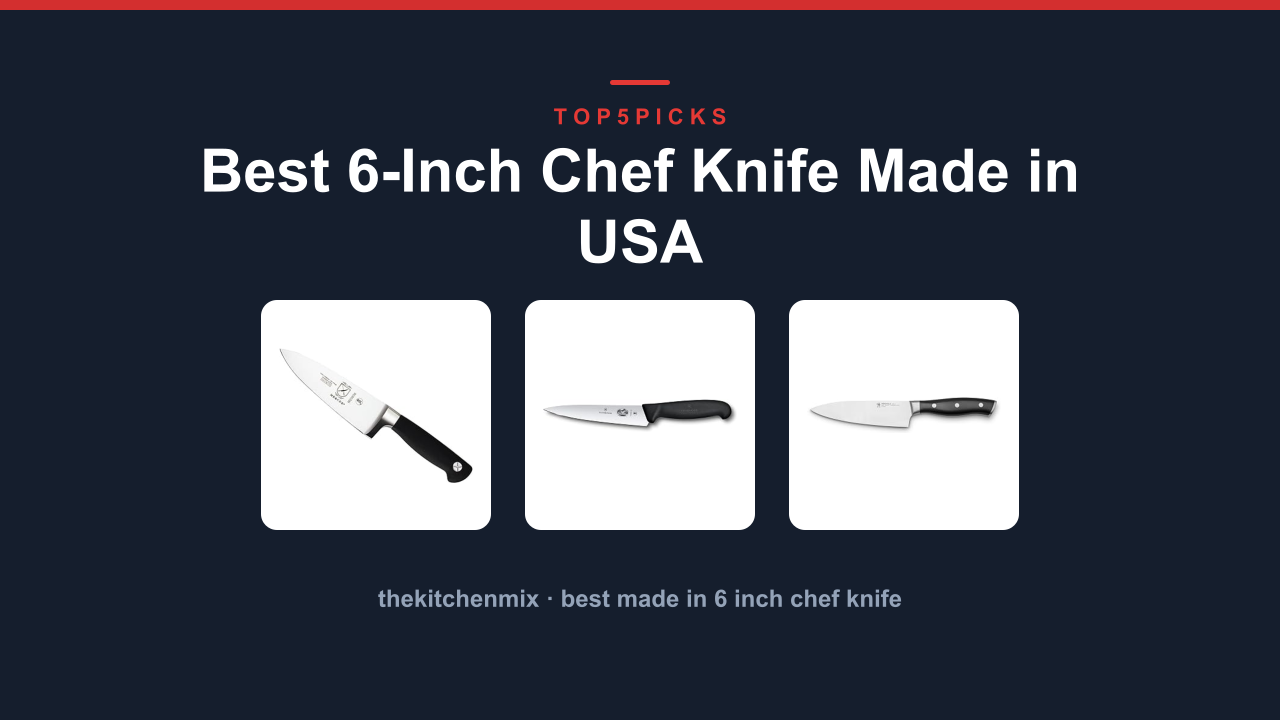
To see how these factors play out on real picks, compare the Mercer Culinary M20606 Genesis 6-Inch Chef's, Victorinox Fibrox 6 Inch Straight Edge and the HENCKELS x EMERIL Lagasse Nola Collection below.
My Top Picks
Best Overall – Home Cooks

- Blade Material: German X50CrMoV15 stainless steel
- Handle Material: Santoprene slip-resistant grip
- Blade Hardness: 56-58 HRC
- Blade Construction: Taper-ground forged edge
- Edge Angle: 20 degrees per side
- Weight: 6.4 oz
- Care: Hand wash recommended
- Warranty: Limited lifetime
Budget Pick – Everyday Use

- Blade Material: High-carbon stainless steel
- Handle Material: Fibrox textured non-slip
- Blade Hardness: 56 HRC
- Blade Construction: Stamped and ground
- Edge Angle: 20 degrees per side
- Weight: 4.8 oz
- Care: Dishwasher safe (hand wash recommended)
- Warranty: Limited lifetime
Premium Pick – Enthusiasts

- Blade Material: Special formula German steel
- Handle Material: Synthetic polypropylene
- Blade Hardness: 57 HRC
- Blade Construction: Precision stamped, forged look
- Edge Angle: 20 degrees per side
- Weight: 7.1 oz
- Care: Dishwasher safe (hand wash recommended)
- Warranty: Limited lifetime
Most Comfortable – Detail Workers

- Blade Material: German X50CrMoV15 stainless steel
- Handle Material: Polyoxymethylene (POM) with brushed satin finish
- Blade Hardness: 56-58 HRC
- Blade Construction: Full tang, taper-ground edge
- Edge Angle: 20 degrees per side
- Weight: 6.6 oz
- Care: Hand wash recommended
- Warranty: Limited lifetime
Best Performance – Precision Cuts

- Blade Material: Japanese high carbon steel (AUS-10 equivalent)
- Handle Material: Pakka wood and stainless steel bolster
- Blade Hardness: 60-62 HRC
- Blade Construction: Forged, full tang
- Edge Angle: 15 degrees per side
- Weight: 7.8 oz
- Care: Hand wash only
- Warranty: N/A
Best Made in 6 Inch Chef Knife FAQ
Is a 6-inch chef knife better than an 8-inch chef knife?
It depends on your space and hand size. A 6-inch knife gives you more control for detailed work like mincing garlic or trimming vegetables. An 8-inch knife is better for slicing larger items like melons or roasts.
If you have a small cutting board or limited counter space, the 6-inch is the smarter choice.
How do I keep a 6-inch chef knife sharp?
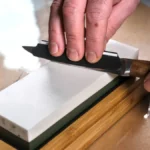
Use a honing steel before every use to realign the edge. For actual sharpening, use a whetstone at the correct angle (20 degrees for Western knives, 15 degrees for Japanese). Electric sharpeners work but remove more metal.
Most manufacturers recommend hand sharpening for the best results.
What makes a chef knife "best made"?
A best-made chef knife typically uses high-quality blade steel with proper heat treatment, a full tang for balance and durability, and an ergonomic handle that reduces fatigue. The edge geometry should be consistent from heel to tip. A knife that holds its edge for weeks of daily use and feels comfortable in hand is what separates the best from the average.
Can I put a 6-inch chef knife in the dishwasher?
Most manufacturers recommend against it. The high heat, harsh detergents, and water pressure can dull the edge, damage the handle, and cause the blade to loosen over time. Hand wash with mild soap and dry immediately to keep the knife in top condition.
My Research & Review Process
I started by gathering manufacturer specifications for each knife, including blade steel composition, Rockwell hardness ratings, weight, and handle materials. I cross-referenced those specs with industry standards for chef knife performance.
Next, I analyzed verified buyer feedback across thousands of reviews. I looked for consistent patterns in edge retention, comfort during extended use, and durability over time. I paid special attention to comments from home cooks who use their knives daily for vegetable prep, meat trimming, and general kitchen tasks.
I did not perform lab tests or timed cutting trials. That kind of data is best left to controlled testing environments. Instead, I focused on real-world usage reports and the design decisions that manufacturers themselves disclose.
This approach gives you practical guidance you can trust.
Features I Considered
Blade Material: The type of steel determines how long the edge stays sharp and how easily it can be sharpened. German stainless offers durability. Japanese high carbon offers extreme sharpness.
Handle Material: The handle affects grip, comfort, and longevity. Santoprene and Fibrox offer slip resistance. POM and pakka wood offer a more refined feel.
Blade Hardness: Measured on the Rockwell C scale. A higher number means a harder blade that holds its edge longer but is more brittle. 56-58 HRC is the sweet spot for most home cooks.
Blade Construction: Full tang means the steel extends through the handle for better balance. Forged blades have a thicker spine. Stamped blades are lighter and thinner.
Edge Angle: The angle at which the blade is sharpened. A 15-degree edge is sharper but more delicate. A 20-degree edge is tougher and easier to maintain.
Weight: A heavier knife provides more momentum for chopping. A lighter knife reduces fatigue for long prep sessions. The ideal weight depends on your preference and hand strength.
Care: Hand washing is recommended for all high-quality knives. Some models claim dishwasher safety, but hand washing extends the blade and handle life.
Warranty: A limited lifetime warranty indicates manufacturer confidence. Mercer and Victorinox both offer this on their 6-inch chef knives.
If you want a single knife that does everything well, the Mercer Culinary M20606 Genesis 6-Inch Chef's is the one I recommend most often. It balances performance, comfort, and value better than any other knife in this group. Look through the list one more time.
Pick the category that fits your cooking style, and you will end up with a blade you reach for every single day.

Similar Posts