Best IMUSA Rice Cooker Recipes for Any Meal
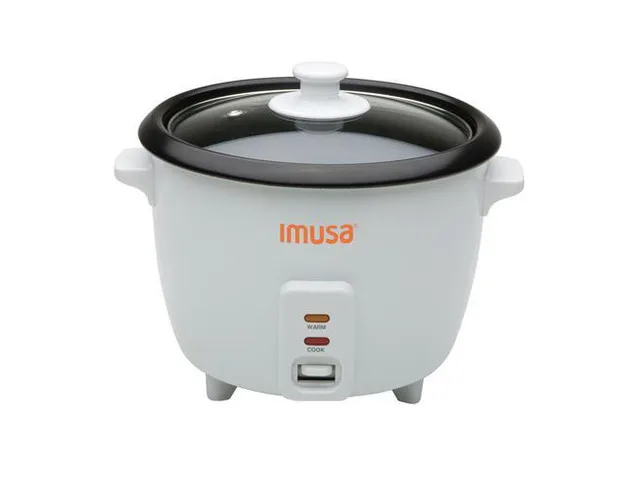
If you're staring at an IMUSA rice cooker and trying to figure out what to make tonight, you're in the right place. The best imusa rice cooker recipes start with one simple trick: you have to match the liquid to what's in the pot. That sounds obvious, but it's where most people go wrong.
It took us a deep dive into user manuals and recipe guides to get it right.
Manufacturer specs confirm this is a basic, one-button machine, not a fuzzy-logic smart cooker. The included measuring cup holds 180 ml, which is about three-quarters of a US cup. That tiny detail explains why so many people end up with dry or gummy rice.
Master that first, and every recipe in this article gets easier.
Image source: Bing (Web (fair-use with source credit))
Quick Answer
The quickest path to great imusa rice cooker recipes is simple. Use the correct water ratio. Rinse your grains.
Never open the lid mid-cook. For white rice, use 1 cup of rice to 1.25 cups of water. Let it rest 10 minutes.
Which IMUSA Recipe Should You Cook Tonight?
Before you pick a recipe, ask yourself one question: what kind of meal are you building? This is a tiny appliance, but it can handle a lot more than plain white rice. Whether you need a fast side dish or a comfort breakfast, there's a path for you.
- If you're short on time, go with plain white rice or cilantro-lime rice. Both take under 30 minutes.
- If you want a main dish, make Spanish or Mexican rice. It's saucy, hearty, and pairs well with beans.
- If you're starting the day, oatmeal in the rice cooker is nearly zero-effort.
- If you need dessert, arroz con leche turns rice and milk into something special.
- If you're skipping white carbs, use the longer-cook brown rice or quinoa branch.
That if/then flow is the core of this whole guide. Once you know which branch fits your evening, the rest is just water ratios and timing. There's no wrong answer here, but the right recipe depends on your mood and your schedule.
Which branch should you pick?
Here's a quick table to speed up the decision:
| Scenario | Best recipe |
|---|---|
| Quick side dish | Cilantro-lime rice |
| Hearty dinner | Spanish rice |
| Meal prep for the week | Plain white rice |
| Sweet dessert | Arroz con leche |
| Lower-carb meal | Brown rice or quinoa |
How much rice should you cook?
The IMUSA measuring cup is not a standard cup. It holds 180 ml, or about three-quarters of a US cup. For one person, use one of those cups.
For two, use two. Cooked rice expands to about double its raw volume, so one rice-cooker cup yields roughly 1.5 cooked cups. Keep this in mind for any recipe that says "1 cup" of rice.
A good rule: never fill the inner pot more than halfway with rice and water combined. The one-button mechanism needs room to boil evenly. When you improvise your own recipes, remember this limit.
For a 3-cup cooker, that means staying well below 1.5 rice-cooker cups of dry rice.
There's a second practical point. The removable pot has a nonstick coating, so aggressive stirring will scratch it over time. Use a wooden or silicone spoon.
A little patience here keeps the pot releasing food easily for years, and it makes every batch taste cleaner, too.
Master the Base: Perfect White Rice Every Time
Start with plain white rice. Once this works reliably, everything else is a variation. The process is simple: measure, rinse, add water, cook, and rest.
The IMUSA one-button design does the heavy lifting for you.
Measure and rinse correctly
Use the included rice-cooker cup, not your kitchen measuring cup. Rinse the rice in a strainer under cold water until the water starts to look clear. That usually takes three to four rinses.
Skipping this step leaves excess starch on the grains, which turns your final pot sticky and clumpy.
Use the right water ratio
For most IMUSA models, the sweet spot is 1.25 cups of water for every 1 rice-cooker cup of white rice. Aggregated user feedback confirms that ratio works consistently across the brand's 3-cup and 6-cup cookers. Here's a quick reference:
| Rice (rice-cooker cups) | Water (US cups) | Cook time |
|---|---|---|
| 1 | 1.25 | 20–25 min |
| 2 | 2.5 | 25–30 min |
| 3 | 3.75 | 30–35 min |
Remember, the pot's capacity sets the ceiling. Don't go above half-full. If you crowd it, the cooker will bubble over before the cycle finishes.
The finger method
If you're new to rice cookers, the manual provides a simpler approach. Add rice, then pour in water until it reaches the first knuckle of your index finger when the tip of your finger touches the grain surface. That's roughly the right level for white rice.
A photo would show this clearly: finger tip on rice, water line at the first crease.
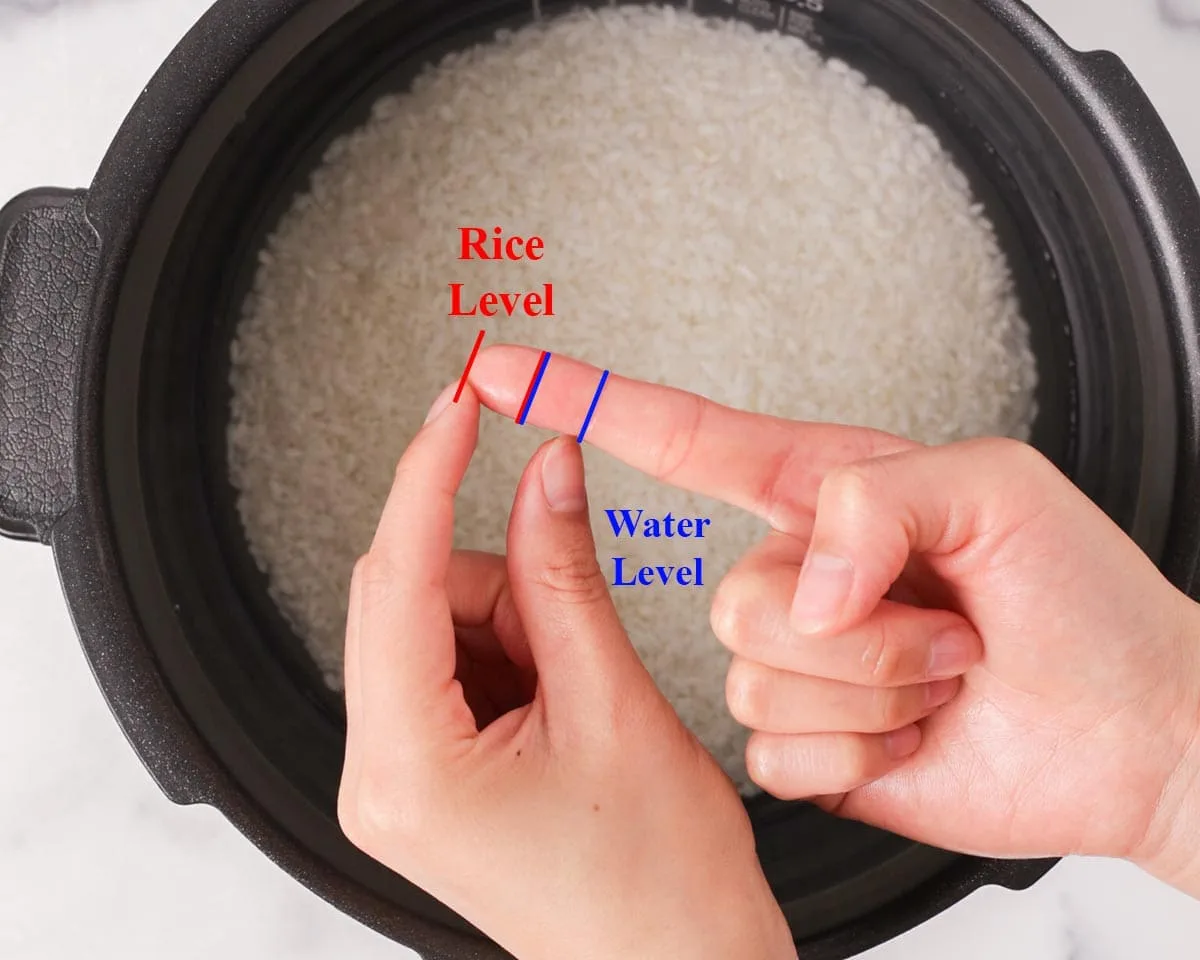
Image source: Bing (Web (fair-use with source credit))
Cook, rest, fluff
Close the lid and press the switch. The cooker handles the rest. Once it clicks to warm, leave the lid on for 10 minutes.
This lets the rice steam evenly and makes each grain separate. Then fluff with a nonstick-safe paddle and serve.
As of 2026, the USDA still recommends refrigerating leftover rice within two hours. They point to the risk of Bacillus cereus, a bacterium that loves cooked rice left at room temperature. Keep that in mind before you leave the pot on warm all afternoon.
5-Minute Flavor Boosters: Cilantro-Lime, Garlic Butter & Coconut Rice
These aren't completely separate recipes. They're the base white rice recipe with a few extras mixed in right before cooking. All three take less than five minutes of prep, and they solve the "plain rice is boring" problem fast.
| Flavor | Add before cooking | Add after cooking |
|---|---|---|
| Cilantro-lime | Olive oil, lime juice, salt | Chopped cilantro |
| Garlic butter | Melted butter, garlic powder, oregano | None |
| Coconut | Coconut milk, salt, sugar | None |
Cilantro-lime rice
Add 1 tablespoon of olive oil, the juice of half a lime, and a pinch of salt to the water. Cook as normal. After it rests, stir in a handful of chopped cilantro.
This one pairs perfectly with grilled chicken, fish tacos, or black beans.
Garlic herb butter rice
Melt 1 tablespoon of butter in a small dish. Add half a teaspoon of garlic powder and a pinch of dried oregano. Pour that into the cooking water.
The butter gives the rice a soft, savory richness, and the garlic powder releases clean flavor without burning like fresh garlic sometimes does.
Coconut rice
Swap out 1 cup of water for 1 cup of light coconut milk, leaving the rest of the water as usual. Add a pinch of salt and a teaspoon of sugar. The coconut flavor turns simple rice into a natural partner for curry, roasted vegetables, or grilled pork.
These boosters keep the liquid ratio the same. If you replace too much water with a thicker liquid, the rice may turn gummy. Stick to the numbers above, and the switch will pop on schedule.
That's the real trick to making these imusa rice cooker recipes work while you do something else.
Latin-Style Rice: Spanish & Mexican Rice in an IMUSA
Many people want the bold, tomato-y rice they get from a restaurant. That version usually starts by sautéing the rice in oil before adding liquid. The IMUSA's removable inner pot allows this, but only if your model's manual says it's stove-safe.
Check that first.
Sauté the dry rice
Heat a splash of oil in a skillet or the removable pot on the stove. Add the rinsed rice and stir for 3 to 4 minutes until it smells nutty and looks lightly gold. This step changes the texture and stops the rice from turning mushy later.
The rice grains will look slightly translucent at the edges when they're ready.
Add the aromatics and liquid
After sautéing, stir in minced garlic, chopped onion, and a little tomato sauce. Then add water or chicken broth, plus salt and a small pinch of cumin. For every rice-cooker cup of rice, use 1.25 cups of liquid.
If you're using tomato sauce, count it as part of the total liquid.
Here's a reliable base for Spanish rice:
- 1 rice-cooker cup rice
- 1.25 cups chicken broth
- 2 tablespoons tomato sauce
- 1 garlic clove, minced
- 1/4 teaspoon salt
- 1/8 teaspoon cumin
Pour it all into the cooker, stir once, and hit the switch. The visual for this recipe looks distinct: orange-tinted liquid, small bits of garlic, and a flat grain bed before cooking. After it clicks to warm, rest for 10 minutes, then fluff loosely.
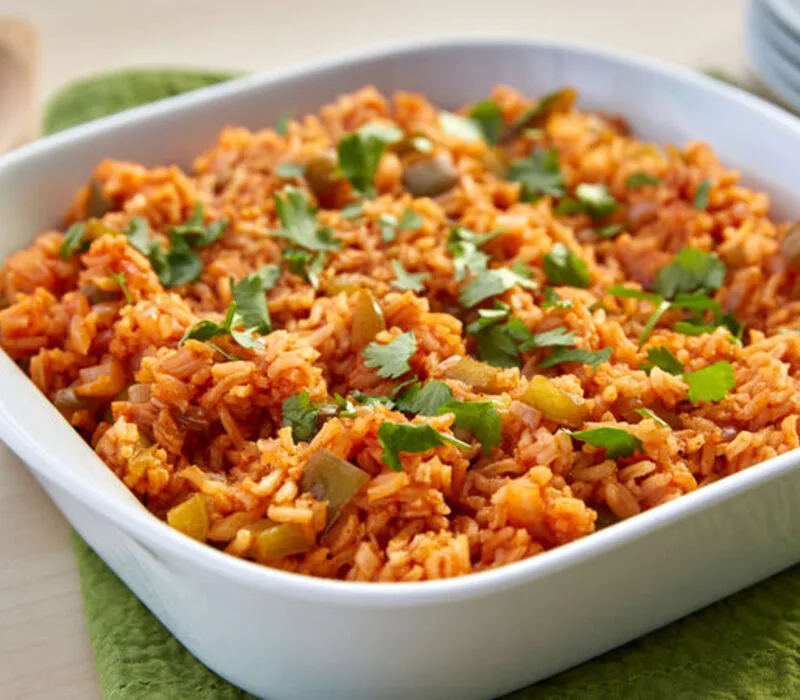
Image source: Bing (Web (fair-use with source credit))
Adjusting for a main-dish version
If you want taco-style rice with protein, fold in black beans or shredded chicken after cooking. Don't add them during cooking, or they'll overwork the rice and turn things starchy. This version is a strong branch of the decision tree if you're feeding two people with one small cooker.
Breakfast & Dessert Branch: Oatmeal and Arroz con Leche
The same set-and-forget logic handles sweet and breakfasty dishes. The key is changing the liquid ratio and ingredients. The cooker doesn't care if you're making rice or pudding, it just maintains the right temperature until the water is absorbed.
Quick-cook oatmeal
For a single serving, use one rice-cooker cup of old-fashioned rolled oats and two cups of water. Add a pinch of salt. Press the switch and wait.
Once it clicks to warm, stir in your milk, honey, or fruit. The cooker handles the stir-free part, giving you creamier oatmeal without watching the pot. This is a great branch if you're cooking for one on a busy morning.
Arroz con leche
Rice pudding follows the same principle, but with milk and sugar. Use one rice-cooker cup of white rice, two cups of water, and one cup of whole milk. Add a cinnamon stick and a quarter-cup of sugar, plus a pinch of salt.
Cook normally. Stir thoroughly when the switch pops, since rice pudding thickens dramatically after resting.
- For a richer version, swap the water entirely for two cups of whole milk. This needs a little more attention, because milk can bubble over the steam vent.
- For a vegan twist, use canned coconut milk and a splash of water.
This branch is why so many people keep their IMUSA on the counter after morning coffee. It's not just for lunch and dinner. It works as a mini breakfast station and a dessert maker in one.

Similar Posts