Indian Chaat Recipes: A Flavorful Street Food Guide

Every chaat photo you've saved shows the same thing: glossy layers, bright chutneys, and a crunch you can almost hear. But most Indian chaat recipes fall apart in the plating phase, not the cooking phase. The spices and chutneys are easy.
The layering, texture balance, and timing are where dishes turn sad and soggy.
In our research, we broke down how street vendors build these plates. One number explains why chaat is so tricky: an assembled plate keeps its crunch for only about 10 to 15 minutes. After that, yogurt and chutney soften the base.
That timing drives everything from prep to plating. So let's start with why chaat looks the way it does.
Quick Answer
Indian chaat recipes combine crisp fried bases with yogurt, chutneys, and crunchy toppings. Assembly matters more than cooking. Layer the crunch at the bottom.
Add wet ingredients last. Serve within 10 minutes. The goal is contrast in every bite.
Image source: Bing (Web (fair-use with source credit))
Why Chaat Is the Most Visual Food You'll Make at Home
Chaat is the rare dish where plating isn't decoration. It's the recipe. Every layer sits in a specific order for a structural reason, not a cosmetic one.
The base carries weight, the wet ingredients add contrast, and the sev seals it all with crunch.
The "street-stand look" and why it matters for taste
Street vendors arrange puris in neat rows. They drizzle chutney in thin lines. They don't do this for Instagram.
They do it because layered food stays crispy longer. When wet chutney touches the full surface of a papdi, it goes soft within minutes. When it sits on top as a drizzle, the base stays firm until you bite.
What a photo shows you: that cross-section of crisp bottom, creamy middle, and crunchy crown is the actual flavor profile.
What a good chaat plate should look like (before the first bite)
A well-assembled plate shows five visual cues. A firm, dry base underneath. Clean chutney lines across the top.
A thick yogurt swirl, never watery. A sev crown that mounds slightly. And bright garnishes: pomegranate, coriander, red onion.
If one cue is missing, the balance is off. If the plate looks flat and gray, the taste will be flat too. People eat with their eyes first, and chaat rewards that instinct.
Chaat Components: What to Prep Before You Even Think About Plating
Great chaat is 90 percent prep and 10 percent assembly. Everything below can be made ahead or bought ready-made. As of 2026, most Indian grocery stores stock frozen puri, ready-made papdi, and nylon sev.
That's a solid shortcut, as long as the components are fresh.
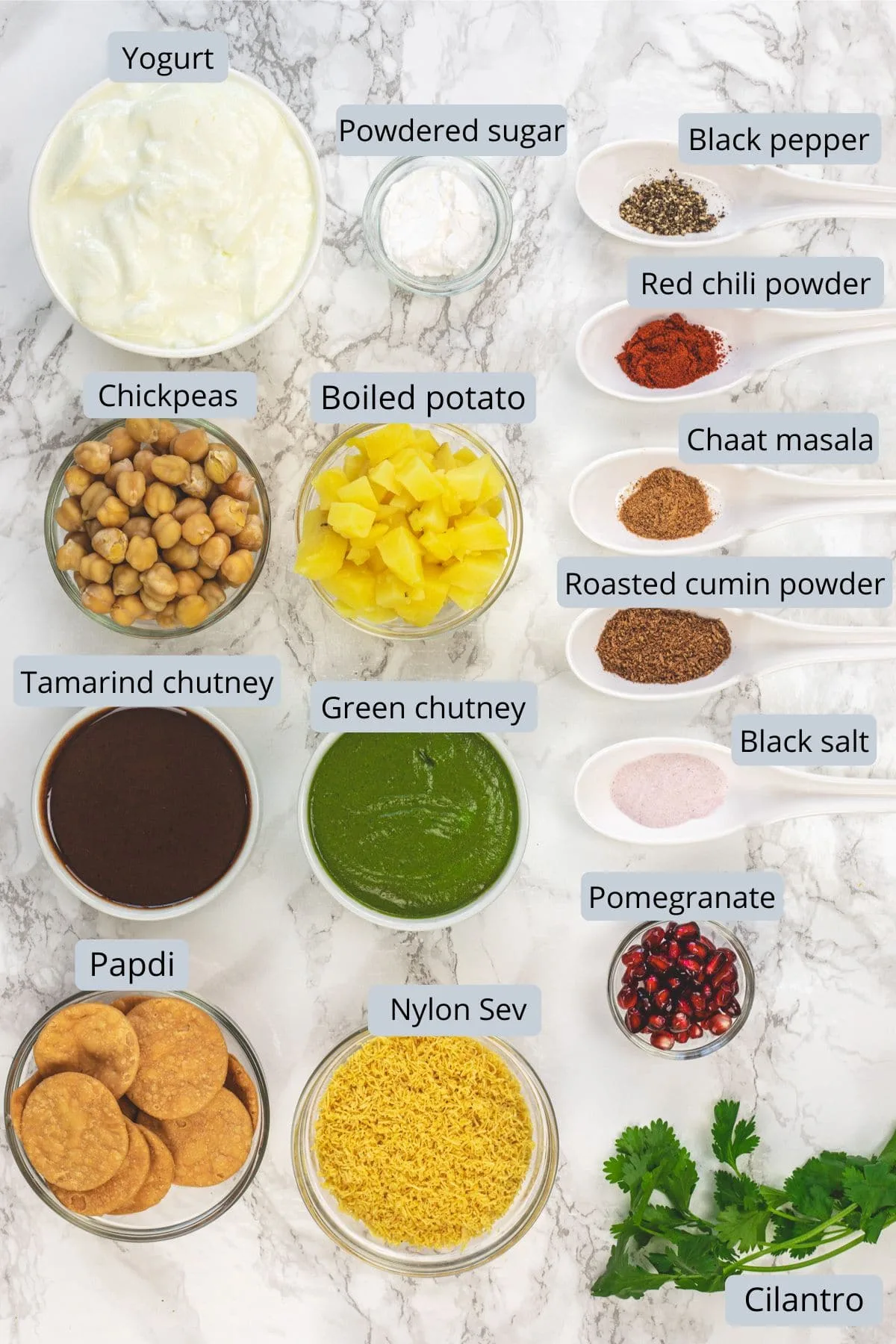
Image source: Bing (Web (fair-use with source credit))
Puri, papdi, and sev: the crunch layer
Puri are hollow, puffed shells used for pani puri and dahi puri. They're best fried the same day or bought frozen. Papdi are flat, crisp wafers that hold toppings for sev puri.
Store them in an airtight container for up to two days. Sev, especially nylon sev, is the thin chickpea noodle that adds the final crunch.
Chutneys, yogurt, and chaat masala: the flavor-and-drizzle layer
Green chutney, made from coriander and mint, brings heat and brightness. Tamarind chutney adds that dark, sweet-tangy note. Consistency matters.
Both need to be thick enough to drizzle in lines, not thin enough to soak the base. Whisked yogurt should be smooth and thick, slightly sweetened. Chaat masala and black salt are the seasonings that make everything taste like street food.
The garnish lineup: onions, pomegranate, coriander, peanuts
Finely chopped red onion, fresh coriander leaves, pomegranate arils, and roasted peanuts. These add color, acidity, and a pop of texture. Prep them before assembly and add them last.
They're the final visual layer, and they make the plate look alive.
The Step-by-Step Visual Assembly: Sev Puri, Dahi Puri, and Bhel Puri
These three recipes cover every core chaat technique: layering, filling, and mixing. Master them and the rest are variations.
Sev puri: building the papdi base
Place 4 to 6 papdi flat-side up on a plate. Spoon a teaspoon of mashed spiced potato onto each one. Drizzle green chutney across the top, then tamarind chutney in thin lines.
Add a spoonful of thick yogurt. Sprinkle chaat masala and black salt. Crown with sev, pomegranate, and coriander.
Serve immediately. The papdi stays crunchy because the wet ingredients sit on top, not underneath.
Dahi puri: filling and topping without breaking the shell
Take ready-made puri and crack a small hole in the top of each. Stuff in a little potato and a drop of each chutney. Then spoon yogurt generously over the entire shell.
The puri will soften, and that's expected. The filling stays firm, the yogurt stays cool, and the garnish goes on last. Eat within five minutes.
Bhel puri: mixing, not layering, and why texture still matters
Bhel is a bowl snack. Combine puffed rice, sev, chopped onion, tomato, boiled potato, and peanuts in a big bowl. Add chutneys and toss gently.
The trick is tossing, not stirring. Stirring crushes the puffed rice. What a photo would show: a bright, irregular-looking mix where every spoonful catches something different.
Serve in bowls or paper cones right away.
Common Chaat Visual Mistakes (and How to Fix Them)
If your chaat looks flat, soggy, or messy, one of these three problems is usually the culprit. Each one has a simple fix.
Soggy papdi and diluted chutney
If the papdi feels soft before you bite, the chutney is too thin or the plate sat too long. Fix it by simmering tamarind chutney until it coats a spoon. Whisk yogurt without adding water.
And assemble no more than 10 minutes ahead. The FSSAI also advises keeping yogurt-based dishes from sitting at room temperature for extended periods. That's a safety point, not just a texture one.
Uneven drizzles and slapped-on garnishes
If chutney lands in blobs, use a squeeze bottle. If garnishes pile up in one corner, chop them finer and sprinkle evenly. Chaat should look intentional.
Straight lines and even coverage read as appetizing, while random dumping reads as careless.
The sev avalanche: too much or too little
Too much sev buries the chutney and yogurt flavors. Too little leaves the plate flat. Use about two tablespoons per serving.
You want every forkful to catch some crunch, not climb a mountain of noodles.
The Chaat Lineup: Matching the Base to the Occasion
Not every chaat works for every moment. Here's how to match the style to the setting.
Papdi-based vs. puri-based vs. puffed rice
Papdi-based chaats like sev puri are sturdy. They hold toppings well and sit happily on a plate. Puri-based chaats like dahi puri are fragile and conversational, best eaten in a single bite.
Puffed rice chaats like bhel are light, scoopable, and ideal for crowds.
When to serve each style (party platter, quick snack, meal)
If you're hosting, go with sev puri and dahi puri on a shared tray. They look impressive and disappear fast. If you need a 10-minute snack, bhel puri is the answer.
If you want a full meal, build aloo tikki chaat or samosa chaat with hot chole on top.
Quick reference table: crunch level, optimal assembly time, and visual impact
| Chaat style | Crunch level | Best served within | Visual impact |
|---|---|---|---|
| Sev puri | High | 10 minutes | Tall, layered, colorful |
| Dahi puri | Medium | 5 minutes | Glossy, white and red |
| Bhel puri | High | 15 minutes | Bright, textured bowl |
Aggregate reviews from home cooks confirm the same pattern: the fresher the assembly, the louder the crunch. Trust the table and you'll skip most of the common failures.
Expert Plating Tips for Street-Level Crunch and Color
Street vendors rely on a few tricks that make chaat look effortless. You can steal all of them. None require special tools.
The result is a plate that looks like it came from a busy Mumbai cart.

Image source: Bing (Web (fair-use with source credit))
Use squeeze bottles for clean lines
Pour green and tamarind chutney into squeeze bottles with fine tips. That gives you thin, controlled lines instead of splatters. A spoon works, but the result looks heavier and less even.
What a photo would show: chutney lines that run parallel, not crossing blobs.
Build from bottom to top, dry to wet
Start with the crisp base. Add thick fillings like potato or chickpeas. Then drizzle chutneys and yogurt.
Garnishes and sev always go last. Wet ingredients never touch the base directly. This order keeps the bottom crunchy until the first bite.
Respect the 10-minute rule
Each chaat has a serving window. Sev puri stays crisp for about 10 minutes. Dahi puri softens within 5 minutes.
Bhel puri holds for 15 minutes if the chutney is thick. Assemble in small batches, not all at once.
For parties, set up a chaat bar. Keep components separate and let guests build their own plates. The crunch survives longer, and the spread looks impressive.
Just label the chutneys. Green means spicy, and tamarind means sweet.
Chaat Assembly FAQs
Why did my puri turn soft right away?
Moisture reached it before serving. Thin yogurt, watery chutney, or too much resting time will all ruin the crunch. Whisk your yogurt until it's thick enough to coat a spoon.
Simmer the tamarind chutney until it thickens slightly. Assemble the plate no more than 10 minutes before you eat.
Can I prepare components ahead of time?
Yes. Fry puri and papdi up to two days ahead. Store them in an airtight container with a paper towel to absorb moisture.
Chutneys stay fresh in the fridge for four days. Whisk yogurt fresh on the day you serve. This approach turns chaat from stressful to simple for parties.
What's the ideal yogurt consistency for drizzling?
It should coat the back of a spoon and drip slowly. If it's too thick, whisk in a teaspoon of milk. If it looks watery, strain it through muslin for 30 minutes.
The right texture flows off a spoon in a ribbon, not a waterfall. This makes clean lines possible.
Can I make chaat without frying?
Yes. Bake papdi and puri at 375°F for about 10 minutes until crisp. Air fryers work well too.
The texture comes close to fried versions, though the crunch won't last as long. Brushing the surface lightly with oil helps browning and crispness.
How do I store leftover sev and puri?
Sev keeps for weeks in an airtight container. Puri stays crisp for two days at room temperature. Never refrigerate either one.
Cold air adds moisture and kills the crunch. If puri soften slightly, refresh them in a hot oven for three minutes.
Final Recommendation: Your First Chaat Plate, Done Right
Start with sev puri. It teaches layering, tolerates small mistakes, and photographs beautifully. Once you've mastered it, move to dahi puri and bhel puri.
A simple starter plate
Lay four papdi on a plate. Add a teaspoon of mashed spiced potato to each one. Drizzle both chutneys in thin lines.
Spoon over thick yogurt. Sprinkle chaat masala and black salt. Crown with sev, pomegranate, and coriander.
Serve within 10 minutes.
Store-bought vs. homemade components
Frozen puri and bottled chutneys save time without ruining the dish. Make your own chutneys when you want more control over heat and sweetness. Store-bought nylon sev outperforms most homemade versions.
Use the time you save for prep and assembly, where it actually matters.
Why prep beats improvisation
Chaat rewards preparation, not last-minute improvisation. Prep everything first. Control your timeline.
Let assembly be the only hurried step. That's how street vendors hit that perfect crunch every single time. It works just as well in your kitchen.

Similar Posts