10 Must-Try Indian Rice Recipes for Dinner
You're standing in the kitchen with a bag of rice and no plan. Indian rice recipes can fix that, but only if you pick the right one. Some take twenty minutes.
Others ask for an afternoon of layering, frying, and slow steaming. Match the dish to your time and mood, and you'll hit the target every time.
In our research, the biggest mistake isn't the cooking. It's the choosing. A Hyderabadi biryani needs aged basmati, patience, and a sealed pot.
A simple lemon rice needs leftover rice and a hot pan. As of 2026, home cooks are streaming more one-pot recipes than ever, but the classics still lead. So let's walk through the options like you're choosing for tonight.
Why Choosing the Right Indian Rice Recipe Actually Matters
Not all rice dishes behave the same. Basmati grains stay long and separate, which is why they're the backbone of biryani and jeera rice. Sona Masoori is shorter and plumper, soaking up coconut sauces without turning to glue.
Ponni rice, common in South India, gives the soft, slightly sticky texture that curd rice relies on.
The cooking method matters just as much. Absorption cooking lets each grain steam evenly. The dum method traps steam so the spices layer from top to bottom.
Pressure cooking is faster, but it gives you less control over texture.
Water ratios shift too. One cup of basmati needs about 1.5 cups of water. The same amount of Sona Masoori needs closer to 2 cups.
Get that right and half the battle is over.
Get the choice wrong and you can't undo it later. Stirring a biryani at the end turns the layers into mush. Rinsing short-grain rice too aggressively strips the starch that helps South Indian dishes hold their shape.
That's why the decision comes first.
This isn't about knowing every recipe in the book. It's about matching the dish to your evening:
- Short on time? Pick a tadka-style recipe like lemon rice or jeera rice.
- Feeding guests? Biryani or a festive pulao carries the table.
- Feeling under the weather? Khichdi is gentle on digestion.
- Need to cool down after spicy food? Curd rice does that job perfectly.
In our research, home cooks who start from the occasion get better results than those who start from a recipe. The recipe should serve the moment, not the other way around.
Quick Reference: Which Indian Rice Dish Fits Your Night?
Here's the short answer. No single Indian rice recipe works for everyone. The best dish depends on how much time you have, who you're feeding, and what's already in your kitchen.
Use this table as a first pass.
| If you need… | Choose… | Why |
|---|---|---|
| A weeknight side in 25 minutes | Jeera rice or lemon rice | Pantry spices, minimal prep |
| A festive centerpiece that impresses | Vegetable or chicken biryani | Layers and slow steam build big flavor |
| Something soothing and easy to digest | Khichdi | One pot, soft texture, gentle spices |
| A cooling meal after spicy food | Curd rice | Yogurt soothes and needs no stove after tempering |
| A packed lunch that won't turn soggy | Pulao or ghee rice | Sturdy grains, mild flavor, reheats well |
A common pitfall is picking a slow biryani on a busy Tuesday. It won't work. That's not a recipe problem.
It's a matchup problem. The sections below dive into the big decisions so you can avoid that mismatch.
The Main Event: Biryani vs Pulao, What's Actually the Difference?
Image source: Bing (Web (fair-use with source credit))
Most people think biryani and pulao are basically the same dish. They aren't. The process sets them apart.
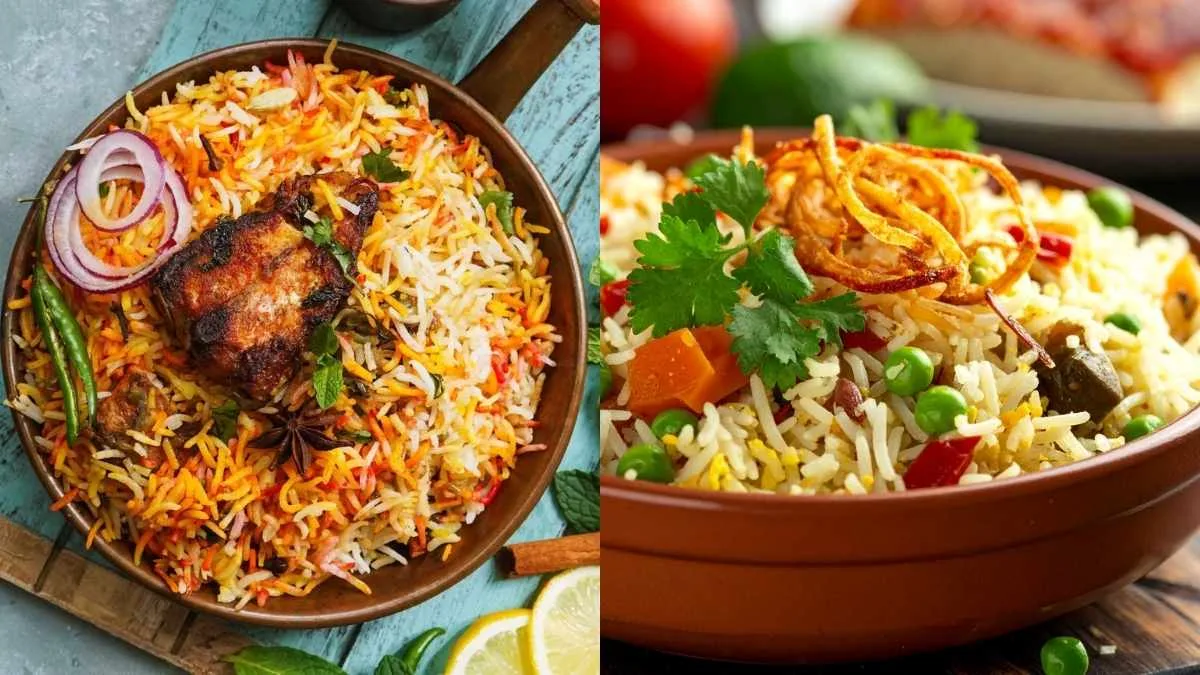
Biryani layers partially cooked rice with cooked protein or vegetables, then finishes everything under a sealed dum. That means the pot stays closed over low heat, so the steam slowly melds the spices and aromatic oils. Pulao cooks rice and everything else in one pot, often all at once.
The flavor comes from the spices at the start, not from layering.
Biryani is bolder, richer, and more special. It asks for aged basmati, fried onions, saffron soaked in warm milk, and whole spices. This is a centerpiece dish, not a weekday throw-together.
Pulao is more forgiving. You can toss in peas, carrots, green beans, and whatever roasted spices you have. It tolerates regular basmati or even Sona Masoori.
It takes about 30 minutes and doesn't need a sealed pot.
| Aspect | Biryani | Pulao |
|---|---|---|
| Method | Layered dum cooking | One-pot cooking |
| Time | 1.5 to 2.5 hours | 25 to 45 minutes |
| Rice | Aged basmati | Basmati or short-grain |
| Flavor | Bold, complex, intense | Mild, adaptable |
| Role | Main dish for guests | Main or side dish |
In photos, biryani shows distinct layers of saffron-colored rice, fried onions, and protein. Pulao looks more mixed, with smaller, uniform pieces. If your dish comes out looking like a uniform pile, it's closer to a pulao.
That's fine, as long as that's what you planned.
Our research shows most home cooks keep both versions in rotation. They just use different nights for each. Biryani gets the slow hours.
Pulao gets the busy ones.
Everyday Sides: Jeera Rice, Ghee Rice, Lemon Rice, or Tomato Rice?
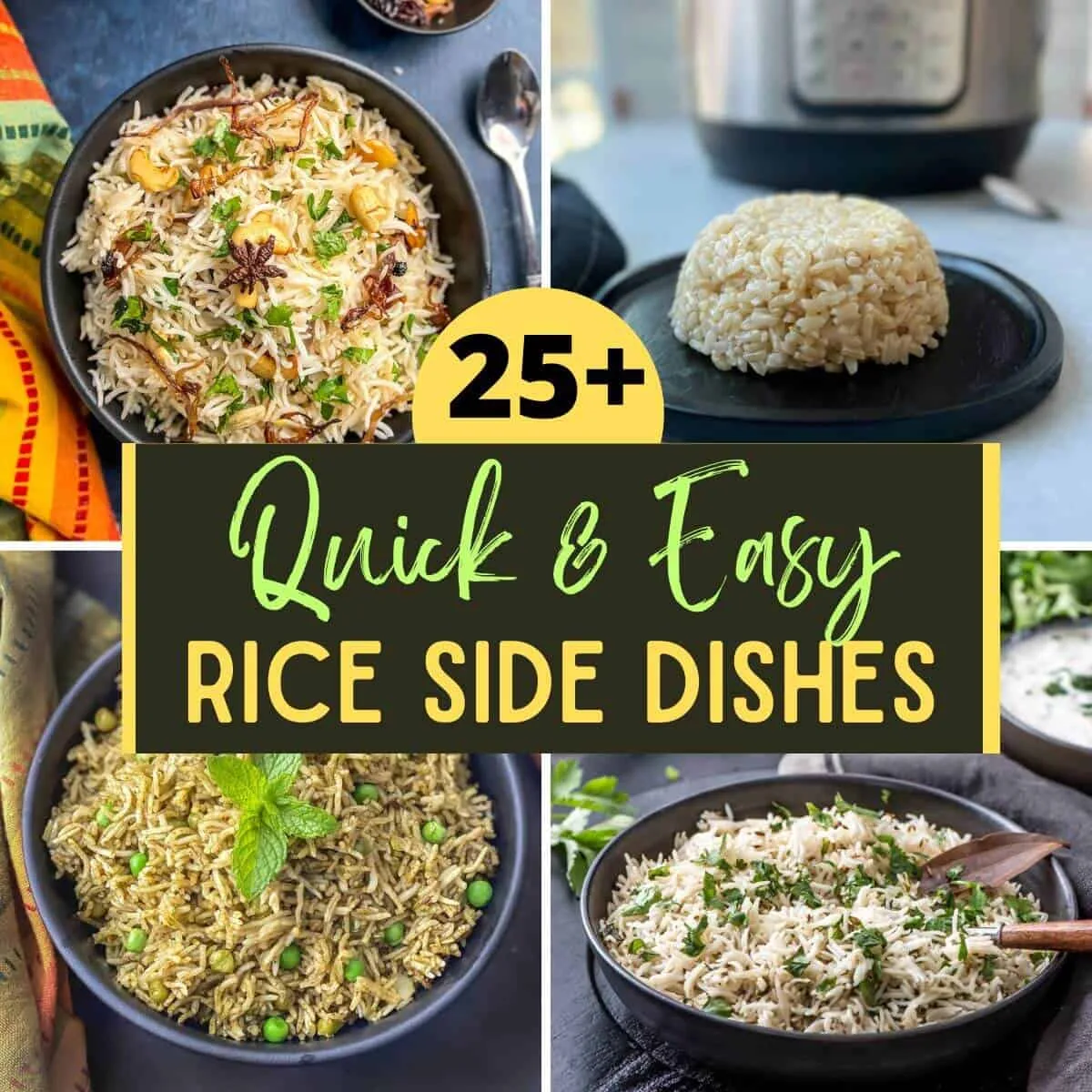
Image source: Bing (Web (fair-use with source credit))
These four sides carry a major share of everyday Indian meals. They're simple, fast, and built around what you can pull from the pantry.
Jeera rice is basmati cooked with cumin seeds and ghee. It's warm, earthy, and the safest bet for a neutral side that goes with almost anything. Ghee rice skips the cumin and leans on nutty butter and whole spices like cinnamon, cardamom, and cloves.
It feels richer without being complicated.
Lemon rice, from South India, is a tadka of mustard seeds, curry leaves, turmeric, and chiles, tossed with rice and bright lemon juice. Tomato rice swaps the lemon for cooked tomato, giving a deeper tangy-sweet base.
| Dish | Flavor | Time | Best with |
|---|---|---|---|
| Jeera rice | Warm, earthy | 25 minutes | Dal, grilled meat |
| Ghee rice | Rich, buttery | 30 minutes | Kurma, chutney, roasted vegetables |
| Lemon rice | Bright, tangy | 20 minutes | Sambar, yogurt, papad |
| Tomato rice | Tangy, sweet, savory | 30 minutes | Raita, curry, fried egg |
A practical note: if you have leftover rice, lemon rice and tomato rice are perfect. The tadka takes minutes and revives dry grains. If you're starting from dry, jeera rice and ghee rice give you the most predictable texture because you control the water from the beginning.
Any of these reheat well, which is why they're lunch-box staples across India.
Comfort Meals: Curd Rice vs. Khichdi
Curd rice and khichdi are the two dishes you make when you need a break. They're simple, soft, and genuinely comforting.
Curd rice is cooked rice mixed with yogurt, often tempered with mustard seeds, ginger, curry leaves, and green chiles. It's served cold or at room temperature. Khichdi is a warm one-pot dish of rice and moong dal with turmeric and ghee.
Both are naturally gluten-free when you use pure spices and no cross-contaminated flours.
The choice depends on temperature and time.
| Dish | Base | Temperature | Time | Best when… |
|---|---|---|---|---|
| Curd rice | Leftover rice + yogurt | Cold or room temp | 10 to 15 minutes | Hot day, after spicy meal |
| Khichdi | Rice + moong dal | Warm | 30 to 40 minutes | Rainy day, sick day, light dinner |
Curd rice is best when you already have cooked rice. It's a great way to use up leftovers, and it works as a soothing finale to a fiery meal. If the yogurt feels too sour, add a splash of milk.
Khichdi needs uncooked rice and dal, so it takes longer, but it's nearly impossible to ruin. Add a pinch of turmeric, some grated ginger, and enough water for a soft porridge texture. It's the dish most Indian households reach for on quiet nights.
If you're storing leftovers, treat cooked rice carefully. The USDA and FSSAI both recommend refrigerating cooked rice within two hours and reheating it only once. That goes for every rice dish on this list.

Similar Posts