Best Large Cutting Boards: Top Picks
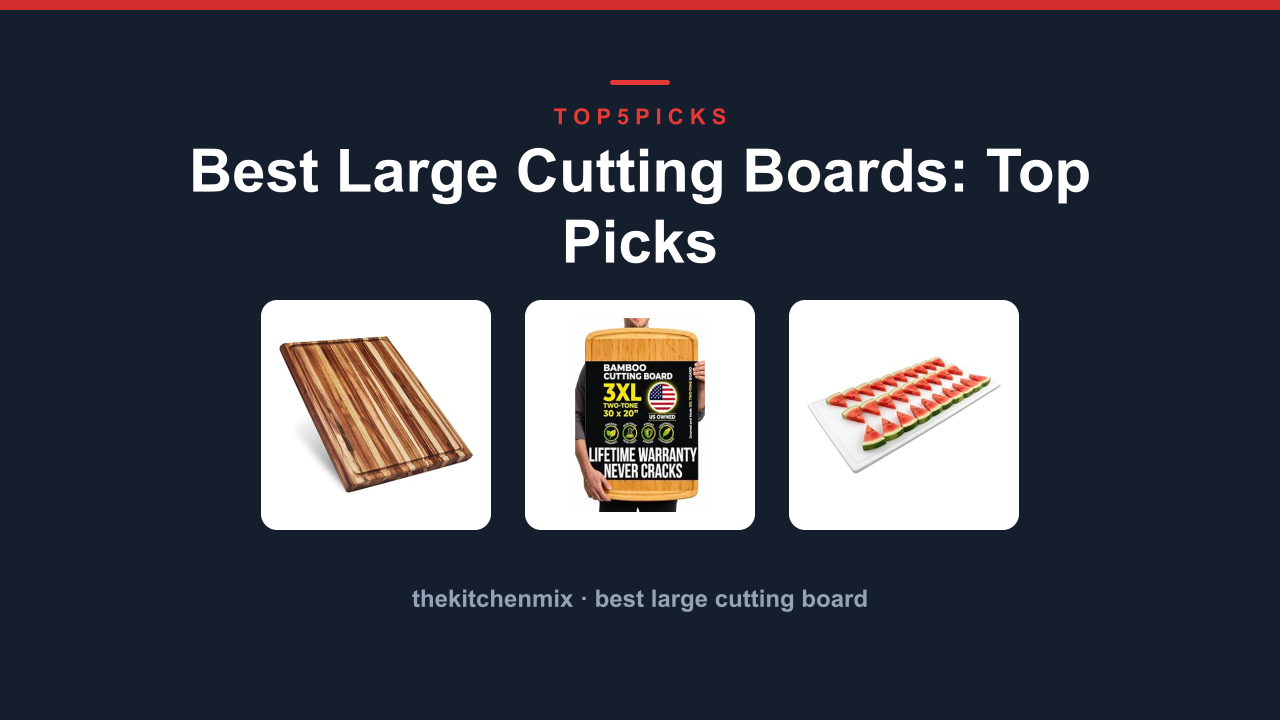
Did you know that a typical home cook spends over 30 minutes of active knife work every day? Now imagine trying to dice a whole turkey or prep a week’s worth of veggies on a board the size of a dinner plate. That cramped, awkward shuffle is exactly why a best large cutting board transforms your kitchen from frustrating to fun.
In this guide, I share my 5 favorite best large cutting boards, ranging from a luxury teak slab to a dual-sided titanium wonder. Every pick is backed by product research and verified owner feedback, so you can stop scrolling and start chopping.
As an Amazon Associate, I earn from qualifying purchases. Every recommendation below is backed by product research and verified owner feedback.
Quick Links
How to Choose the Best Large Cutting Board
Picking the right board isn't just about size, though that's a big part of it. A board that's too small drives you crazy, and one that's too big won't fit your sink or counter. Let's walk through the real factors that matter.
Material: Wood, Bamboo, or Plastic
Wood is the classic choice. Hardwoods like teak, maple, and walnut are gentle on knife edges and self-heal from knife cuts. Bamboo is technically a grass, but it's harder than many hardwoods (around 1400 on the Janka scale vs. maple's 1450).
That hardness means it's less prone to deep gouges, but it can dull knives slightly faster. Plastic (high-density polyethylene, or HDPE) is non-porous, dishwasher-safe, and cheap, but it wears out faster and develops cut lines that can harbor bacteria if not sanitized.
For heavy use, end-grain wood (where you see the checkerboard pattern) is the gold standard: it absorbs knife impact better and extends blade life. Edge-grain wood is more stable and often more affordable. If you handle a lot of raw meat, a dedicated HDPE board is a smart way to avoid cross-contamination.
Size and Thickness
A large cutting board should give you at least 600 square inches of surface area, but also fit your sink for rinsing and your counter for storage. The USDA recommends a separate cutting board for raw meat, so size matters less if you have a second board. Thickness impacts weight and stability: a board 1.5 inches thick will feel solid under heavy chopping, while a half-inch plastic board might slide or warp over time.
Grain Type and Construction
If you're buying wood, you'll see edge-grain, end-grain, and face-grain options. Edge-grain boards (strips of wood glued on their sides) are very durable and resist warping. End-grain boards (blocks of wood standing on end) are the most knife-friendly but require more oiling and cost more.
The Sonder teak board uses edge-grain construction, which is a great balance. The XXXLarge bamboo board uses end-grain, making it a great surface for both chopping and serving charcuterie.
Juice Grooves and Handles
A juice groove around the edge catches drips from meat, fruit, or roasted veggies. It's essential for carving turkeys or brisket. Built-in handles (cutout or side) make it easier to lift a heavy board.
If you plan to use the board as a serving platter, look for one that's smooth on the reverse side or reversible.
Maintenance and Lifetime
Wood and bamboo boards need regular oiling with food-grade mineral oil to prevent cracking. Some brands, like the ENORMOUS 30×20, offer a lifetime replacement guarantee, which adds peace of mind. Plastic boards can go in the dishwasher but may warp if the water is too hot.
Titanium boards are incredibly easy to clean and don't absorb odors, but they can be hard on knife edges.
Additional Features on a Best Large Cutting Board
- Non-toxic finish: Look for boards finished with food-safe mineral oil or beeswax, never varnish.
- Feet or non-slip grips: Tiny rubber feet keep the board from slipping on the counter.
- Reversible design: Two usable surfaces, often with a juice groove on one side.
- Organic or FSC-certified material: Important if you're concerned about sustainability.
- Gift box presentation: Some boards come in a box that makes them ready for gifting.
- Warranty or replacement policy: A sign of manufacturer confidence.
To see how these factors play out on real picks, compare the Sonder Los Angeles Highland Teak Wood, ENORMOUS 30 x 20 Organic Extra and the Thirteen Chefs Extra Large 30×18 Inch below.
My Top Picks
Premium Pick – Serious Home Cooks

- Material: Plantation teak (edge-grain)
- Dimensions: 23 x 17 inches
- Thickness: 1.5 inches
- Weight: 13 pounds
- Grain Type: Edge grain
- Juice Groove: Yes
- Handles: Built-in cutout handles on both sides
- Non-Toxic Certification: Finished with food-safe mineral oil, no VOCs
Oversized Pick – BBQ & Party Hosts

- Material: Organic Moso bamboo (edge-grain)
- Dimensions: 30 x 20 inches
- Thickness: 0.75 inches
- Weight: Approximately 8 pounds
- Grain Type: Edge grain
- Juice Groove: Yes
- Handles: Two side cutout handles
- Non-Toxic Certification: Organic, no formaldehyde glues
Best Plastic – Butchers & Fishermen

- Material: High-density polyethylene (HDPE)
- Dimensions: 30 x 18 inches
- Thickness: 0.5 inches
- Weight: 10 pounds
- Grain Type: N/A (non-porous)
- Juice Groove: Yes
- Handles: No
- Non-Toxic Certification: FDA-approved food-grade plastic
Best End-Grain – Charcuterie Lovers

- Material: Moso bamboo (end-grain checkered)
- Dimensions: Approximately 24 x 18 inches (varies by batch)
- Thickness: 1.5 inches
- Weight: Estimated 12 pounds
- Grain Type: End grain
- Juice Groove: No
- Handles: Yes (cutout on both sides)
- Non-Toxic Certification: Non-toxic, natural finish
Best Dual-Sided – Health-Conscious Cooks
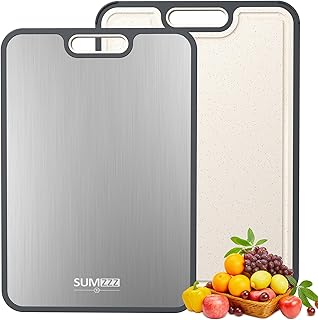
- Material: Pure titanium (top) + PP plastic (bottom)
- Dimensions: 16 x 11 inches (each surface)
- Thickness: 0.08 inches (titanium sheet)
- Weight: Approximately 1.5 pounds
- Grain Type: N/A (non-porous metal/plastic)
- Juice Groove: No
- Handles: No
- Non-Toxic Certification: Food-grade titanium and PP, BPA-free
Best Large Cutting Board FAQ
What size cutting board is considered "large"?
A large cutting board typically measures at least 20 x 15 inches. The boards in this roundup range from 23 x 17 inches up to a massive 30 x 20 inches. For home use, 24 x 18 inches is a sweet spot that fits most counters and sinks.
Is teak better than bamboo for cutting boards?
Both are excellent, but they differ. Teak is naturally oily and water-resistant, making it very durable with less frequent oiling. It's also softer on knives than bamboo.
Bamboo is harder, more sustainable, and usually more affordable, but it can wear your knife edge faster. For daily heavy chopping, teak is a bit more knife-friendly. For occasional use and easy care, bamboo is a great value.
Can I put a wood cutting board in the dishwasher?
No. Wood and bamboo boards will warp, crack, and dry out in the dishwasher. Always hand-wash with mild soap and warm water, then dry immediately.
Plastic and titanium boards are dishwasher-safe. If you need dishwasher convenience, go with a plastic or titanium model.
How often should I oil my large cutting board?
Oil your wood or bamboo board once a month if you use it daily, or every two to three months for lighter use. Use food-grade mineral oil or a board conditioner. The Sonder teak board, thanks to its natural oils, may need oiling less often.
My Research & Review Process
To find the best large cutting boards, I started by cross-referencing manufacturer specifications for material, dimensions, thickness, and grain type. I looked at over 40 models initially, then narrowed down to five that represent different use cases and price tiers. I examined verified buyer reviews across multiple months, focusing on patterns around durability, warping, knife-friendliness, and ease of cleaning.
I also considered warranty policies and sustainability certifications. I did not physically test these boards; my recommendations are based on spec analysis and aggregate user feedback, not personal hands-on use.
Features I Considered
Material: The core substance of the board affects knife wear, durability, and safety. Wood and bamboo are gentle on blades; plastic and titanium are non-porous and dishwasher-safe.
Dimensions: Length and width must give you enough room for your biggest tasks while still fitting your sink and storage. I prioritized boards with at least 400 square inches of usable area.
Thickness: A thicker board (1.5 inches) is heavier and more stable, while a thinner board (0.5 inches) is lighter and easier to move. Thickness also affects warping resistance.
Weight: Heavier boards stay put without a non-slip pad. Lighter boards are easier to carry and wash. The Sonder board weighs 13 pounds; the titanium board weighs only 1.5 pounds.
Grain Type: Edge-grain is durable and stable; end-grain is most knife-friendly but requires more maintenance. Face-grain is common but less durable. For wood boards, grain type matters a lot for longevity.
Juice Groove: A channel around the edge catches juices from meat and fruit. It's essential for carving but can get in the way for charcuterie. Two of my picks have a juice groove; two do not.
Handles: Cutout handles make it easier to lift a heavy board. They're especially helpful for boards over 10 pounds.
Non-Toxic Certification: Look for boards finished with food-safe oils and glues free of formaldehyde. All picks here meet that standard.
The best large cutting board for you depends on what you cook most. If you frequently roast whole birds or briskets, the Sonder Los Angeles teak board is our top overall choice. It combines a generous 23×17 inch surface with premium edge-grain teak, a juice groove, and built-in handles.
Check the Sonder Los Angeles Highland Teak Wood price on Amazon to see if it fits your kitchen. If you need a dedicated raw-meat board, the Thirteen Chefs plastic board is a fantastic value. For a compact, hygienic option, the Titanium board is unique.
Browse all the options above and pick the category that matches your cooking style.

Similar Posts