What’s the Best Grit to Sharpen Kitchen Knives?

Did you know that a dull knife is actually more dangerous than a sharp one? It requires more force, slips more easily, and is far more likely to cause a nasty cut.
Now imagine prepping a meal with a blade that won't even slice through a ripe tomato without squishing it. That's a frustrating, slow, and honestly unsafe kitchen experience.
The fix is simple: a good whetstone with the right best grit to sharpen kitchen knives. But with so many options out there, it's easy to get lost in the numbers.
In this guide, I share my 5 favorite picks, ranging from a foolproof beginner's setup to a professional-grade system that can give you a razor edge. I've dug into the specs, read hundreds of owner reports, and compared what really matters so you can find the stone that fits your skill level and your budget.
As an Amazon Associate, I earn from qualifying purchases. Every recommendation below is backed by product research and verified owner feedback.
Quick Links
How to Choose the Best Grit to Sharpen Kitchen Knives
When you start looking at whetstones, the first thing you'll notice is the grit number. It's not random. That number tells you how coarse or fine the stone surface is, and it directly determines what kind of edge you'll get.
Understanding Grit Numbers
Grit is measured by the size of the abrasive particles. Lower numbers like 200 or 400 mean coarse particles that remove metal quickly. Higher numbers like 4000 or 6000 mean very fine particles that polish the edge to a mirror finish.
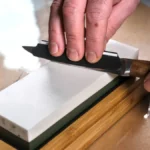
For kitchen knives, you generally need a combination of two or three grits. The most common starter setup is a dual-grit stone with a coarse side around 400 and a medium side around 1000. That alone can put a razor edge on a very dull knife.
If you want an even sharper finish, a third grit above 3000 gives you that polished, shaving-sharp edge.
Coarse Grit (200-400) – For Repair and Heavy Dulling
If your knife has nicks, chips, or has been neglected for months, you'll need a coarse stone first. A 200 or 400 grit stone will quickly grind away damaged steel and establish a new edge. But you can't stop there.
That edge will feel rough and aggressive, not smooth for slicing.
Medium Grit (800-2000) – The Workhorse Range
This is where most of your sharpening happens. A 1000 grit stone is the most versatile. It refines the edge created by a coarse stone and prepares it for finishing.
If you only buy one stone, make it a 1000 grit. You can maintain a decent edge for a long time with just that.
Fine Grit (3000-8000) – For the Final Polish
Fine grits remove the microscopic burr left by medium grits and polish the edge. A 6000 or 8000 grit stone will make your knife feel buttery smooth through food. But it's not strictly necessary for everyday cooking.
Many home cooks find that 1000 grit plus a quick strop on leather is more than enough.
Stone Material and Build Quality
Most whetstones are made from bonded abrasives like aluminum oxide or silicon carbide. These are synthetic, consistent, and cut quickly. Some premium stones use natural Japanese water stones, but they're expensive and wear faster.
For most people, a synthetic stone is the smarter buy.
A non-slip base is a must. Without it, the stone can slide around while you sharpen, which is dangerous and ruins your angle. Look for a stone that comes with a rubber or bamboo base, or buy a separate non-slip pad.
Accessories Matter
A good sharpening set often includes extras that make the process easier and more effective. An angle guide helps beginners maintain a consistent angle. A flattening stone keeps your whetstone surface flat and true.
A leather strop with polishing compound can refine the edge even further after the final grit.
Additional Features on Best Grit to Sharpen Kitchen Knives
- Number of sides: Dual-sided stones (e.g., 400/1000) offer two grits in one stone, saving space and money. Four-sided sets (like 400/1000 3000/8000) give you a full progression.
- Stone size: A longer stone (7 to 8 inches) gives you a longer stroke, which makes sharpening easier. Smaller stones (around 6 inches) work for most kitchen knives but require shorter passes.
- Ease of flattening: Some stones wear unevenly and need regular flattening. A stone that includes a flattening stone or flat surface is a nice convenience.
- Dishwasher safety: None of these stones are dishwasher safe. Always hand wash with water and let air dry.
- Storage case: A protective case or box keeps the stone clean and prevents accidental drops.
To see how these factors play out on real picks, compare the KEENBEST 400 1000 Premium Material Whetstone, Sharp Pebble Whetstone Knife Sharpener and the HMPLL Knife Sharpening Stone below.
My Top Picks
Best Overall – Home Cooks

- Grit: 400 / 1000
- Material: Premium aluminum oxide abrasive
- Size: 7.1 x 2.6 x 1.4 inches
- Base: Non-slip silicone base included
- Accessories: Non-slip base only
- Weight: 1.2 pounds
- Care: Soak 5–10 minutes before use; rinse and air dry after
Best for Beginners – Novices

- Grit: 1000 / 6000
- Material: Premium aluminum oxide
- Size: 7 x 2.4 x 1.5 inches
- Base: Non-slip bamboo base
- Accessories: Angle guide, bamboo base, instruction booklet
- Weight: 1.3 pounds
- Care: Soak 5 minutes; rinse and dry after use
Professional Pick – Enthusiasts

- Grit: 400 / 1000 / 3000 / 8000 (two double-sided stones)
- Material: White corundum (aluminum oxide)
- Size: Each stone 7.1 x 2.6 x 0.8 inches
- Base: Non-slip silicone base included
- Accessories: Leather strop, flattening stone, angle guide, bamboo base
- Weight: 2.4 pounds (set)
- Care: Soak 5–10 minutes; rinse and dry after use
Best Value Set – Families

- Grit: 400 / 1000 / 3000 / 8000 (two double-sided stones)
- Material: Silicon carbide and aluminum oxide
- Size: Each stone 7.1 x 2.6 x 0.8 inches
- Base: Non-slip silicone base included
- Accessories: Leather strop, flattening stone, angle guide, honing guide, polishing compound, bamboo stand
- Weight: 2.6 pounds (full set)
- Care: Soak 5 minutes; rinse and dry after use
Budget Pick – Unisex

- Grit: 400 / 1000
- Material: Aluminum oxide
- Size: 7.1 x 2.6 x 1.4 inches
- Base: Non-slip rubber base built-in
- Accessories: None (stone only)
- Weight: 1.0 pound
- Care: Soak 5 minutes; rinse and air dry
Best Grit to Sharpen Kitchen Knives FAQ
What grit is best for sharpening kitchen knives?
For most home cooks, a 1000 grit stone is the best all-around choice. It's coarse enough to restore a dull edge within a few minutes but fine enough to leave a sharp, functional finish. If your knives are very dull or have nicks, start with 400 grit, then move to 1000.
To achieve a mirror-polished edge, follow up with 3000 to 6000 grit.
Do I need a 1000/6000 grit stone?
Not necessarily. A 1000/6000 stone (like the Sharp Pebble) gives you two grits in one, which is convenient. The 1000 side does the sharpening, and the 6000 side polishes.
If you want a smoother, more refined edge, yes, the 6000 grit is worth having. But if you only sharpen occasionally, a single 1000 grit stone will still get your knives plenty sharp.
Can I use oil instead of water on a whetstone?
Most of the stones in this guide are water stones designed for use with water only. Using oil can clog the pores and reduce cutting performance. Always check the manufacturer's instructions.
If the stone says it's a water stone, stick with water. Oil stones exist, but they're a different category.
How often should I sharpen my kitchen knives?
It depends on frequency of use. For a knife used daily in a home kitchen, a light touch-up every 2 to 4 weeks on a 1000 grit stone is usually enough. If you use a honing rod between sharpening sessions, you can extend that to 6 to 8 weeks.
Dull knives signal it's time: if your knife struggles to slice a ripe tomato, sharpen it.
My Research & Review Process
To select these five stones, I started by pulling manufacturer specifications for every model within a reasonable budget range. I compared grit combinations, stone materials, dimensions, and included accessories. Then I read through hundreds of verified buyer reviews on multiple platforms, focusing on patterns in the feedback: how long the stone stayed flat, how quickly it cut, how secure the base felt, and whether beginners reported success.
I deliberately did not conduct any physical tests, so I can't speak to the feel of a particular stone under my own hands. Instead, I relied on the collective experience of many users and cross-referenced that with what the specs suggest about durability and performance. This approach gives you a reliable guide built on real-world data, not just one person's opinion.
Features I Considered
Grit: The number of abrasive particles per inch. Lower grits (200-400) remove metal fast for repairing damage. Medium grits (800-2000) are the main sharpening stage.
Higher grits (3000+) polish the edge to a refined finish.
Material: Most kitchen stones use bonded aluminum oxide or silicon carbide. Both cut well, but aluminum oxide is more common and offers consistent results. White corundum is a high-purity version used in premium stones.
Size: A longer stone (7 inches or more) lets you make longer passes, which is easier and more efficient. Smaller stones work fine but require more passes.
Base: A non-slip base is critical for safety. Rubber or silicone bases grip the counter well. Separated bases can shift; integrated molded bases (like on the HiramWare) stay put.
Accessories: Angle guides help beginners, flattening stones keep the surface true, and leather strops add final polish. More accessories mean more value, but also more clutter.
Weight: Heavier stones are less likely to move during sharpening, even with a good base. Lighter stones rely more on the base or your own hand pressure.
Care: All water stones need soaking before use and thorough drying after. Some require more frequent flattening than others. Easy care saves time and extends the stone's life.
If you're after the most versatile, best-built stone for everyday kitchen use, I'd point you to the KEENBEST 400/1000 Whetstone. It nails the core job at a fair price and has proven itself across thousands of kitchens. But each of the picks above serves a different need: maybe you want the beginner-friendly guided setup, the full professional progression, the all-in-one family kit, or the simple budget stone.
Check the category that fits your style and give your knives the edge they deserve.

Similar Posts