Convert Oven Recipes to Air Fryer Like a Pro
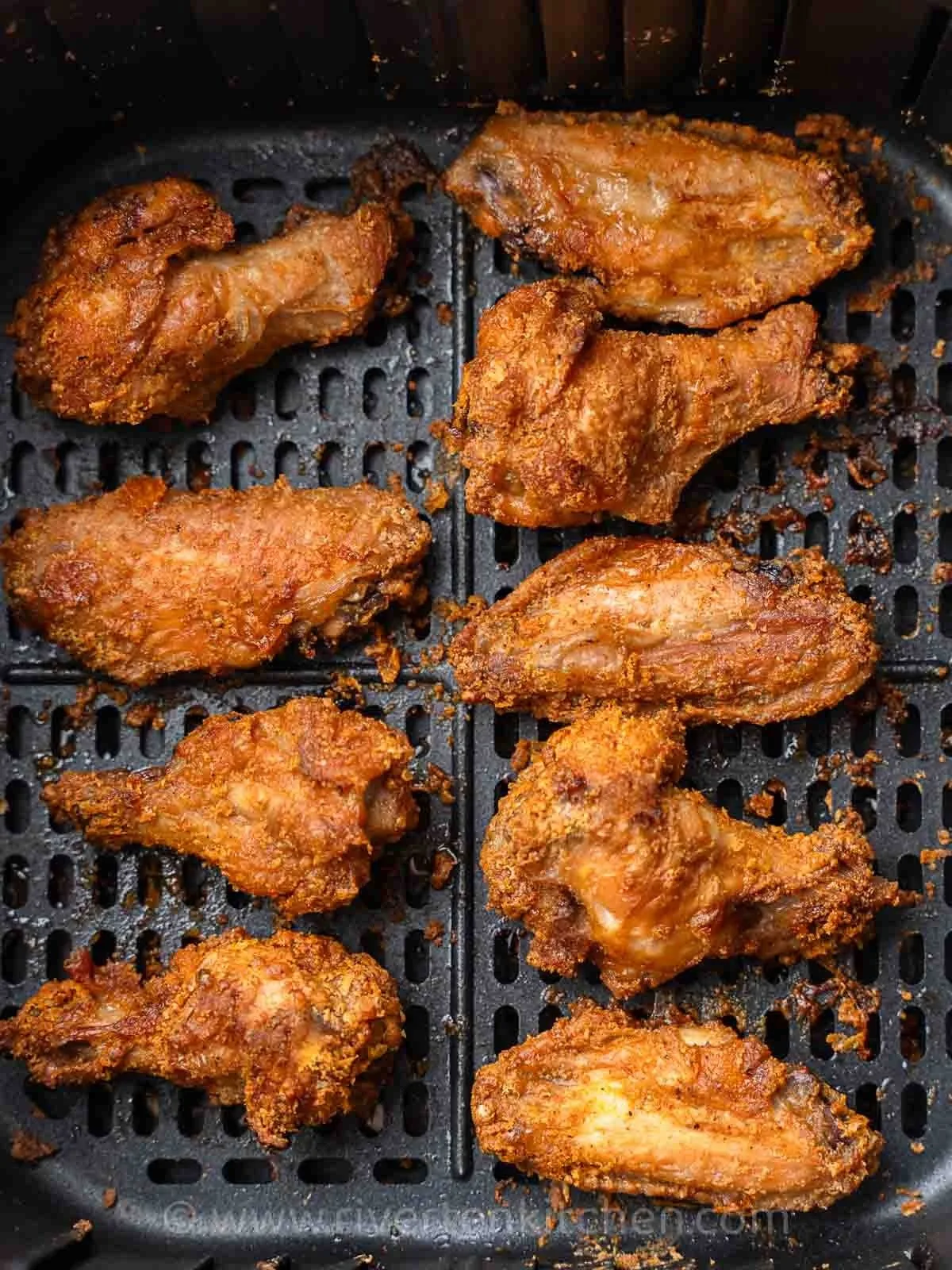
If you've ever tried to cook a regular oven recipe in an air fryer and ended up with burnt edges and a raw middle, you already know why this matters. Learning how to adjust oven recipe for air fryer is the difference between a perfect meal and a disappointing one. The good news is the process follows predictable rules once you understand what's actually happening inside that compact machine.
Most air fryers reach cooking temperature in under three minutes. A conventional oven takes ten to fifteen minutes to preheat. That speed difference alone signals that the cooking environment is fundamentally different.
You have to adjust your approach, not just your expectations.
Quick Answer
Lower the temperature by 25°F. Reduce the cooking time by 20 to 30 percent. Check for doneness early.
Arrange food in a single layer. These four adjustments cover most oven-to-air-fryer conversions.
Why Your Oven Recipe Won't Translate as-Is
A conventional oven heats a large volume of air slowly. The heating elements cycle on and off to maintain a steady temperature. Food sits in that gentle, ambient heat while it cooks through.
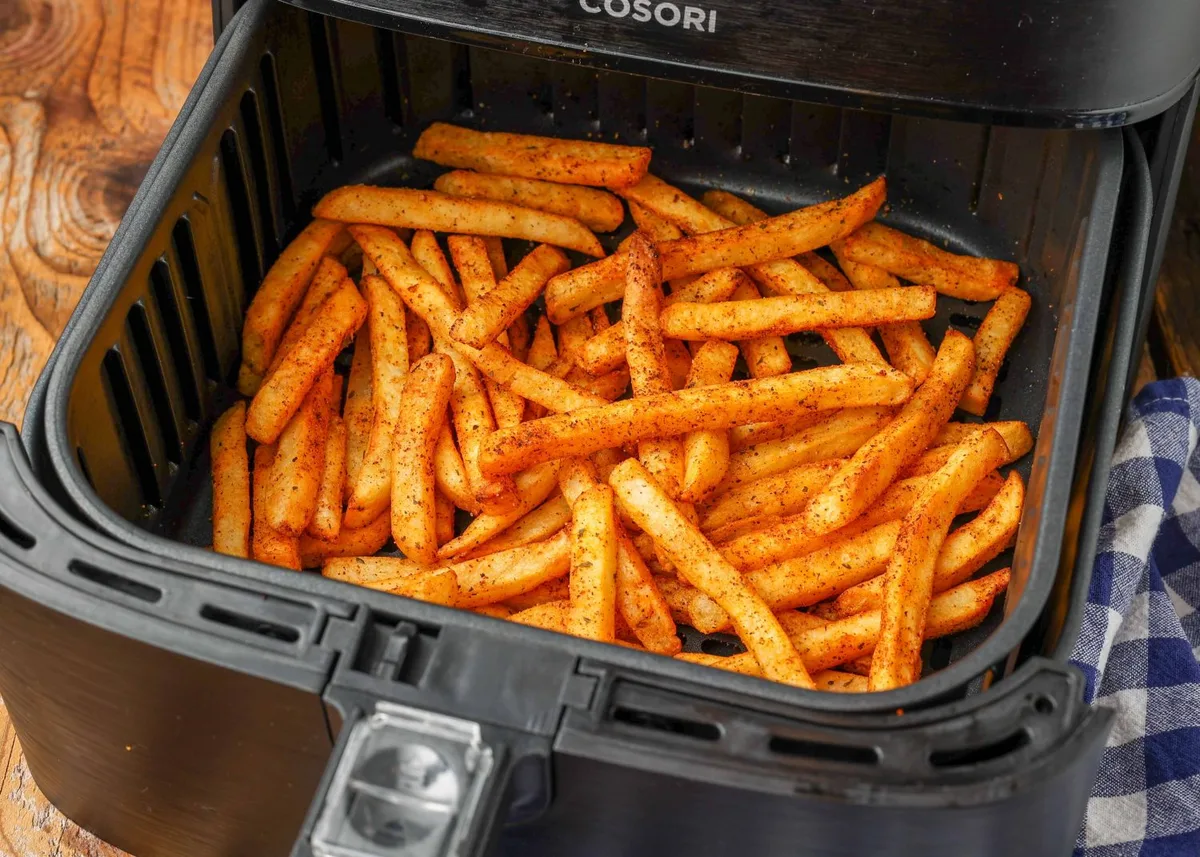
An air fryer uses a different mechanism entirely. A heating element sits close to a high-speed fan. That fan blasts hot air directly onto the food surface at high velocity.
The cooking chamber is small, often a tenth the size of a standard oven. So the heat is intense and concentrated.
This is why your 400°F oven recipe behaves differently at 400°F in an air fryer. The outside browns and crisps before the interior finishes cooking. You get that burnt crust and raw center problem.
The physics explains it. Faster air movement means faster heat transfer. The same temperature that produces gentle browning in an oven can scorch food in an air fryer.
You have to account for that concentrated energy.
Recipes also assume a certain moisture environment. An oven traps steam inside its large cavity. An air fryer's fan blows that steam away constantly.
Food dries out faster, which helps crispiness but hurts baked goods.
The Rule of Thumb That Gets You Close Every Time
The standard conversion rule is straightforward. Drop the oven temperature by 25°F. Cut the cooking time by about one quarter.
This covers most recipes reasonably well. A 350°F oven recipe becomes 325°F in the air fryer. A 20-minute bake becomes 14 to 16 minutes.
You check at the shorter mark and add time as needed.
Why 25°F specifically? The rapid air circulation transfers heat much more efficiently. A lower ambient temperature produces the same browning rate that a higher temperature would in a conventional oven.
The faster cooking time comes from that same efficiency.
Here is a quick reference for common oven temperatures:
| Oven Temperature | Air Fryer Temperature | Oven Time | Start Checking At |
|---|---|---|---|
| 325°F | 300°F | 25 min | 17 min |
| 350°F | 325°F | 20 min | 14 min |
| 375°F | 350°F | 30 min | 21 min |
| 400°F | 375°F | 25 min | 17 min |
| 425°F | 400°F | 15 min | 10 min |
Always use an instant-read thermometer for meat and poultry. The USDA recommends cooking poultry to 165°F and ground meats to 160°F. That internal temp is your final verdict, not the timer.
Add time in two-minute increments after your first check. Air fryers cook fast, so small additions make a big difference. Two extra minutes can take food from underdone to perfect.
What's Actually Different Inside an Air Fryer?
The air fryer is essentially a small, powerful convection oven. But that small size changes everything about how heat behaves.
The heating element sits at the top or back of the unit. The fan sits directly beside or behind it. Together they create a focused stream of hot air that hits the food directly.
In a full-size oven, the air moves more gently and the heat distributes across a much larger space.
The cooking chamber in a basket-style air fryer holds maybe 4 to 6 quarts of air. A standard oven holds 4 to 5 cubic feet. That is roughly 120 to 150 quarts.
The air fryer concentrates the same heat energy into a space that is twenty to thirty times smaller.
That concentration is why things cook faster and crisp better. But it is also why delicate foods can dry out or burn.
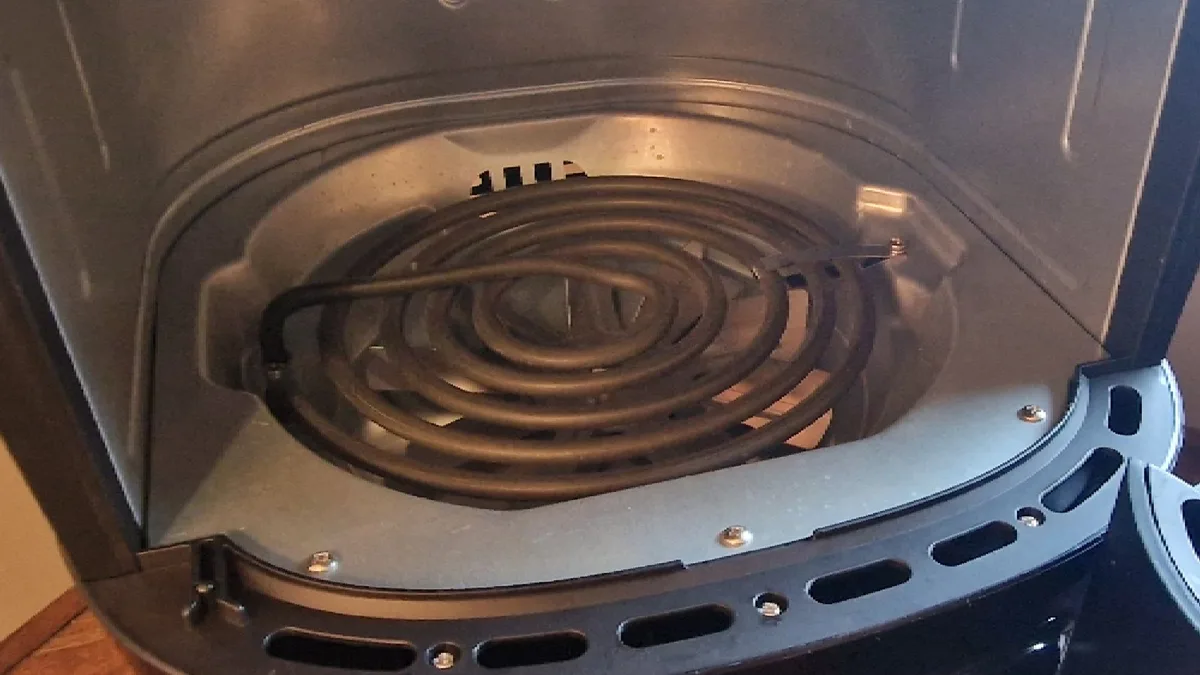
The basket design matters too. The food sits on a perforated tray that allows hot air to circulate underneath. In an oven, a baking sheet blocks airflow to the bottom of the food.
The air fryer exposes the food from all sides.
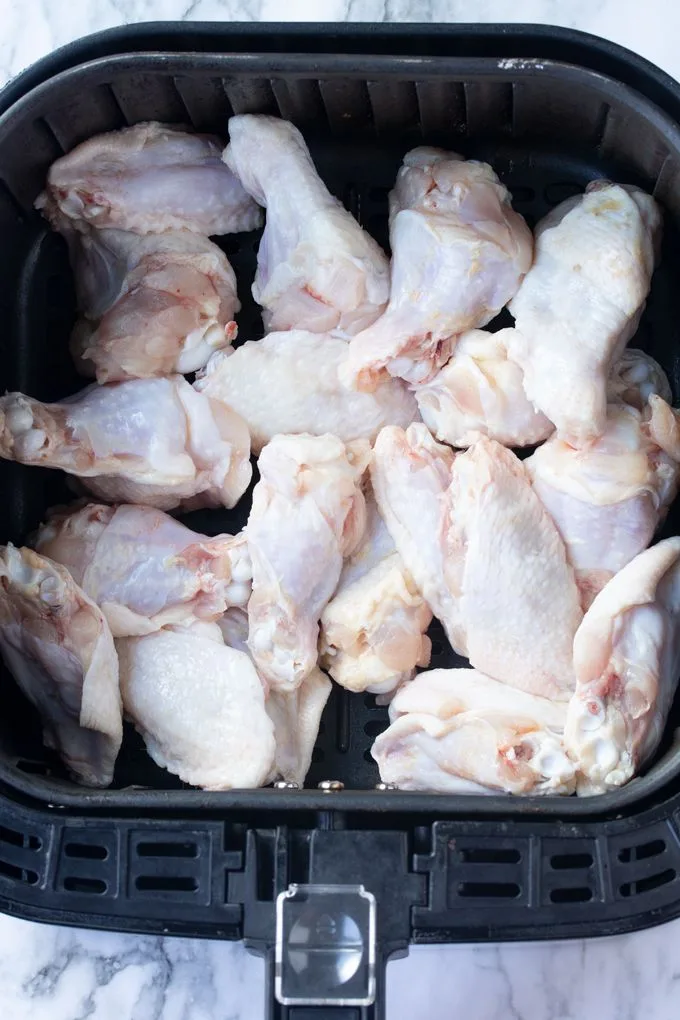
This has two practical effects. Food needs less oil to brown because the hot air does the work. And food needs to be in a single layer so air can reach every surface.
The fan speed is the other major variable. Most air fryers run the fan at a single high speed during cooking. Some models offer adjustable fan settings.
But even at low speed, the airflow is stronger than what you get in a standard oven.
How to Convert an Oven Recipe: The Step-by-Step Workflow
Here is the process that works for the widest range of recipes. Follow these steps in order.
Step 1. Check if the recipe fits. Measure your air fryer basket. If the food would stack or overlap, you need to cook in batches or choose a different recipe.
Overlapping guarantees uneven results.
Step 2. Apply the temperature adjustment. Reduce the listed oven temperature by 25°F. For baked goods and breaded items, you might reduce by 30 to 40°F.
We will cover those exceptions in the next section.
Step 3. Estimate the new cooking time. Multiply the original time by 0.75 to get your first check point. If the recipe says 20 minutes, check at 15 minutes.
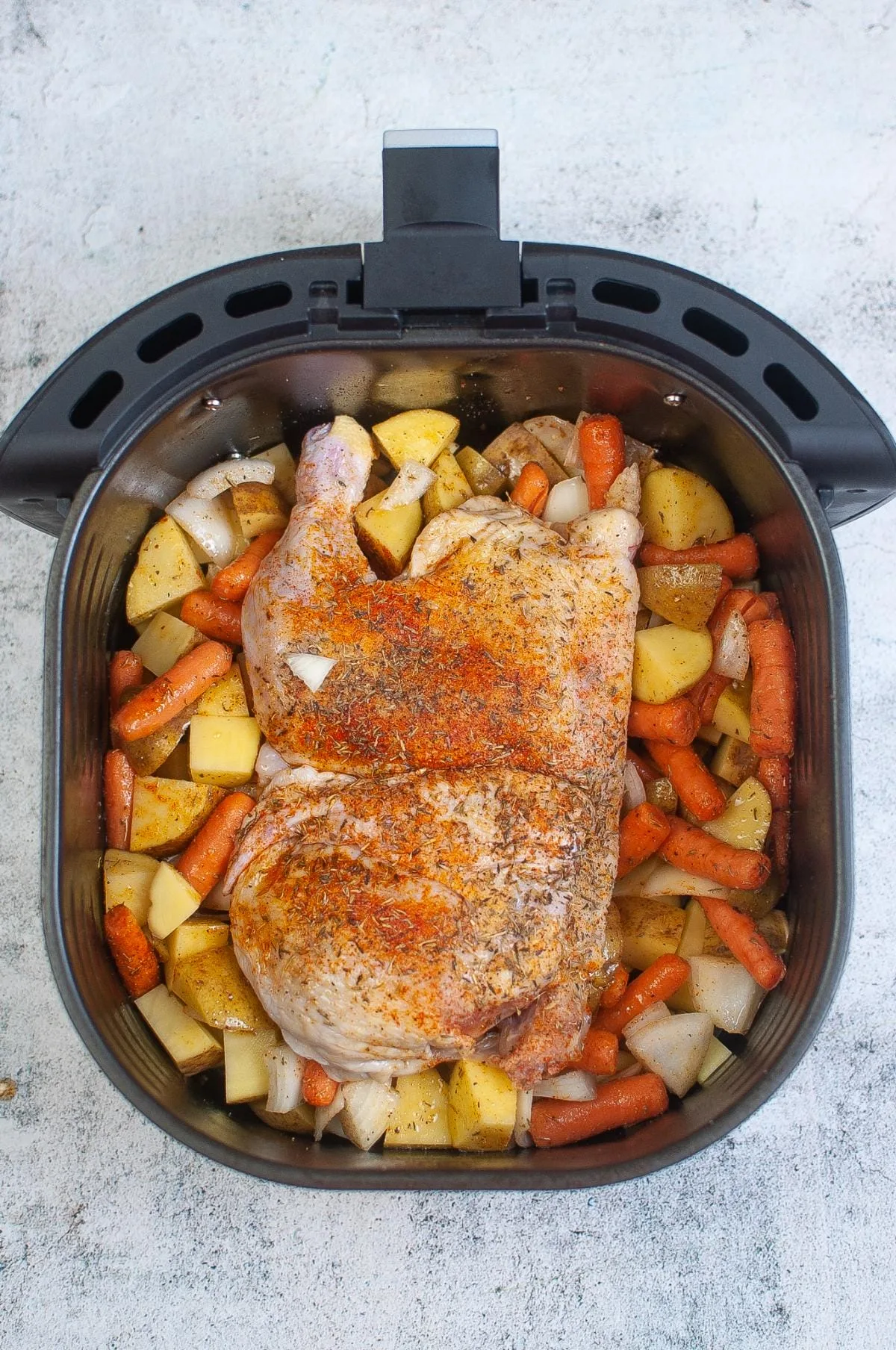
Step 4. Prepare the food for air frying. Toss or brush it with a light coating of oil. Arrange it in a single layer with small gaps between pieces.
Do not crowd the basket.
Step 5. Preheat the air fryer. Most models take 2 to 4 minutes. Preheat while you prepare the food.
Step 6. Cook for the shortened time. Open the basket at your check point. Shake or flip the food.
Check for doneness visually and with a thermometer if needed.
Step 7. Add time in small increments. If the food needs more, add 2 minutes and check again. Repeat until done.
Step 8. Rest before serving. Food continues cooking from residual heat for a minute or two after it leaves the air fryer. Account for that carryover, especially with meat and baked goods.
This workflow handles about 80 percent of common recipe conversions. The exceptions come down to food category, which we cover next.
Recipe-by-Recipe Branch: Meat, Cakes, Vegetables, and Frozen Food
Different foods respond differently to the air fryer's intense heat. Here is how the conversion changes by category.
Meat and poultry. Use the standard 25°F drop. Use a thermometer to confirm doneness. Thicker cuts benefit from a lower temperature and longer time to prevent burning the outside.
Reduce by 30°F instead of 25°F for steaks and chicken breasts over one inch thick.
Breaded and battered foods. These are the air fryer's specialty. Keep the 25°F reduction. Spray the breading lightly with oil for even browning.
Shake the basket halfway through. Check at 60 percent of the original time rather than 75 percent. Breading browns very fast in moving air.
Baked goods. This is the trickiest category. Cakes, muffins, and quick breads rely on gentle, even heat to rise and set. The air fryer's fan can create a crust before the center rises.
Reduce temperature by 30 to 40°F for baked goods. Cover loosely with foil if the top browns too fast. Use a smaller pan that fits the basket and leave extra headroom for rising.
Vegetables. Fresh vegetables need the standard 25°F drop. Toss them in oil and spread them in a single layer. Shake once during cooking.
Check at 70 percent of the original time. Dense vegetables like potatoes need more time than soft ones like zucchini.
Frozen foods. Follow the package instructions for oven cooking. Apply the standard conversion. The main difference is that frozen foods benefit from an extra minute or two of preheating to maintain temperature when the cold food enters the basket.
Shake halfway through.
Fish and seafood. Reduce temperature by 25°F. Check at 60 percent of the original time. Fish cooks very quickly and dries out fast in the air fryer.
Err on the side of undercooking and test with a fork for flakiness.
The key idea across every category is the same. Check early. Check often.
Add time in small bursts. The air fryer rewards attention.
The Most Common Conversion Mistakes (and How to Fix Them)
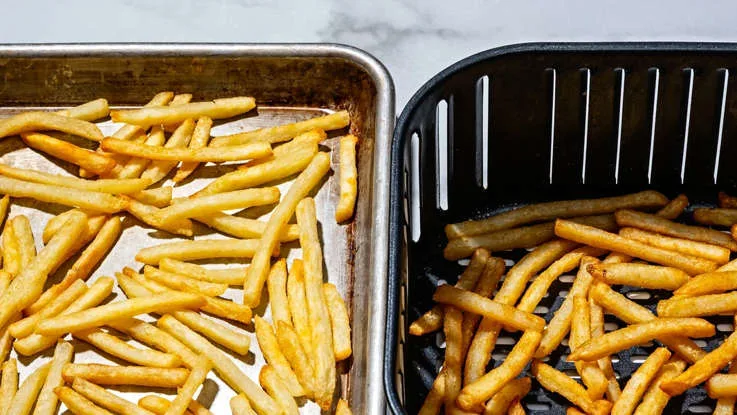
Overcrowding the basket. This is mistake number one by far. When you pile food on top of food, the hot air can't reach every surface. The result is a soggy bottom, a raw middle, and burnt edges.
The fix is simple. Cook in a single layer with small gaps between pieces. If it doesn't fit, work in batches or pick a different recipe.
Keeping the same temperature. At 400°F, the air fryer transfers heat far faster than an oven. Your recipe may look right, but the outside scorches before the inside finishes. Always drop the temperature by 25°F.
For delicate foods like fish or cake, drop it by 40°F.
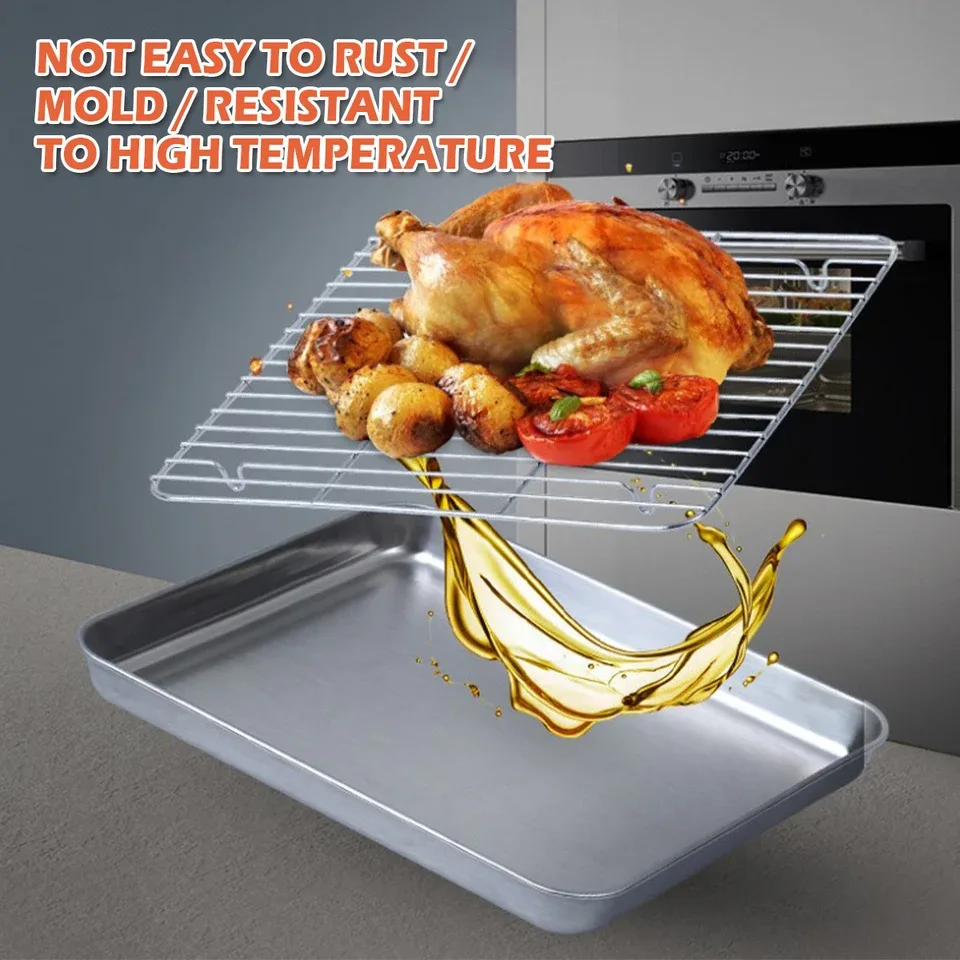
Using the same pan. An oven-safe dish or baking sheet blocks the airflow to the bottom of the food. You end up with a steamed underside. Skip the pan entirely.
Place food directly on the basket tray, or use a perforated air fryer liner that lets air through.
Forgetting to shake or flip. Air fryers don't cook evenly without a little help. Food near the heating element finishes first. Turn or shake the basket halfway through the cooking time.
This simple step fixes most uneven browning problems.
Skipping the preheat. Some models heat up fast enough that preheating feels unnecessary. But dropping cold food into a cold chamber changes the cooking math. Preheat for 2 to 4 minutes, then add your food.
Set a timer so you don't forget.
Air Fryer Conversion FAQs
Do I need to reduce the temperature for every oven recipe?
Yes, with very few exceptions. Most recipes take a 25°F drop in temperature and a 20 to 30 percent time cut. The only recipes that may not need adjustment are very delicate dishes that already cook at low temperatures, like a 275°F slow-roasted meal.
Even then, check early.
Can I convert baking recipes like cakes and muffins?
Yes, but expect a learning curve. Reduce the temperature by 30 to 40°F. Use a pan that fits your basket with room for rising.
The center may set slower than the edges. Cover the top loosely with foil if it browns too quickly. Test with a toothpick.
Why does my food burn on the outside but stay raw inside?
This is a classic symptom of skipping the temperature reduction. The air fryer's rapid heat transfer cooks the surface much faster than an oven. Drop the temperature by 25°F, lower the fan speed if your model has one, and check the food a few minutes early.
Do I need to add oil to recipes that don't call for it?
Not necessarily. Oil helps browning and prevents sticking, but many foods release enough natural fat. Lean items like chicken breast or potatoes benefit from a light spray.
Use one teaspoon to one tablespoon total, and toss to coat evenly.
What if my recipe is already written for a convection oven?
Convection ovens and air fryers work on the same principle, but air fryers circulate air much faster. Use the convection temperature as a starting point and reduce it by about 10°F. Reduce the time by 10 to 15 percent, then check for doneness.
Final Call: When to Use the Air Fryer and When to Keep the Oven
The air fryer shines in specific situations. Use it for crispy vegetables, breaded proteins, frozen snacks, fish, and reheating leftovers. It delivers crunchy texture on par with deep frying, but with a fraction of the oil.
Cleanup takes minutes instead of scrubbing a baking sheet.
It also wins on speed and energy use. As of 2026, most basket-style models run between 1000 and 1800 watts. Heating a small chamber uses far less energy than a full-size oven.
For a single chicken breast or a tray of roasted potatoes, the air fryer saves both time and electricity.
But the oven still has a real place. Large roasts, whole chickens, multiple casserole dishes, and whole sheet-pan meals simply don't fit in a typical basket. Baked goods like bread loaves and angel food cakes need the gentle, consistent heat of a conventional oven.
When you're cooking for a crowd, the oven wins every time.
A good rule from our research: if the food fits in a single layer in your basket, use the air fryer. If it doesn't, or if the recipe relies on rising evenly in a large pan, keep the oven. You don't have to choose one or the other.
Use both where they work best.

Similar Posts