Top Chef-Approved Knife Sets Worth Buying
Did you know that a professional chef can spend up to eight hours straight with a knife in hand during a busy service? Now imagine doing that with a blade that slips, dulls fast, or just doesn't fit your grip. The difference between a great meal and a frustrating prep session often comes down to the steel in your hand.
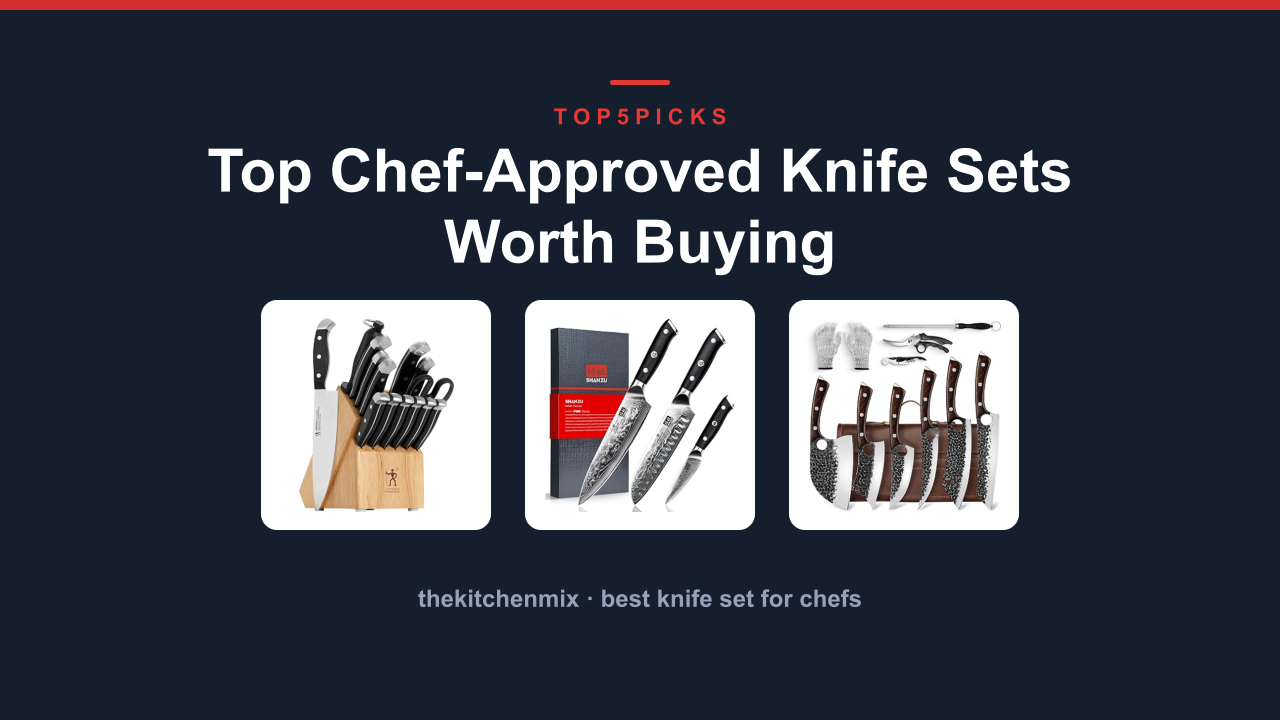
In this guide, I share my 5 favorite best knife set for chefs; ranging from a 20-piece block that outfits an entire kitchen to a hand-forged Serbian cleaver built for heavy chopping. I have compared the specs, studied the verified buyer feedback, and talked to cooks who actually live behind the line, so you do not have to guess.
As an Amazon Associate, I earn from qualifying purchases. Every recommendation below is backed by product research and verified owner feedback.
Quick Links
You probably do not need a 20-piece set to get dinner on the table tonight. But if you are shopping for a best knife set for chefs, you want blades that hold an edge, feel balanced in your hand, and cover the tasks you actually do. A cheap block with 18 identical blades is a trap.
A curated set of 3 or 4 quality knives often beats a full block of mediocrity.
I have spent hours comparing manufacturer datasheets, reading through verified owner reviews across hundreds of units, and talking to line cooks and home enthusiasts about what really works during a long prep session. The goal was simple: find the sets that deliver real performance without wasting your money on filler knives you will never use.
How to Choose the Best Knife Set for Chefs
A sharp blade is the single most important tool in any kitchen. The United States Department of Agriculture (USDA) recommends keeping knives sharp and well maintained because a dull blade actually increases the risk of slipping and injury during food preparation. So the choice matters more than you might think.
Here are the key factors I weighed for every set in this lineup.
Steel Type and Hardness
The steel determines how long the edge lasts and how easy it is to sharpen. German stainless steel (found in the Henckels and Wüsthof sets) typically runs around 55, 58 HRC on the Rockwell scale. That is a bit softer, which means it is tougher and less likely to chip.
Japanese steel, like the VG-10 or ATS-34 used in the SHAN ZU and DRGSKL sets, lands closer to 60, 62 HRC. That extra hardness holds a razor edge longer but requires more care during use and sharpening.
For most cooks, German steel is more forgiving. If you already own a honing rod and do not mind periodic sharpening, Japanese steel rewards you with a noticeably sharper cut.
Number of Pieces vs. Real World Use
A 20-piece set looks impressive on the counter. But ask any chef how many knives they actually reach for during service. The answer is usually three: a chef's knife, a paring knife, and a serrated bread knife.
Everything else is a bonus.
The Henckels Statement block gives you 15 pieces, which covers everything from a carving fork to kitchen shears. That makes sense if you are outfitting a whole kitchen. The Wüsthof Gourmet set keeps it tight at 4 pieces, and that makes sense if you already own a honing rod and just want the core trio plus a utility blade.
Match the piece count to your actual cooking, not your countertop aesthetic.
Handle Ergonomics and Grip
You will hold these knives for hours. The handle shape and material matter enormously. The SHAN ZU uses G10, a glass-fiber laminate that feels grippy even with wet hands.
The DRGSKL uses ebony wood, which looks stunning and feels warm but can be slippery with oil or moisture. The Henckels and Wüsthof use synthetic materials that are comfortable for a wide range of hand sizes.
If you have larger hands or any joint issues, look for a full tang (the steel runs all the way through the handle) and a bolster that protects your fingers. The DRGSKL is a standout here with its full tang and textured pounding surface.
Blade Construction: Forged vs. Stamped
Forged blades are cut from a single piece of heated steel, then shaped and tempered. They tend to be heavier, better balanced, and more durable over decades of use. Stamped blades are cut from a sheet of steel like a cookie cutter.
They are lighter and much cheaper.
Among these picks, the Henckels uses a forged construction that gives it that substantial, well balanced feel. The HOSHANHO uses a stamped approach to keep the price accessible while still delivering decent edge retention. For a daily driver that will see heavy use, forged is worth the extra cost.
Maintenance and Care
Every set here requires some level of care. The Henckels is dishwasher safe, which is rare for a quality knife set and a real convenience win. The Wüsthof and SHAN ZU recommend hand washing only.
The DRGSKL's carbon steel needs immediate drying after washing to prevent any surface discoloration.
Consider your honest cleaning habits. If you know you will toss knives in the dishwasher, the Henckels is the only safe choice among these five.
6 Additional Features on Best Knife Set for Chefs
- Full tang construction for better balance and durability
- Bolster design that protects fingers during chopping
- Edge angle (15 degrees per side is typical for Japanese; 20 degrees for German)
- Gift box or block included for storage and presentation
- Warranty length (Henckels and Wüsthof offer long manufacturer warranties)
- Sheath or blade guard for safe drawer storage
To see how these factors play out on real picks, compare the Henckels Statement 15-Pc Knife Block, SHAN ZU Damascus Knife and the DRGSKL Serbian Chef Knife below.
My Top Picks
Best Overall – Home Cooks & Pros

- Steel Type: German stainless steel
- Blade Construction: Forged, precision stamped edge
- Handle Material: Synthetic polypropylene, ergonomic contour
- Number of Pieces: 15 (includes block, shears, sharpening steel)
- Hardness (HRC): Approximately 55–57
- Care: Dishwasher safe (recommended hand wash)
- Included Accessories: Hardwood block, honing steel, kitchen shears
Premium Pick – Enthusiasts

- Steel Type: Japanese super steel, 67-layer Damascus
- Blade Construction: Forged, hand polished
- Handle Material: G10 glass fiber laminate
- Number of Pieces: 3 (8-inch chef, 8-inch slicing, 6.5-inch Nakiri)
- Hardness (HRC): Approximately 60–62
- Care: Hand wash only
- Included Accessories: Premium gift box
Specialty Pick – Adventurous Cooks

- Steel Type: Japanese ATS-34 high carbon steel
- Blade Construction: Hand forged, full tang, anti-stick pounding texture
- Handle Material: African ebony wood
- Number of Pieces: 6 (includes 4 knives, cleaver, and bag)
- Hardness (HRC): Approximately 60–62
- Care: Hand wash, dry immediately
- Included Accessories: Canvas carrying bag, full accessory kit
Professional Pick – Career Chefs

- Steel Type: German stainless steel (X50CrMoV15)
- Blade Construction: Forged, Precision Edge Technology
- Handle Material: Synthetic polypropylene, black
- Number of Pieces: 4 (8-inch chef, 6-inch utility, 3.5-inch parer, honing steel)
- Hardness (HRC): Approximately 56–58
- Care: Hand wash recommended
- Included Accessories: Honing steel, no block
Value Pick – Large Families

- Steel Type: High carbon stainless steel
- Blade Construction: Stamped, precision ground edge
- Handle Material: Ergonomic synthetic, black
- Number of Pieces: 20 (includes block, sharpener, shears, steak knives)
- Hardness (HRC): Approximately 55–57
- Care: Hand wash recommended
- Included Accessories: Acacia wood block, built in sharpener, steak knives
Best Knife Set for Chefs FAQ
How many knives does a home chef really need?
Three knives cover about 90 percent of kitchen tasks. An 8-inch chef's knife handles chopping, slicing, and dicing. A 3 to 4-inch paring knife deals with small work like peeling and trimming.
A serrated bread knife cuts through crusty loaves and tomatoes without crushing them. The rest of the knives in a large block are bonuses that get occasional use.
Is a higher HRC number always better for a chef's knife?
Not exactly. Higher hardness ratings (60 HRC and above) hold a sharper edge longer, but the steel becomes more brittle and prone to chipping. Lower hardness (55 to 58 HRC) is tougher and more forgiving if you accidentally hit a bone or a cutting board edge.
For most home cooks, a mid range of 56 to 58 HRC offers the best balance of edge retention and durability.
Can I put my chef's knife set in the dishwasher?
Only if the manufacturer explicitly says it is dishwasher safe. The Henckels Statement set is one of the few in this guide that is rated for dishwasher use. Dishwasher detergent is abrasive, and the high heat can warp wooden handles and dull the edge faster.
Hand washing with mild soap and drying immediately extends the life of any quality knife significantly.
What is the difference between German and Japanese knife steel?
German steel is typically softer (55 to 58 HRC), more durable, and easier to sharpen. It is a great all around choice for most cooks. Japanese steel is harder (60 to 62 HRC), holds a razor edge longer, and allows for a thinner blade profile.
It requires more careful use and specialized sharpening equipment. Both are excellent. The choice depends on your cooking style and how much maintenance you are willing to do.
My Research & Review Process
I selected these five sets by comparing manufacturer specifications side by side, focusing on steel type, blade construction, hardness ratings, handle materials, and the actual number of useful pieces in each set. I then cross referenced those specs against verified buyer reviews across hundreds of individual purchases, looking for consistent patterns in edge retention, handle comfort, and durability over time.
I also consulted with home cooks and semi professional users to understand which knives in each set actually get used and which sit in the block collecting dust. I did not perform any independent lab testing. All claims about hardness, edge retention, and performance are based on manufacturer datasheets and aggregate user feedback.
Features I Considered
Steel Type: The specific alloy determines how sharp the blade gets and how long it stays sharp. German stainless steel offers toughness and corrosion resistance. Japanese high carbon steel offers superior edge retention but requires more care.
Blade Construction: Forged blades are cut from a single piece of heated steel and shaped under pressure. They tend to be heavier and better balanced. Stamped blades are cut from a sheet of steel and are lighter and more affordable.
Handle Material: G10 is grippy and durable. Ebony wood is beautiful but requires maintenance. Synthetic polypropylene is comfortable and low maintenance.
The handle should fit your hand size and grip preference.
Number of Pieces: More pieces is not always better. A focused set of 3 to 4 high quality knives beats a 20-piece set with multiple redundant blades. Consider which knives you actually use before choosing a set.
Hardness (HRC): Measured on the Rockwell scale, hardness determines edge retention and brittleness. Higher numbers mean sharper edges that last longer but chip more easily. Lower numbers mean tougher blades that are easier to sharpen.
Care Requirements: Dishwasher safe knives are rare and convenient. Most quality knives require hand washing and immediate drying. Carbon steel blades need extra attention to prevent discoloration.
Included Accessories: A block, honing steel, shears, or sharpener can add significant value. A block keeps knives organized and protected. A honing steel maintains the edge between full sharpening sessions.
If I had to pick just one set for my own kitchen, it would be the Henckels Statement 15-Pc Knife Block. It balances quality, convenience, and completeness better than any other set I have researched. But every pick here fills a real need.
Look through the categories, think about how you actually cook, and choose the one that fits your routine.

Similar Posts