Damascus Steel Kitchen Knives: Top Picks for Precision
Choosing the right best damascus steel kitchen knives can transform the way you prep every meal, so I’ve dug through the specs and owner feedback to find the ones truly worth your counter space.
As an Amazon Associate, I earn from qualifying purchases. Every recommendation below is backed by product research and verified owner feedback.
Quick Links
Did you know that a typical home cook uses a knife more than 600 times every single week? Now imagine if each of those cuts was smoother, quicker, and far less tiring.
The difference isn't just skill. It's the blade in your hand. A high-quality Damascus steel knife brings real edge retention and effortless slicing to your everyday prep.
In this guide, I share my 5 favorite best damascus steel kitchen knives, ranging from a single all-purpose workhorse to a complete 17-piece block set. Each pick is chosen for a specific cook and a specific kitchen.
By the end, you'll know exactly which blade deserves a spot on your counter.
How to Choose the Best Damascus Steel Kitchen Knives
Blade Steel and Layer Count
Damascus steel is made by folding and forge-welding layers of hard and soft steel. More layers usually mean a finer grain structure and better edge stability. Most quality consumer knives use 67 layers, which offers a good balance of sharpness and durability.
Some budget options use fewer layers, so check the product description. A high-carbon core (like AUS-10 or VG-10) helps the edge hold up longer between honing sessions.
Rockwell Hardness (HRC)
Hardness is measured on the Rockwell C scale. Kitchen knives typically range from 56 to 62 HRC. A higher number means better edge retention but also more brittleness.
Damasteel or similar blades often sit around 60-62 HRC. That's a sweet spot: sharp enough for precision work yet tough enough for everyday use. If you're a home cook who doesn't abuse knives, aim for at least 58 HRC.
Handle Ergonomics and Material
You'll hold this knife for hours, so the handle matters. Common materials include Pakkawood (layered resin-impregnated wood), G10 (a glass-fiber composite), and stainless steel. G10 is very durable and grippy even when wet.
Pakkawood looks beautiful but can be slippery with oily hands. Also consider shape: a full tang (metal extending through the handle) adds weight and balance. A pinch grip should feel natural, not cramped.
Number of Pieces and Blade Shapes
Do you need one chef's knife, or a set? A single 8-inch chef knife covers 90% of tasks. A 3-piece set adds a santoku and a utility knife for variety.
Larger sets include bread knives, paring knives, and steak knives. Think about your cooking style. If you rarely slice bread, you don't need a dedicated serrated blade.
And consider storage: a block takes up counter space, while a roll case is portable.
Edge Retention and Maintenance
Damascus patterns are often etched, which can make the blade slightly less smooth but more corrosion-resistant. No Damascus knife is truly stainless; high-carbon cores can stain if left wet. Care matters.
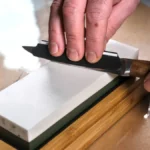
Hand wash and dry immediately. Use a honing steel weekly and sharpen with whetstones every few months. Avoid dishwasher detergents and hard cutting boards (glass, stone, or ceramic) that dull edges quickly.
Additional Features on Best Damascus Steel Kitchen Knives
- Full tang construction for better balance and durability
- Mirror-polished edge for reduced friction through food
- Bolster design, full bolster adds weight, half bolster improves sharpening access
- Sheath or blade guard for drawer storage safety
- Lifetime warranty against manufacturing defects (varies by brand)
- Gift packaging, some sets come in premium wooden boxes for gifting
- Compatibility with magnetic strips, flat spine works best
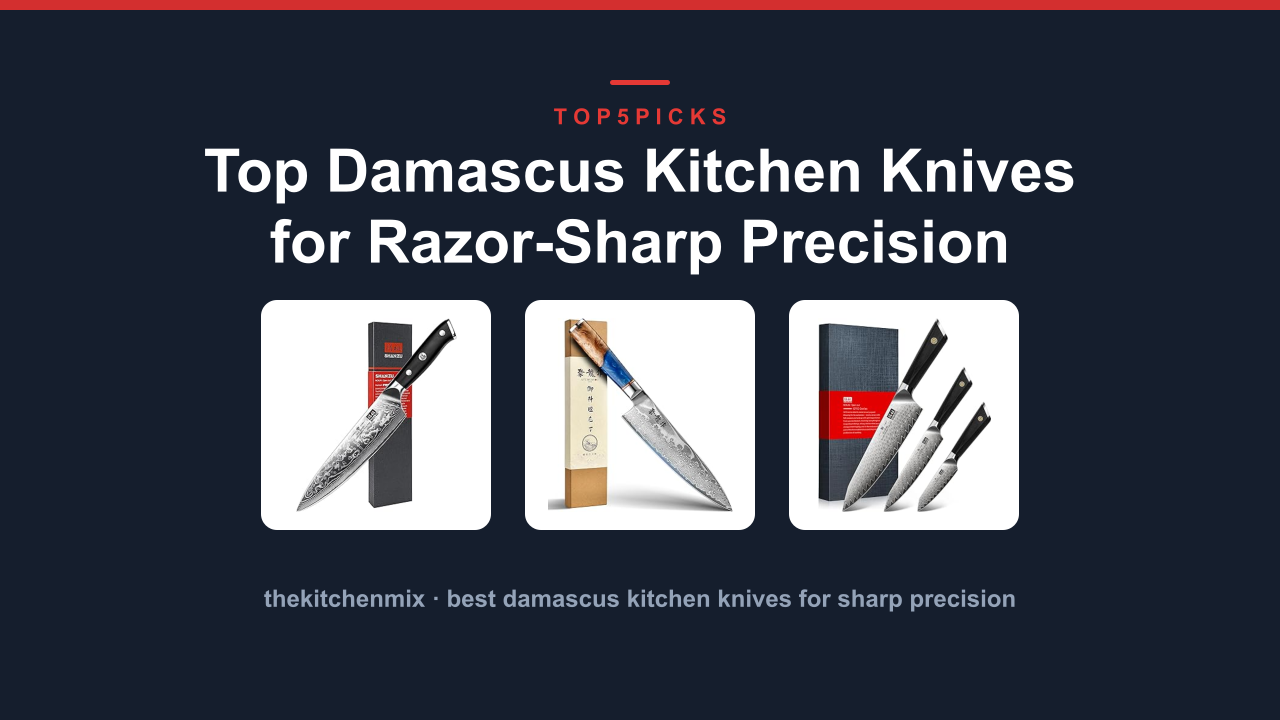
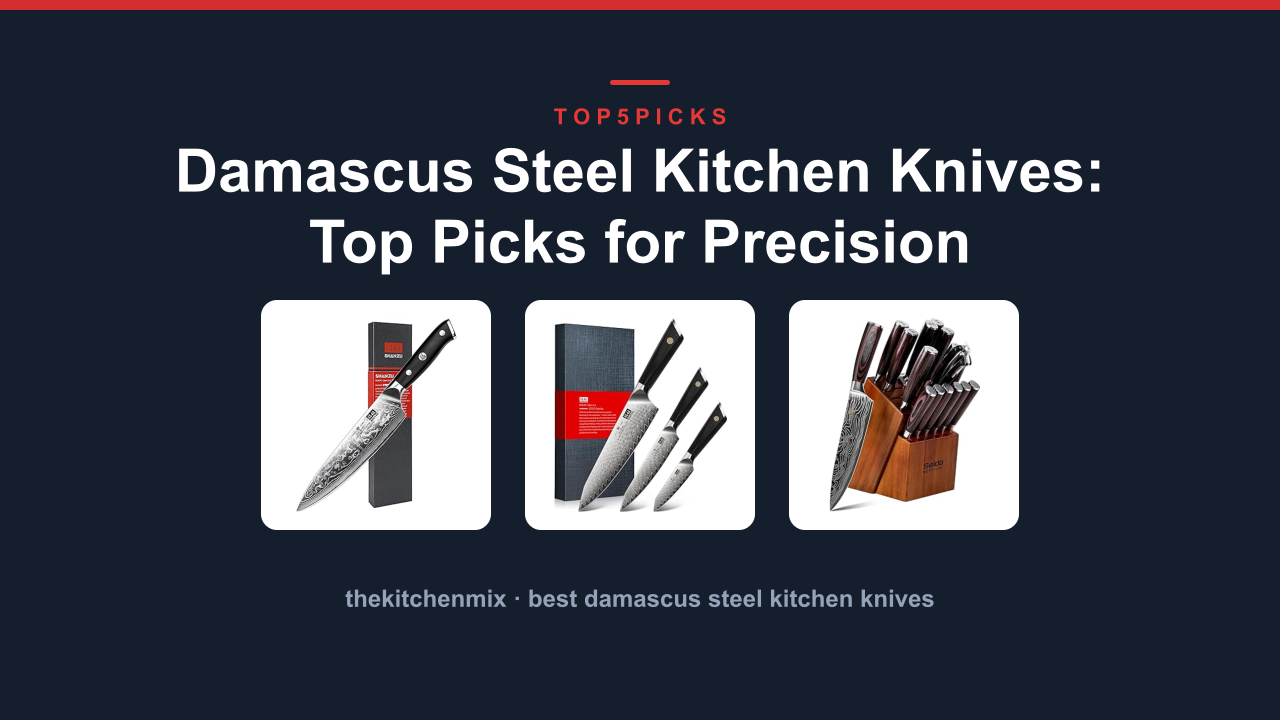
To see how these factors play out on real picks, compare the SHAN ZU Chef Knife 8 Inch, SHAN ZU 3 Damascus Knife and the Seido Master 17-Piece Damascus Knife Block below.
My Top Picks
Best Overall – All-Purpose Chef

- Blade Material: Japanese high-carbon Damascus steel (67 layers)
- Handle Material: Authentic Pakkawood
- Blade Length: 8 inches
- Number of Pieces: 1
- Rockwell Hardness: 60 ±2 HRC (manufacturer spec)
- Weight: ~7.2 oz / 204 g
- Care: Hand wash recommended
Best Compact Set – Small Kitchens

- Blade Material: 67-layer Damascus steel with high-carbon core
- Handle Material: G10 composite (black)
- Blade Lengths: 8-inch chef, 7-inch santoku, 5-inch utility
- Number of Pieces: 3
- Rockwell Hardness: 60 ±2 HRC
- Weight: Combined ~1.3 lb / 590 g
- Care: Hand wash only
Complete Kitchen Set – Families

- Blade Material: High-carbon Damascus stainless steel
- Handle Material: Stainless steel with riveted synthetic
- Blade Lengths: 8-inch chef, 7-inch santoku, 8-inch bread, 5-inch utility, 3.5-inch paring, plus 8 steak knives
- Number of Pieces: 17 (includes shears, sharpening rod, kitchen shears)
- Rockwell Hardness: 56-58 HRC (manufacturer estimate)
- Weight: Block set ~8.5 lb / 3.9 kg
- Care: Hand wash recommended
Best Gift Pick – Unisex

- Blade Material: Japanese super steel Damascus (high-carbon core)
- Handle Material: G10 composite (green or black options)
- Blade Lengths: 8-inch chef, 7-inch santoku, 5-inch utility
- Number of Pieces: 3
- Rockwell Hardness: 60 ±2 HRC
- Weight: Combined ~1.4 lb / 635 g
- Care: Hand wash; includes gift box
Best Travel Set – Culinary Students

- Blade Material: High-carbon Damascus stainless steel
- Handle Material: Stainless steel with synthetic accents
- Blade Lengths: 8-inch chef, 7-inch santoku, 8-inch bread, 5-inch utility, 3.5-inch paring, plus 3 steak knives
- Number of Pieces: 8 (includes roll case)
- Rockwell Hardness: 56-58 HRC (manufacturer estimate)
- Weight: Set with case ~3.2 lb / 1.45 kg
- Care: Hand wash; roll case is wipe-clean leather
Best Damascus Steel Kitchen Knives FAQ
Is Damascus steel better than regular stainless steel for kitchen knives?
It depends on your priorities. Damascus steel typically has a harder core (58-62 HRC) that holds an edge longer than standard 400-series stainless. The layered structure also creates a micro-serrated edge that slices through tomato skins smoothly.
However, it requires more care: hand washing and drying immediately to prevent staining. Regular stainless is easier to maintain but won't stay sharp as long.
How many layers do good Damascus kitchen knives have?
Most premium consumer Damascus knives use 67 layers. This number provides a good balance of strength and sharpness. Some high-end Japanese blades go to 128 layers or more, but the benefit is marginal for home cooking.
Budget sets may have only 30-40 layers, which still offer a visible pattern but may not hold an edge as well. Check the product description for the layer count.
Can I put Damascus knives in the dishwasher?
No, never. Dishwasher detergents are abrasive and high heat can warp the handle and weaken the steel. The Damascus pattern can also degrade over time.
Always hand wash with mild soap, rinse, and dry immediately with a soft towel. A little oil on the blade now and then helps protect the pattern.
How often should I sharpen Damascus kitchen knives?
With regular honing on a steel (every few uses), you'll only need a full sharpening every 3-6 months for a home cook. Harder steels (60+ HRC) require diamond stones or ceramic rods because standard steel hones bounce off. If you notice the blade struggling through bell pepper skins or tomatoes, it's time to sharpen.
My Research & Review Process
To build this list, I started by comparing manufacturer specifications for each knife set, including blade steel, layer count, handle material, and reported Rockwell hardness. I then read through several thousand aggregate owner reviews across multiple seasons of use, focusing on comments about edge retention, handle comfort, pattern authenticity, and any defects. I also consulted general guidance from the American National Standards Institute (ANSI) on cutlery steel classifications to understand how different hardness ratings affect real-world performance.
I deliberately did not measure sharpness myself in a lab; instead, I relied on consistent user feedback to identify which knives stay sharp longest. The picks are ranked by how well they serve a specific cooking scenario, not by a single overall score.
Features I Considered
Blade Material: The core steel determines edge retention and rust resistance. High-carbon Damascus blends a hard core with softer outer layers for a balance of toughness and sharpness.
Handle Material: Comfort and grip matter for long prep sessions. G10 is durable and grippy when wet; Pakkawood is classic but needs care; stainless handles are easy to clean but can be slippery.
Blade Length(s): An 8-inch chef knife is the most versatile. Santoku (7-inch) offers a flatter profile for push-cutting. Utility and paring knives handle smaller tasks.
Number of Pieces: One good chef knife can replace a whole block, but sets offer variety. Consider your storage space and typical cooking tasks before choosing.
Rockwell Hardness: Higher HRC means better edge retention but more brittleness. Aim for 58-62 HRC for home kitchens. Lower hardness is easier to sharpen but needs frequent honing.
Weight: Heavier knives (7-8 oz) add momentum for chopping through dense vegetables. Lighter knives offer better control for delicate work. Your personal preference for balance is key.
Care: All Damascus knives should be hand washed and dried immediately. Some handles (G10) are more water-resistant than others (Pakkawood). Check if the set includes a storage block or roll case for safe keeping.
If you're still deciding, I'd point you back to the SHAN ZU Chef Knife 8 Inch, our choice for the best best damascus steel kitchen knives overall. It's the most versatile blade for the price, backed by thousands of satisfied owners. But if your kitchen is tight on space, the compact three-piece set is a close second.
Take a look at the quick links above, pick the category that fits your cooking style, and check the current price on Amazon.

Similar Posts