Step-by-Step Tutorial: Removing Rust from Antique Cast Iron Cookware
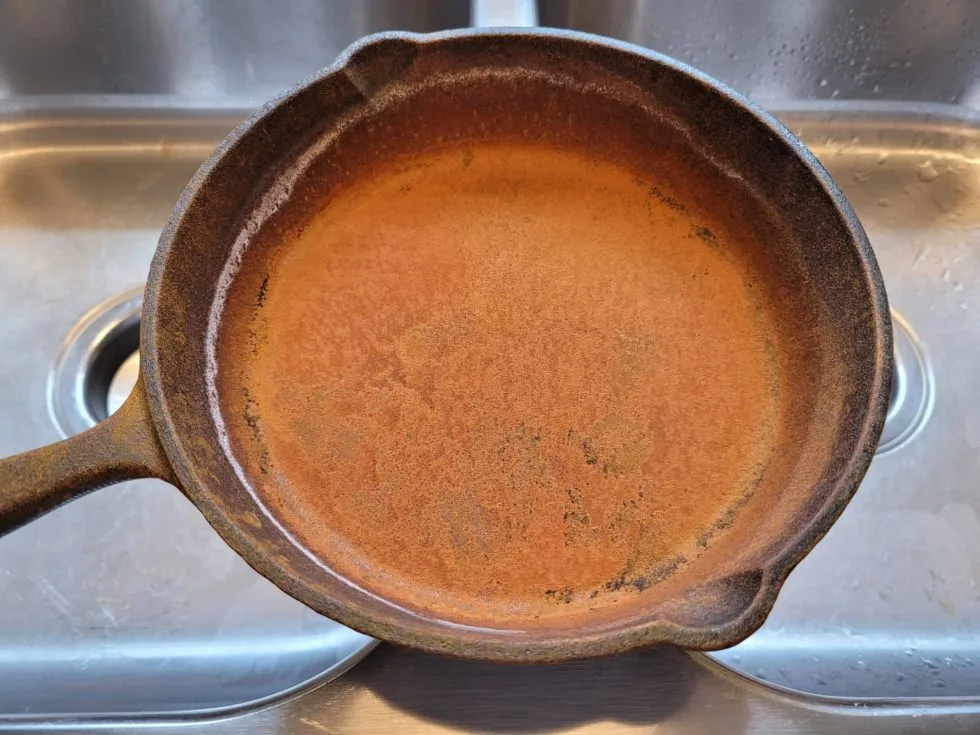
If you’re staring at a rusty cast iron pan and wondering if it’s doomed, here’s the good news: you can almost always fix it. Learning how to get rust off cast iron cookware doesn’t require fancy tools or a chemistry degree. It comes down to one simple question: how bad is the rust?
Most home cooks can restore a rusty skillet in about 30 minutes to an hour using items already in their kitchen. Vinegar, steel wool, and a neutral cooking oil are the main players. Harder cases might need an electrolysis setup or a full seasoning strip, but that’s the exception, not the rule.
As of 2026, the safest and most widely recommended method is still the classic vinegar soak followed by immediate drying and re-seasoning. Let’s walk through how to figure out exactly what your pan needs.
Image source: Bing (Web (fair-use with source credit))
Quick Answer
To remove rust from cast iron, scrub the affected area with steel wool or a chainmail scrubber. For stubborn rust, soak the pan in a 1:1 vinegar and water solution for 15 to 30 minutes. Rinse thoroughly.
Dry the pan immediately with a towel and then on low heat. Apply a thin layer of cooking oil. Bake the pan upside down at 400°F for one hour.
Let it cool in the oven.
Start Here: What Type of Cast Iron Are You Restoring?
Before you grab any scrubbing tool, you need to know exactly what kind of cast iron you’re working with. This is the most common mistake people make when learning how to clean rusty cast iron pans. The wrong approach can ruin a perfectly good piece of cookware.
Bare cast iron is the classic black skillet. It has a rough or slightly pebbled cooking surface that darkens over time as seasoning builds up. This is the type that can (and should) be stripped and re-seasoned when rust appears.
Enameled cast iron looks completely different. It has a smooth, glass-like coating inside and outside, often in bright colors like cream, red, or blue. The enamel is non-reactive and doesn’t need seasoning.
But it’s also fragile. Scrubbing enameled cast iron with steel wool or abrasive pads will scratch the coating permanently.
Here’s how to tell them apart at a glance:
| Feature | Bare Cast Iron | Enameled Cast Iron |
|---|---|---|
| Surface feel | Rough, slightly grippy | Smooth, glossy, glass-like |
| Color inside | Dark gray to black | Usually cream or light gray |
| Needs seasoning | Yes | No |
| Reacts to acid | Yes (can strip seasoning) | No (non-reactive) |
| Can use steel wool | Yes | No |
If you have enameled cast iron and the rust is actually staining the surface rather than eating into it, that’s a different problem. Real rust on enameled cast iron means the enamel has chipped or cracked. In that case, the pan is no longer safe to use for cooking.
You can’t repair chipped enamel.
For bare cast iron, keep reading. That’s where the restoration process really shines.
Manufacturer specifications from major cast iron producers confirm that bare cast iron can handle aggressive cleaning. It’s literally the same material that was used for campfire cooking two centuries ago. A little vinegar and elbow grease won’t hurt it.
Quick Decision Guide: Light, Medium, or Heavy Rust?
Not all rust is equal. The approach that works for a few surface spots will destroy a pan that’s been sitting in a damp basement for years. Match your method to the severity of the rust.
That’s the core logic of any good rust removal workflow.
Light rust looks like scattered orange or brown spots on an otherwise seasoned surface. You can feel slight roughness when you run a finger over it. The pan might still have a decent layer of seasoning in the untouched areas.
Medium rust covers a large portion of the cooking surface. The original seasoning is mostly gone, and the rust has started to darken into a deeper brown or reddish-orange tone. The surface feels noticeably rough.
Heavy rust is when the entire pan is covered with a thick, scaly layer. The rust may have pitted the iron surface, creating small divots or craters. The pan looks more like a found object than cookware.
Here’s the simple decision tree:
| Rust Severity | Visual Cue | Recommended Method | Time Required |
|---|---|---|---|
| Light | Orange spots, some seasoning left | Salt and oil scrub or short vinegar wipe | 10 to 15 minutes |
| Medium | Even orange-brown coverage, seasoning gone | Vinegar soak (1:1 with water) for 20 to 30 minutes | 30 to 45 minutes |
| Heavy | Thick scaly rust, pitting visible | Electrolysis or lye bath for full strip | Several hours to overnight |
If you’re unsure, start with the gentlest method first. You can always escalate. But you can’t undo over-scrubbing or soaking a pan for too long.
Light Rust: The 15-Minute Scrub and Re-Season Method
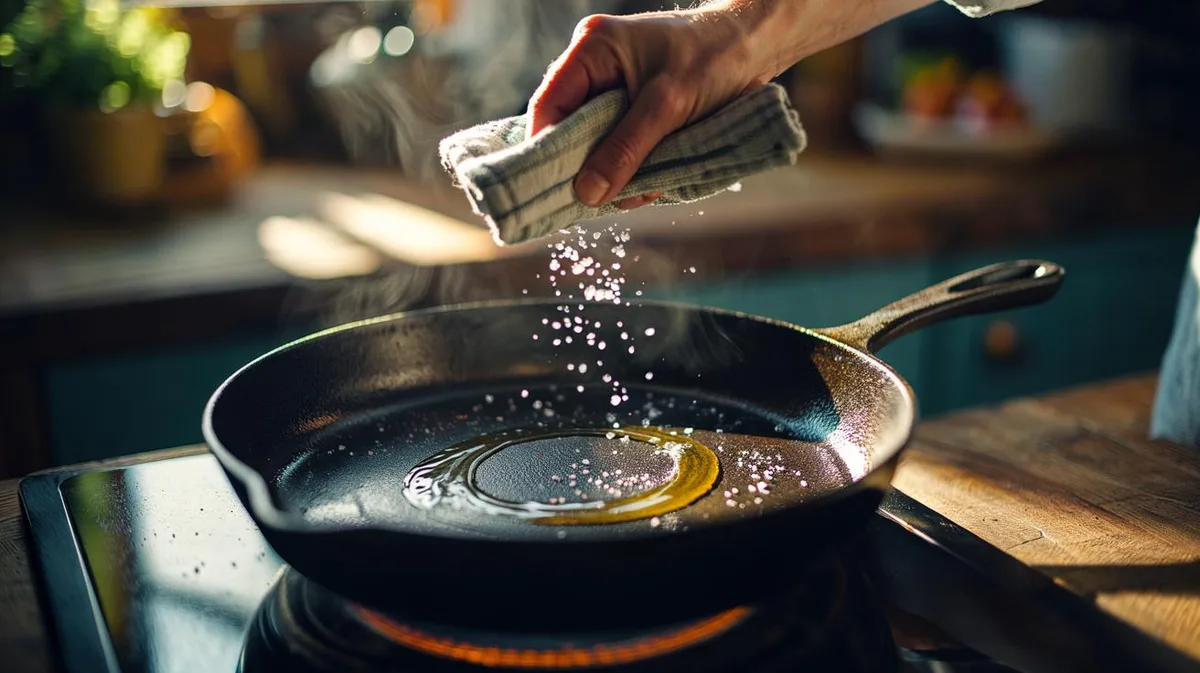
Image source: Bing (Web (fair-use with source credit))
Light rust is the best-case scenario. You caught it early, and the fix is quick. This method preserves as much of the existing seasoning as possible while removing only the rust itself.
What you’ll need:
- Coarse kosher salt or fine sea salt
- A stiff brush or chainmail scrubber
- Paper towels
- Dish soap (only this once)
- A neutral cooking oil (vegetable, canola, or grapeseed)
Step 1: Scrub with salt and oil. Pour about two tablespoons of salt into the pan. Add just enough oil to make a thick paste. Rub the paste over the rusty spots using a paper towel or a scrub brush.
The salt acts as a gentle abrasive that lifts rust without grinding into the seasoning underneath. Keep scrubbing until the rust is gone.
Step 2: Wash with soap. Contrary to old cookware myths, a little dish soap is fine for this one-time cleaning. Use warm water and a soft sponge. Rinse thoroughly.
Step 3: Dry immediately. This is non-negotiable. If you leave water sitting on the surface for more than a minute, flash rust can form. That’s a thin layer of orange rust that appears almost instantly on bare iron.
Dry the pan with a clean towel, then place it on a low burner for two to three minutes to evaporate any moisture you missed.
Step 4: Apply a thin oil layer. Use about half a teaspoon of oil. Rub it over the entire cooking surface with a paper towel. Try to wipe off as much oil as you put on.
You want a microscopically thin layer.
Step 5: Heat to set. Place the pan in a 350°F oven for 15 minutes. Let it cool in the oven. That’s it.
For most light rust jobs, this method restores the pan to functional condition in under 20 minutes. You don’t need to fully strip and re-season unless there are large bare patches.
Medium Rust: Vinegar Soaks Without Ruining the Pan
Medium rust means the seasoning is gone from most of the cooking surface. You’re dealing with exposed iron that has oxidized. The salt scrub won’t cut it here.
You need a chemical approach that dissolves rust without damaging the underlying metal.
Vinegar is the go-to for this. It’s acetic acid, which reacts with iron oxide (rust) to form water-soluble compounds that rinse away cleanly. But here’s the catch: vinegar doesn’t discriminate.
It will keep dissolving iron if you leave it in too long. Over-soaking can cause pitting and etching.
The golden ratio: Mix equal parts white vinegar and water. Submerge the rusted pan completely. Check it every five minutes.
| Soak Time | Effect | Best For |
|---|---|---|
| 5 to 10 minutes | Light rust lifts, seasoning unaffected | Spot treatment |
| 15 to 20 minutes | Medium rust becomes removable | Half-covered pans |
| 25 to 30 minutes | Most rust softens, seasoning fully stripped | Full restoration |
| Over 30 minutes | Risk of pitting and surface damage | Not recommended |
Step 1: Prepare your workspace. Use a plastic tub or a large container that can fully hold the pan. Line the bottom with a towel to protect the surface. Pour in the vinegar solution.
Step 2: Submerge and monitor. Place the pan in the solution. Set a timer for 10 minutes. Pull the pan out and scrub with steel wool or a stiff brush under running water.
If rust is still visible, return it to the solution for another 5 to 10 minutes.
Step 3: Scrub away the residue. Once the rust looks loose and orange, scrub the pan thoroughly with steel wool. You should see bare gray iron underneath. Rise well with warm water.
Step 4: Neutralize the acid. Mix one tablespoon of baking soda with two cups of water. Rub this over the entire pan. This stops the vinegar from continuing to react.
Rinse again.
Step 5: Dry and season immediately. This step is critical. Bare iron will flash rust within minutes if left wet. Dry the pan with a towel.
Then put it in a 200°F oven for five minutes to evaporate any leftover moisture.
From here, you move to the full re-seasoning process covered in the next section. Medium rust almost always requires at least two layers of new seasoning to build back a functional non-stick surface.
What to avoid: Do not use vinegar on enameled cast iron. The acid can degrade the enamel surface over time. Do not let vinegar dry on the pan.
And absolutely do not leave the pan in the solution longer than 30 minutes total, even if rust remains. Multiple shorter soaks are safer than one long soak.
Heavy Rust: When to Strip, Electrolyze, or Start Fresh
Heavy rust is different. You’re not trying to preserve seasoning at this point because there’s nothing left to save. The goal is to strip the pan down to bare metal and start over.
This takes more time and effort, but the result is a pan that’s as good as new.
Method 1: Lye bath or commercial stripper. A lye bath removes old seasoning and rust in one go. You can buy yellow-cap Easy-Off oven cleaner (the one with lye) and spray the pan inside and out. Run cold water over the trim and hold the brake cleaner all the way down. wait until it cools.
Wrap it in a kitchen trash bag and let it sit for 24 hours. Rinse, scrub with steel wool, and repeat if needed.
Method 2: Electrolysis. This is the gold standard for serious restoration. It uses a low-voltage electrical current to pull rust off the iron without any abrasion. You fill a plastic bucket with water and washing soda.
Attach a stainless steel sacrificial plate to the positive lead. Clip the negative lead directly to the pan. Plug it in and let it run for several hours.
| Method | Pros | Cons | Best For |
|---|---|---|---|
| Lye bath / oven cleaner | Easy setup, kills seasoning fast | Needs gloves and ventilation | Rust with thick seasoning |
| Electrolysis | Removes rust perfectly, no etching | Requires setup, takes several hours | Vintage heirloom pieces |
| Commercial rust remover | No scrubbing, liquid dissolves rust | Can be expensive, not all are food-safe | Deep pitting |
When to buy a new pan instead: If the rust has caused deep pitting across more than 50 percent of the cooking surface, the pan will never perform well. Pitting creates uneven heating and spots where food sticks permanently. A new bare cast iron skillet is about $25.
Your time is worth more than trying to save a pan that’s structurally compromised.
Step-by-step for electrolysis:
- Gather materials: Plastic bucket (not metal), washing soda (sodium carbonate), stainless steel plate, battery charger, heavy copper wire.
- Mix solution: Add one tablespoon of washing soda per gallon of water. Stir until dissolved.
- Set up electrodes: Attach the positive clip to the steel plate. Place the plate on one side of the bucket.
- Attach the pan: Clip the negative lead directly to the cast iron. Submerge the pan fully. Make sure the clips stay above water.
- Run the system: Plug in the charger. You should see bubbles forming on the surface. That’s hydrogen gas forming. Leave it for 12 to 24 hours.
- Finish: Turn off the charger before unclipping. Rinse the pan. Scrub off remaining residue with a brush. The rust will be gone.
For heavy rust, the most important safety rule is ventilation. Electrolysis produces hydrogen gas. Lye produces fumes.
Work outside or with a fan drawing air away from your workspace.
Once the pan is bare metal, the re-seasoning process is exactly the same regardless of how you stripped the rust. Clean, dry, oil, and bake. Multiple layers.
Re-Seasoning and Storage: Locking In Your Work
Getting the rust off is only half the battle. If you stop there, that bare gray iron will flash rust within hours. Re-seasoning is what seals the surface and prevents corrosion from coming back.
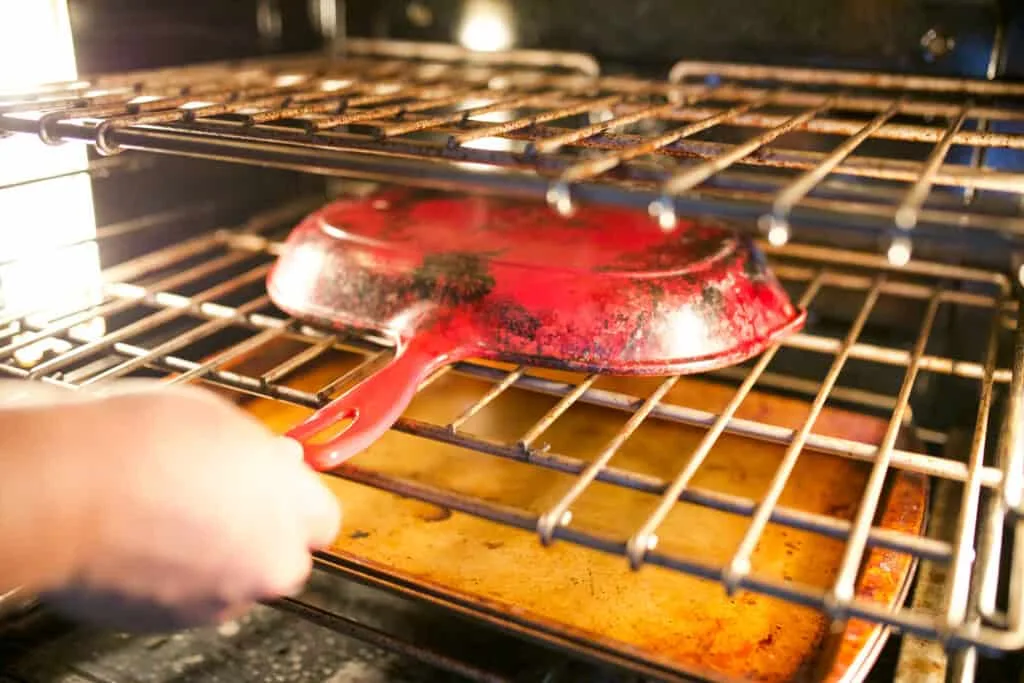
Image source: Bing (Web (fair-use with source credit))
How many seasoning layers do you need?
One layer will protect the pan from flash rust, but it won't give you a non-stick surface. Plan for at least three layers after any rust removal job. Here is the breakdown:
| Layer Count | What It Delivers | When It's Enough |
|---|---|---|
| 1 | Prevents flash rust, slight brown tint | Temporary storage only |
| 2 | Light golden color, partial non-stick | Light re-season after minor scrub |
| 3 | Deep bronze or black, decent non-stick | Standard for most rust repairs |
| 4 to 6 | Glossy black, fully non-stick | Heavy rust full strip restoration |
The re-seasoning process
Preheat your oven to 400°F (204°C). Apply a very thin layer of oil to the entire pan. Grapeseed, vegetable, canola, or flaxseed oil all work well.
The key is to wipe off as much oil as you put on. If the pan looks greasy, it is too thick.
Place the pan upside down on the middle rack. Put a baking sheet on the lower rack to catch any drips. Bake for exactly 60 minutes.
Turn the oven off and leave the pan inside until it cools completely. Repeat for each additional layer.
Storage tips to prevent future rust
Never store cast iron with the lid on tightly. Trapped moisture is the number one cause of rust recurrence. Use a paper towel or cloth between the lid and the pan to absorb humidity.
Keep the pan in a dry cabinet away from the stove. Steam from cooking can settle on the surface and cause spotting. If you live in a humid climate, consider a thin oil wipe before long term storage.
This creates a moisture barrier that stops oxidation before it starts.
Frequently Asked Questions
Can you use vinegar to remove rust from cast iron?
Yes, but only on bare cast iron and only in short intervals. Use a 1:1 ratio of white vinegar to water. Do not soak longer than 30 minutes total.
Rinse thoroughly and dry immediately.
Will baking soda remove rust from cast iron?
Baking soda works as a mild abrasive paste for light surface rust. It is less aggressive than vinegar. Mix it with a little water to form a paste and scrub with a stiff brush.
It won't damage the seasoning underneath.
Is it safe to cook in a rusty cast iron pan?
No. Rust is iron oxide and can flake into your food. Small amounts are not toxic, but they can contain bacteria.
Always remove the rust completely and re-season before cooking.
Can you use steel wool on cast iron?
Yes, on bare cast iron only. Steel wool is fine for scrubbing off rust. Avoid it on enameled cast iron because it will scratch the glass coating permanently.
How do you stop cast iron from rusting again?
Dry the pan thoroughly after every wash. Never let it air dry. Apply a thin coat of oil before storage.
Store in a dry place without a tight fitting lid.
Does soap ruin cast iron seasoning?
Modern dish soap will not damage well-seasoned cast iron. Use it sparingly for cleaning after rust removal. Avoid prolonged soaking in soapy water.

Similar Posts