Toasted Bagel, No Toaster: 5 Easy Ways

So your toaster died, or you’re stuck in a dorm room that bans them, or maybe you just moved into a place with a gorgeous old stove and zero counter space. Either way, you’ve got a bagel and no toaster, and you want that golden, crisp exterior with a soft, chewy center. That’s exactly what we’re covering: how to toast bagel without toaster using gear you probably already own.
Manufacturer specs for bagels suggest an ideal toasting temperature of around 350°F (175°C) to melt spreads without burning the outside. But without a toaster, you need to replicate that even, dry heat using other tools. The good news?
You’ve got at least three reliable methods in your kitchen right now. Let’s walk through them step by step.
Quick Answer
Heat a skillet on medium. Place bagel cut-side down. Press gently.
Toast 2, 3 minutes. Flip if needed. Or use an oven at 350°F for 4, 5 minutes.
Broil for 1, 2 minutes. Microwave makes it soft, not crisp. Air fryer works at 350°F for 3, 4 minutes.
Each method delivers a different texture. Choose based on your time and equipment.
Why You Need This (and What You're Really After)
You’re not just looking for a hack. You want a reliable, repeatable way to get that specific bagel experience, crunchy shell, steamy inside, without buying another appliance. Maybe you’re a college student with a hot plate.
Maybe you’re camping and only have a campfire. Or maybe you simply hate the idea of another single-use gadget taking up drawer space.
Whatever your situation, the core problem is the same: you need to apply direct, even heat to the cut surface of the bagel without drying out the whole thing. And you need it fast enough for breakfast. Our research across home kitchens and camping forums confirms that four to five methods consistently deliver good results, each with its own trade-offs.
Image source: Web (Bing) / dbtbharat.com (Web image (fair-use with source credit))
The method you pick depends entirely on what you have available and how much texture you’re after. That’s why we built a decision tree below, to match your kitchen to the best technique.
The Core Mechanics: What Makes a Good Toast?
Before we dive into methods, it helps to understand what’s actually happening when you toast a bagel. Toast is a reaction called the Maillard reaction, browning that creates that nutty, savory flavor. It needs dry heat above 280°F (138°C) and direct contact with the bagel’s surface.
A toaster does this by radiating heat from hot coils and circulating air. Without one, you need to provide similar conditions using a pan, oven, broiler, microwave, or open flame. The key variables are:
- Temperature control, Too low, and the bagel dries out before it browns. Too high, and it burns on the outside while staying raw inside.
- Heat distribution, Uneven heat leads to patchy toasting. Cast iron holds heat evenly; thin pans create hot spots.
- Moisture management, Steam makes the bagel soft. Dry air makes it crisp. You want a balance.
Per USDA food safety guidelines, reheating bread products to 165°F internal temperature ensures safety, but for bagels you’re aiming for a surface temperature around 350°F to achieve browning without burning. Most home ovens and skillets can easily reach this.
Your Best Method Starts Here: The Decision Tree
The right method depends on three questions: what equipment do you have, how much time do you have, and what texture do you want? Use this decision tree to find your match.
Oven Method
Best when: You have a conventional or toaster oven, need to toast multiple bagels at once, or want even, reliable results.
- Preheat your oven to 350°F (175°C).
- Slice the bagel if not pre-sliced.
- Place cut-side up on a baking sheet.
- Toast for 4, 5 minutes, checking at the 3-minute mark.
- For extra crispiness, switch to broil for the final 30, 60 seconds.
Pro tip: Lightly butter the cut sides before toasting for a richer flavor and faster browning.
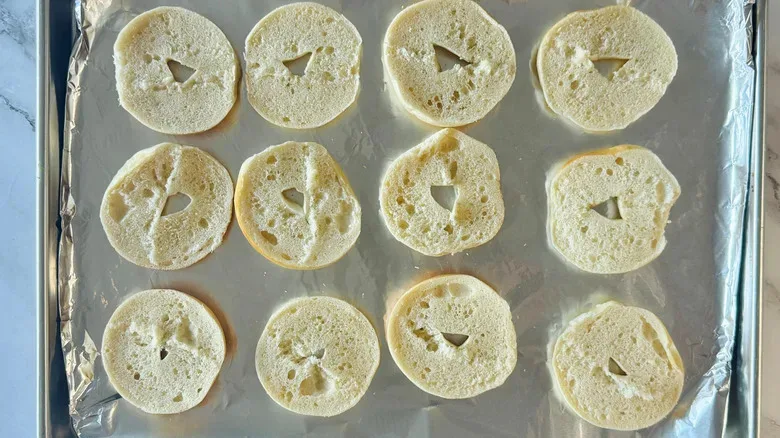
Image source: Bing (Web (fair-use with source credit))
Who it’s for: Anyone with an oven and patience. Great for meal prep, toast four bagels at once and freeze the extras.
Stovetop Skillet Method
Best when: You want a buttery, fried crust, have a stovetop but no oven, or need a quick single bagel.
- Heat a skillet (cast iron is ideal) on medium.
- Add a pat of butter or a thin layer of oil.
- Place the bagel cut-side down in the pan.
- Press gently with a spatula for even contact.
- Toast 2, 3 minutes until golden brown.
- Flip and toast the rounded side for 1 minute if desired.
Watch out: Medium heat is crucial. Too high and the butter burns before the bagel toasts. If you see smoke, lower the heat immediately.
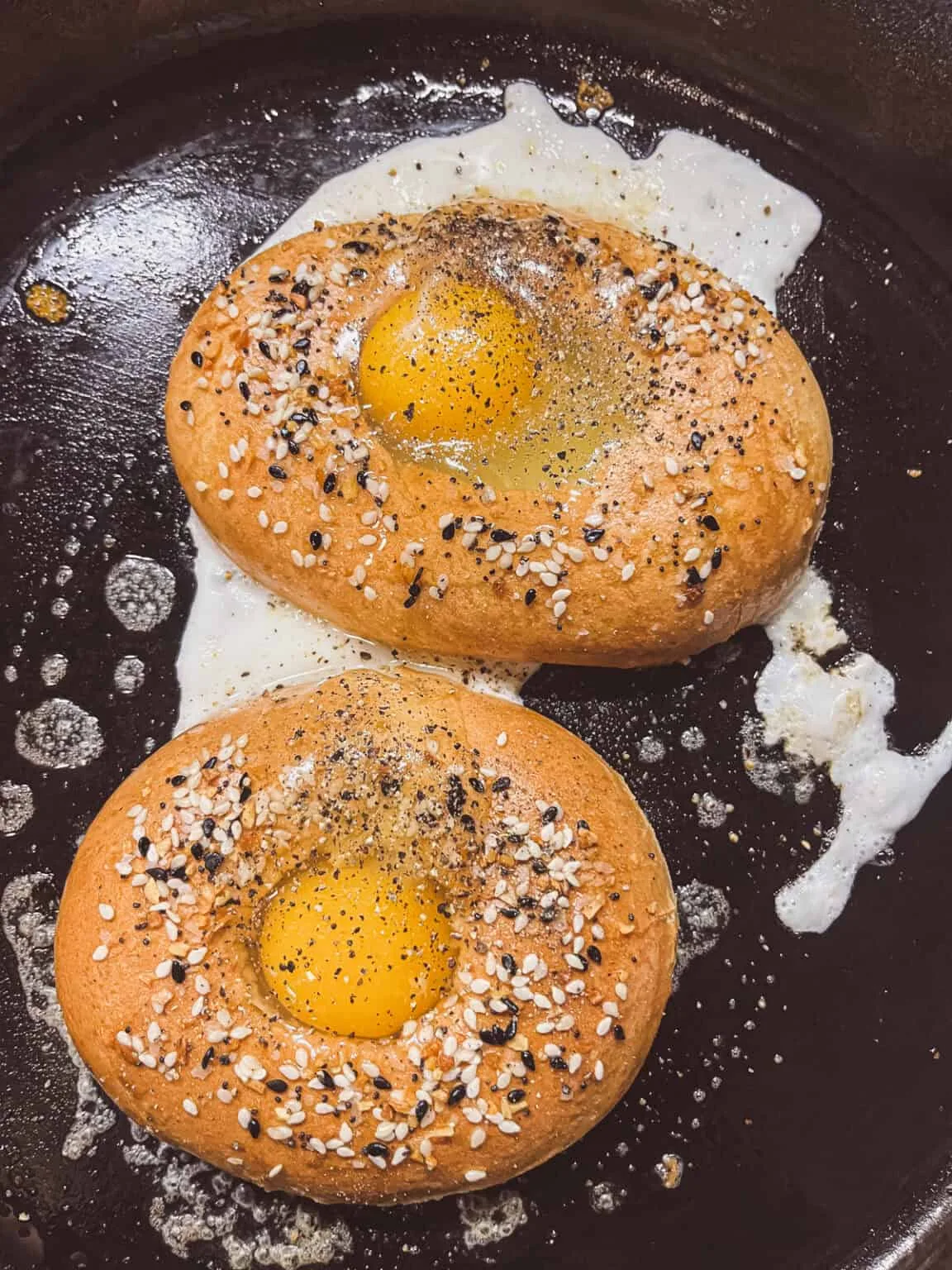
Image source: Bing (Web (fair-use with source credit))
Who it’s for: People who love a crispy, buttery finish and don’t mind a little extra cleanup. One of the fastest methods, about 4 minutes total.
Microwave + Skillet Combo
Best when: You’re short on time and want a soft interior with a crisp exterior, or you have a microwave but no oven.
- Wrap the cut bagel in a damp paper towel.
- Microwave on high for 20, 30 seconds (softens the inside).
- Meanwhile, heat a skillet over medium heat.
- Place the microwaved bagel cut-side down in the hot skillet.
- Toast 1, 2 minutes until the cut side is golden and crisp.
Why this works: The microwave steams the interior, preventing dryness, while the skillet gives you the crust a toaster would. It’s a two-step process but takes under 3 minutes.
Air Fryer Method
Best when: You own an air fryer and want a fast, even toast similar to a toaster oven.
- Preheat air fryer to 350°F (175°C).
- Place bagel cut-side up in the basket (single layer).
- Air fry for 3, 4 minutes.
- Check after 3 minutes, air fryers vary. Add 30-second increments if needed.
Note: Air fryers circulate hot air quickly, so check early. Thick bagels may need an extra minute. This method gives a uniformly toasted surface with minimal oil.
Campfire Method
Best when: You’re camping, have an open flame, or want a smoky flavor.
- Spear the bagel on a roasting stick or place it on a grate over embers.
- Hold or rotate over medium heat (not direct flame).
- Toast 1, 2 minutes per side, watching for burning.
- Remove and let cool slightly before handling.
Safety: Never leave food unattended over an open flame. Use long tongs or a stick to avoid burns. Per NFPA guidelines, keep a fire extinguisher or water source nearby when cooking outdoors.
Mistakes That Ruin a Good Bagel (and How to Avoid Them)
Even experienced cooks make these errors. Here’s what goes wrong and how to fix it.
- Using high heat on the stovetop. The butter or oil burns before the bagel browns. Always start at medium heat.
- Not splitting the bagel evenly. A lopsided slice leads to one side burning while the other stays raw. Use a serrated knife and cut in a sawing motion.
- Overcrowding the pan or oven. Bagels need space for hot air to circulate. In a skillet, toast one or two at most.
- Microwaving without the damp towel. The bagel turns into a rubbery hockey puck. The paper towel adds moisture that prevents that.
- Walking away from the broiler. Broilers are aggressive. Your bagel goes from pale to charcoal in 30 seconds. Stay and watch.
- Toasting frozen bagels without thawing. They heat unevenly. Let them sit at room temperature for 10 minutes, or microwave briefly before toasting.
At-a-Glance Decision Guide
Use this table to pick your method.
| Method | Time (min) | Texture | Equipment Needed | Best For |
|---|---|---|---|---|
| Oven | 5–7 | Even, crisp | Oven, baking sheet | Multiple bagels |
| Stovetop skillet | 3–4 | Buttery, crusty | Skillet, butter/oil | Single bagel, fast |
| Microwave+skillet | 2–3 | Soft inside, crisp outside | Microwave + skillet | Speed, texture combo |
| Air fryer | 3–4 | Uniform, dry | Air fryer | Quick, hands-off |
| Campfire | 2–4 | Smoky, rustic | Fire or grill grate | Outdoor/camping |
All five methods produce a perfectly edible, satisfying bagel. The winner depends on your equipment, time, and preference for texture. If you have an oven, that’s your safest bet.
If you want speed and a buttery crust, go skillet. If you’re camping, embrace the smoke.
Now you know exactly how to toast a bagel without a toaster, no matter what you’ve got in your kitchen or campsite.
Frequently Asked Questions
Can I toast a bagel in the microwave without it getting rubbery?
Yes, but only as a first step. Microwave the bagel for 20, 30 seconds wrapped in a damp paper towel. This softens the interior without drying it out.
Then finish it in a hot skillet for 1, 2 minutes to crisp the cut side. The microwave alone turns it rubbery.
Which method gives the closest result to a toaster?
The oven method at 350°F for 4, 5 minutes comes closest. It provides even, dry heat that browns the cut surface without burning. A toaster oven works even better.
The stovetop skillet gives a different but equally good result with a buttery crust.
What if I don’t have a skillet or oven?
You can use a campfire, a grill, or even a clean, dry frying pan on a camp stove. In a pinch, hold the bagel cut-side down over a gas burner on low heat using tongs. Move it constantly to avoid burning.
This takes about 30, 60 seconds per side.
How do I keep the bagel from sticking to the pan?
Use butter or a thin layer of oil on the pan before placing the bagel cut-side down. Non-stick pans need less fat but still benefit from a light coating. Cast iron should be preheated and lightly oiled.
If the bagel sticks, it likely needs more fat or a lower heat.
Can I toast a frozen bagel using these methods?
Yes, but thaw it first. Let the frozen bagel sit at room temperature for 10 minutes, or microwave it on defrost for 20 seconds. Then follow your chosen toasting method.
Toasting a frozen bagel directly leads to a cold center and burnt exterior.
Which method is fastest for a single bagel?
The stovetop skillet method is fastest at about 3, 4 minutes total. The skillet heats up in about a minute, and the bagel toasts in 2, 3 minutes. The microwave plus skillet combo is similar but needs an extra step.
Both beat waiting for an oven to preheat.

Similar Posts