How to Fix Light Rust Spots on Cast Iron in 3 Simple Steps
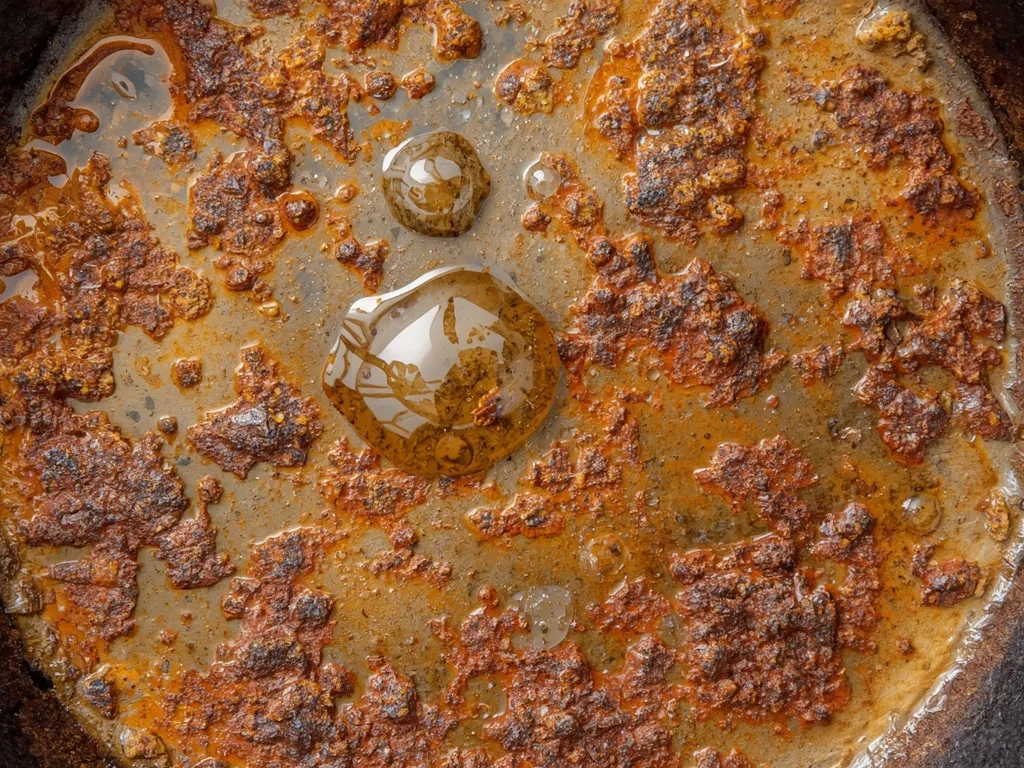
Seeing a rusty pan can feel like a small tragedy. If you’re wondering how to fix rusted cast iron, stop and breathe. It’s a learnable skill, and usually a quick one.
You can handle this with supplies you likely already have in your kitchen or garage. Rust looks destructive, but on bare cast iron, it’s mostly a surface problem that a little elbow grease can solve.
The catch is that no single method works for every pan. The right fix depends on whether you have bare cast iron or enameled cast iron, plus how deep the rust goes. As of 2026, the standard household approach for bare iron is a 1:1 white vinegar and water soak.
That mixture dissolves rust, or iron oxide, without eating into the base metal. It’s a process confirmed in manufacturer care guides and university cooking extensions, including Lodge’s published guidance. Let’s walk through the first, most important decision.
Image source: Bing (Web (fair-use with source credit))
Quick Answer
To fix rusted cast iron, check if your pan is enameled or bare. For light rust on bare iron, scrub and reseason. For heavy rust, soak in a 1:1 white vinegar and water mix.
Soak 15 to 30 minutes, then scrub and neutralize. Never use vinegar on enameled pans. Use a baking soda paste on enameled surface rust instead.
Full steps follow below.
First, Check If Your Pan Is Bare or Enameled: This Changes Everything
Before you grab steel wool, stop. You need to know what kind of cast iron you own. That single answer changes every step that follows.
Bare cast iron is raw iron with a seasoning layer of polymerized oil. It’s matte, gray-silver or dark black, and feels rough to the touch. Rust on bare iron forms anywhere and can be scrubbed off without wrecking the pan.
Enameled cast iron has a fused glass coating. It’s glossy, smooth, and usually white or cream inside, with a colored exterior on brands like Le Creuset or Staub. Rust on enameled pans only appears where chips or cracks expose the iron underneath.
You cannot scrub that coating with steel wool, because you’ll scratch or remove the enamel.
| Bare Cast Iron | Enameled Cast Iron |
|---|---|
| Matte, rough surface | Glossy, glass-smooth surface |
| Rust forms freely across the pan | Rust only at chips or worn spots |
| Can withstand lye, vinegar, and steel wool | Easily damaged by lye, vinegar, and steel wool |
| Needs reseasoning after rust removal | Never reseasoned; enamel is the finish |
If you’re still unsure, check the bottom of the pan. Most enameled pans have a brand stamp like Le Creuset or Staub. Bare pans often read “Lodge” or list a size.
Using vinegar on an enameled pan is a one-way ticket to a ruined finish. The acid attacks the glass coating and exposes more rust, so the pan becomes unsafe to cook on. Take the extra minute to confirm your pan type first.
Have enameled? Jump down to the enameled section near the end of this guide. Bare?
Keep reading. Your method depends entirely on what comes next.
How Bad Is the Rust? Light Surface Haze vs. Deep, Flaking Rust
You’ve confirmed you’re working with bare cast iron. Now look at the damage. Severity determines whether you need a brush or a full rehabilitation.
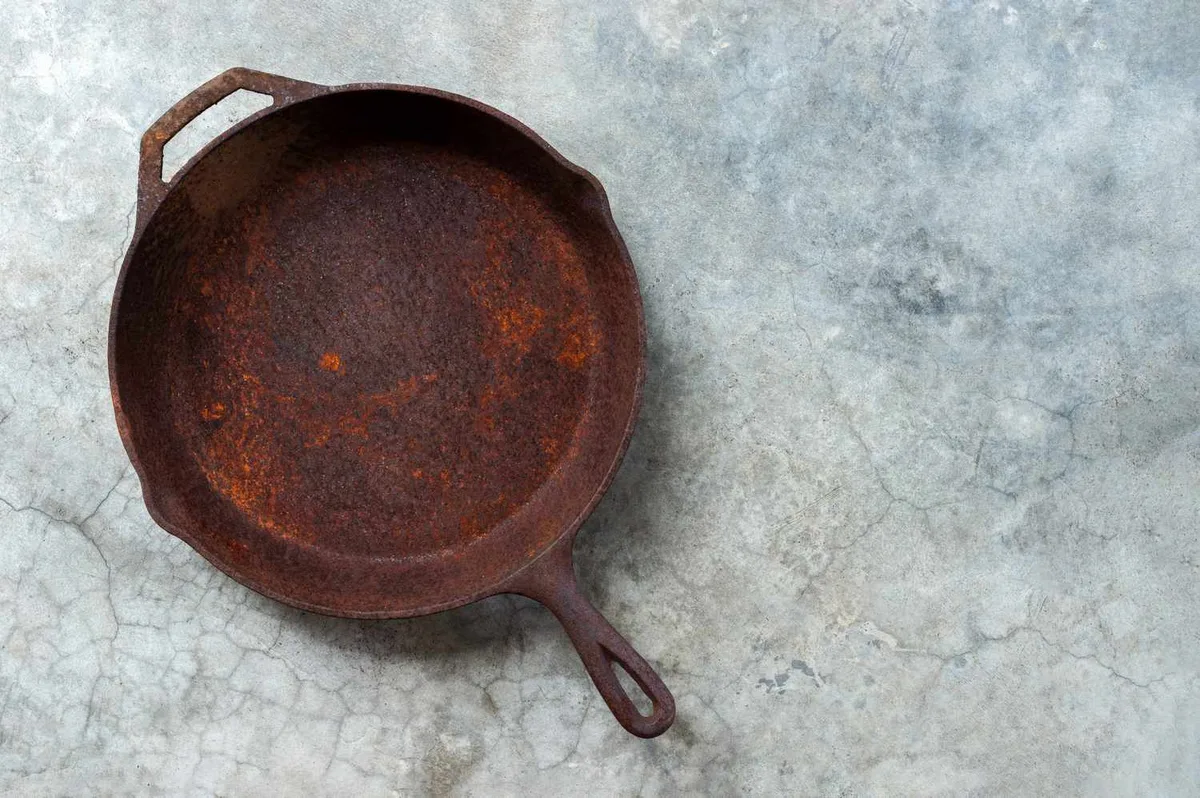
Light surface rust looks like a dusty orange haze. When you wipe it with a dry paper towel, the towel comes away stained but the pan’s surface feels intact. This is fresh rust, commonly caused by leaving the pan wet or in a humid cabinet.
Deep rust looks flaky, lumpy, and often reddish-brown or dark black. It may chip off on your finger, and the pan’s surface shows small pits, like tiny moons. This is the result of prolonged moisture exposure uncovering the iron.
A quick way to test: wipe a finger across the pan. If it comes away orange with a smell of metal, you have active rust. If the texture feels smooth and grey, you might just be staring at old, worn seasoning.
Scrub that with mild soap and water, not a rust remover.
In our research, the line is simple. Light rust responds to a targeted scrub in under 30 minutes. Heavy rust demands stripping the pan down to bare iron and starting fresh, a process that takes hours or days with the vinegar or electrolysis route.
Choose your path below.
Fixing Light Surface Rust on Bare Cast Iron: The Quick Scrub-and-Season Path
You’re lucky. Light rust is the easiest fix in cast iron maintenance, so start with the least aggressive method.
Step 1: Wash the pan with warm water and mild dish soap to remove loose grease and fibers. Dry it thoroughly. This step is not optional, because wet iron flash rusts.
Step 2: Apply a tiny amount of vegetable oil to the rusted area. Use a drop or two, and rub it into the spots with a nylon brush or stainless steel scrubber. The oil acts as a lubricant.
The abrasive does the lifting. You want to scrub away the rust, not the seasoning beneath it.
Step 3: Rinse the pan under warm water and dry it completely. The instant it’s dry, apply a thin coat of oil, about a teaspoon, and rub it in with a paper towel. This protects the iron while your seasoning rebuilds.
Step 4: Place the pan on the stovetop over low heat for five minutes, or pop it in an oven at 350°F for 30 minutes. When it’s cool enough to handle, wipe off any excess oil with a clean paper towel.
Manufacturer specifications from Lodge confirm that light rust needs no stripping. A fine steel wool grade, like super-fine 0000, also works without damaging an intact seasoning layer. Resist the urge to sand or file.
That creates rough patches that collect burns and rust.
Heavy Rust on Bare Cast Iron: The Full Restoration Workflow
Deep rust means you’re starting from zero. That’s fine, because cast iron is one of the few pieces of kitchen equipment that rewards full resets.
First, strip any old seasoning you can see. Spray the pan with oven cleaner containing lye, or soak it in a lye bath for 12 to 24 hours. Lye dissolves polymerized oil but does not touch rust.
You need the bare iron exposed before tackling oxidation. Wear gloves, and work in a ventilated space.
Next, remove the rust. The standard method for most home setups is a 1:1 mixture of white vinegar and water. Submerge the bare iron completely and check every 20 to 30 minutes.
Most rust releases in one to two hours.
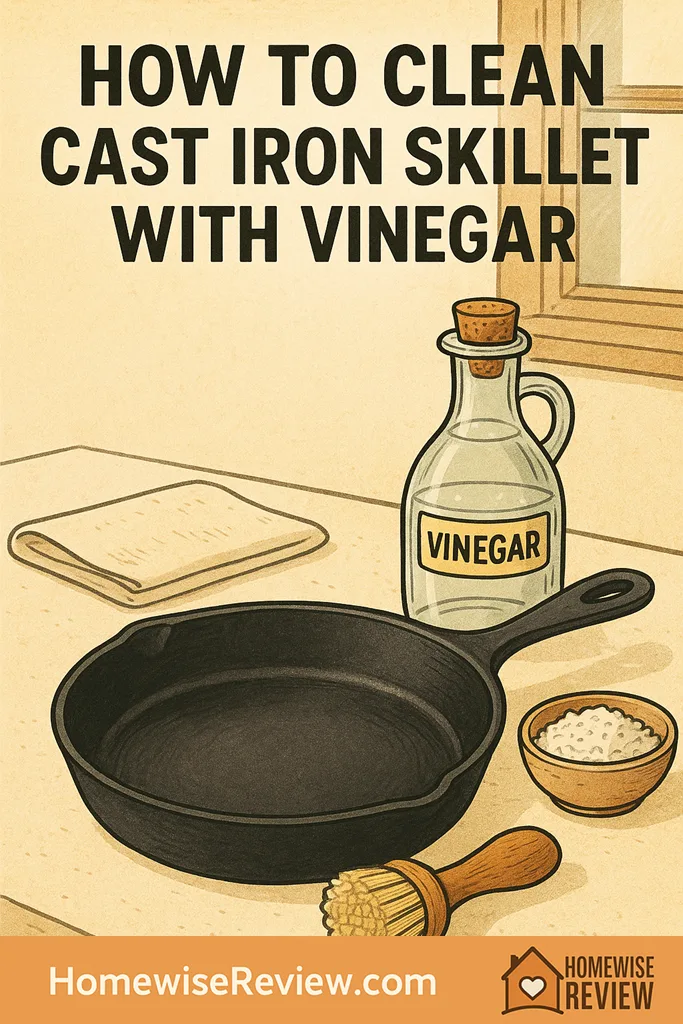
Image source: Web (Bing) / homewisereview.com (Web image (fair-use with source credit))
After the soak, scrub with steel wool to lift the soft rust. Rinse with water, then neutralize the acid with a tablespoon of baking soda in two cups of water. Rub it in, rinse again, and dry the pan immediately.
Expect flash rust, a light orange bloom that appears after drying. Trust the process and oil the pan right away.
The higher-effort alternative is electrolysis. It uses a plastic container, washing soda, a battery charger, and a sacrificial steel anode. That setup takes about 30 minutes to build and works in 12 to 24 hours.
It’s the least aggressive method for antique pans, because it removes rust and built-in crud without eating into the logo or factory finish.
Avoid rust remover chemicals like naval jelly. They’re engineered for machinery, not cooking surfaces, and they can leave residues that are toxic at high heat.
What to Do With Rusted Enameled Cast Iron: When to Stop
Enameled cast iron gets a different playbook entirely. Aggressive rust removal methods are outright dangerous for the pan.
Light rust spots on an enameled surface happen when chips wear through the glass coating. The fix is gentle: make a paste with water and baking soda, apply it to the spot, and let it sit for 15 minutes. Rub with a nylon scrubber or soft sponge.
Rinse and dry.
Never soak enameled pans in vinegar or lye. Acid and alkali attack the enamel itself, not just the rust. That’s not a rumor, it’s chemistry.
The finish becomes rough and brittle, and soon you’ll have worse rust lines around every scratched spot.
You also have to know when the pan’s life is done. If the enamel is chipping inside the cooking surface, don’t cook in it. The fragments are sharp, and exposed cast iron underneath will rust repeatedly.
Most manufacturers will tell you the cookware is a hazard once the coating is compromised.
If the damage is only on the outside bottom or handles, you can clean it carefully and keep cooking. If chips appear on the cooking surface, retire the pan. Use it for bread baking in a parchment liner, or as a lovely countertop planter.
Don’t reach for reseasoning techniques here. That’s a practice for bare iron only.
After the Rust Is Gone: Re-Seasoning Your Pan the Right Way
You removed every speck of rust. Now the bare iron needs a fresh protective layer. Seasoning is the process of baking oil into a hard, nonstick polymer coating.
It’s what turns raw cast iron into a cooking surface that resists moisture and rust.
Start by heating the dry pan in a 200°F oven for 15 minutes. Warm iron absorbs oil more evenly. Remove the pan and apply a very thin layer of oil, about half a teaspoon, to every surface including the handle and bottom.
Flaxseed and grapeseed oils are popular choices. Our research shows grapeseed oil hits a balance between durability and cost.
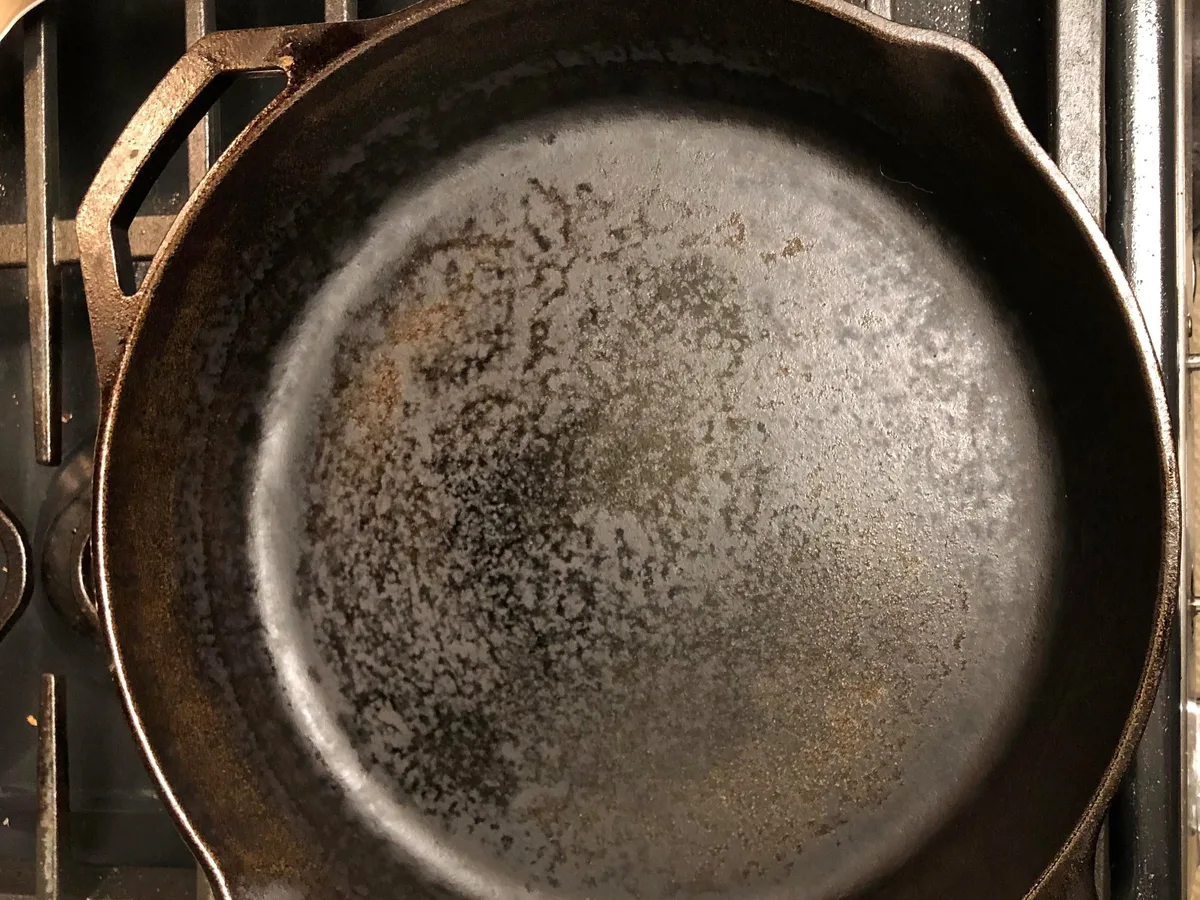
Image source: Bing (Web (fair-use with source credit))
Wipe the oil in with a paper towel. Then wipe it again, as if you’re trying to remove it all. The remaining film is exactly what you want.
Too much oil creates sticky spots that never cure properly.
Place the pan upside down on the top oven rack with a sheet pan underneath to catch drips. Bake at 400°F to 450°F for one hour. Let the pan cool inside the oven.
Repeat this process three to four times for an initial seasoning layer that’s hard and uniform.
After the final round, your pan should look dark brown or black with a satin shine. It will not be fully nonstick yet. That comes with regular use and additional thin layers over time.
Cook high-fat foods like bacon or fried eggs for the first few uses to build the seasoning naturally.
Common Rust-Removal Mistakes That Ruin Cast Iron
The biggest mistake is using vinegar on enameled cast iron. As we covered, the acid attacks the glass coating and creates permanent damage. If you own an enameled pot, never soak it in any acidic solution.
Another frequent error is oversoaking bare cast iron. Vinegar is effective but corrosive. Leaving a pan in a vinegar bath for more than two hours causes surface pitting.
Check every 20 to 30 minutes. When the rust lifts, pull it out.
Skipping the neutralizing rinse is also common. After a vinegar soak, residual acid continues to work on the metal. A quick rinse with a baking soda solution stops the reaction cold.
Many people also apply seasoning too thick. A gloppy layer cures into a sticky, uneven surface that attracts rust. Thin coats, multiple rounds, and thorough wiping are the formulas that work.
Finally, do not use power tools. Angle grinders and wire brushes remove too much base metal. They also create heat that warps the pan.
Hand scrubbing with steel wool is slower but safer.
Frequently Asked Questions
Can I use vinegar on enameled cast iron?
No. Vinegar eats through the glass enamel coating. Use a baking soda paste instead for light surface rust on enameled pans.
How long do I soak cast iron in vinegar?
Soak bare cast iron for 15 to 30 minutes for light rust. For heavy rust, check every 20 minutes up to two hours. Never go longer.
Do I need to strip seasoning before removing rust?
Yes, for heavy rust. Lye or oven cleaner strips the old seasoning. Rust removal only works effectively on bare iron.
What oil is best for reseasoning cast iron?
Grapeseed and flaxseed oils are common choices. They polymerize well at high temperatures. Avoid butter or olive oil for initial seasoning.
Can rusted cast iron be saved?
Yes, in nearly all cases. Even heavily pitted pans can be restored and used safely. Only enameled pans with chipped interiors are a lost cause.
How do I stop rust from coming back after fixing it?
Dry the pan completely after every wash. Apply a thin coat of oil before storing. Keep it in a dry cabinet, not near the stove steam.

Similar Posts