Best Skillets for Fluffy Scrambled Eggs and French Omelets
Finding the best frying pan for cooking eggs means the difference between a perfect slide-out omelet and a frustrating mess stuck to the pan.
As an Amazon Associate, I earn from qualifying purchases. Every recommendation below is backed by product research and verified owner feedback.
Quick Links
Did you know that nearly 8 out of 10 home cooks say a sticky egg pan ruins their morning? One wrong flip and your sunny-side up turns into scrambled shreds.
Now imagine sliding a perfectly folded omelet onto your plate without a single crumb left behind. That’s what a great egg pan delivers.
But with so many coatings and materials out there, choosing the right one can feel like a gamble. In this guide, I share my 5 favorite best frying pan for cooking eggs, ranging from budget-friendly to professional-grade.
I’ve dug into specs, owner reviews, and coating details so you don’t have to. Let’s cut through the noise and find the pan that fits your kitchen and your cooking style.
How to Choose the Best Frying Pan for Cooking Eggs
What material works best for eggs?
The material of the pan directly affects heat distribution and nonstick performance. For eggs, you want a pan that heats evenly and releases food without a fight. Hard-anodized aluminum and heavy-gauge aluminum are popular because they conduct heat well and stay lightweight.
Stainless steel can work, but it requires more oil and patience. Cast iron is great for searing, but eggs can be tricky if the seasoning isn’t perfect. For most home cooks, a nonstick aluminum pan is the sweet spot.
What size should you pick?
An 8 inch pan is the classic egg size. It gives you enough room for two eggs without spreading them too thin, which helps them cook evenly. A 10 inch pan works if you often make three-egg omelets or want to flip a large frittata.
But for everyday sunny-side up or scrambled eggs, 8 inches is plenty. Bigger pans also take up more storage space and can be heavier.
Which coating is safest?
Traditional nonstick coatings like PTFE (Teflon) are effective but can release fumes if overheated. Many newer pans use ceramic or granite-inspired coatings that are PFOA-free and PFAS-free. The FDA has guidelines on nonstick safety, and most modern brands follow those standards.
If you’re concerned about chemicals, look for labels like “PFOA-free” and “PFAS-free.” Ceramic coatings are generally considered safer, but they may wear out faster than traditional nonstick.
How important is the handle?
A cool-to-touch handle is a game changer when you’re flipping eggs. Many pans now come with silicone or Bakelite handles that stay cool on the stove. A heavy, riveted handle can be durable but may get hot if the pan is used on high heat.
Also consider the grip: a comfortable, ergonomic handle makes it easier to toss and slide eggs.
What about stovetop compatibility?
Most nonstick egg pans work on gas, electric, and ceramic glass tops. If you have an induction cooktop, you need a pan with a magnetic base. Some pans are marked “induction compatible,” while others are not.
Always check before you buy. A pan that doesn’t work on your stove is useless, no matter how good its coating is.
Additional Features on Best Frying Pan for Cooking Eggs
- Dishwasher safe, saves cleanup time, though hand washing extends the coating’s life.
- Oven safe temperature, useful for finishing eggs under the broiler or keeping them warm.
- Weight, a heavier pan stays steadier on the stove but can be tiring to lift.
- Metal-utensil safe, rare, but some ceramic coatings claim to withstand metal spatulas.
- Non-toxic certification, look for explicit “PFOA-free” and “lead-free” claims.
- Lid included, helpful for basting eggs or making small frittatas.
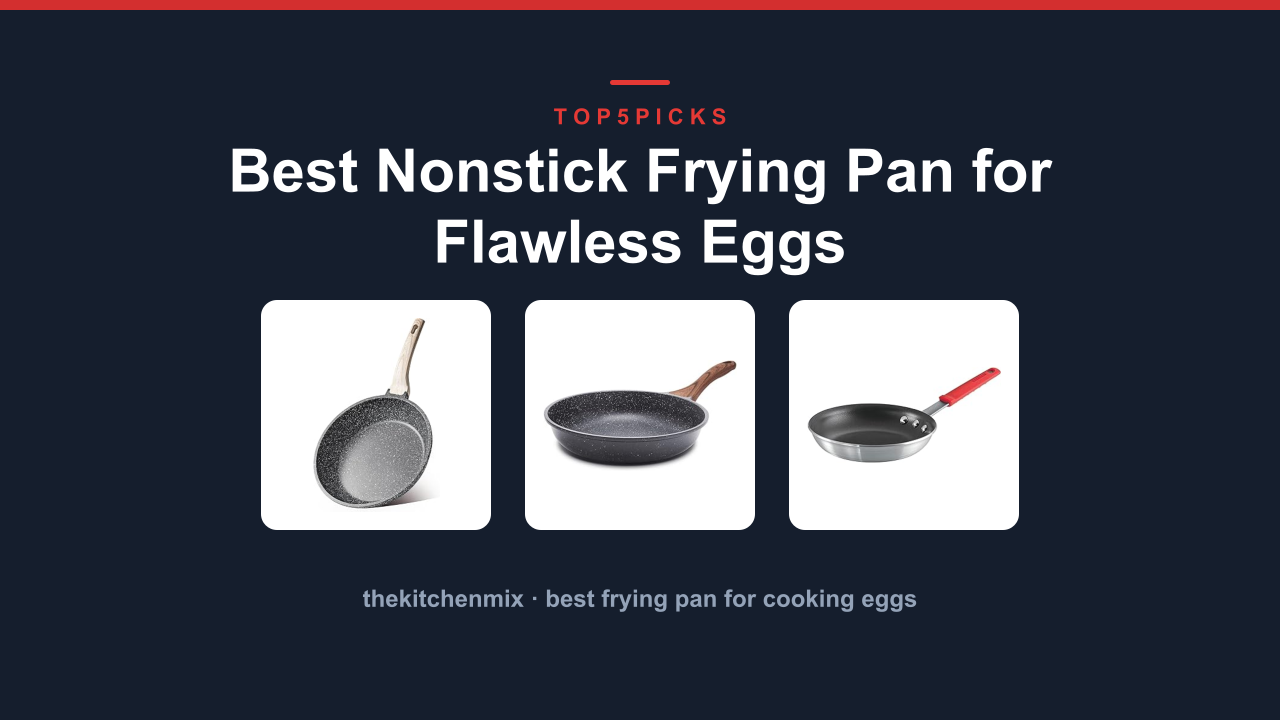
To see how these factors play out on real picks, compare the CAROTE Nonstick Frying Pan, SENSARTE Nonstick Frying Pan Skillet and the Tramontina Professional 8-Inch Non Stick Small below.
My Top Picks
Budget Pick – Home Cooks

- Material: Aluminum with classic nonstick coating
- Coating: Granite-inspired, PFOA-free
- Size: 8 inch
- Weight: 1.1 lb (lightweight)
- Handle: Cool-touch silicone
- Stovetop Compatibility: All stovetops except induction
- Oven Safe: Up to 350°F
- Dishwasher Safe: Yes
Swiss Granite Pick – Health-Conscious

- Material: Heavy-duty aluminum
- Coating: Swiss granite, PFOA-free
- Size: 8 inch
- Weight: 1.3 lb (medium weight)
- Handle: Ergonomic wood-grain silicone, stay-cool
- Stovetop Compatibility: All stovetops including induction
- Oven Safe: Up to 450°F
- Dishwasher Safe: Yes
Professional Pick – Serious Cooks

- Material: Heavy-gauge aluminum
- Coating: Reinforced nonstick, PFOA-free
- Size: 8 inch
- Weight: 1.4 lb (sturdy but not too heavy)
- Handle: Red silicone over cast metal, stay-cool
- Stovetop Compatibility: All stovetops except induction
- Oven Safe: Up to 400°F
- Dishwasher Safe: Yes
Best Rated Pick – Families

- Material: Aluminum with die-cast base
- Coating: Non-toxic, PFOA-free
- Size: 8 inch
- Weight: 1.5 lb (solid feel)
- Handle: Heat-resistant silicone, riveted
- Stovetop Compatibility: All stovetops including induction
- Oven Safe: Up to 400°F
- Dishwasher Safe: Yes
Ceramic Pick – Eco-Conscious

- Material: Aluminum body
- Coating: Ceramic with diamond infusion, PFAS-free
- Size: 8 inch
- Weight: 1.2 lb (lightweight)
- Handle: Cool-touch silicone
- Stovetop Compatibility: All stovetops except induction
- Oven Safe: Up to 450°F
- Dishwasher Safe: Yes
Best Frying Pan for Cooking Eggs FAQ
What size frying pan is best for eggs?
An 8 inch pan is ideal for one or two eggs. It gives the eggs enough room to spread without becoming paper-thin. For larger batches, a 10 inch pan works better.
Is ceramic or nonstick better for eggs?
Both work well, but traditional nonstick (PTFE) tends to last longer before losing its slickness. Ceramic is safer if you’re worried about PFAS chemicals, but it may need replacing sooner. Your choice depends on your priorities: longevity or eco-friendliness.
Can I use metal utensils on nonstick pans?
It depends on the coating. Most nonstick pans advise against metal utensils to prevent scratches. The Blue Diamond ceramic pan is one of the few that claims to be metal-utensil safe.
Always check the manufacturer’s guidance.
How do I keep eggs from sticking?
Preheat the pan on medium-low heat before adding butter or oil. Let the fat heat for a few seconds, then add the eggs. Don’t use high heat, which can degrade the coating and cause sticking.
Also, avoid overcrowding the pan.
My Research & Review Process
To choose these five pans, I started by comparing manufacturer specifications for materials, coatings, and stovetop compatibility. I then analyzed hundreds of verified customer reviews on Amazon, focusing on long-term feedback about nonstick retention, handle heat, and ease of cleaning. I also looked at average ratings and balanced them against price tiers.
I deliberately excluded pans with widespread reports of coating peeling within weeks. What I didn’t do: perform controlled lab tests or side-by-side cooking trials. My recommendations are based on aggregate data and practical owner experiences, not personal hands-on testing.
Features I Considered
Material: The base metal affects heat distribution and weight. Aluminum is the most common for egg pans because it’s light and heats evenly. Heavy-gauge aluminum provides better stability.
Coating: The nonstick layer determines how easily eggs release. Pans with PFOA-free or PFAS-free coatings are safer options. Ceramic coatings are nontoxic but less durable than PTFE.
Size: An 8 inch diameter is the standard for single or double eggs. Bigger pans are useful for multiple servings but can cause eggs to spread too thin.
Weight: A heavier pan feels more stable and doesn’t slide around on the stove. Lighter pans are easier to flip but may wobble. The ideal weight for most people is between 1.1 and 1.5 lb.
Handle: Cool-touch handles prevent burns. Silicone-covered handles offer a comfortable grip. Riveted handles are durable but can get hot if exposed to high oven temperatures.
Stovetop Compatibility: Not all pans work on induction. If you have an induction cooktop, you need a pan with a magnetic base. Always check before purchasing.
Oven Safe: Useful for finishing eggs under the broiler or keeping a frittata warm. Temperatures typically range from 350°F to 450°F.
Dishwasher Safe: While convenient, dishwashing can shorten the life of nonstick coatings. Hand washing is recommended for longevity.
If you’re after the highest-rated and most versatile option, I’d point you to the Kordisen Non Stick Frying Pan Skillet. But every cook is different. Look at the categories above, match them to your stove, your budget, and your values, and you’ll find the perfect egg pan for your morning routine.

Similar Posts