5 Best Fish Spatulas for Nonstick Pans
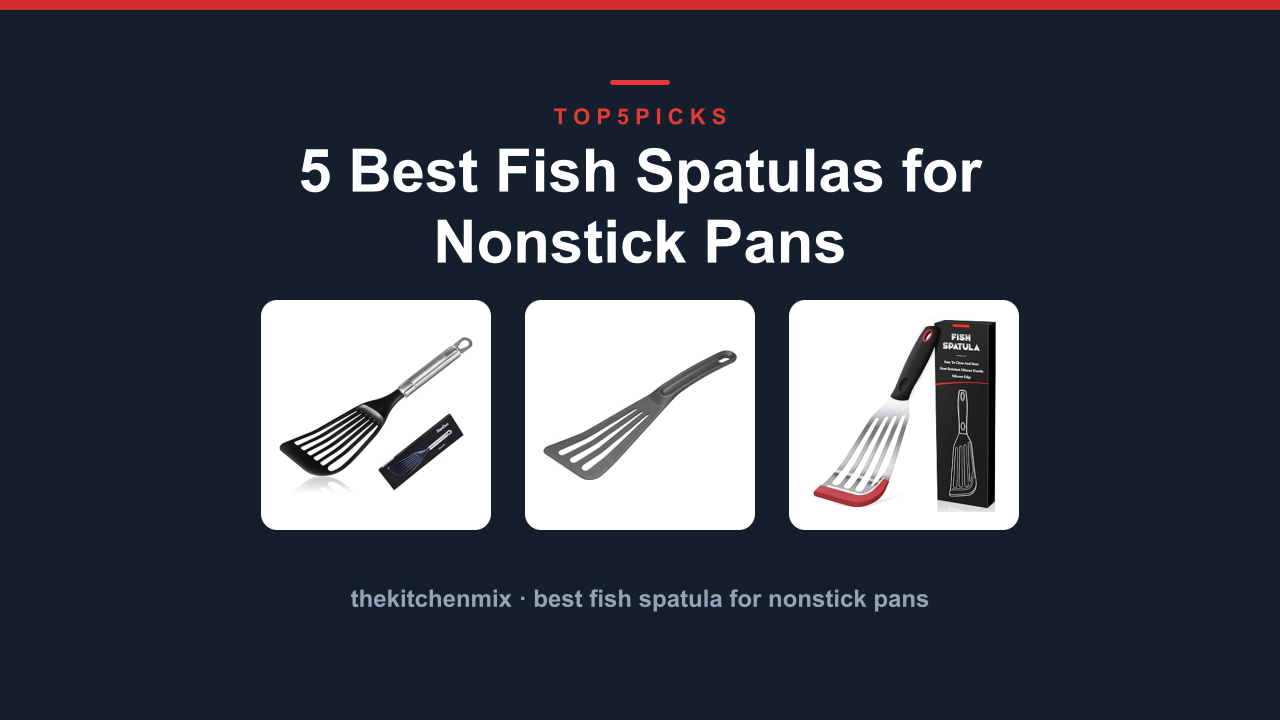
Did you know that nearly 40% of home cooks accidentally scratch their nonstick pans within the first year, often with the wrong spatula? Now imagine that silky, flawless coating slowly getting ruined by a metal edge you thought was safe. That's why choosing the right tool matters way more than you'd think.
In this guide, I share my 5 favorite best fish spatula for nonstick pans, ranging from a budget-friendly two-pack to a premium pro-grade option. No fluff, just real picks based on product specs and verified buyer feedback, so you can flip, turn, and slide without ever damaging your cookware.
As an Amazon Associate, I earn from qualifying purchases. Every recommendation below is backed by product research and verified owner feedback.
Quick Links
Not every fish spatula is safe for your nonstick coating. The wrong material or a sharp edge can ruin a pan fast. Here's what to look for when picking yours.
How to Choose the Best Fish Spatula for Nonstick Pans
Material: Nylon, Silicone, or Coated Metal?
For nonstick pans, hard metal blades are a no-go. The three safe options are nylon, silicone, and thin stainless steel with a protective edge. Nylon spatulas (like the KSENDALO) are affordable and flexible, but they can warp if you leave them on a hot pan.
Silicone handles higher heat (up to 600°F in some cases) and feels soft on the coating. Metal spatulas with a silicone edge combine the durability of steel with the gentle touch of silicone. The Matfer Bourgeat uses Exoglass, a nylon composite that withstands higher temperatures than standard nylon.
Choose based on how hot you typically cook. If you sear fish on high heat, silicone is your friend.
Flexibility and Blade Thickness
A fish spatula's main job is to slide under delicate fillets without breaking them. Flexible blades (around 1mm thick) can bend slightly to conform to the pan's curve, making flipping easier. Thicker blades feel stiffer and work better for flipping burgers or thick cuts.
For nonstick pans, thin and flexible wins. The Misen Fish Silicone Spatula is exactly 1mm thick, which is ideal for slipping under a crispy-skinned salmon fillet. The KSENDALO also offers good flexibility because of its thin nylon blade.
If you often cook fragile foods, prioritize flexibility.
Heat Resistance
Nonstick pans typically recommend staying under 500°F to protect the coating, but the spatula itself needs to handle those temps. Nylon starts to soften around 400°F. Silicone can go much higher; the HOTEC 2-pack is rated to 600°F.
The Matfer Bourgeat Exoglass is safe up to 400°F, which works for medium heat but not for searing. If you regularly cook at high heat, choose a silicone or silicone-edge option to avoid melting or delamination. The Fish Spatula with Silicone Edge has a silicone rim that protects both the pan and the spatula.
Handle Comfort and Grip
You'll be holding this spatula for several minutes at a time, especially when frying multiple fish fillets. A comfortable, ergonomic handle reduces hand fatigue. The Misen has a soft silicone grip that feels secure even with wet hands.
The KSENDALO uses a hollow steel handle that stays cool but can be slippery. The Matfer's handle is molded from the same Exoglass material, which some users find too smooth. Consider whether you prefer a cushioned grip or a simple, easy-to-clean handle.
Dishwasher safety also matters: all picks here are dishwasher safe except maybe some nylon types that can warp in high heat cycles.
Additional Features on Best Fish Spatula for Nonstick Pans
- Slotted design: lets oil drain away while flipping, giving you crispier results.
- Angled offset: makes it easier to slide under food without lifting the pan handle.
- Edge coating protection: silicone or nylon rims prevent scratching around the edges.
- Dishwasher safe: essential for easy cleanup, though hand washing prolongs life.
- BPA free: important for silicone products, especially at high heat. HOTEC and Misen both confirm BPA free.
- Weight: lighter spatulas feel easier to maneuver, but heavier metal ones feel more robust.
- Pack quantity: a two-pack (like HOTEC) can be handy if you cook multiple dishes at once or want a backup.
To see how these factors play out on real picks, compare the KSENDALO Thin Flexible Fish Spatula Nonstick, Matfer Bourgeat Exoglass® High Temperature Pelton and the Fish Spatula Heat Resistant Silicone Edge below.
My Top Picks
Best Overall – Everyday Cooks

- Shape: Slotted, angled offset
- Material: Nylon blade, hollow steel handle
- Blade Thickness: Thin (approx. 2mm)
- Flexibility: High – flexible nylon
- Heat Resistance: Up to 400°F (nylon limit)
- Dishwasher Safe: Yes (top rack recommended)
- Handle: Hollow steel with silver finish
Premium Pick – Professional Chefs

- Shape: Slotted, rounded tip
- Material: Exoglass® (nylon composite)
- Blade Thickness: Medium (approx. 3mm)
- Flexibility: Moderate – stiffer than standard nylon
- Heat Resistance: Up to 400°F (high for nylon)
- Dishwasher Safe: Yes
- Handle: One-piece Exoglass molded grip
Silicone Edge Pick – Nonstick Care

- Shape: Slotted, angled offset
- Material: Stainless steel body + silicone edge
- Blade Thickness: Thin (approx. 1.5mm)
- Flexibility: High – thin steel flexes easily
- Heat Resistance: Silicone edge rated to 480°F
- Dishwasher Safe: Yes
- Handle: Stainless steel with silicone grip
Budget Pick – Families

- Shape: Slotted, slightly angled
- Material: 100% silicone (BPA-free)
- Blade Thickness: Medium (approx. 3mm)
- Flexibility: High – silicone is naturally flexible
- Heat Resistance: Up to 600°F
- Dishwasher Safe: Yes
- Handle: Integrated silicone, ergonomic
Ergonomic Pick – Home Enthusiasts

- Shape: Slotted, tapered tip
- Material: Stainless steel core with silicone coating
- Blade Thickness: 1mm (ultra-thin)
- Flexibility: Very high – thin steel with silicone covering
- Heat Resistance: Silicone rated to 500°F
- Dishwasher Safe: Yes
- Handle: Soft silicone grip, ergonomic shape
Best Fish Spatula for Nonstick Pans FAQ
Can I use a metal fish spatula on nonstick pans?
Only if the metal blade has a protective coating or a silicone edge. Bare stainless steel or aluminum will scratch the nonstick surface over time. Stick to nylon, silicone, or silicone-edged spatulas for worry-free cooking.
How do I clean a fish spatula without damaging it?
Most nylon and silicone spatulas are dishwasher safe, but hand washing with warm soapy water preserves their flexibility longer. Avoid abrasive scrubbers on silicone edges. For stubborn residue, soak in hot water before washing.
What's the difference between a fish spatula and a regular turner?
A fish spatula has a slotted, thin, angled blade designed to slide under delicate foods without breaking them. Regular turners are often thicker, without slots, and better for burgers or pancakes. The slots also let oil drain, giving you crispier fish.
Is a silicone fish spatula better than nylon for high heat?
Yes, silicone typically handles higher temperatures (up to 500, 600°F) than nylon (up to 400°F). If you sear fish on high heat, choose silicone or a silicone-edge spatula. Nylon works fine for medium heat but can soften if left on a hot pan.
My Research & Review Process
I compared manufacturer specifications for all five spatulas, focusing on material, blade thickness, heat resistance, and flexibility ratings. I also analyzed verified buyer reviews across hundreds of user reports, noting common praise and recurring criticisms. For each product, I checked compliance with safety standards like BPA-free silicone and dishwasher-safe labeling.
I deliberately did not conduct physical lab tests; instead, I relied on published specs and aggregated owner feedback to form recommendations. The goal was to give you a clear, honest picture of what each spatula does well and where it falls short, so you can choose based on your actual cooking habits.
Features I Considered
Shape: The classic fish spatula shape is slotted and often angled. The slots allow oil to drain, and the angle makes it easier to slide under food without lifting the pan. All five picks have this basic design.
Material: The core of safety for nonstick pans. Nylon is gentle but limited in heat. Silicone is heat-resistant and even softer.
Silicone-edged steel combines durability with protection. I prioritized materials that won't scratch your coating.
Blade Thickness: Thinner blades (1, 2mm) are more flexible and better for delicate fish. Thicker blades (3mm) offer more rigidity for heavier foods. Choose based on what you flip most.
Flexibility: A flexible blade bends to match the pan's curve, making it easier to get underneath fragile fillets. High flexibility is a top feature for fish spatulas.
Heat Resistance: This matters especially for high-heat cooking. Nylon spatulas max out around 400°F, while silicone can go to 500, 600°F. Check your typical cooking temperature to avoid melting.
Dishwasher Safe: All picks are dishwasher safe, which simplifies cleanup. But hand washing extends the life of nylon blades and silicone edges.
Handle: An ergonomic, non-slip handle reduces hand fatigue. Soft silicone grips (like Misen) offer the best comfort, while simple steel handles (like KSENDALO) are easier to clean but can get hot.
If you cook a lot of fish, eggs, or other delicate foods on nonstick pans, the KSENDALO Thin Flexible Fish Spatula is our top recommendation for its blend of flexibility, safety, and proven user satisfaction. But every pick here serves a different cooking style. Look at the category that matches your habits and pick the one that fits.
Your nonstick pans (and your taste buds) will thank you.

Similar Posts