Stovetop vs. Oven: Best Methods to Season a Cast Iron Skillet After De-Rusting
That rusty cast iron skillet sitting in your garage isn't ruined. It's just waiting for the right rescue plan. Learning how to season a rusty cast iron skillet is a straightforward process, and we'll walk you through it step by step.
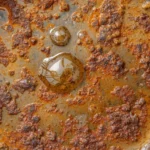
Rust looks scary, but it's only surface-level iron oxide that you can fully remove and reseason.
Manufacturer specifications and peer-reviewed corrosion research show that seasoning is a polymerized oil layer, not just leftover grease. As of 2026, the standard approach still starts with removing rust down to bare iron, then building multiple thin oil coats at 350 to 450°F. This guide helps you diagnose the rust level, gather the right tools, and season your skillet so it lasts another generation.
Quick Answer
To season a rusty cast iron skillet, remove all rust first. Soak it in equal parts water and white vinegar. Scrub down to bare iron, dry it, and coat with a thin layer of high-smoke-point oil.
Then bake it upside down at 400°F for 45 minutes. Repeat three to four times.
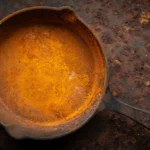
Image source: Bing (Web (fair-use with source credit))
Start Here: What Kind of Rust Are You Dealing With?
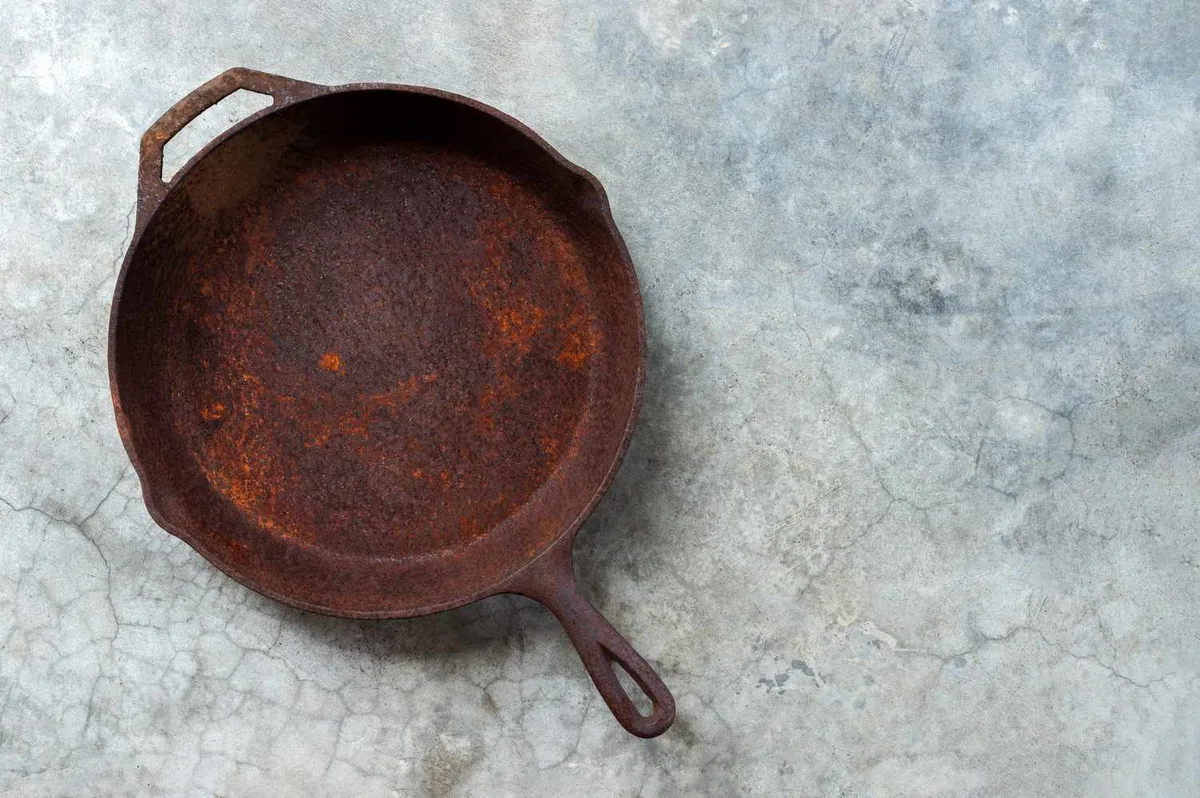
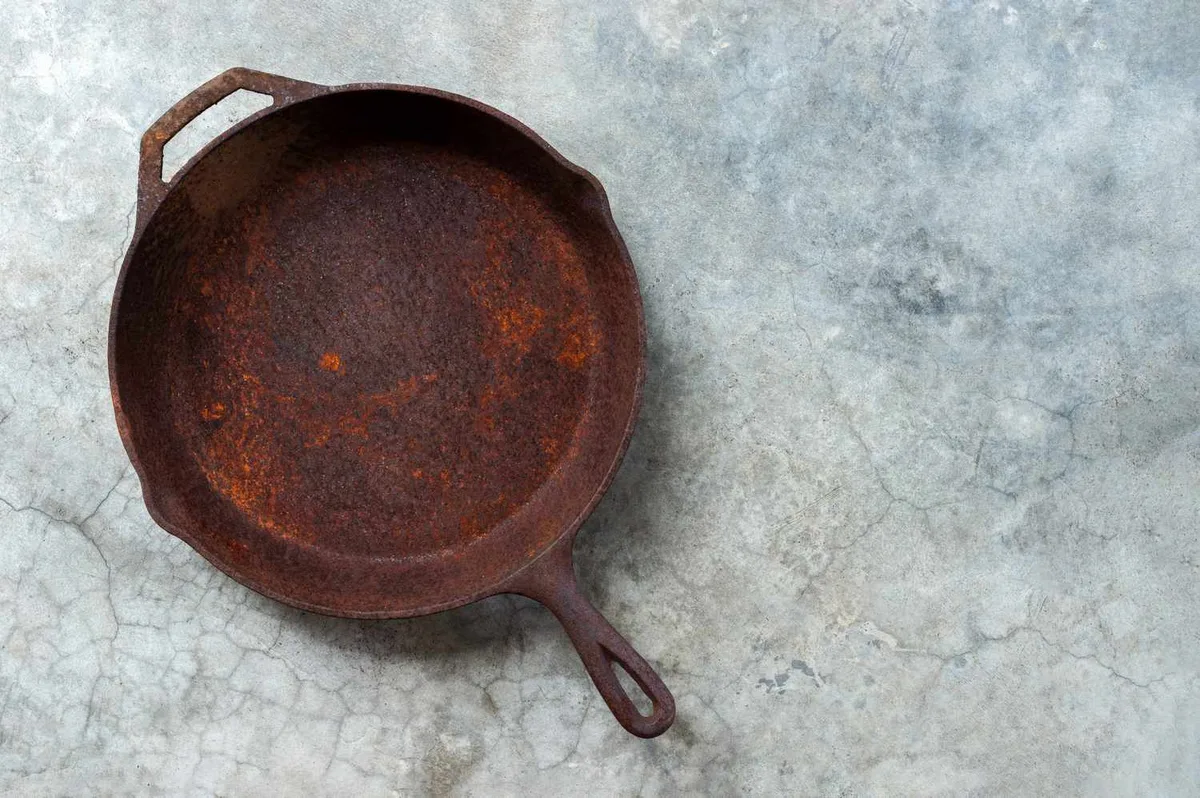
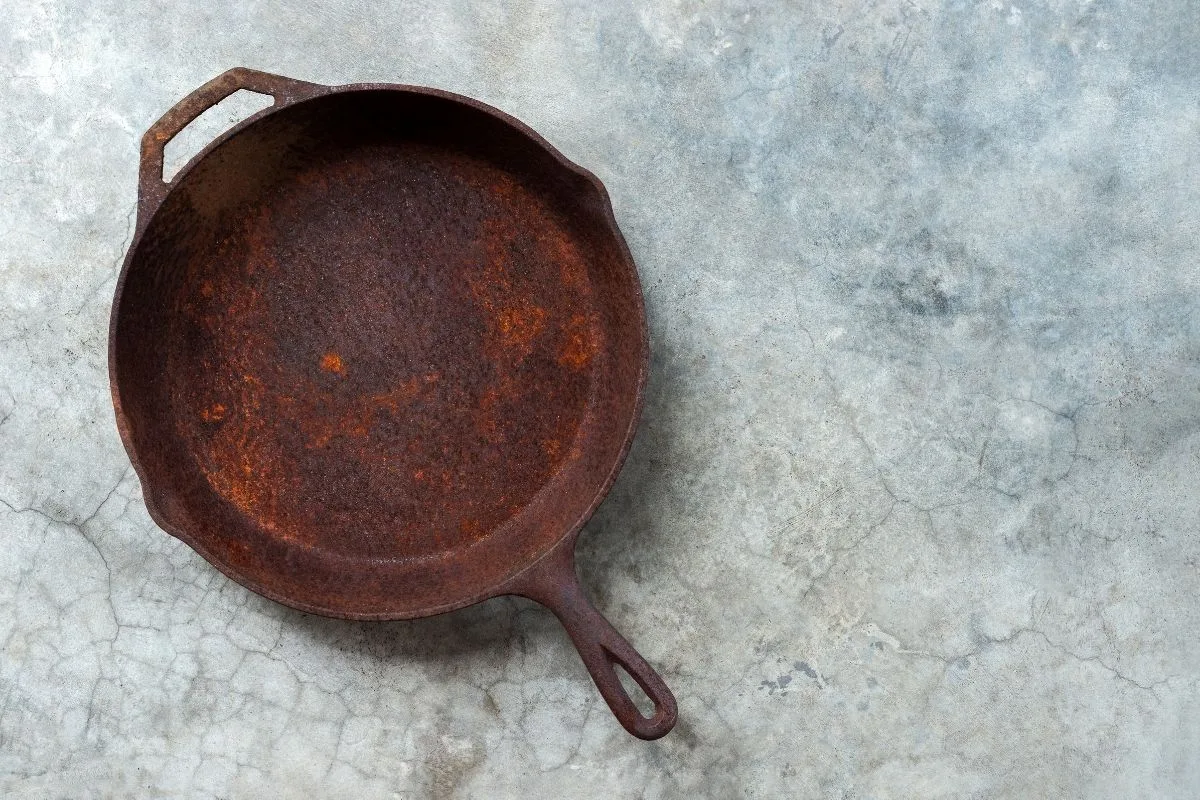
The right approach starts with an honest look at the damage. Use a quick check to decide whether you can spot-treat or need a full strip.
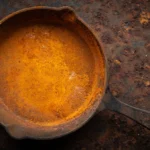
Light surface rust
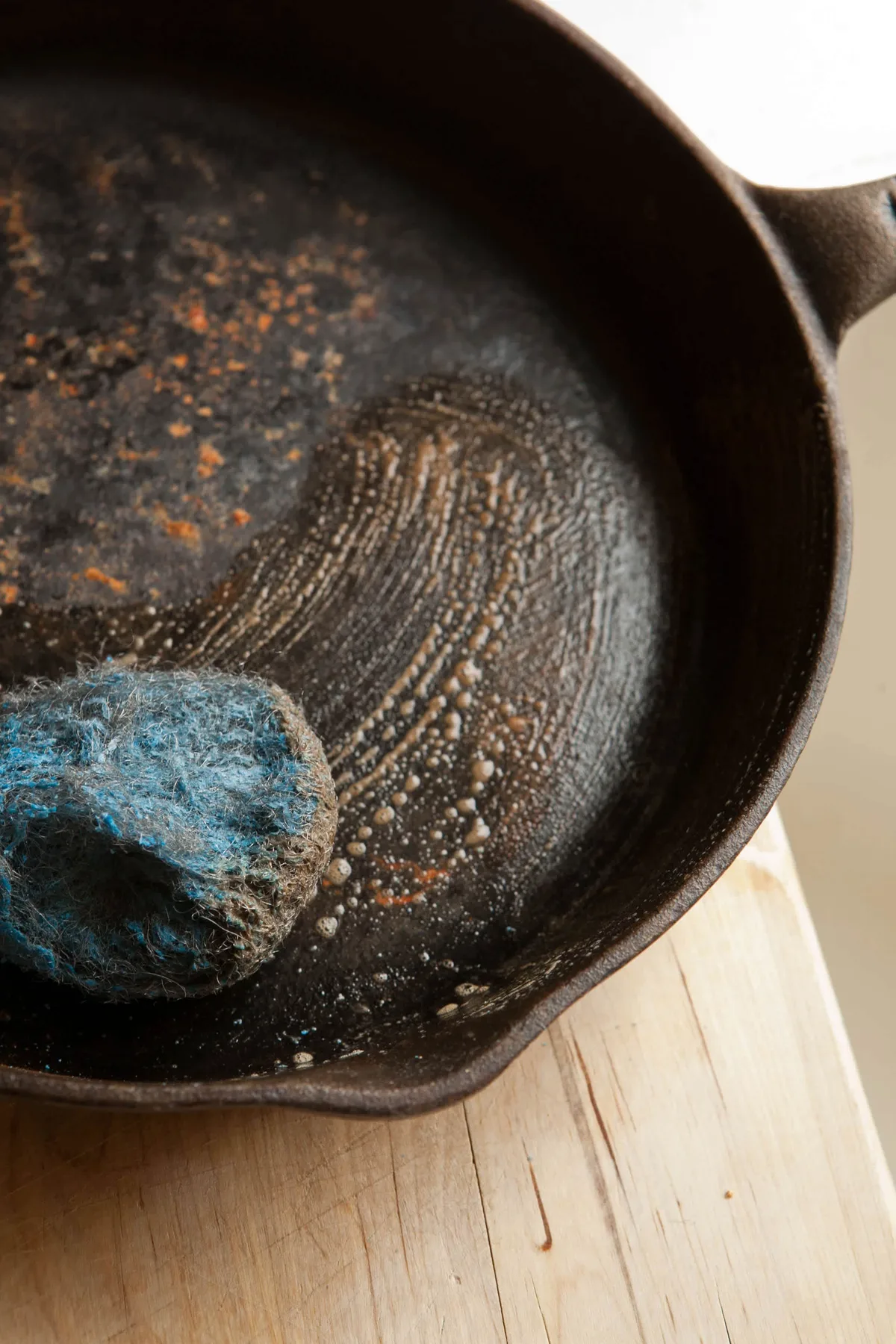
If you see a thin, powdery orange layer that wipes off easily, you can skip the heavy stripping. Scrub with fine steel wool and soapy water, then season right away. This takes under an hour.
Moderate rust
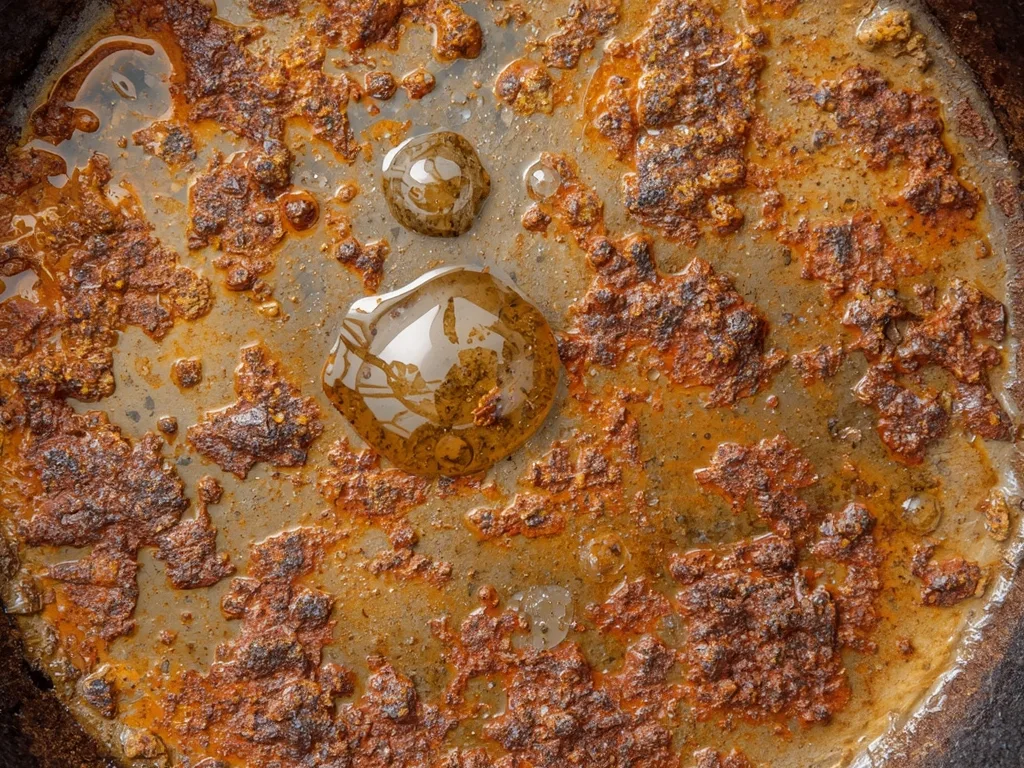
If the rust has flaked into patches and the surface feels rough, a vinegar soak is your next step. It dissolves rust without grinding down the iron. Expect a full strip and three or more seasoning coats.
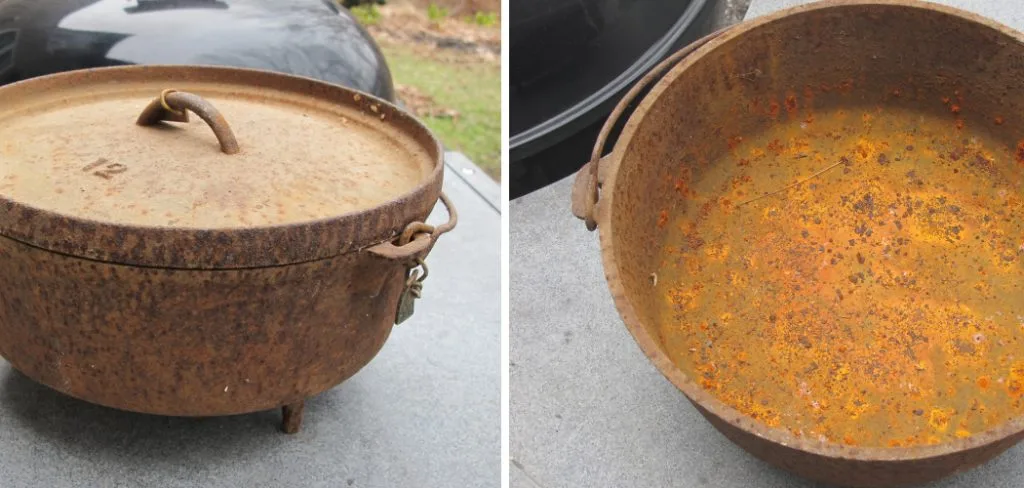
Heavy rust and pitting
Deep craters and rough spots that hold moisture need a longer soak or electrolysis. If pits remain after cleaning, they can trap water and keep rusting your pan. Check the structure carefully, too.
If there is any warping or cracking, the skillet is likely beyond saving.
A quick visual cue
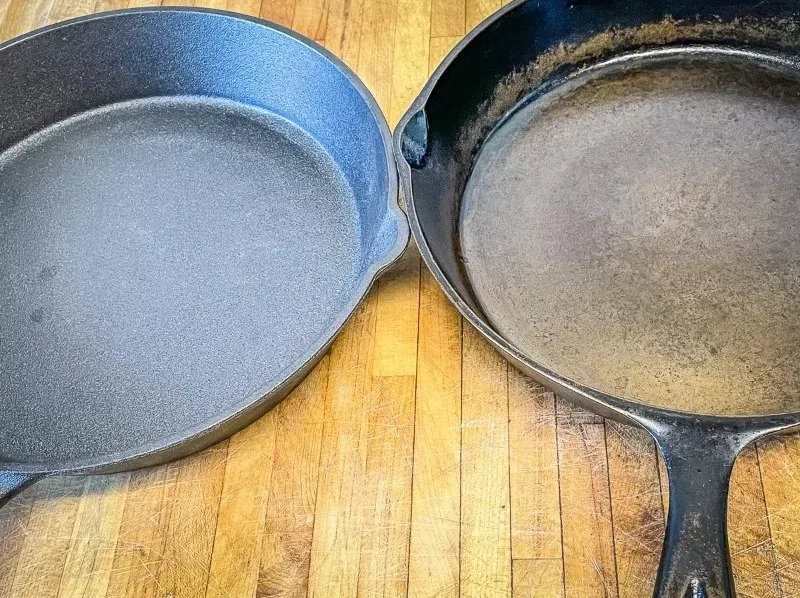
Bare iron looks dull gray and rusts within minutes. Seasoned iron looks glossy and dark. If you see orange, you have work to do.
What You'll Need Before You Start
You do not need fancy chemistry equipment. Most of this is already in your kitchen or a cheap hardware store run away.
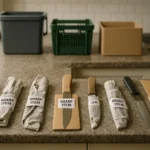
Tools and materials
| Item | Purpose |
|---|---|
| Steel wool (fine grade) | Scrubbing loose rust |
| White vinegar | Dissolving rust |
| Water | Diluting vinegar |
| Chainmail scrubber | Removing stuck-on food |
| Lint-free cloth or paper towels | Applying thin oil coats |
| Oven thermometer | Checking true oven temperatures |
| Aluminum foil | Catching seasoning drips |
| Dish soap and sponge | Cleaning off grease and grime |
Choosing your oil
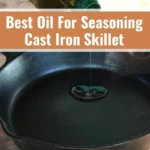
The oil needs a smoke point above 400°F. Canola and grapeseed are the most reliable. Flaxseed gives a hard coating but flakes off on some pans.
Olive oil smokes too low and leaves a sticky surface.
Safety gear
Wear gloves if your hands are sensitive to vinegar or steel wool. Grab goggles if you plan to sand. And open a window during oven seasoning, because there will be light smoke.
How to Strip Rust Off a Cast Iron Skillet (Step by Step)
The goal is to get down to bare, gray iron without etching the surface. Here is the vinegar method that works best for most pans.
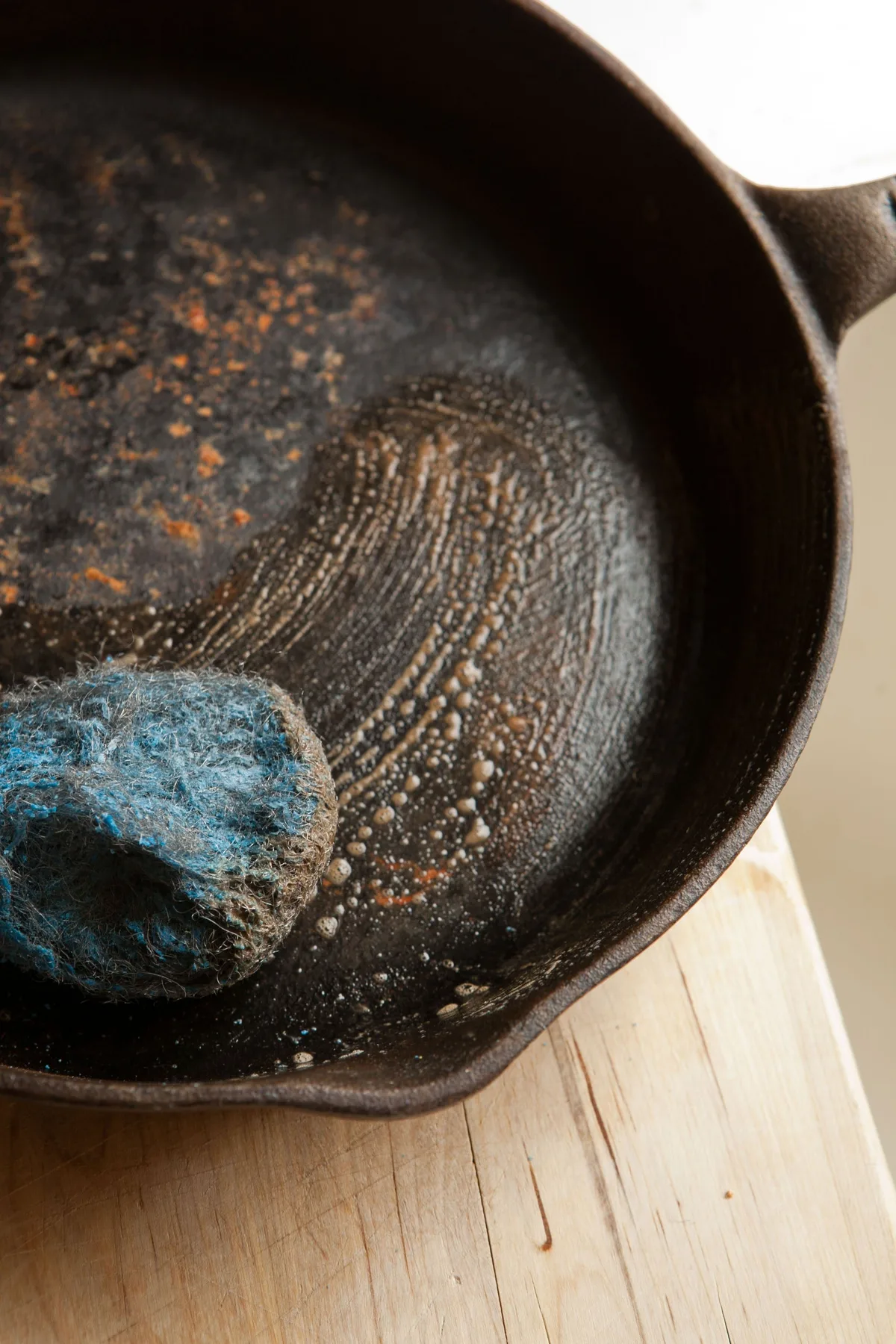
- Scrub off loose rust. Use steel wool and warm soapy water. This removes loose flakes and gives the vinegar a clean surface to work on.
- Prepare a 50/50 vinegar soak. Mix equal parts white vinegar and water in a bin large enough for the skillet. Submerge the pan fully.
- Check every 30 minutes. Light rust takes about 30 minutes. Heavy rust can need up to two hours. Pull the skillet out sooner if the surface looks clean.
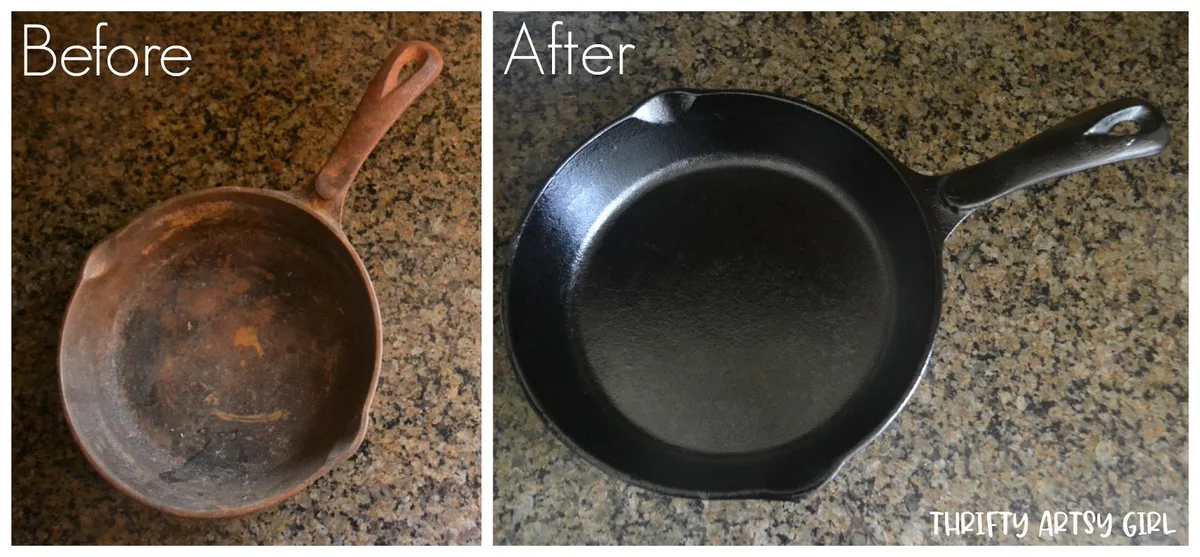
- Rinse and scrub again. Run the pan under cool water, then scrub away the cloudy residue. The surface should look dull gray, not orange or red.
- Dry it immediately. Pat it dry with a towel, then heat it on the stove for a few minutes so every drop of moisture evaporates.
- Apply a thin coat of oil right away. This prevents flash rust from forming before you season.
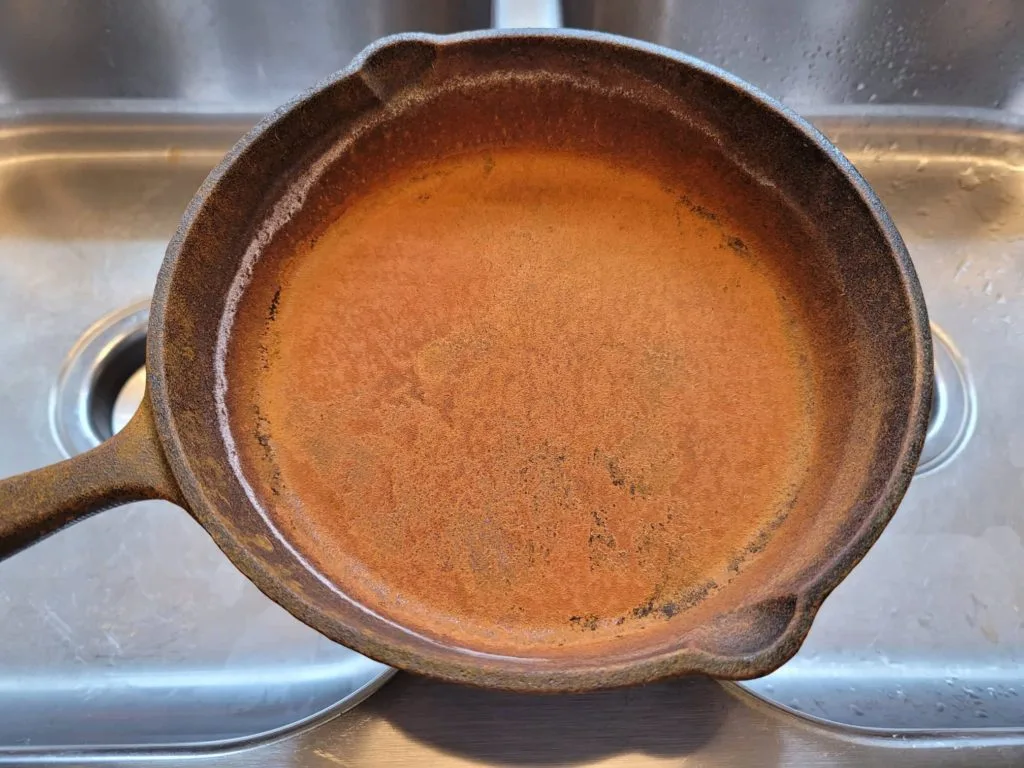
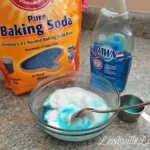
Image source: Bing (Web (fair-use with source credit))
A warning about vinegar soak times
Do not leave the skillet soaking overnight. Vinegar is acetic acid. Too much time creates etching that leaves a rough texture and damages the surface.
For vintage pans, electrolysis is gentler, but it requires a car battery charger and a bucket of washing soda.
How to Season a Rusty Cast Iron Skillet Right
Once the pan is bare and oiled, it is time to polymerize the layer. This is where the skill comes in.
- Preheat the oven to 400°F. If your oven runs hot, set it to 425°F. Use an oven thermometer to confirm.
- Wipe the oil into the whole pan. Use canola or grapeseed oil. Apply a thin, even coat across the bottom, sides, and handle.
- Wipe it off like you made a mistake. This is the most important step in seasoning. The pan should look nearly dry. Excess oil creates sticky, gummy patches.
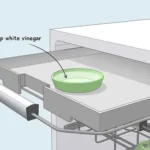
- Place the skillet upside down. Put it on the middle rack. Put a sheet of aluminum foil on the lower rack to catch drips.
- Bake for 45 minutes. Then turn the oven off and let the pan cool inside. Do not pull it out early.
- Repeat three to four times. Each coat adds a thin, hard layer. After the final coat, the pan should look satiny and dark.
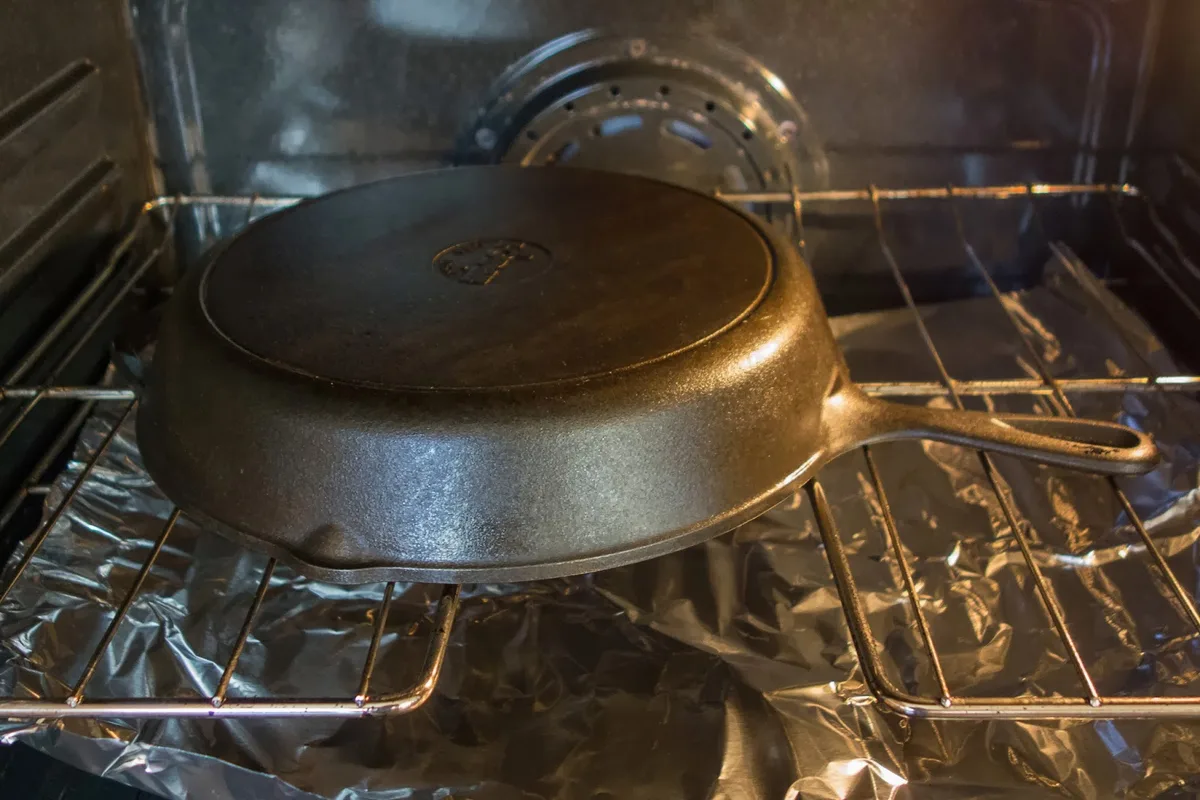
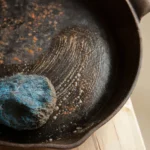
Image source: Web (Bing) / 2for66.com (Web image (fair-use with source credit))
Could you use a stovetop method?
Yes, for small touch-ups. Heat the pan on medium, add a dab of oil, and wipe it in. But for a full rust restoration, the oven is more even and reliable.
Per manufacturer guidance, oven seasoning also creates a more consistent finish across the entire surface.
Common Mistakes That Ruin a Rusty Skillet Restoration
Most ruined restorations come from the same handful of errors. Avoid these and your pan will be fine.
Soaking vinegar too long
A 24-hour vinegar soak will etch the iron and leave a permanent rough surface. Set a timer. Check the skillet every 30 minutes.
Using olive oil for seasoning
Olive oil has a smoke point around 375°F. It burns before it polymerizes, leaving a sticky, greasy mess. Stick with canola, grapeseed, or vegetable oil.
Over-oiling each coat
Too much oil pools and hardens into bumps. After you oil the pan, wipe it down again with a fresh towel until it looks dry. That invisible film is all you need.
Sanding down vintage pans
A wire brush or grinder removes the original milled finish. That finish is a big part of a vintage skillet's value and nonstick quality. Use vinegar or electrolysis instead.
Seasoning over rust
If you skip the strip, rust will keep forming under your seasoning. It flakes off and leaves orange spots. Bare iron first, always.
Ignoring flash rust
You dry the pan, turn around for one minute, and see orange. That is flash rust. It forms quickly in humid air.
The fix is easy. Coat the pan in oil immediately after drying.
How to Keep Rust From Coming Back
The fix after all that work is simple. Keep the pan dry and keep a thin oil film on it. Those two habits prevent rust almost entirely.
As of 2026, manufacturer care guides still say the same.
Wash the skillet with hot water and a small dab of soap after cooking. Rinse it thoroughly, then dry it immediately with a towel. Place it on a warm stovetop burner for a few minutes to evaporate any trapped moisture.
When the pan is warm, rub a drop of canola oil over the whole surface.
Humid climates make this routine non-negotiable. Coastal air and summer dew can trigger flash rust in hours. We suggest storing the pan with a dry paper towel inside.
Or let it sit on the stove rather than in a damp cabinet. If you notice a faint orange tint after storage, season that spot again.
How often should you reseason a skillet?
Cook with it regularly and you rarely need to reseason. Each greasy meal adds a layer of flavor and protection. Only reseason when food starts sticking or the surface looks dull.
That might be every three months, or just once a year.
When the Skillet Isn't Worth Saving
Not every rusty pan deserves a full restoration. Check for structural damage before you spend time on vinegar and oven cycles.
Hold the skillet at eye level and look for cracks. Twirl it to check for warping. Set it on a flat countertop and see if it rocks back and forth.
A warped pan heats unevenly and makes cooking frustrating. Even a beautiful seasoning cannot fix that.
Rust holes and pitting are another dealbreaker. If the iron is so corroded that it has actual holes, the pan is structurally weak. Cooking in it always risks water or oil seeping through.
Toss it instead.
But first, double-check what you are seeing. Black, crusty buildup is often just carbonized food, not rust. A 50/50 vinegar soak removes rust but leaves carbon behind.
Scrape the pan with a metal spatula. If you feel hard, black crust, that is not rust damage. Clean it off with elbow grease.
When the skillet is not salvageable, replace it with a new bare cast iron pan. Enameled cast iron is a good alternative if you hate the maintenance. But for classic searing and durability, nothing beats a fresh bare skillet.
Frequently Asked Questions
Is rust on cast iron safe to cook on?
No, you should not cook on rust. Rust is iron oxide, and it can flake into your food. Small amounts are unlikely to make you sick, but they ruin taste and texture.
Always strip the rust completely before seasoning and using the pan.
Can I use a self-cleaning oven to burn off rust?
A self-cleaning cycle can burn off old seasoning and crud, but it won't remove rust. It also gets hot enough to warp thin pans and release fumes. It's safer to use vinegar and elbow grease for rust removal.
Save the oven for seasoning itself.
How long does it take to restore a rusty skillet?
Light rust takes about one hour from start to finish. Heavy rust with pitting takes a few hours, including multiple seasoning coats. The vinegar soak alone takes 30 to 120 minutes.
Electrolysis methods can stretch the project across a whole weekend.
What is the best oil for seasoning cast iron?
Canola oil and grapeseed oil produce the most reliable results. They have smoke points above 400°F and harden into a tough coating. Flaxseed oil creates a darker finish but flakes off for some cooks.
Avoid olive oil and butter, which smoke too low and turn sticky.

Similar Posts