The Best Way to Clean Rust Off Cast Iron

That rusted cast iron skillet isn't destined for the trash. Learning how to clean rust off cast iron cookware is one of the most useful kitchen skills you'll ever pick up, and it's easier than you'd think.
Rust on cast iron is just iron oxide forming where the seasoning layer wore away. Manufacturer specifications from Lodge Cast Iron confirm that even heavily rusted pans can usually be saved. As of 2026, the standard practice still comes down to three steps: assess, remove, and reseason.
Here's how to figure out where your pan sits.
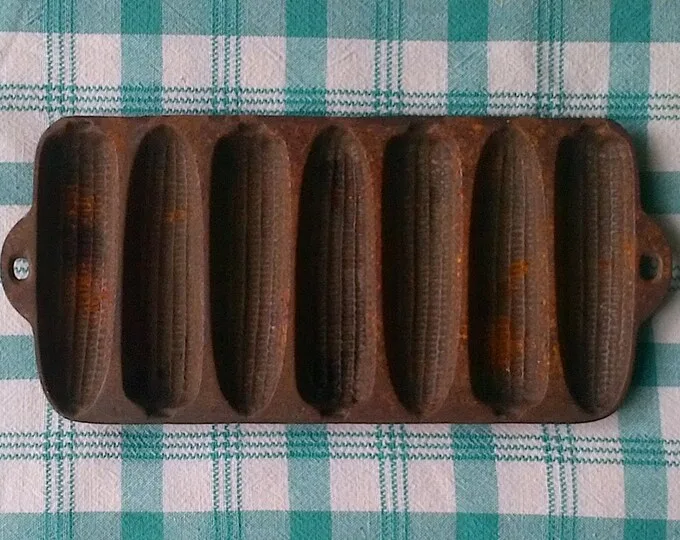
Image source: Web (Bing) / southernliving.com (Web image (fair-use with source credit))
Problem / Pain Point: "Is My Cast Iron Pan Ruined?"
Finding rust on a cast iron pan feels like a betrayal. You babied it, you seasoned it, and now it looks like a barn find. But here's the truth: rust on cast iron is usually fixable, and it's almost never a reason to toss the pan.
Rust happens when moisture hits bare iron. The seasoning layer, which is polymerized oil, normally protects the surface. When that layer burns off, chips, or wears down from washing, the exposed iron reacts with oxygen and water.
That reddish-brown dust is iron oxide, and it's purely a surface condition.
What actually ruins a pan:
- Cracks or fractures in the iron
- A visible warp that rocks on the burner
- Holes eaten through the metal
- Rust that has pitted deep enough to create craters
If your pan has none of those, it's restorable. Even vintage pans found at flea markets with thick rust scale can come back with the right approach.
Here's a quick way to check your pan's condition: run a dry paper towel over the rusty area. If brown powder lifts away, you're dealing with surface rust. If the surface feels rough and pitted underneath, you're looking at deeper corrosion.
That just needs more aggressive treatment. You'll assess the severity yourself in the next section, using a simple visual test.
Quick Answer / Key Insight: How to Tell If It's Surface Rust or Deep Damage
To clean rust off cast iron cookware, first assess the damage. Light brown dust scrubs away easily. Deep pits need stronger treatment.
Most rusty pans are fully restorable.
The distinction matters. The removal method changes with severity. Surface rust sits on top of the iron and comes off with friction.
Deep corrosion physically eats into the metal, so it needs acid or electrolysis to lift it out.
| Rust Level | What It Looks Like | Best Method |
|---|---|---|
| Light | Powdery brown dust, seasoning mostly intact | Salt or chainmail scrub |
| Medium | Rough orange patches, bare metal showing | 50/50 vinegar soak |
| Heavy | Thick grey-brown scale, deep pitting | Electrolysis or rust remover |
If you're still unsure, look at the pan under bright light. Surface rust appears as a flat, dusty film. Pitting shows up as tiny dark craters that hold shadow.
That visual test settles it fast.
One note about the middle zone: if rust comes off with a stiff scrub but leaves grey bare iron, that's still medium. Treat it, then reseason right away. Bare iron will flash rust within minutes.
The Decision Tree: Which Rust Removal Method Is Right for You?
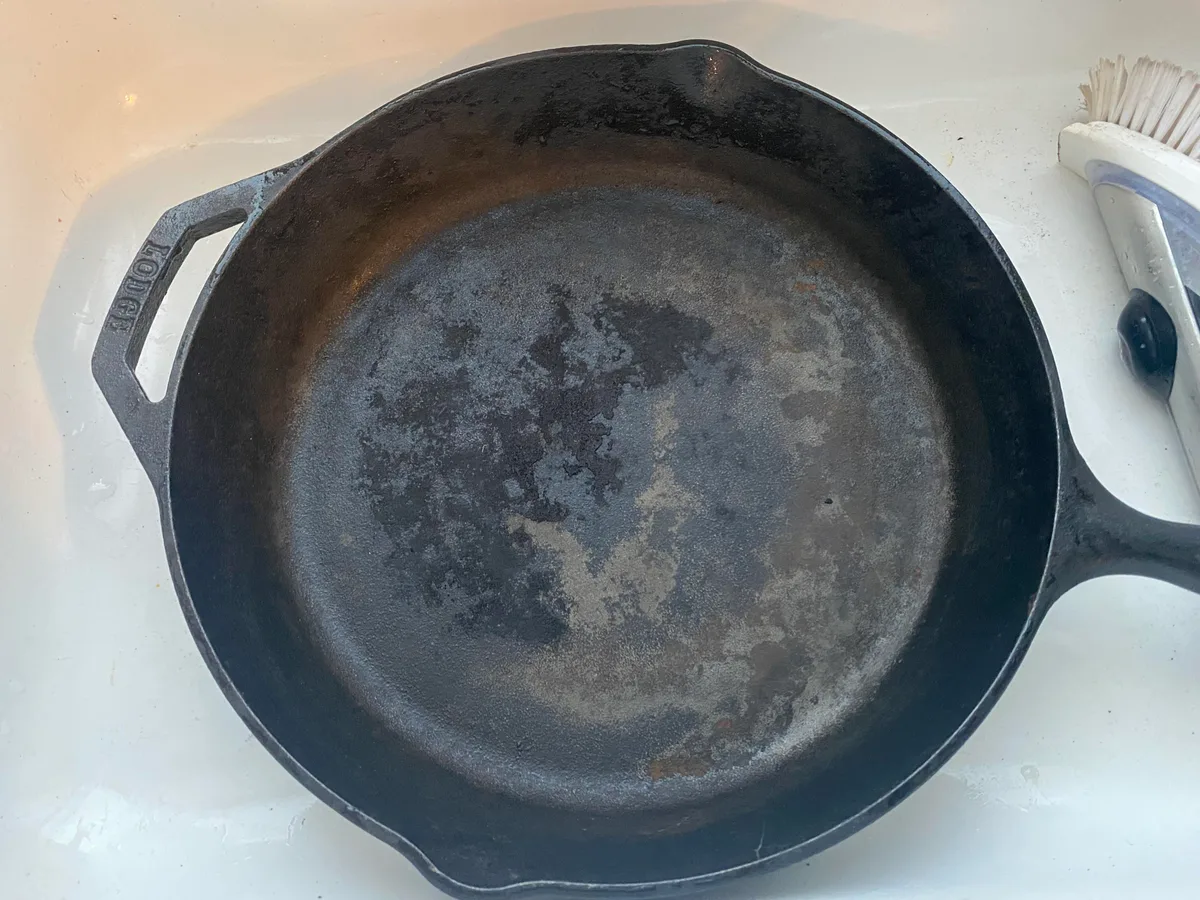
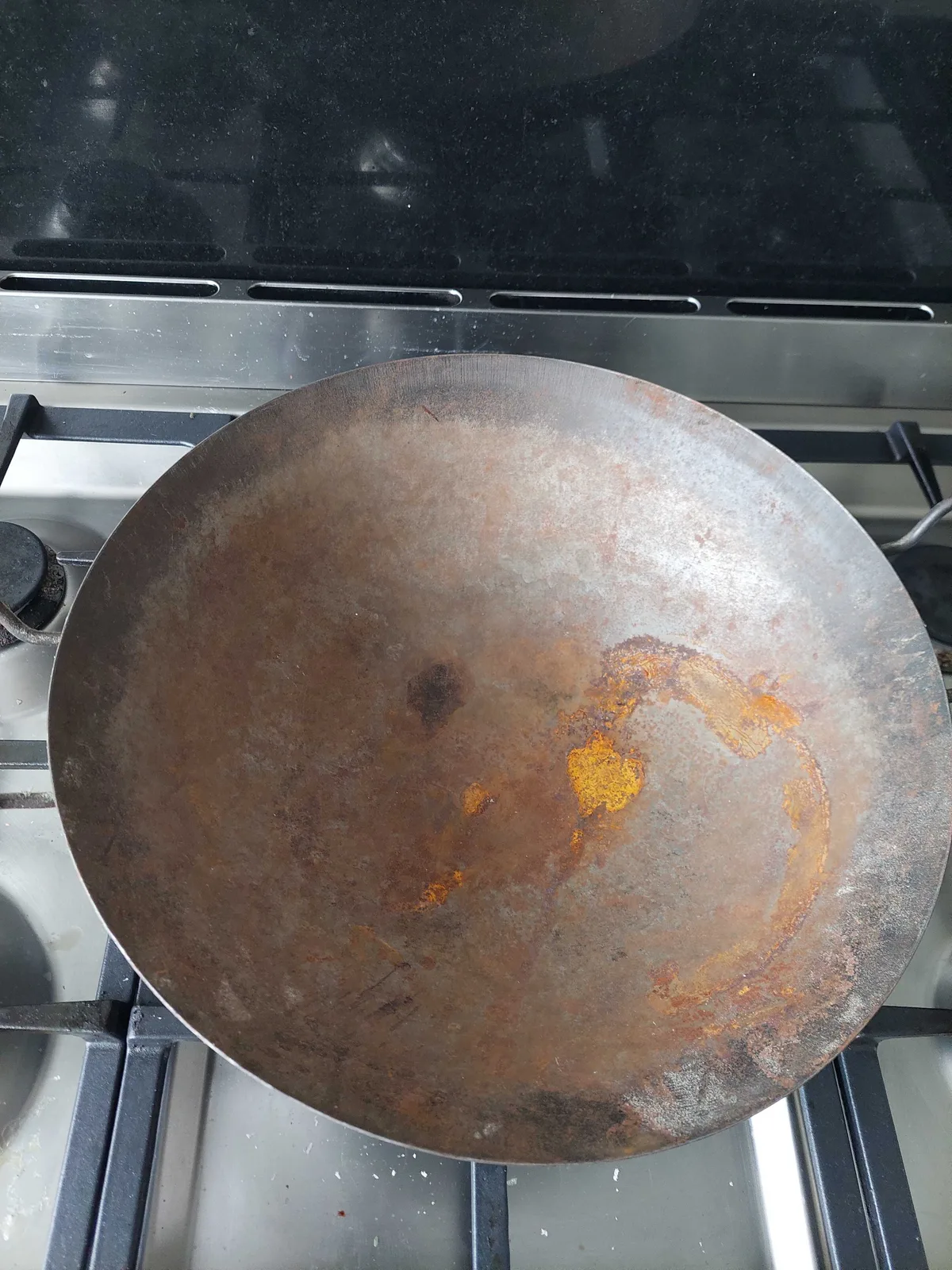
Image source: Bing (Web (fair-use with source credit))
If your rust is light, grab a scrubber and skip the soaking entirely. A wet pan with coarse salt works wonders on powdery rust. Rinse, dry, and re-oil.
That's it.
If your rust is medium, use the vinegar soak. Mix distilled white vinegar and water in a 50/50 ratio. Submerge the pan, then check it every 15 minutes.
Too much time in vinegar risks etching the iron.
If your rust is heavy, go straight for electrolysis or a chemical rust remover. Scrubbing thick scale by hand takes forever and often misses the deepest corrosion. A DIY electrolysis setup uses a plastic tub, washing soda, a stainless steel anode, and a battery charger.
It sounds technical, but it's the gentlest method for vintage pans.
Enameled cast iron is the exception. The coating is glass-like, so abrasives and vinegar will damage it. Use a gentle cleaner and a soft sponge instead.
Best choice by situation:
- You want the pan fixed tonight: salt scrub for light rust, vinegar for medium
- You value the original surface: electrolysis
- You're restoring a flea-market find: full strip with vinegar, then electrolysis
Two safety notes. Electrolysis releases hydrogen gas, so run it outside or in a ventilated space. And never use a rust remover that leaves residues on a pan you'll cook with.
Check the label for food-contact safety.
Step-by-Step Process: How to Clean Rust Off Cast Iron (By Rust Level)
For Light Rust: Salt Scrub and Stovetop Touch-Up
- Sprinkle coarse salt over the rusted area.
- Scrub in circles with a paper towel or halved potato.
- Rinse the pan in warm water.
- Dry it immediately, then warm it on the stovetop.
- Rub in a drop of oil.
For Medium Rust: The 50/50 Vinegar Soak and Scour
- Soak in a 50/50 white vinegar and water mix for up to 30 minutes. Check every 15.
- Scrub with steel wool or a chainmail scrubber.
- Rinse with warm soapy water to neutralize the acid.
- Dry with a towel, then heat on the stove to evaporate moisture.
- Move to the reseasoning steps below.
For Heavy Rust: Full Strip, Electrolysis, or Rust Remover
- Set up an electrolysis tank or apply a chemical rust remover.
- Let it sit until rust lifts off. This takes 12 to 72 hours.
- Rinse and scrub away the softened scale.
- Dry thoroughly by heating the pan.
- Apply multiple seasoning coats.
Each level builds on the last. If the vinegar soak doesn't get everything, move up to the heavy treatment.
After the Rust Is Gone: How to Reseason Your Cast Iron Properly
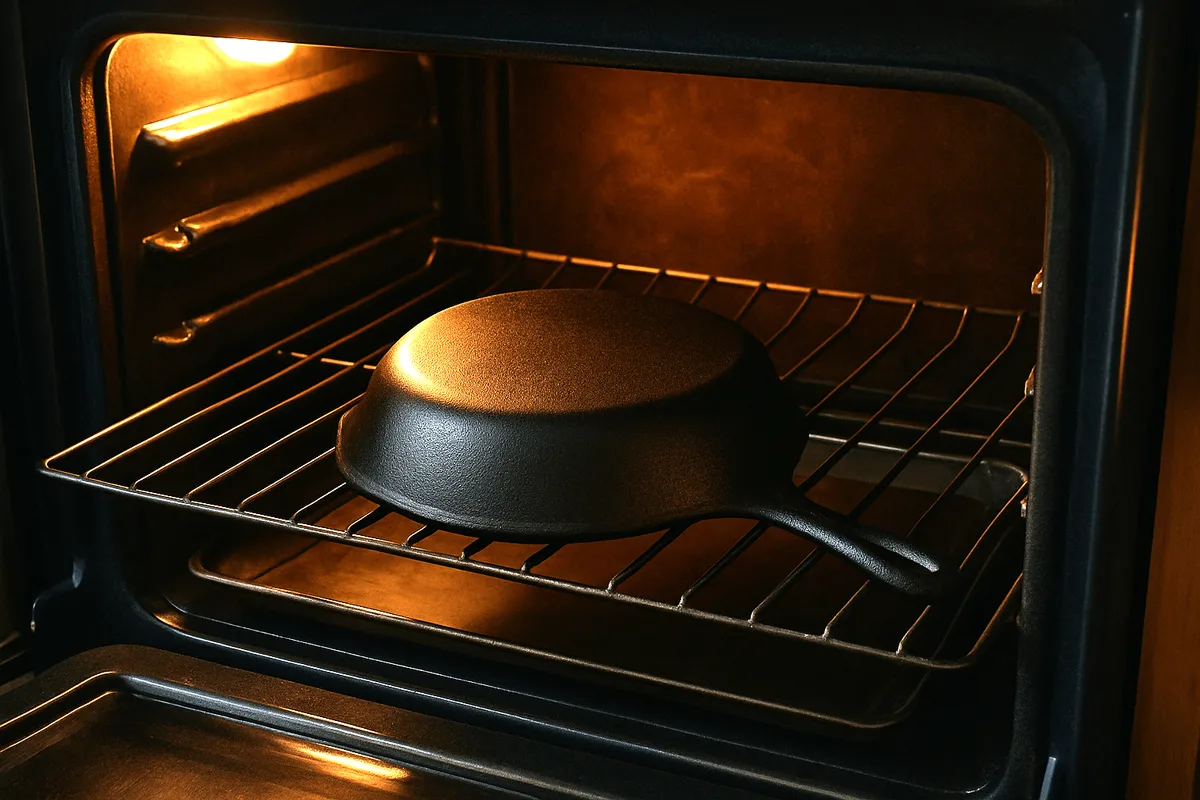
Image source: Bing (Web (fair-use with source credit))
Once the rust is gone, the exposed iron will rust again within minutes if you don't seal it. That's what reseasoning does: it builds a fresh polymerized oil layer that protects the surface and gives you a natural nonstick finish.
Here's the process:
- Wash the pan with warm water and a little dish soap. This removes leftover rust dust and acid residue.
- Dry it thoroughly, then place it on a warm burner to drive off all moisture.
- Coat the whole pan in a thin layer of high-smoke-point oil. Flaxseed, grapeseed, or canola work best.
- Wipe the oil off like you didn't mean to apply it. The key is a near-invisible film.
- Put the pan upside down in an oven at 450°F to 500°F.
- Bake for 30 to 60 minutes, then turn off the oven and let the pan cool inside.
- Repeat the oil and bake cycle 2 to 4 times for a durable finish.
Manufacturer guidance from Lodge Cast Iron's official site emphasizes using a light hand with oil. Too much oil leaves sticky, uneven seasoning. If your pan finishes with a tacky surface, that's why.
Don't strip it. Just add another layer and wipe harder. Use an oven thermometer to verify temperature, too.
Some ovens run off by a full 50 degrees.
One more thing to know: flash rust. It shows up as a thin orange film right after rinsing. It happens fast on bare iron.
Rewash, dry, and oil immediately to stop it.
Mistakes to Avoid: Don't Ruin Your Pan Again
After all that work, it hurts to mess things up at the finish line. But a few common mistakes turn a restored pan right back into a rusty mess.
The biggest error people make is using too much oil during reseasoning. A heavy layer doesn't polymerize evenly. It bakes into a sticky, tacky surface that never hardens properly.
The solution is simple: apply oil, then wipe it off with a clean cloth until the pan looks dry.
Another frequent problem is rushing the drying step. Moisture trapped in the pores of bare iron causes flash rust within minutes. After rinsing, dry the pan with a towel.
Then put it on a low burner for two minutes. That steam-bake step seals the deal.
| Mistake | What Happens | How to Fix It |
|---|---|---|
| Too much oil | Sticky gummy seasoning | Wipe off more next coat, or strip |
| Not drying fully | Flash rust reappears | Rewash, dry on burner, oil fast |
| Soaking vinegar too long | Pitted etched surface | Limit to 30 minutes |
| Cooking acidic food too soon | Seasoning strips off | Wait until pan has 3+ seasoning layers |
A word on acidic foods. Tomatoes, wine, and citrus react with newly seasoned iron. Wait until the pan has an established dark patina.
That takes four to six cooking sessions with fatty foods.
Finally, never put a freshly restored pan in the dishwasher. The harsh detergent and steam strip seasoning and trigger rust. Hand wash only.
Frequently Asked Questions
Can I use sandpaper to remove rust from cast iron?
Yes, but only for heavy rust with pitting. Start with 80-grit sandpaper and work up to 220-grit. Go in smooth circles.
Sanding changes the surface texture permanently. It works best on vintage pans you plan to fully restore.
Will bleach remove rust from cast iron?
No. Bleach does not dissolve rust. Worse, it promotes corrosion by reacting with the iron.
Stick to white vinegar or chemical rust removers made for food-safe surfaces.
How long does a vinegar soak take for rust removal?
Check the pan every 15 minutes. Most light to medium rust lifts off within 30 minutes. Heavy rust may need 60 minutes.
Never exceed two hours. Longer soaks etch the iron surface and create pitting.
Can I cook in a cast iron pan with light rust?
No. Eating rust particles is not dangerous in small amounts, but the texture is unpleasant and the pan won't cook evenly. Remove the rust first, reseason, then cook.
Why does my pan keep rusting after I clean it?
The iron is still bare. Either you skipped the reseasoning step or the seasoning layer is too thin. Apply two to four rounds of oil baking at 450°F.
Also check your storage area. Damp cabinets cause repeat rust.
Is electrolysis safe for beginners?
Electrolysis is safe with basic precautions. Work in a ventilated area, keep the pan and anode from touching, and unplug the charger before handling the pan. If that sounds complex, use a chemical rust remover instead.
Final Verdict: Your Pan Is Probably Fine — Here's Your Next Move
Here's the honest take: most rusty cast iron pans are restorable. The rust is just a surface reaction, not structural damage. You have to decide how much effort the pan deserves.
For a thrifted skillet with sentimental value, go ahead and do the full electrolysis and multiple seasoning coats. For a modern daily driver with light rust, a salt scrub and stovetop touch-up are enough.
One quick rule of thumb: if the pan cost less than $20 and the rust is deep, it's worth restoring for the experience. If it's a high-end enameled piece, check with the manufacturer first.
You now have everything you need. Grab your pan, pick the method that matches your rust level, and get that iron back in action. It will outlast you if you treat it right.

Similar Posts