How to Clean Rust Off a Dutch Oven Fast
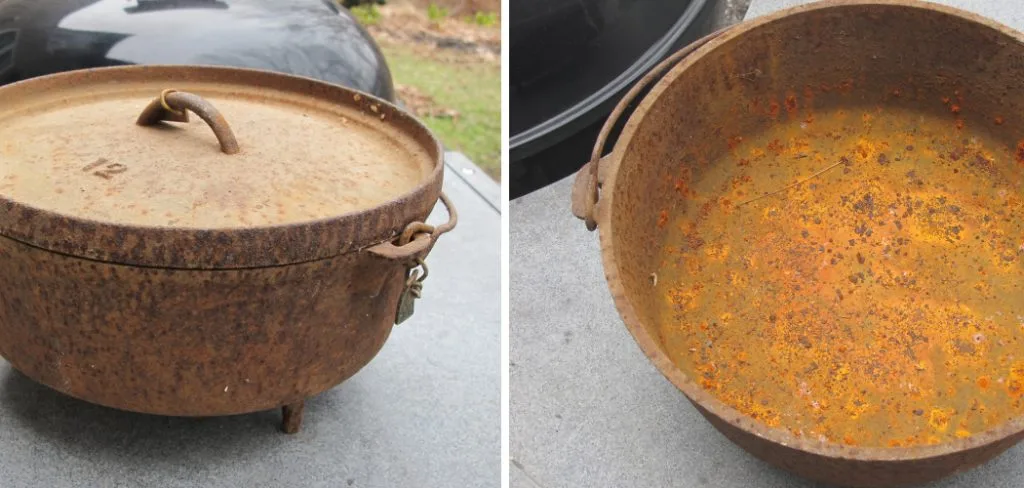
If you've ever pulled out your trusty dutch oven only to find brown flakes or an orange haze, you know the gut punch. Learning how to clean rust off a dutch oven isn't just about scrubbing, it's about knowing exactly what you're working with.
Per the USDA's guidance on cookware care, cast iron is remarkably resilient, but it does need the right approach. The method that saves one pot can destroy another. That's why we're walking through a simple decision tree instead of throwing random tips at you.
Image source: Bing (Web (fair-use with source credit))
Why Rust Appears on a Dutch Oven (And Why It's Probably Fixable)
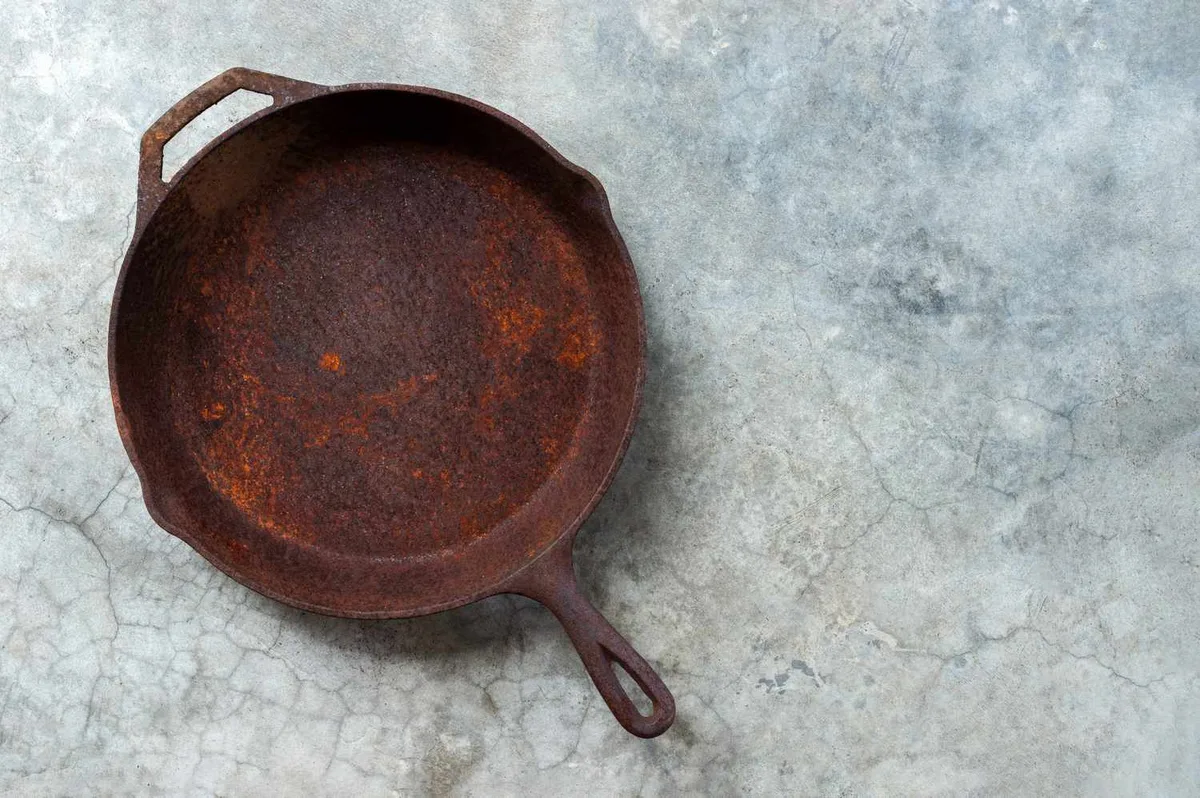
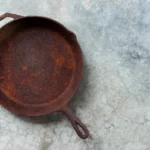
Rust is just oxidation, plain and simple. Iron meets oxygen, moisture gets involved, and you get that reddish-brown crud. It happens when the protective layer fails.
For enameled dutch ovens, that failure means a chip or crack in the glass coating. Water seeps in, hits the raw iron underneath, and rust blooms. For bare cast iron, it means the seasoning wore off.
You washed it too hard, let it soak, or stored it damp.
Here's the good news. Surface rust is almost always fixable. You can scrub it off, neutralize it, and start fresh.
In our research, we found that shallow rust is purely cosmetic. It doesn't make the pot unsafe. It just looks awful.
Deep pitting is different. If the rust has eaten into the metal, you'll see rough craters. That's structural damage.
You can still restore the pot, but it will never be perfectly smooth. It's still usable, just not pretty.
The real dealbreaker is a chipped enamel coating. If the glass layer is broken, you're dealing with potential shards in your food. That pot is done for.
Toss it and buy a new one.
Step 1: Identify Your Pot — Enameled vs. Bare Cast Iron
Before you touch a scrub brush, you need to know what you own. This single step determines the entire cleaning process. Get it wrong and you can permanently ruin a perfectly good dutch oven.
Here's the simple test. Look at the interior surface. Is it smooth, glossy, and either white, cream, or a solid color?
You have an enameled dutch oven. Is it rough, matte, black, and slightly bumpy to the touch? You have bare cast iron.
Manufacturer specifications confirm this distinction. Lodge, Le Creuset, and Staub all publish separate care guides for each type. They aren't interchangeable.
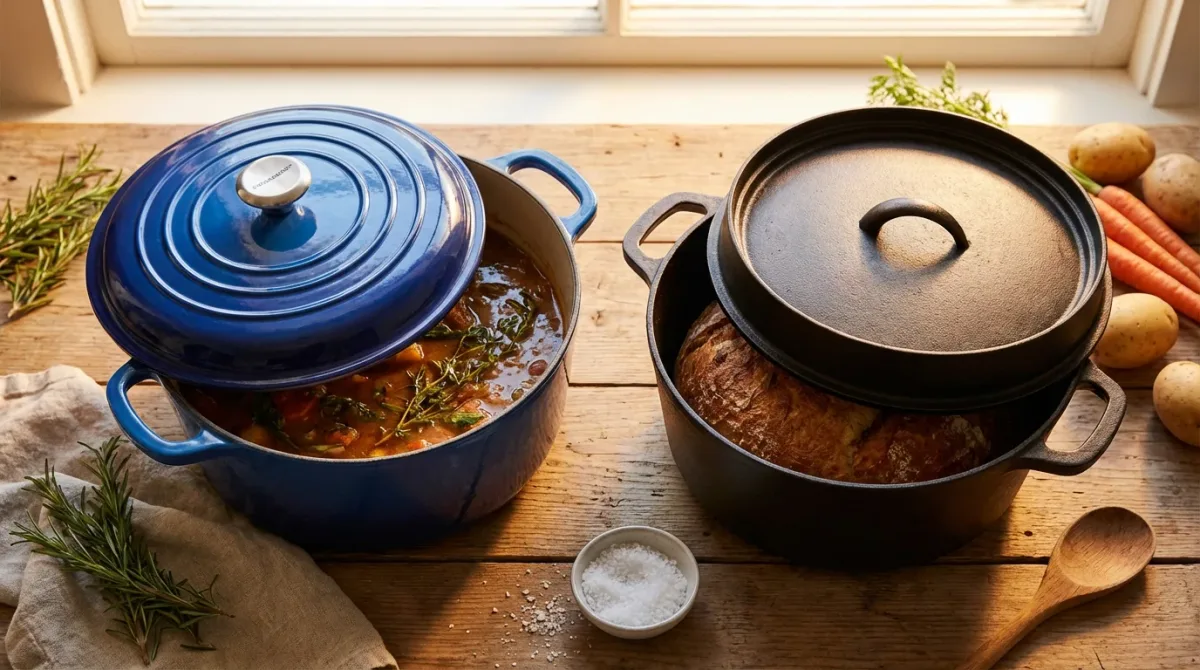
Image source: Bing (Web (fair-use with source credit))
Here's a quick reference table to lock it in:
| Feature | Enameled Cast Iron | Bare Cast Iron |
|---|---|---|
| Interior finish | Smooth, glass-like coating | Rough, matte, black |
| Reactivity | Non-reactive (safe for acidic foods) | Reactive (needs seasoning to protect) |
| Rust cleaning method | Gentle cleaner (baking soda or Bar Keepers Friend) | Abrasive scrub / vinegar soak |
| Seasoning required | Never | Always after cleaning |
| Best for | Stews, braises, slow cooking | Searing, frying, camping |
If you inherited a pot or found one at a thrift store, look at the rim. Bare iron rims are gray or black. Enameled rims are usually a colored coating.
If the rim is chipped and you see exposed iron, move on to the enameled section. That pot is compromised.
Cleaning Rust Off an Enameled Dutch Oven: Gentle Routes Only
Enamel is glass. Treat it like a delicate baking dish. No steel wool, no metal scrapers, no harsh abrasive pads.
Those things leave micro-scratches that dull the finish and trap future dirt.
For light rust stains, grab some baking soda. Mix it with a little water to form a thick paste. Use a non-scratch nylon brush or a soft sponge.
Scrub the rusty area gently. The mild abrasiveness lifts the stain without harming the enamel.
For tougher rust, Bar Keepers Friend is your best friend. It's a gentle oxalic acid-based powder. It cuts through rust without scratching.
Make a paste, rub it in with a damp sponge, let it sit for one minute, and rinse thoroughly. That's it.
Do not use bleach. Do not use vinegar soaks on enamel. The acid can dull the glossy finish over time.
Stick to the powder cleaner.
If the rust is coming from a chip in the enamel, no cleaner will fix it. The rust will keep returning because moisture is getting under the coating. In that case, the pot is a lost cause for cooking.
Repurpose it as a planter or bread baker, but stop cooking in it.
Cleaning Rust Off Bare Cast Iron: Vinegar Soak, Scrub, and Neutralize
Bare cast iron is tougher. You can be more aggressive because the surface is meant to take abuse. But you still need to follow a process.
The vinegar soak is the gold standard. Mix equal parts white vinegar and water. Submerge the rusty pot completely.
Let it soak for no more than 30 minutes. Set a timer. Seriously.
Set a timer.
Why 30 minutes? Vinegar is acetic acid. It dissolves iron oxide quickly.
But if you leave it longer, the acid starts eating the good metal underneath. That's pitting. 30 minutes is the sweet spot for removing rust without causing damage.
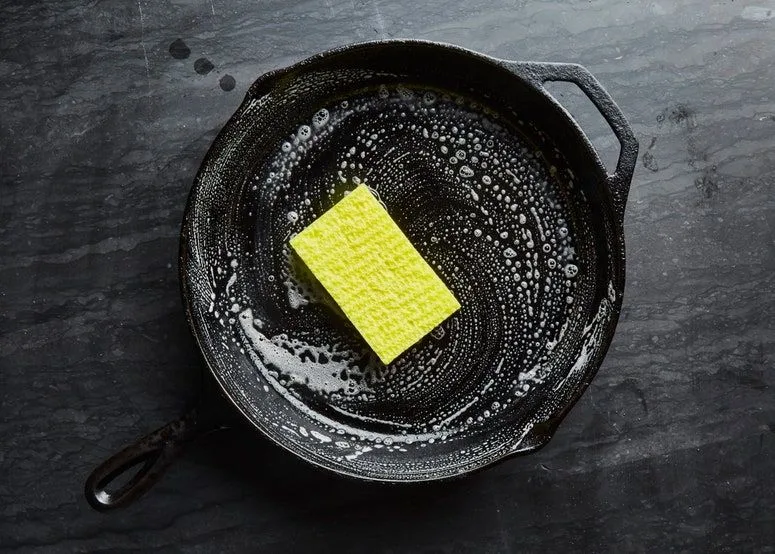
Image source: Bing (Web (fair-use with source credit))
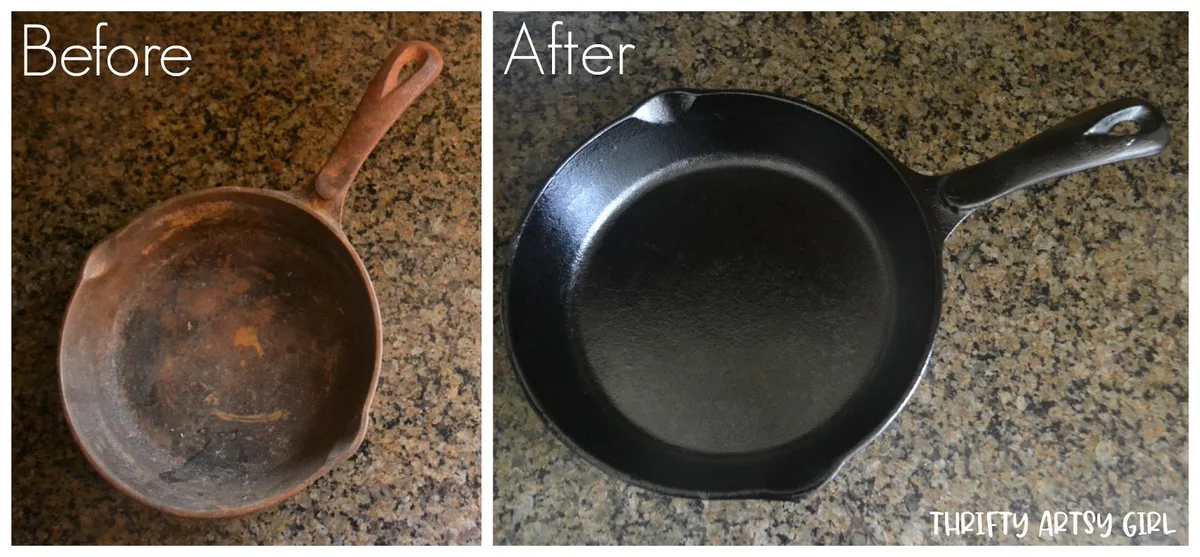
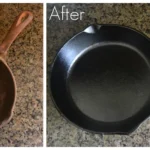
After the soak, pull the pot out and scrub it with steel wool or a chainmail scrubber. You'll see the rust lift off like mud. Rinse it with clean water and scrub again until the water runs clear.
Now the critical step. Neutralize the acid. Mix a small amount of baking soda with warm water.
Wash the pot with this solution. It stops the vinegar from continuing to eat at the iron. Rinse one final time with clean water.
Dry the pot immediately. Use a clean towel, then put it on a warm burner for a few minutes to evaporate any hidden moisture. Do not leave it wet.
Flash rust can form in minutes.
Re-Seasoning Bare Cast Iron: The Make-or-Break Final Step
You cleaned the rust, but now the pot is raw iron. It will rust again within hours if you don't protect it. That's where seasoning comes in.
Seasoning is just baked-on oil. Heat causes the oil to polymerize, turning it into a hard, non-stick surface. It's the same chemistry as industrial coating, but you can do it in your kitchen.
Here's the step-by-step process.
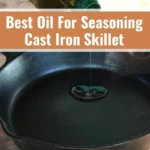
Preheat your oven to 450°F to 500°F. Check your oil's smoke point. Flaxseed oil, grapeseed oil, or plain vegetable oil all work well.
Avoid butter or olive oil. They burn at lower temperatures.
Apply a thin layer of oil to the entire pot, inside and out. Use a paper towel. Wipe off as much as you can.
You want a sheen, not a pool. Excess oil will drip and form sticky spots.
Place the pot upside down on the top oven rack. Put a baking sheet on the bottom rack to catch drips. Bake for one hour.
Turn off the oven and let the pot cool inside. Don't open the door. The slow cool down helps the seasoning bond.
Repeat this process three to four times for a strong initial layer. Over time, regular cooking will build it up naturally.
Manufacturer guidelines from Lodge confirm this method. They recommend 375°F to 400°F for one hour if using their oil, but higher temperatures work for higher smoke point oils. The goal is the same.
A bonded layer that stops rust cold.
Mistakes That Ruin Dutch Ovens: Chips, Pitting, and Flash Rust
The biggest mistake we see is using steel wool on enamel. It leaves permanent micro-scratches that trap food and dull the glass. The coating will never look smooth again.
Over-soaking is the second killer. Leaving bare iron in vinegar past one hour causes pitting. Those tiny craters hold moisture and food for years.
The surface becomes rough and nearly impossible to rebuild.
Flash rust is sneakier. You clean the pot perfectly, and it's orange again within an hour. That happens when iron dries slowly in humid air.
The fix is simple. Dry it on a warm burner immediately after rinsing.
Another common disaster is the self-clean oven cycle. Extreme heat fractures enamel coatings. The fine cracks collect grease and rust.
Once crazed, the pot is permanently weakened.
And never use a dishwasher on any dutch oven. The detergents strip seasoning from bare iron. They also dull enamel over time.
Hand washing takes two minutes. It saves you months of regret down the line.
A chipped enamel pot needs a different kind of warning. Glass shards can flake into food, and rust spreads underneath the coating. No cleaner can fix that.
Stop cooking with it. Repurpose it as a planter or decorative piece instead.
FAQs: Vinegar Length, Rust in Food, and Vintage Family Pots
How long can I leave vinegar on cast iron?
Thirty minutes maximum for a 50/50 vinegar and water soak. Past that, the acid starts eating the base metal. You'll see pitting.
Set a kitchen timer before you walk away.
Is rust in food dangerous?
Rust is essentially iron oxide, and the body processes iron normally. The gritty texture and metallic taste are off-putting, but not toxic. Still, remove all rust and reseason the pot before your next meal.
Can I save a vintage or inherited dutch oven?
Yes, if it's bare cast iron. Scrub it down and start over with fresh seasoning. For enameled pots, inspect carefully for chips.
Pre-1970s enamel may contain lead, so test before cooking with it.
Why does rust keep coming back after cleaning?
That's flash rust, caused by moisture left on the surface. After washing, dry the pot on a lit burner for a few minutes. Then rub in a micro-thin layer of oil before storing.
Your Restoration Decision Guide: Match Your Pot to the Right Method
Follow the if-then branches, and you'll avoid most restoration mistakes.
If the pot is enameled and the rust is just a surface stain, use baking soda paste or Bar Keepers Friend. If the enamel is chipped, no cleaner will stop the rust. Retire it from cooking duty.
If it's bare cast iron with light rust, skip the vinegar soak. Just scrub with steel wool or chainmail, rinse, dry, and reseason.
If it's bare cast iron with heavy rust or flaking, use the full vinegar soak process. Thirty minutes, then neutralize with baking soda, dry on a burner, and season three to four times.
If the iron is deeply pitted, it's still usable. Rough spots will fill in with repeated seasoning. Consider using it as a dedicated bread oven until it smooths out.
Per Lodge's care instructions, a thin oil layer before storage is non-negotiable. Keep the pot in a dry place with the lid slightly open to let air circulate. Do that, and your dutch oven will outlive every other pan in your kitchen.

Similar Posts