Delicious Juicer Juice Recipes for Everyday Health
You want juicer juice recipes that actually taste good and match what you need that day. Maybe you're chasing a morning energy lift, a gentle detox, or something your kids will actually drink. The problem is most recipe lists ignore your personal goal and your machine's limits.
A simple decision tree solves that.
In our research, the most useful recipes follow a 3:1 vegetable-to-fruit ratio for balanced flavor and manageable sugar. The USDA confirms that whole fruits hold more fiber, but fresh juice delivers a concentrated dose of vitamins and enzymes. The trick is matching your recipe to your reason and your juicer type.
Image source: Bing (Web (fair-use with source credit))
Quick Answer
The best juicer juice recipes depend on your goal, your machine, and your taste preferences. Green juice blends work well for gentle detox. Root combos support post-workout recovery.
Simple fruit mixes suit kids. A 3:1 veggie-to-fruit ratio keeps sugar in a healthy range.
Start With Your Reason: The Juice Decision Tree
Your first step isn't picking produce. It's knowing why you're juicing today. The answer changes your ingredient list, your ratio, and even your juicing order.
Here's how to pick based on your real situation.
I Want Energy Without Caffeine
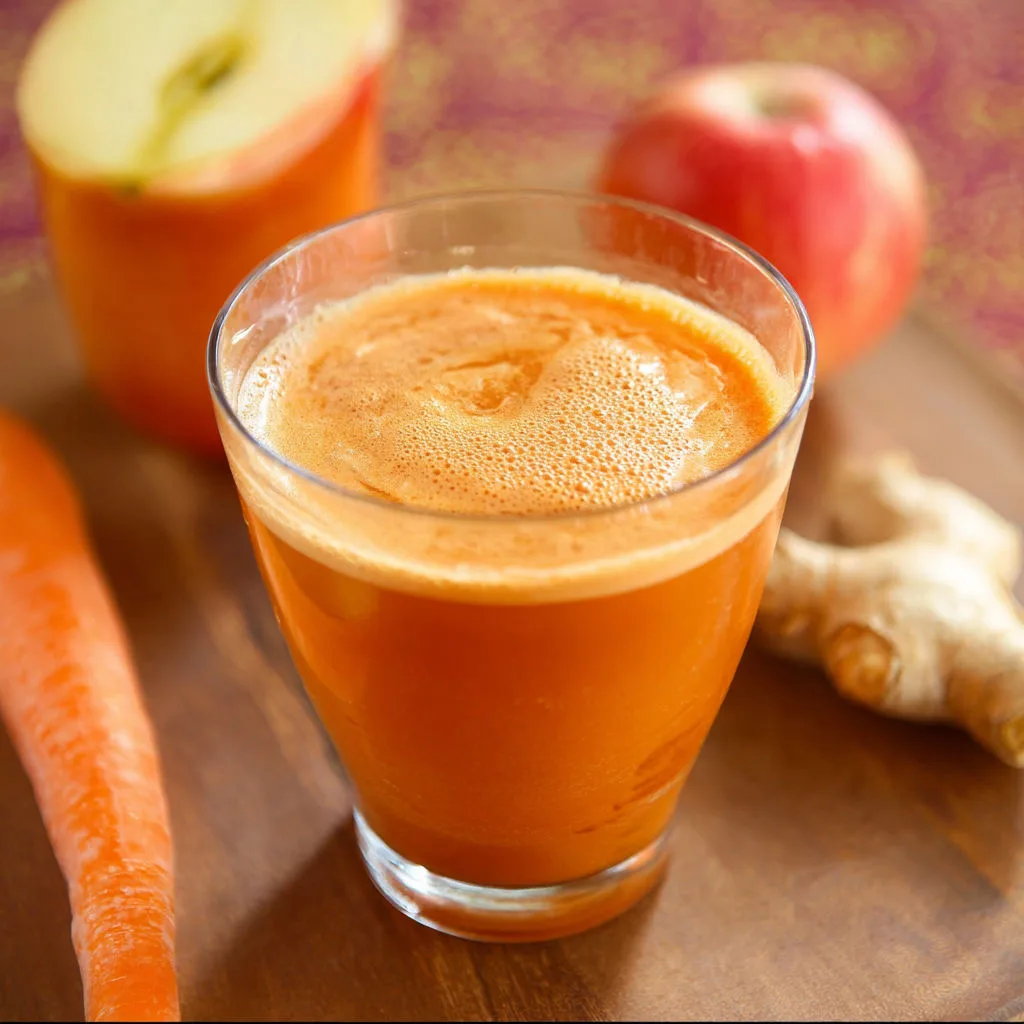
You need quick carbs and natural stimulants. Apple provides sugars that convert fast. Ginger adds a warm kick that wakes up your palate.
Lemon brightens everything and offers vitamin C. Try this combo: 1 apple, a 1-inch ginger knob, and half a lemon. If you have a masticating juicer, add a few carrot sticks for extra sweetness.
I Need a Detox or Digestion Reset
Focus on dark greens and watery vegetables. Kale, cucumber, celery, and a green apple form the classic base. The chlorophyll supports liver function.
The water content hydrates faster than plain water. If you're new to green juice, start with a 4:1 vegetable-to-apple ratio. If you feel bloated, add fennel bulb or fresh mint.
I'm Making Juice for Kids
Sweetness is non-negotiable. Watermelon and apple are safe bets. Add a small piece of cucumber to dilute the sugar a little without changing the taste.
Avoid strong greens like kale or bitter leaves. If your child is hesitant, freeze the juice into popsicle molds. They get the nutrients without the texture complaint.
I Want Something Low-Sugar for Weight Loss
Cut the fruit to one piece or eliminate it entirely. Cucumber, celery, and lemon make a crisp base. Add a handful of spinach for body and a pinch of cayenne for metabolism support.
If the taste feels flat, add a small green apple. Keep the total fruit below 25 percent of the batch.
Check Your Juicer: Why Equipment Changes the Recipe
Your juicer type determines which recipes work well and which turn into a messy failure. If you ignore this, you'll get foamy juice, bitter flavors, or a clogged machine. Here is what each machine handles best.

Image source: Bing (Web (fair-use with source credit))
Masticating (Slow) Juicers: Best for Leafy Greens
A masticating juicer crushes produce at low speed, typically 40, 80 RPM. It handles kale, spinach, wheatgrass, and ginger with almost no foaming. The pulp comes out dry, meaning you extract more juice.
If you own this type, prioritize leafy-heavy recipes. You can also juice soft berries and tomatoes without clogging.
Centrifugal (Fast) Juicers: Best for Hard Fruit and Roots
A centrifugal juicer spins at 3,000, 15,000 RPM, using a shredding disc and a mesh strainer. It works great on apples, carrots, beets, and celery. It struggles with leafy greens because the leaves get caught in the basket and produce wet pulp.
If you own this type, always start with a soft ingredient like cucumber, then follow with greens, then finish with hard produce to push the greens through.
Citrus Presses: A One-Trick Pony, and That's Fine
A citrus press only handles oranges, grapefruits, lemons, and limes. It is perfect for a simple morning orange juice. But it cannot juice a carrot or a leaf of kale.
If citrus is your main goal, this machine works fine. Otherwise, use it as a supplement to your main juicer.
The Best Juice Recipes for Every Goal
Each recipe below targets a specific outcome. We've designed them to work with both centrifugal and masticating machines, with a note when a swap helps.
The Morning Energy Boost (Apple-Ginger-Lemon)
- 1 green apple
- 1-inch fresh ginger, peeled
- Half a lemon, peeled
- Optional: 2 carrots
Juice the ginger first, then the apple, then the lemon. If using carrots, add them after the ginger. This yields about 8, 10 ounces.
Drink it within 15 minutes for the best taste and enzyme activity.
The Green Reset (Kale-Celery-Cucumber-Apple)
- 2 large handfuls of kale
- 3 celery stalks
- Half a cucumber
- 1 green apple
If you have a centrifugal juicer, roll the kale into a tight tube and juice it between the cucumber and apple. This pushes greens through the spinning basket. The yield is roughly 10, 12 ounces.
Drink it cold.
The Root Revival (Carrot-Beet-Orange)
- 4 carrots
- 1 small beet, scrubbed and halved
- 1 orange, peeled
Juice the carrot first, then the beet, then the orange. The orange's acidity helps clean the machine's parts of beet stain. This recipe delivers a natural pre-workout dose of nitrates.
According to USDA FoodData Central, one cup of carrot juice provides over 400 percent of the daily value for vitamin A.
The Kid-Friendly Sip (Watermelon-Apple-Mint)
- 2 cups watermelon, rind removed
- 1 apple
- 3 fresh mint leaves
Juice the apple first, then the watermelon, then roll the mint leaves into the apple's path. This yields a very sweet, pink juice. If your juicer has a foam separator, use it.
If not, skim the foam with a spoon.
The Low-Sugar Hydrator (Cucumber-Lemon-Celery)
- 1 cucumber
- 4 celery stalks
- Half a lemon, peeled
- Small handful of spinach (optional)
Juice the cucumber, then celery, then spinach, then lemon. This recipe has 5, 7 grams of sugar per serving. Drink it between meals as a snack that won't spike your blood sugar.
The Golden Ratio: How to Build a Balanced Juice Every Time
You don't need a recipe every single day. If you learn the basic structure, you can improvise with whatever produce is in your fridge. The rule is simple.
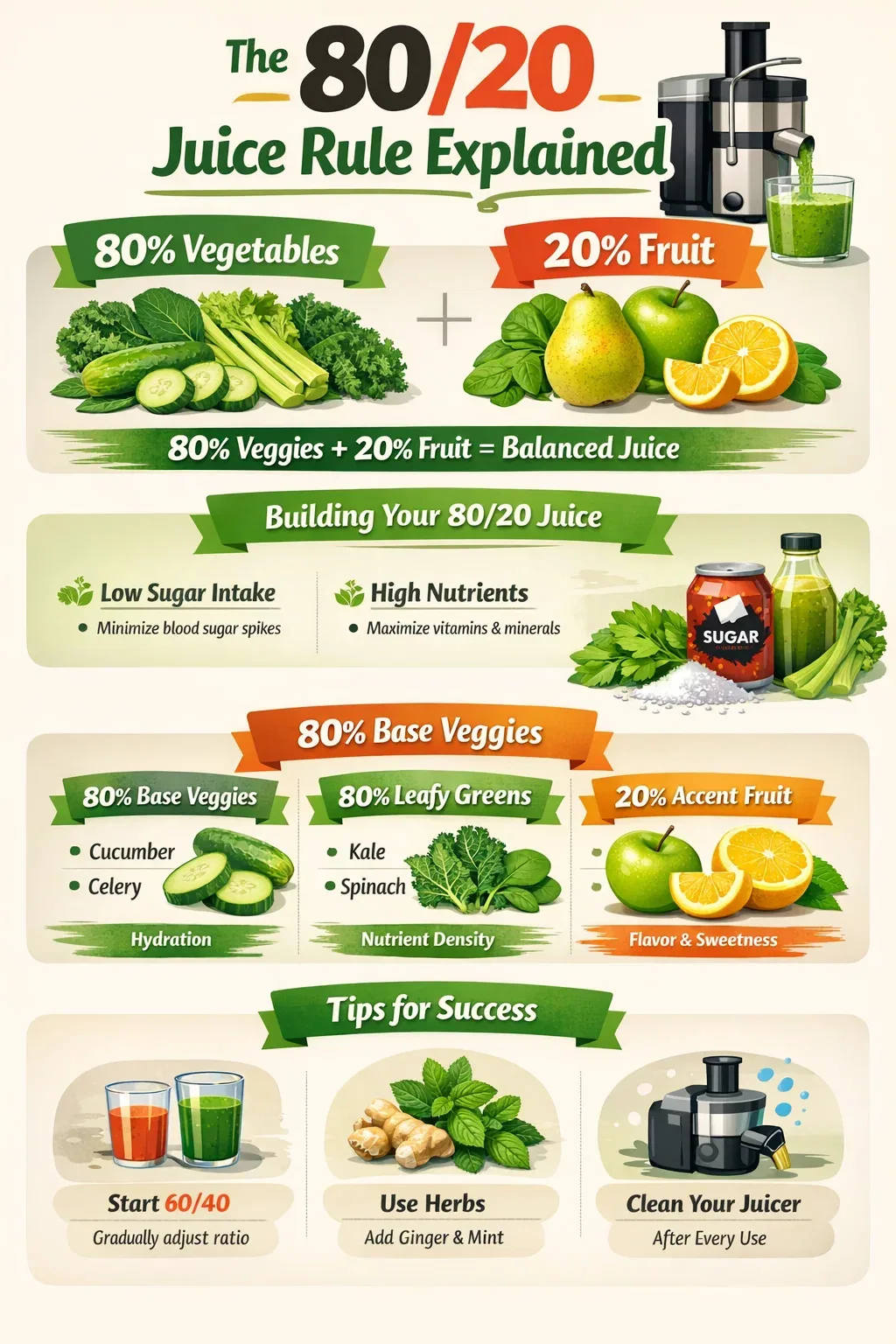
Image source: Bing (Web (fair-use with source credit))
The 3:1 Veggie-to-Fruit Rule
For every three parts vegetables, use one part fruit. This keeps the sugar load in check while making the juice palatable. If you use two apples and one carrot, that is a high-sugar drink.
If you use three carrots and one apple, you get sweetness without a crash. Adjust the ratio based on your goal. For weight loss, use 4:1 or even 5:1.
Sweet, Tart, Earthy, and Fresh: The Flavor Layers
Think of juice building like cooking. You need at least one element from each layer:
- Sweet: apple, carrot, beet, pineapple
- Tart: lemon, lime, green apple, cranberry
- Fresh: cucumber, celery, mint, parsley
- Earthy: beet, ginger, turmeric, fennel
If a juice tastes boring, you are missing the tart layer. Add a squeeze of lemon. If it tastes bitter, you need more sweet.
Add half an apple.
Batch Sizes and Yield Cheat Sheet
| Ingredient | Amount for 1 serving | Approx yield |
|---|---|---|
| Apple | 1 medium | 4 oz |
| Carrot | 3 medium | 4 oz |
| Kale | 4 leaves | 2 oz |
| Celery | 3 stalks | 3 oz |
| Cucumber | ½ medium | 4 oz |
| Beet | 1 small | 3 oz |
Use this table to estimate how much produce to buy for a week of juice. A typical weekly batch of green juice requires about 15 apples, 20 celery stalks, 4 cucumbers, and 2 bunches of kale. Scale up or down based on your consumption.
Common Juicing Mistakes That Ruin a Glass
Even experienced juicers make these errors. They cost you flavor, yield, and cleanup time. Here is how to avoid them.
Putting the Wrong Ingredients in the Wrong Order
If you load fibrous kale first into a centrifugal machine, it gets stuck in the spinning basket. The machine shakes, the juice comes out thin, and you waste half the greens. The fix is simple.
Always juice soft, watery ingredients first: cucumber or celery. Then add leafy greens. Then finish with hard items like apple or carrot.
The hard pieces push the soft residue through the system.
Ignoring Your Juicer's Limits
Your machine cannot handle every ingredient. No centrifugal juicer can properly juice wheatgrass or large amounts of spinach. Do not force it.
If the machine sounds strained, stop, clean the basket, and try alternating with a harder ingredient. If it still struggles, reserve that recipe for a masticating juicer.
Over-Chilling or Storing Juice Too Long
Fresh juice starts losing nutrients immediately after extraction. The oxidation process turns it brown and diminishes enzyme activity. Drink within 15 minutes for peak value.
If you must store it, pour into a glass jar, fill to the brim to minimize air, cap it tight, and refrigerate. Consume within 24 hours. Do not store in plastic bottles; the oxygen permeability is higher.
Forgetting to Balance Flavors
A pure celery juice is medicinal. A pure apple juice is candy. Both are unbalanced.
Always include a tart element like lemon and a fresh element like cucumber. Taste the juice before you pour the whole batch. If it needs fixing, add a splash of lemon for brightness or a piece of apple for sweetness.
Small adjustments save the whole glass.
FAQs: Juicing Questions We All Ask
Do I Need to Peel Everything?
No. Thick-skinned produce like oranges, pineapple, and melons should be peeled, but many peels are completely fine. Cucumber, carrots, and apples juiced with their skin intact add fiber and nutrients.
The only rule: wash everything thoroughly before it goes anywhere near your machine.
Is Green Juice Better Than Fruit Juice?
Green juice is lower in sugar and higher in water-soluble vitamins, so it wins for daily hydration and weight management. Fruit juice tastes better but spikes blood sugar faster. The best approach is a green-heavy blend with one apple for sweetness.
That balances nutrition and taste.
Can I Juice Ahead of Time?
You can, but you lose nutrients the longer it sits. The USDA recommends consuming fresh juice within 24 hours if refrigerated. Fill the jar completely to leave zero air space, cap it tight, and drink it cold.
Expect some oxidation and color change after a few hours.
How Do I Cut Down on Foam?
Foam comes from air being introduced during extraction. A masticating juicer produces almost none, while centrifugal models create plenty. Run the juice through a fine mesh strainer, or skim the top with a spoon.
Many juicers include a built-in foam separator.
What Should I Do With the Leftover Pulp?
The pulp is pure fiber you can reuse instead of tossing. Mix it into muffin batter, vegetable broth, compost, or even homemade crackers. Carrot and beet pulp adds moisture and texture to baked goods.
Just store it in the fridge and use it within two days.
Your Move: Which Juice Should You Make Today?
If you need a decision in ten seconds, use this quick matrix. Match your situation to a recipe, and let your juicer type guide the details.
| Your situation | Best recipe | Key ratio |
|---|---|---|
| Morning energy | Apple-Ginger-Lemon | 2 fruit to 1 root |
| Detox or bloat | Green Reset | 4 veg to 1 fruit |
| Post-workout | Root Revival | 3 roots to 1 citrus |
| Kids want sweet | Watermelon-Mint | Mostly fruit, minimal veg |
| Weight loss | Low-Sugar Hydrator | 5 veg to 0 fruit |
Ready to Start a Routine? Try This 3-Day Plan
Day one: make the Low-Sugar Hydrator to ease your palate into greens. Day two: try the Green Reset with an extra half apple if bitterness bothers you. Day three: finish with the Root Revival for a nutrient-dense boost.
Drink every juice within 15 minutes of making it.
Keep a bottle of lemon juice handy. A quick squeeze fixes any flat flavor at the end. And remember to clean your juicer right after use, because dried pulp is far harder to remove.
Start with the recipe that matches your reason today, and you will build a habit that actually sticks.

Similar Posts