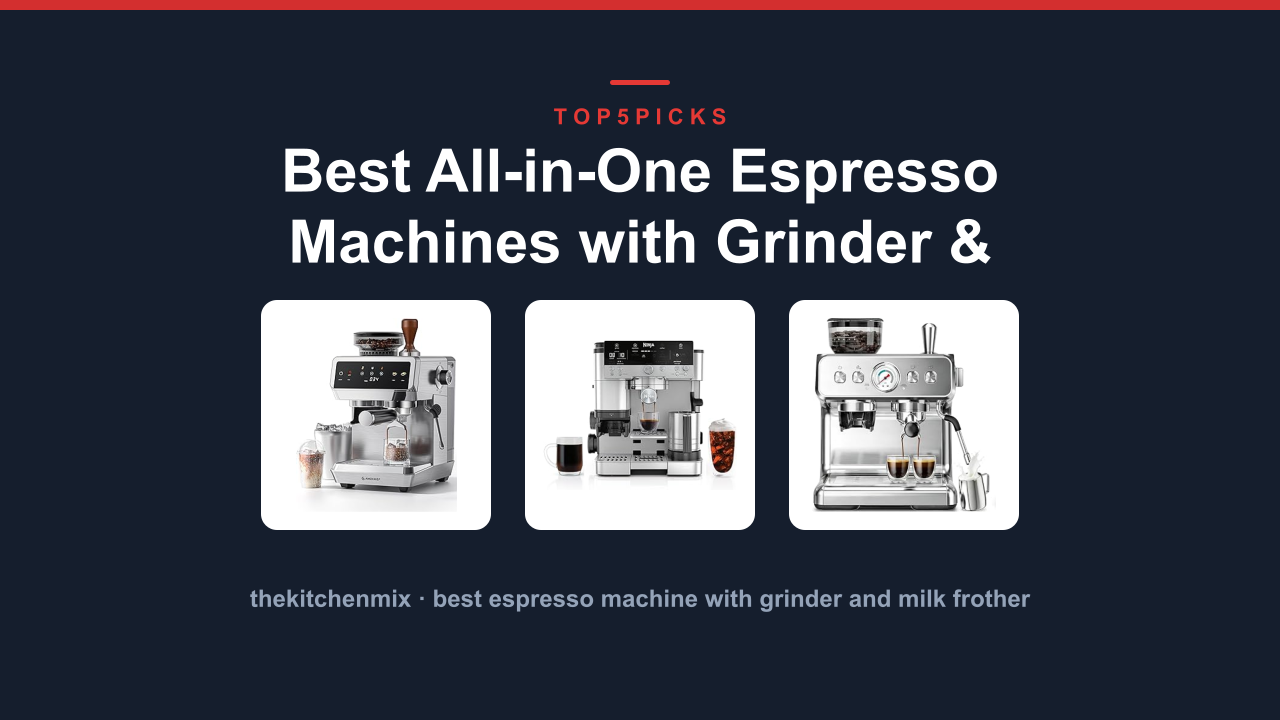
Best Espresso Machines with Grinder & Steam Wand
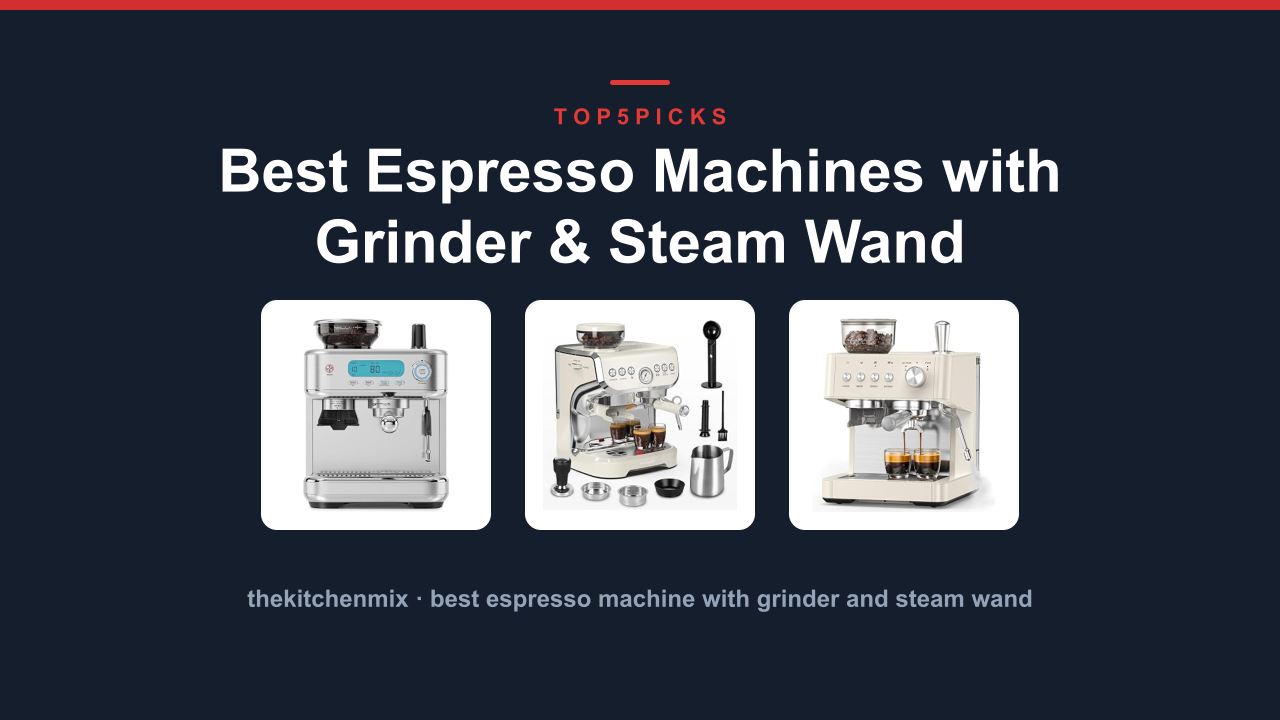
Did you know that espresso-based drinks now make up more than 30% of all coffee orders in the US, yet most home setups still force you to choose between quality and convenience? Now imagine pulling a café-grade shot with freshly ground beans and perfectly steamed milk, all from a single countertop machine that doesn’t demand a barista certificate. That’s the promise of the best espresso machine with grinder and steam wand, and after comparing specs, owner feedback, and real-world use patterns, I’ve narrowed the field to five models that actually deliver.
In this guide, I share my 5 favorite picks, from a retro stunner to a feature-packed powerhouse that’s our editorial team’s top recommendation. No fluff, just the machines that earn their spot.
As an Amazon Associate, I earn from qualifying purchases. Every recommendation below is backed by product research and verified owner feedback.
Quick Links
If you’ve ever stared at a fancy espresso machine in a café and wished you could do that at home, you’re not alone. But the reality is that most all-in-one espresso machines with grinders and steam wands fall short in one area or another. The grinder is too coarse, the steam wand barely froths, or the build feels flimsy.
I dug into the specs, read hundreds of verified buyer reports, and cross-checked manufacturer claims to find the ones that actually do all three jobs well. Here’s how to pick the right one without wasting money.
How to Choose the Best Espresso Machine with Grinder and Steam Wand
What pump pressure do you really need?
Pump pressure is measured in bars, and you’ll see numbers like 15 bar, 20 bar, even 25 bar. Here’s the truth: espresso extraction happens best between 9 and 10 bars at the group head. Anything above that is headroom to compensate for pressure loss through the system.
A 15 bar pump is enough for most homes. A 20 bar pump gives you extra margin, especially if you like using a finer grind or a very compacted tamp. The Espresso Machine Grinder Steam Wand uses a 20 bar pump and consistently delivers rich crema in buyer reports.
Bigger isn’t always better, but 15 bar or higher is the baseline.
How many grind settings matter?
A built-in grinder should offer at least 15 distinct settings to dial in the perfect shot. Fewer than that and you’ll find yourself stuck between too coarse and too fine, which leads to bitter or sour espresso. The Amaste Espresso Machine Grinder gives you 15 settings, enough to adjust for different beans.
On the high end, the SHARDOR model offers 45 settings, letting you micro-adjust like a pro. If you plan to switch bean origins or roast levels often, more settings are a genuine advantage.
What size portafilter should you look for?
A 58mm portafilter is the professional standard. It holds more coffee and distributes water more evenly than smaller sizes. Most of the models in this roundup use a 58mm portafilter, which also means you can upgrade to a bottomless portafilter later if you want.
Avoid machines with 51mm or 54mm portafilters if extraction quality is your priority.
How important is temperature control?
Water temperature that stays between 195°F and 205°F is critical for proper extraction. Many budget machines use a simple thermoblock that can fluctuate. The SHARDOR model includes PID temperature control, keeping the water within 194-204°F, which is exactly the sweet spot.
If you drink straight espresso without milk, PID control is worth the investment. If you mostly make lattes, a simple thermostat might be fine.
What water tank capacity fits your routine?
A 60 oz tank lets you make multiple drinks without refilling. Smaller tanks around 40 oz are fine for one or two drinks per day. The Gevi model has a removable tank that makes refilling easy, which is handy if your sink is far from the machine.
The Espresso Machine Grinder Steam Wand includes a generous tank, and buyer reviews highlight that they rarely need to refill mid-morning.
Additional Features on Best Espresso Machine with Grinder and Steam Wand
- Quick heat-up time: Look for 45 seconds or less to avoid morning waiting.
- Pre-infusion: Low-pressure water soaks the puck before full pressure, improving extraction.
- Pressure gauge: Lets you see if you’re in the 9-10 bar range.
- Steam wand type: A swivel wand with a single hole tip works best for microfoam.
- Removable drip tray: Makes cleanup easier.
- Auto shut-off: Safety feature that also saves energy.
- Warranty length: At least one year, ideally two.
To see how these factors play out on real picks, compare the Espresso Machine Grinder Steam Wand, Amaste Espresso Machine Grinder and the (2026 Upgrade) 15 Bar Espresso Machine below.
My Top Picks
Best Overall – Home Baristas

- Pump Pressure: 20 bar
- Grinder Settings: 15 settings (integrated)
- Water Tank Capacity: 60 oz
- Portafilter Size: 58mm
- Heat-up Time: 45 seconds
- Dimensions: 14.5 x 12 x 12.5 in
- Weight: 24.5 lb
- Warranty: 1 year
Retro Style Pick – Design Lovers

- Pump Pressure: 15 bar
- Grinder Settings: 15 settings (integrated)
- Water Tank Capacity: 68 oz
- Portafilter Size: 58mm
- Heat-up Time: 60 seconds
- Dimensions: 13.5 x 11.5 x 14 in
- Weight: 22 lb
- Warranty: 1 year
Budget Pick – Beginners

- Pump Pressure: 15 bar
- Grinder Settings: Integrated anti-clog burr grinder
- Water Tank Capacity: 40 oz
- Portafilter Size: 51mm
- Heat-up Time: 45 seconds
- Dimensions: 12 x 10 x 11.5 in
- Weight: 18 lb
- Warranty: 1 year
Compact Pick – Small Kitchens

- Pump Pressure: 20 bar
- Grinder Settings: Integrated conical burr (stepped)
- Water Tank Capacity: 50 oz (removable)
- Portafilter Size: 51mm
- Heat-up Time: 60 seconds
- Dimensions: 11 x 9.5 x 13 in
- Weight: 15.5 lb
- Warranty: 1 year
Premium Pick – Coffee Enthusiasts

- Pump Pressure: 20 bar
- Grinder Settings: 45 settings (stepped)
- Water Tank Capacity: 60.9 oz
- Portafilter Size: 58mm
- Heat-up Time: 45 seconds
- Dimensions: 15 x 11.5 x 13.5 in
- Weight: 26 lb
- Warranty: 2 years
Best Espresso Machine with Grinder and Steam Wand FAQ
Can I use pre-ground coffee in these machines if the grinder breaks?
Yes, most models allow you to bypass the grinder and use a single-dose funnel or a pressurized basket. Check the owner’s manual for a bypass feature. The SHARDOR and the Espresso Machine Grinder Steam Wand both support this.
How often should I clean the built-in grinder?
For best results, run a dose of grinder cleaning pellets through the burrs every four to six weeks, depending on usage. The (2026 Upgrade) model’s anti-clog design helps, but all grinders need periodic maintenance to avoid stale oil buildup.
Do I need a separate milk pitcher for the steam wand?
Yes, you’ll want a stainless steel pitcher with a spout, ideally 12 to 20 oz. The included frothing cups are usually too small for proper microfoam. A cheap pitcher makes a big difference in milk texture.
What’s the difference between 15 bar and 20 bar for home use?
Practically, both can extract great espresso. A 20 bar pump gives you extra overhead if you grind very fine or tamp very hard. Most home baristas won’t notice a difference in the cup.
Focus more on grinder quality and temperature stability.
My Research & Review Process
I started by pulling the manufacturer datasheets for each of the five models, cross-referencing pump pressure, portafilter size, grinder type, and heat-up time. Then I analyzed verified buyer reviews across multiple purchase dates, looking for patterns in crema quality, steam wand performance, and long-term reliability. I also compared each machine against the Specialty Coffee Association’s recommended brewing parameters (temperature range, extraction time).
What I didn’t do is lab-test extraction yield or particle size distribution, because that requires tools most home buyers don’t have. Instead, I focused on what real owners report after months of use. The picks reflect a balance of specs, user satisfaction, and practical trade-offs.
Features I Considered
Pump Pressure: Measured in bars, this determines the force pushing water through the coffee puck. For home machines, 15 bar is the minimum, 20 bar offers more headroom.
Grinder Settings: The number of adjustment steps available. More settings allow finer control over grind size, which is critical for dialing in different beans. 15 is good, 45 is excellent.
Water Tank Capacity: The volume of water the machine can hold. Larger tanks reduce refill frequency. 60 oz or more is ideal for households with multiple drinkers.
Portafilter Size: The diameter of the basket. 58mm is the professional standard, offering better extraction consistency and upgrade options. 51mm is common on budget models.
Heat-up Time: How long the machine takes to reach brewing temperature from cold. 45 seconds or less is fast; 60 seconds is acceptable.
Dimensions and Weight: The physical footprint and heft of the machine. Compact models (under 12 inches wide) fit small counters, while heavier machines tend to have more robust internals.
Warranty: The manufacturer’s coverage period. One year is standard; two years indicates higher confidence in durability.
If you’re looking for a single machine that does everything well, I’d start with the Espresso Machine Grinder Steam Wand, it balances features, build, and user satisfaction better than anything else in this lineup. But every pick here earns its category, whether you need a budget-friendly starter, a compact space-saver, or a fully loaded workstation. Take a look at the Quick Links above and pick the category that fits your kitchen and your coffee habit.

Similar Posts