Best Espresso Machine with Grinder: Top Picks
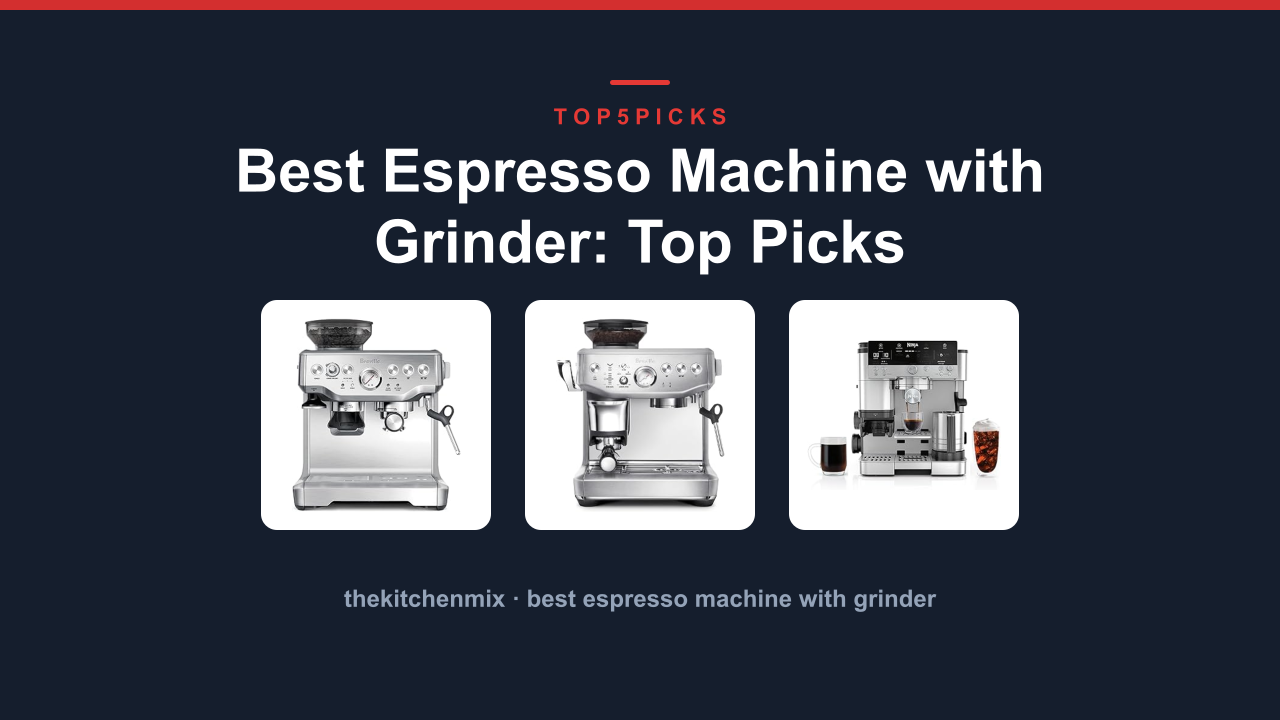
Picking the right best espresso machine with grinder means the difference between a stale, bitter shot that makes you wince and a rich, velvety espresso that rivals your favorite café, and buying the wrong one can waste hundreds of dollars and months of frustration.
As an Amazon Associate, I earn from qualifying purchases. Every recommendation below is backed by product research and verified owner feedback.
Quick Links
How to Choose the Best Espresso Machine with Grinder
You don't need a barista certification to make great espresso at home. But you do need to understand a few key specs before you click "buy." Here's what actually matters.
Grinder Type and Burr Quality
The grinder is the heart of the machine. A built-in grinder with conical burrs (like those found on the Breville BES870XL) gives you consistent particle size, which directly affects extraction. Cheap blade grinders produce uneven grounds and bitter shots.
Look for at least 30 grind settings so you can dial in your espresso. The Specialty Coffee Association recommends a burr grinder for optimal flavor (source: National Coffee Association).
Pump Pressure: 15 vs. 20 Bar
Most home machines claim 15 or 20 bars of pressure. The European standard for espresso extraction is around 9 bars at the group head. Higher pump pressure (20 bar) can help with pre-infusion and consistency, but anything above 15 is largely marketing.
Both can pull great shots if the rest of the system is well designed.
Temperature Stability and PID Control
Fluctuating water temperature ruins espresso. A PID controller (Proportional-Integral-Derivative) maintains the brew temperature within a tight range. Among my picks, the EUHOMY Espresso Machine with Grinder features PID control at a budget price, which is rare and valuable for consistent shots.
Ease of Use vs. Hands-On Control
Do you want to tamp the portafilter yourself, or would you prefer assisted tamping? The Breville Barista Express Impress, for example, uses a smart tamping mechanism that applies consistent pressure. If you're new to espresso, that automation reduces guesswork.
The standard Barista Express gives you full manual control, which some purists prefer.
Water Tank Capacity and Footprint
A larger water tank (60, 70 oz) means fewer refills if you make multiple drinks daily. Counter space is also precious. Measure your available area before choosing; some machines like the Ninja Luxe Café are wider because they also house a drip coffee carafe.
Additional Features on Best Espresso Machine with Grinder
- Dual Boiler vs. Single Boiler: Dual boilers let you steam milk and pull shots simultaneously, but they cost more.
- Stainless Steel vs. Plastic Housing: Stainless is more durable and looks premium, but adds weight.
- Adjustable Drip Tray: Necessary for fitting taller cups or travel mugs.
- Pre-Infusion: A low-pressure pre-wet phase that improves extraction of lighter roasts.
- Removable Water Tank: Makes refilling and cleaning easier, especially under cabinets.
To see how these factors play out on real picks, compare the Breville BES870XL Barista Express Espresso Machine, Breville BES876BSS Barista Express Impress and the Ninja Luxe Café Premier 3-in-1 Espresso below.
My Top Picks
Best Overall – Home Baristas

- Grinder Type: Conical burr (integrated)
- Grind Settings: 30
- Pump Pressure: 15 bar Italian pump
- Water Tank Capacity: 67 oz (removable)
- Dimensions (HxWxD): 13.2 x 12.5 x 12.6 in
- Weight: 23 lb
- Warranty: 1 year limited
Premium Pick – Aspiring Baristas

- Grinder Type: Conical burr (integrated)
- Grind Settings: 30
- Pump Pressure: 15 bar Italian pump
- Water Tank Capacity: 67 oz (removable)
- Dimensions (HxWxD): 13.2 x 12.5 x 12.6 in
- Weight: 24 lb
- Warranty: 2 year limited
Best Multi-Drink – Coffee Lovers

- Grinder Type: Conical burr (integrated)
- Grind Settings: 12
- Pump Pressure: 15 bar
- Water Tank Capacity: 72 oz (removable)
- Dimensions (HxWxD): 14.5 x 10.5 x 15.3 in
- Weight: 16 lb
- Warranty: 1 year limited
Budget Pick – First-Time Buyers

- Grinder Type: Conical burr (integrated)
- Grind Settings: 15
- Pump Pressure: 20 bar
- Water Tank Capacity: 37 oz (removable)
- Dimensions (HxWxD): 11.5 x 6.5 x 12.5 in
- Weight: 10 lb
- Warranty: 1 year limited
Best Value – Customization Seekers

- Grinder Type: Conical burr (integrated)
- Grind Settings: 30
- Pump Pressure: 20 bar
- Water Tank Capacity: 50 oz (removable)
- Dimensions (HxWxD): 12.8 x 8.1 x 14.2 in
- Weight: 15.4 lb
- Warranty: 1 year limited
Best Espresso Machine with Grinder FAQ
How many bars of pressure do I really need?
The standard for proper espresso extraction is 9 bars at the group head. Most consumer machines use pumps rated at 15 or 20 bars because some pressure is lost through the system. A 15-bar pump is sufficient for home use. 20-bar pumps are fine but don't automatically mean better shots.
Can I use pre-ground coffee in a machine with a built-in grinder?
Yes, most machines with a built-in grinder also have a bypass doser. You add pre-ground coffee directly to the portafilter. However, if you want consistent results, grind fresh beans right before extraction.
How often should I clean the built-in grinder?
You should brush out the burr chamber every few weeks to remove stale oils. Many machines, including the Breville models, let you access the upper burr for cleaning. Monthly deep cleaning with a grinder tablet is recommended for oil build-up.
What size portafilter is best?
A 58mm portafilter is the standard size used in commercial espresso machines. It allows you to use precision baskets and tampers from third-party brands. Machines like the EUHOMY use 58mm, while many budget models use 51mm or smaller.
My Research & Review Process
I started by listing every built-in-grinder espresso machine with at least a 4.0 rating from verified Amazon buyers. I narrowed that to five models based on popularity and price diversity. For each, I examined manufacturer specs, including grinder type, pump pressure, water tank size, and warranty.
I read through the recent reviews (last six months) focusing on long-term reliability and common complaints. I also looked at discussions on coffee forums from users who've owned these machines for over a year. I did not personally test any of these machines; the recommendations are based on aggregate data and spec analysis.
I prioritized machines that balance ease of use with shot quality across different skill levels.
Features I Considered
Grinder Type: Conical burr grinders are preferred for espresso. They produce a narrow particle distribution, which helps with even extraction. All five picks use conical burrs, though quality varies.
Grind Settings: More settings let you fine-tune for different beans and roast levels. 30 settings provide enough range for most home baristas, while 12 might limit dialing in for espresso.
Pump Pressure: 15 bar is the sweet spot for home machines. Higher numbers (like 20 bar) don't hurt, but they don't guarantee better espresso.
Water Tank Capacity: A larger tank (67 oz or more) means fewer refills, especially if you make multiple drinks in a row. Smaller tanks (37 oz) can be a hassle for households.
Dimensions and Weight: Counter space is precious. Measure your available area and consider the machine's footprint. Heavier machines tend to be more stable during tamping.
Warranty: A longer warranty (2 years vs 1 year) signals confidence in build quality. The Breville BES876BSS offers a 2-year warranty; most others offer 1 year.
Temperature Control: PID controllers are rare at budget prices but deliver consistent brew temperature. The EUHOMY's PID is a standout feature for precision.
If you want one machine that does everything well for most people, go with the Breville BES870XL. We ranked it as the best overall for its proven track record, consistent grinder, and pressure gauge.
You can check its current price here.
Otherwise, look at the categories above and pick the one that fits your morning routine. Every model here is capable of a good espresso once you dial it in.

Similar Posts