How to Buff Away Light Surface Rust from Cast Iron with Microfiber and Oil
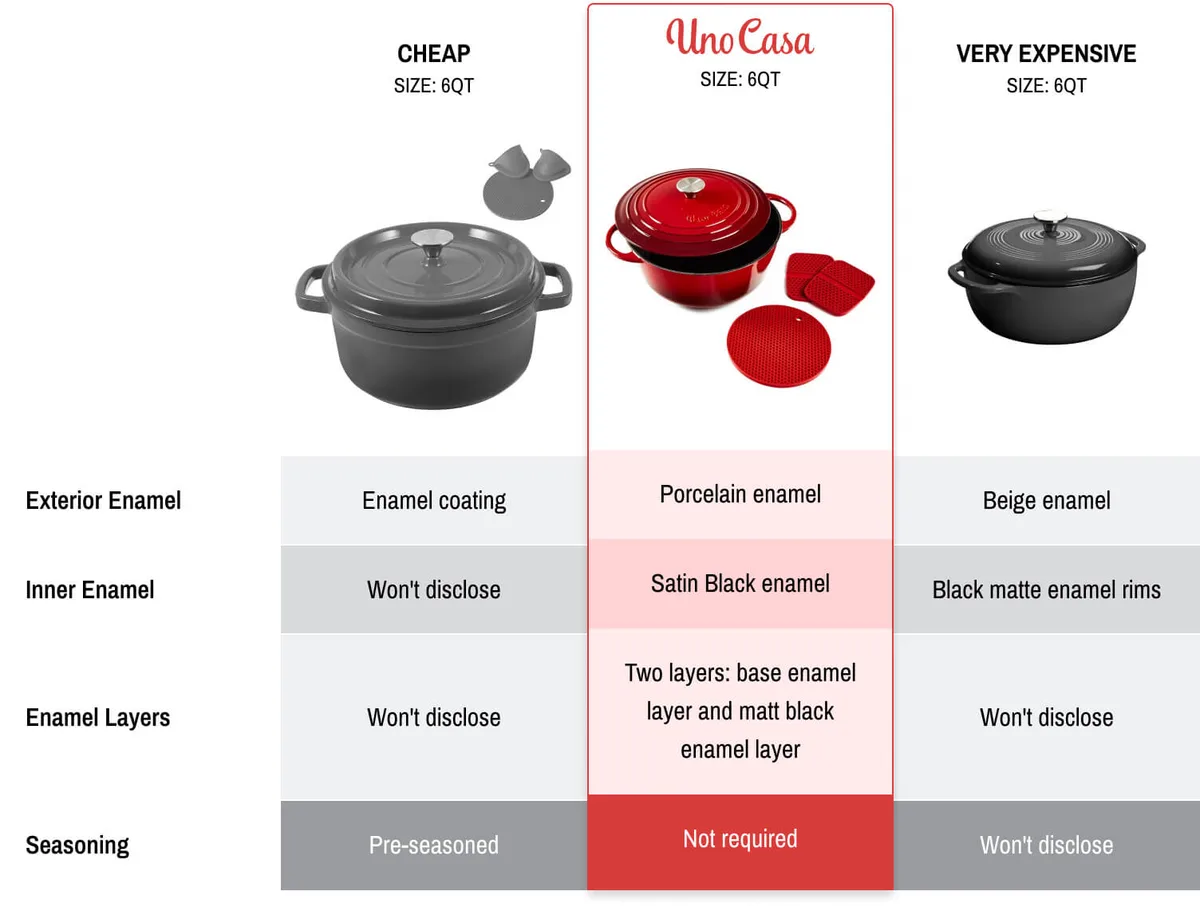
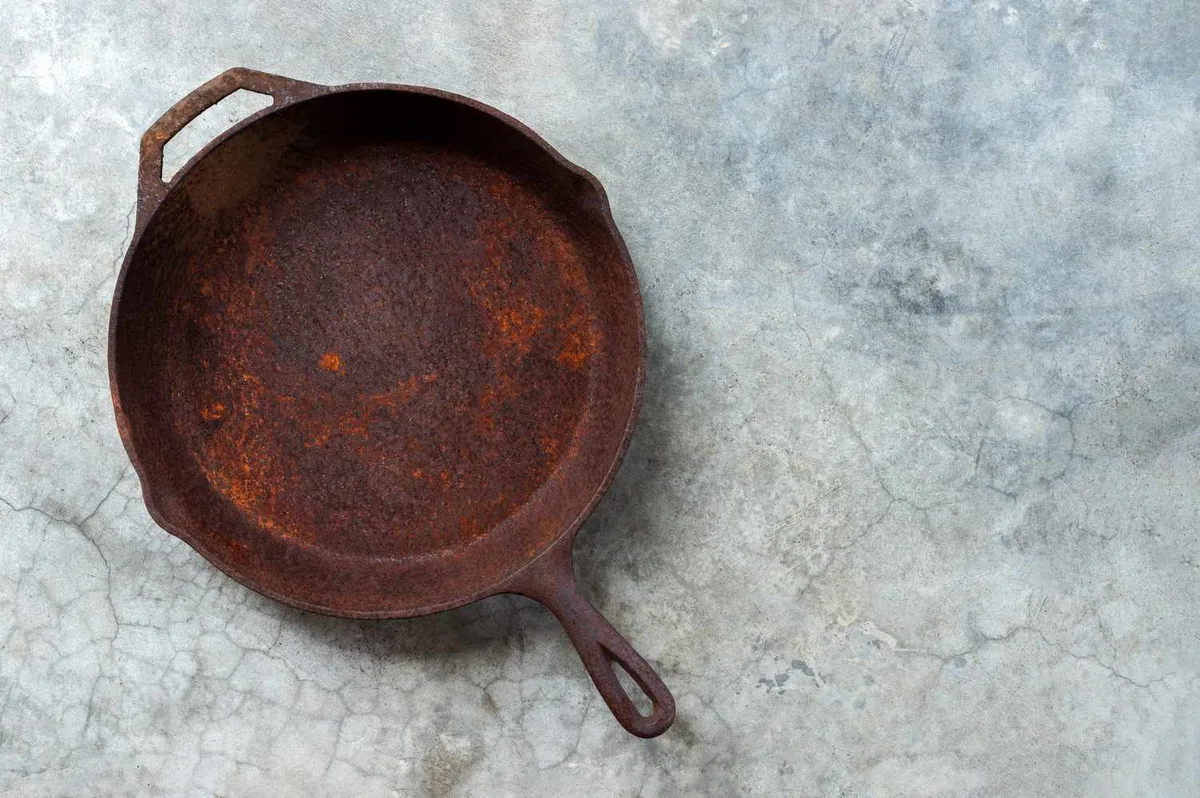
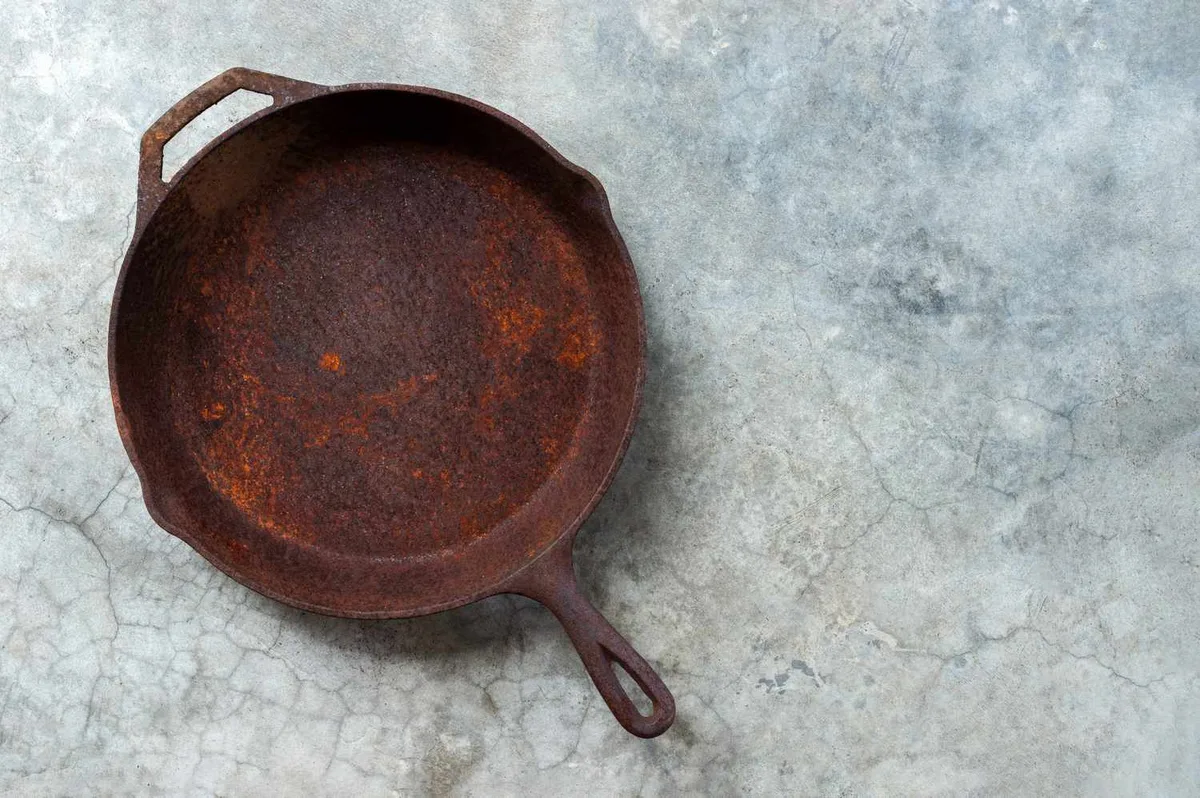
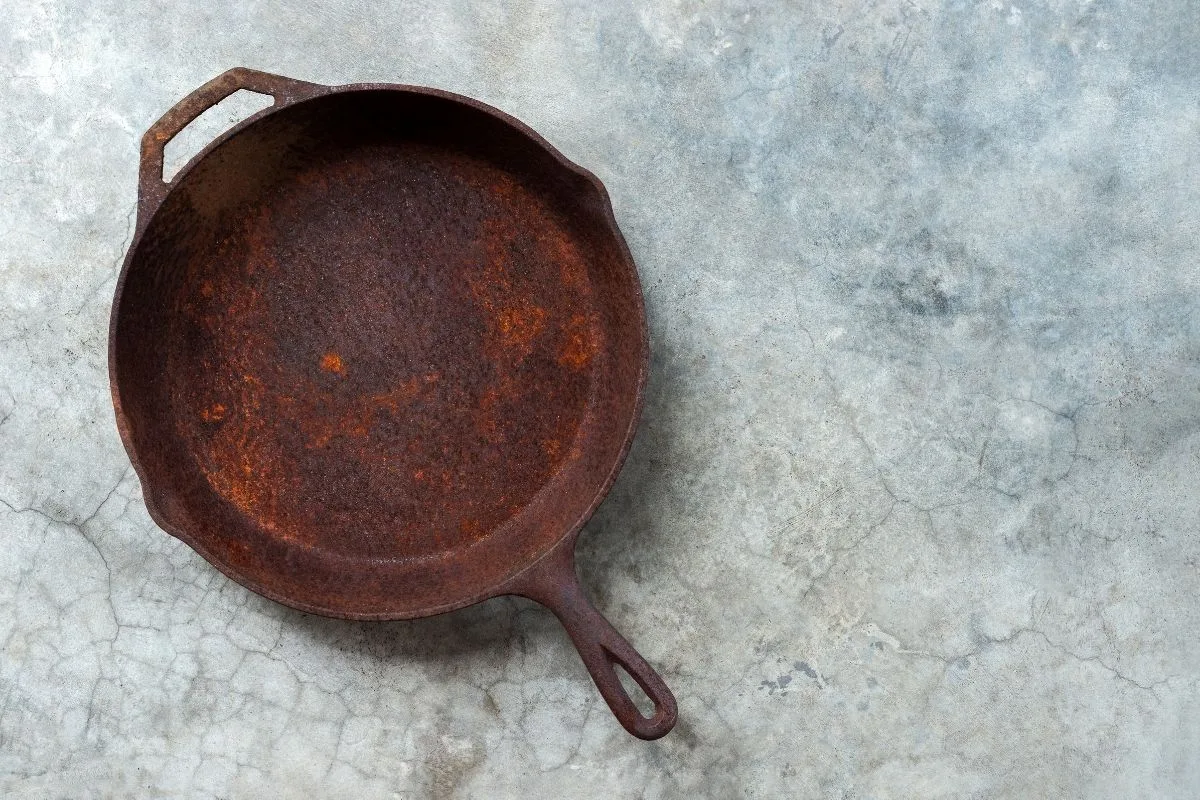
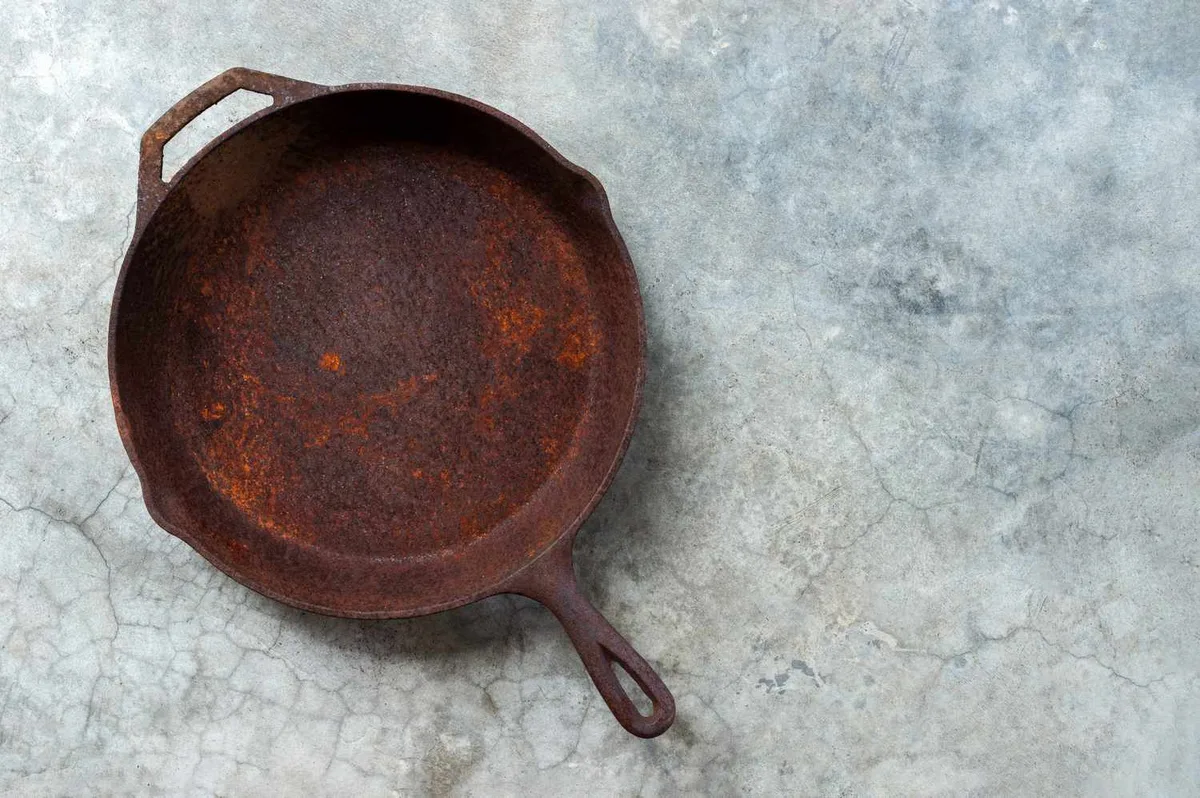
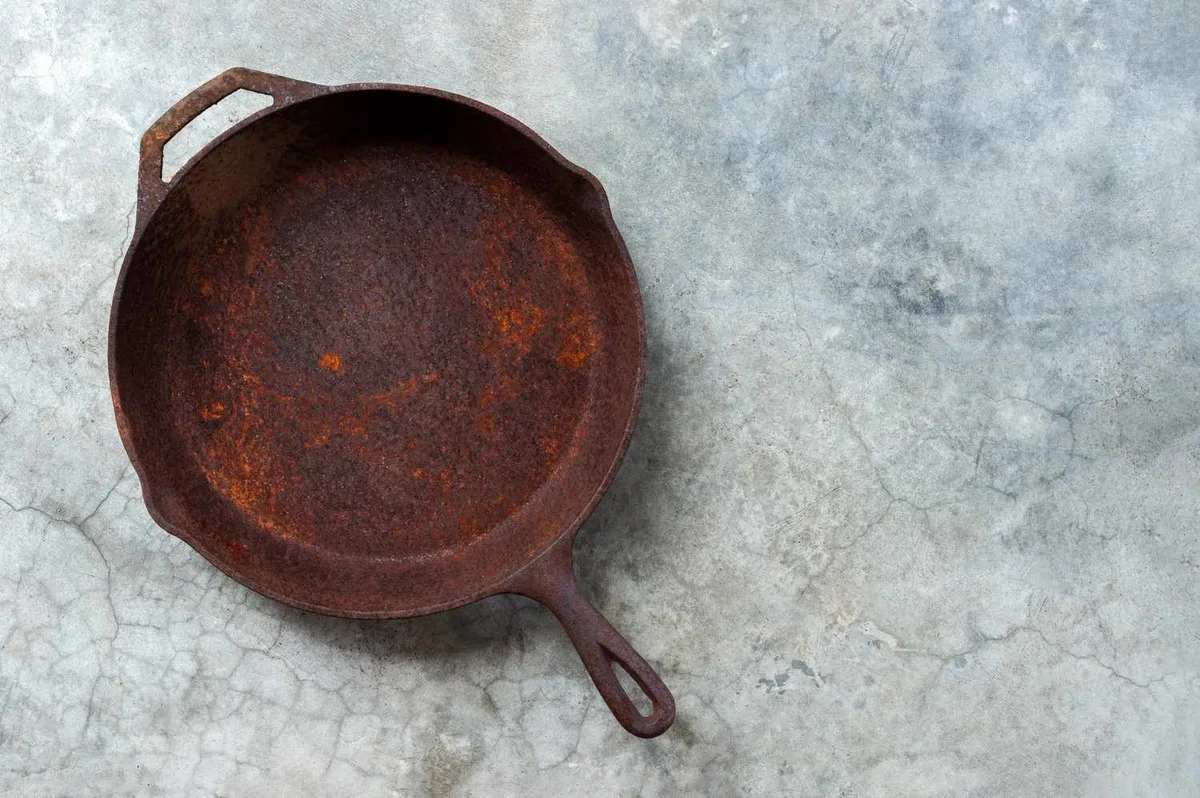
If you’ve ever stared at a rusty cast iron skillet wondering how to remove surface rust from cast iron, you’re not alone. The good news is that most surface rust is cosmetic and restorable. With the right method, you can bring that pan back to cooking condition in under an hour.
Manufacturer guidelines from Lodge indicate that rust removal success depends on the depth of corrosion and whether the pan is bare or enameled. A quick assessment saves time and prevents damage. Let’s start by figuring out exactly what you’re dealing with.
Quick Answer
Scrub loose rust with steel wool. Soak in equal parts white vinegar and water for 30 minutes. Scrub again.
Dry completely on the stove. Apply a thin oil layer and heat to reseason. That’s the process for bare cast iron.
The First Question: Is It Surface Rust or Something Worse?
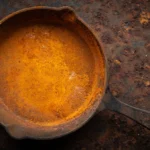
Not every orange spot is surface rust. Some rust has bitten into the metal, leaving pits you can feel with your fingernail. That distinction changes your approach.
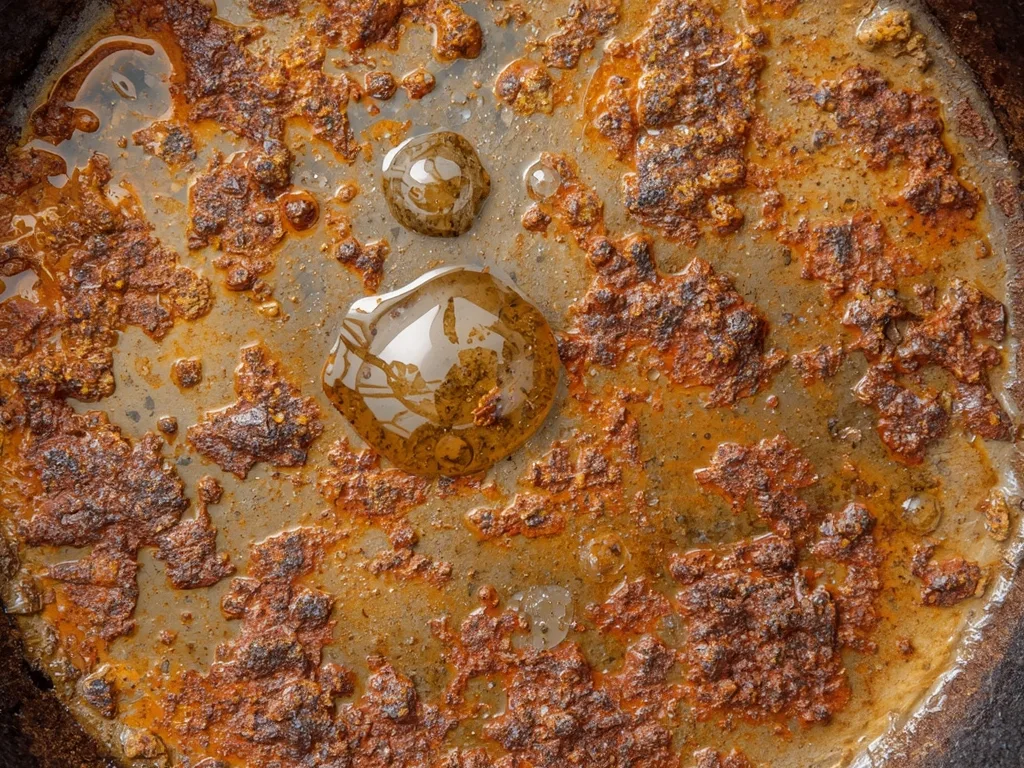
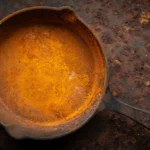
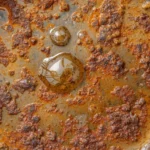
Surface rust looks like a dusty orange powder or a thin discoloration. It sits on top of the seasoning layer or on bare iron. It comes off with light scrubbing. Deep rust feels rough or cratered.
It means the iron has lost mass, and you need more aggressive removal like a long vinegar soak or electrolysis.
Here’s an if/then guide:
- If the rust rubs off with a dry paper towel, it’s flash rust, not deep corrosion.
- If the rust leaves a shallow stain after scrubbing, it’s still surface level.
- If you see pitting or flaking metal, you’re past surface rust and into restoration territory.
For vintage pans, especially those made before the 1950s, extra caution is needed. Some older pieces may contain lead if they were used for melting metals. The U.S.
Consumer Product Safety Commission recommends testing any antique cookware before cooking in it. If you’re unsure, use a lead test kit first.
Bare Cast Iron vs. Enameled: Why It Matters
This is the single most common mistake people make: treating an enameled pan like a bare one. The wrong method can ruin a perfectly good piece of cookware.
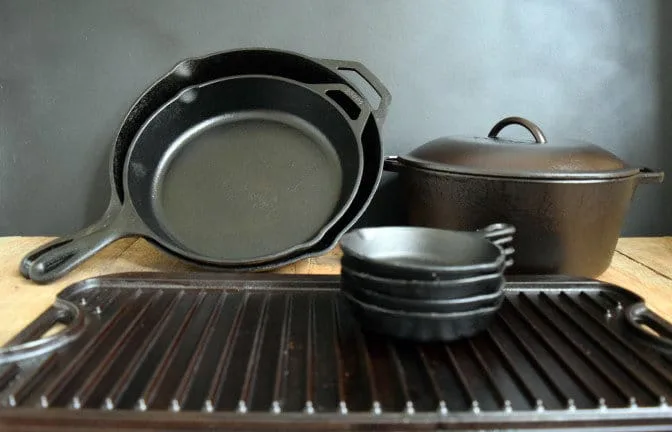
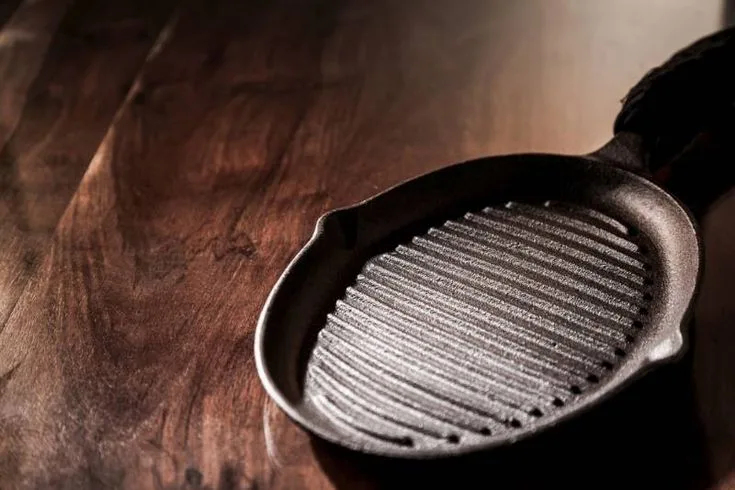
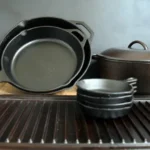
Bare cast iron has a rough or smooth black surface that you season with oil. It can handle acidic soaks, steel wool, and high heat. Enameled cast iron has a glass-like coating that chips if you scrape it with metal or soak it in acid.
Image source: Bing (Web (fair-use with source credit))
Here’s what changes:
- Vinegar soaks are safe for bare iron but will dull or etch enamel.
- Steel wool works great on bare iron but scratches enamel permanently.
- Re-seasoning is necessary after rust removal on bare iron but pointless on enameled pans.
If you can’t tell which type you have, look at the interior color. Bare iron is dark gray or black. Enameled interiors are usually cream, white, or light gray.
If it’s smooth and glossy, it’s enameled. If it’s matte and rough, it’s bare.
Light Rust on Bare Cast Iron: The 15-Minute Fix
If your pan has a light dusting of orange rust and the surface still feels smooth, you can fix it with a quick scrub and fresh oil.
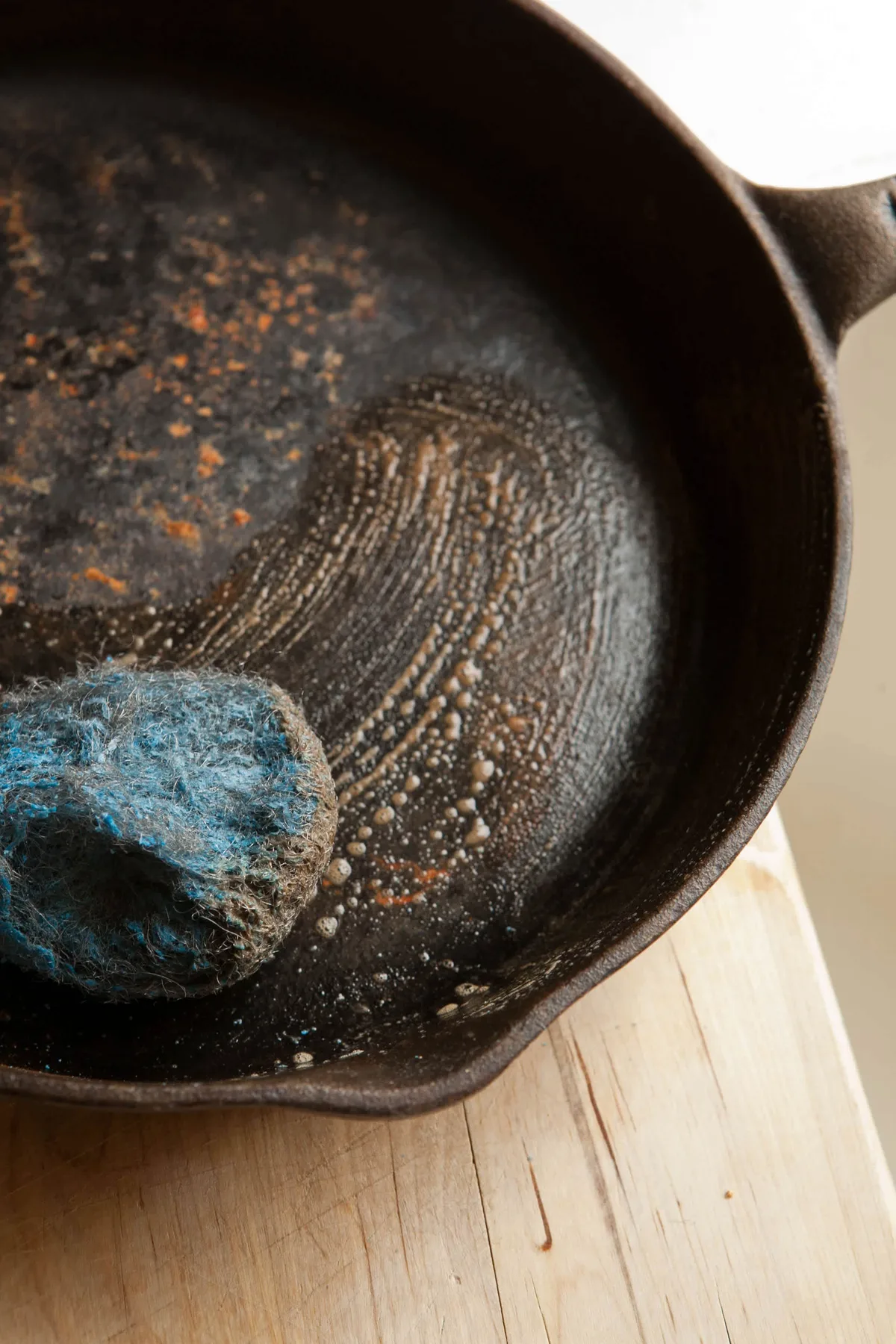
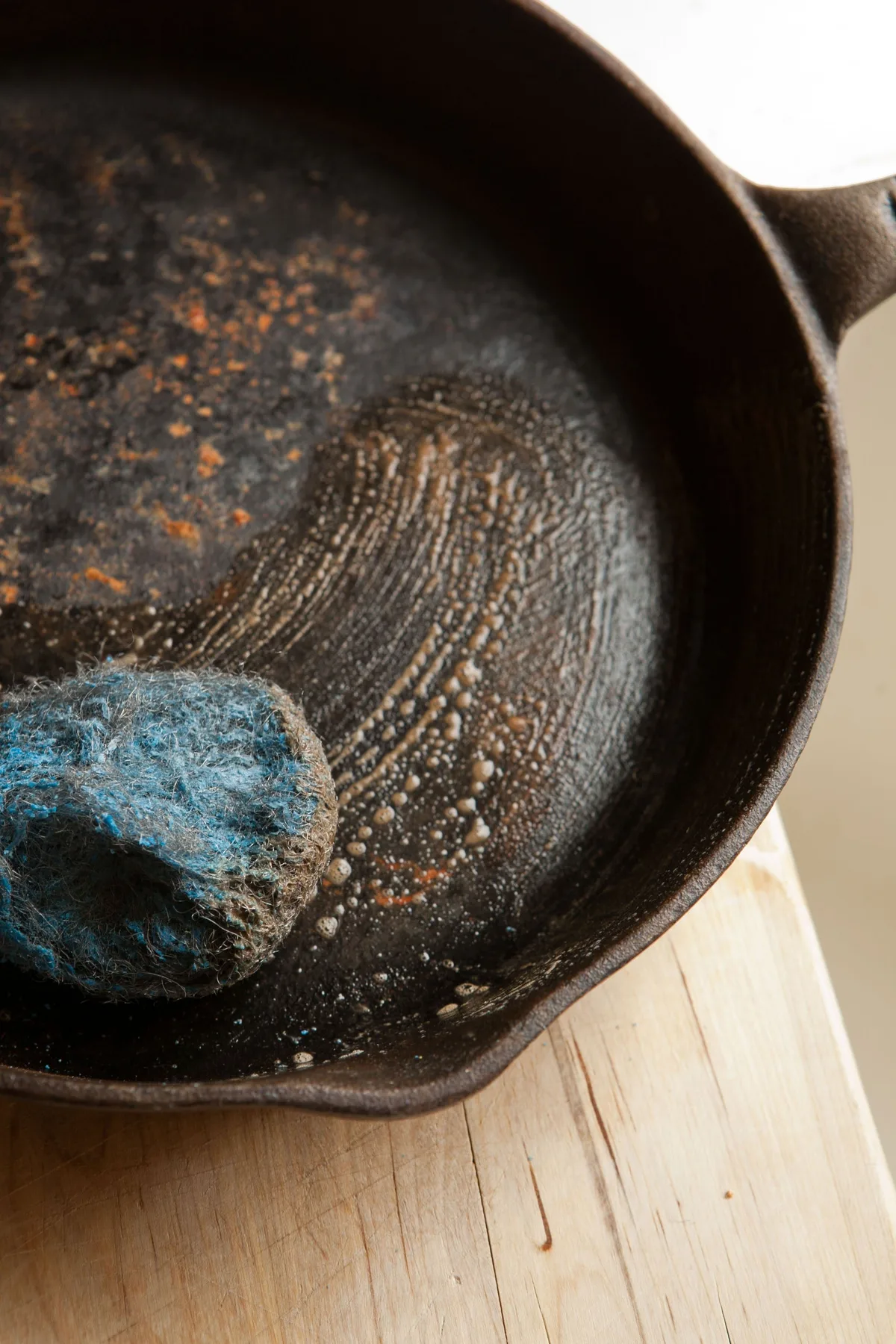
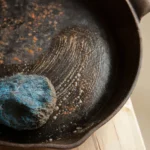
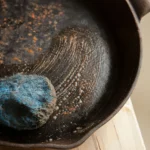
Step 1: Scrub dry. Use fine steel wool or a chainmail scrubber. Rub in a circular motion over the rusty spots. No soap yet.
The rust will powder off.
Step 2: Wipe with vinegar. Dip a paper towel in undiluted white vinegar and rub the rusty area. Let it sit for 5 to 10 minutes. This dissolves the remaining oxidation.
Step 3: Wash and dry. Rinse with warm water and a drop of mild dish soap. Dry immediately with a towel. Then put the pan on the stove over low heat for 2 to 3 minutes to evaporate any trapped moisture.
Step 4: Oil and heat. Rub a teaspoon of vegetable oil over the entire cooking surface. Wipe off the excess. Heat the pan on medium-low until it just starts to smoke.
Let it cool. That’s a single-layer reseason.
Total time is about 15 minutes, and the pan is ready to cook again after one seasoning round. If the rust returns quickly, you may have missed a spot or left the pan too wet.
Moderate to Heavy Rust on Bare Cast Iron: Soak and Scrub
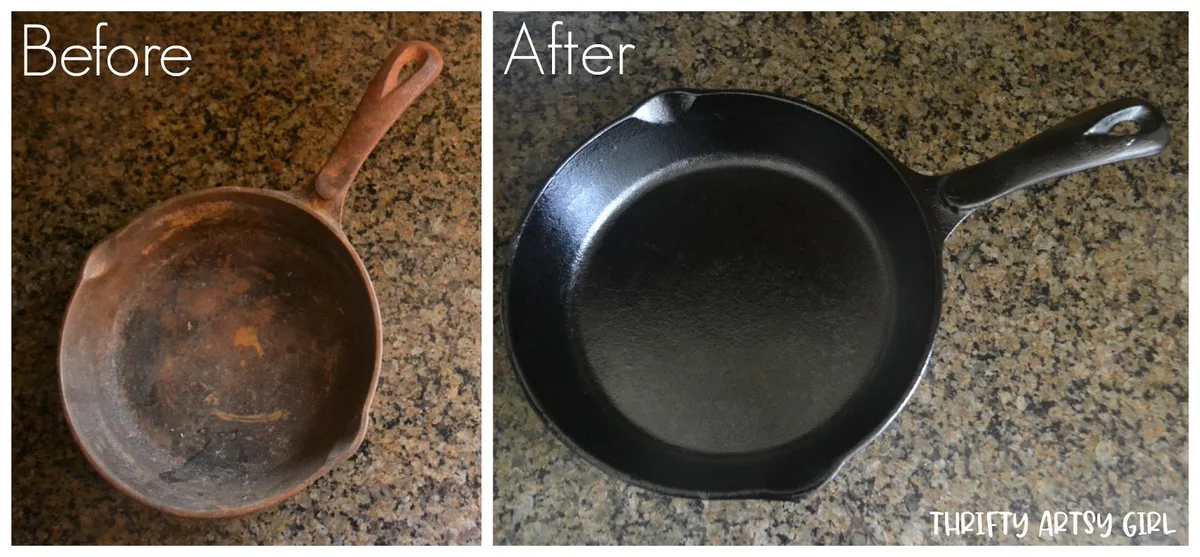
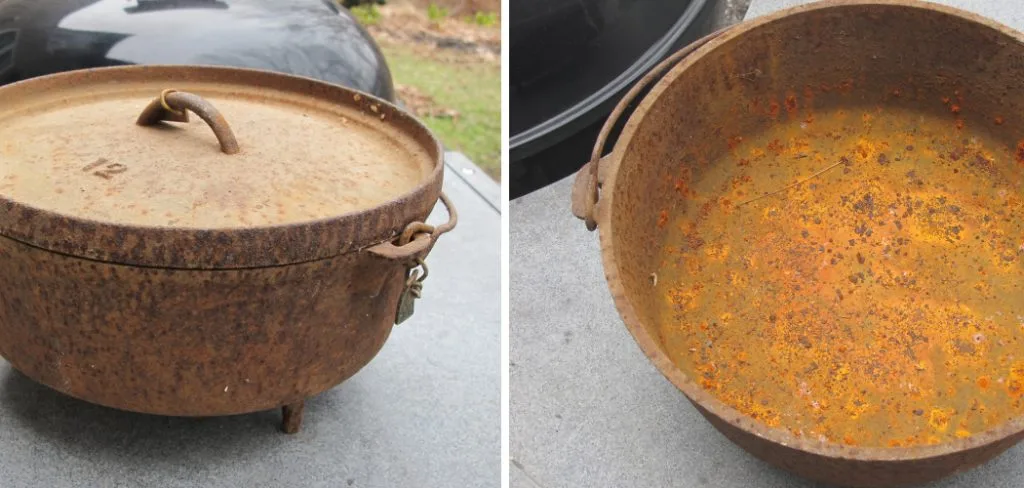
When rust covers large areas or has built up in layers, a dry scrub won’t cut it. You need a vinegar soak to break the rust down chemically.
The mix: Combine equal parts white vinegar and water in a container large enough to submerge the rusty part of the pan. If only the cooking surface is rusty, pour the solution inside the pan.
The timing: Soak for 30 minutes for moderate rust. Check every 10 minutes. If the rust is thick or pitted, you can go up to 1 hour total.
Do not leave it overnight. Vinegar is acidic enough to start eating into the iron itself after a few hours, leaving a dull gray surface that won’t hold seasoning well.
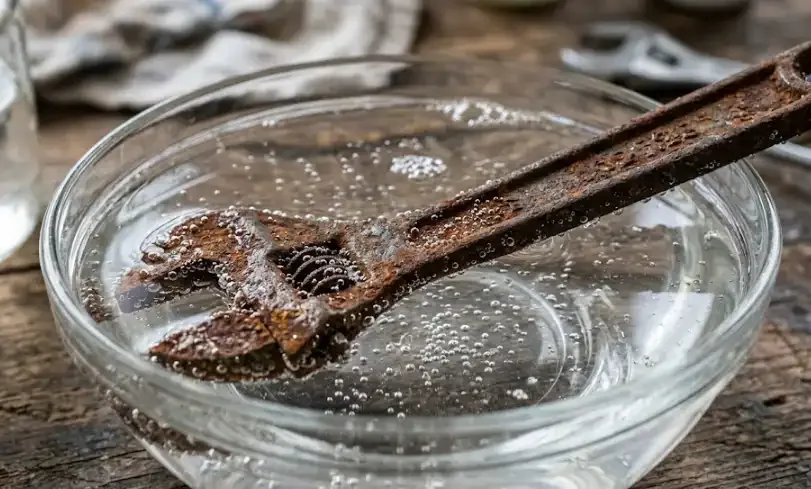
Image source: Bing (Web (fair-use with source credit))
The scrub: After soaking, scrub with steel wool or a nylon brush. The rust should come off in a brown slurry. If you hit bare gray metal, you’re done.
Rinse thoroughly with water.
Neutralize the acid: Mix 1 tablespoon of baking soda with 1 cup of water. Pour it over the pan and scrub lightly. This stops the vinegar from continuing to work on the iron.
Rinse again.
Dry immediately. This step is critical. Wet iron flash-rusts in minutes. Dry with a towel, then heat on the stovetop until all moisture is gone.
Season right away. Apply a thin coat of oil and bake at 400°F for one hour in the oven. Repeat for a second layer if the pan looks patchy. After that, the pan is ready.
For extremely heavy rust with deep pitting, consider electrolysis. It’s the most thorough method and doesn’t risk pitting the iron. However, it requires a battery charger, a plastic tub, and washing soda.
That’s a separate guide entirely, but it’s worth knowing about if you restore vintage pans regularly.
Rust on Enameled Cast Iron: Gentle Techniques Only
If you’ve got rust on an enameled pan, stop before you grab the steel wool. That glass coating is tough against heat but soft against abrasion. Scrub it with metal and you’ll leave permanent gray scratches that trap food and can eventually chip.
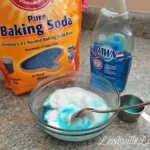
For light surface rust on enameled cast iron, use a paste of baking soda and water. Apply it to the rusty spots and scrub gently with a non-scratch nylon sponge or a soft brush. Rinse and dry.
The rust usually comes off without any harsh chemicals.
For stubborn rust stains that won’t lift with baking soda, try a soak in diluted bleach. Mix one part bleach with three parts water and let it sit for 15 minutes. Bleach won’t damage the enamel the way vinegar can.
Rinse thoroughly and dry. Note that bleach only removes the stain, not the rust itself. If the rust has eaten through the enamel, no cleaning method will fix it.
That pan needs replacing.
What to avoid at all costs:
- Steel wool or metal scrubbers. They scratch enamel permanently.
- Vinegar soaks. The acid dulls the glossy finish over time.
- High heat seasoning. Enamel doesn’t need seasoning, and high heat can crack it.
- Oven self-cleaning cycles. The extreme temperature can shatter the coating.
If the rust is inside the pan on the cooking surface and the enamel is chipped or cracked, stop using it. Enamel fragments can break off into food. That’s a safety issue, not just a cosmetic one.
The Step Nobody Talks About: Drying and Re-Seasoning
Most people stop after scrubbing the rust off. They rinse the pan, wipe it with a towel, and call it done. That’s exactly when rust comes roaring back.
Wet cast iron flash-rusts within minutes, especially in humid climates. The moment you rinse away the vinegar, the exposed iron starts oxidizing again. You can literally watch it turn orange if you leave it wet in the sink.
The drying drill:
- Towel dry immediately, including the bottom and handle.
- Put the pan on a stovetop burner over low heat for 3 to 5 minutes.
- Watch until every drop of water evaporates. Any visible steam means the pan is still wet.
- Let it cool just enough to handle, then apply oil.
This dry-heat step is non-negotiable, as of 2026. Manufacturer specifications from Lodge state that moisture trapped beneath a new oil layer is the leading cause of seasoning failure.
Re-seasoning after rust removal:
Scrubbing rust off also strips away the old seasoning layer. That leaves bare iron exposed. A single paper-thin layer of oil won’t protect it during cooking.
You need at least two seasoning rounds before the pan goes back to heavy use.
Here’s the method that works every time:
| Step | Action | Temperature | Time |
|---|---|---|---|
| 1 | Apply thin oil coat | Room temp | 1 minute |
| 2 | Wipe off excess | Room temp | 30 seconds |
| 3 | Bake upside down | 400°F | 1 hour |
| 4 | Cool in oven | Off | Until cool |
| 5 | Repeat step 1-4 | Same | One more round |
Use vegetable oil, canola oil, or grapeseed oil. Flaxseed oil makes a hard coating but flakes off under heavy use. Stick with oils that have a smoke point between 400°F and 450°F.
The pan is ready after two rounds. If the surface still feels sticky or tacky, you used too much oil. Wipe it down and bake again at 450°F for 30 minutes.
Mistakes That Send Your Pan to the Scrap Pile
Most ruined cast iron pans aren’t worn out from cooking. They’re damaged by well-intentioned rust removal attempts that went wrong. These are the four most common mistakes our research has identified across aggregate user feedback.
Mistake 1: Soaking in vinegar overnight. This is the number one error. A few hours in vinegar dissolves rust. Twelve hours starts etching the iron surface, leaving it rough, dull, and hard to season.
If you forget about a soaking pan, you may end up with a piece that never holds seasoning properly again.
Mistake 2: Using the oven self-cleaning cycle to burn off rust. The extreme heat of a self-cleaning cycle exceeds 800°F. That can warp thin-walled vintage pans or crack enameled pieces. It also destroys any remaining seasoning, leaving you with bare iron that flash-rusts instantly.
Mistake 3: Sanding or grinding the surface. Power tools remove rust fast but also remove the smooth surface that seasoning bonds to. Vintage pans in particular have a machined finish that took decades to develop. Sanding it off makes the pan harder to season and more prone to sticking.
Mistake 4: Skipping the neutralization step after vinegar. Vinegar is acidic and continues working on the iron even after you pour it out. If you don’t rinse with a baking soda solution, the residual acid keeps etching the surface under the new oil layer. That leads to patchy seasoning and recurring rust spots.
If you catch any of these mistakes early, recovery is possible. Scrub the pan clean, dry it thoroughly, and start the seasoning process fresh. But if you see deep pitting or warping, the structural integrity is compromised.
That pan is best retired to decorative use.
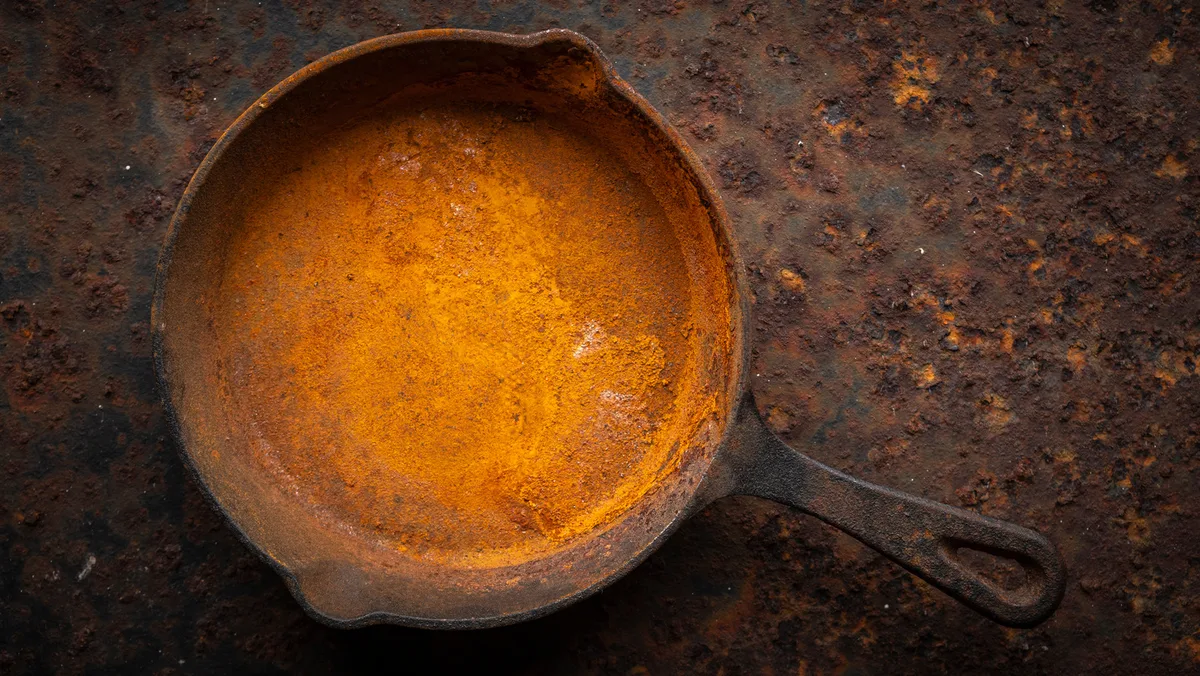
Image source: Bing (Web (fair-use with source credit))
Frequently Asked Questions
Can I use sandpaper to remove rust from cast iron?
Yes, but only as a last resort for heavy pitting. Use 80-grit sandpaper and sand in one direction, not in circles. Stop as soon as you hit clean metal.
Smooth the surface with 120-grit afterward. Season immediately to prevent flash rust.
Does baking soda remove rust from cast iron?
Baking soda works as a mild abrasive, not a chemical rust remover. It’s best for scrubbing light surface rust on enameled pans where you can’t use steel wool. For bare cast iron, vinegar or steel wool is more effective.
How long does it take to remove rust from cast iron?
Light rust takes 15 minutes with a dry scrub and quick oiling. Moderate rust takes 30 to 60 minutes including a vinegar soak and reseasoning. Heavy rust with pitting can take several hours or require an overnight electrolysis setup.
Can I use Coca-Cola to remove rust from cast iron?
Coca-Cola contains phosphoric acid, which dissolves rust. It works similarly to vinegar but takes longer and leaves a sticky sugar residue. You’d need to rinse extremely well.
White vinegar is cheaper, faster, and doesn’t leave sugar behind.
Is it safe to cook in a rusty cast iron pan?
Cooking in a pan with light surface rust is not toxic, but the rust flakes can end up in your food. That bitter metallic taste ruins a meal. The bigger concern is that rust compromises the seasoning, leading to more sticking and more rust.
Clean it before cooking.
How do I stop rust from coming back?
Dry your pan completely after every wash. Heat it on the stove for two minutes to evaporate moisture. Apply a thin oil layer before storing.
Keep it in a dry cabinet, not near the sink or stove steam. If you live in a humid area, store it in a paper bag or cotton towel to absorb moisture.

Similar Posts