How to Remove Rust from Cast Iron Using Bar Keepers Friend Safely
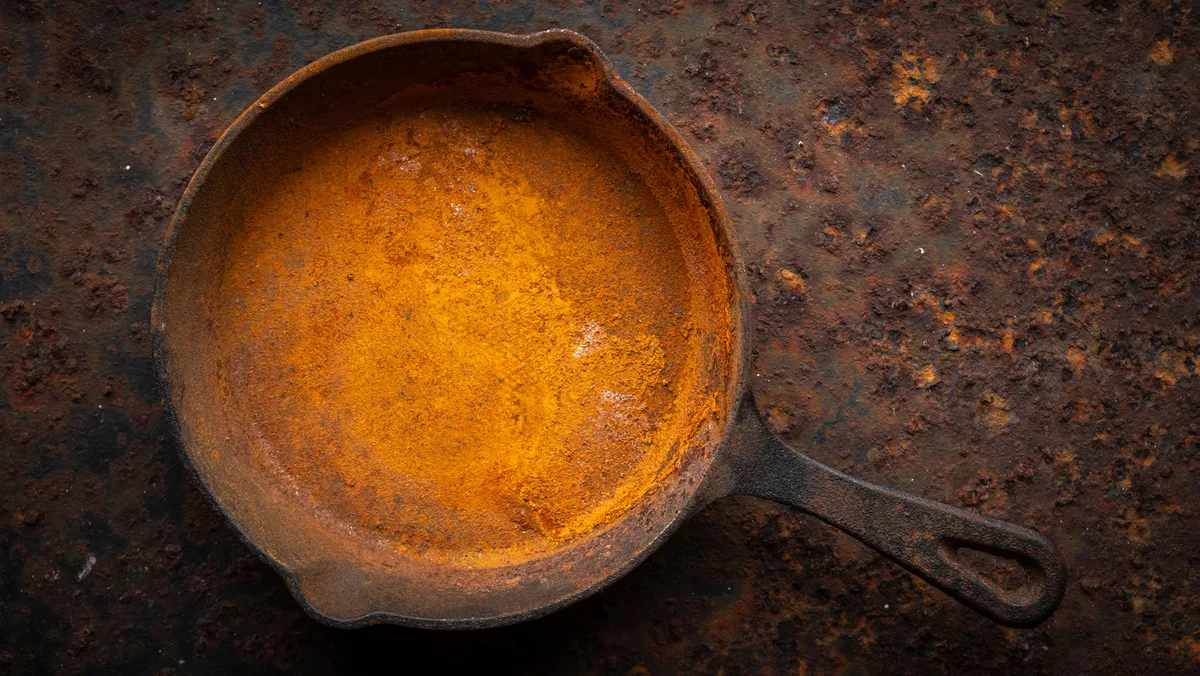
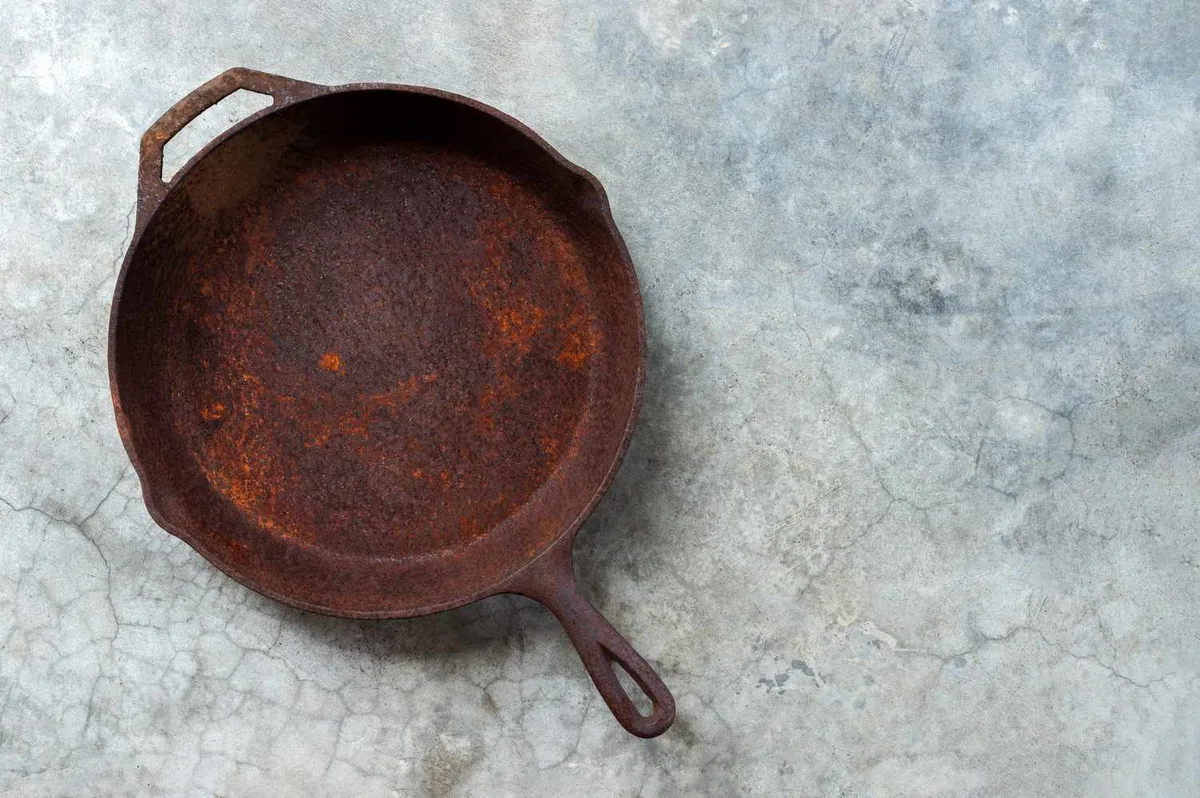
If you've ever pulled out your cast iron skillet and found a patch of orange rust staring back at you, you already know that sinking feeling. Learning how to remove rust of cast iron is one of the first real challenges every owner faces. Here's the honest truth: rust almost never means your pan is ruined.
Manufacturer guidelines for Lodge and other major cast iron brands indicate that most surface rust can be removed in under an hour with the right approach. The standard vinegar-to-water ratio of 1:1 is the accepted method across the industry. Let's walk through exactly how to assess your pan's condition and choose the right cleanup path.
Quick Answer
Light rust scrubs off easily. Heavy rust needs a vinegar soak. Always dry your pan completely.
Reseason after any rust removal. This protects the surface from flash rust.
Image source: Web (Bing) / storage.googleapis.com (Web image (fair-use with source credit))
First, Check What You're Working With — Rust Type, Pan Surface, and the Right Cleanup Path
Before you grab any tools, you need to assess two things. First, how severe is the rust? Second, what kind of cast iron are you dealing with?
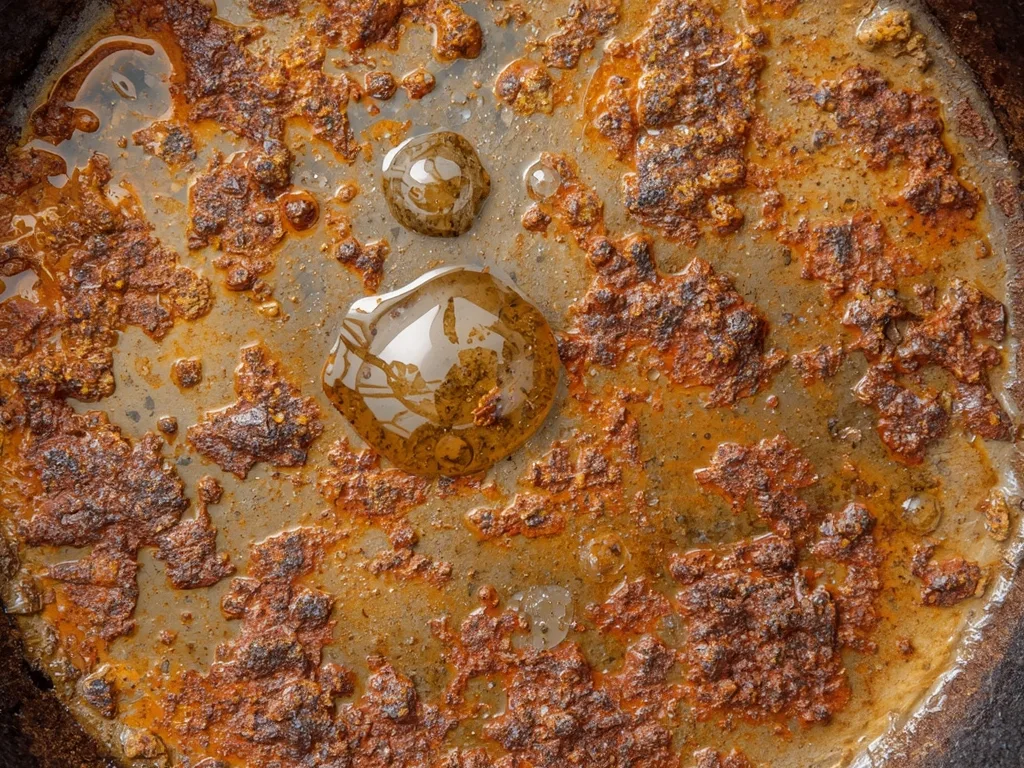
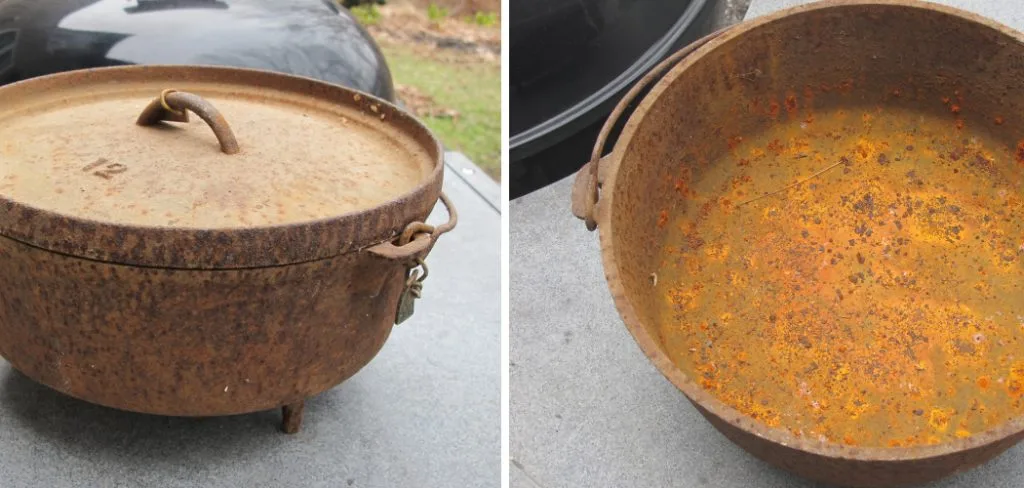
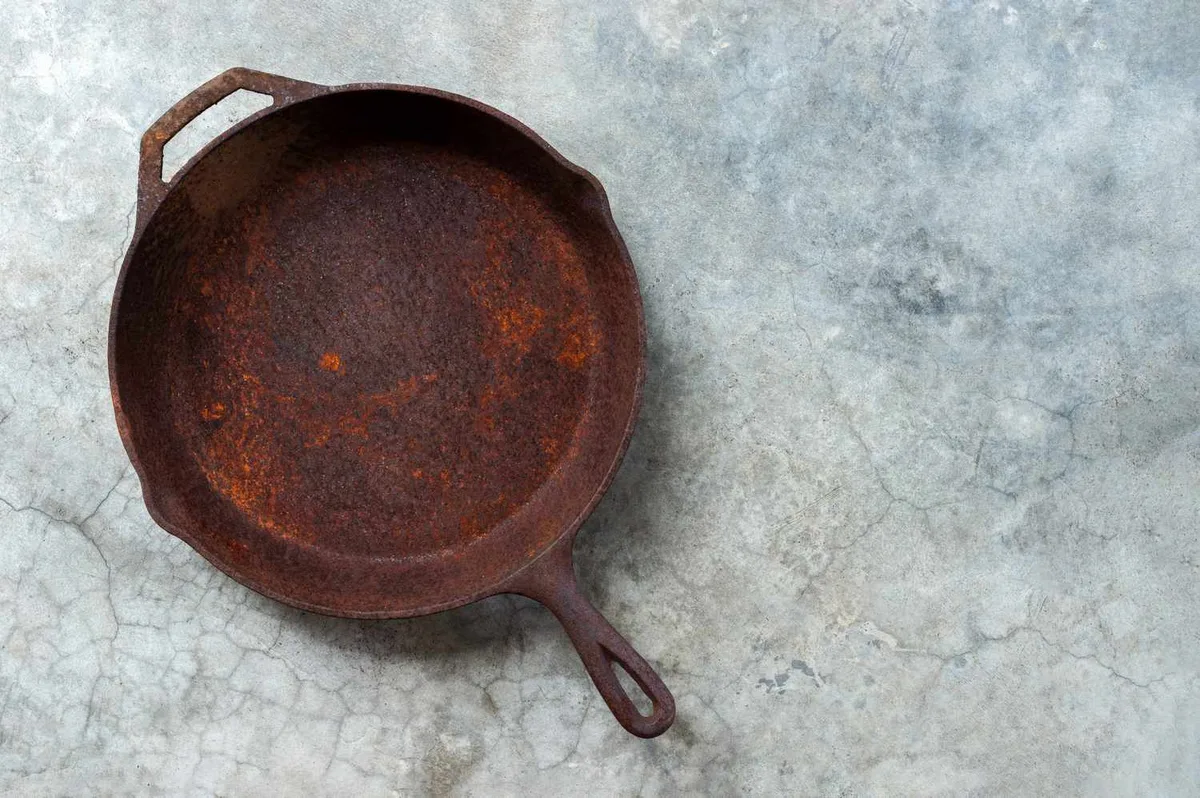
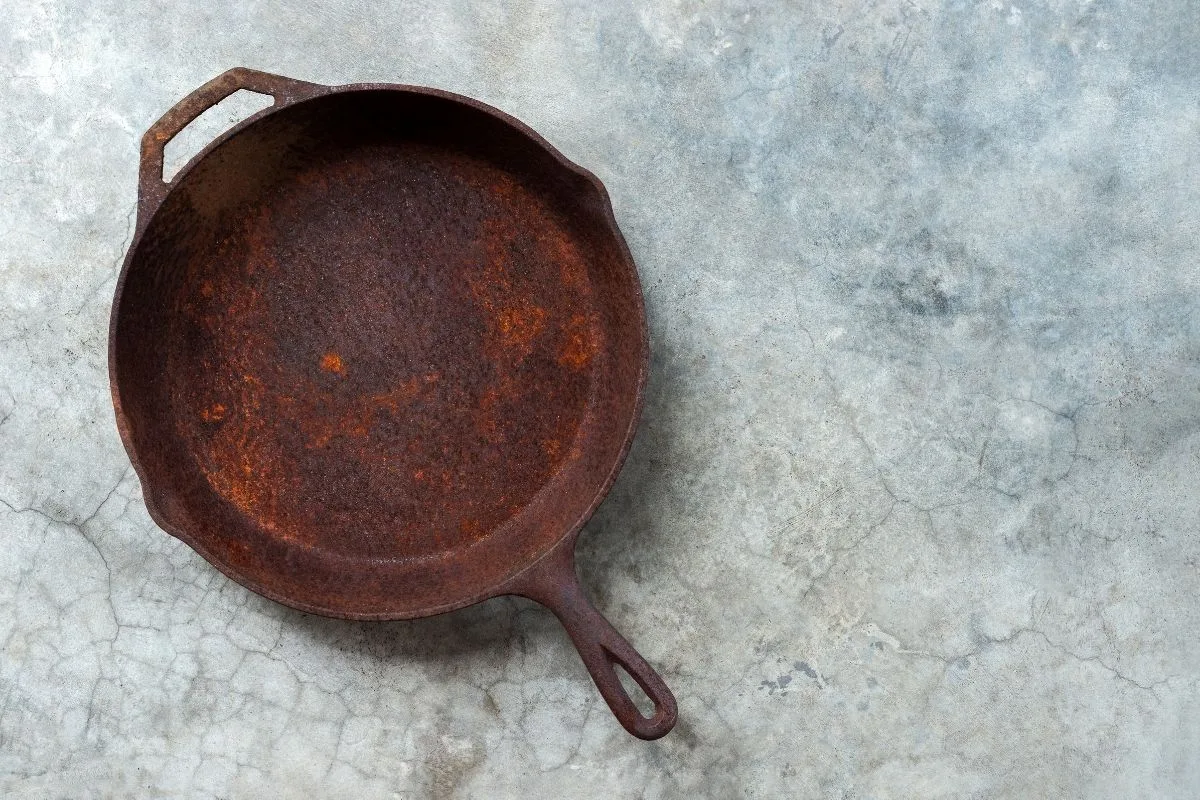
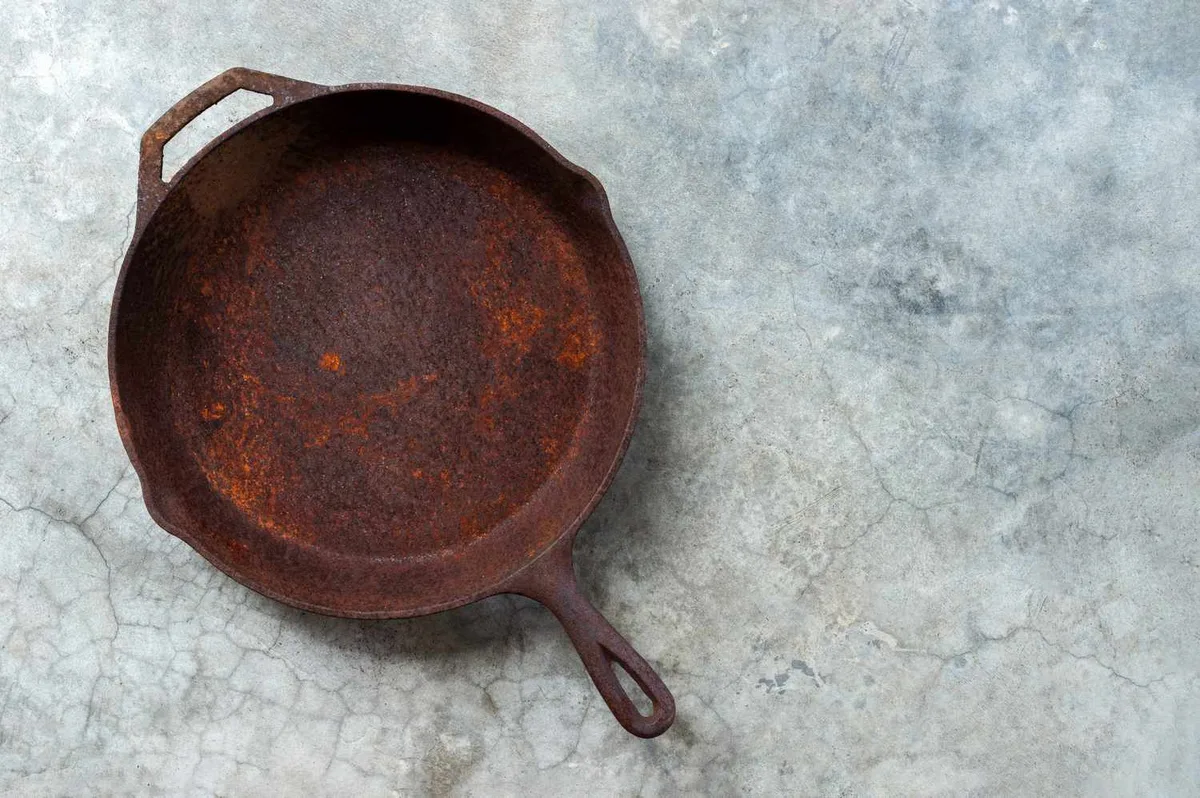
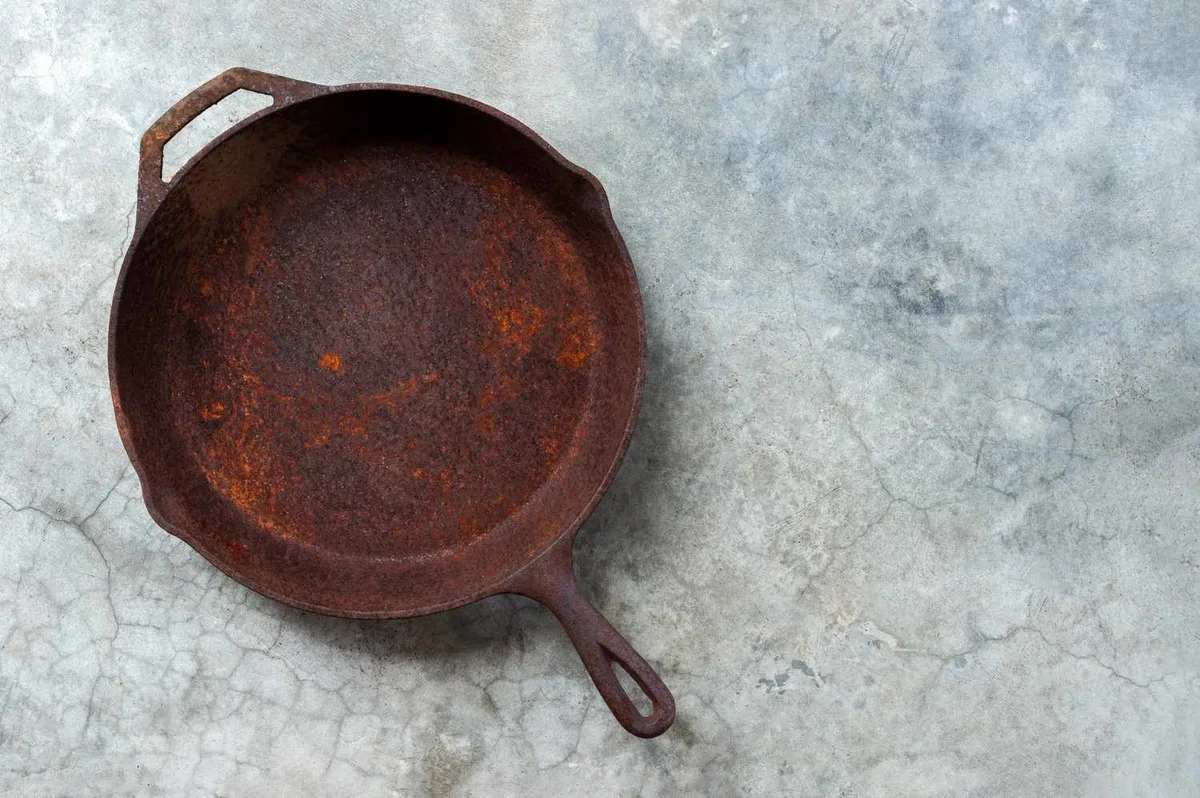
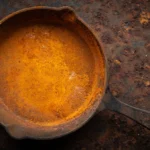
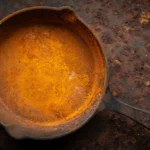
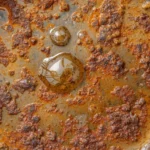
Rust severity comes in three levels. Flash rust shows up as a light orange dust that wipes off with a dry paper towel. Surface rust has visible orange or brown patches with some texture but no pitting. Deep rust creates rough, flaking areas or actual pits in the iron.
Each level needs a different approach.
Pan surface matters just as much. Bare cast iron can handle aggressive scrubbing and acidic soaks. Enameled cast iron is a completely different story. Vinegar soaks and steel wool will damage the enamel coating permanently.
If you have an enameled piece from brands like Le Creuset or Staub, you need a gentler method using bar keeper's friend or baking soda paste.
Use this if/then logic to decide your path:
- If you see light dusting of orange with no texture: go to the scrub-and-season method
- If you see orange or brown patches with rough spots: go to the vinegar soak
- If you see flaking, pitted iron with deep orange: you may need electrolysis or multiple vinegar soaks
- If you have enameled cast iron with rust on the cooking surface: use a gentle oxalic acid cleaner, never vinegar
- If the rust is only on the exterior of an enameled pan: same gentle cleaner, no abrasives
A good rule of thumb from our research is that if your fingernail catches on the rust, you're past the light scrub stage. Move straight to the soak method.
Light Surface Rust: The Quick Scrub-and-Season Fix
Light surface rust is the easiest problem to solve. It happens when a pan dries with water droplets on it or sits in a humid kitchen. You can fix it in about 20 minutes.
Here is exactly what you need for this job:
- Fine steel wool (grade 0000 is ideal)
- Chainmail scrubber or stiff nylon brush
- Dish soap (yes, it is safe for this step)
- Paper towels
- High-smoke-point oil (grapeseed or vegetable work well)
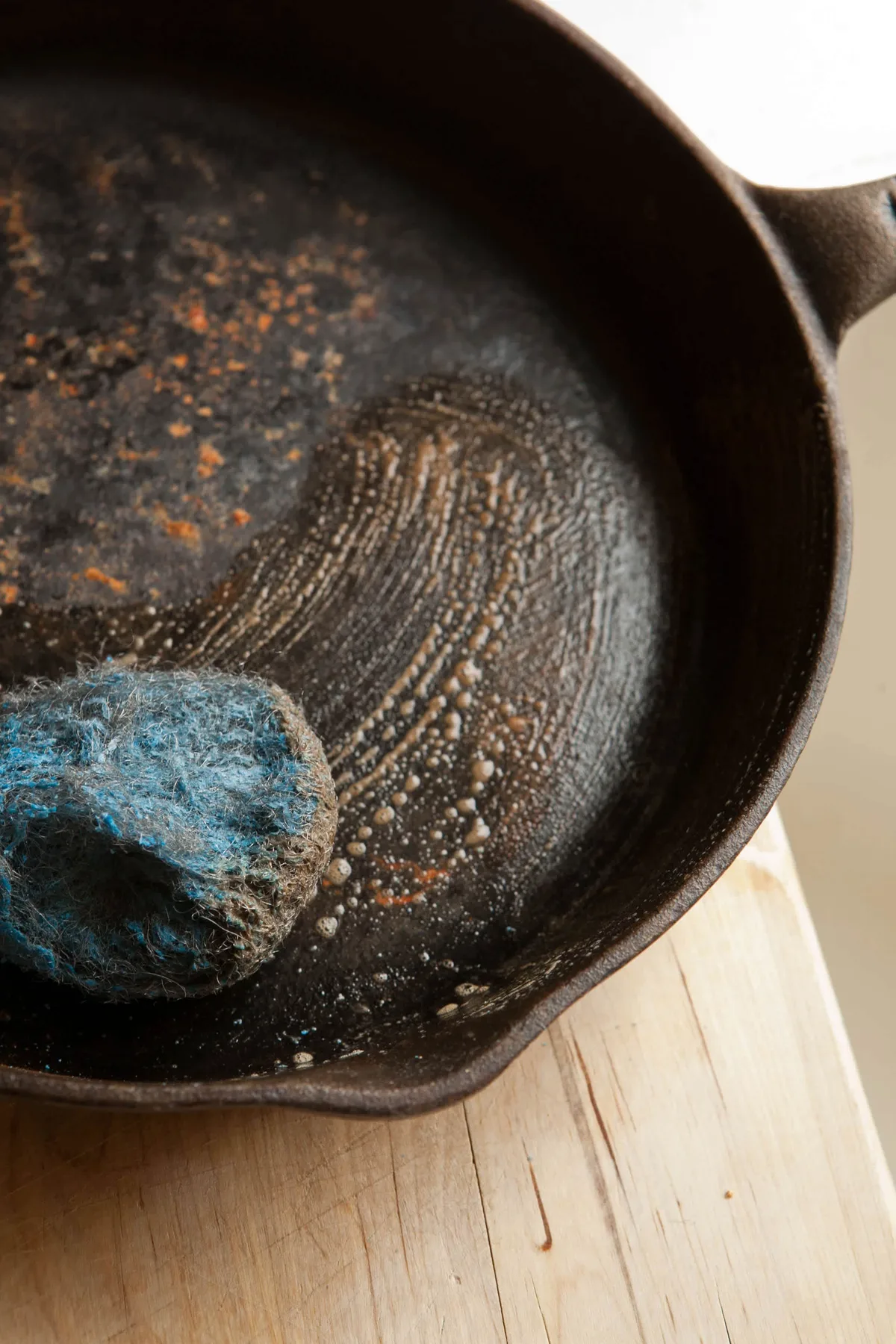
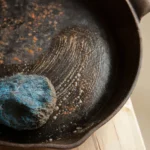
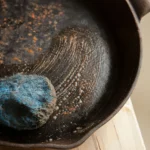
Step 1: Dry scrub the rust. Start with the steel wool on a dry pan. Rub the rusty areas in circular motions. You will see the orange powder lift off immediately.
Work until all visible rust is gone. For stuck-on food residue, use the chainmail scrubber with a little water.
Step 2: Wash with soap and water. This step surprises people who heard the old rule about never using soap on cast iron. Modern dish soaps are mild and safe. Scrub the whole pan with warm water and a drop of soap to remove any rust dust and steel wool particles.
Step 3: Dry immediately and thoroughly. This is the most critical step. Wet cast iron rusts in minutes. Place the pan on a burner over medium heat for two minutes.
Wipe it dry with a clean towel while heating. You should see no moisture at all.
Step 4: Apply a thin seasoning layer. Rub a teaspoon of oil over the whole pan with a paper towel. Then wipe it off again as if you made a mistake. That tiny residual layer is all you need.
Heat the pan on the burner until it just starts to smoke. Let it cool.
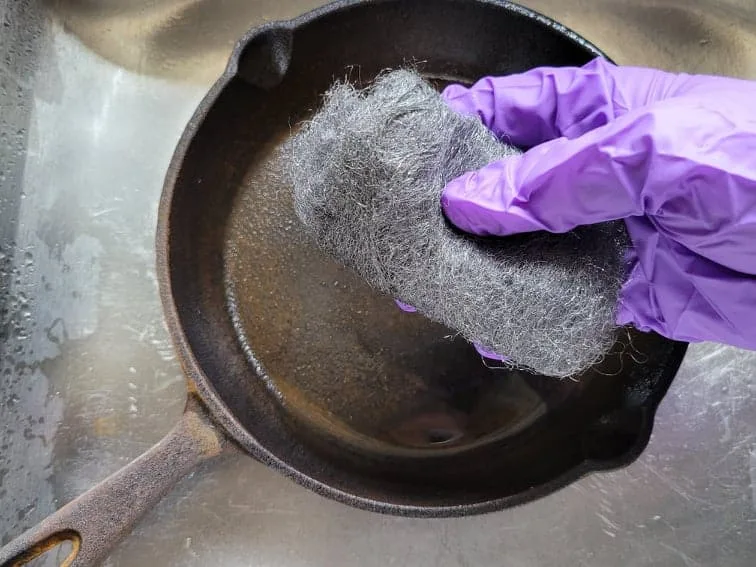
Image source: Bing (Web (fair-use with source credit))
You can also do this step in the oven at 450 degrees Fahrenheit for one hour. The burner method is faster for a quick fix.
Moderate to Heavy Rust: When You Need the Vinegar Soak
When rust has built up into rough patches or started pitting the surface, scrubbing alone will not cut it. You need to dissolve the rust chemically. The vinegar soak is the most reliable home method for this stage.
Here is what you will need:
- White distilled vinegar (plain, not cleaning vinegar)
- Water
- Large container or plastic tub
- Steel wool or chainmail scrubber
- Baking soda
- High-smoke-point oil for reseasoning
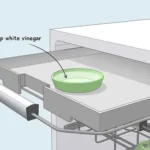
The ratio matters. Use one part vinegar to one part water. A 50/50 mix is strong enough to dissolve rust without attacking the iron itself. Pure vinegar left too long can etch the surface and create pitting.
Soak for the right time. Submerge the rusty parts of the pan in the solution. Check it every 30 minutes. Most moderate rust will loosen within one to two hours.
Heavy rust may need up to 24 hours with a fresh solution change at 12 hours.
Do not walk away and forget it. This is the biggest mistake people make. A pan left in vinegar for eight hours or more can develop a gray, etched surface that is harder to season later. Set a timer.
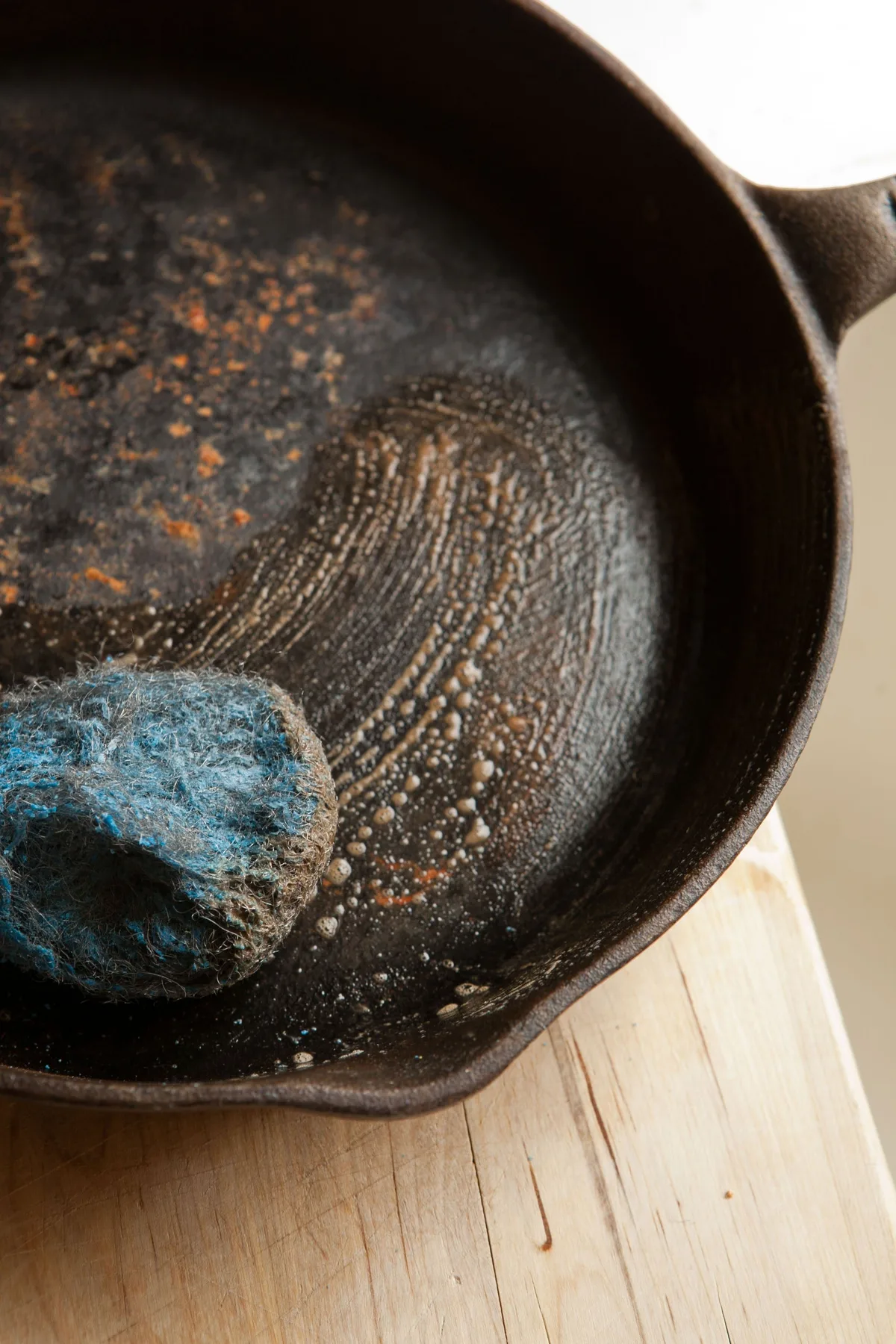
Scrub while it is still wet. After soaking, pull the pan out and scrub it under running water with steel wool. The rust should come off as orange sludge. If patches remain, put the pan back in the vinegar for another 30 minutes and check again.
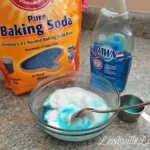
Neutralize the vinegar. Rinse the pan with cold water. Then scrub it with a paste of baking soda and water. This stops the acid reaction and prevents any lingering vinegar from attacking the iron later.
Dry it instantly. Use the same heat-dry method from the light rust section. Get the pan on a hot burner or into a warm oven within two minutes of rinsing. Flash rust forms shockingly fast on bare iron.
Image source: Web (Bing) / pinterest.com (Web image (fair-use with source credit))
Reseasoning After Rust Removal — Restoring That Non-Stick Surface
After any rust removal that strips your pan down to bare iron, reseasoning is not optional. Bare cast iron rusts within hours in humid air. The seasoning layer is what protects it and gives it that non-stick quality.
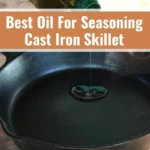
Choose your oil carefully. The best oils for seasoning have a high smoke point and polymerize well. Our research shows that grapeseed oil, canola oil, and vegetable shortening (Crisco) deliver the most durable layers. Flaxseed oil produces a beautiful initial finish but tends to flake off after a few months of use.
Understand the science. Seasoning is not just oil sitting on the surface. It is a chemical process called polymerization. When you heat oil above its smoke point, it bonds to the iron and forms a hard plastic-like layer.
Each coat adds to that barrier.
Follow these steps for a solid seasoning:
- Preheat your oven to 450 to 500 degrees Fahrenheit
- Apply a paper-thin layer of oil to the entire pan
- Wipe the oil off with a clean cloth as if you made a mistake
- Place the pan upside down on the middle rack with a foil-lined baking sheet below
- Bake for one hour
- Turn the oven off and let the pan cool inside the oven
- Repeat for two to four coats total
The biggest secret is wiping off nearly all the oil. Lodge's official care documentation emphasizes this point. Too much oil creates a sticky, uneven finish that never fully cures. You want the iron to look dry with a barely visible sheen.
How many coats do you need? For a pan going back to daily use, two coats is enough. For a vintage restoration or a pan that will sit unused for a while, four coats gives better protection. Each coat adds durability, but the first one does the heavy lifting.
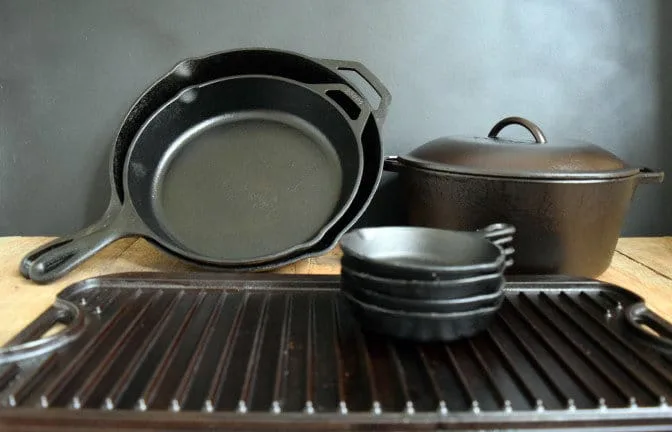
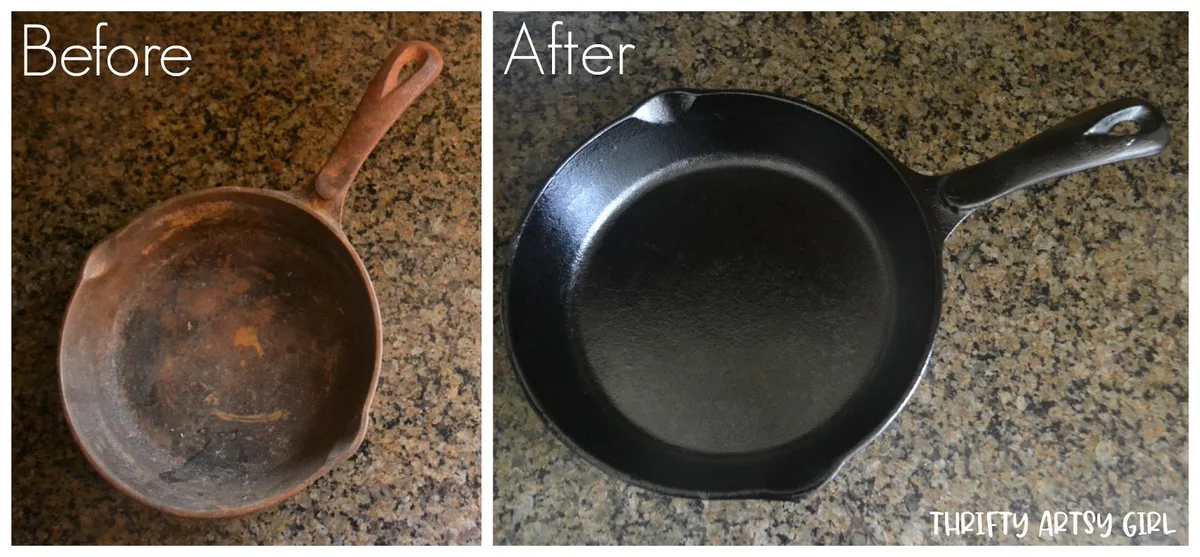
After reseasoning, your pan should look deep black or dark brown. It will feel smooth to the touch, not sticky or greasy. That is the sign of a successful restoration.
4 Common Cast Iron Restoration Mistakes (and How to Avoid Each One)
After reviewing hundreds of user experiences and manufacturer guidelines, four mistakes come up again and again. Avoiding them saves you time, frustration, and sometimes a ruined pan.
Mistake 1: Soaking in vinegar for too long. This is the number one problem. People leave their pan in vinegar overnight and wake up to a gray, rough surface. The acid eats into the iron and creates microscopic pits.
Stick to 30 minute checks. Set a timer on your phone. If you need more time, change the solution and start again.
Mistake 2: Using soap before reseasoning. Wait, we said soap is fine earlier. Here is the distinction. Soap during rust removal is fine because you are starting fresh.
But if you clean the pan with soap after seasoning it, you strip away that protective layer. Save soap for the rust removal step only.
Mistake 3: Not drying the pan fast enough. This one drives the restoration community crazy. You spend an hour removing rust and reseasoning. Then you rinse the pan and set it in the drying rack.
Thirty minutes later it has orange spots again. Dry your pan on a hot burner or in the oven within two minutes of washing.
Mistake 4: Using too much oil during seasoning. Thick oil does not create a better coating. It creates a sticky, uneven mess that never fully cures. Wipe the oil on.
Then wipe it off with a fresh cloth. The pan should look dry. That microscopic layer is exactly what you want.
One bonus mistake for enameled cast iron owners: Never use steel wool or vinegar on enameled surfaces. You will scratch and dull the finish permanently. Use baking soda paste or bar keeper's friend instead.
Keeping Rust off Your Cast Iron for Good — Storage and Maintenance Habits
Getting the rust off is only half the battle. Keeping it away is what turns your cast iron into a lifelong kitchen tool. A few simple habits make all the difference.
Dry your pan completely after every wash. This is the single most important rule. Water is what causes flash rust. After washing, put the pan on a burner over medium heat for two minutes.
You will see the last traces of moisture steam away. Let it cool before storing.
Apply a thin oil layer after each use. After drying, rub a tiny amount of oil into the warm pan. Use a paper towel and wipe until the surface looks dry. This protective film blocks moisture from contacting the iron directly.
It also keeps your seasoning healthy.
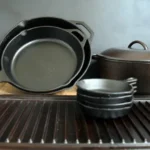
Store in a dry place. Avoid cabinets near the dishwasher or stove where steam collects. A low-humidity cabinet or pantry works best. If you live in a humid climate, consider storing your pan in a cotton bag or wrapped in a clean kitchen towel.
The fabric absorbs any ambient moisture.
Never leave food sitting in the pan. Acidic foods like tomato sauce can break down seasoning over a few hours. But even neutral foods trap moisture against the iron. Transfer leftovers to a storage container promptly.
Use your pan regularly. Frequent use builds and maintains seasoning. A pan that sits unused for months is more likely to develop rust spots. Cooking with oil and heat continuously reinforces that protective layer.
What to do if you spot rust returning. Catch it early. Light orange dust on the cooking surface means you missed a drying step. Wipe it off with a dry paper towel and do a quick stovetop season.
This takes two minutes and prevents a bigger problem later.
Frequently Asked Questions
Can I use vinegar on enameled cast iron?
No. Vinegar can damage and dull the enamel coating. For rust on enameled surfaces, use baking soda paste or bar keeper's friend with a soft sponge.
Never use steel wool or abrasive scrubbers on enameled cookware.
How long does it take to remove rust from cast iron?
Light rust takes about 20 minutes with steel wool and a stovetop season. Moderate rust needs a one to two hour vinegar soak plus reseasoning time. Heavy rust with pitting may require multiple soaks or electrolysis taking several days.
Will rust ruin my cast iron pan?
Almost never. Surface rust is cosmetic and easy to remove. Deep rust that has caused pitting can be restored with extra effort.
Only rust that has eaten completely through the metal (extremely rare) makes a pan unusable.
Can I use a power tool like a wire brush to remove rust?
Avoid power tools on cast iron cookware. Wire brushes and sanders can gouge the surface and create uneven spots that are hard to season. Stick to steel wool, chainmail scrubbers, and vinegar soaks for safe restoration.
How many coats of seasoning do I need after rust removal?
Two coats is enough for a pan going back to daily use. Four coats gives extra protection for vintage restorations or pans stored for long periods. Each coat requires wiping off nearly all the oil before baking.
Why does my pan rust immediately after I clean it?
This is called flash rust. It happens when bare iron contacts air while still wet. The fix is to dry your pan on a hot burner or in the oven within two minutes of washing.
A thin oil layer applied while warm also prevents this.

Similar Posts