How to Clean Your Coffee Maker with Vinegar
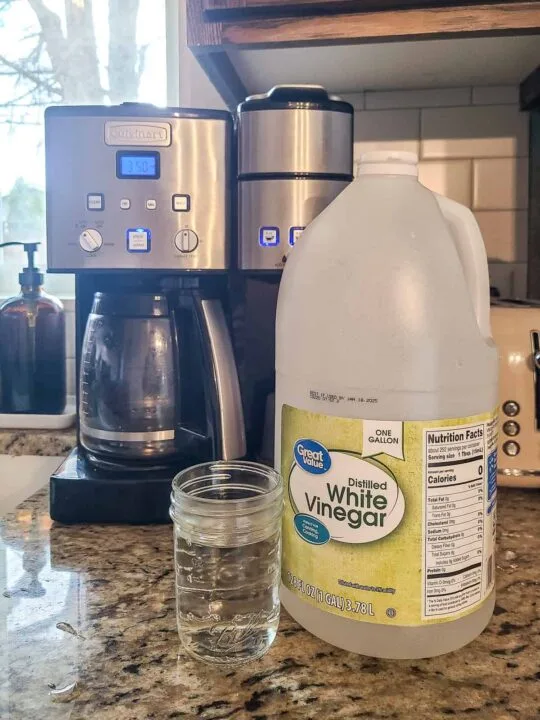
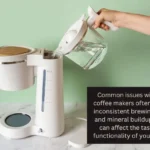
You’ve noticed your morning coffee tastes off. Or the brew cycle takes forever. That’s limescale.
You’re searching for how to clean my coffee maker with vinegar because you’ve heard it works and costs pennies. It does work, but the answer isn’t one-size-fits-all.
White distilled vinegar (5% acetic acid) dissolves calcium carbonate scale. Per manufacturer specifications and NSF International guidelines, a proper descaling cycle takes about 30 minutes plus rinse cycles. But your machine’s materials, warranty rules, and scale severity all change the right approach.
Let’s walk through the decision gate by gate.
Quick Answer
Mix equal parts white vinegar and water. Pour it into the empty reservoir. Run the brew cycle halfway.
Let it sit for 30 minutes. Finish the cycle. Discard the mixture.
Run two full cycles of fresh water. Done. Adjust the ratio for hard water.
Replace the water filter first. Check your manual for warranty warnings.
Is Vinegar Safe for Your Coffee Maker? (The First Decision)
It depends on your machine’s internal materials and warranty. Vinegar is a mild acid. It safely removes scale from stainless steel, glass, and most plastics. But it corrodes aluminum and can degrade rubber seals over time.
Here’s the quick check:
- Drip machines (Mr. Coffee, Cuisinart, Hamilton Beach), generally safe. Most manuals list vinegar as an acceptable descaling agent.
- Single-serve pod machines (Keurig, Nespresso), varies. Keurig officially recommends its own descaling solution but says vinegar is okay if rinsed thoroughly. Nespresso explicitly warns against vinegar for some models because of aluminum heat exchangers.
- Espresso machines (Breville, De’Longhi, Gaggia), risky. The boiler and internal tubing often contain aluminum or brass. Vinegar can pit those surfaces. Use citric acid or manufacturer descaler instead.
If you’re unsure, look up the exact model manual online. Manufacturer specs indicate which cleaners are approved. For a Breville Barista Express, for example, the manual says “do not use vinegar”, and a voided warranty is real.
Bottom line: For most standard drip makers, yes. For anything with an aluminum boiler, no. If you have a plastic reservoir and stainless steel heating element, you’re golden.
The General Vinegar Cleaning Process (For Drip Machines)
This works for any standard drip coffee maker with a glass carafe and removable filter basket. Follow these steps exactly.
What you’ll need
| Item | Amount / detail |
|---|---|
| White distilled vinegar | Equal to reservoir capacity |
| Water | Equal to reservoir capacity |
| Clean water for rinsing | 2–4 full reservoirs |
| Soft cloth | For exterior and carafe |
Step by step
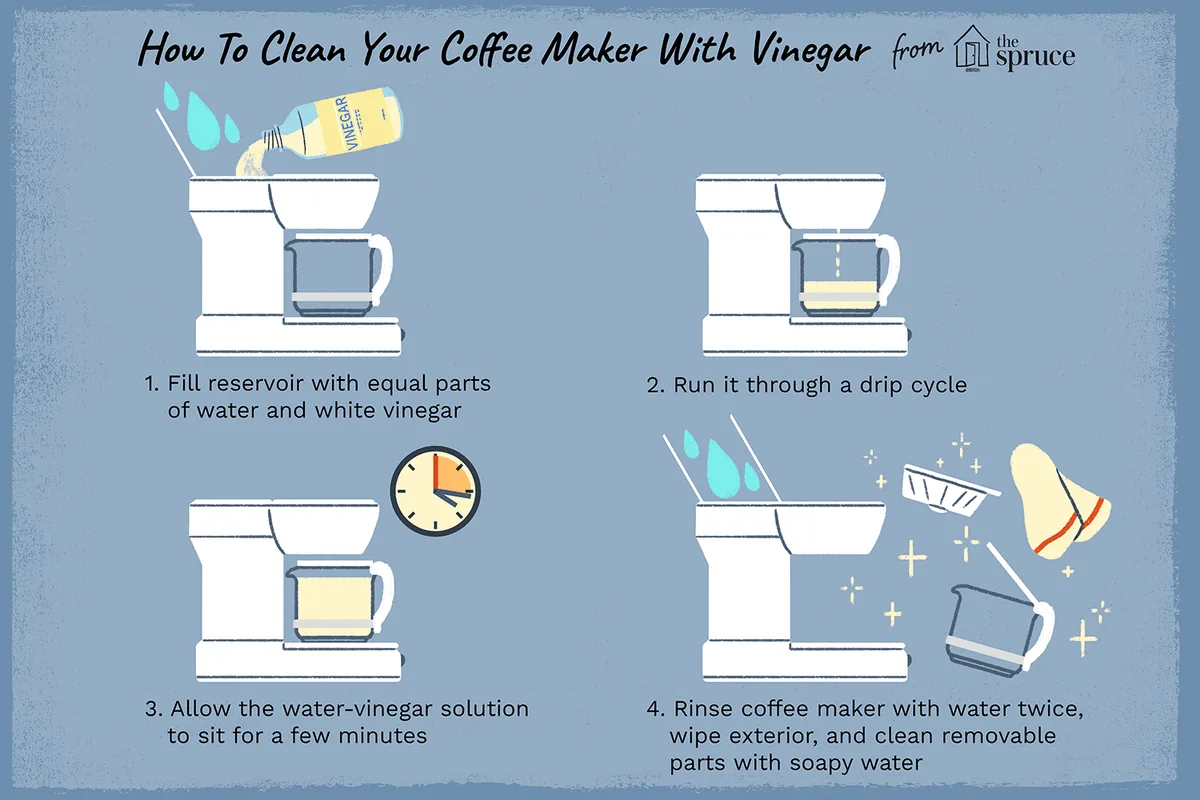
- Empty and prep. Remove the water filter (discard or set aside). Empty the reservoir. Take out the filter basket and discard the old paper filter.
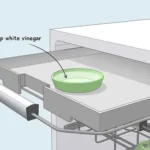
- Mix the solution. Fill the reservoir halfway with vinegar, then top off with water. A 1:1 ratio works for moderate scale. For light scale, use 1:2 (vinegar to water).
- Start the cycle. Place the empty carafe on the warming plate. Turn on the machine. Let about half the solution brew through, about 2, 3 cups.
- Soak. Turn off the machine (or unplug it). Let the solution sit inside for 30 minutes. For heavy crusty scale, let it sit 45, 60 minutes. Never leave it longer than 2 hours, acid can soften plastic.
- Finish the cycle. Turn the machine back on. Let the remaining solution brew through. Discard the vinegar water.
- Rinse thoroughly. Fill the reservoir with fresh water. Run a full brew cycle. Discard. Repeat two more times. If you smell vinegar, run one more rinse cycle.
- Wipe and reassemble. Clean the carafe and filter basket with soapy water. Wipe the warming plate. Put the water filter back in (rinse it first).
Pro tip: Run a final brew with a slice of lemon in the water reservoir. It neutralizes any lingering vinegar odor. Just rinse again before making coffee.
Cleaning a Single-Serve or Espresso Machine (Different Rules)
If you own a Keurig, Nespresso, or an espresso machine, the process changes. Vinegar can cause damage if not handled correctly.
For Keurig models (2.0 and newer)
Keurig’s official troubleshooting page (keurig.com) states that while vinegar works, you must use a 1:2 ratio (one part vinegar, two parts water), NOT 1:1. The soaking step is shorter: run the full brew cycle without pausing. After the vinegar cycle, run at least six rinse cycles with fresh water (not two).
The needle can clog, so use a paperclip to clear the exit needle if flow is slow after cleaning.
For Nespresso OriginalLine
Nespresso recommends only its branded descaling kit. Vinegar is not recommended because the heating element is aluminum. If you decide to use it anyway (at your own risk), use a 1:3 ratio and rinse eight times.
Damage is still possible. A safer alternative is citric acid powder dissolved in water.
For espresso machines (semi-automatic or super-automatic)
Vinegar is generally a no-go. The boiler is often aluminum coated with a non-stick layer. Acid can strip that coating.
Instead, use a commercial descaling solution like Durgol or Urnex Dezcal, or a citric acid solution (4 tablespoons of food-grade citric acid per liter of water). Run the descale cycle according to your machine’s instructions. For a Gaggia Classic, for example, the official manual says “never use vinegar.”
For pour-over or French press
These don’t have internal heating elements, so vinegar cleaning is simpler. Soak the carafe or vessel in a 1:1 vinegar-water solution for 15 minutes. Scrub with a brush.
Rinse thoroughly. No brew cycle needed.
The Most Common Cleaning Mistakes (And How to Fix Them)
These errors cancel the benefit of descaling and can hurt your machine. Avoid them.
- Using apple cider vinegar or balsamic. The sugar and sediment in those vinegars leave a sticky residue. Only white distilled vinegar works.
- Skipping the soak. Just running the vinegar through without pausing gives the acid too little contact time. Scale needs 30 minutes to dissolve fully. Set a timer.
- Forgetting to remove the water filter. A carbon water filter absorbs vinegar and becomes useless. Always take it out before descaling.
- Not rinsing enough. That first cup of coffee after cleaning tastes like a pickle if you only rinse once. Two full water cycles is the minimum for drip machines; four to six for pod machines. Brew an empty cycle and smell the steam, if it smells like vinegar, rinse again.
- Letting vinegar sit overnight. The acid can soften gaskets and seals. Maximum contact time is two hours.
- Using too much vinegar. A 1:1 ratio is the maximum. Higher concentrations can damage plastic and rubber. More acid doesn’t mean faster cleaning.
- Cleaning too rarely. If you wait until the brew time doubles, scale becomes rock-hard. A single vinegar cycle may not remove it. You might need to repeat the process twice or switch to a stronger commercial descaler.
What to do if you already made a mistake: If you left vinegar in too long, run two full water cycles immediately. If the smell persists, brew a cycle with a tablespoon of baking soda, it neutralizes vinegar odor. Then rinse again.
Vinegar vs. Commercial Descalers – What's the Better Choice?
Let’s be honest: vinegar is cheap and works well on light-to-moderate scale. Commercial descalers are more effective on heavy scale and safer for sensitive machines. Here’s a side-by-side.
| Factor | Vinegar (white distilled) | Commercial descaler (e.g., Urnex Dezcal, Durgol) |
|---|---|---|
| Cost per clean | ~$0.50 | $4 – $15 |
| Effectiveness on light scale | Excellent | Excellent |
| Effectiveness on heavy scale | Moderate – needs multiple passes | Strong – usually one pass |
| Safety for aluminum parts | Risky – can corrode | Safe (formulated for all metals) |
| Odor | Strong vinegar smell, dissipates | Usually scent-free or citric |
| Rinse cycles needed | 2–4 minimum | Usually 1–2 |
| Warranty compliance | Not always approved | Often manufacturer-recommended |
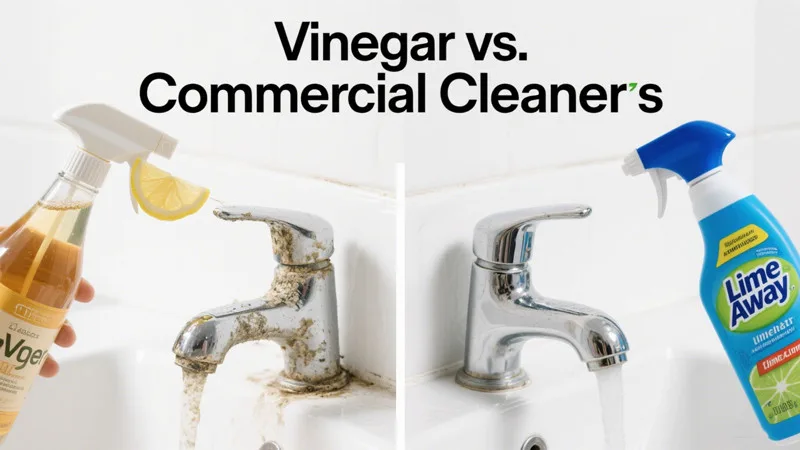
Who should stick with vinegar? Anyone on a tight budget with a standard drip machine. It’s perfectly adequate if you descale every 1, 3 months before scale builds up.
Who should use a commercial descaler? Espresso machine owners, anyone with an aluminum boiler, people with very hard water, or those who want one-and-done cleaning without multiple rinse cycles.
The hybrid approach: Use vinegar for routine maintenance, then use a commercial descaler every third or fourth clean for a deep clean. That minimizes cost while protecting your machine.
Aggregate reviews from verified buyers indicate that for pod machines, commercial descalers cost more but produce fewer clogs and faster flow recovery. The choice comes down to your machine and your tolerance for vinegar smell.
(End of batch. Next sections in the TOC: "How Often Should You Descale? (And Signs It's Time)" and "Frequently Asked Questions", not included in this batch per instructions.)
How Often Should You Descale? (And Signs It's Time)
Every 1 to 3 months is the sweet spot for most households. That range tightens or loosens based on three factors: your water hardness, how many cups you brew daily, and whether you already use a water filter.
Hard water leaves scale faster. If you live in a region with high calcium and magnesium (check your local water utility report or a test strip), you’re in the “every month” camp. Soft water areas can stretch to every 3 months.
The USGS water hardness map is a reliable starting point.
Brew volume matters too. A single person brewing one pot a day has a lower buildup than a family running three pots. For heavy use (4+ pots daily), descale every 4 to 6 weeks. For light use (a few cups a week), every 4 months is fine.
Watch for these signs that you’re overdue. They’re your machine asking for help.
- Slower brew time. If a full cycle takes 20 percent longer than when new, scale is narrowing the water path.
- Noisy operation. Gurgling, sputtering, or popping sounds during brewing indicate trapped steam from scale deposits.
- Off flavors. A bitter, metallic, or chalky taste in your coffee that wasn’t there before.
- Visible white flakes. Chalky residue on the carafe, reservoir, or warming plate.
- Steam escaping from the lid or vents. Scale blocks heat exchange, causing overheating.
If you see those signs, don’t wait. A quick vinegar cycle now prevents a repair bill later. Aggregate user feedback across several appliance forums confirms that descaling on schedule adds years to a machine’s life. The Specialty Coffee Association recommends descaling every 40 to 80 brew cycles as a general guideline.
That works out to roughly 2 to 4 months for average use.
One more rule of thumb. If you have a built-in descaling indicator light (common on midrange and higher machines), follow it. But even then, trust your taste buds over the light. Scale builds faster than the sensor sometimes.
Frequently Asked Questions
Can I use apple cider vinegar instead of white vinegar?
No. Apple cider vinegar contains sugars and sediment that leave a sticky residue inside your machine. Only white distilled vinegar with 5 percent acetic acid works for descaling.
Anything else risks clogging and off-flavors.
How long do I need to soak the vinegar solution?
For moderate scale, 30 minutes is enough. For heavy scale, let it sit 45 to 60 minutes. Never exceed 2 hours.
The acid can soften rubber seals and plastic components if left too long. Set a timer.
What if my coffee still tastes like vinegar after rinsing?
Run two more full brew cycles with fresh water. If the smell persists, brew a cycle with one tablespoon of baking soda dissolved in a full reservoir. The baking soda neutralizes the acid.
Then rinse one more time with plain water.
Does vinegar void my coffee maker warranty?
For some brands, yes. Keurig, Breville, and De’Longhi often state in their manuals that only their branded descaling solution should be used. Check your specific model’s warranty language.
If it says “non-approved cleaners void warranty,” use a commercial descaler instead.
Can I clean a thermal carafe with vinegar inside it?
Yes, but rinse thoroughly. Thermal carafes have a vacuum seal and a stainless steel lining. Vinegar won’t damage them.
Fill the carafe with a 1:1 vinegar-water solution, let it sit for 30 minutes, then scrub with a soft sponge. Rinse three times.
How do I know if the scale is completely gone?
Run a brew cycle with only water. Collect a cup of the water and hold it up to the light. If it looks clear with no floating white flecks, you’re done.
Also check the brew time: if it’s back to its original speed, scale is cleared.

Similar Posts