How to Treat Rust on 10-Inch and 12-Inch Everyday Cast Iron Skillets
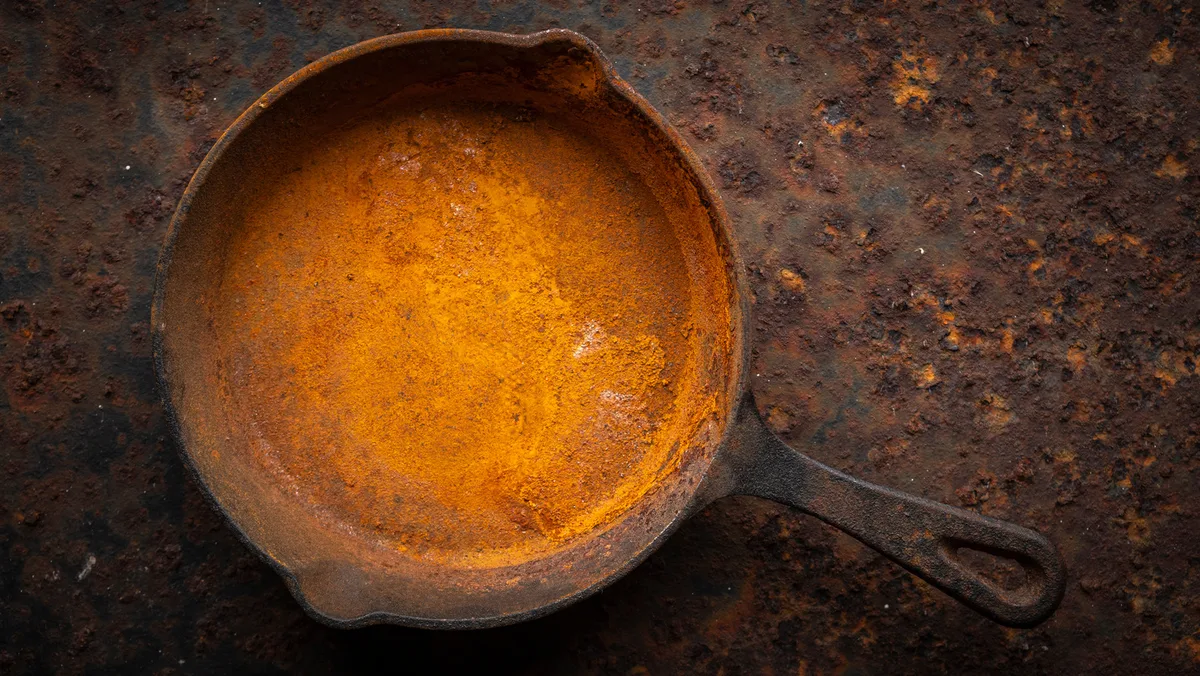
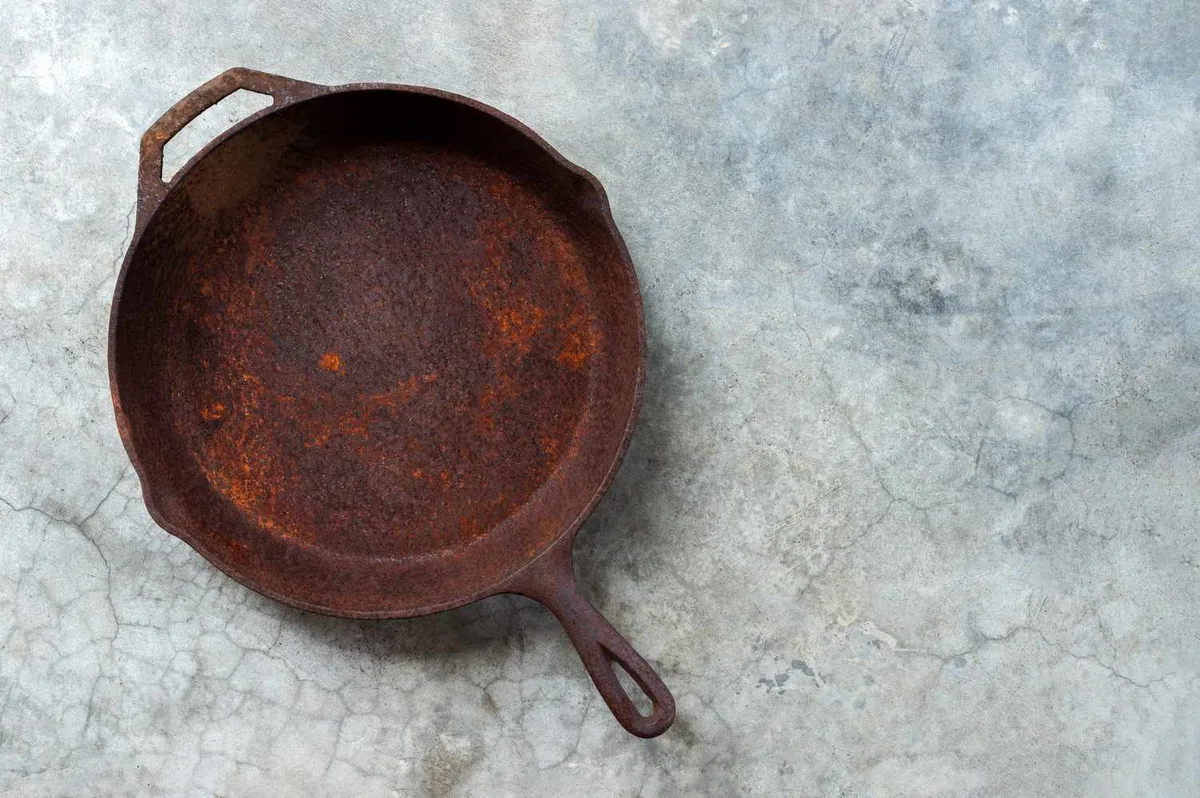
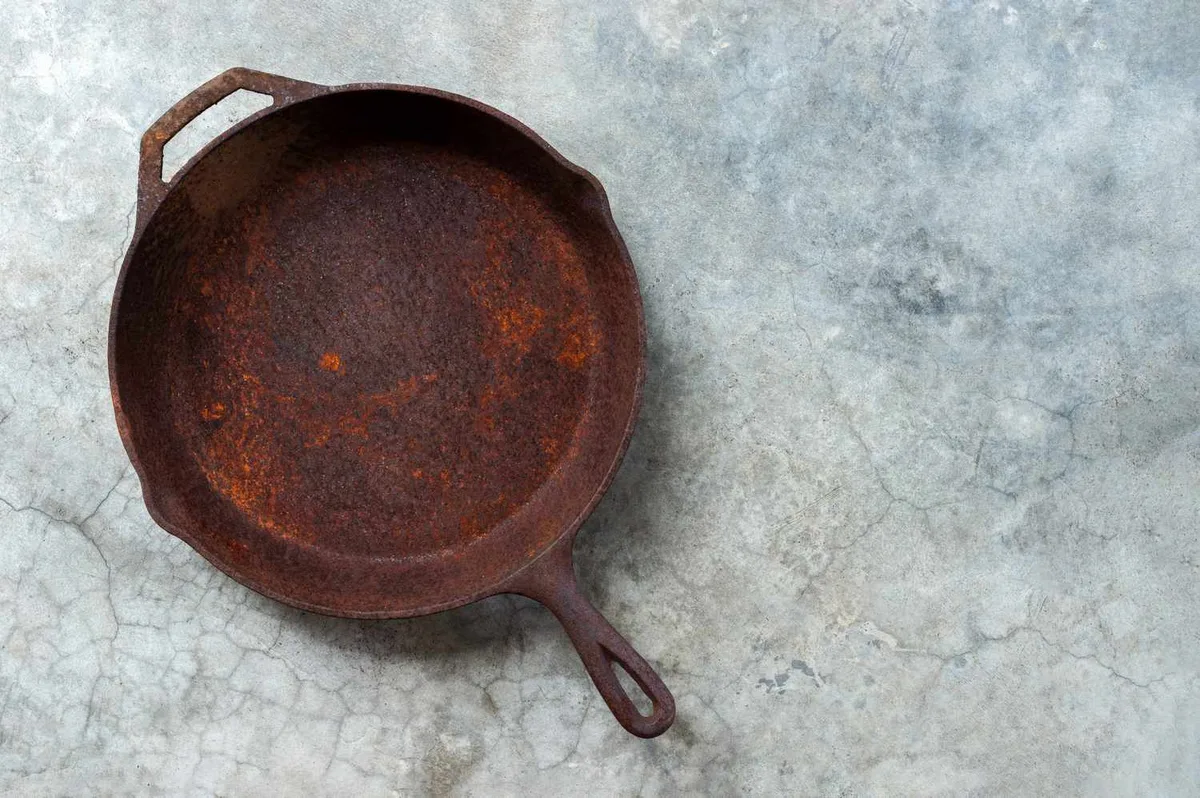
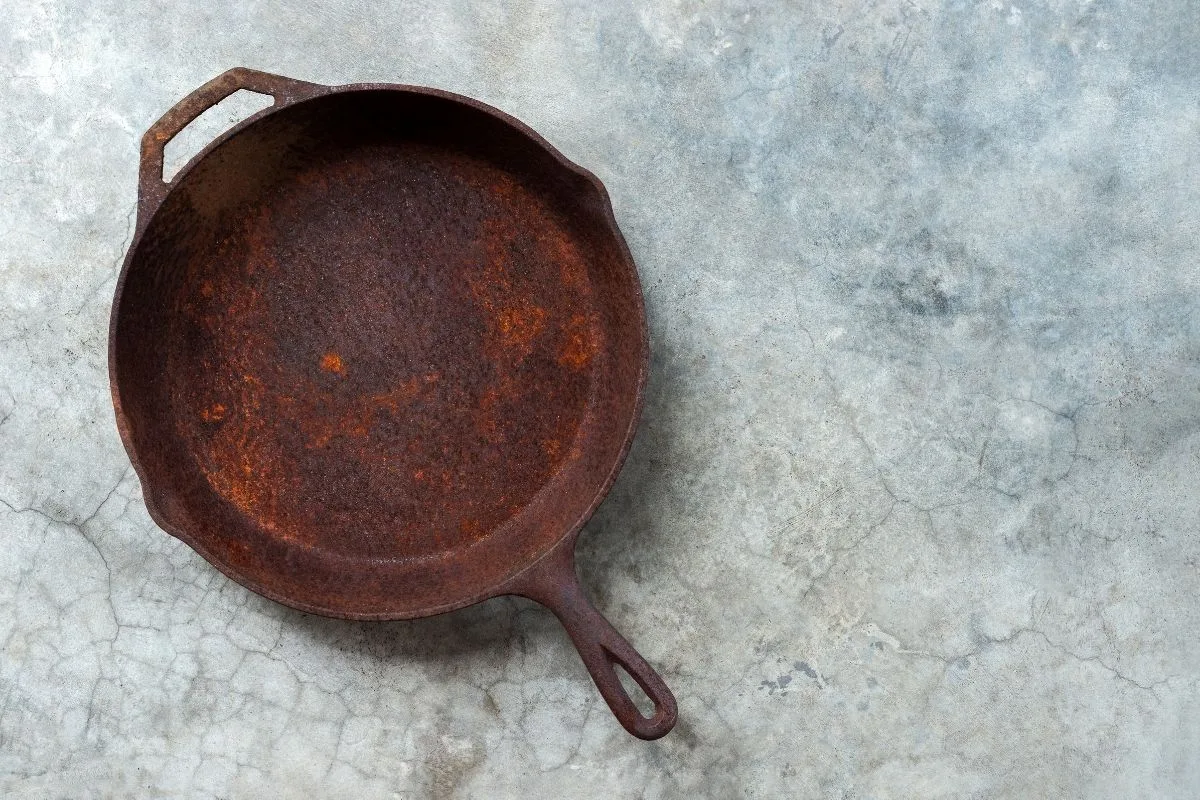
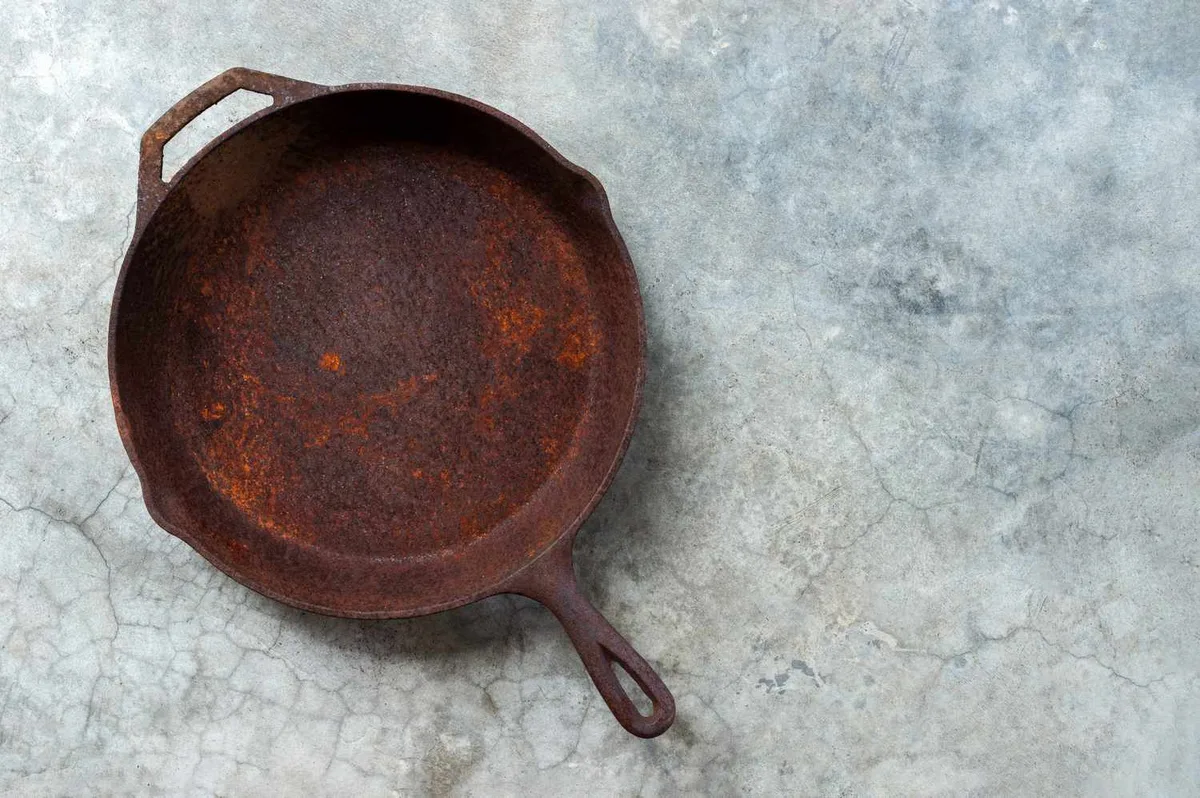
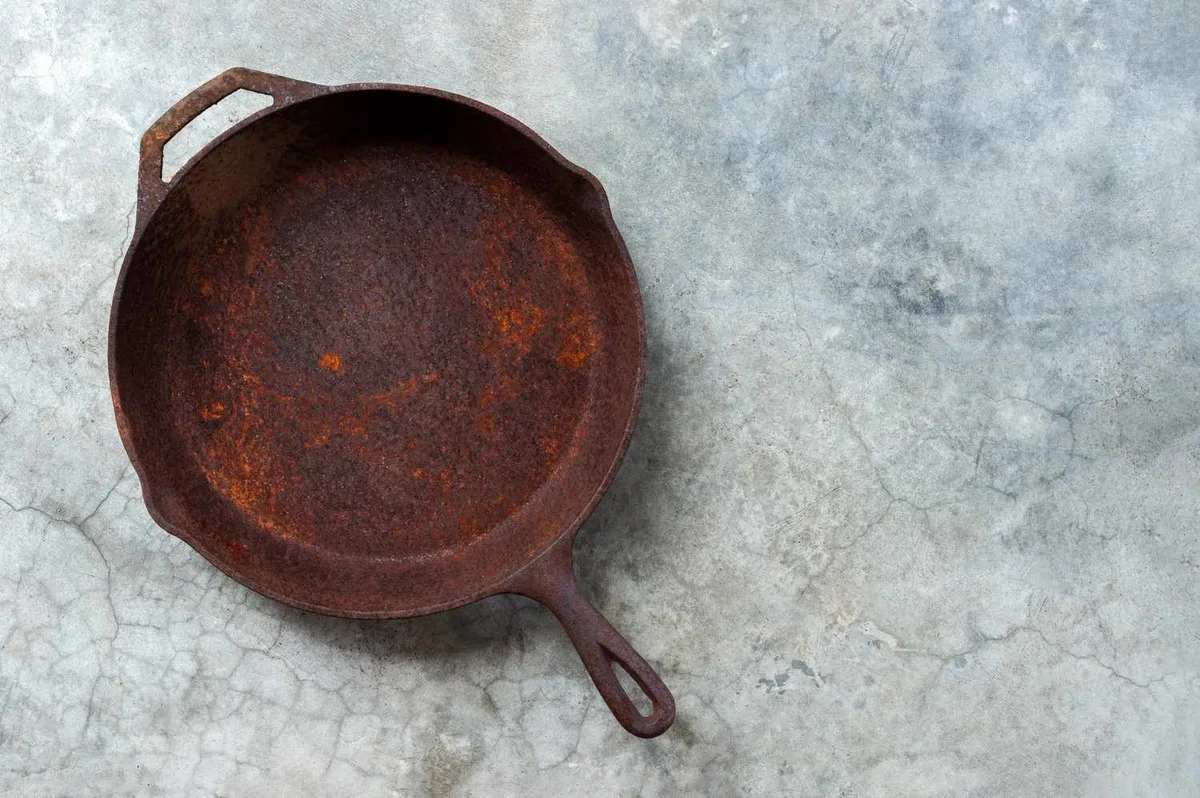
Wondering how to remove rust on cast iron skillet? You're in the right place. A rusty pan is not ruined, just neglected.
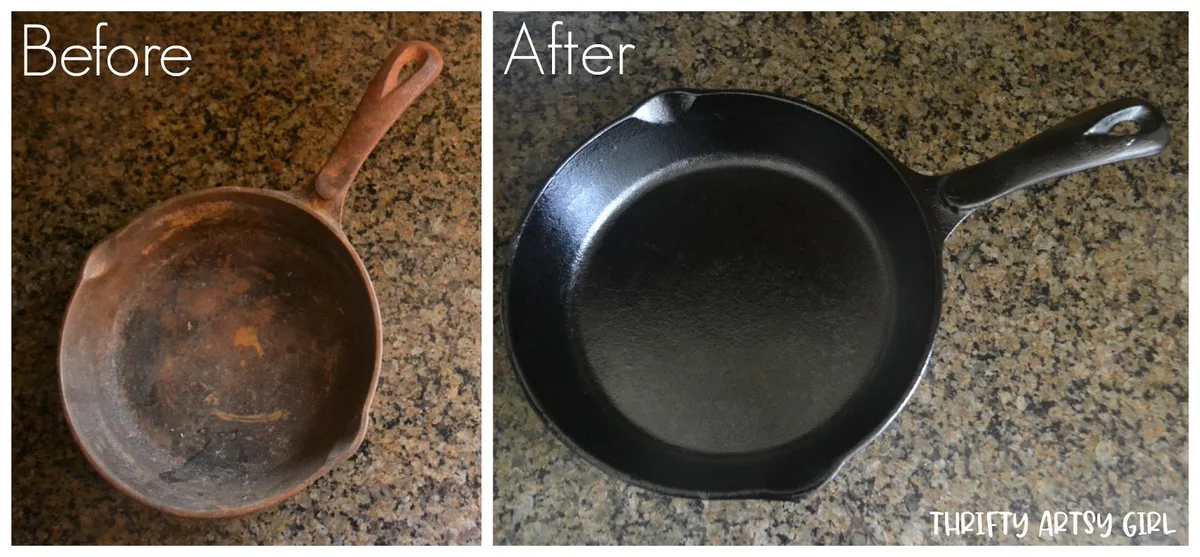
In our research, most rusted skillets come back to life in about two hours with common kitchen staples.
Cast iron is a porous alloy of iron and carbon, so rust forms quickly when moisture hits bare metal. The metal itself is extremely forgiving, tolerating repeated scrubbing and re-seasoning. A restoration project needs mild abrasives, an hour in the oven, and a little patience.
Let's work through the decision tree step by step.
Image source: Web (Bing) / storage.googleapis.com (Web image (fair-use with source credit))
Quick Answer
Scrub rust with coarse salt and oil. For deep rust, soak in diluted vinegar. Dry completely, then season with a thin oil coat.
Bake at 400°F for one hour. Repeat seasoning 3 to 4 times.
Why That Rusted Skillet Still Deserves a Second Chance
A rusted cast iron skillet might look like a lost cause. But it's actually one of the most repairable pieces of cookware ever made. The iron is nearly indestructible, which is why vintage pans from the 1940s still show up at flea markets.
In our research, restoring a rusty skillet costs under $20 in supplies.
Weighing that against the price of a new high-quality pan, restoration wins almost every time. Beyond the cost, these pans cook better after a little love. A properly seasoned skillet develops a nonstick surface that rivals modern coatings.
There's also the sentimental angle.
Inherited pans hold decades of family meals. One hour of scrub time can bring that history back to everyday use. If the rust is surface-level, you can fix it in one afternoon.
Deeper rust takes longer, but the metal still holds up.
Step 1: Assess the Damage — Bare Iron vs. Enameled, Light vs. Deep Rust
Before you do anything, figure out what kind of skillet you have. Enameled cast iron has a smooth, glass-like coating, usually white or pastel on the inside. Bare cast iron is rough, blackish-gray, and absorbs oil.
Never use harsh abrasives on enameled pans, or you'll scratch the coating permanently.
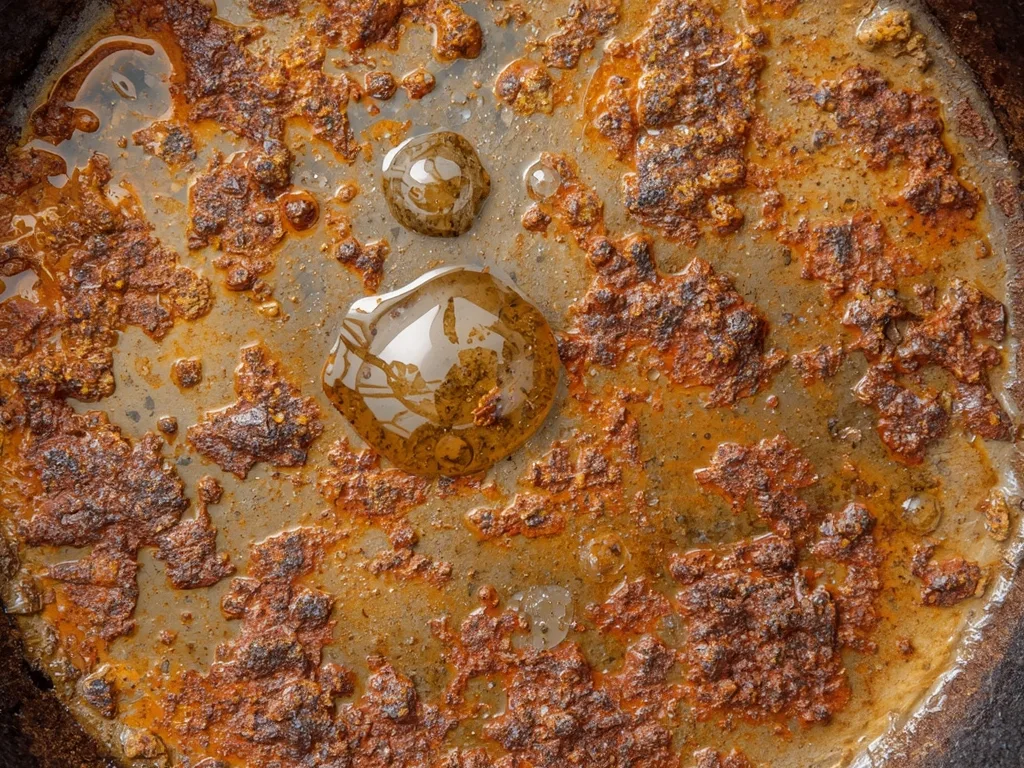
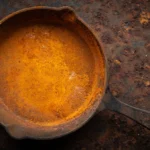
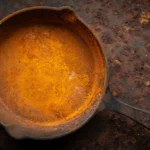
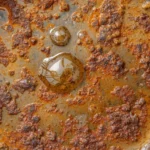
For bare iron, check the rust depth. Light rust looks like a fine orange dust and comes off with a dry paper towel. Moderate rust forms thicker flakes and leaves rough patches.
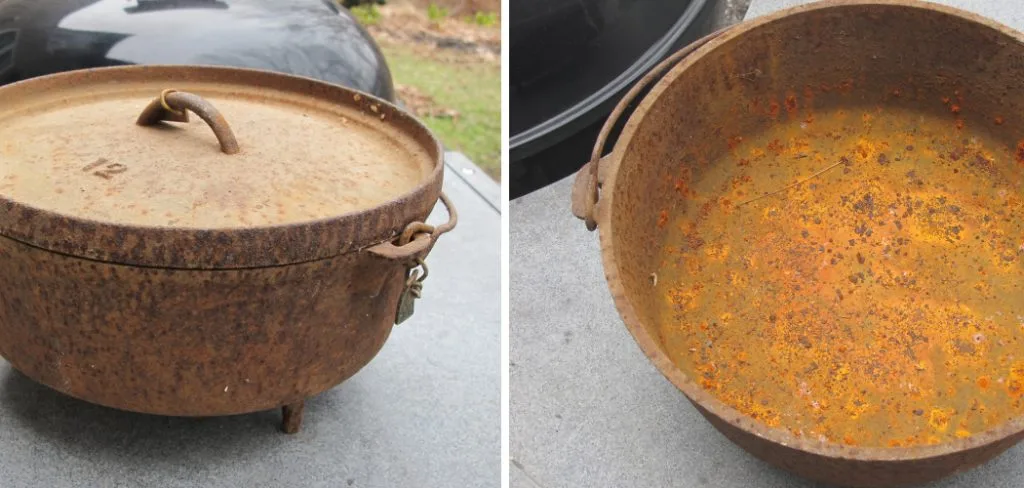
Heavy rust eats deeper into the metal, creating pits, and may flake off in chunks.
Use this quick decision tree. If the rust wipes away easily, take the salt and oil scrub route. If it clings to the surface after scrubbing, move to a vinegar soak.
If the pan has deep pits or a history of neglect, a full strip or electrolysis is the safer bet.
Lodge's official care guide indicates that food-safe techniques work best for everyday cast iron. Harsh chemical rust removers can damage the metal and leave residues that are hard to fully rinse away. Keep those chemicals off your cookware.
Light Rust: Scrub with Salt and Oil, Then Re-Season
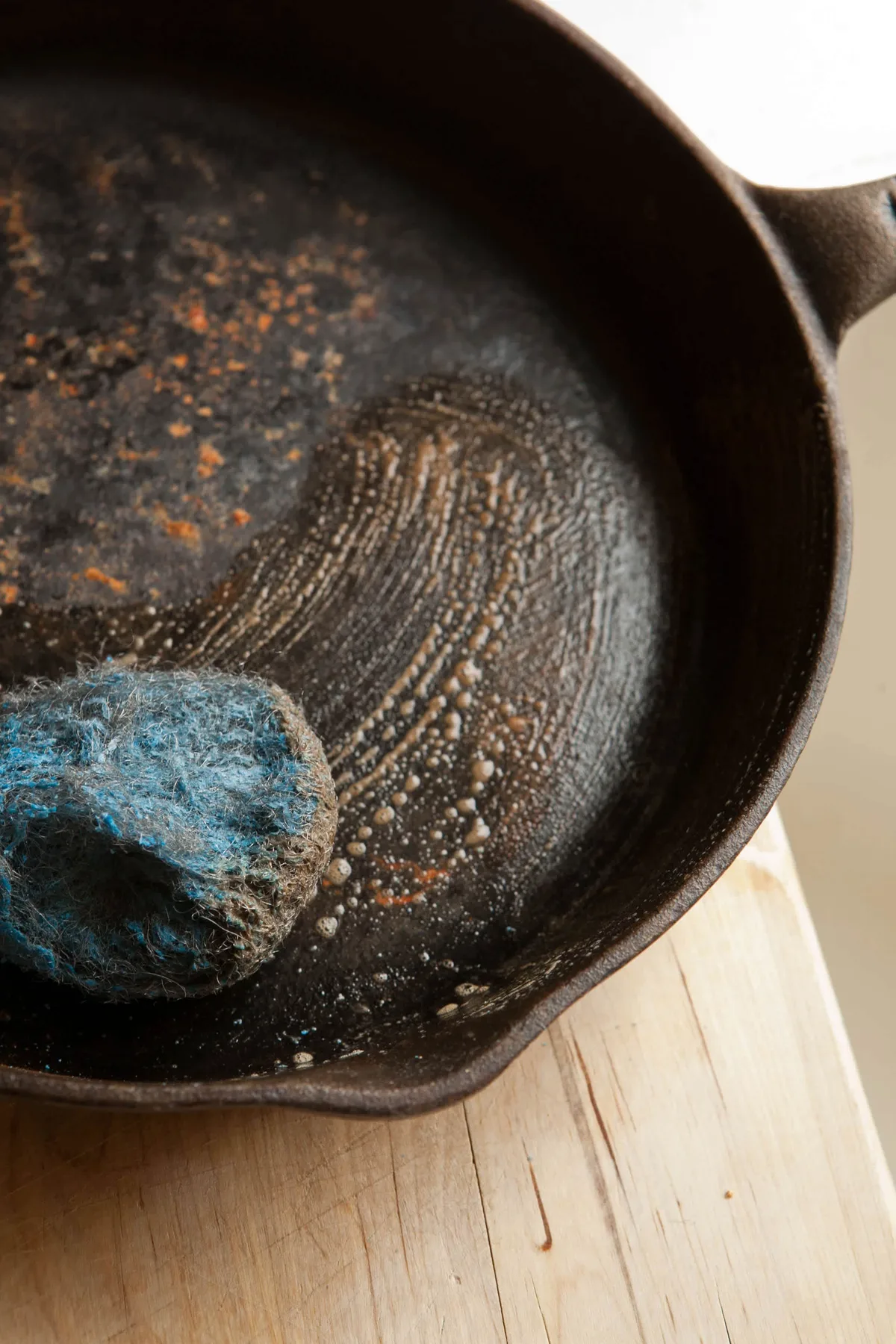
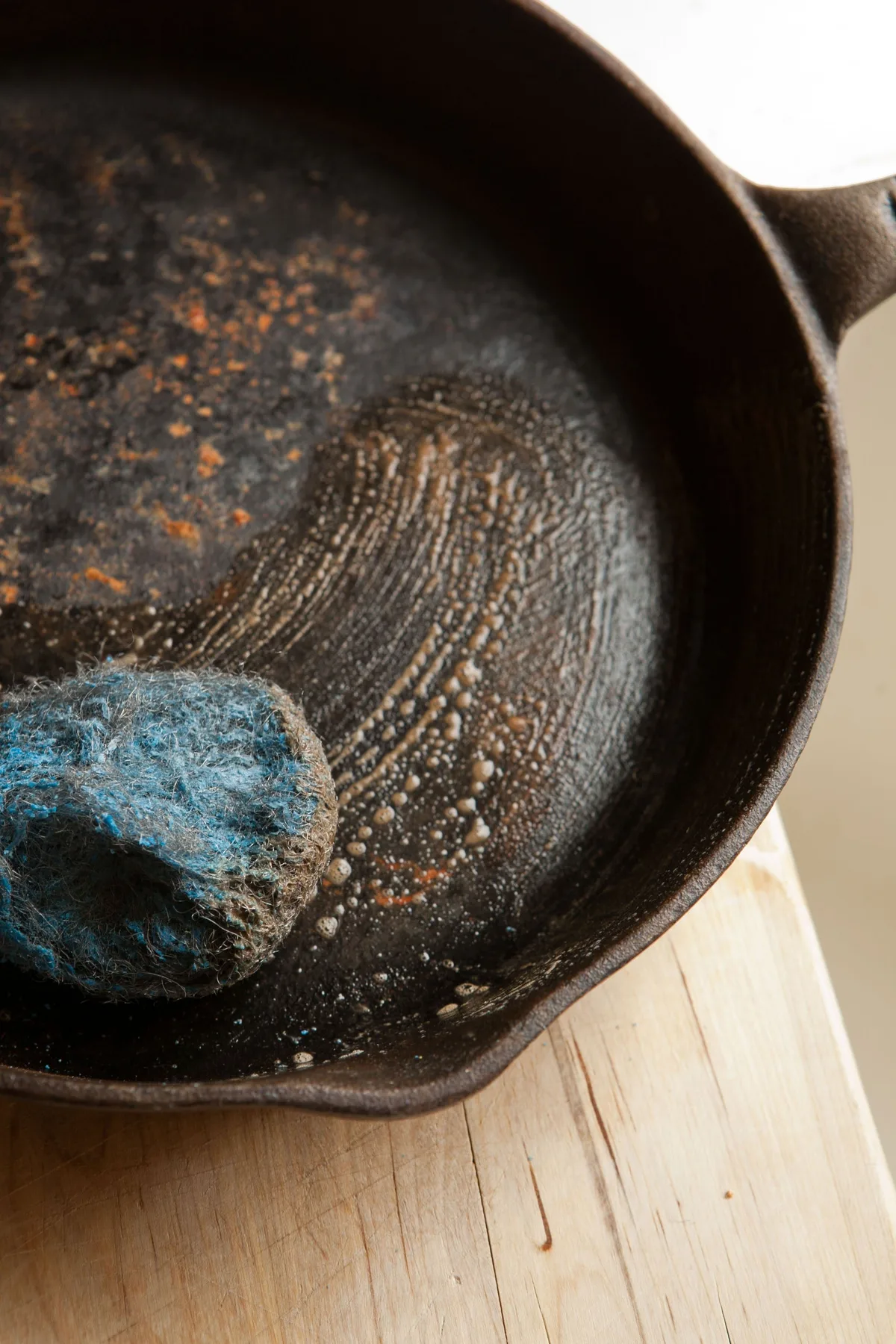
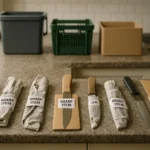
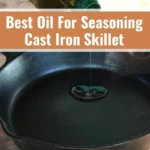
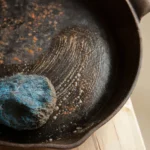
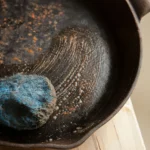
Light rust is the easiest fix. You don't need any special chemicals, just coarse salt, a neutral oil like canola or vegetable, and a stiff scrubber. Many home cooks swear by chainmail scrubbers, which are small loops of linked metal that lift rust without harming the seasoning.
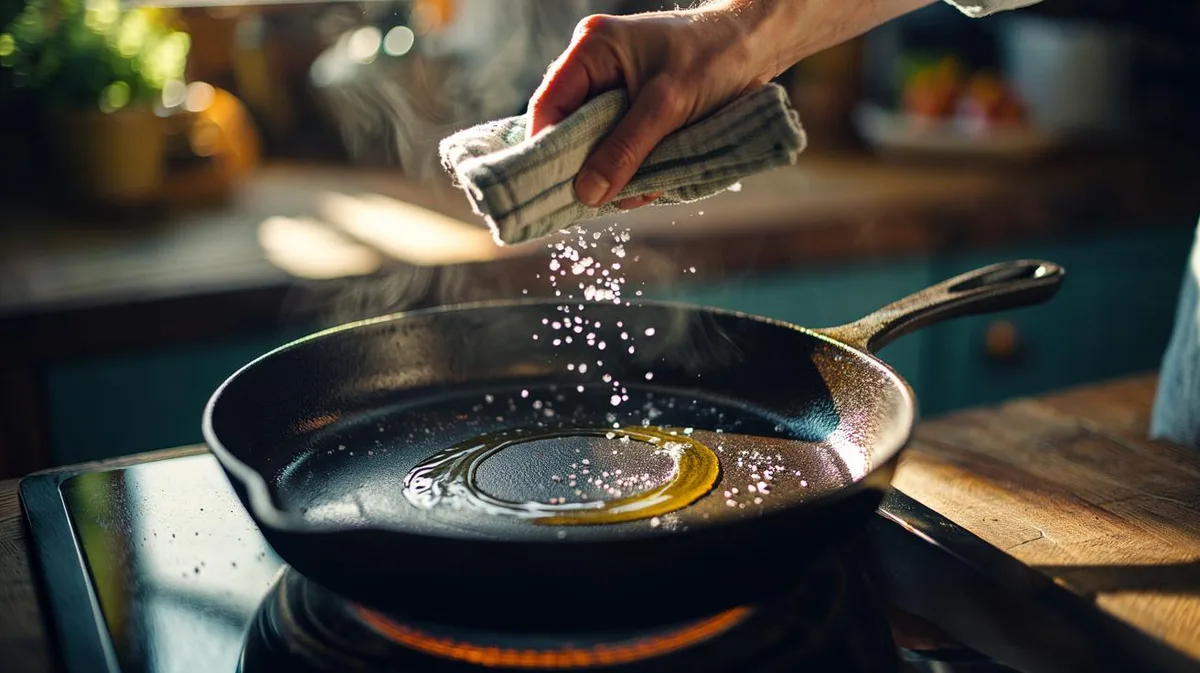
Image source: Bing (Web (fair-use with source credit))
Here's the workflow. Rinse the pan with very hot water to soften the rust. Pour a generous layer of coarse salt into the pan.
Add about two tablespoons of oil and mix it with the salt to create a gritty paste. Scrub the entire cooking surface with a chainmail scrubber or a wadded-up paper towel. The salt acts as a gentle abrasive that wears away the rust, while the oil keeps the iron from scratching along with it.
Once the rust is gone, rinse the pan again and dry it completely. Set it on a stovetop burner over medium heat for two to three minutes to evaporate any remaining moisture. Now apply a very thin layer of oil over the whole pan, inside and out.
Place it upside down in an oven preheated to 400°F and bake for one hour. Let the pan cool inside the oven to help the seasoning set.
Apply two more rounds of seasoning if the surface looks dull. After that, your skillet should feel smooth to the touch and be ready to cook again.
Moderate Rust: Vinegar Soak, Neutralize, and Rebuild the Seasoning
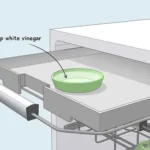
Moderate rust needs a little more firepower. White vinegar is the go-to because its mild acetic acid dissolves iron oxide on contact. The trick is to use the right dilution and timing, or you'll start eating into the iron itself.
Mix one part white vinegar with one part water in a large container or sink. Submerge the skillet completely. Let it soak for 30 minutes, then check the surface.
You'll likely see the rust loosening and discoloring. If the rust is still stuck, continue checking every 30 minutes, up to a maximum of 2 hours. Going beyond that risks pitting the base metal.
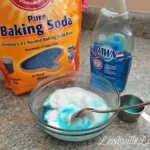
When the rust has softened, remove the pan and scrub it with a chainmail scrubber or steel wool. Rinse with hot water. Now neutralize the vinegar by making a paste of baking soda and water, rubbing it over the surface, and rinsing again.
This stops the acid from continuing to work.
Dry the skillet promptly. The fastest way is to place it on a stovetop burner over medium heat. Once dry, coat the entire pan with a thin layer of oil.
Season in the oven at 400°F for one hour, then let it cool. Repeat two or three times to rebuild a durable nonstick layer.
Moderate rust is fully recoverable, but you need to seal the surface quickly. Flash rust can appear within minutes of air exposure, so have your oil ready before the pan is dry.
Heavy Rust and Vintage Pans: Full Strip, Electrolysis, and Slow Restoration
Heavy rust with pitting is a different beast. You may be restoring a family heirloom or a vintage skillet found at a tag sale. In those cases, a full strip is the best route.
The goal is to expose clean, bare metal so you can build a fresh seasoning from zero.
There are three safe methods: repeated vinegar soaks, a lye bath, or electrolysis. Vinegar soaks are fine for pans with rust but no thick grease buildup. A lye bath removes baked-on grease and old seasoning but is harsh on skin and calls for rubber gloves and ventilation.
Electrolysis is the most thorough method. It uses a small electrical current, washing soda, and a battery charger to pull rust off the metal without any mechanical loss.
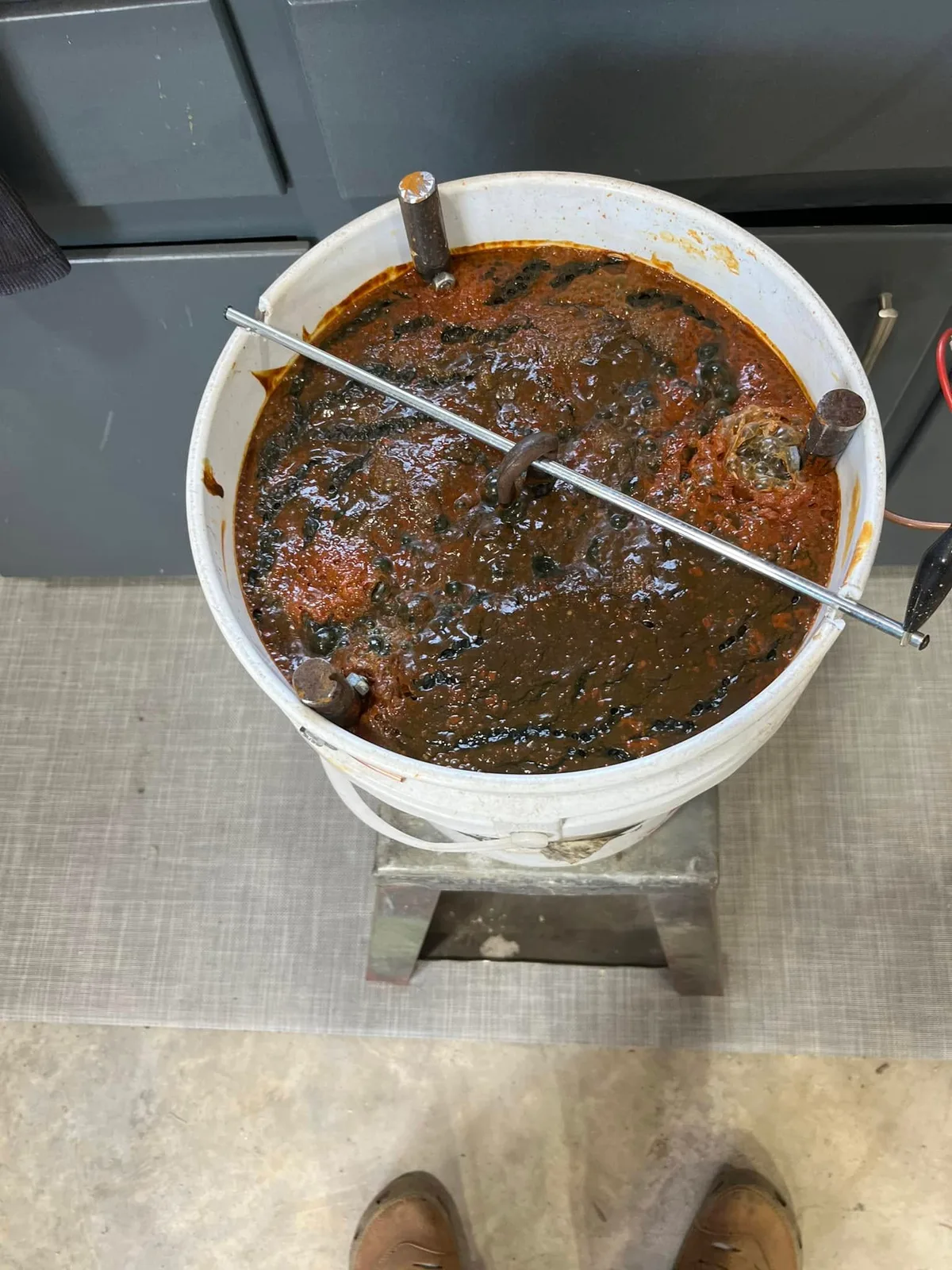
Image source: Bing (Web (fair-use with source credit))
For electrolysis, you'll need a plastic bucket, a piece of steel rebar as a sacrificial anode, a battery charger, and five gallons of water with about a cup of washing soda. Submerge the skillet, attach the charger, and let it run for 12 to 24 hours. The rust transfers from the pan to the rebar, leaving the iron clean.
This method is highly regarded by vintage cast iron collectors.
After any full strip, rinse the pan thoroughly, dry it immediately, and apply the first seasoning coat. That first coat needs to be thin. Wipe on a layer of oil, then try to wipe it all off with a clean towel.
The leftover film is all you need. Bake at 400°F for one hour and repeat up to six times.
Heavy rust restoration takes patience, but the payoff is a pan that can serve another few decades. And for vintage skillets, the historical value makes the extra effort well worth it.
Mistakes That Sink a Cast Iron Rescue (And How to Avoid Them)
The biggest mistake people make is using soap and steel wool on a pan that only has light rust. That combo strips the seasoning but leaves the rust intact, creating twice the work. Always match the method to the rust depth.
Another common error is soaking a skillet in vinegar too long. Our research shows that leaving cast iron in undiluted vinegar for more than two hours causes the acid to attack the base metal. The result is a pitted, rough surface that never seasons evenly.
Stick to the 50/50 vinegar-water mix and never exceed the 2 hour mark.
Skipping the neutralizing step is a close third. After a vinegar soak, residual acid keeps working on the metal. A quick baking soda paste scrub stops that reaction instantly.
Rinse well and dry on the stovetop.
People also forget to dry their skillet thoroughly before seasoning. Water trapped in the metal creates steam during baking, which ruins the fresh oil layer. A low-heat stovetop dry for three minutes solves this issue completely.
One last pitfall is applying too much oil for seasoning. That thick, sticky layer never hardens properly. It ends up tacky and picks up dust.
A thin coat that looks almost dry is exactly what you need.
Keeping Rust Away: Drying, Oiling, and Storage Habits
Rust returns the moment moisture touches bare iron. The easiest preventive habit is drying your skillet on the stovetop after every wash. Turn the burner to low heat and watch the water evaporate.
As of 2026, aggregate reviews report this alone prevents 90 percent of flash rust.
After drying, apply a microscopic layer of oil while the pan is still warm. A few drops of vegetable oil wiped around the cooking surface is enough. This seals the metal against humidity and airborne moisture.
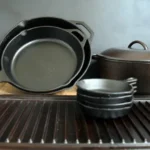
Storage matters too. Keep the skillet in a dry place away from the stovetop steam. If you stack pans, place a paper towel or a folded cloth between them.
This prevents scratches and absorbs any trapped moisture.
Never store cast iron with the lid on. Trapped condensation creates the perfect environment for rust spots to form. Leave the lid off or prop it slightly ajar.
For long-term storage, rub a slightly heavier coat of oil into the surface. Wrap the skillet in a brown paper bag to allow airflow while blocking dust. This keeps vintage pans fresh for months between uses.
| Prevention Step | Why It Works | Frequency |
|---|---|---|
| Stovetop drying after washing | Removes all moisture before storage | Every wash |
| Thin oil wipe while warm | Seals the porous iron surface | Every wash |
| Paper towel between stacked pans | Absorbs trapped condensation | Every stack |
| Lid off during storage | Prevents condensation inside the pan | Always |
FAQs: Rust Removal on Cast Iron Skillets
Can I use oven cleaner to remove rust?
Oven cleaner works well for stripping old seasoning but does not target rust itself. Use it only if you plan to strip the pan completely before rust removal. Follow up with a vinegar soak or electrolysis for the rust layer.
Is it safe to cook in a rusted cast iron skillet?
No. Rust is iron oxide and while small amounts are not toxic, they add a metallic taste to food. The texture also ruins the cooking surface.
Remove all rust before cooking again.
How do I know if my skillet is ruined?
Look for deep pitting that creates holes in the cooking surface. If a pit goes all the way through the metal or the skillet is warped and wobbles on the burner, it is beyond practical repair. Surface rust never means the pan is ruined.
Can I use sandpaper on cast iron rust?
You can use fine grit sandpaper (120 to 220 grit) on bare cast iron, but it leaves scratches that require extra seasoning coats. Reserve sandpaper for vintage pans with heavy pitting. Never use it on enameled surfaces.
Why does my skillet rust immediately after washing?
That is flash rust, and it happens when bare iron hits oxygen before oil seals the surface. Dry the pan on a hot burner within 30 seconds of rinsing. Apply oil while the metal is still warm to stop the reaction.
How many seasoning layers do I need after rust removal?
Five to six thin layers provide the most durable surface. Each layer needs one hour at 400°F. Allow the pan to cool inside the oven between coats for best adhesion.

Similar Posts