The 3-Step Acid Bath and Neutralization Technique for Cast Iron Rust
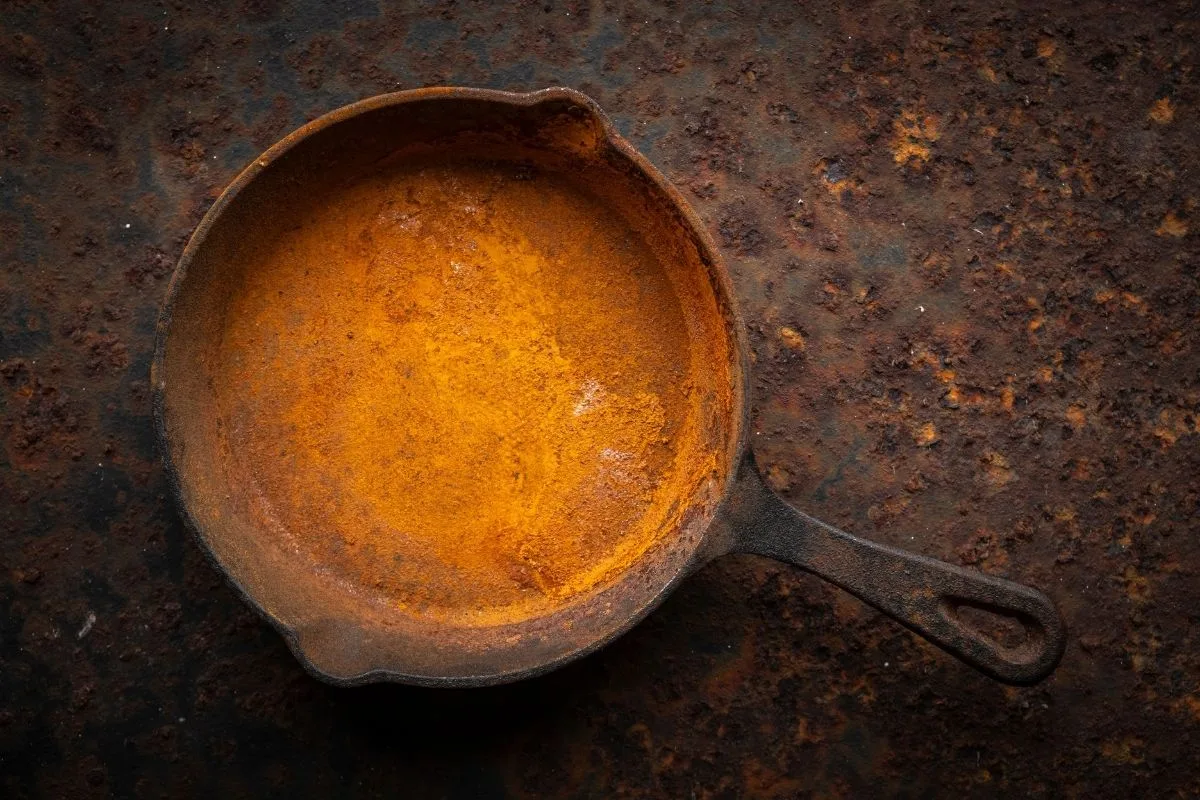
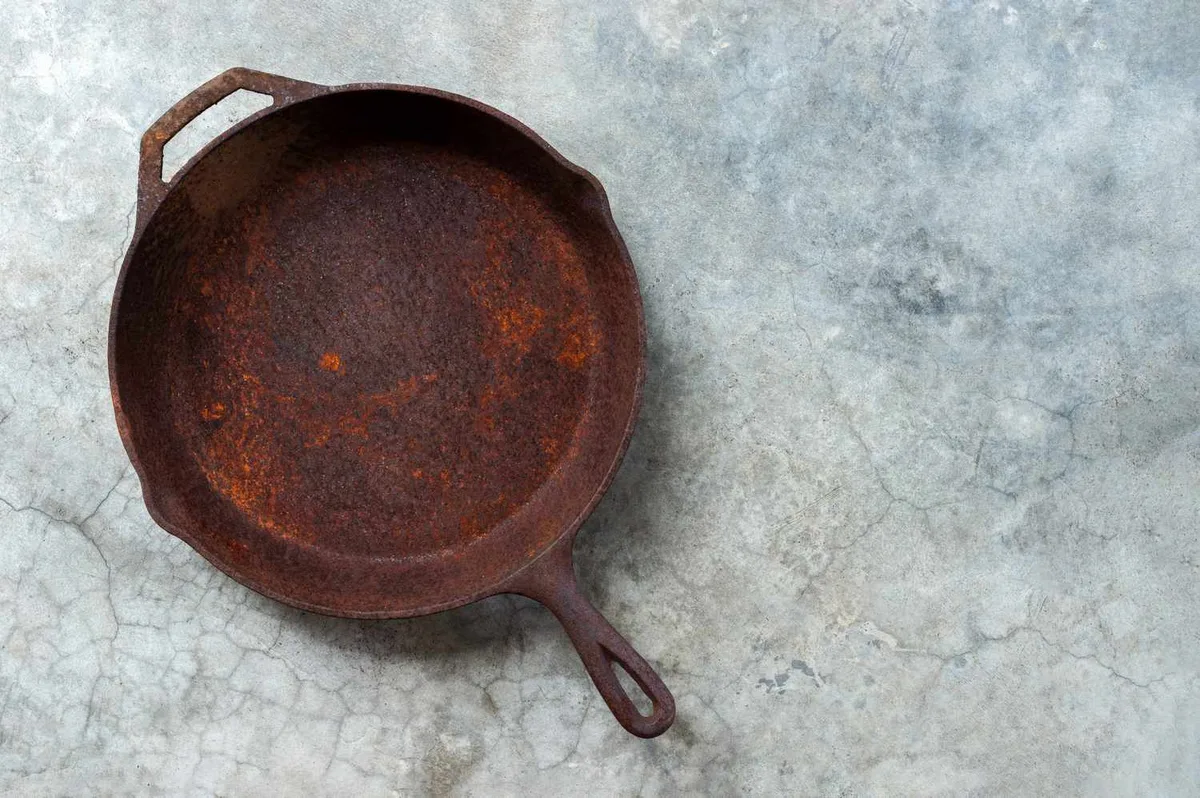
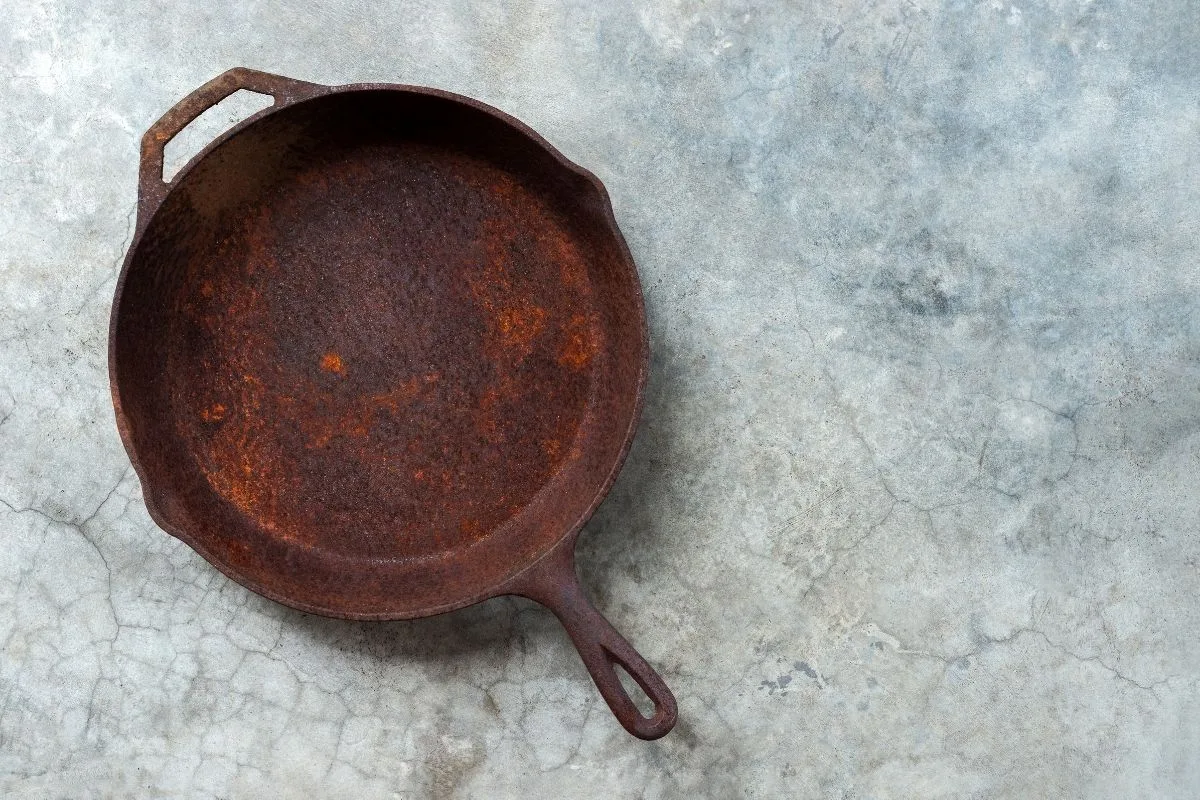
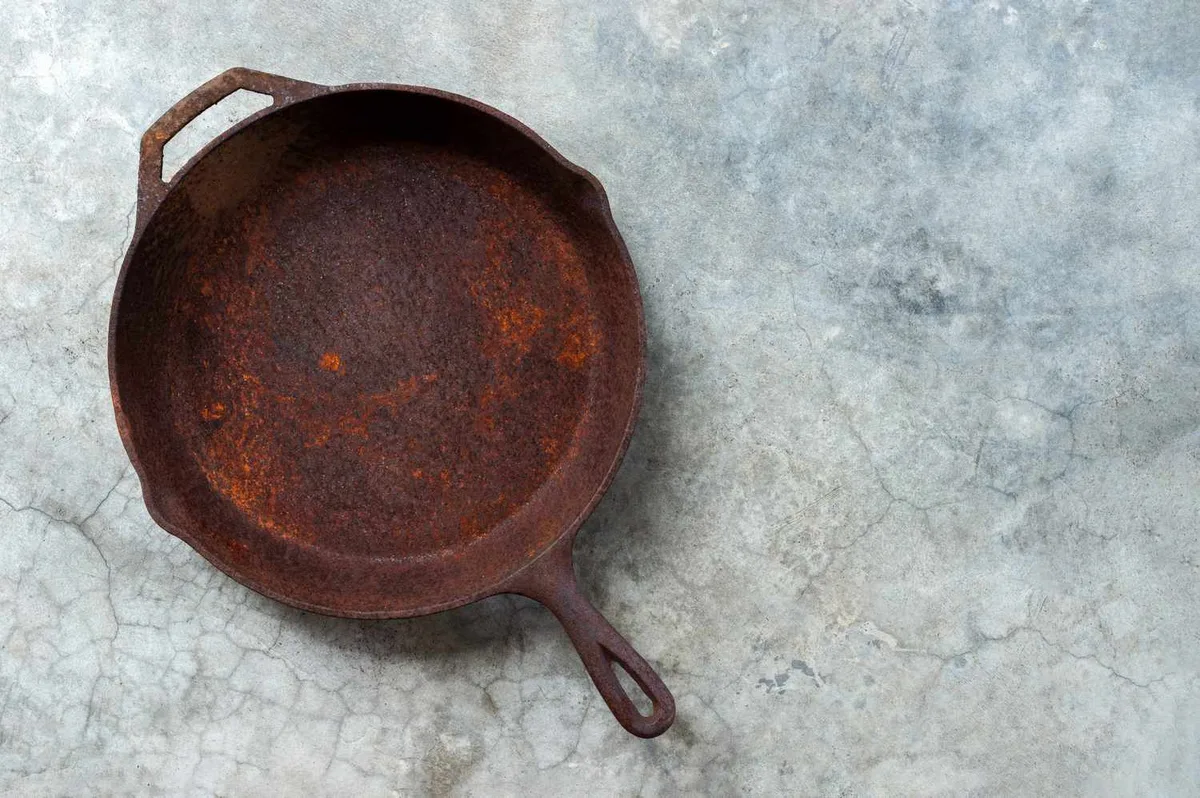
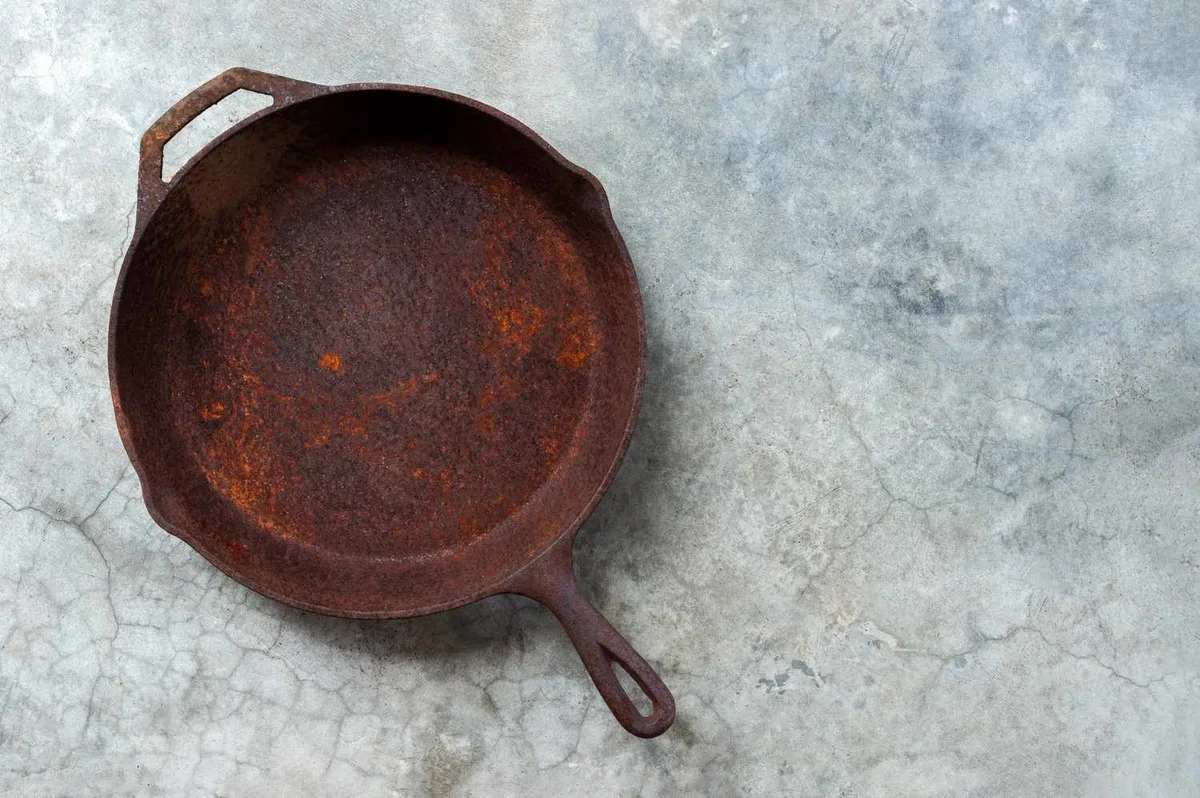
Pulling a rusted cast iron pan out of storage is never a good feeling. But learning how to remove rust off cast iron is simpler than most people realize once you understand what you're dealing with.
According to materials science research on iron oxide removal, the key is matching your approach to the rust depth and the pan type. Manufacturer recommendations from major cast iron producers confirm that a 1:1 white vinegar solution dissolves surface rust in about 30 minutes without damaging the base metal. Knowing which method fits your pan is the difference between a successful restoration and a ruined skillet.
Image source: Bing (Web (fair-use with source credit))
Quick Answer
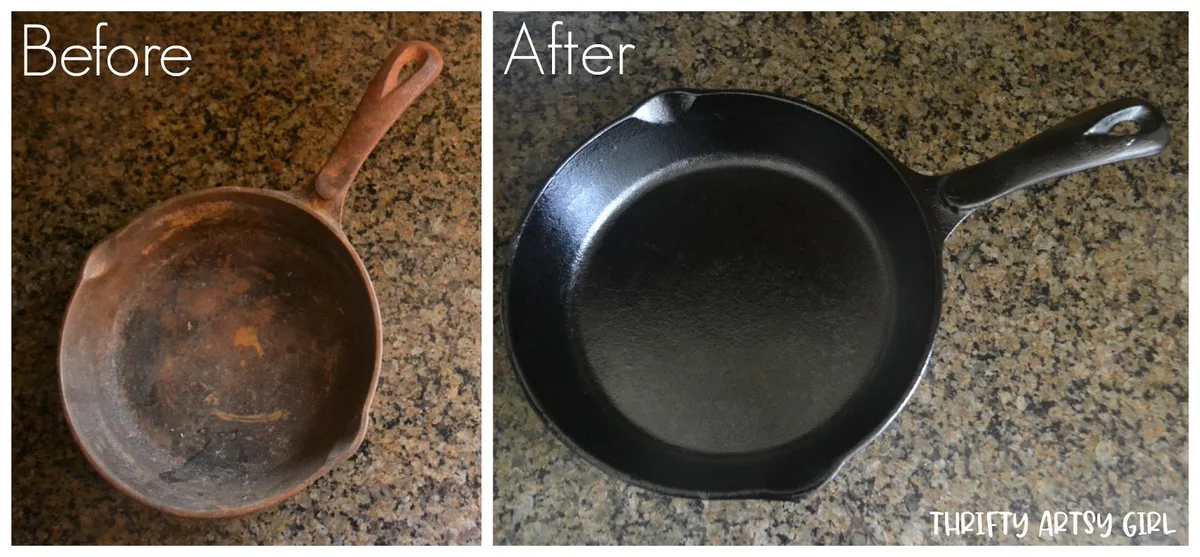
To remove rust off cast iron, scrub it with steel wool or soak it in vinegar. Dry the pan immediately. Then reseason it with oil in a 400°F oven.
That restores the protective layer and stops new rust from forming.
What Kind of Rust Are You Dealing With?
Not all rust is the same, and the wrong approach can do more harm than good. Your first job is to look at the pan and ask two questions: Is it bare cast iron or enameled? And how deep does the rust go?
Bare cast iron has a porous, rough surface that you can season with oil. Enameled cast iron has a smooth glass-like coating, usually white or colored on the inside. If the rust is on an enameled surface, you can't soak it in vinegar or scrub it with steel wool, you'll ruin the coating.
On bare iron, those methods are fair game.
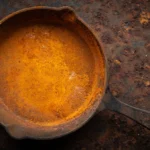
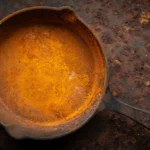
Rust depth matters just as much. Light surface rust looks like a fine orange dust or small patches. You can often wipe it off with a paper towel.
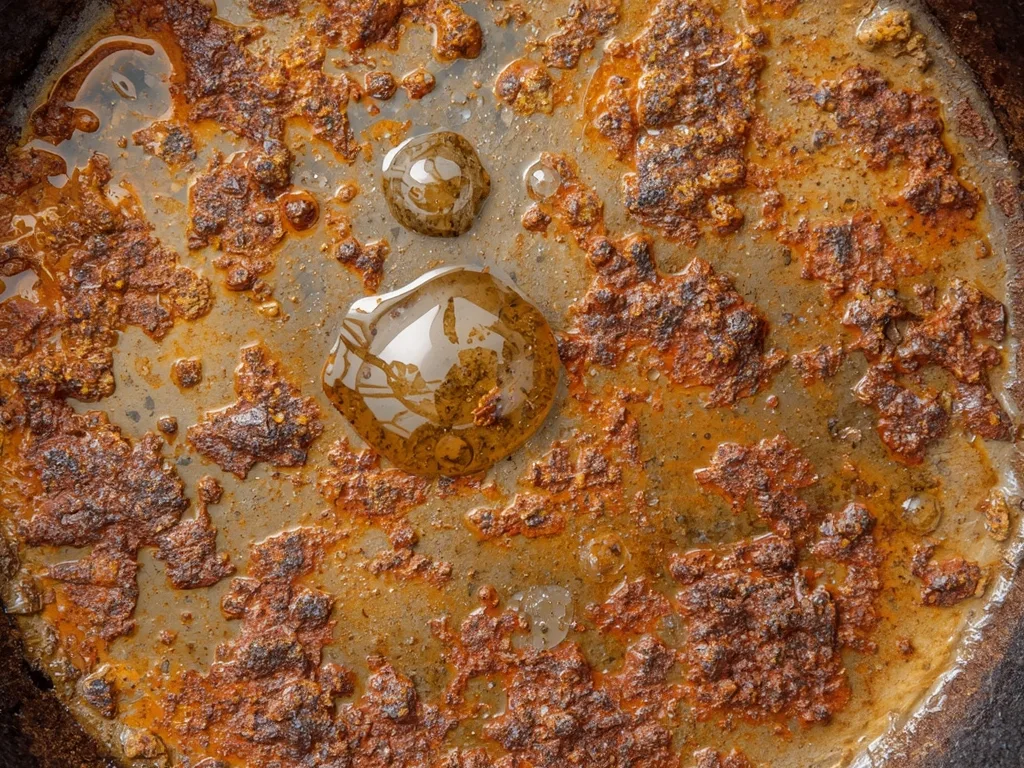
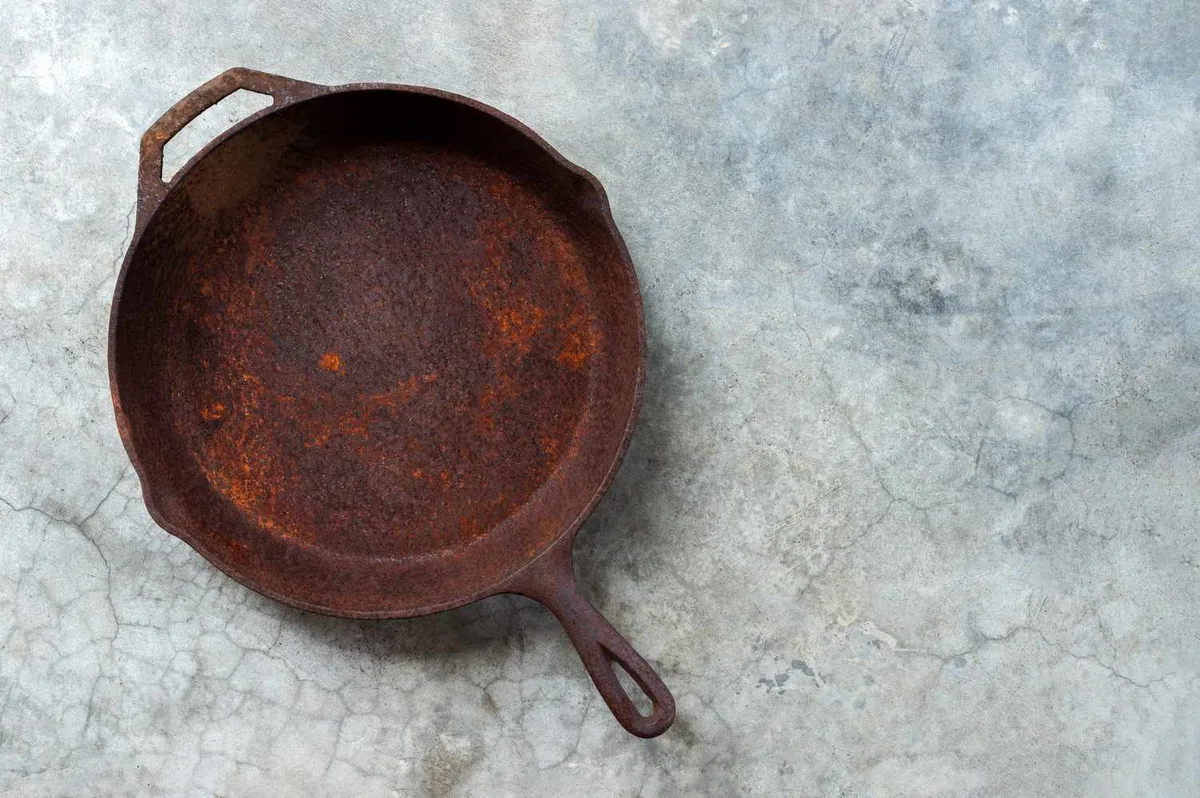
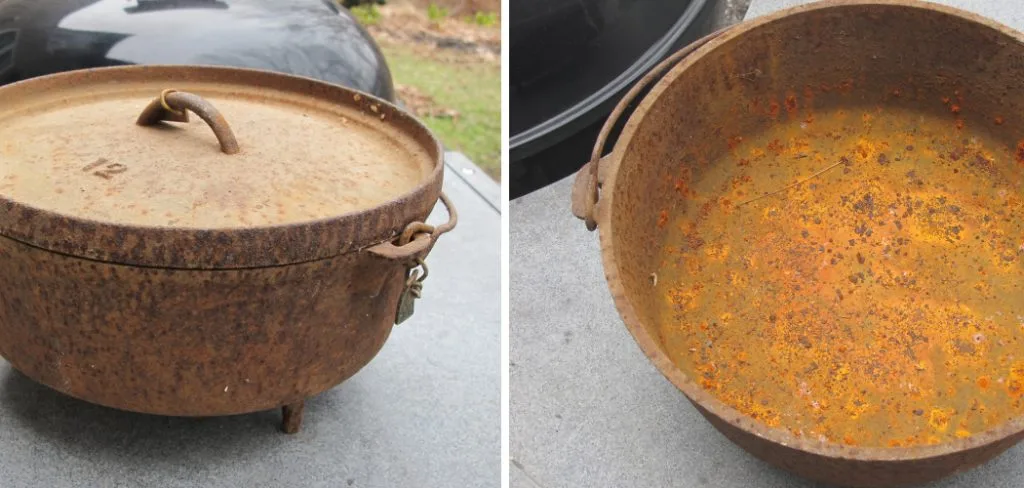
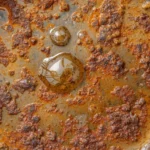
Medium rust feels rough under your fingertips and won't wipe away. Heavy rust forms thick, flaky scales that can actually pit the metal underneath.
Here is a quick way to assess your pan as of 2026:
Bare cast iron. Look for the raw, dark gray metal on the cooking surface and sides. If you see any chipped or peeling black coating mixed with orange, that's old seasoning, not enamel. You can strip it all off safely.
Enameled cast iron. The interior will be smooth, glossy, and usually cream or light gray. Rust on the inside of an enameled pan means the coating is already damaged or worn through. That changes your options completely.
Pitted rust. Run your fingernail across the rusted area. If you feel dips or craters in the metal, the rust has eaten below the surface. That pan will need a more aggressive approach like electrolysis or an oxalic acid soak.
Many people confuse old, flaking seasoning with rust. Seasoning is black or dark brown. Rust is orange, reddish, or yellow-brown.
If your pan is covered in black flakes with orange underneath, you have a two-layer problem: old seasoning on top of active rust. You'll need to strip the seasoning first before tackling the rust.
Start Here: Match the Method to the Rust Type
Once you know what you're working with, the right method becomes obvious. Use this simple decision guide to pick your path.
Light surface rust on bare cast iron. The vinegar soak and scrub is your best bet. It's fast, uses household ingredients, and works within an hour. This covers about 80% of typical rust problems people encounter.
Medium to heavy rust on bare cast iron. You need electrolysis or an oxalic acid soak. These methods dissolve rust deeper into the metal and handle flaky scaling better. Expect to spend several hours to a full day on this.
Pitted or deeply rusted bare cast iron. Electrolysis is the gold standard here. It removes rust from deep pockets without scrubbing. Vinegar soaks won't reach the bottom of pits reliably, and you risk over-etching the metal.
Enameled cast iron with surface rust. Skip the soak entirely. Use a gentle baking soda paste or a specialized enamel cleaner. If the enamel is chipped or rust is bleeding through, the pan may be unsafe to cook in.
Enameled cast iron with heavy rust inside. This is usually a sign that the enamel has failed. Replacement is often safer than restoration. Chipped enamel can contain glass shards in your food.
Here is a quick reference table:
| Rust Type | Pan Type | Recommended Method | Time Needed |
|---|---|---|---|
| Light surface | Bare iron | Vinegar soak + scrub | 30–60 minutes |
| Medium surface | Bare iron | Vinegar soak or oxalic acid | 1–2 hours |
| Heavy scaling | Bare iron | Electrolysis or oxalic acid | 4–24 hours |
| Pitted rust | Bare iron | Electrolysis | 12–48 hours |
| Light surface | Enameled | Baking soda paste | 15–30 minutes |
| Heavy/chipped | Enameled | Replace pan | N/A |
If you are unsure, start with the gentlest method and work your way up. The vinegar soak is forgiving enough that it won't ruin a pan if you watch the clock. Electrolysis and oxalic acid are more aggressive and require more setup and safety gear.
Light Surface Rust? Try the Vinegar Soak and Scrub
This is the method most people need, and it works beautifully on pans that have light orange dusting or small rust patches. You probably have everything you need in your kitchen already.
What you need:
- White vinegar (distilled, 5% acidity)
- Water
- A container large enough to submerge the pan
- Steel wool (grade 0000 or 00)
- A stiff nylon brush
- Paper towels
- Cooking oil for reseasoning
The step-by-step process:
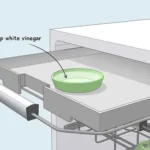
Mix a 1:1 solution of white vinegar and water. Pour it into your container and fully submerge the rusty pan. Set a timer for 30 minutes.
Check the pan every 20 to 30 minutes. The vinegar's acetic acid reacts with iron oxide and loosens rust without eating into good metal.
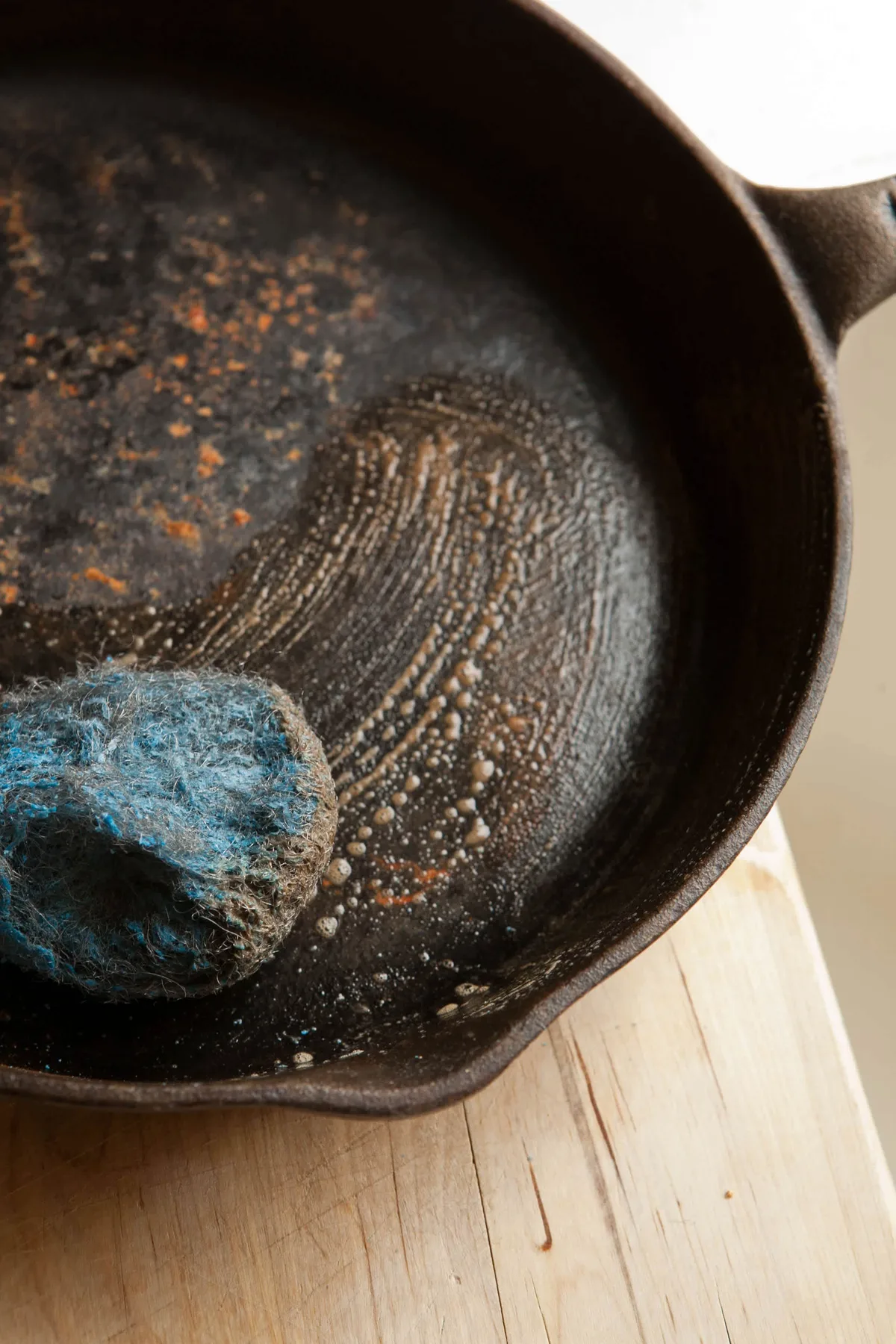
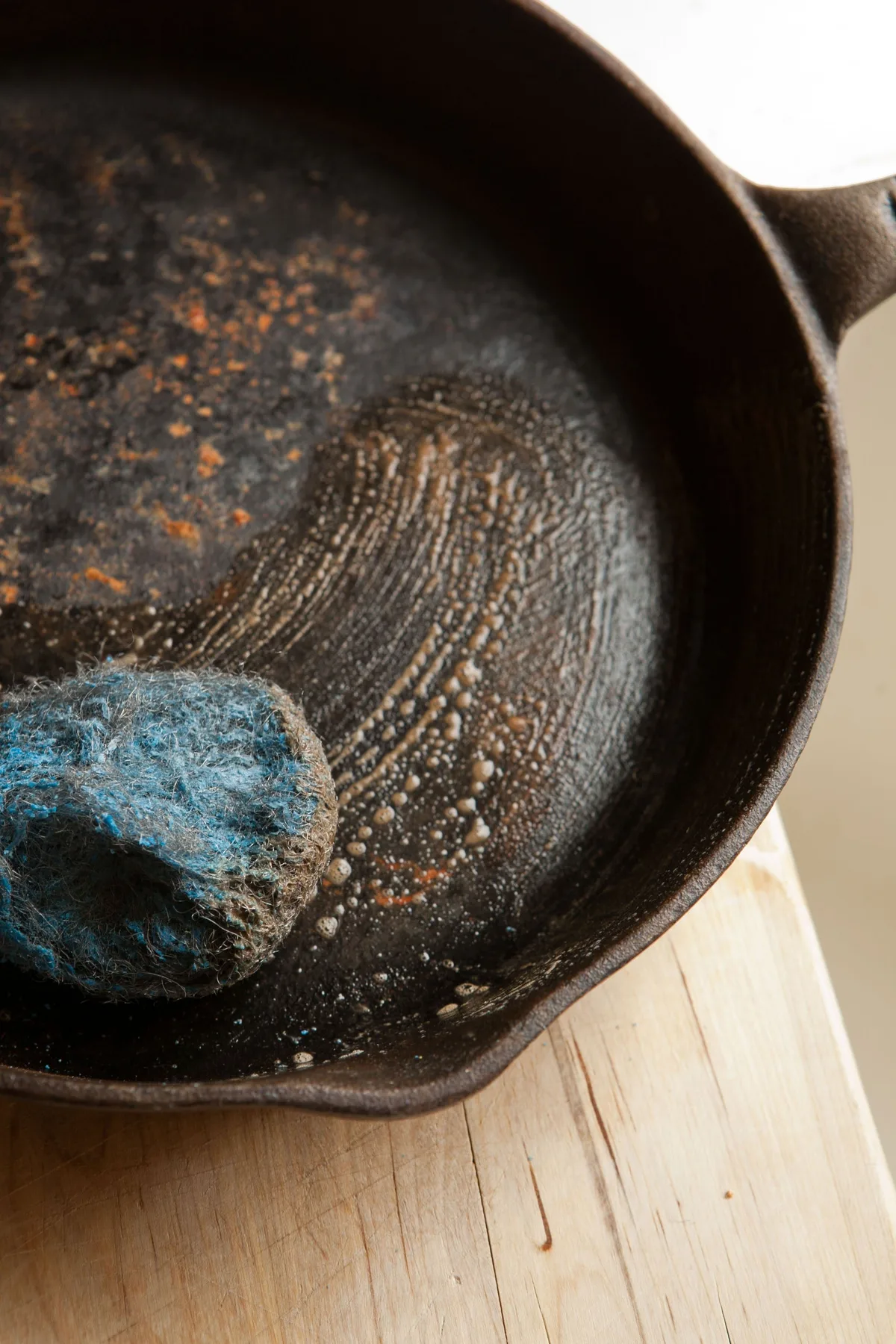
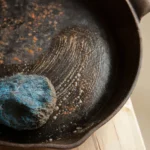
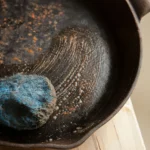
After 30 minutes, pull the pan out. You should see the rust turning into a loose sludge. Scrub the surface with steel wool under running water.
The rust should lift off easily. If stubborn spots remain, put the pan back in the vinegar solution for another 15 to 20 minutes.
This is the critical moment. Rinse the pan with hot water and dry it immediately with a towel. Then place it in a warm oven at 200°F for 10 to 15 minutes to drive off any hidden moisture.
Flash rust can form in seconds if the pan stays wet. Do not skip the oven drying step.
Image source: Bing (Web (fair-use with source credit))
Once the pan is bone dry, apply a thin layer of oil and reseason it in the oven at 400°F to 450°F for one hour. The oil bonds to the bare iron and creates a fresh protective layer.
Things to watch for:
Vinegar is acidic, and it does not stop working just because you pull the pan out. Rinse thoroughly. Any leftover vinegar residue will continue to react with the iron and cause flash rust or a metallic smell.
Do not soak the pan longer than one hour total. Extended vinegar exposure can dull the surface and create a rough texture called etching. If one hour does not remove the rust, switch to a more aggressive method.
Some people add salt to the vinegar solution as an abrasive. That works, but it can scratch the surface. Stick with plain vinegar and steel wool for the smoothest result.
Heavy Rust or Pitting? Go for Electrolysis or Oxalic Acid
When rust has formed thick scales or eaten into the metal, vinegar won't cut it. You need chemistry or electricity to do the heavy lifting.
Electrolysis for deep rust removal
Electrolysis uses a low-voltage electric current to pull rust off the iron and onto a sacrificial piece of steel. It is the most thorough method available and the safest for antique pans with delicate markings or original surface texture.
The setup is straightforward. You need a plastic bucket, a battery charger (2 to 12 amps), a piece of steel plate or rebar, and washing soda (sodium carbonate). Fill the bucket with water and dissolve one tablespoon of washing soda per gallon.
Attach the positive clamp to the steel electrode and the negative clamp to your cast iron pan. Submerge both in the solution without letting them touch. Plug in the charger and wait.
Within a few hours, you will see bubbles forming on the pan. The rust loosens and falls to the bottom of the bucket. After 12 to 24 hours, pull the pan out, rinse it, and scrub off any remaining residue with a soft brush.
The bare iron underneath will be clean and smooth.
Safety matters here. Work in a well-ventilated area. Do not let the positive and negative clamps touch each other underwater.
Use the charger outdoors or in a garage with the door open for proper ventilation during electrolysis. Wear rubber gloves when handling the solution.
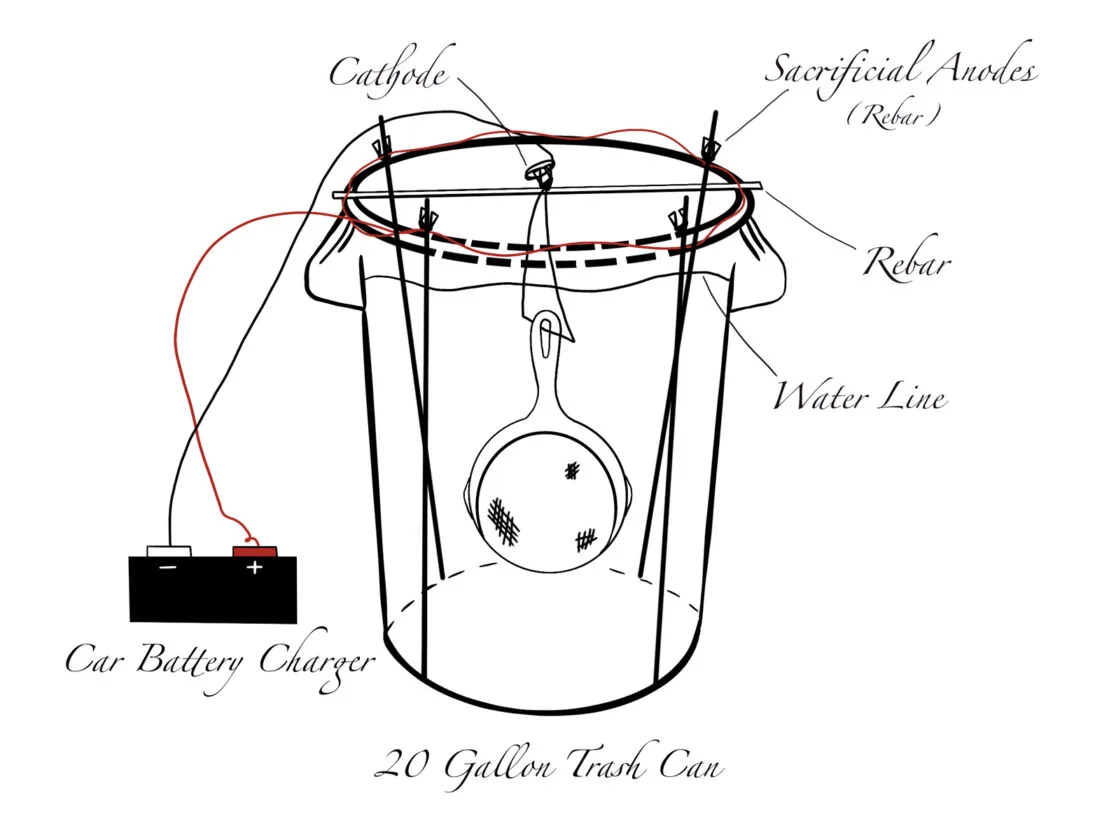
Image source: Bing (Web (fair-use with source credit))
Oxalic acid soak for heavy scaling
Oxalic acid is a chemical rust remover that works by converting iron oxide into a water-soluble compound. You can find it in powder form at hardware stores or in commercial rust removers.
Mix the powder with warm water according to the package instructions. Submerge the rusty pan and let it soak for 30 to 60 minutes. Check the pan every 15 minutes.
The rust will turn a grayish color and loosen. Scrub with a nylon brush and rinse thoroughly.
Oxalic acid is more aggressive than vinegar. Wear gloves and eye protection. Do not use it on enameled cast iron, it can attack the coating.
Rinse the pan multiple times with fresh water to remove all chemical residue before seasoning.
When to strip old seasoning first
If your pan has layers of old, flaky seasoning hiding rust underneath, you need to strip that seasoning before treating the rust. Lye is the safest way to remove seasoning without damaging the metal. Spray the pan with oven cleaner containing lye, seal it in a plastic bag for 24 to 48 hours, then scrub off the softened seasoning.
After that, the rust underneath is exposed and ready for electrolysis or oxalic acid.
Enameled Cast Iron? Skip the Soak Entirely
Enameled cast iron looks like cast iron but behaves completely differently when it comes to rust removal. The glass-like coating is durable, but it is also brittle and sensitive to acids and abrasives.
Surface rust on enamel
If you see rust on the inside of an enameled pan, check whether the coating is intact. Run your finger over the area. If it feels smooth and glossy, the rust is probably sitting on top of the enamel rather than penetrating it.
This happens when metal salts from cooking or hard water leave a stain that looks like rust.
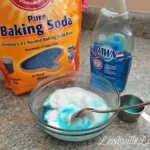
Make a paste with baking soda and a tiny amount of water. Apply it to the rust stain and let it sit for 10 minutes. Gently scrub with a soft sponge or nylon brush.
Rinse and repeat if needed. Do not use steel wool, abrasive powders, or vinegar on enamel. They will scratch or dull the glossy finish.
For stubborn marks, try a specialized enamel cleaner like Bar Keepers Friend, which uses oxalic acid in a mild formula. Apply it as a paste, let it sit briefly, and scrub gently. Rinse fully.
Rust through damaged enamel
If the rust is actually coming from the iron underneath, your enamel is chipped or worn. This is a safety issue. Chipped enamel can flake off into food, and the exposed iron will rust and pit further.
The pan is no longer non-reactive for acidic foods.
Manufacturer guidelines from Le Creuset and other enameled iron producers state that a pan with chipped interior enamel should be retired from cooking use. You can still use it as a decorative piece or for bread baking if you line it with parchment paper. But for everyday cooking, replacement is the safer choice.
Prevention for enameled pans
Enameled cast iron does not need seasoning, but it does need careful drying. After washing, dry the pan on the stove over low heat for a minute or two. Do not let water sit in the pan overnight.
That's how many people discover rust spots that were actually mineral deposits from standing water.
Reseason Your Pan and Keep Rust From Coming Back
Once the rust is gone, you are looking at bare gray iron. That surface will flash rust within minutes if it stays wet. So the reseasoning process starts with drying, not oil.
Dry the pan with a clean towel immediately. Then place it in a 200°F oven for 10 to 15 minutes. This drives moisture out of the porous metal.
While the pan heats, choose your seasoning oil.
The best oils for cast iron seasoning have a high smoke point. Our research shows that grapeseed oil, canola oil, and vegetable shortening all work well. Avoid flaxseed oil.
Despite its popularity in some restoration circles, aggregate reviews indicate it creates a hard but brittle seasoning that flakes off within months.
Apply a very thin layer of oil to the warm pan. Wipe it on with a cloth. Then try to wipe it all off again with a clean cloth.
That sounds wrong, but it is the key step. Too much oil leaves sticky spots that never fully cure.
Place the pan upside down in a 400°F to 450°F oven. Put a sheet of aluminum foil or a baking sheet on the rack below to catch drips. Bake for one hour.
Turn off the oven and let the pan cool inside.
Repeat this process two or three times for a durable base layer. Each layer bonds to the previous one and fills microscopic pores in the iron. The result is a smooth, dark surface that resists moisture and rust.
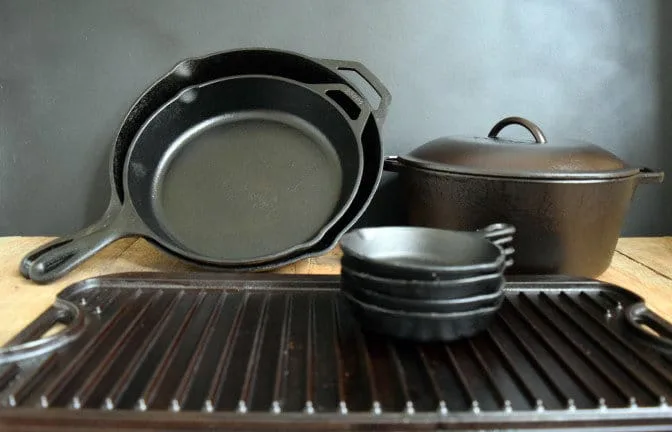
Long-term rust prevention. Store cast iron in a dry place. Never leave it soaking in water. After each use, wash with mild soap, dry thoroughly, and rub a thin film of oil into the surface before putting it away.
In humid climates, store the pan in a cloth bag or wrap it in paper towels to absorb moisture from the air.
Frequently Asked Questions
How long can I soak cast iron in vinegar?
No longer than one hour total. The acetic acid in vinegar dissolves rust, but it also attacks the bare iron over time. Extended soaking creates a rough, etched surface.
If one hour does not remove the rust, switch to electrolysis or oxalic acid.
What is flash rust and how do I stop it?
Flash rust is a thin orange film that forms on bare iron within seconds of rinsing. It happens when moisture and oxygen hit the unprotected metal. To stop it, dry the pan immediately with a towel and put it in a warm oven.
Then apply oil right away.
Can I use sandpaper or a power tool to remove rust?
Yes, but proceed with caution. Sandpaper or an angle grinder with a wire wheel removes rust fast. It also removes the original surface texture and any markings stamped into the pan.
Use power tools only on heavily pitted pans where the surface is already damaged.
Is it safe to cook in a rusty cast iron pan?
Small amounts of surface rust are not toxic. But they will make your food taste metallic and leave brown flecks in your dish. Heavy rust with pitting can harbor bacteria.
Always remove rust fully before cooking again.
How many layers of seasoning do I need after rust removal?
Three thin layers is the standard starting point. That is enough to cover the bare iron and create a functional non-stick surface. The seasoning will strengthen over time with regular cooking.

Similar Posts