The Easiest Way to Clean a Rusty Dutch Oven
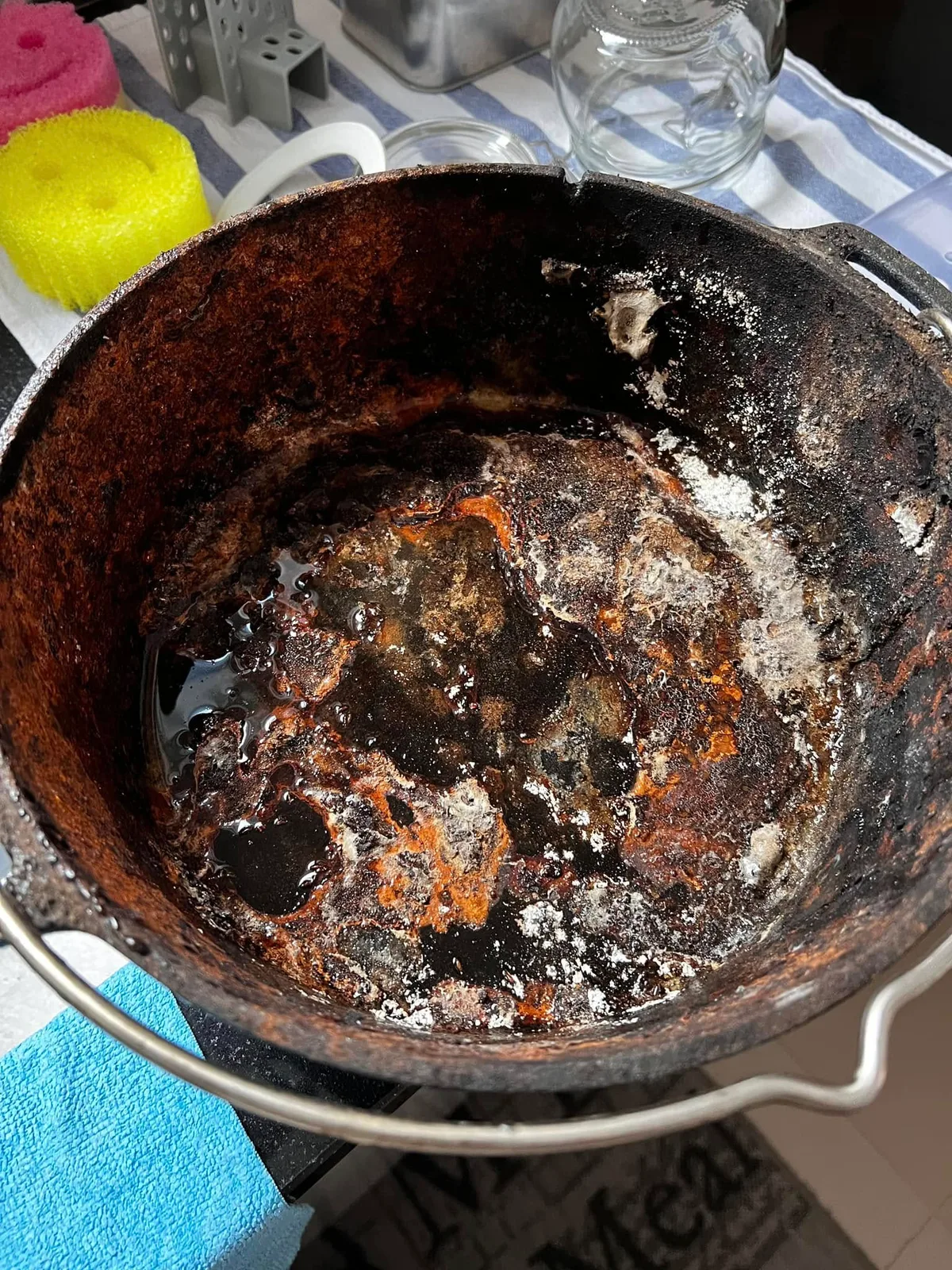
Let's be real. Finding rust on your dutch oven is the kind of kitchen setback that makes you wonder if you've ruined a beloved piece of cookware. The good news is that, in most cases, you haven't.
Knowing how to clean rusty dutch oven spots properly can save your pot and your budget, whether it's a modern enameled model or a vintage bare cast iron gem.
The first thing to understand is that rust itself is just oxidized iron. It's not the end of the world, but how you remove it matters. Manufacturer specifications from cast iron brands like Lodge indicate that a plain white vinegar and water solution is a safe rust remover for bare iron, provided you keep the soak under 60 minutes.
As of 2026, this remains the standard first step in any cast iron restoration.
Image source: Bing (Web (fair-use with source credit))
Quick Answer: Bare Iron vs. Enameled — The First Decision That Changes Everything
To clean a rusty dutch oven, start by checking the coating. For bare cast iron, soak in a 50/50 water and vinegar mix for up to 60 minutes. Scrub with fine steel wool, dry, and re-season.
For enameled cast iron, use Bar Keepers Friend. Never soak enamel in vinegar.
Is It Actually Rust? How to Tell What You're Dealing With
Before you attack the spot with anything harsh, look at it carefully. Rust and burnt food look similar but need completely different treatments. Rust is a reddish-brown powder that rubs off onto your fingers or a paper towel.
Carbon buildup is black, sticky, and often greasy. It feels smooth but flakes when scraped.
Here's a quick visual guide.
| Look / Touch | Rust | Carbon Buildup | | Color | Reddish-brown, orange | Black, dark brown | | Texture | Powdery, dry | Sticky, glossy | | Paper towel test | Leaves rusty residue | Leaves greasy mark | | Smell | Metallic | Burnt food | | Location | Bare iron surfaces, rims | Cooking surface, sides |
If you see orange powder, it's rust. If the surface is black and hard, that's seasoning or carbon, which is a separate problem. Lodge's official care guide confirms that rust forms when iron is exposed to water and oxygen.
That's why the problem often appears after you leave a pot wet overnight or store it in a damp cabinet.
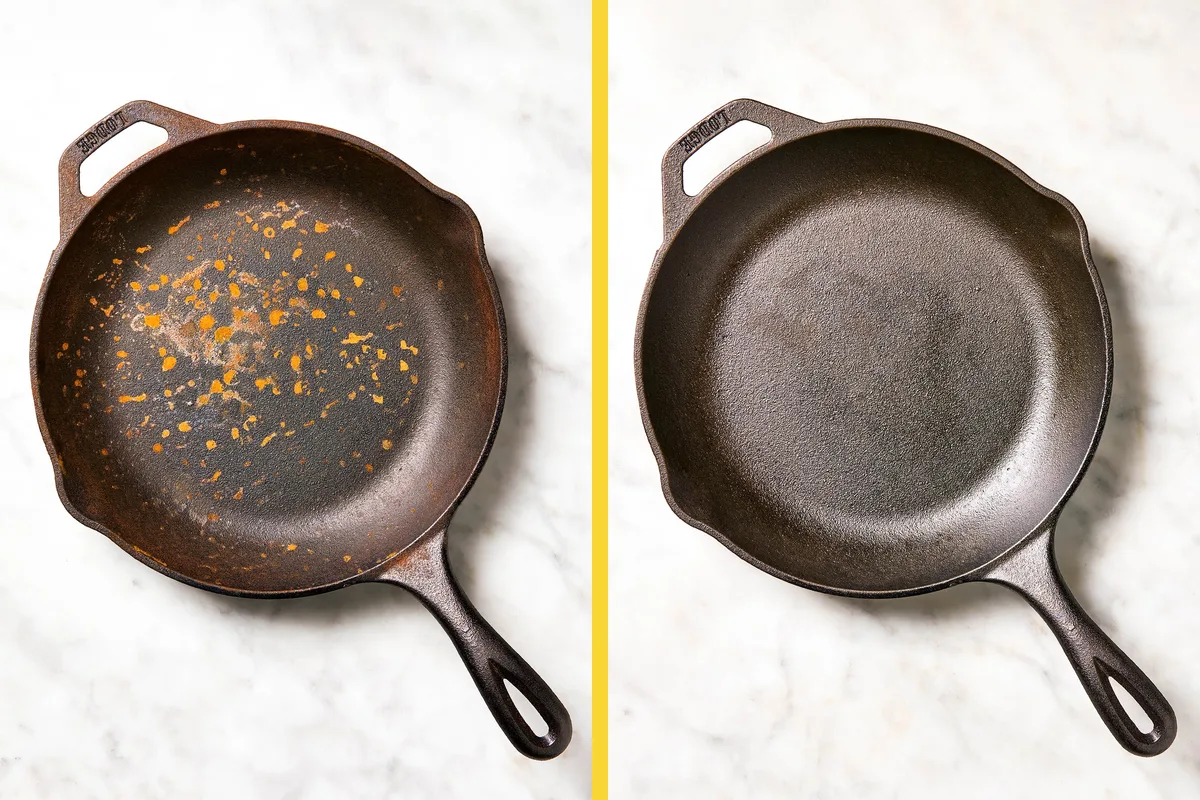
Image source: Bing (Web (fair-use with source credit))
Another clue is where it appears. Rust on the outside or rim of an enameled dutch oven means the enamel has worn thin. Rust inside a bare cast iron piece means moisture sat on the surface for too long.
If you own an enameled dutch oven, check the interior for chips or cracks. Rust that comes from under the enamel is a bigger issue. Once the enamel ruptures, the iron underneath starts to oxidize.
That rust can bleed into your food. In that case, cleaning the surface won't help. You need to think about replacing the pot.
If you found an old pot at a thrift store, do a quick lead test before cooking in it. Many vintage pieces were used for melting lead or as decorative items. Test kits cost about $10 and are worth the peace of mind.
The Decision Tree: Which Cleaning Method Belongs to Your Situation
Here's where the path splits. Your decision depends on two things: the type of coating and the depth of the rust. Ask yourself these questions.
Question 1: Is it bare cast iron or enameled?
- Bare iron shows gray, black, or dark metal during wear.
- Enameled surfaces are glossy, usually colored, or white inside.
Question 2: How deep is the rust?
- Light: surface discoloration, no texture.
- Moderate: visible rust bumps, pitting.
- Heavy: flakes, deep pits, or rust through.
Use this chart to pick your route.
| Condition | Method | Tools | | Light rust on bare iron | Vinegar soak (30 min) | Fine steel wool, white vinegar, water | | Moderate rust on bare iron | Vinegar soak (60 min) + scrub | Chainmail scrubber, baking soda paste | | Heavy rust on bare iron | Electrolysis or oven cleaner | Battery charger, washing soda, or oven cleaner | | Rust on enameled rim | Bar Keepers Friend paste | Soft scrub brush, non-abrasive sponge | | Rust on enameled interior | None, replace | N/A |
Image source: Bing (Web (fair-use with source credit))
Here's the if/then logic.
If you have bare iron and light rust: Mix equal parts white vinegar and water. Submerge the pot or affected area. Soak for 30 minutes, then scrub gently with fine steel wool.
The rust should lift off.
If you have bare iron and moderate rust: Extend the vinegar soak to 60 minutes. Scrub with a chainmail scrubber or a coarser steel wool grade. If rust remains, make a baking soda paste (3 parts baking soda to 1 part water) and scrub in circular motions.
If you have bare iron and heavy rust: Skip the vinegar for the worst cases. Use the oven cleaner method or full electrolysis. Both methods remove rust and old seasoning.
They take longer but work deeper. For vintage cast iron, consider electrolysis because it's gentler on the metal.
If you have an enameled dutch oven with rust on the rim: Do not use vinegar. Vinegar can eat the enamel. Instead, make a paste of Bar Keepers Friend and water.
Apply it with a soft cloth, rub gently, and rinse. This works for the small rust spots that appear where the rim meets the lid.
If you have an enameled dutch oven with rust inside: This is the kill condition. Rust inside the cooking surface means the enamel is damaged. Cleaning won't fix it.
Replacing the pot is the only safe option.
Step-by-Step: Your Method From Start to Finish
Once you've picked your method, follow this sequence. These steps cover the most common scenario: bare cast iron with light to moderate rust. We'll also cover enameled rims at the end.
Tools and Materials
| Item | Why you need it | | White distilled vinegar | Dissolves rust on bare iron | | Water | Dilutes vinegar and rinses | | Fine steel wool (#0000) | Scrubs away loosened rust | | Chainmail scrubber | Handles moderate rust | | Baking soda | Neutralizes acid and scrubs | | Dish soap | Cleans grease and residue | | Paper towels | Dries and checks for rust | | Vegetable oil or Flaxseed oil | Re-seasons the iron |
Step 1: Prep the surface
Wash the dutch oven with warm water and dish soap. This removes dirt and grease that block the acid. Dry it completely.
Step 2: Mix and soak
Mix equal parts white vinegar and water. For a 5-quart dutch oven, you'll need about 2 gallons of liquid. Submerge the rusted part.
For whole-pot rust, fill the pot or place it in a plastic container.
Step 3: Time the soak
Set a timer. Light rust takes 30 minutes. Moderate rust takes up to 60 minutes.
Check every 15 minutes. The vinegar will fizz as it reacts with rust. That's expected.
Step 4: Scrub the rust away
Remove the pot from the vinegar. Use fine steel wool to rub the surface in circles. The rust will come off as a brown paste.
Rinse the pot and check for spots. If a spot stays, repeat the soak for another 15 minutes.
Step 5: Neutralize and dry
Rinse the pot with water. Rub a thin layer of baking soda over the whole surface. This stops the acid from acting.
Rinse again. Dry with a towel, then place the pot in a 200°F oven for 10 minutes. This evaporates all leftover moisture.
Step 6: Season immediately
Your bare iron is now shiny and flammable. That's a good sign. Rub a thin layer of oil over the whole pot.
Use a paper towel to wipe off as much oil as possible. The pot should look dry, not greasy. Place it upside down in a 425°F oven with a baking sheet on the rack below.
Bake for one hour, then let it cool. Repeat three to five times for a durable layer.
For enameled rims:
Make a paste of Bar Keepers Friend and water. Apply with a soft cloth and rub gently for 2 minutes. Rinse well and dry.
Reapply if needed. Do not use steel wool.
Mistakes That Wreck Your Dutch Oven (And How to Avoid Them)
Even with the right method, a few simple errors can undo your work. Here are the mistakes we see most often.
Soaking too long in vinegar
Vinegar dissolves rust, but it also eats raw iron. A soak that runs over 60 minutes can leave pits in your pot. Set a timer and check every 15 minutes.
If rust is stubborn, use a paste instead of soaking longer.
Using vinegar on enameled surfaces
Enameled cast iron has a glass-like coating. Vinegar can erode that coating, leaving you with a rough finish and more rust. Never use vinegar on enamel.
Stick with Bar Keepers Friend.
Scrubbing enamel with steel wool
Steel wool scratches enamel. Those scratches become places for food to stick and rust to form. Use a soft sponge or brush on enameled surfaces only.
Skipping the drying step
Cast iron rusts in the presence of water. That's chemistry. After you rinse your pot, dry it thoroughly with a towel, then place it in a warm oven for 10 minutes.
That extra step prevents flash rust.
Seasoning over rust
If you skip a rust spot and season over it, the rust will bleed through the oil and keep spreading. The seasoning won't stick. Always remove all rust before you add oil.
Using oven cleaner on enameled surfaces
Oven cleaner strips seasoning from bare iron, but it's a harsh chemical that can damage enamel. Check the bottle and the surface before you pour anything.
Ignoring chips in enamel
A chipped enamel interior is not a cosmetic issue. That chip can expose raw iron, which rusts and can leach into acidic food. It's no longer safe to cook in.
Replace the pot.
Skipping a lead test on vintage pieces
Old cast iron can contain lead from previous uses, especially if the pot was used for melting lead or as a decorative piece. A simple swab test catches this. It costs $10 and takes 5 minutes.
It's non-negotiable if you plan to cook.

Similar Posts