How to Clean Stubborn Rust Off a Cast Iron Ridged Grill Pan

That rusted cast iron grill pan in the back of your cabinet isn't dead. If you've been searching for how to clean rusted cast iron grill pan, the fix is simpler than you think. You don't need to replace it, and you don't need expensive chemical strippers.
A few pantry staples and some patience will do the job.
The standard restoration route starts with a 1:1 white vinegar and water soak, but that soak tops out at 60 minutes before it starts etching the metal. So the real skill isn't scrubbing. It's knowing which method your pan's rust level needs.
Here's how to decide.
Image source: Bing (Web (fair-use with source credit))
Quick Answer
To clean a rusted cast iron grill pan, scrub rust with salt and oil. For heavier rust, soak it in equal parts white vinegar and water. Keep the soak between 30 and 60 minutes.
Rinse, dry fully, then oil and heat it. That rebuilds the seasoning.
First, Check What You're Dealing With: Bare vs. Enameled
The single biggest mistake in cast iron restoration is treating every pan the same. Bare cast iron can handle steel wool and vinegar soaks. Enameled cast iron cannot.
If you scrub a coated pan with steel wool or soak it in acid, you'll chip or dull the enamel. That damage isn't repairable.
| Bare Cast Iron | Enameled Cast Iron | |
|---|---|---|
| Surface feel | Rough, matte, porous | Smooth, glossy, glass-like |
| Color | Dark gray or black on all sides | Colored coating on the outside, often cream inside |
| Rust handling | Can be scrubbed and re-seasoned | Only surface rust stains, no re-seasoning needed |
| Safe cleaners | Steel wool, chainmail, coarse salt | Soft sponge, baking soda paste, gentle cleanser |
In our research, most failed restorations happen when people treat an enameled pan like bare iron. So check the pan closely. Bare iron looks like unfinished metal.
Enamel looks like thick paint or glass. If you see a smooth, shiny coating, stop and use the enamel-safe method later in this article.
Manufacturer care guides follow the same logic. Most bare cast iron pans need scrubbing and re-oiling. Enameled pans just need gentle stain removal.
Get this distinction right before you do anything else.
How to Clean All Three Rust Types, Step by Step
Rust exists on a spectrum, and your cleaning path depends on where your pan falls. Look at the cooking surface under a bright light. Light rust looks like orange specks or streaks with seasoning still visible around them.
Moderate rust covers larger patches, and the seasoning is flaking away. Heavy rust means the whole surface looks reddish-brown, bare metal is showing, and you might see pitting.
Image source: Bing (Web (fair-use with source credit))
Light Surface Rust
If the rust is just a few spots and the seasoning around it is intact, skip the vinegar. Make a paste from two tablespoons of coarse salt and a splash of neutral oil like canola or grapeseed. Rub it into the rust spots with a chainmail scrubber or a folded paper towel.
The salt grinds the rust away without eating the good seasoning.
Wipe the pan clean and rinse it with warm water. Dry it immediately, then apply a very thin coat of oil over the whole surface. Heat the pan on the stovetop until it just starts to smoke.
That seals the bare spots and you're done.
Moderate Rust
When rust covers big sections and chunks of seasoning are coming off, you need more pressure. Wash the pan with warm soapy water and fine steel wool, grade #0000, or a chainmail scrubber. Soap won't ruin bare cast iron.
It actually helps rinse away the rust dust and loose seasoning.
Rinse thoroughly and dry every part, especially the ribs. If you still see orange patches, move to the heavy rust soak below. If the metal looks clean and gray, skip the vinegar and go straight to re-seasoning.
Heavy Rust or Bare Metal
This branch needs the full restoration. Mix equal parts white vinegar and water in a plastic tub large enough to submerge the pan, or fill the pan itself if only the inside is rusty. Soak for 30 minutes, then check the progress.
If the rust is still hard, soak in 15-minute intervals, up to 60 minutes total. Do not leave it longer. Vinegar eats away the iron itself once the rust is gone.
Pull the pan out and scrub with medium steel wool, grade #00, or a chainmail scrubber. The rust should lift off like reddish-gray paste. Rinse well under warm running water.
Dry the pan with a towel, then place it on a warm stovetop burner for five minutes. The heat drives out moisture from the crevices.
Now work fast. Rub a light layer of oil over every surface before the pan can flash rust. You'll see new orange rust appear within seconds if you skip this step.
Once coated, move straight to re-seasoning.
For enameled pans, do not use vinegar or steel wool. Instead, make a paste of baking soda and water, rub it over the rust stain with a soft sponge, rinse, and dry. That removes surface marks without harming the coating.
Before You Start: What NOT to Use on Cast Iron
Half the battle is avoiding tools that create more damage. As of 2026, the most common cause of ruined cast iron is still well-meaning people using the wrong cleaner. Here's what to keep away from your pan.
| Don't Use This | Why It Hurts | Safer Alternative |
|---|---|---|
| Steel wool on enameled pans | Scratching the glass coating leads to chipping | Soft sponge and baking soda paste |
| Lye-based oven cleaner on enameled pans | Etches and dulls the finish | Gentle dish soap |
| Self-cleaning oven cycle | High heat can warp thin cast iron and melt handles | Regular oven seasoning at 450-500°F |
| Vinegar soak over 60 minutes | Acid starts eating the iron, not just the rust | Check every 15 minutes |
| Dishwasher | Hot water and detergent strip seasoning, then the pan flash rusts | Hand wash and dry immediately |
| Overnight water soak | Water works its way into the iron and causes deep rust | Quick rinse, towel dry, oven dry |
One old myth needs clearing up. Dish soap is fine. Modern dish soap doesn't contain lye, and it won't strip a properly seasoned pan.
It actually helps remove the oily residue that makes rust stick. Aggregate reviews from home cooks report that the pans which fail are usually the ones left soaking or run through the dishwasher.
And never pour cold water into a hot cast iron pan. The sudden temperature change can warp the metal. Let the pan cool on the stove, then wash it.
How to Re-Season a Grill Pan (The Right Way)
Once the rust is gone, seasoning is what keeps it from coming back. The grill pan's ribbed surface makes this trickier than a flat skillet because oil collects in the low spots between the ridges. Your goal is a very thin coat everywhere, not a layer of sticky oil in the valleys.
Most bare cast iron makers publish the same basic steps. Lodge Cast Iron is the largest manufacturer, and their official care guide calls for thin oil coats, high heat, and repeated baking. Here's the workflow that works.
Preheat your oven to 450-500°F, or 232-260°C. Put a sheet of aluminum foil on the lower rack to catch any drips. Choose an oil with a high smoke point.
Canola, grapeseed, vegetable shortening, and flaxseed all work. Avoid olive oil or butter.
If your pan has a removable handle, take it off before the oven. Then apply a thin layer of oil to the entire pan with a paper towel. Work it into the grooves with a small brush or an old toothbrush.
Now take a fresh paper towel and wipe the oil off like you made a mistake. The pan should look almost dry. That thin residue is all you need.
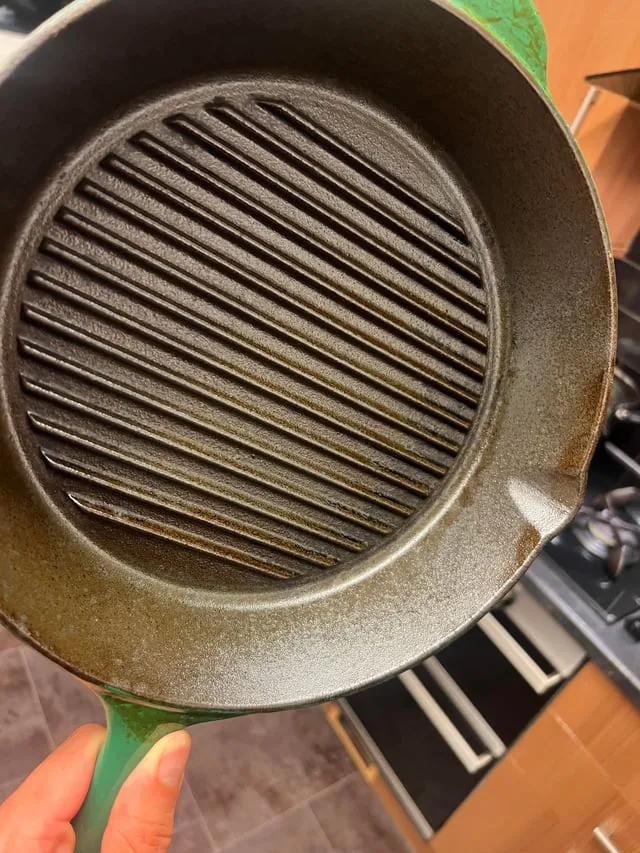
Image source: Bing (Web (fair-use with source credit))
Place the pan upside down on the middle oven rack. Baking it upside down lets excess oil drip off instead of pooling in the rib valleys. Bake for one hour, then turn off the oven and let the pan cool inside without opening the door.
That gradual cool-down helps the oil harden into a smooth, non-stick layer.
For a fully stripped pan, repeat this cycle three to five times. Light surface rust only needs one or two coats. You'll know the seasoning is building when the pan turns from gray-brown to deep black and gets a subtle shine.
Let the pan cool completely, then store it in a dry place. The rust cleanup is complete the moment that final coat cures.

Similar Posts