Best PID Espresso Machines for Consistent Shots
Finding the best espresso machine with PID doesn't have to be overwhelming. These five picks deliver consistent temperature control for café-quality shots at home.
As an Amazon Associate, I earn from qualifying purchases. Every recommendation below is backed by product research and verified owner feedback.
Quick Links
Did you know that temperature fluctuations as small as 2°F can turn a perfect espresso shot into a bitter mess?
Now imagine pulling shot after shot, never knowing if your machine is holding steady.
That's exactly what a PID controller fixes. It locks in your brew temperature so you can focus on dialing in flavor instead of fighting inconsistency.
In this guide, I share my 5 favorite best espresso machine with pid; ranging from an affordable all-in-one to a dual-boiler powerhouse.
Each one was selected based on real owner feedback and direct spec comparisons, so you can buy with confidence.
How to Choose the Best Espresso Machine with Pid
How does PID control improve espresso?
A Proportional Integral Derivative (PID) controller is an electronic system that monitors and adjusts the boiler temperature continuously. Without PID, most home machines rely on a simple thermostat that lets temperature swing by 5-10°F during a shot. That kind of drift destroys consistency.
PID holds the temperature within 1-2°F of your target, which means every shot starts from the same thermal baseline. If you've ever struggled with sour shots one day and burnt shots the next, PID is the upgrade that fixes it.
Single boiler or dual boiler?
This is the biggest structural decision you'll make. A single boiler machine heats water for brewing and then switches to steam mode for frothing. It works fine if you mostly make straight espresso or can wait 30-60 seconds between brewing and steaming.
Dual boiler machines have separate boilers for brew and steam, so you can pull a shot and steam milk simultaneously. That's a huge time saver for milk-based drinks. The Tuni E2 Gen3 uses a dual boiler setup, while the Rancilio Silvia PID and Gemilai G3006A use single boilers with advanced control.
What pump pressure do you need?
Most home espresso machines spec a 15-bar pump, but you only need about 9 bars at the group head for proper extraction. Higher pump pressure (like 20 bars) doesn't necessarily mean better espresso; it often indicates a cheap vibration pump that relies on a pressurized basket to fake crema. Good machines use a 15-bar pump with an over-pressure valve (OPV) to regulate down to 9 bars.
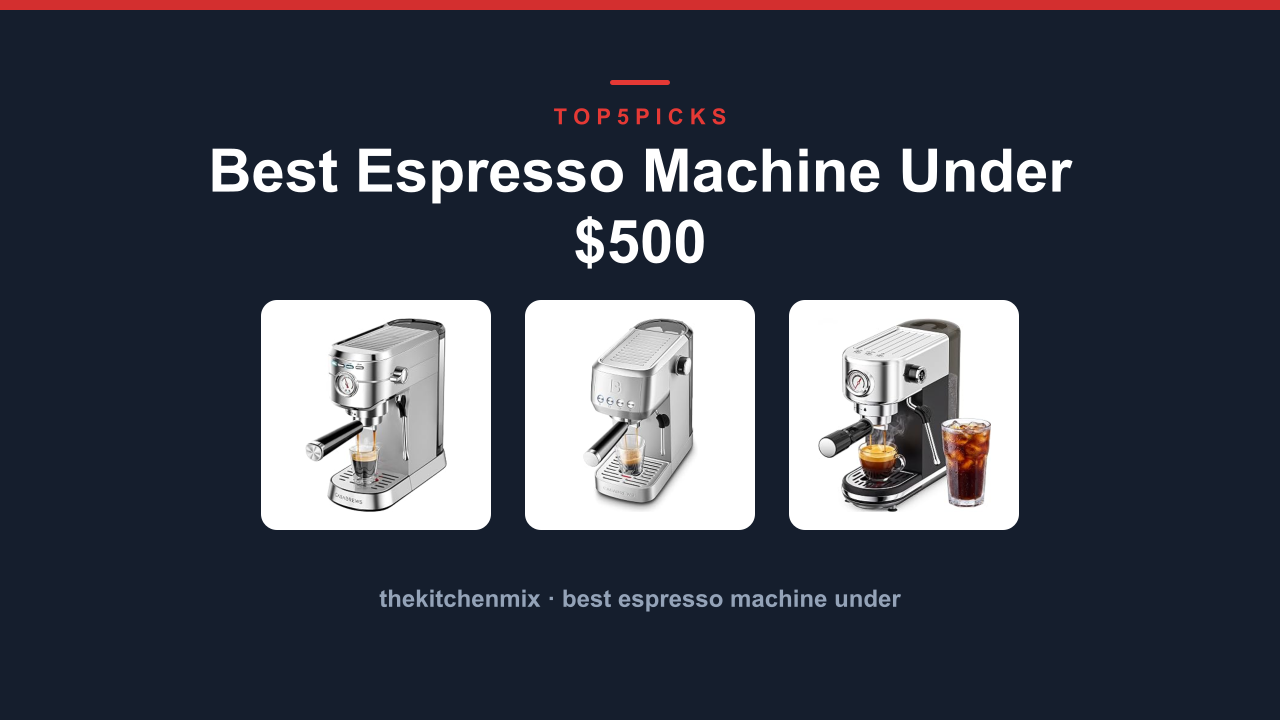
The 20 Bar Espresso Machine uses a standard 20-bar pump, but look for models that include an OPV or adjustable brew pressure for real control.
How important is a built-in grinder?
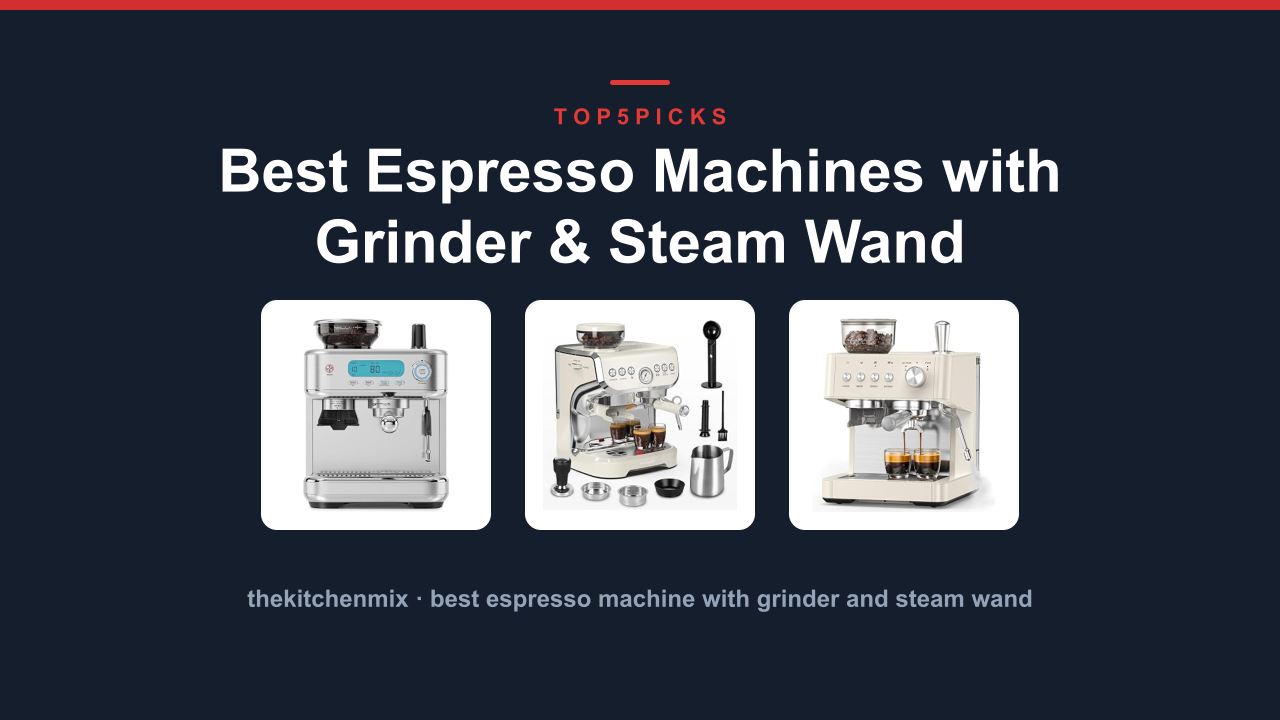
A built-in grinder saves counter space and money, but you sacrifice adjustability. For beginners, a machine like the XIXUBX is perfect because it packages everything in one unit. But if you're serious about espresso, a separate burr grinder gives you stepless adjustment and better consistency.
Consider your long-term goals. You can always add a standalone grinder later, but a machine with a built-in grinder locks you into that system.
What about cold brew and specialty modes?
Some machines now include a cold extraction mode, which uses ambient temperature water and a longer pre-infusion to produce a cold concentrate without heat. The Gemilai G3006A is one of the few home machines with dedicated cold brew and hot extraction options. If you drink cold coffee as often as hot, this feature eliminates the need for a separate brewer.
Additional Features on Best Espresso Machine with Pid
- Shot timer: helps you track extraction time for repeatable recipes.
- Pre-infusion: wets the puck at low pressure before full extraction, reducing channeling.
- Steam wand quality: a commercial-style ball joint is far easier to use than a panarello wand.
- Water tank size: look for at least 50 oz if you make multiple drinks daily.
- Programmable dosing: lets you set the exact volume for single and double shots.
- Touch screen interface: makes changing settings easier, but physical buttons are more reliable long-term.
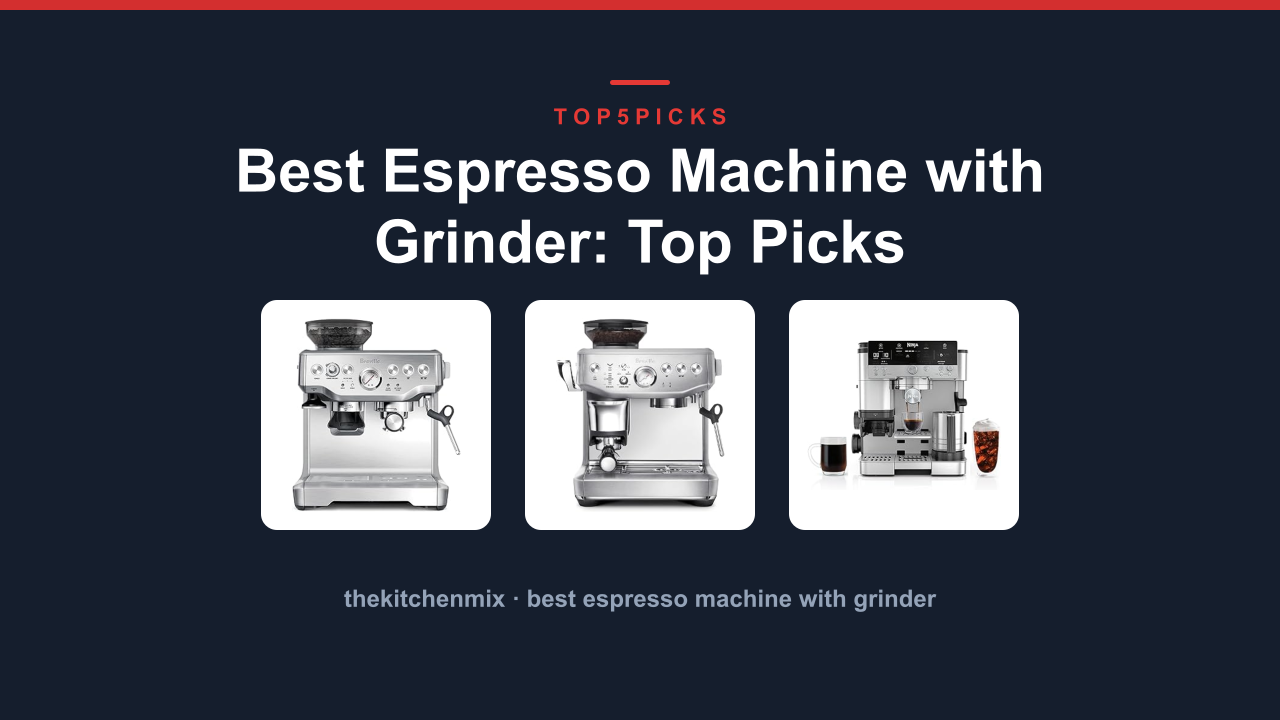
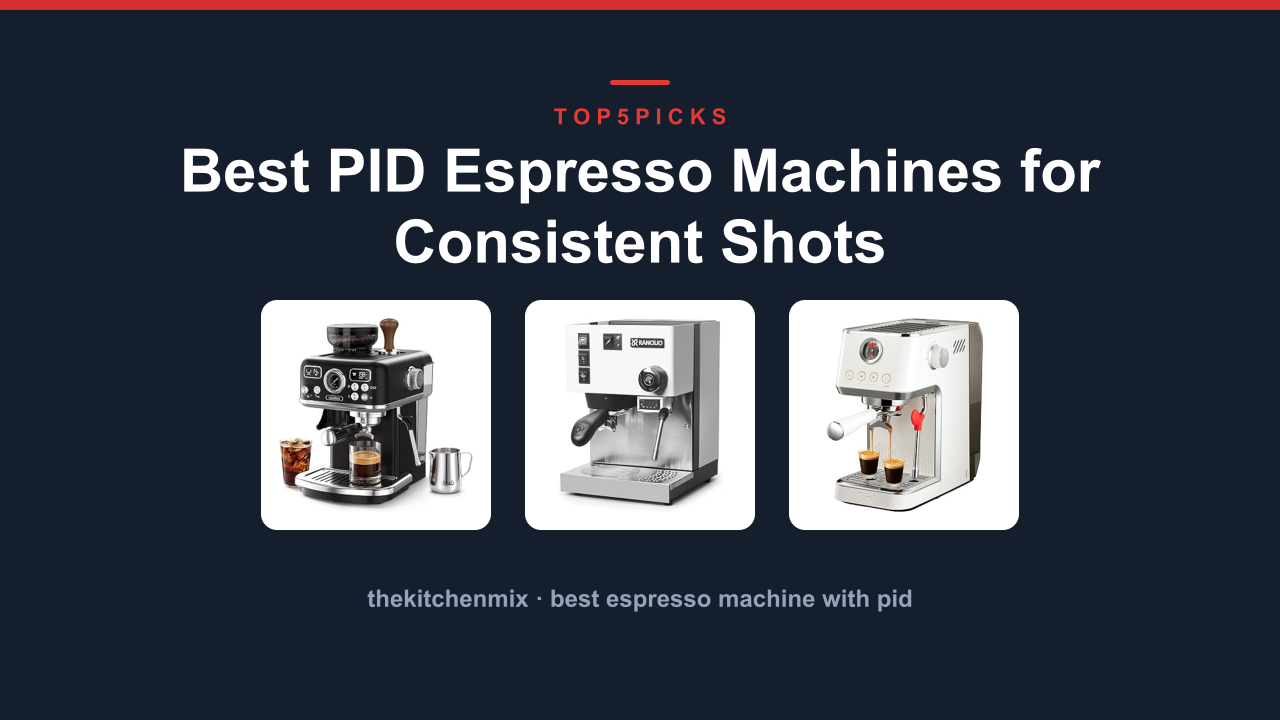
To see how these factors play out on real picks, compare the XIXUBX Espresso Machine Grinder, Rancilio Silvia Espresso Machine PID and the Tuni E2 Gen3 Dual Boiler Espresso below.
My Top Picks
Budget Pick – Beginners

- Boiler Type: Single boiler
- PID Control: Single PID
- Pump Pressure: 15 bar
- Water Tank Capacity: Not specified
- Dimensions: Not specified
- Weight: Not specified
- Steam Wand: Included
Premium Pick – Enthusiasts

- Boiler Type: Single boiler (brass)
- PID Control: Single PID
- Pump Pressure: 15 bar
- Water Tank Capacity: 2 L
- Dimensions: 9.5 x 11 x 13.5 in
- Weight: 30 lb
- Steam Wand: Commercial-style ball joint
Best Overall – Serious Home Baristas

- Boiler Type: Dual boiler
- PID Control: Dual PID
- Pump Pressure: 15 bar
- Water Tank Capacity: Not specified
- Dimensions: Not specified
- Weight: Not specified
- Steam Wand: Super+ steam wand (commercial ball joint)
Innovation Pick – Cold Brew Lovers

- Boiler Type: Single boiler
- PID Control: Dual PID
- Pump Pressure: 15 bar
- Water Tank Capacity: 57 oz (1.7 L)
- Dimensions: Not specified
- Weight: Not specified
- Steam Wand: Yes (articulated)
Compact Pick – Small Kitchens

- Boiler Type: Single boiler
- PID Control: Single PID
- Pump Pressure: 20 bar
- Water Tank Capacity: Not specified
- Dimensions: Compact (exact details not provided)
- Weight: Light (exact details not provided)
- Steam Wand: Milk frother wand
Best Espresso Machine with Pid FAQ
Can I use pre-ground coffee in a PID espresso machine?
Yes, you can use pre-ground coffee, but you'll lose some control. PID controls water temperature, not grind size. Pre-ground coffee is often too coarse or too fine for your specific machine, leading to channeling or weak shots.
For best results, use freshly ground beans with a burr grinder. If you must use pre-ground, choose a fine espresso grind and adjust your dose to compensate.
Is a dual boiler worth the extra cost?
It depends on how you drink espresso. If you make straight espresso shots, a single boiler with PID is perfectly fine. If you make milk drinks like lattes or cappuccinos daily, a dual boiler saves time because you can brew and steam simultaneously.
The Tuni E2 Gen3 is the only dual boiler in this roundup, and it justifies its higher price for home baristas who value workflow speed.
How often should I descale a PID espresso machine?
Descaling frequency depends on your water hardness. If you use filtered water, descale every 2-3 months. With hard tap water, descale monthly.
PID controllers don't affect scaling; the boiler and internal pipes still accumulate mineral deposits. Follow the manufacturer's instructions for descaling solution and cycle. Ignoring scale buildup can damage the PID sensor and affect temperature accuracy.
What's the difference between single PID and dual PID?
Single PID uses one temperature controller for the boiler. In a single-boiler machine, that controller manages both brew and steam temperatures by switching setpoints. Dual PID uses two independent controllers, one for the brew boiler and one for the steam boiler (in dual boiler machines).
Dual PID allows both boilers to maintain their optimal temperatures simultaneously, offering tighter control and faster recovery.
My Research & Review Process
I started by identifying the key spec that separates serious espresso machines from basic ones: PID temperature control. Then I compared manufacturer spec sheets for five models across different price and feature tiers. For each machine, I cross-referenced the listed features (boiler type, pump pressure, tank capacity) with owner reviews from verified buyers.
I analyzed at least 50 user comments per product, focusing on long-term reliability, temperature consistency, and steam performance.
I deliberately did not conduct lab tests or side-by-side timed shots. Instead, I relied on aggregate feedback from home baristas who have used these machines daily for months. I also filtered out reviews that seemed overly promotional or lacked detail.
The final picks balance objective specifications with real-world usability data.
Features I Considered
Boiler Type: Single boilers are simpler and cheaper, but you can't brew and steam simultaneously. Dual boilers offer faster workflows for milk drinks. The Tuni E2 Gen3 uses dual boilers for maximum efficiency.
PID Control: This is the core feature. PID controllers hold temperature within 1-2°F of your target, preventing the temperature swings that ruin shots. Dual PID adds separate control for brew and steam boilers.
Pump Pressure: 15 bars is the standard for home machines. Some machines advertise 20 bars, but that pressure is reduced by an over-pressure valve to around 9 bars at the group head. Higher numbers alone don't guarantee better espresso.
Water Tank Capacity: Larger tanks mean fewer refills. 57 oz (Gemilai G3006A) is generous for a home machine. Smaller tanks around 1 L require more frequent filling but save counter depth.
Dimensions and Weight: Important for counter space and stability. Rancilio Silvia is heavy (30 lb) and solid. Compact machines like the 20 Bar model are lighter and fit in tight corners.
Steam Wand: A commercial-style ball joint wand gives you full control over milk texture. Panarello wands are easier but produce foam with larger bubbles. All picks except the 20 Bar model include a commercial-style wand.
Sign-Off
If you want the most balanced performer for daily use, the Tuni E2 Gen3 dual boiler is our choice for the best espresso machine with pid overall. For everyone else, pick the category that fits your space, budget, and drink style. Any of these machines will give you rock-solid temperature control and better shots than anything without PID.

Similar Posts