5 Step-by-Step Rules for De-Rusting Any Cast Iron Item at Home
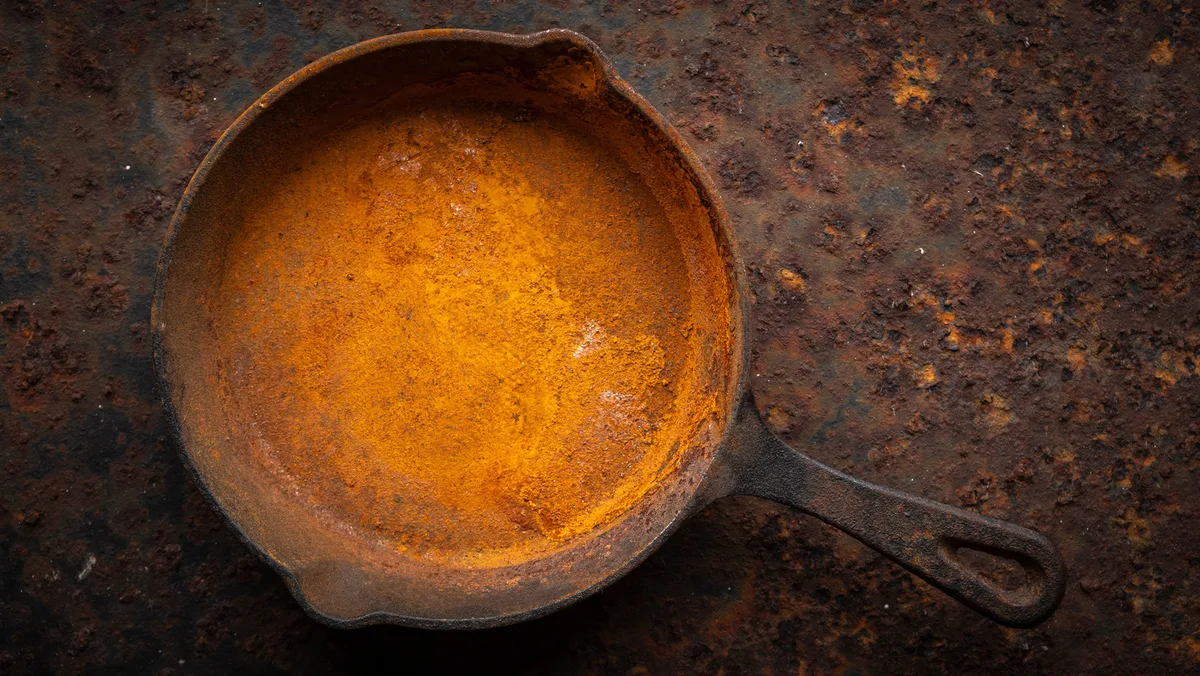
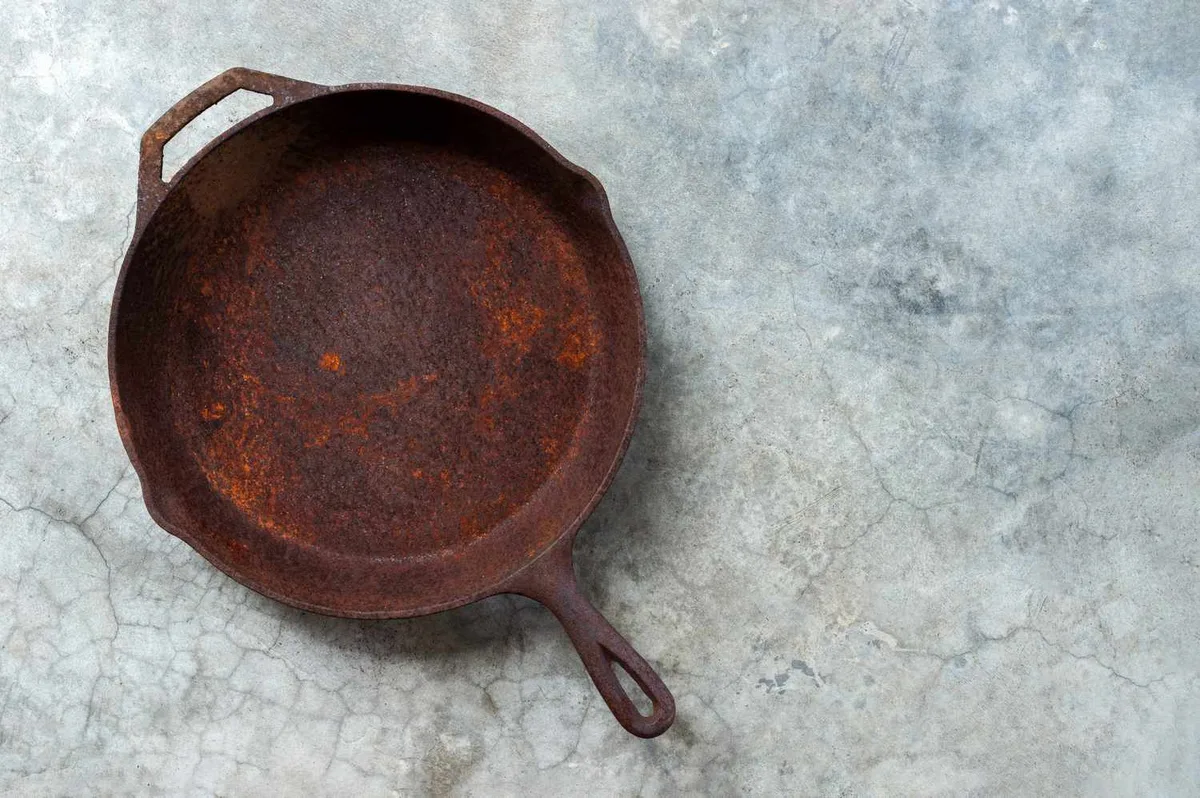
Cast iron pans rust. It happens to almost every owner at some point, and it's not a death sentence for your favorite skillet. Knowing how to remove rust from a cast iron pan is a basic kitchen skill that can rescue cookware you'd otherwise throw away.
Manufacturer care guides and vintage cast iron collectors agree on the core sequence: assess the rust level, strip it off, neutralize the surface, and rebuild the seasoning. As of 2026, a 1:1 white vinegar and water soak is still the cheapest, most reliable way to dissolve rust without damaging the iron underneath. The right method depends entirely on how deep the rust has bitten, so let's start there.
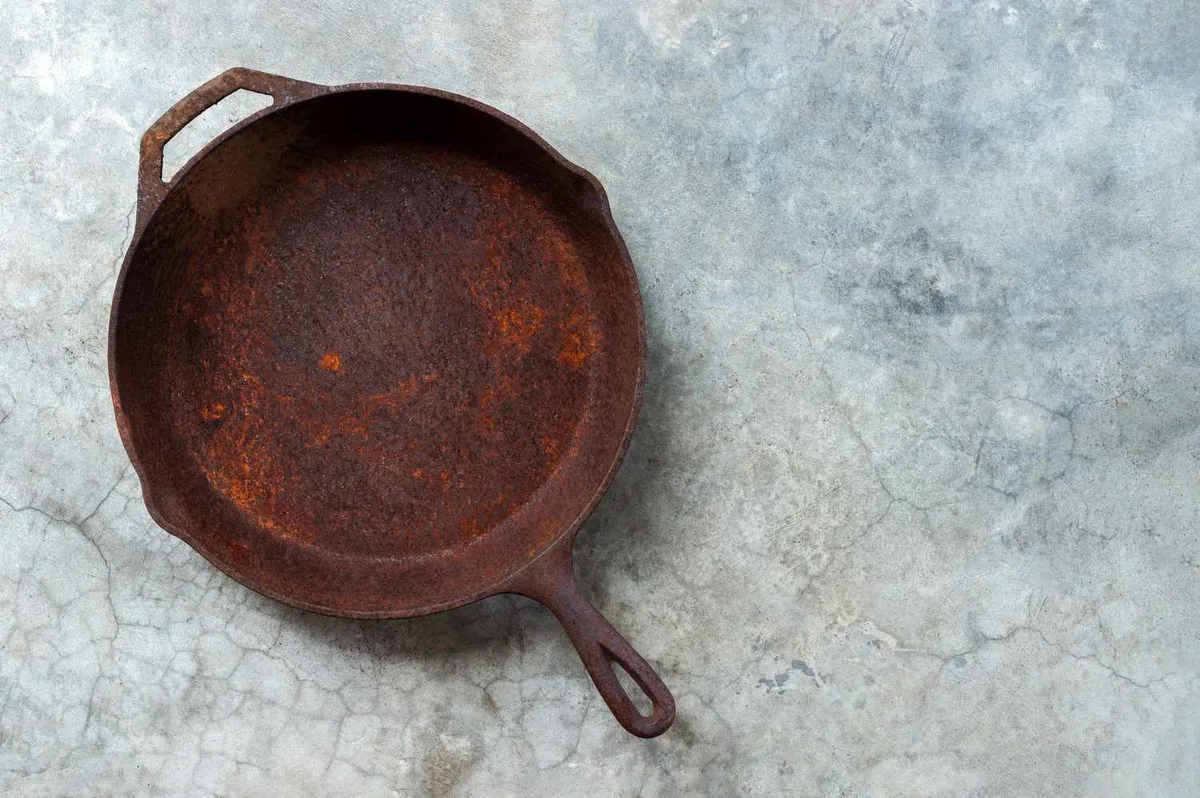
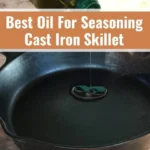
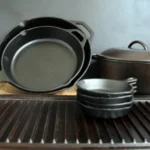
Image source: Bing (Web (fair-use with source credit))
Quick Answer
Remove rust from a cast iron skillet by scrubbing loose flakes first. Soak it in a 1:1 vinegar and water mix for 30 minutes. Rinse, dry thoroughly, and coat with thin oil.
For light rust, use salt and a potato instead.
What Kind of Rust Are You Dealing With?
The first move is diagnosis. Not all rust behaves the same, and the wrong treatment can damage your pan.
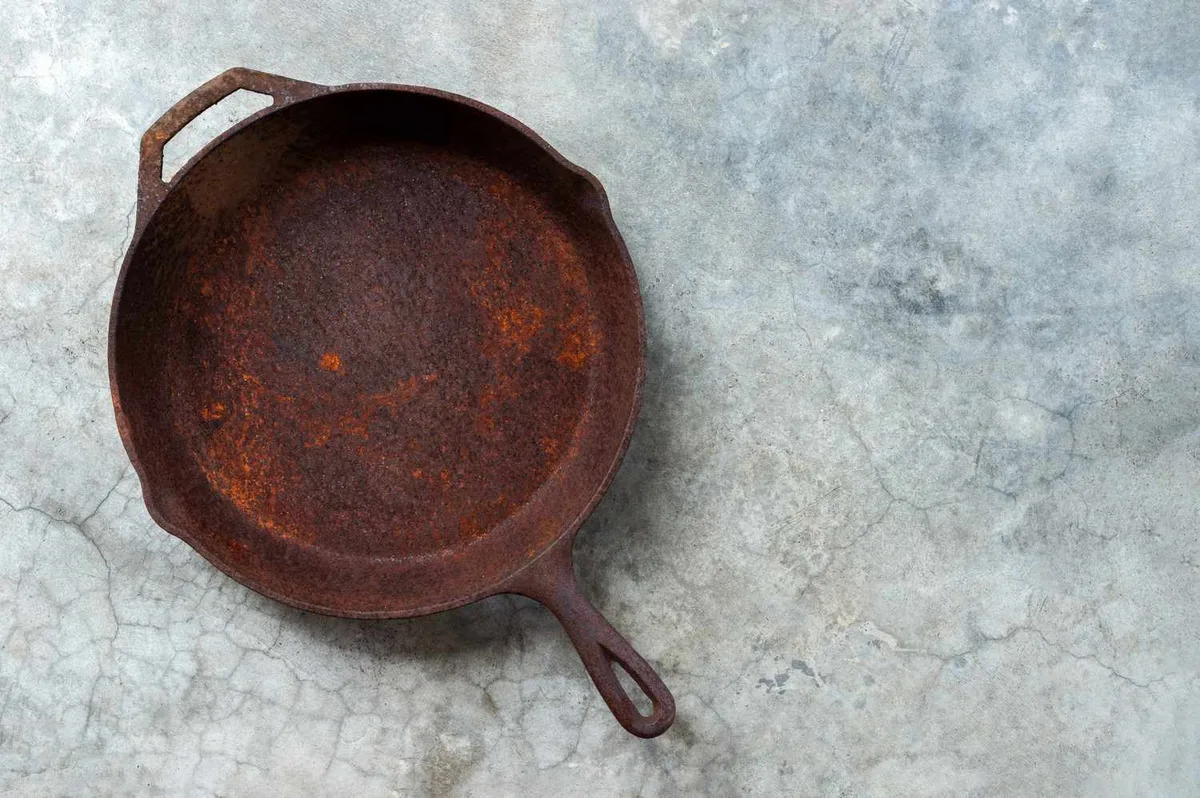
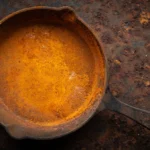
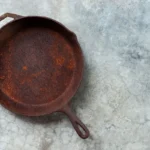
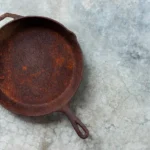
Light surface rust shows up as orange dust or tiny specks. It wipes off with a dry paper towel and doesn't feel rough. If you see this, skip the harsh chemicals and use the quick fix.
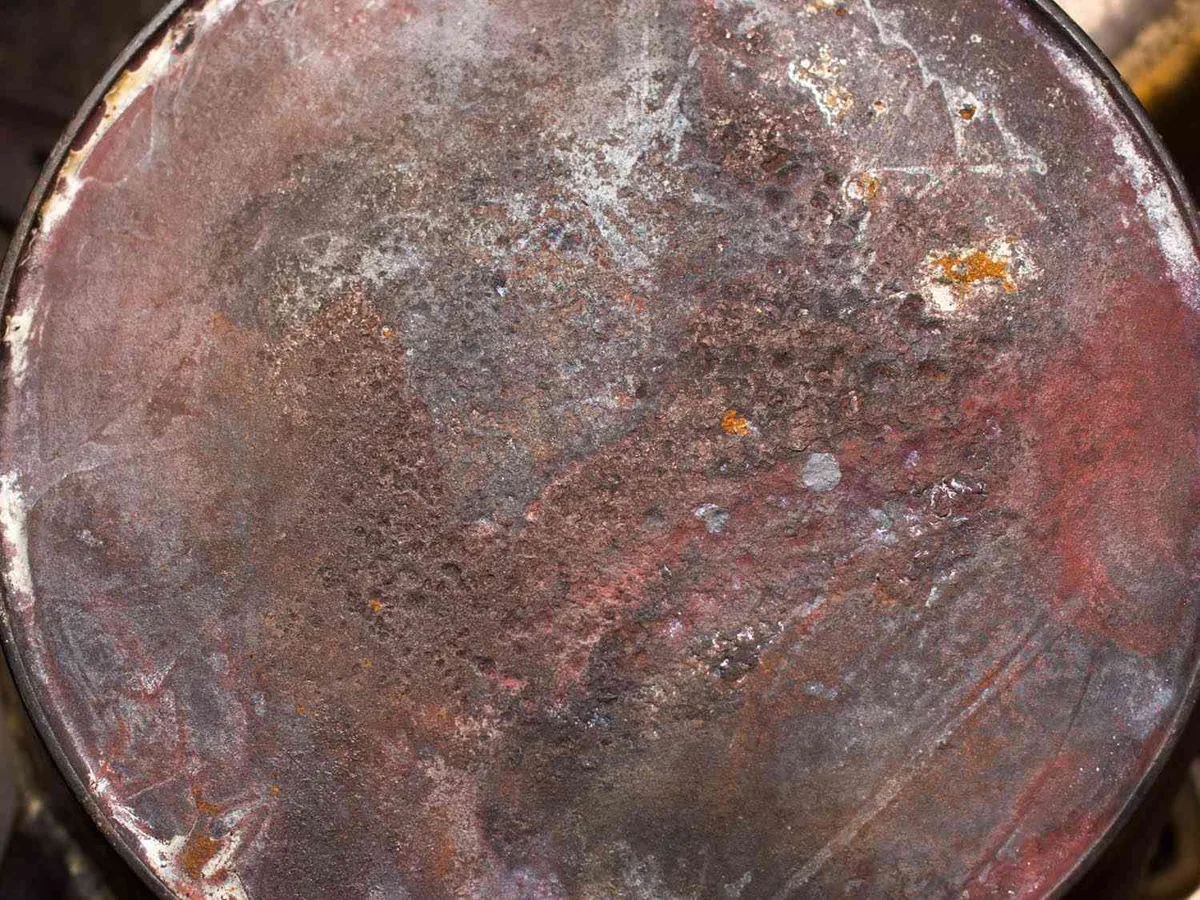
Moderate rust feels gritty and leaves reddish-brown powder on your fingers. The seasoning has failed, but the iron underneath is solid. A vinegar soak usually solves this.
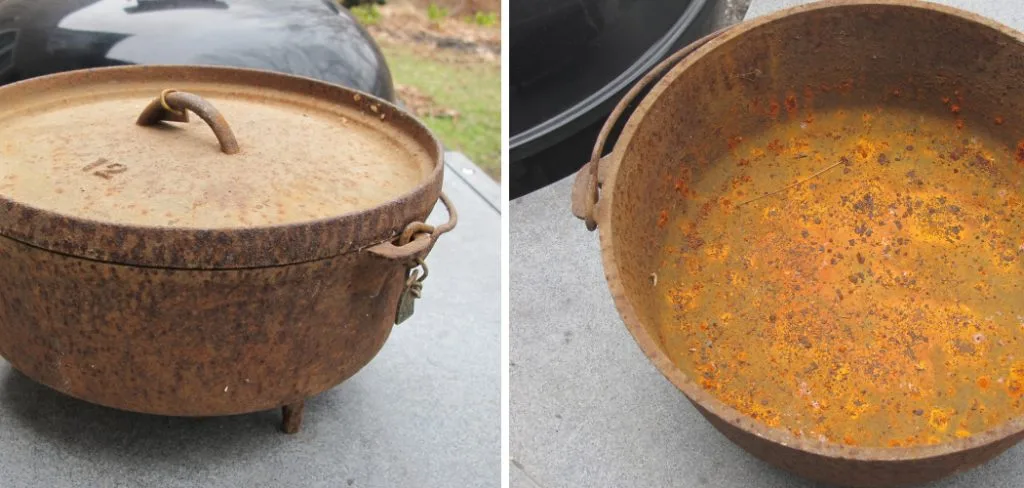
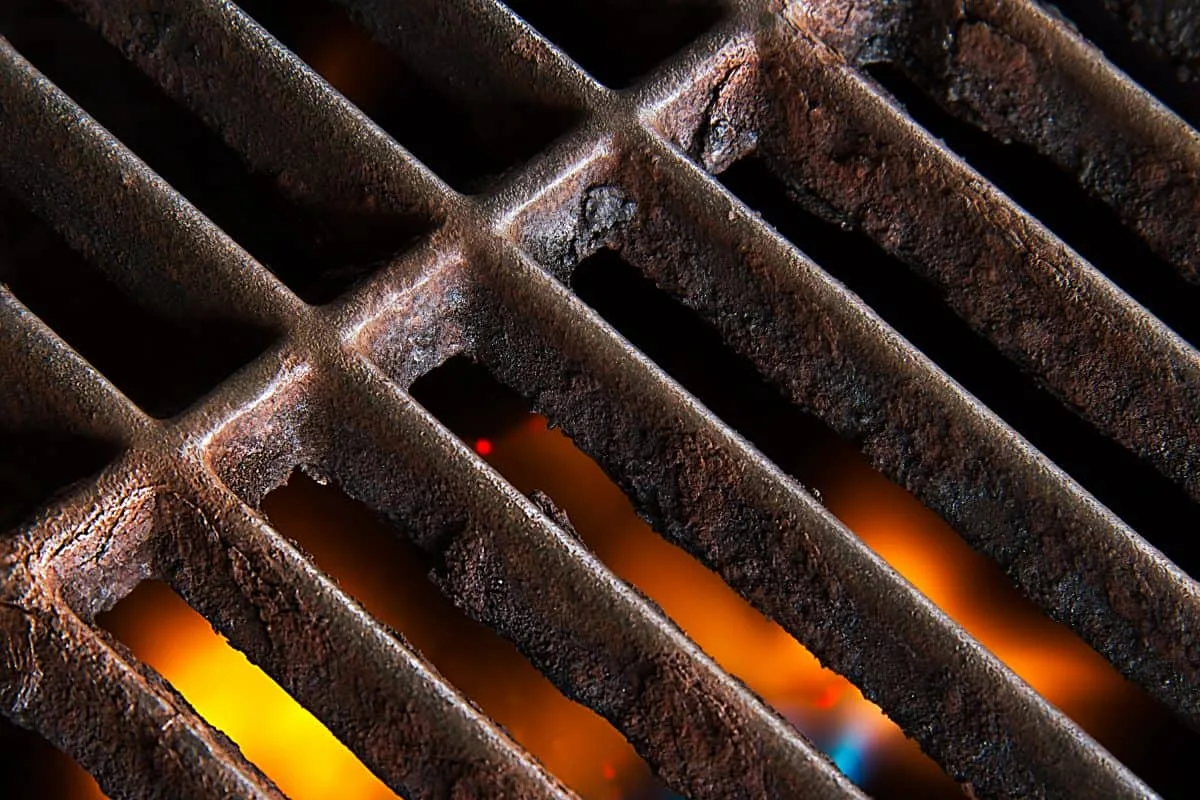
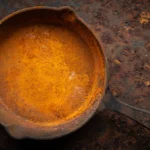
Heavy rust means flaking patches, deep color, and sometimes visible pitting. This pan needs a full strip and reseason from scratch.
Old seasoning can fool you. It looks like dark crusty spots. Wash the pan with warm soapy water first.
Real rust stays behind, while old seasoning washes away.
| Rust severity | What you see | What to do |
|---|---|---|
| Light | Orange dust, smooth surface | Salt and potato method |
| Moderate | Rough, red-brown powder | Vinegar soak, 30 minutes max |
| Heavy | Flaking, pitted, grey metal | Full strip and reseason |
Use this table as your roadmap. If you're still unsure, rub the surface with a white paper towel. Orange residue means rust.
Brown residue is usually old carbon.
Vintage cast iron collectors check for pitting before anything else. Light pitting is cosmetic. Deep pitting means the iron has lost mass.
That affects how the pan heats and cooks. If the pan is deeply pitted, focus on seasoning it well and avoid aggressive scrubbing in the future.
One quick test for rust vs. carbon: dip a cotton swab in vinegar and rub the spot. Rust will dissolve into a reddish mark. Carbon won't react.
Quick Fix: Removing Light Surface Rust (Without Stripping Seasoning)
Image source: Web (Bing) / completecookware.com (Web image (fair-use with source credit))
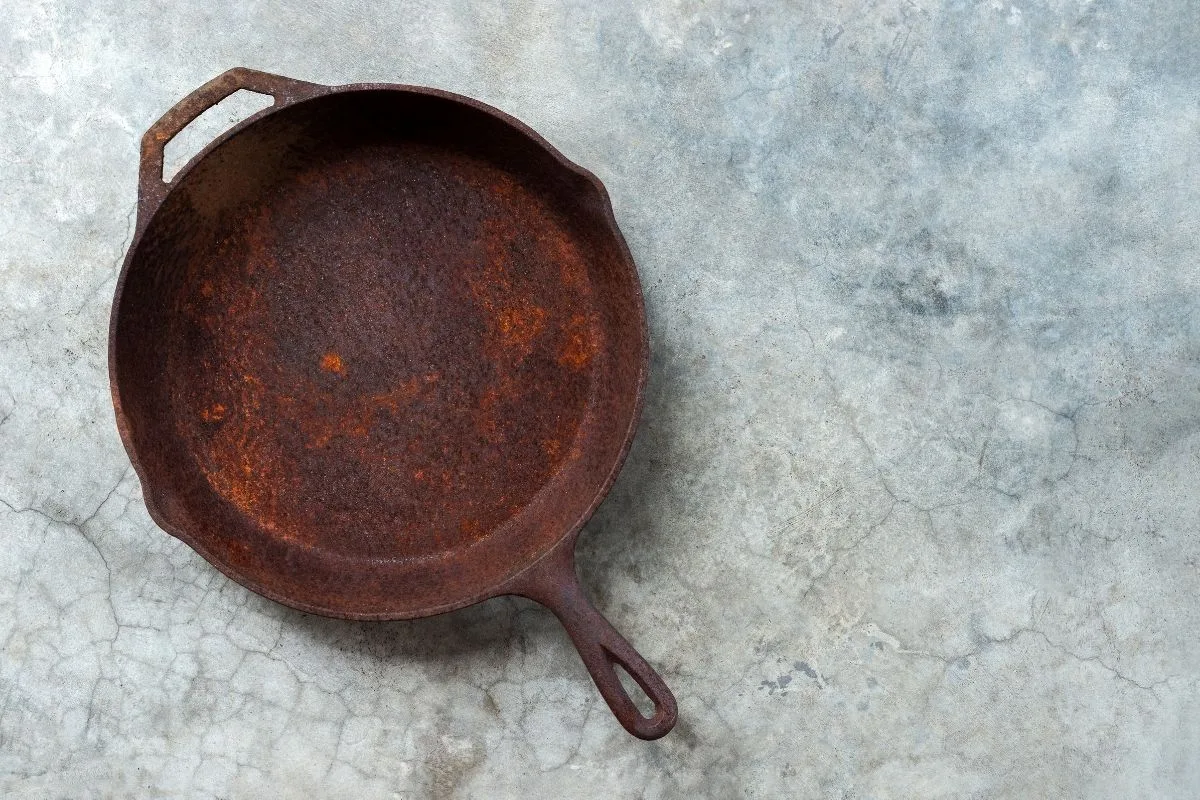
If you catch rust early, you don't need acid or heavy scrubbing. Two kitchen-based methods lift the rust off without ruining the seasoning underneath. Both take less than ten minutes.
The Potato + Salt Trick
Cut a raw potato in half and cover the cut side with coarse salt. Scrub the rusted spots in small circles, applying moderate pressure. The potato releases moisture that pulls rust from the surface, while the salt provides gentle abrasion.
Rinse the pan well and dry it over low heat.
This trick is perfect for faint spots or light dust. It won't fix a heavily rusted pan, but it won't strip your seasoning either.
The Baking Soda Paste Method
Mix three parts baking soda with one part water into a thick paste. Spread it over the rusty areas and let it sit for ten minutes. Scrub with a stiff brush or fine steel wool.
Baking soda is a mild alkaline abrasive, which makes it surprisingly effective at lifting rust.
After either method, wash the pan with warm soapy water. Dry it completely. Rub a few drops of oil onto the surface and heat the pan until the oil just starts to smoke.
This seals the iron and prevents flash rust from forming.
Dealing with Moderate to Heavy Rust
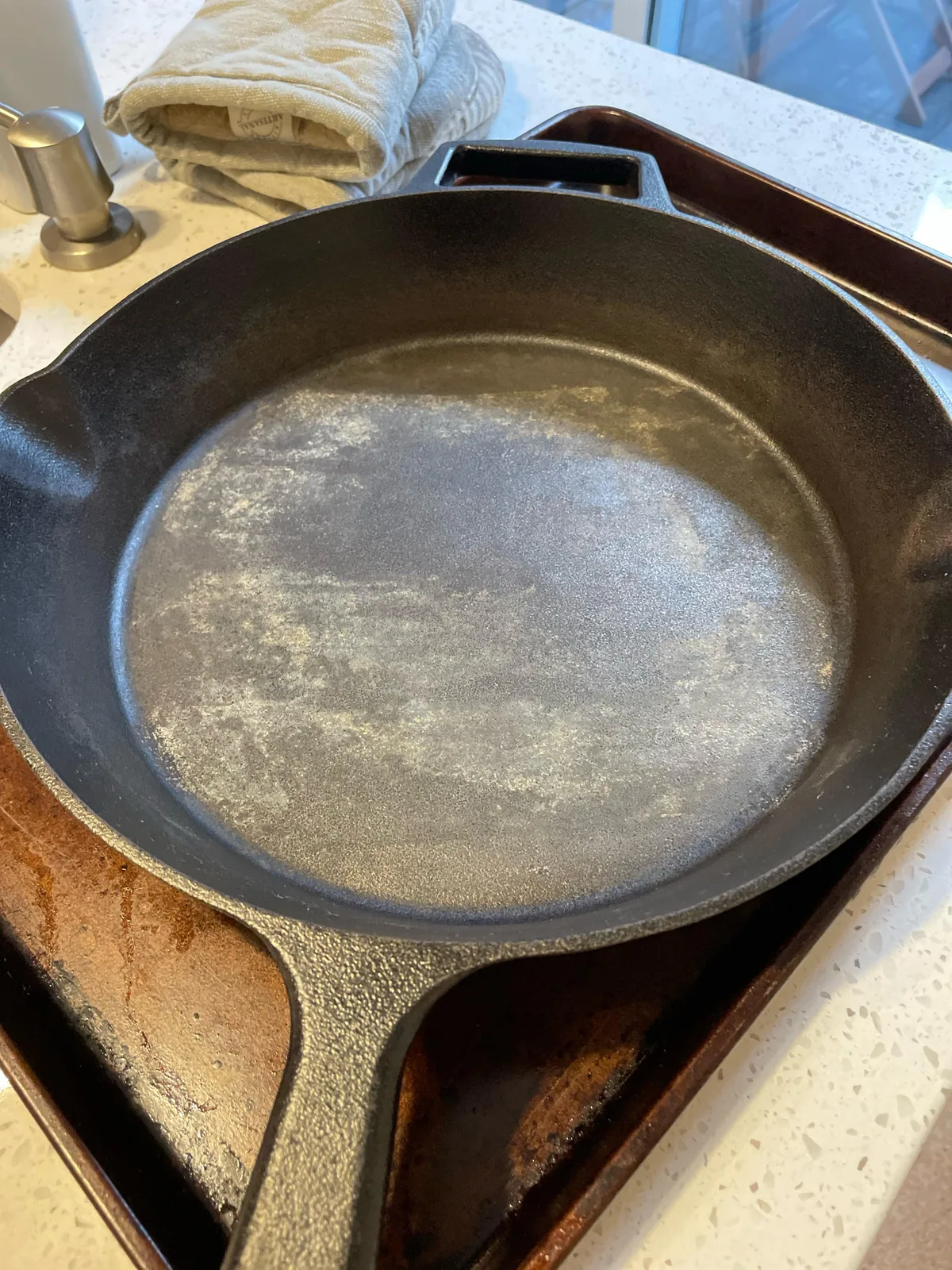
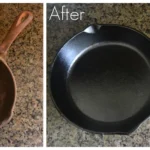
Image source: Web (Bing) / reddit.com (Web image (fair-use with source credit))
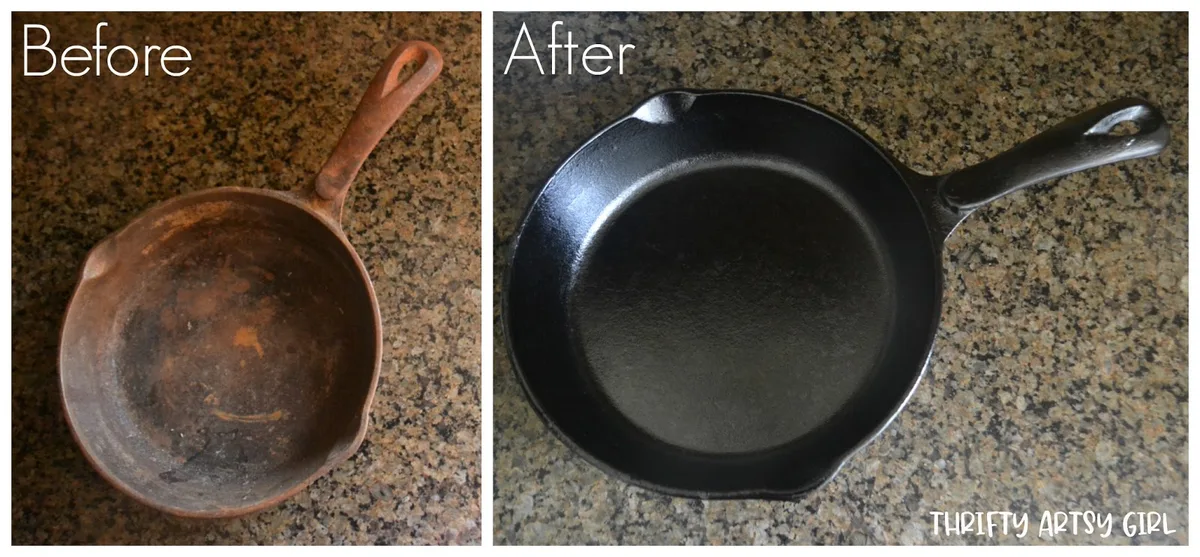
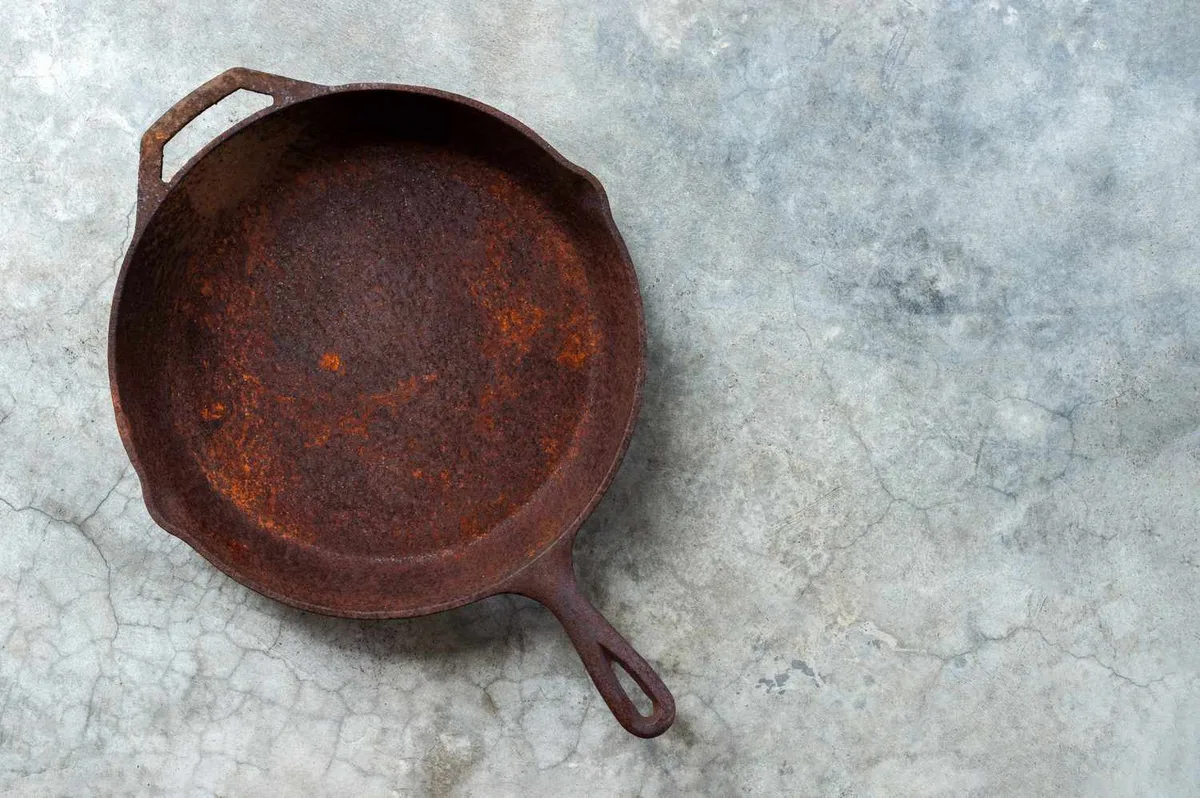
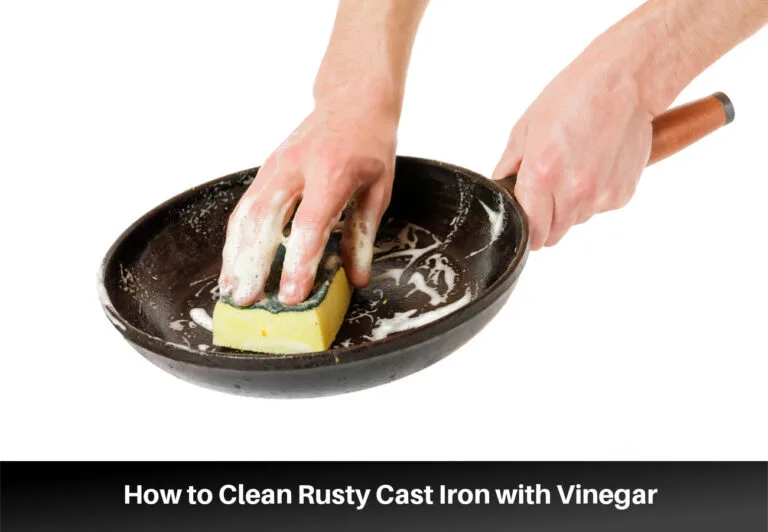
Moderate rust needs a chemical assist. The vinegar bath is the standard approach because dilute acetic acid dissolves rust without eating into the solid iron.
Here's the workflow:
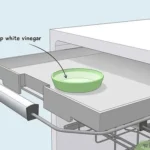
- Mix equal parts white vinegar and warm water in a plastic or glass tub.
- Submerge the pan completely.
- Check it every 10 to 15 minutes.
- Remove it after 30 minutes at the latest.
- Scrub with steel wool or a chainmail scrubber.
- Rinse with warm water and dry immediately.
The 30-minute max is a hard rule. Vinegar is an acid. Cast iron is porous.
Leave the pan soaking too long and the acid creates pits that are hard to fix. The care instructions published by Lodge Cast Iron recommend the same caution.
After the soak, wash the pan with warm soapy water to neutralize the acid. Dry it on the stove over low heat. The moment it's dry, rub in a thin layer of oil.
Bare iron flash-rusts within minutes, so this step is non-negotiable.
For heavy rust with flaking and pitting, you can follow the same steps, but you'll likely need to move on to the full restoration method below.
Full Restoration: Stripping and Reseasoning from Scratch
Options for Stripping Rust
Heavy rust calls for a full reset. You have three proven routes:
- Electrolysis uses a 12V charger, a sacrificial steel anode, and water mixed with washing soda. It pulls rust off the iron cleanly. Vintage pan collectors often prefer this because it leaves the original surface smoothness untouched.
- Lye-based oven cleaner strips seasoning and rust chemically. It takes longer and smells strong, but it works well on stubborn layers.
- Manual sanding with 80 to 120-grit sandpaper or coarse steel wool is the simplest option. It's cheap, but it's also the easiest way to scratch the iron if you rush.
How to Build a New Seasoning Layer
Once the pan is bare and clean, dry it completely and warm it in a 200°F oven for ten minutes. Rub a thin layer of oil over the entire surface, then wipe it off as if you made a mistake. The goal is a barely visible film.
Bake the pan upside down at 400 to 450°F for one hour. Place foil on the rack below to catch drips. Turn the oven off and leave the pan inside to cool.
Repeat this oil and bake cycle three to six times.
Canola oil and grapeseed oil are reliable choices for seasoning. Flaxseed oil creates a hard, glassy layer, but it can flake off if applied too thick. The right oil matters less than the thin layer.
How to Remove Rust from Enameled Cast Iron
Enameled cast iron is a different beast. The cooking surface is a glass-like coating, which means rust rarely reaches the iron underneath. If you see brown staining, it's usually residue, not active corrosion.
For Light Stains on Enamel
Mix baking soda with a little water to form a soft paste. Scrub gently with a non-abrasive sponge. You can also use Bar Keepers Friend, a mild cleanser that removes rust stains without scratching the glass finish.
Rinse thoroughly and dry. That's usually all it takes.
For Chips and Cracks in the Enamel
If rust is bleeding through a chip or crack, the glass coating is compromised. The iron beneath is exposed and will keep corroding. Enamel can't be reseasoned.
No amount of oil will rebuild that glass layer.
The bigger risk is food safety. Chipped enamel can break off into meals in sharp pieces. The [U.S.
Consumer Product Safety Commission](https://www.cpsc.gov) monitors cookware safety issues, and its guidance is clear: chipped enamel cookware should be retired.
If you can't bear to toss it, use it for decorative purposes or plant storage. Don't cook with it.
Common Mistakes That Ruin Cast Iron (And How to Avoid Them)
Rust removal is forgiving. Most failures come from a handful of avoidable mistakes, not the process itself.
Soaking Vinegar Too Long
Vinegar dissolves rust, then keeps etching the bare iron. Thirty minutes is the hard limit. An overnight soak creates deep pits that hold seasoning unevenly.
Over-Oiling After Seasoning
The oil layer should be almost invisible. If you can feel it, it's too thick. A heavy coat polymerizes into a sticky, tacky mess.
Wipe the oil on, then wipe it off as if you're erasing it.
Skipping the Drying Step
Water is rust's fuel. Bare iron can flash-rust within an hour of staying wet. Dry it over low heat on the stove, not just with a towel.
That extra minute saves you a full restoration later.
Scrubbing Vintage Pans with Harsh Tools
Aggressive stainless steel scrubbers remove the original smooth finish. That surface is why vintage pans cook so well. Use fine steel wool, grade 00, or a chainmail scrubber.
Sandpaper is for heavily rusted modern pans, not collectible iron.
Thinking the Pan Is Ruined
Cast iron is incredibly forgiving. Even a heavily rusted pan can come back with vinegar, electrolysis, or a lye bath. Unless it's cracked, warped, or deeply pitted with holes, it's likely salvageable.
The only real failure is enameled cookware with chipped glass coating.
FAQs: Quick Answers to Common Rust Questions
Is rust on cast iron harmful to eat?
In small amounts, rust is not toxic. Swallowed rust is mostly iron oxide, which your body treats like dietary iron. Still, don't cook on a rusty surface.
It tastes bad, leaves gritty bits in your food, and weakens the pan. Clean and reseason before use.
Can I save a pan that's been rusting for years?
Yes. Bare cast iron doesn't rot or degrade from surface rust. Even a pan sitting in a damp garage for decades can be revived.
Use the vinegar soak and reseasoning process. Only cracks, warps, or holes make a pan truly unusable.
Why does my pan rust again after one wash?
Washing removes the protective oil film. If you don't dry the pan quickly, flash rust forms within minutes. Always dry over low heat.
Then rub in a thin layer of oil while the pan is still warm.
Does soap ruin a seasoned cast iron pan?
No. Modern dish soap is mild and won't strip a fully polymerized seasoning layer. Lye-based detergents are too harsh and should be avoided.
After washing, dry and apply a light oil coat to maintain the surface.
Should I sand my cast iron to remove rust?
For heavy rust, yes. Start with 80 to 120-grit sandpaper and work your way through 400-grit. Sand gently to keep the cooking surface smooth.
You'll need to reseason with at least three thin oil coats afterward.
Final Decision Guide
Pick your method based on rust level. Light orange dust means a potato and salt scrub. Moderate rust means a 30-minute vinegar bath.
Heavy, flaking rust means a full strip and reseason from scratch.
If the pan is cracked, warped, or has chipped enamel, stop. Those problems are permanent. Manufacturer care resources confirm that bare iron is safe to strip and re-season, while damaged enamel is not.
The best cure is prevention. After each wash, heat the pan dry and rub in a drop of oil. Store it in a dry place.
That five-minute routine stops rust from ever gaining a foothold.

Similar Posts