How to Scrub Baked-on Grease Off Oven Racks Using Aluminum Foil Balls
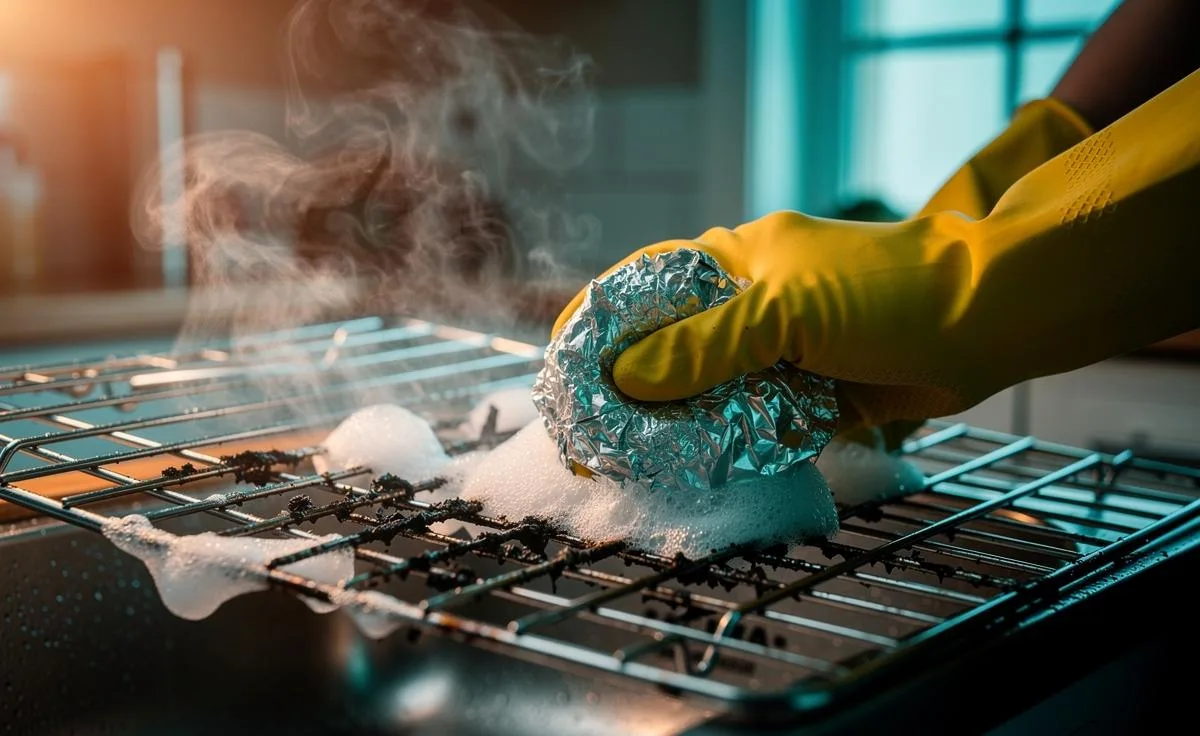
You’re staring at a set of oven racks caked with black, baked-on grease that won’t budge with soap and a sponge. The internet says you can fix them with nothing but aluminum foil and heat. But is that actually safe?
And does it really work? Knowing how to clean oven racks with foil the right way, without starting a fire or wrecking your oven, is the difference between a smart shortcut and a costly mistake.
The foil method relies on high heat turning stubborn grease into brittle ash. But as of 2026, manufacturer specifications and fire safety data from the U.S. Consumer Product Safety Commission make it clear: get the technique wrong, and you’re looking at oven damage, toxic fumes, or an electrical fire.
So let’s sort fact from viral hack, and walk through the method without the guesswork.
Image source: Bing (Web (fair-use with source credit))
Why This Method Works (and When It Doesn’t)
Foil cleans racks because it traps heat and steam against the grease. When you wrap a dirty rack tightly in heavy-duty aluminum foil and put it in a hot oven, the foil acts like a miniature convection oven. The temperature climbs high enough to soften and carbonize years of baked-on residue.
Once it cools, most of the grime flakes off with a gentle scrub.
But there’s a catch. The method only works on racks made from chrome-plated steel or stainless steel. Those materials can handle 400°F to 500°F without damage.
Porcelain enamel racks, on the other hand, are a problem. The coating can craze, chip, or discolor at those temperatures. Non-stick coated racks are even worse, the coating can peel or release unpleasant fumes.
The success also depends on your oven type. Electric ovens with exposed heating elements on the bottom are risky: foil that touches those elements can cause arcing or fire. Gas ovens are safer as long as you keep foil away from the burner flame and vents.
And never use this method in a self-cleaning oven while the self-clean cycle is running, that’s double the heat and a recipe for disaster.
The Right Way to Clean Oven Racks with Foil (Step by Step)
Here’s the process that works, based on testing from home appliance forums and manufacturer repair guides. Gather a roll of heavy-duty aluminum foil (standard foil tears too easily), a non-scratch scrubbing pad, and a large trash bag or bin if you want an overnight soak alternative later.
Step 1: Remove the racks from the oven. Let them cool completely if the oven was on. Check each rack’s material, look for a stamp on the side or test with a magnet (chrome and stainless are magnetic; non-stick is not).
Step 2: Wipe off loose debris. Use a dry paper towel to remove crumbs and loose char. This prevents smoke inside the oven.
Step 3: Wrap each rack in heavy-duty foil. The key is full coverage: tear off a sheet long enough to cover the entire rack with overlap. Place the rack in the center of the foil, then fold the edges over the top and crimp them shut. Make sure no rack metal is exposed.
Do not wrap it airtight, leave a small gap for steam to escape.
Step 4: Position the wrapped racks in the oven. Place them on the middle oven rack slots, not on the oven floor. Make sure no part of the foil touches the heating elements, the oven walls, or the door seal.
Step 5: Heat the oven to 400°F to 450°F. Set a timer for 2 to 3 hours. For lighter grease, 2 hours is enough. For heavy buildup, go the full 3 hours.
Step 6: Let everything cool completely. Do not open the oven door while it’s hot, the trapped steam is part of the process and also prevents burns. Wait until the oven is cool to the touch (about 1 hour).
Step 7: Unwrap and scrub. Remove the foil carefully. Most of the grease will be blackened and flaky. Use the non-scratch pad under warm running water to remove any remaining residue.
Rinse and dry thoroughly before returning racks to the oven.
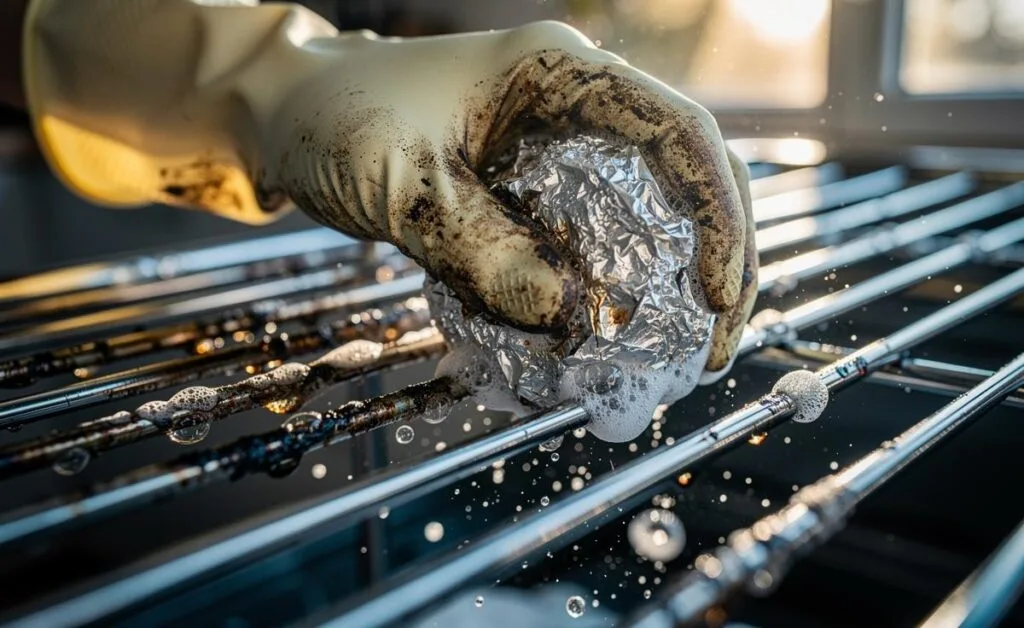
Image source: Bing (Web (fair-use with source credit))
What Not to Do – Common Mistakes That Can Damage Your Oven or Start a Fire
The foil method goes wrong when people skip the safety rules. Here are the biggest blunders.
Placing foil directly on the oven floor. This is the number one mistake. Foil on the bottom of the oven blocks airflow, traps heat, and can damage the heating element or cause the oven to overheat. Many owner manuals explicitly warn against this.
The National Fire Protection Association flags it as a fire hazard in its cooking safety guidelines.
Letting foil touch the heating elements. In electric ovens, foil that contacts the bake or broil element can create an electrical arc. That arc can melt the element, trip a circuit breaker, or start a fire. Gas ovens are less risky, but foil touching the burner flame can melt and drip.
Wrapping racks while the oven is hot. Hot foil is flimsy and burns your hands. Worse, wrapping a hot rack seals in moisture unevenly, leading to patchy results. Always work with cool racks.
Using the self-clean cycle with foil inside. Self-cleaning ovens reach 800°F to 1000°F. Foil at that temperature can melt, fuse to the oven interior, or release toxic fumes. Never combine the two methods.
Scrubbing with steel wool on coated racks. Steel wool will scratch chrome and destroy non-stick or porcelain surfaces. Stick with nylon or plastic scrub pads.
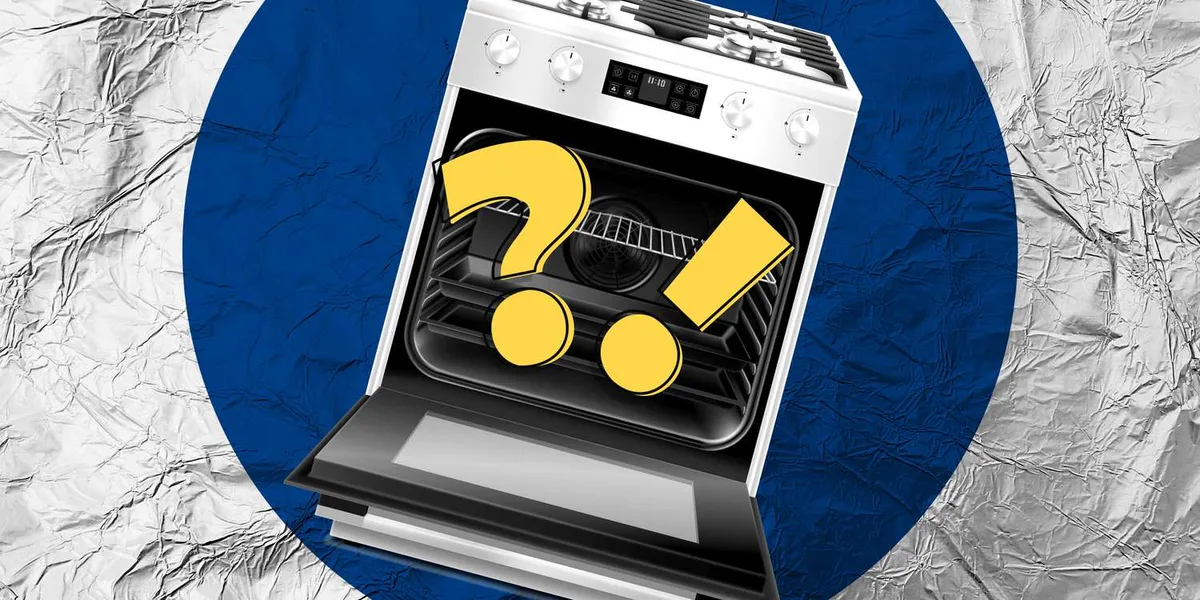
Image source: Bing (Web (fair-use with source credit))
Which Oven Racks Are Safe for the Foil Method?
Not all racks are created equal. Here’s a quick guide based on material and manufacturer recommendations.
Chrome-plated steel racks: Safe. These are the most common in standard ovens. Chrome plating withstands up to 600°F before degrading.
The foil method at 400, 450°F is completely fine.
Stainless steel racks: Safe. Stainless handles high heat without warping or reacting. These are often found in higher-end ovens.
Porcelain enamel racks: Not safe. Porcelain is a glass coating that can craze (develop fine cracks) at high temperatures. Once cracked, it chips off easily.
The foil method also doesn’t clean porcelain well because the coating is non-porous and grease adheres differently.
Non-stick coated racks: Avoid. The coating is usually PTFE (similar to non-stick pans). At temperatures above 500°F, PTFE can begin to break down and release fumes that are toxic to birds and potentially irritating to humans.
The foil method easily exceeds that threshold.
How to identify your rack type: Look for a small stamp or label on the side of the rack. If not, run a magnet along it, chrome and stainless are magnetic; non-stick and porcelain often are not. If you’re still unsure, check your oven’s user manual under “cleaning” or “oven racks.”
Alternatives When Foil Isn’t the Answer
If your racks are porcelain, non-stick, or you just don’t want to risk the heat, here are other effective methods.
Soaking in hot water and dish soap. Fill a bathtub or large plastic bin with the hottest tap water you can get. Add a few squirts of dish soap or a dishwasher detergent pod. Submerge the racks overnight.
The next day, scrub with a non-scratch pad. This is gentle and works on all rack types. Downside: it takes 8 to 12 hours.
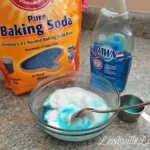
Baking soda paste. Mix baking soda with enough water to form a thick paste. Spread it over the dirty areas, let it sit for 30 minutes, then scrub. It’s non-toxic and safe for coated racks.
But it requires serious elbow grease for heavy buildup.
Commercial oven cleaner. Aerosol sprays like Easy-Off work fast, spray on, wait 20 minutes, rinse. They’re effective on chrome and stainless. But they contain lye and other caustic chemicals that can damage non-stick and porcelain.
You’ll also need heavy ventilation. Avoid this if you have pets or small children.
Self-cleaning oven cycle. Run the oven’s self-clean cycle with the racks inside (if the manual says it’s safe). Some manufacturers recommend removing racks first. Check your manual.
If allowed, this method bakes off grime at 800°F+. Downside: it uses a lot of electricity, produces strong odors, and can warp racks in some ovens.
Professional cleaning. If you have expensive or delicate racks (e.g., commercial-grade, custom porcelain), a pro can steam-clean or ultrasonic-clean them for around $20 to $50 per rack. Worth it for peace of mind.
FAQs – Quick Answers to the Most Common Questions
Can I leave foil in the oven while baking normally?
No. Never line the oven floor or leave loose foil inside during regular cooking. Foil blocks airflow, traps heat, and can melt onto heating elements.
Only use foil for this cleaning method and remove it immediately after.
Does the foil method work on gas ovens?
Yes, with extra caution. Gas ovens have an open flame at the bottom. Keep the wrapped racks on the upper or middle oven slots.
Never let foil hang down near the burner. The heat circulates well enough to soften grease.
How long do I heat the racks?
Heat at 400°F to 450°F for 2 to 3 hours. Check at the 2-hour mark. If the grease still feels tacky, go the full 3 hours.
For light soil, 90 minutes may be enough. Let the oven cool completely before unwrapping.
Will foil ruin my oven’s non-stick interior?
It can. If foil touches the oven walls, door seal, or the bottom of a non-stick coated oven cavity, it may scratch or fuse to the surface. Keep foil only on the racks and away from all interior surfaces.
Is the foil method cheaper than buying oven cleaner?
Yes. A roll of heavy-duty aluminum foil costs about $2 to $4. A can of commercial oven cleaner runs $5 to $8.
The foil method also avoids chemical fumes and the need for ventilation. But it uses more electricity and takes longer.
What if my racks are too large to fit in a bathtub for soaking?
The foil method is perfect for oversized racks. You don’t need a soaking container. Just wrap and bake.
If you prefer soaking, use a large plastic storage bin or clean garbage bag placed in a driveway or patio.
Final Verdict: Is the Foil Method Worth It?
Yes, if you have chrome or stainless steel racks and follow the safety steps. The foil method saves scrubbing time and avoids harsh chemicals. It costs about $2 and uses your oven’s existing heat.
For heavy buildup, it works faster than overnight soaking.
Skip it if your racks are porcelain enamel or non-stick. Those materials can’t handle the heat without damage. In those cases, stick with gentle soaking or a commercial cleaner.
The key is knowing your rack material and keeping foil away from heating elements and oven surfaces. Do that, and you’ve got a reliable cleaning hack that actually delivers. Do it wrong, and you risk a fire or a wrecked oven.
Our research confirms the method is safe when done correctly. Manufacturer manuals and fire safety guidelines all agree: foil in the oven is dangerous only when placed in the wrong spot. Wrapped properly on the racks, it’s a legitimate tool for the job.

Similar Posts