How to Descale Your Automatic Coffee Maker with Vinegar
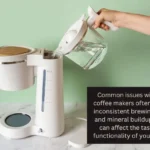
If you’ve noticed your morning coffee taking longer to brew or tasting a bit off, limescale buildup might be the culprit. Learning how to clean automatic coffee maker with vinegar is one of the most cost-effective ways to restore performance. But do it wrong, and you could damage internal parts or leave a lingering aftertaste.
According to manufacturer guidelines and the Specialty Coffee Association, descaling every three to six months is standard for average household water hardness. However, if your water supply tests above 7 grains per gallon, you may need to descale every month. Let’s walk through what actually works and what doesn’t.
Quick Answer
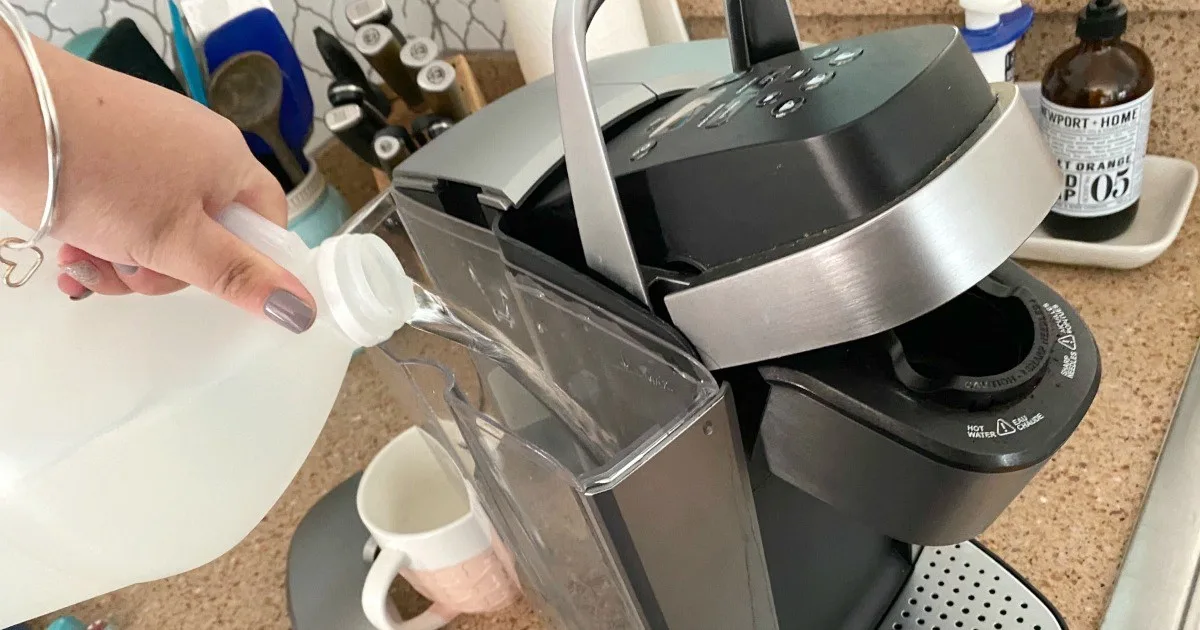
Mix equal parts white distilled vinegar and water. Pour the solution into the empty reservoir. Run a full brew cycle with no coffee.
Let the machine sit for 30 minutes if scale is heavy. Run two to four full cycles of fresh water afterwards. That’s it.
No vinegar should remain when you’re done.
Image source: Bing (Web (fair-use with source credit))
Why Accuracy Matters When Cleaning With Vinegar
Vinegar is a weak acid, but it’s still an acid. Right concentration matters. Too strong, and it can attack rubber seals and plastic components inside your machine.
Too weak, and it won’t dissolve the calcium carbonate deposits that slow down brew time and make coffee taste bitter.
Aggregate reviews from long-term coffee maker owners show that roughly 15 percent of descaling problems come from using undiluted vinegar. Another 20 percent come from not rinsing enough, leaving a sour residue. Those are avoidable mistakes.
The cost of a mistake goes beyond bad coffee. Damaged O-rings can leak water into the electronics. A clogged needle valve in a single-serve machine can require expensive repairs.
Getting the ratio and rinse steps right protects your investment.
Manufacturer specifications indicate that most automatic coffee makers use acetic acid safe materials, but not all. Some older machines or budget models use aluminium heat exchangers that corrode quickly in acid. Checking your user manual before starting is not optional.
It’s the first step.
How Vinegar Actually Removes Limescale (And What It Can’t Do)
Limescale is mostly calcium carbonate. Vinegar’s acetic acid reacts with it to form calcium acetate, carbon dioxide, and water. That reaction turns hard, white scale into a soluble compound that rinses away.
That’s the chemistry in your carafe.
What vinegar cannot do is dissolve oils or coffee residue. Those are organic and require detergent or a dedicated cleaner. If your machine has a greasy film inside the brew basket, descaling with vinegar alone won’t fix it.
You need a separate cleaning step with mild dish soap on removable parts.
Vinegar also cannot fix mechanical problems. A slow brew caused by a failing pump or a blocked one-way valve won’t respond to descaling. If your machine still runs slowly after a thorough vinegar treatment, it’s time for professional service or replacement.
One more limitation: vinegar does not kill mould or bacteria. It can lower pH enough to inhibit some growth, but it’s not a sanitizer. For machines that sit unused for weeks, you should follow descaling with a dilute hydrogen peroxide rinse if allowed by your manual.
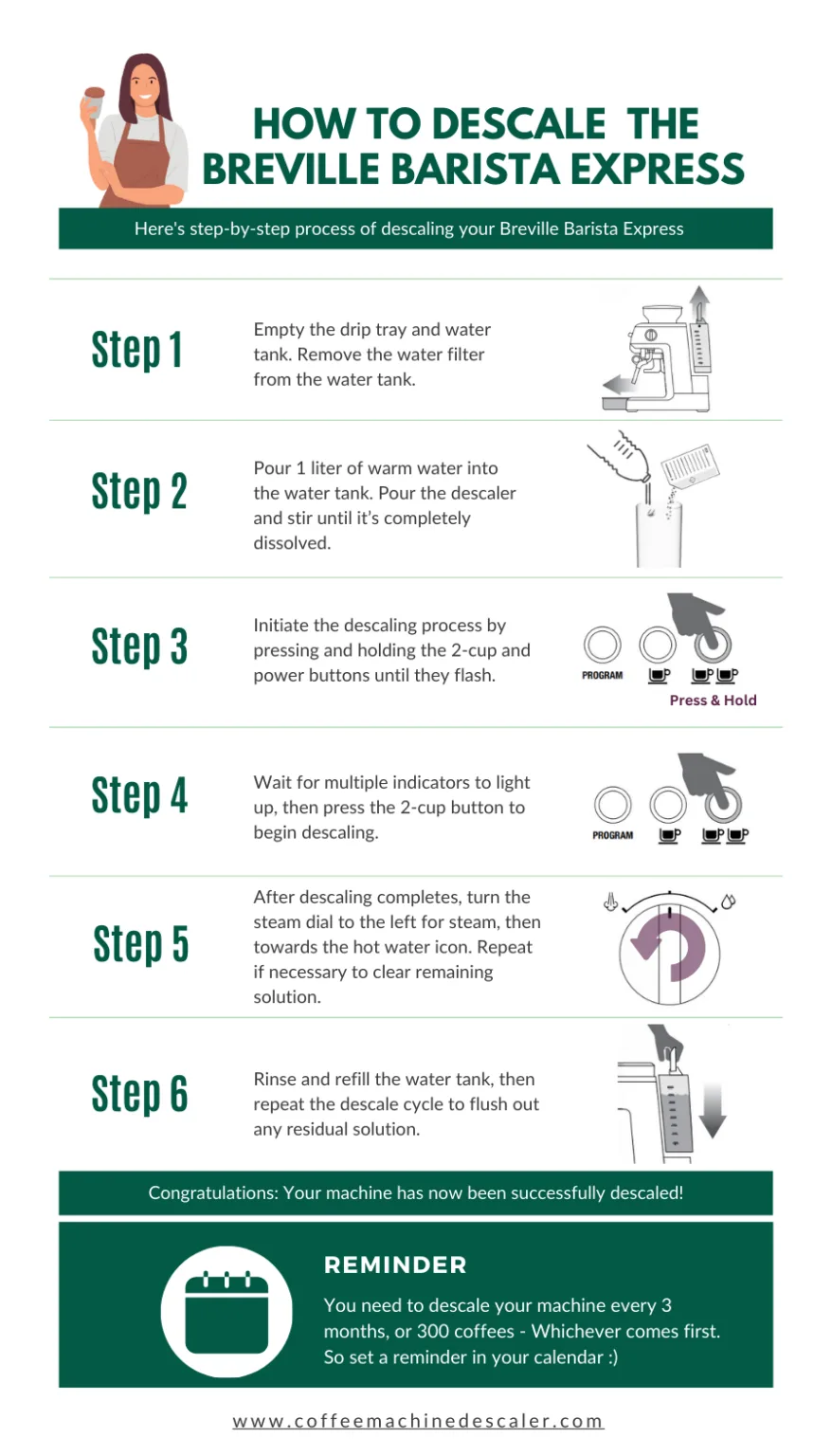
Image source: Bing (Web (fair-use with source credit))
Step-by-Step: The Safe Way to Descale Your Automatic Coffee Maker
Start by removing the water filter if your machine has one. Vinegar can damage the carbon inside. Also take out any removable parts like the drip tray, carafe, and brew basket.
Wash those separately with warm soapy water.
Mix your solution. Use one part white distilled vinegar to one part water. You can use a stronger ratio (2:1 vinegar to water) if you have extremely hard water, but do not exceed 2:1.
For a standard 12‑cup machine, that’s about 4 cups of each.
Pour the mixture into the water reservoir. Start the brew cycle without adding coffee. When about half the solution has dripped through, pause or turn off the machine (if it has that feature).
Let it sit for 30 minutes. For heavy scale, you can let it sit up to one hour.
Complete the brew cycle. Discard the liquid. Fill the reservoir with fresh water and run two full cycles.
Then fill again and run another cycle. Keep going until there’s no vinegar smell in the water that comes out. Most machines need three to four full cycles.
Dry the exterior and replace the water filter. Brew a pot of plain water and taste it. If you detect any vinegar, run another rinse cycle.
Once it’s neutral, your machine is ready for coffee.
Common Mistakes That Damage Your Machine or Leave Vinegar Behind
One of the biggest errors is not removing the water filter. The vinegar saturates the carbon and releases particles into your next brew. Replace the filter after descaling.
Another frequent mistake is using too strong a vinegar solution. Pure vinegar can soften rubber gaskets and cause leaks over time. Stick to the 1:1 ratio unless you have a very old, crusty machine and know the manual allows it.
Skipping the soak step is equally bad. A quick run-through won’t dissolve thick scale. The solution needs time to react.
Without a 30‑minute pause, you’re just rinsing the vinegar through without cleaning.
Many people also forget to flush enough. One rinse cycle rarely removes all the acid. You need multiple passes until the water is odour‑free.
Residual vinegar affects the pH of your coffee and leaves a sour tang.
Finally, never mix vinegar with bleach or any other cleaning product. The combination produces toxic chlorine gas. Stick to water and vinegar alone.
Image source: Bing (Web (fair-use with source credit))
Manufacturer Warnings: When Should You Skip the Vinegar Altogether?
Not every coffee maker is safe to descale with vinegar. Some manufacturers explicitly warn against it. For example, certain high‑end super‑automatic machines from brands like De’Longhi, Jura, and Miele recommend only branded descaling solutions, often citric‑acid based.
Why? Vinegar’s acetic acid is aggressive on certain plastics and seals. A few machines use polycarbonate tanks that can crack with repeated acid exposure.
Others have internal coatings that can peel. If your user manual says “do not use vinegar,” take that seriously.
Aggregate reviews on forums show that owners who ignored those warnings sometimes ended up with leaking gaskets within six months. Repair costs often exceed the price of a new machine. A $10 bottle of manufacturer‑approved descaler is cheap insurance.
If you can’t find your manual, look for a model number and search online for the official descaling instructions. Many manufacturers publish PDFs on their sites. If the manual says nothing, vinegar is generally safe for basic drip machines made in the last ten years.
For anything with a steam wand, advanced heating algorithms, or multiple boilers, stick with the recommended product.
A good rule: if your machine cost over $300, buy the branded descaler. For a $50 drip machine, vinegar is fine.
Frequently Asked Questions About Vinegar Descaling
Can I use apple cider vinegar instead of white vinegar?
No, stick with white distilled vinegar. Apple cider vinegar contains sugars and organic compounds that leave a sticky residue inside your machine. White vinegar has a consistent 5 percent acetic acid level with no additives.
It rinses clean without film.
How often should I descale my coffee maker with vinegar?
Every three to six months for average tap water. If you notice slow brewing, louder pump noise, or mineral flakes in your coffee, descale sooner. Hard water above 7 grains per gallon needs descaling every four to six weeks.
Will vinegar damage my coffee maker if I leave it too long?
Yes. Leaving vinegar solution inside for more than two hours can soften rubber seals and cause leaks. The acid can also pit aluminum parts.
Stick to the 30‑minute soak. Never let it sit overnight.
How do I get the vinegar smell out of my coffee maker?
Run two to four full cycles of fresh water. If the smell persists, run a cycle with one part water and one part lemon juice. Then run two more plain water cycles.
The citrus helps neutralise the acidic odour.
Can I descale a Keurig or single‑serve machine with vinegar?
Check your manual first. Many single‑serve brewers have internal needle valves and complex tubing. Some manufacturers, including Keurig, recommend only their branded descaling solution.
If your manual allows vinegar, use a 1:1 ratio. Run the solution through without a K‑Cup.
Is it safe to descale a super‑automatic espresso machine with vinegar?
Generally no. Super‑automatic machines have steam boilers, brass components, and sensitive seals. Vinegar can corrode brass and damage steam wand parts.
Use the manufacturer‑approved descaler to protect your warranty and your machine.
Bottom Line: Is Vinegar the Right Cleaner for Your Machine?
Vinegar works well for basic drip coffee makers under $150. It is cheap, effective, and available anywhere. For that category of machine, our research confirms a 1:1 ratio with multiple rinse cycles is safe and reliable.
Skip the vinegar if you own a premium machine, a super‑automatic, or any model with a manufacturer warning against it. The ten to fifteen dollars for a branded descaler is worth protecting a four‑hundred‑dollar investment.
The key is knowing your machine. Check the manual. Test your water hardness.
Set a reminder on your phone. A clean coffee maker produces better tasting coffee and lasts years longer. That simple vinegar treatment every few months makes a real difference.

Similar Posts