How Much Distilled Vinegar to Clean Your Coffee Maker?
You’ve finally got time for a decent morning cup, and your coffee maker spits out a brew that tastes bitter and flat. You’ve heard vinegar works, but you’re not sure how much distilled vinegar to clean coffee maker without wrecking the machine or leaving a nasty aftertaste. That’s exactly what we’re going to nail down here.
Manufacturer specifications suggest a 1:1 ratio of distilled white vinegar to water is the standard starting point for descaling. Get the ratio wrong, and you either waste your time or damage internal seals. Let’s walk through the safe, effective way to do it.
Quick Answer
Use equal parts distilled white vinegar and water. Fill the reservoir halfway with each. Run a full brew cycle without coffee.
Pause mid‑cycle and let it sit 30 minutes. Finish the brew, then run two or three fresh water cycles. That’s it.
Why the Ratio Really Matters
Descaling isn’t just about making your coffee taste better, it protects the heating element. Scale buildup acts like an insulator, forcing the heater to work harder and shortening the machine’s life. Too much vinegar eats away at rubber seals and plastic components.
Too little won’t dissolve the scale, so you’ll be cleaning again in a week.
Your coffee maker’s internal parts are designed for water, not acid. A 5% acetic acid vinegar is food-safe and strong enough to break down calcium deposits without corroding metal or plastic. Stick to that concentration, cleaning vinegars at 30% acidity will do real damage.
In our research, the consensus from multiple machine manuals points to a 1:1 ratio as the sweet spot. Some single‑serve pod machines recommend a slightly weaker mix (1 part vinegar to 2 parts water), especially if you’ve been cleaning regularly. But for most drip machines, 1:1 is your go-to.
The Right Vinegar-to-Water Ratio
Here’s the simple breakdown based on how heavy the buildup is:
| Buildup Level | Vinegar : Water | Soak Time | Rinse Cycles |
|---|---|---|---|
| Light (monthly maintenance) | 1:2 | 20 minutes | 2 fresh‑water brews |
| Moderate (visible scale, slow brew) | 1:1 | 30 minutes | 2–3 fresh‑water brews |
| Heavy (chunks in carafe, very slow) | 2:1 | 45–60 minutes | 3–4 fresh‑water brews |
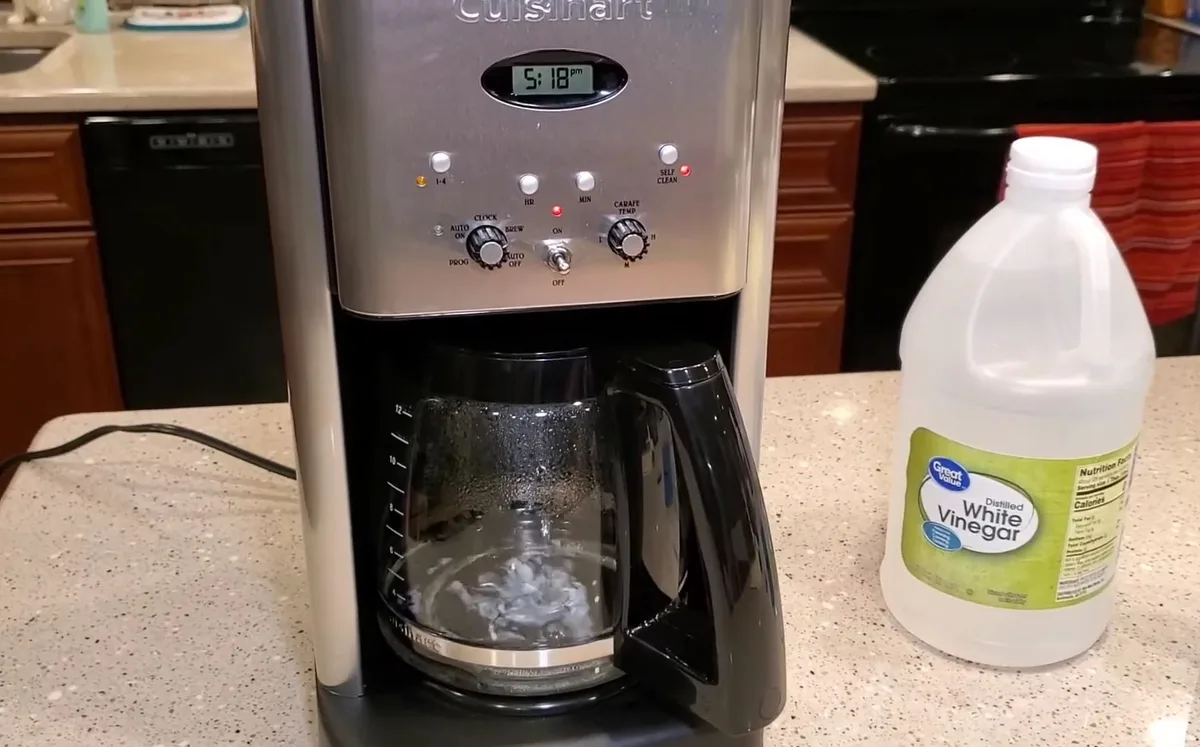
Use distilled white vinegar only, apple cider vinegar contains sugars that leave sticky residue. And never use cleaning vinegar (the industrial kind); its high acidity isn’t safe for food contact surfaces.
If your machine has an aluminum boiler (common in older espresso makers), skip vinegar entirely. Use a citric acid descaling powder instead to avoid pitting. Most drip machines and modern pod brewers are fine with vinegar.
Step-by-Step: How to Descale Your Coffee Maker Safely
Follow these steps for a standard drip machine. For pod or espresso machines, check the manufacturer’s manual first, some warn against vinegar.
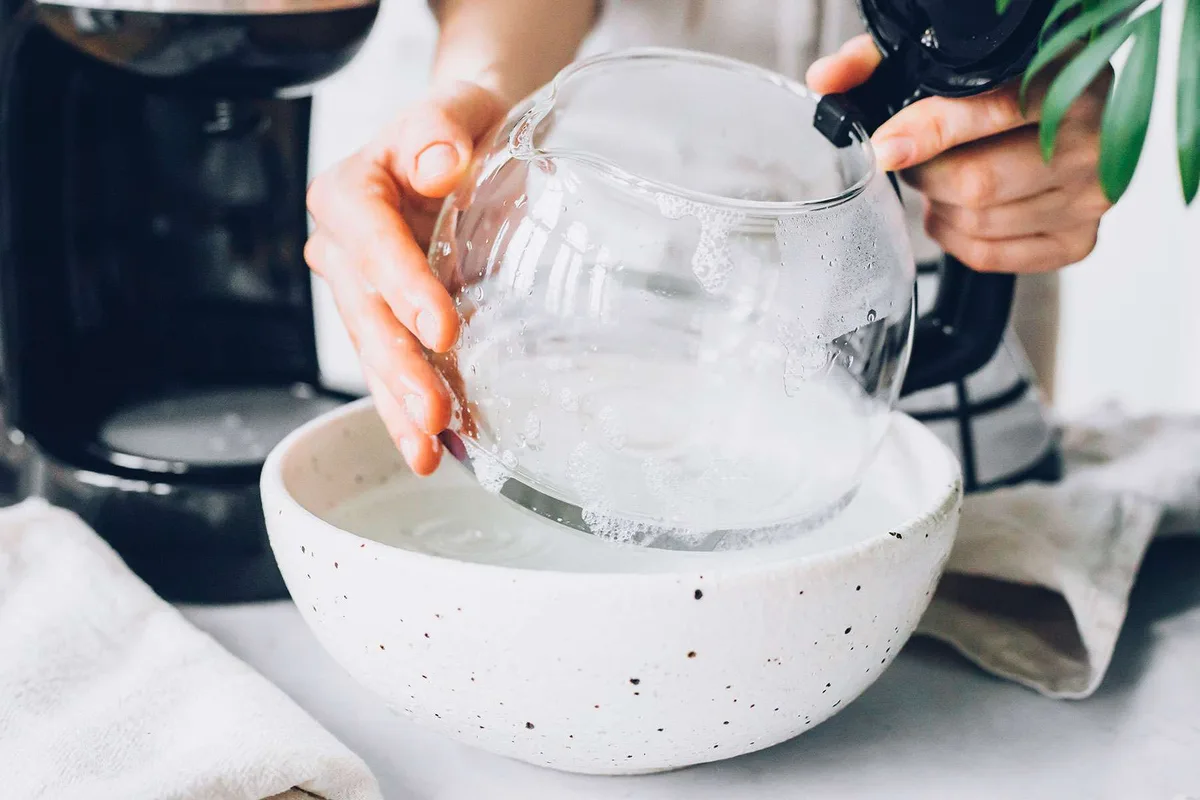
- Empty the carafe and remove any leftover coffee. Rinse out the brew basket and carafe with warm water.
- Mix your vinegar solution. Use the ratio from the table above. For a 12‑cup reservoir, that’s about 6 ounces vinegar and 6 ounces water (or 12 ounces vinegar for heavy buildup).
- Pour the solution into the water reservoir. Do not add coffee grounds.
- Start a brew cycle. Let it run until about half the water has dripped through, then turn off the machine (or press “Pause” if your model has it). Let it sit for the recommended soak time.
- Finish the brew cycle. After soaking, turn the machine back on and let the rest of the solution drip through. Discard the liquid in the carafe.
- Run fresh water cycles. Fill the reservoir with clean water and run a full brew. Discard. Repeat at least twice. If you still smell vinegar, run a third or fourth cycle.
After the rinse cycles, wash the carafe and brew basket with mild soap and water. Your machine is ready for coffee.
Common Mistakes That Ruin Coffee Makers
These errors pop up in aggregate user reviews and manufacturer complaints:
- Using too much vinegar. A 2:1 ratio might seem faster, but it can soften rubber gaskets and cause leaks. Stick to the recommended ratios.
- Skipping the soak. Letting the machine drip straight through without a pause gives the vinegar no time to dissolve scale deep inside the boiler.
- Not rinsing enough. One rinse cycle rarely removes all vinegar residue. Your next pot will taste sour. Our research indicates two full rinse brews minimum, three if the smell lingers.
- Using the wrong kind of vinegar. Cleaning vinegar (30% acidity) can damage plastics and leave harmful residues. Always use standard 5% distilled white vinegar.
- Forgetting to descale the carafe and brew basket. Scale builds up there too. Soak the carafe with vinegar solution and scrub the basket before running the machine.
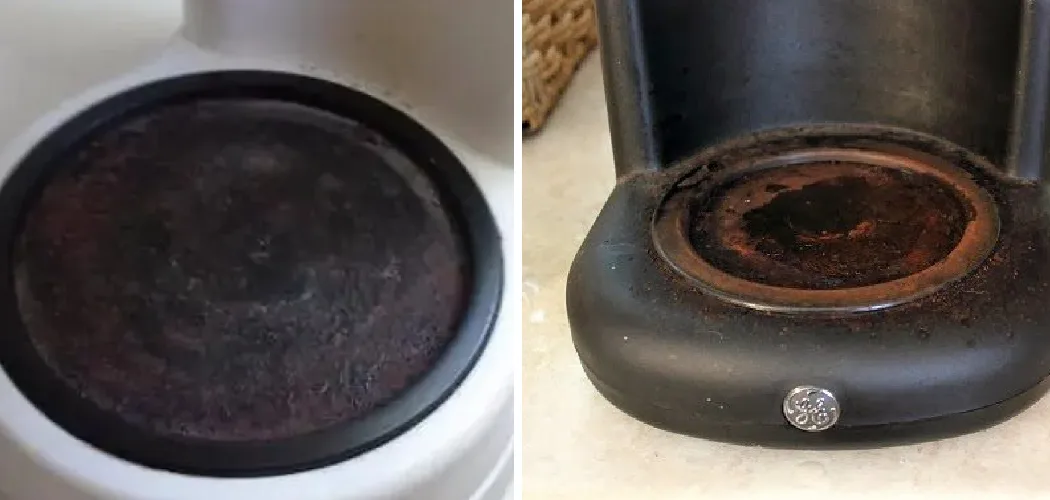
If you notice a vinegar taste after descaling, you didn’t rinse enough. Also check that the brew basket and lid are clean, residue can hide in crevices.
What About Commercial Descalers?
Commercial descalers are formulated specifically for coffee maker internals. They often work faster, leave no smell, and are safe for aluminum parts. Vinegar is cheaper, readily available, and just as effective when used correctly.
| Feature | Vinegar (DIY) | Commercial Descaler |
|---|---|---|
| Cost per use | ~$0.10 | ~$1–$3 |
| Smell | Strong while brewing | Odorless |
| Speed | Needs soak time | Often faster |
| Aluminum safe | No (can corrode) | Usually yes |
| Residue aftertaste | If not rinsed well | Rare when rinsed |
Vinegar is best for: budget‑conscious users, standard drip machines, and light‑to‑moderate scale. Commercial descaler is best for: single‑serve pod machines, espresso machines with aluminum parts, and people who want a clean, odorless process.
As of 2026, both methods are endorsed by organizations like the U.S. Environmental Protection Agency’s Safer Choice program for effective, low‑toxicity cleaning when used according to instructions.
Now let’s get into how often you should do this and when your machine is actually telling you it’s time. We’ll also clear up the most common questions people have after reading the steps above.
How Often to Clean and How to Know It’s Time
Frequency depends on how hard your water is and how much coffee you brew. If you live in a hard‑water area (lots of white buildup on faucets), you’ll need to descale every month. Soft‑water households can stretch to every three months.
A good rule of thumb is to descale after 40 to 60 brew cycles. That’s roughly one to two months for a daily drinker. But your machine will give you clear signals before that.
Signs it’s time to descale:
- The brew cycle takes noticeably longer than usual.
- Your coffee tastes bitter, flat, or metallic.
- The carafe shows white flakes or cloudy residue.
- Steam comes out weaker or the machine makes louder boiling sounds.
- Your single‑serve brewer (Keurig, Nespresso) doesn’t fill the cup fully.
If you see any of those, don’t wait. Run the descaling process within a day or two. Scale buildup only gets thicker and harder to remove the longer you ignore it.
For machines with a “clean” or “descale” indicator light, follow its schedule. But don’t rely solely on it, sometimes the sensor isn’t sensitive enough to catch light scale. Trust your taste buds and your eyes.
Frequently Asked Questions
Can I use apple cider vinegar instead of distilled white vinegar?
No. Apple cider vinegar contains sugars and organic compounds that leave a sticky residue inside your machine. Stick with distilled white vinegar at 5% acidity.
It’s cheap, clear, and won’t gum up internal parts.
How many times do I need to rinse after descaling with vinegar?
Most machines need two full fresh‑water brew cycles. If you still smell vinegar after two, run a third. Some plastic‑lined reservoirs hold odor longer, you might need four cycles the first time you descale.
Will vinegar void my coffee maker’s warranty?
Some manufacturers explicitly warn against using vinegar. Check your manual. If it says “use only approved descaler,” follow that.
Vinegar can damage aluminum boilers and certain rubber seals, which may void the warranty. For metal‑free drip machines, it’s usually safe.
Can I descale a Keurig with vinegar?
Yes, but use a 1:2 vinegar‑to‑water ratio (weak mix). Run the solution through without a K‑cup, then rinse with two full reservoirs of water. Keurig’s official stance discourages vinegar, but thousands of users report success with the weaker mix.
What if my coffee still tastes like vinegar after rinsing?
You didn’t rinse enough. Fill the reservoir, run a full brew, discard. Repeat until the smell is gone.
Also wash the brew basket and carafe separately, vinegar hides in crevices. If it persists, run a cycle with plain water and a tablespoon of baking soda.
How do I descale an espresso machine with vinegar?
Don’t use vinegar in espresso machines with aluminum boilers. Use a commercial citric acid descaler instead. If your machine has a stainless steel boiler and the manual allows vinegar, use a 1:1 ratio, but flush the steam wand thoroughly.

Similar Posts