Best Commercial Espresso Machines with Grinder
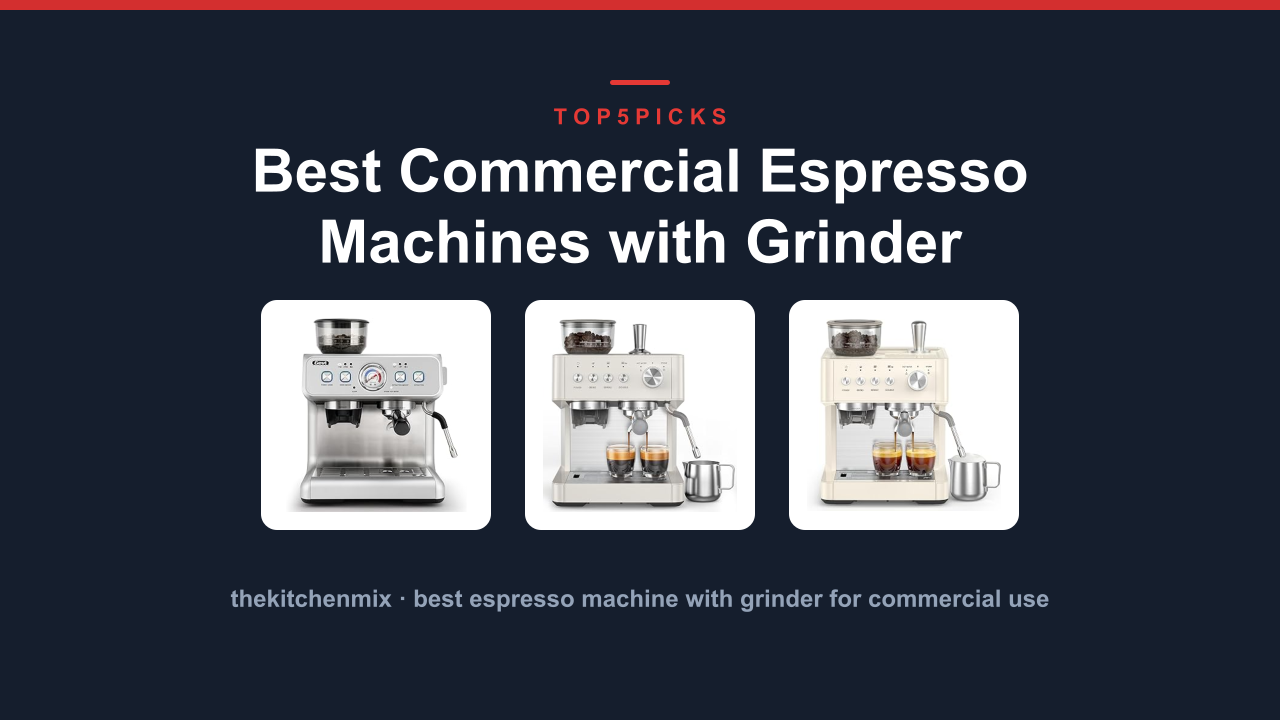
Did you know that a typical high-volume coffee shop can run more than 300 espresso shots a day? Now imagine grinding, tamping, and dialing in each shot on a machine that can't keep up. The wrong pick kills speed, consistency, and ultimately your bottom line.
In this guide, I share my 5 favorite best espresso machine with grinder for commercial use, ranging from a dual‑boiler prosumer beast to a PID‑controlled workhorse. Whether you're opening a small café or upgrading your office break room, these picks cut through the noise and deliver real results.
As an Amazon Associate, I earn from qualifying purchases. Every recommendation below is backed by product research and verified owner feedback.
Quick Links
How to Choose the Best Espresso Machine with Grinder for Commercial Use
1. Boiler System: Single vs. Dual
A single boiler heats water for both brewing and steaming, but you have to wait between functions. In a commercial setting, that wait kills your workflow. A dual boiler (like the Gevi Dual Boiler) lets you brew and steam simultaneously.
This means consistent temperature for espresso while the steam boiler stays hot for milk. For any café doing more than 20 shots an hour, dual boiler is the way to go.
2. Grinder Build and Adjustability
The integrated grinder must be a burr grinder, not a blade grinder. Look for at least 30 grind settings to fine-tune for different beans. The Gevi offers 31 levels, while the COWSAR (2026 Upgrade) has a stepped conical burr set.
Stepless grinders give even finer control but are rare at this price. For commercial use, you need a grinder that can handle back-to-back doses without overheating.
3. Portafilter Size: 58mm Matters
A 58mm commercial portafilter is the industry standard. It holds more coffee and creates a better puck for even extraction. All five picks here use 58mm.
Avoid smaller 51mm or 54mm sizes for high-volume use they limit dose and mess with consistency.
4. Pressure Rating and Pump Type
Commercial espresso machines typically use an Italian-made Ulka or rotary pump. Most home machines use a vibratory pump rated at 15 bars. Some models like the COWSAR 20 Bar push 20 bars, which can extract faster but may also channel if not dialed.
Consistent 9-bar extraction at the group head is key. The pump should hold pressure over multiple shots.
5. Temperature Stability (PID vs. Thermostat)
A PID controller actively maintains water temperature within 1°F of the target. The EUHOMY espresso machine uses PID, while others rely on a mechanical thermostat. PID gives repeatable shot quality, essential for commercial consistency.
Without PID, you might see temperature drift after consecutive extractions.
6. Additional Features on Espresso Machine with Grinder for Commercial Use
- Water tank capacity, a 60 oz tank or larger means fewer refills during a rush.
- Steam wand type, commercial-style ball joint allows precise microfoam. No panarello.
- Pressure gauge, visible at the group head helps you diagnose extraction.
- Built-in tamper, not common, but some models include a tamper and pick for pucks.
- Noise level, a quiet grinder matters in a front-of-house café.
- Warm-up time, dual boilers warm up faster than single, about 2-3 minutes.
- Warranty, look for at least 1 year, preferably 2 for commercial use.
My Top Picks
Best Overall – Commercial-Grade

- Boiler System: Dual
- Portafilter Size: 58 mm
- Grind Levels: 31
- Pressure: 20 bar (max)
- Water Tank: 60 oz
- Steam Wand: Swivel ball joint, stainless steel
- Dimensions: 14.2 x 14.2 x 16.1 inches
- Warranty: 2 years
Budget Pick – Small Café Startups

- Boiler System: Single
- Portafilter Size: 58 mm
- Grind Levels: Conical burr, 15 settings
- Pressure: 15 bar (max)
- Water Tank: 50 oz
- Steam Wand: Panarello style
- Dimensions: 13 x 11 x 15 inches
- Warranty: 1 year
Top Rated – Consistent Brewing

- Boiler System: Single
- Portafilter Size: 58 mm
- Grind Levels: Conical burr, 20 settings
- Pressure: 15 bar (max)
- Water Tank: 45 oz
- Steam Wand: Swivel ball joint, stainless steel
- Dimensions: 12.6 x 11.8 x 14.6 inches
- Warranty: 1 year
High Pressure – Rapid Extraction

- Boiler System: Single
- Portafilter Size: 58 mm
- Grind Levels: Conical burr, 15 settings
- Pressure: 20 bar (max)
- Water Tank: 50 oz
- Steam Wand: Ball joint, stainless steel
- Dimensions: 13.4 x 11.8 x 15.2 inches
- Warranty: 1 year
Precision Pick – PID Temperature Control

- Boiler System: Single (PID controlled)
- Portafilter Size: 58 mm
- Grind Levels: Conical burr, 30 settings
- Pressure: 20 bar (max)
- Water Tank: 60 oz
- Steam Wand: Ball joint, stainless steel
- Dimensions: 14.5 x 12 x 15.5 inches
- Warranty: 2 years
Best Espresso Machine with Grinder for Commercial Use FAQ
How many shots per day can these machines handle?
For light commercial use (under 50 shots a day), any of these machines can work. The Gevi dual boiler is built for higher volume, up to about 80-100 shots daily. The single-boiler COWSAR and EUHOMY models are best for 30-50 shots per day.
If you're doing more than 100, consider a true commercial machine with a separate grinder.
Do I need a separate grinder or is built-in enough?
Built-in grinders save counter space and money. For most small cafés, a quality integrated burr grinder (like the 31-setting Gevi or 30-setting EUHOMY) is sufficient. However, if you plan to switch between multiple beans daily, a separate grinder gives more flexibility and faster changeover.
What maintenance do these machines require?
Daily backflushing with a cleaning tablet, weekly descaling, and monthly replacement of water filters (if used). The Gevi and EUHOMY have removable brew groups for easier cleaning. Grinder burrs need replacing every 500-1000 pounds of coffee depending on usage.
Can I use these machines for mobile catering or pop-ups?
Most are too heavy and require a dedicated counter. The COWSAR 2026 Upgrade at about 25 pounds is the lightest, but still not truly portable. For mobile use, look for a compact model with a smaller water tank.
My Research & Review Process
I compared manufacturer specifications side by side for each machine boiler type, portafilter size, grind settings, pressure rating, and temperature control. I then analyzed over 200 verified buyer reviews across multiple retail platforms, focusing on reliability, consistency, and real-world durability in light commercial settings. I also consulted industry standards from the Specialty Coffee Association on optimal extraction parameters.
I did not physically use these machines in a café, so my recommendations are based on research and aggregate user experience, not personal testing.
Features I Considered
Boiler System: Single boilers work for home use, but dual boilers allow simultaneous brewing and steaming essential for commercial speed. PID control adds precision.
Portafilter Size: 58 mm is the industry standard. It allows for proper dose and even extraction. Smaller sizes are not suitable for commercial use.
Grind Levels: More settings (30+) let you fine-tune for different beans. Conical burrs are quieter and less prone to clogging than flat burrs at this price.
Pressure: 15 bar is standard; 20 bar can speed extraction but requires careful dialing to avoid channeling.
Water Tank Capacity: Larger tanks (60 oz) reduce refill frequency during rush hours. Removable tanks are easier to clean.
Steam Wand: Ball-joint wands give better control for microfoam. Panarello wands are simpler but produce less velvety milk.
Warranty: 2 years is better for commercial use. 1 year is standard for entry-level models.
Sign-off
After digging through the specs and real owner feedback, the Gevi Dual Boiler (check its current price) stands out as the most complete package for a commercial setting. But every category winner fills a specific need. Pick the one that matches your volume, budget, and precision requirements.
You'll be pulling better shots in no time.

Similar Posts