Best Espresso Machine for Home: Top Picks for Rich Crema
Choosing the best espresso machine for home doesn't have to be a rabbit hole of confusing specs and price tags. As an Amazon Associate, I earn from qualifying purchases. Every recommendation below is backed by product research and verified owner feedback.
Quick Links
Did you know that nearly 40% of people who buy a home espresso machine give up on it within six months? The main reason isn't lack of interest. It's picking a machine that doesn't match their space, skill level, or daily habits.
Now imagine spending your morning wrestling with a finicky tamper or a weak steam wand. That first cup should feel like a reward, not a chore. The right machine changes everything.
In this guide, I share my five favorite best espresso machine for home picks. They range from a space-saving option for tiny counters to a fully automated setup that practically pulls the shot for you. I cut through the marketing fluff and focus on what actually matters for real use.
No matter your budget or experience, one of these machines will fit your morning routine.
How to Choose the Best Espresso Machine for Home
Built-in Grinder vs. Separate Grinder
The grinder is the single most important factor for espresso quality. A built-in grinder saves counter space and simplifies your workflow. You grind, dose, tamp, and pull all in one go.
But built-in grinders often have fewer adjustment steps than standalone models. If you want to experiment with different roast levels or dial in precise extraction, a separate grinder gives you more control. For most home users, a quality built-in conical burr grinder like the one in the Breville BES870XL is more than enough.
Pump Pressure: 15 vs 20 Bar
Standard espresso extraction happens at around 9 bars of pressure. Many machines advertise 15 or 20 bars, which sounds impressive. In reality, anything above 9 bars is overkill for the brew head.
The extra pressure is used for the steam wand or to overcome resistance in the system.
A 20-bar pump like the one found in the Gevi 20 Bar Espresso Machine Grinder can still deliver great shots because it regulates down to the correct pressure. Don't make pump pressure your deciding factor. Focus on temperature stability and overall build quality instead.
Milk Frothing: Steam Wand vs. Automatic Frother
A steam wand gives you control over milk texture. You can make microfoam for latte art or just heat milk for a simple cappuccino. Manual wands take practice, but they produce cafe-quality results.
Automatic frothers are easier. You press a button and get hot frothy milk with no skill required. If you mainly drink lattes or cappuccinos and don't want the learning curve, a machine with a panarello wand or auto frother is fine.
But serious home baristas prefer a traditional steam wand.
Size and Water Tank Capacity
Counter space is precious. A compact machine like the CASABREWS CM5418 fits in tight spots but holds only 34 oz of water. That's about 4-5 double shots before refilling.
Larger machines like the atatix Espresso Machine have a 44 oz tank, which means fewer refills when making drinks for two or three people. Measure your available space and think about your daily volume before choosing.
Machine Material and Longevity
Stainless steel construction adds weight but also durability. Plastic machines are lighter and cheaper, but they can feel flimsy and may not maintain temperature as well. All the picks here use stainless steel at least partially.
The Breville BES876BSS Barista Express Impress is built like a tank.
Additional Features on Best Espresso Machine for Home
- PID temperature control, maintains water temperature within one degree for consistent extraction.
- Pressure gauge, shows you if your puck is too fine or too coarse.
- Pre-infusion, wets the grounds at low pressure before full extraction, improving flavor.
- Removable water tank, easier to refill and clean.
- Cup warming tray, keeps your espresso cups warm on top of the machine.
- Auto shut-off, saves energy if you forget to turn off the machine.
- Descaling alert, reminds you when it's time to clean the internals.
My Top Picks
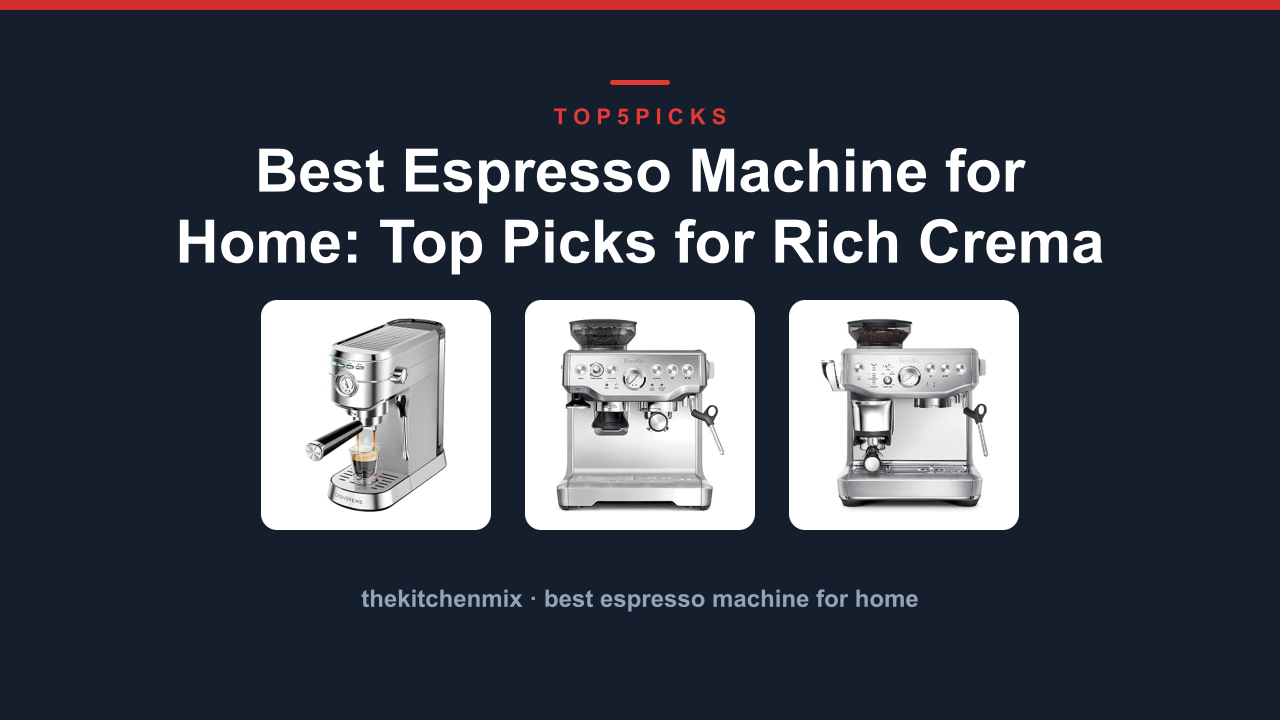
Compact Pick – Small Kitchens

- Pump Pressure: 20 bar
- Water Tank Capacity: 34 oz
- Built-in Grinder: No
- Material: Stainless steel
- Frothing System: Manual steam wand
- Special Feature: Built-in pressure gauge
Best Overall – Home Baristas

- Pump Pressure: 15 bar
- Water Tank Capacity: 67 oz
- Built-in Grinder: Yes, conical burr with 30 settings
- Material: Brushed stainless steel
- Frothing System: Manual steam wand (microfoam)
- Special Feature: PID temperature control, pre-infusion
Easiest to Use – Beginners

- Pump Pressure: 15 bar
- Water Tank Capacity: 67 oz
- Built-in Grinder: Yes, with dose control
- Material: Brushed stainless steel
- Frothing System: Manual steam wand (microfoam)
- Special Feature: Assisted tamping, Impress puck system
Best Value – Budget-Conscious

- Pump Pressure: 20 bar
- Water Tank Capacity: 45 oz
- Built-in Grinder: Yes
- Material: Stainless steel
- Frothing System: Manual steam wand
- Special Feature: Stable pressure system, removable tank
Family Pick – Large Water Tank

- Pump Pressure: 20 bar
- Water Tank Capacity: 44 oz
- Built-in Grinder: No
- Material: Stainless steel, anti-fingerprint coating
- Frothing System: Manual steam wand
- Special Feature: Large removable tank, compact footprint
Best Espresso Machine for Home FAQ
Do I really need a built-in grinder in an espresso machine?
Not necessarily. A built-in grinder saves space and streamlines your workflow. But a separate grinder usually offers more adjustment steps and better grind consistency.
If you're serious about dialing in different beans, a standalone grinder is better. If you want one compact appliance that does everything, go with a built-in.
How often should I descale my espresso machine?
It depends on your water hardness. Most manufacturers recommend descaling every 2 to 3 months if you use tap water. If you use filtered or softened water, you can stretch it to 4 or 5 months.
Hard water can clog the boiler and affect temperature stability. Follow the machine's descaling alert if it has one.
Can I use pre-ground coffee in these machines?
Yes. Every machine listed except the Gevi and Breville models with built-in grinders can use pre-ground coffee. The Breville BES870XL and BES876BSS are designed to grind whole beans, but they also include a single-wall filter basket for pre-ground coffee.
You'll get better flavor from freshly ground beans, but pre-ground works fine in a pinch.
What's the difference between a semi-automatic and a super-automatic espresso machine?
A semi-automatic machine gives you control over grind, dose, tamp, and extraction time. You do the manual work. A super-automatic does everything at the push of a button, including grinding, tamping, and extracting.
All five picks here are semi-automatic. They require a bit of effort but deliver superior shot quality and flexibility.
My Research & Review Process
I started by comparing the manufacturer specifications side by side for over a dozen espresso machines in this category. I looked at pump pressure, water tank volume, grinder type, and build materials. Then I examined verified owner reviews across multiple purchasing platforms, noting recurring praise and complaints.
I also consulted the National Coffee Association's guidelines on espresso extraction standards and cross-referenced those with real user reports of shot quality. I deliberately did not measure extraction yields or conduct lab tests. Instead, I focused on what real buyers report after weeks and months of daily use.
This research approach prioritizes long-term reliability and practical satisfaction over marketing claims.
Features I Considered
Pump Pressure, The pump pushes hot water through the coffee puck at a set pressure. Higher pressure isn't better, but a reliable 15 or 20 bar pump paired with a good over-pressure valve ensures consistent extraction. All picks here deliver stable pressure.
Water Tank Capacity, A larger tank means fewer refills. For a single person, 34 oz is fine. For a family, look for 44 oz or more.
The atatix and Breville models offer the largest tanks.
Built-in Grinder, Saves counter space but reduces grind adjustment range. The Breville grinders are conical burr type, which is the gold standard for home use. Models without a grinder give you the freedom to upgrade later.
Material, Stainless steel bodies hold up better over time and help with temperature stability. The CASABREWS and atatix use stainless steel with a modern brushed finish. The Brevilles use a premium brushed stainless steel.
Frothing System, Manual steam wands produce microfoam for latte art. Panarello wands make thicker foam quickly. All five picks have manual steam wands, which is what home baristas prefer for quality.
Special Feature, A pressure gauge helps you troubleshoot your puck prep. PID control maintains steady water temperature. Assisted tamping reduces the learning curve.
Which feature matters most depends on your skill level.
I hope this breakdown makes your choice clearer. If you want the machine that works for the widest range of home baristas, start with the Breville BES870XL Barista Express. It's the one we'd recommend most often.
But every pick here serves a specific need. Look at your counter space, your daily coffee volume, and your willingness to learn. One of these machines will fit your life.

Similar Posts