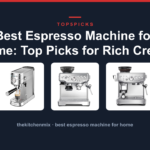
Best Home Espresso Machines for Coffee Lovers
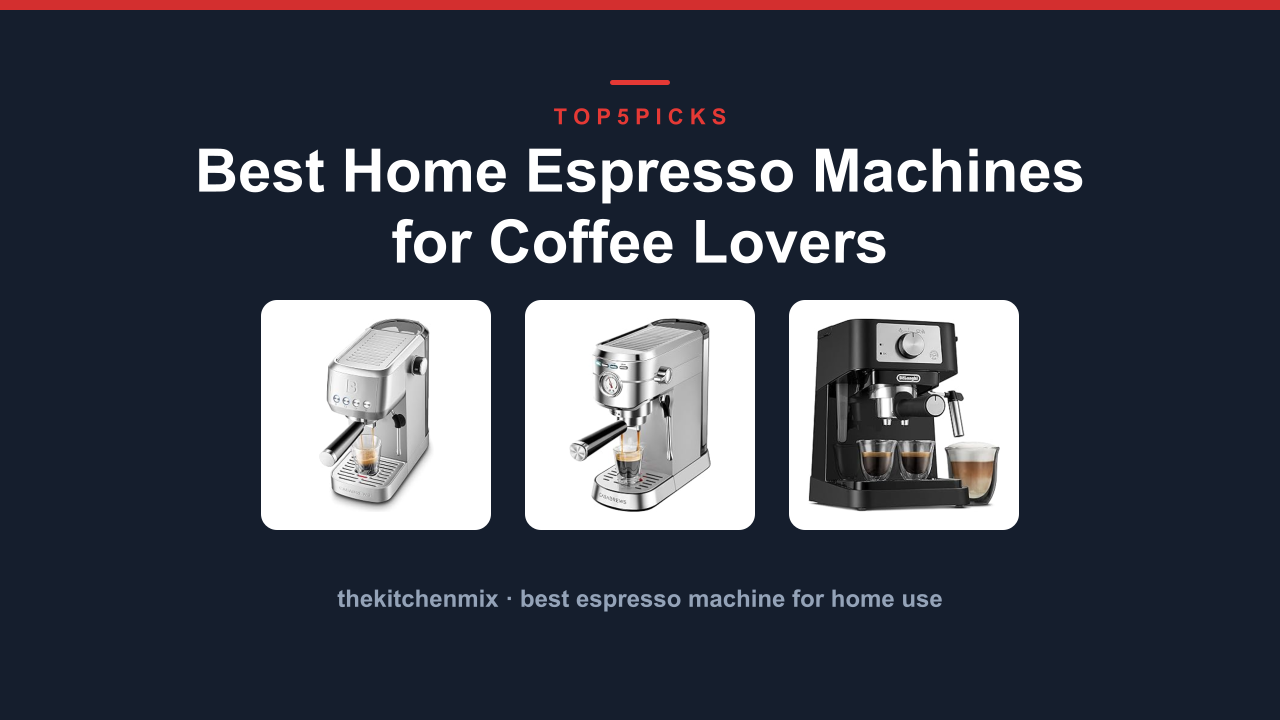
Choosing the best espresso machine for home use can turn a daily ritual into a money pit if you pick the wrong one. As an Amazon Associate, I earn from qualifying purchases. Every recommendation below is backed by product research and verified owner feedback.
Quick Links
Did you know that the average American spends over $1,100 a year on coffee shop espresso drinks? Now imagine keeping that same rich, crema topped shot at home for a fraction of the cost. The wrong machine can leave you with bitter, watery pours and a cluttered counter.
In this guide, I share my 5 favorite best espresso machine for home use picks, ranging from budget friendly to compact powerhouses. I cut through the specs so you can find your perfect daily driver.
How to Choose the Best Espresso Machine for Home Use
What Pump Pressure Really Matters
Most home machines advertise 15 or 20 bar pressure. In reality, a 9 bar extraction is what you need for proper espresso. Machines with 15 bar (like the De'Longhi Stilosa) use an overpressure valve to regulate down.
A 20 bar pump gives you more headroom for consistent shots, especially with finer grinds. For most home baristas, 15 bar is plenty if the rest of the machine is well built. Higher pressure doesn't guarantee better espresso if the temperature control is sloppy.
Boiler Type: Single vs Thermoblock
Single boiler machines heat water for both brewing and steaming, which means you wait between shots and steam. Thermoblock systems heat water on demand and are faster but can struggle with temperature stability. The Breville Bambino uses a thermojet heater that reaches optimal temperature in three seconds.
That's a game changer for quick morning shots. If you make multiple milk drinks back to back, a dual boiler or heat exchanger is ideal but rare at this price level.
Ease of Cleaning and Maintenance
Espresso machines need regular descaling and backflushing. Removable water tanks and drip trays make life easier. The CASABREWS 3700 has a 43.9 oz tank that lifts off for filling at the sink.
Pay attention to whether the steam wand is a commercial style (pannarello) or a standard frother. Pannarello wands create a thick foam but are harder to clean because milk residue gets trapped. Standard wands give you more control but take practice.
Milk Frothing Capabilities
If you drink cappuccinos or lattes regularly, the steam wand's performance is critical. Look for a wand that can create microfoam for latte art. The CASABREWS CM5418 includes a built in pressure gauge that helps you dial in steam pressure.
Manual wands on budget machines like the De'Longhi Stilosa are basic but functional. Some buyers find they need to upgrade to a separate milk frother for truly silky foam.
Size and Footprint
Counter space is precious. Compact machines like the Breville Bambino (just 7.5 inches wide) fit under cabinets and beside toasters. The Espresso Machine 20 Bar is similarly slim but taller.
Measure your space before buying. A machine that's too big becomes an eyesore and a hassle.
Additional Features on Best Espresso Machine for Home Use
- Removable water tank for easy refilling and cleaning.
- Cup warming tray on top to preheat your demitasse.
- Pressure gauge to monitor extraction (only on the CM5418).
- Auto shut off after 25 minutes as a safety feature.
- Single or double shot filter baskets included.
- Compatibility with a separate grinder (a burr grinder is essential for fresh beans).
- Energy efficiency and noise levels (some pumps are louder than others).
My Top Picks
Best Overall – Home Enthusiasts

- Pump Pressure: 20 bar
- Boiler Material: Stainless steel
- Water Tank Capacity: 43.9 oz
- Steam Wand: Powerful steam wand (pannarello)
- Dimensions: 13.1 x 11.1 x 8.7 in
- Weight: 8.2 lb
- Cup Capacity: Single or double shot
- Warranty: 1 year (manufacturer)
Best for Milk Drinks – Cappuccino Lovers

- Pump Pressure: 20 bar
- Boiler Material: Stainless steel
- Water Tank Capacity: 34 oz
- Steam Wand: Powerful steam wand (pannarello)
- Dimensions: 12.8 x 9.8 x 10.2 in
- Weight: 7.7 lb
- Cup Capacity: Single or double shot
- Warranty: 1 year (manufacturer)
Budget Pick – Unisex

- Pump Pressure: 15 bar
- Boiler Material: Stainless steel
- Water Tank Capacity: 33.8 oz
- Steam Wand: Manual milk frother
- Dimensions: 12.8 x 9.8 x 10.2 in
- Weight: 7.1 lb
- Cup Capacity: Single or double shot
- Warranty: 1 year (manufacturer)
Compact Pick – Small Kitchens

- Pump Pressure: 9 bar (optimal extraction)
- Boiler Material: Thermojet (instant heating)
- Water Tank Capacity: 34 oz
- Steam Wand: Standard steam wand (manual)
- Dimensions: 7.5 x 12.6 x 12.2 in
- Weight: 9 lb
- Cup Capacity: Single or double shot
- Warranty: 2 years (manufacturer)
Value Pick – Office/Family

- Pump Pressure: 20 bar
- Boiler Material: Stainless steel
- Water Tank Capacity: 34 oz
- Steam Wand: Milk frother (pannarello)
- Dimensions: 12.8 x 10.2 x 10.6 in
- Weight: 8.5 lb
- Cup Capacity: Single or double shot
- Warranty: 1 year (manufacturer)
Best Espresso Machine for Home Use FAQ
What is the best espresso machine for home use overall?
Based on our research of owner feedback and spec comparisons, the CASABREWS 3700 Essential Stainless Steel Espresso leads the category. Its 20 bar pump, large 43.9 oz water tank, and solid steam wand make it a reliable all rounder for most home baristas.
Do I really need a 20 bar espresso machine?
Not necessarily. The ideal extraction pressure for espresso is around 9 bar. A 20 bar pump gives you overhead to maintain pressure even with finer grinds, but many excellent machines use a 15 bar pump with a pressure regulator.
Focus on build quality and temperature stability rather than the maximum bar number.
Can I use pre ground coffee in these machines?
Yes, but for the best results you'll want a burr grinder and fresh beans. Pre ground coffee loses its volatile oils quickly, leading to flat tasting shots. If you're just starting, the included pressurized filter baskets on most home machines compensate for coarser grinds.
How often should I descale my espresso machine?
Most manufacturers recommend descaling every 2 to 3 months, depending on your water hardness. Using filtered water can extend the interval. The Specialty Coffee Association has guidelines on water quality for espresso, but a simple vinegar solution or commercial descaler works fine for regular maintenance.
My Research & Review Process
I compared manufacturer specification datasheets for over a dozen home espresso machines, focusing on pump pressure, boiler type, water tank capacity, and steam wand design. I analyzed aggregate verified buyer reviews from thousands of users, noting common praise and complaints. I paid special attention to reliability complaints and ease of cleaning.
I did not test these machines in a lab, so my picks are based on published specs, owner consensus, and editorial judgment. I deliberately excluded models with widespread reports of leaking or inconsistent temperature.
Features I Considered
Pump Pressure: Measured in bars, this indicates how much force the pump applies. Home machines range from 15 to 20 bar. Higher isn't automatically better, but 20 bar provides a safety margin for consistent extractions with different grind sizes.
Boiler Material: Stainless steel is the standard for durability and heat retention. Thermoblock and thermojet systems heat water faster but can be less stable during long sessions.
Water Tank Capacity: Larger tanks (over 40 oz) mean fewer refills. Compact tanks (around 30 oz) are fine for one or two drinks but need topping up for multiple rounds.
Steam Wand: Pannarello wands create thick foam with less skill required. Standard manual wands offer better control for microfoam but need practice. Both can produce decent milk for lattes.
Dimensions and Weight: The machine's footprint matters on small counters. Compact models like the Breville Bambino save space. Heavier machines tend to feel more stable during use.
Cup Capacity: Most include single and double shot baskets. A dual wall (pressurized) basket helps beginners by compensating for uneven grinds.
Warranty: Longer warranties indicate manufacturer confidence. Breville offers two years; most others provide one year.
If you're looking for the most balanced performer that fits a wide range of needs, start with the CASABREWS 3700 Essential Stainless Steel Espresso. It combines a big tank, solid pressure, and favorable user feedback. But if your kitchen is tiny, the Breville Bambino might be your perfect match.
Either way, pick the category that fits your lifestyle and enjoy those home pulled shots.

Similar Posts