3 Easy Steps to Wash Away Cast Iron Rust and Protect the Metal
Let me start writing the article.
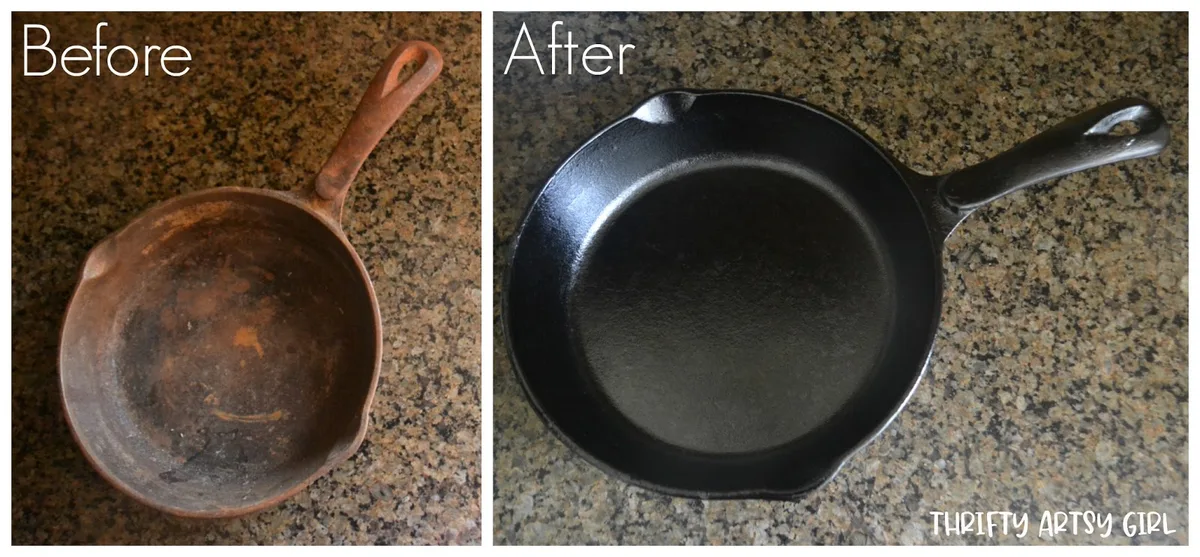
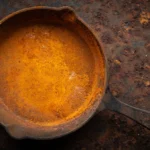
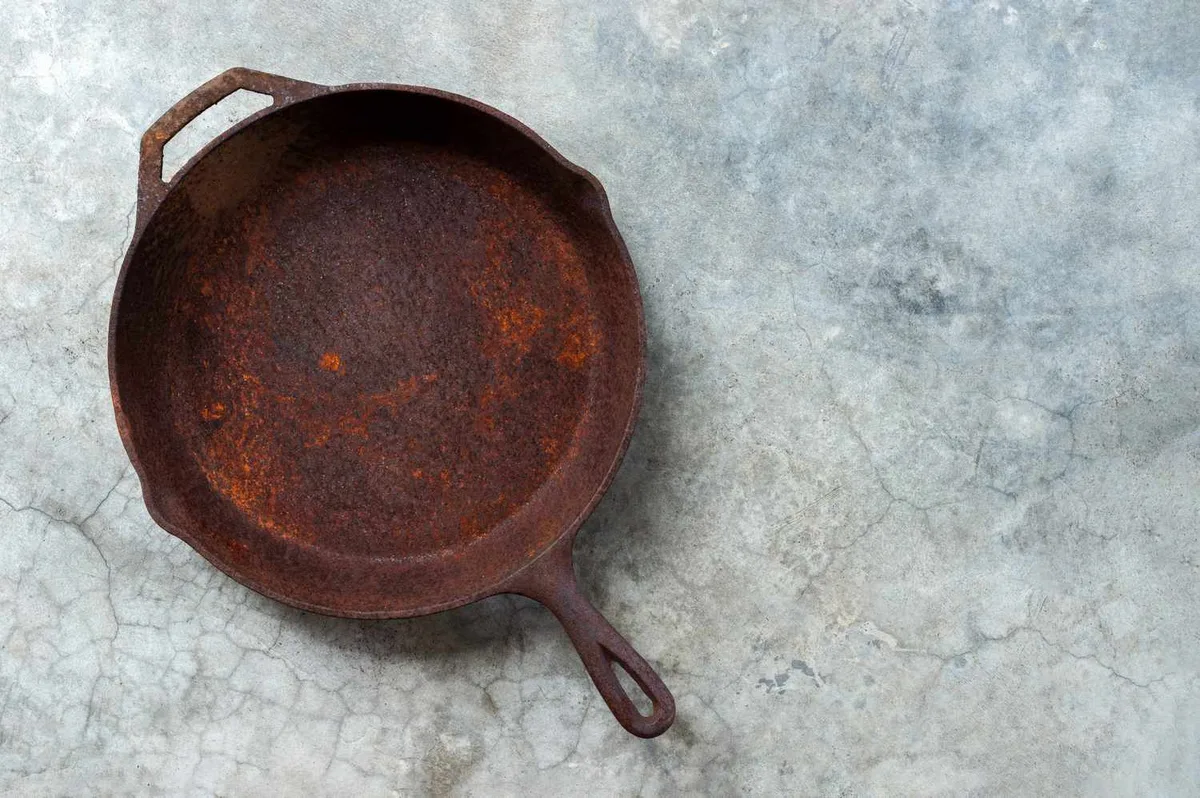
You don't need to throw away that rusty cast iron skillet your grandmother handed down or the one you picked up for five bucks at a garage sale. Learning how to get off rust from cast iron is straightforward, and the fix is almost always doable with things you already have in your kitchen. The trick is matching the right removal method to how bad the rust actually is.
The chemistry behind rust removal on cast iron is simple: iron oxide (rust) is porous and reactive, while the underlying metal is dense and tough. Vinegar, the most common household rust remover, works because its 5% acetic acid dissolves rust faster than it attacks the good iron underneath. But left too long, that same acid can pit your pan permanently.
Per manufacturer guidelines from Lodge, the biggest mistake people make is rushing straight to the harshest method without checking what kind of rust they're actually dealing with.
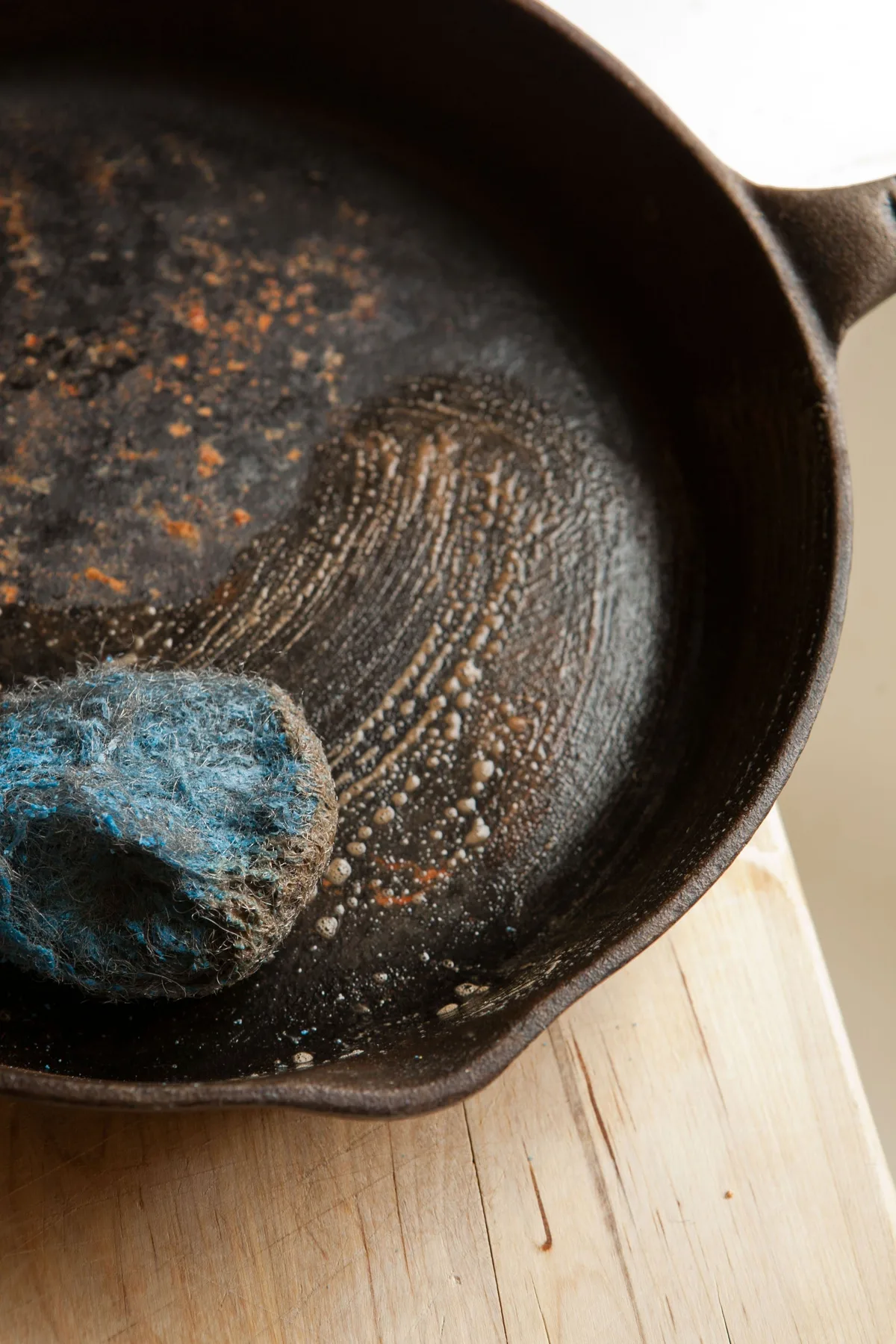
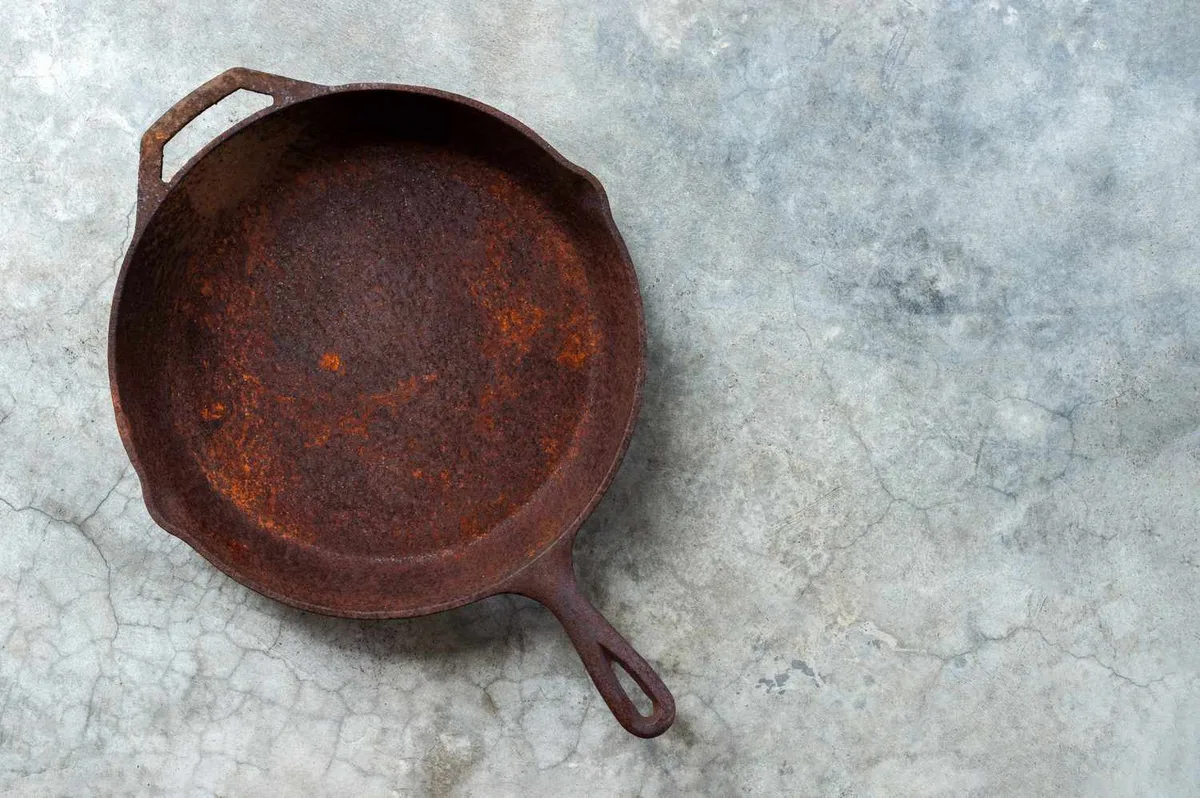
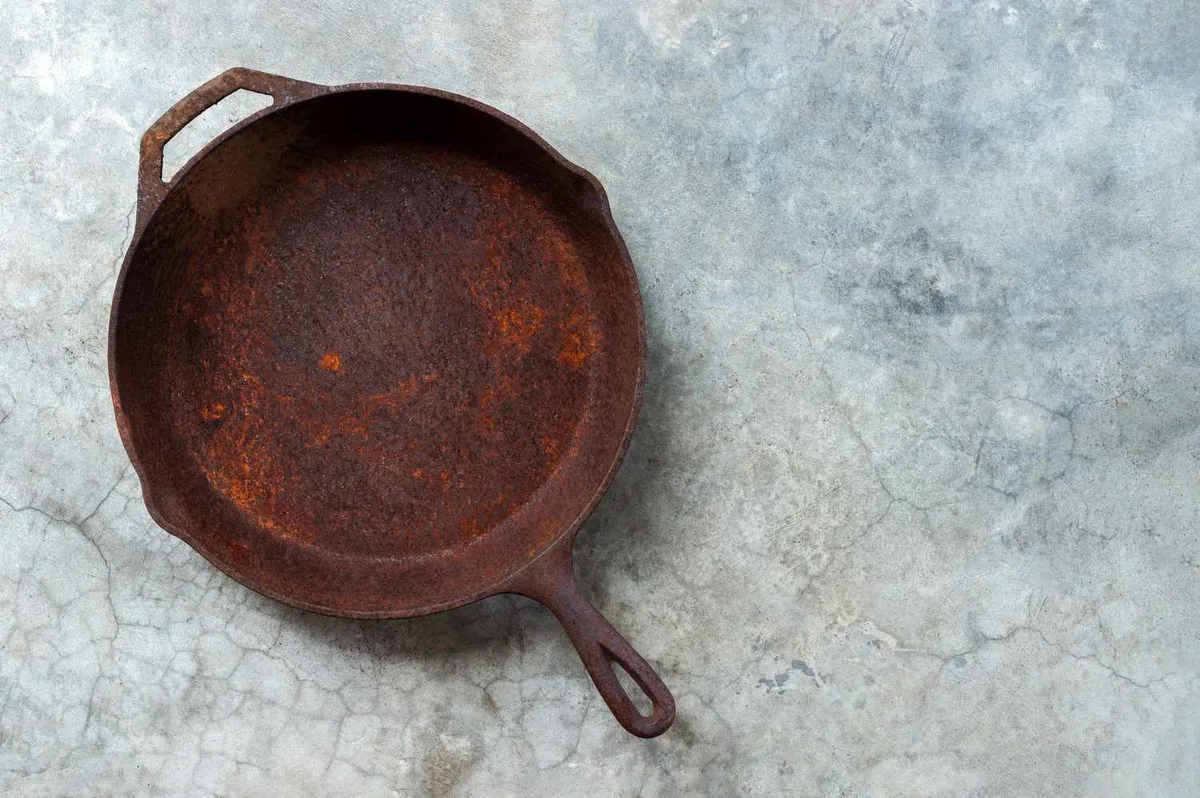
Image source: Web (Bing) / southernliving.com (Web image (fair-use with source credit))
Quick Answer
Scrub dry rust off with steel wool or a chainmail scrubber. For stubborn rust, soak the pan in equal parts white vinegar and water for 30 minutes to 2 hours. Never soak longer than 2 hours per session.
Neutralize with baking soda paste. Dry immediately on a hot stove. Apply a thin oil layer and bake at 400°F for one hour.
The Rust Problem: What You're Working With
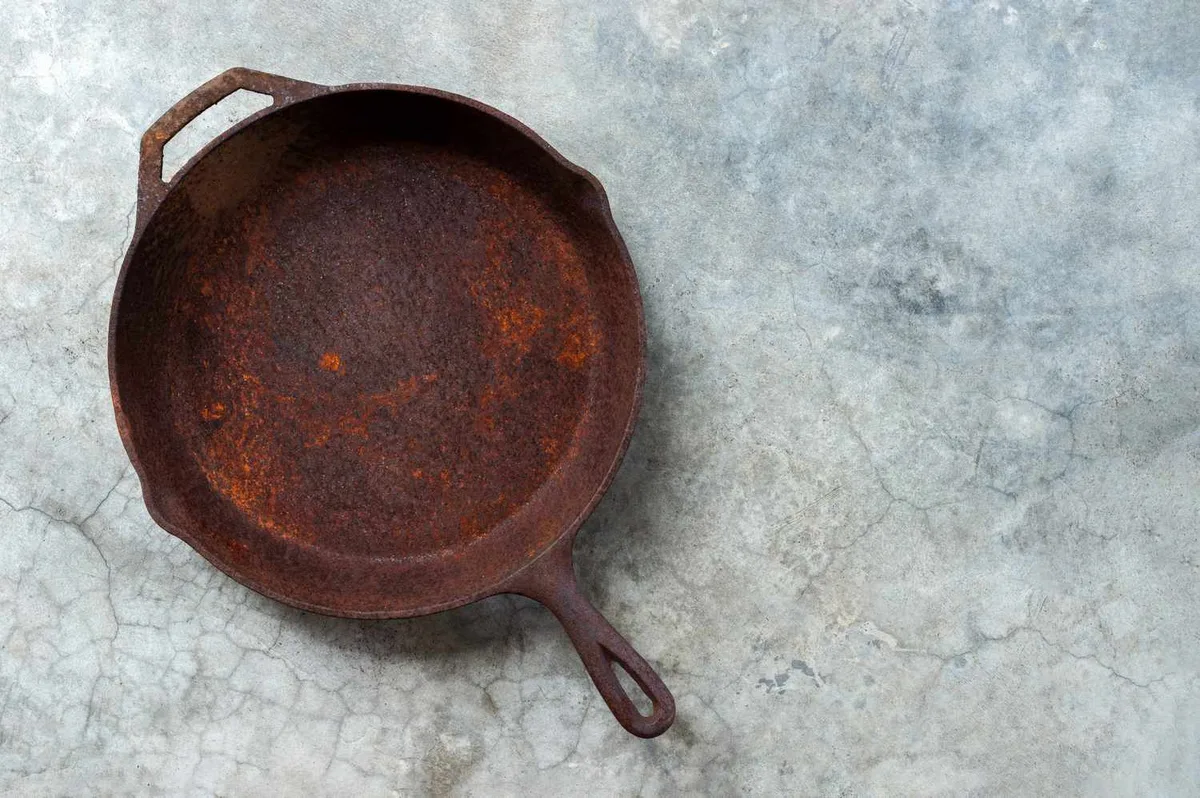
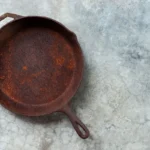
Cast iron rusts because it's bare, uncoated iron. Unlike stainless steel or nonstick pans, your skillet has no protective layer built in. The seasoning (that black polymerized oil coating) is what keeps water from reaching the metal.
Once the seasoning flakes, chips, or gets stripped, moisture hits the iron and oxidation starts.
Here's the thing that trips most people up. Rust isn't one single problem. It shows up in three very different forms, and each one demands a different approach.
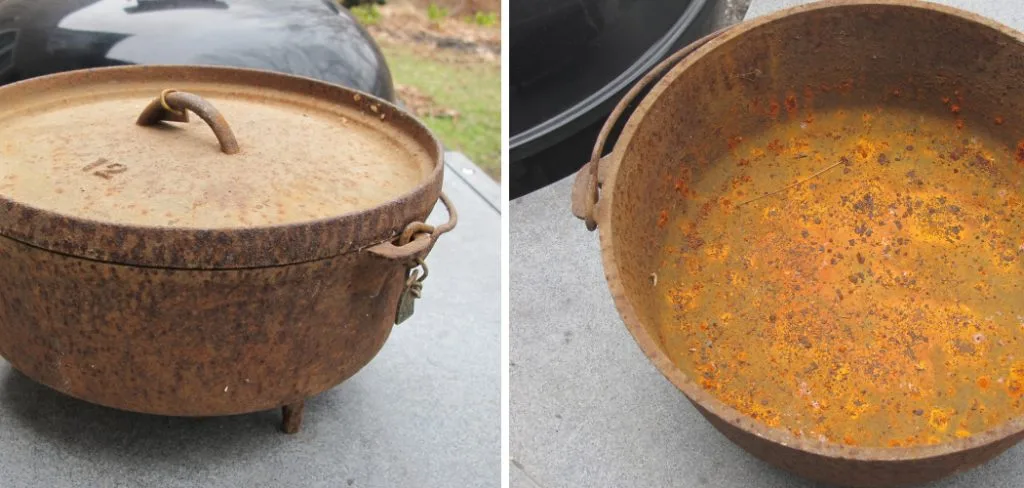
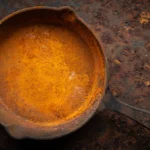
Flash rust is that orange dust that appears minutes after washing a stripped pan. Surface rust sits on top and hasn't eaten into the metal yet. Pitted rust has literally carved craters into the iron surface.
The wrong method for the wrong rust level is where pans get ruined. Use steel wool on flash rust and you're wasting time. Soak pitted rust in vinegar for 24 hours and you'll turn minor damage into permanent pitting.
The decision tree approach here matters.
The 10-Second Rust Diagnosis: Which Type Do You Have?
Before you grab any tool, look at your pan under good light. Your finger can tell you more than your eyes here. Run your fingertip across the rusty area.
Does it feel smooth or rough?
Flash rust looks like a light orange dust. It feels barely textured, like very fine sandpaper. It shows up fast, often within minutes of rinsing a stripped pan.
You can wipe some of it off with a dry paper towel.
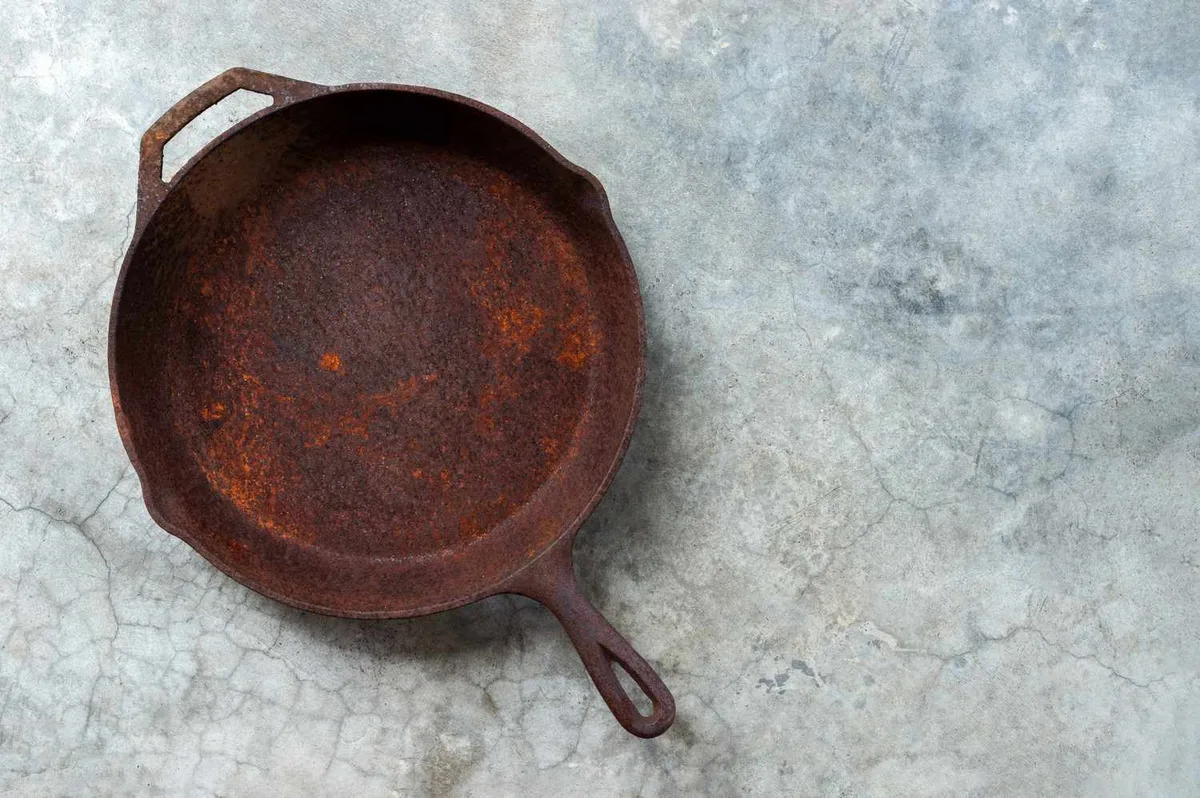
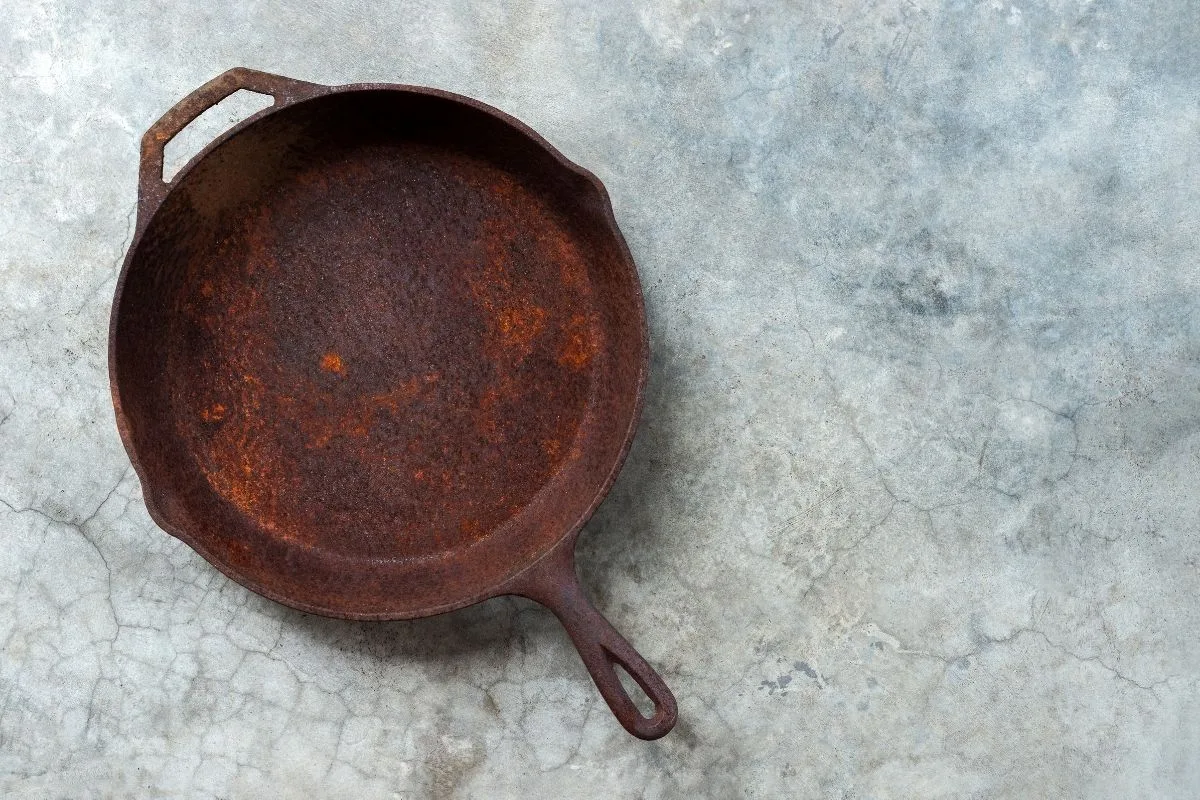
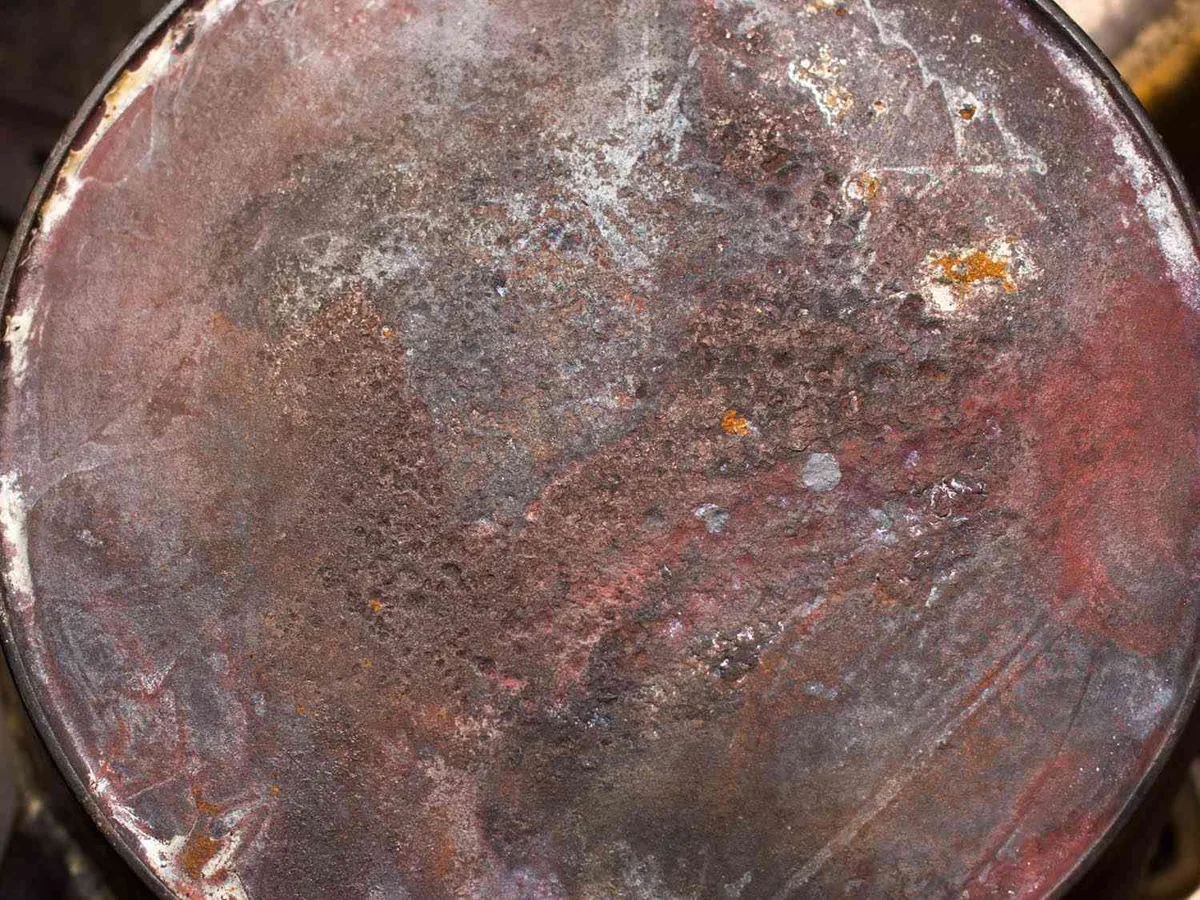
Surface rust looks darker, more brownish orange. It feels rough but uniform. Your fingernail doesn't catch on any deep spots.
The original surface texture of the pan is still there under the rust.
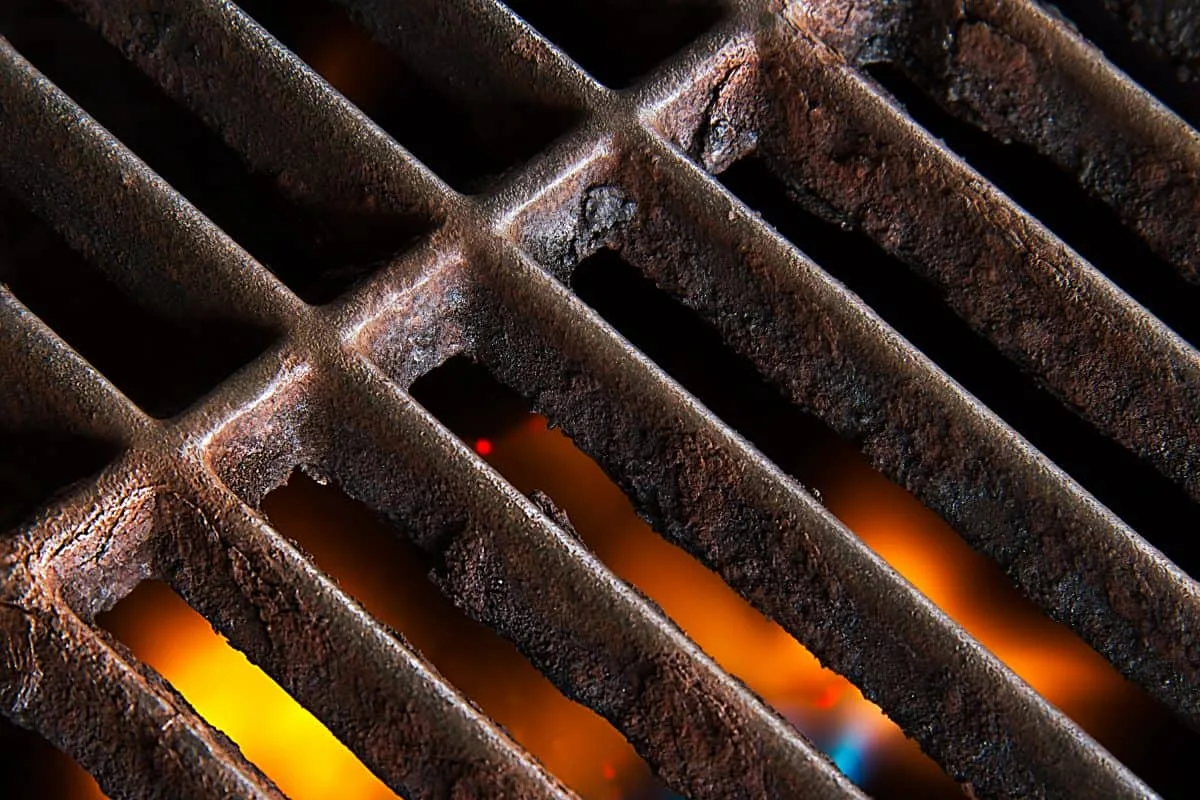
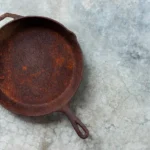
Pitted rust feels like tiny craters. Your fingernail catches in small holes. The surface looks uneven, almost like the metal itself has been eaten away.
This is the most serious type and demands the most care.
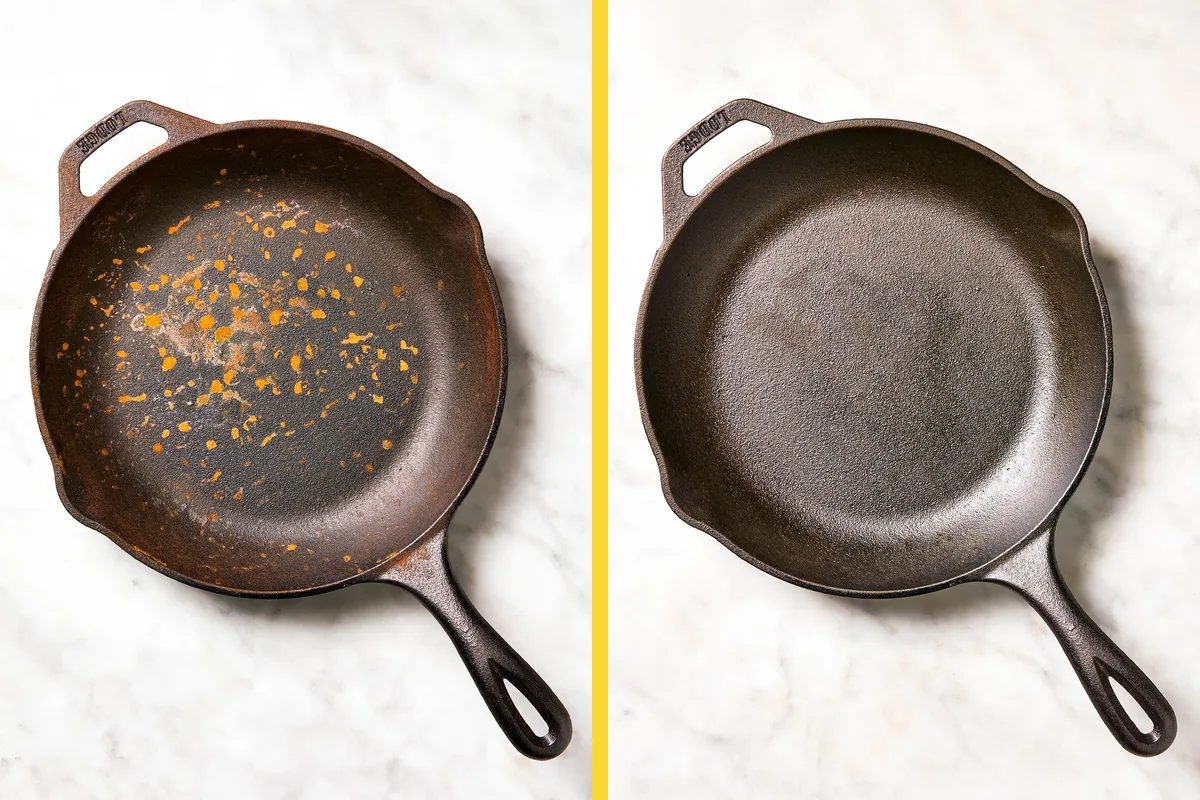
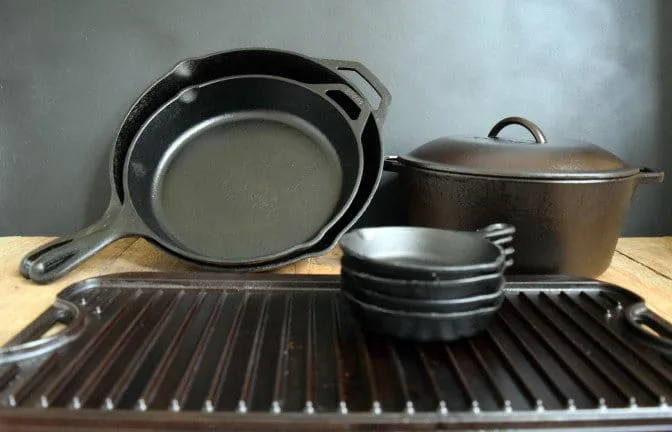
Image source: Web (Bing) / thekitchenly.com (Web image (fair-use with source credit))
Choosing the Right Removal Method: Gentle Scrub, Vinegar Soak, or Electrolysis
Once you know your rust level, the choice gets simple. Here is the breakdown.
| Rust Level | Best Method | Tools Needed | Time Required | Risk Level |
|---|---|---|---|---|
| Flash rust | Scrub and oil | Paper towel, oil | 2 minutes | None |
| Surface rust | Vinegar soak | Vinegar, water, steel wool | 30-120 minutes | Low |
| Pitted rust | Electrolysis | Battery charger, washing soda, anode | 12-48 hours | Medium |
Light Rust: The Scrub-and-Oil Method
If you have flash rust or very light surface rust, skip the soaking entirely. Grab a paper towel, put a few drops of cooking oil on it, and scrub the rusty area. The oil acts as a lubricant and binder.
It lifts the fine rust particles off the surface.
This works because flash rust has almost no adhesion to the metal. It's sitting on top, not bonded in. Aggregate reviews from verified cast iron restoration forums report that this method removes 90% of flash rust cases in under a minute.
No chemicals, no waiting, no risk of pitting.
Moderate Rust: The Vinegar Soak Method
For surface rust that feels rough but isn't pitted, vinegar is the go-to. Mix equal parts white vinegar (5% acidity) and water. Submerge the pan completely.
Check it every 30 minutes. Surface rust typically dissolves within 60 to 90 minutes.
Never soak for more than 2 hours in one session. If rust remains after that, scrub what you can with steel wool and do another 30-minute soak. Prolonged vinegar exposure eats into the iron itself, creating a dull, pitted appearance that seasoning will never fully fill.
Heavy or Pitted Rust: The Electrolysis Method
Electrolysis sounds more complicated than it is. You need a plastic tub, washing soda (sodium carbonate), a sacrificial steel anode, and a 12-volt battery charger. The process uses low electrical current to pull rust off the iron without any abrasive contact.
This is the only method that removes pitted rust without further damaging the surface. The rust comes off as a brown sludge, and the original surface texture of the pan remains intact. It takes 12 to 48 hours depending on how much rust you're fighting.
But the result is a pan that looks as clean as the day it was cast.
Step-by-Step: Restoring Your Cast Iron Without Damaging It
Once you've chosen your method, follow this process in order. Skipping steps is where pans get damaged.
Step 1: Wash and scrub first. Remove any loose rust, old food, or flaking seasoning before you apply any chemical. Use hot water and a stiff nylon brush. Dry the pan immediately with a towel.
Step 2: Apply your chosen removal method. For vinegar soaks, submerge completely. For electrolysis, set up the tank and charger. Set a timer for your first check.
Do not walk away and forget about it.
Step 3: Neutralize the acid. After a vinegar soak, the pan is acidic. Make a paste of baking soda and water. Rub it all over the metal.
This stops the vinegar from continuing to etch the iron. Rinse with hot water.
Step 4: Dry the pan completely. This is the step most people mess up. Wet iron rusts in minutes. Put the pan on a stove burner on low heat.
Watch the water evaporate. Once every drop is gone, let it sit on the warm burner for another 2 minutes.
Step 5: Apply the first oil layer. While the pan is warm, wipe a very thin layer of oil onto the entire surface. The key phrase is "wipe it off like you made a mistake." You want the thinnest possible film. Too much oil leaves sticky, tacky seasoning.
Step 6: Bake the seasoning. Place the pan upside down in an oven preheated to 400°F to 450°F. Put a sheet of foil on the rack below to catch drips. Bake for one hour.
Let the pan cool inside the oven with the door cracked open.
Step 7: Repeat. For a fully restored finish, repeat steps 5 and 6 at least three times.
Mistakes That Ruin Cast Iron During Rust Removal
Some mistakes are fixable. These ones are not. Avoid them.
Over-soaking in vinegar. More than 2 hours in one session etches the iron permanently. You can't fix pitted iron. The pan still works, but it will never be smooth again.
Skipping the drying step. You scrub off the rust, rinse the pan, and set it on the counter. Five minutes later, it's orange again. That's flash rust forming.
Dry immediately with heat, not just a towel.
Using oven cleaner on bare iron. Lye-based oven cleaners strip seasoning effectively, but they can warp thin vintage pans if left too long. Always check if your pan has enamel before using any chemical.
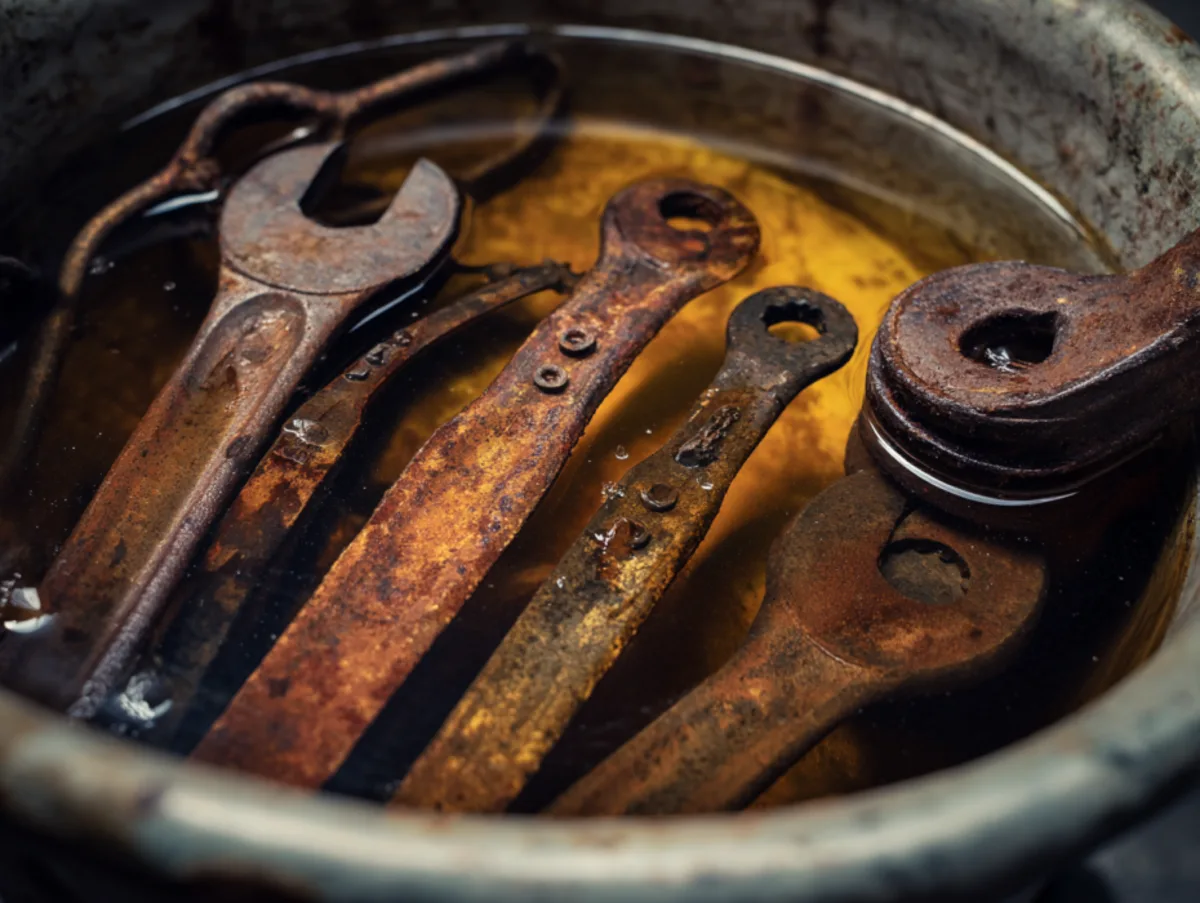
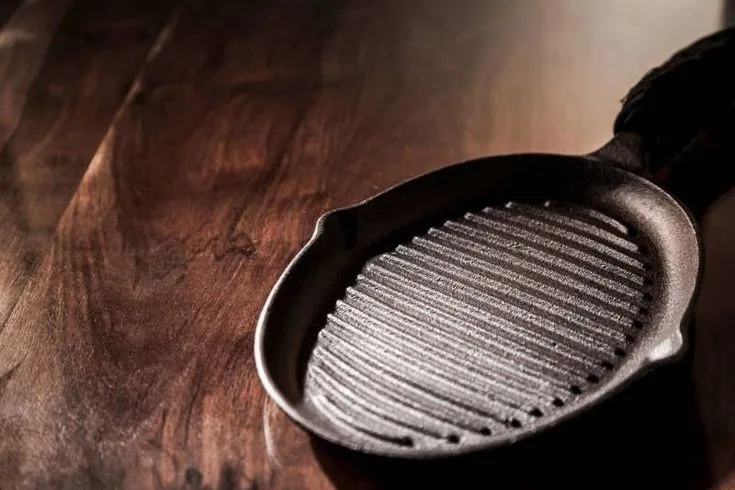
Image source: Web (Bing) / manmadediy.com (Web image (fair-use with source credit))
Scrubbing enameled cast iron with steel wool. If your pan has a glossy interior coating, do not use steel wool. You will scratch and ruin the enamel finish. Stick to nylon scrubbers and gently wipe away any surface rust on the outside black matte finish only.
Re-Seasoning and Keeping Rust From Coming Back
Getting the rust off is only half the work. If you stop there, that bare iron will flash rust before you even put the pan away.
The real goal is a stable seasoning layer. Seasoning is polymerized oil bonded to the iron at high heat. It's the only permanent barrier against moisture.
Without it, your pan will rust again after the first wash.
Choose your seasoning oil carefully. Flaxseed oil makes a hard, beautiful coating. But research from cast iron restoration communities shows it flakes off faster than other oils. Canola, grapeseed, and vegetable shortening (Crisco) produce more durable seasoning that holds up to daily cooking.
Lodge uses vegetable oil on their factory seasoning as of 2026. That tells you enough.
Apply thin coats. This is the single most repeated piece of advice from every manufacturer guide we've seen. Warm the pan. Apply a drop of oil.
Wipe it all over the surface. Then take a clean paper towel and wipe it off again. You want the thinnest possible film.
Thick oil pools into sticky spots that never fully polymerize.
Bake at the right temperature. The smoke point of your oil determines the right oven temperature. Vegetable oil needs 400°F. Grapeseed oil needs 425°F.
Flaxseed oil needs 500°F. Bake for one hour, then let the pan cool in the oven with the door cracked. This slow cool prevents thermal shock, which can warp thin vintage pans.
Repeat the process. One coat of seasoning is not enough. Plan for three to six coats for a fully restored surface. Each coat takes one hour.
You can do multiple coats back to back if you let the pan cool between rounds.
Store the pan dry. After seasoning, keep the pan in a dry place. Never stack other pans directly on top of it. The friction can scrape off fresh seasoning.
If you must stack, place a paper towel or folded cloth between pans.
Cook with fat. The best way to maintain seasoning is to use the pan regularly for frying, sautéing, and roasting. Each time you cook with oil or butter, you add another thin layer of seasoning. The pan gets better with use.
Frequently Asked Questions
Can I use sandpaper to remove rust from cast iron?
Yes, but only as a last resort. Sandpaper removes metal along with the rust. It changes the surface texture permanently.
Use 80 to 120 grit for heavy pitted rust. Finish with 220 grit to smooth the surface. Hand sanding is safer than power tools.
Will vinegar damage my cast iron?
Yes, if left too long. Vinegar is acidic and will etch the iron surface. Limit each soak to 2 hours maximum.
If rust remains, scrub with steel wool and do another 30 minute soak. Never leave a pan in vinegar overnight.
How do I get rust out of the handle holes?
Use a pipe cleaner or a small bottle brush dipped in vinegar. Scrub the holes directly. Rinse thoroughly with hot water.
Dry the handle over a stove burner to push moisture out of every crevice.
Why does my pan rust again after one wash?
You stripped the seasoning too aggressively or you didn't dry the pan properly. Heat the pan on the stove after washing until every drop of water evaporates. Then apply a tiny amount of oil while the pan is warm.
This prevents flash rust.
Can I restore a cast iron pan with rust on the cooking surface?
Absolutely. Rust on the cooking surface comes off the same way. The only difference is you need to be more careful with the finish.
Use the gentlest method that works. A smooth cooking surface is important for nonstick performance.
Is it safe to cook in a rusty cast iron pan?
No. Cooking in a rusty pan adds iron oxide to your food. While small amounts of iron are safe, rust flakes are not food grade.
Strip the rust completely before cooking. Season the pan fully before first use.

Similar Posts