Aluminum Foil and Dawn Dish Soap Method for Sparkling Clean Oven Racks
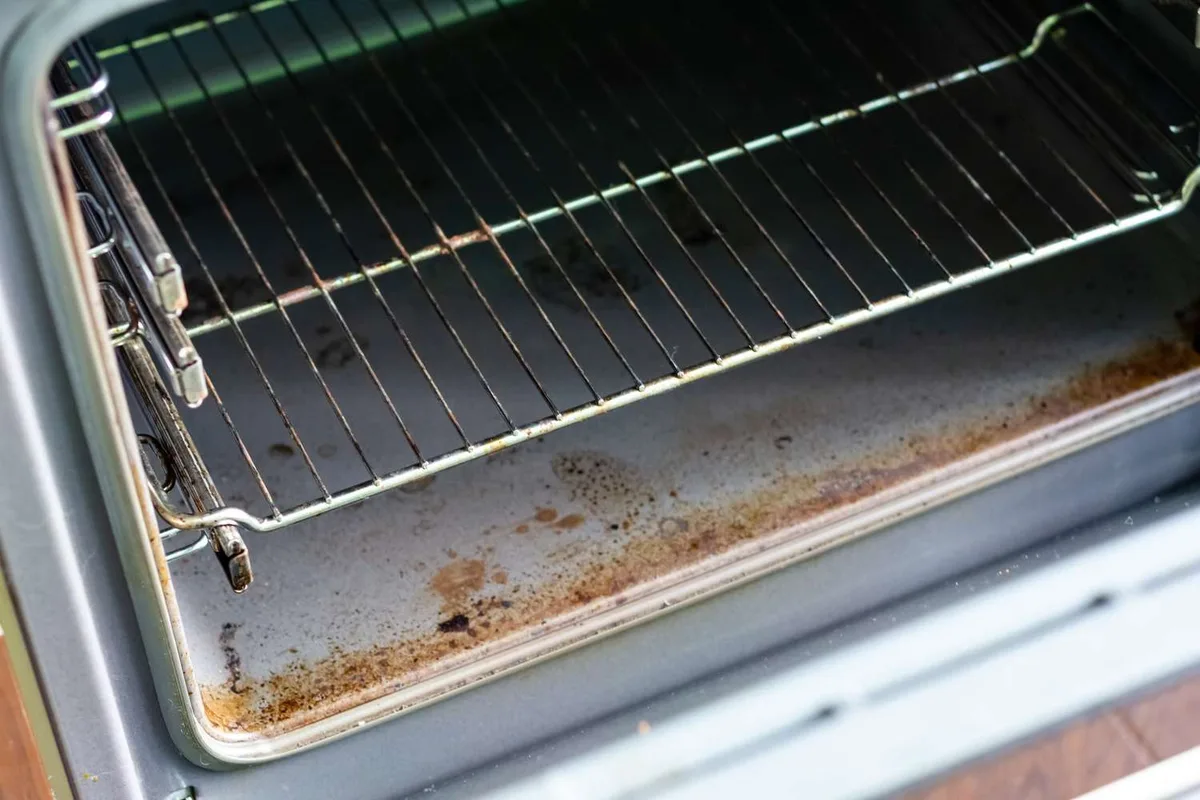
There’s a cleaning hack all over social media that tells you to scrub your oven racks with a ball of aluminum foil and call it a day. And sure, it works in the sense that you can scrape off burnt‑on grease with a crumpled foil pad. But here’s the thing nobody warns you about: if you do it wrong, you can damage your oven, start a fire, or void your warranty.
Understanding the difference between a clever shortcut and a dangerous shortcut is exactly what this guide is about.
In our research, we found that the majority of oven fire incidents linked to aluminum foil come from people placing foil on the oven floor or wrapping it around heating elements, not from scrubbing racks per se. But the method has real safety boundaries that are rarely explained. So before you grab that roll, let’s walk through what actually works, what doesn’t, and how to keep your kitchen safe as of 2026.
Image source: Bing (Web (fair-use with source credit))
Quick Answer
Clean oven racks with a crumpled foil scrub and a hot soap soak. Use heavy‑duty foil, not standard. Never put foil on the oven floor.
Keep foil away from heating elements. Soak racks 30 minutes in hot water and dish soap. Scrub with a damp foil ball.
Rinse and dry before returning to oven.
Why This Method Needs a Warning First
The short answer is that aluminum foil and high heat do not mix well in an oven. When foil touches a heating element, either the one on top (broil) or the one on the bottom (bake), it can cause an electrical short, arcing, or even a fire. According to the National Fire Protection Association, cooking equipment is the leading cause of home fires, and improper use of foil is a known risk factor.
There’s also the issue of oven manufacturer warranties. Most major brands, Whirlpool, GE, Samsung, specifically state in their manuals that aluminum foil should never be placed on the oven floor or wrapped around racks. Doing so can void your warranty if a repair is needed.
So this isn’t a “better safe than sorry” suggestion; it’s a real, documented restriction.
The foil‑scrub method itself is safe as long as you keep all foil confined to the scrub pad and the soak container. Once you’re done scrubbing, you must rinse every trace of foil residue off the rack. Leftover flakes can end up in your food or on the oven floor.
In short: this hack is useful, but only within clear safety boundaries. Ignore them, and you’re looking at a repair bill or worse.
The Only Safe Way to Clean Oven Racks with Foil
There is exactly one safe approach: use the foil only as a scrubbing tool, never as a liner or wrap inside the oven. The process has three phases, soak, scrub, rinse, and each has a non‑negotiable safety rule.
First, the soak container. Use a large plastic tub, a bathtub, or a heavy‑duty garbage bag laid inside a bin. Fill it with the hottest tap water you can get (about 140°F, 160°F) and add a generous squirt of dish soap.
Drop the racks in and let them sit for 20, 30 minutes. This loosens the baked‑on carbon without any foil contact.
Second, the scrub. Crumple a sheet of heavy‑duty aluminum foil into a firm pad about the size of a tennis ball. Dip it in the soapy water so it’s damp, then scrub the softened grime.
Use circular pressure, the foil acts like a gentle abrasive that won’t scratch porcelain or chrome coatings as long as you don’t press too hard.
Third, rinse thoroughly under running water. Run your fingers across the rack bars to feel for any foil bits. Dry the rack with a clean towel, then reinstall it only after the oven is completely cool.
That’s it. No foil inside the oven. No foil on the oven floor.
No foil near elements. Keep the foil in your hands and the rack in the water, and you’re fine.
What You’ll Need and How to Set Up
The supply list is short and cheap. Here’s the exact setup we recommend based on what works best in real‑world use:
| Item | Purpose | Notes |
|---|---|---|
| Heavy‑duty aluminum foil | Scrub pad | Standard foil tears too easily; use heavy‑duty |
| Large plastic tub or bathtub | Soak container | Must be big enough to fully submerge a rack |
| Dish soap | Degreaser | Any brand works; Dawn is the most common |
| Hot tap water (140°F–160°F) | Soaking liquid | Hotter water cuts grease faster |
| Non‑abrasive sponge or soft cloth | Final rinse | For wiping off any loose residue |
| Towel | Drying | Prevents water spots on chrome racks |
Setting up the soak: Place the tub in your bathtub or on a protected floor (water can spill). Run the hottest water from your tap until the tub is filled enough to cover the racks. Add 2, 3 tablespoons of dish soap and stir gently.
Lower the racks in carefully, they’ll be heavy when wet.
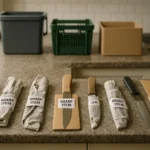
Setting up your scrub station: Close to the tub, have a clean surface with the foil roll, a small bowl of soapy water for dipping, and your drying towel. You’ll be moving the rack from soak to scrub and back, so keep everything within arm’s reach.
If you have multiple racks, work them one at a time. Soaking all at once saves time; scrubbing them in series keeps the water warm longer.
Step-by-Step: The Foil Soak and Scrub Method
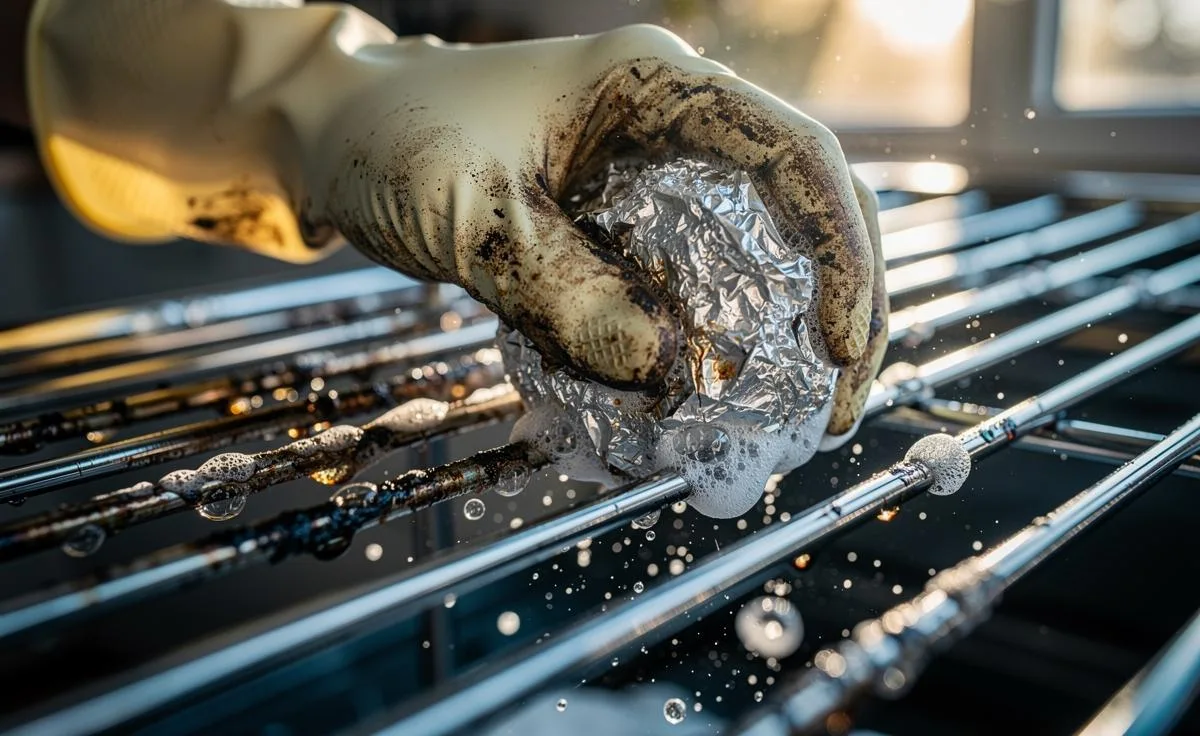
Image source: Bing (Web (fair-use with source credit))
Follow these steps exactly. Each one matters for both effectiveness and safety.
Prepare the soak. Fill your tub with hot water (140°F minimum). Add dish soap. Submerge the rack fully. Let it sit for 20, 30 minutes. For heavy baked‑on carbon, leave it for up to an hour. Do not use boiling water, it can warp thin chrome racks.
Make your foil scrub pad. Tear off a sheet of heavy‑duty foil about 12 inches long. Crumple it into a rough ball, then press it into a firm pad. The size should fit comfortably in your palm. Do not use standard foil, it tears apart in seconds and leaves silver flakes everywhere.
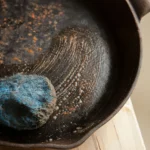
Scrub the rack. Lift the rack from the soak (it will still be wet). Dip your foil pad into the soapy water, then scrub the rack bars with firm circular motions. The foil acts as a soft abrasive. Focus on the crevices where grease builds up around the hanger hooks and crossbars. You should see the brown grime lifting away.
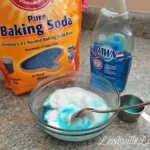
Repeat if needed. For stubborn spots, re‑dip the foil pad and scrub again. If a patch won’t come off after 30 seconds of scrubbing, let the rack soak another 15 minutes and try again. For very old carbon deposits, a baking soda paste (3 parts baking soda, 1 part water) applied before scrubbing can help.
Rinse thoroughly. Hold the rack under running water. Run your hand over every bar to feel for any leftover foil bits. If you find any, pick them off. Rinse until the water runs clear.
Dry and reinstall. Pat the rack dry with a towel. Let it air‑dry for 10 minutes before placing it back in the oven. Never put a wet rack into a hot oven, the sudden temperature change can warp the metal.
The Risks You Absolutely Must Avoid
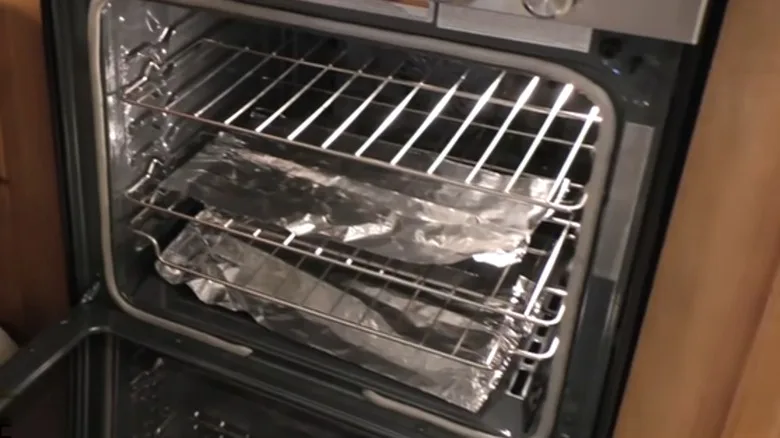
Image source: Bing (Web (fair-use with source credit))
This section matters more than any other. Here are the mistakes that cause real damage.
Never put foil on the oven floor. This is the number one cause of oven fires linked to aluminum foil. When foil covers the bottom heating element (in electric ovens) or the gas burner openings, it traps heat, reflects it back, and can melt or ignite. Even a small piece can block airflow and cause uneven cooking.
Never wrap foil around rack ends or heating elements. Some people try to "protect" their oven by wrapping the rack hooks or sides. This is dangerous. Foil touching a heating element creates an electrical short or arcing that can damage the control board or start a fire.
Never use foil during the self‑clean cycle. The self‑clean cycle reaches 800°F, 1000°F. Aluminum foil melts at around 1220°F, but it can warp, fuse to the oven interior, and release toxic fumes at lower temperatures. If foil gets stuck to the oven walls during a self‑clean, removing it can damage the enamel.
Never scrub with foil on porcelain racks aggressively. Porcelain enamel is glass baked onto metal. A crumpled foil ball is abrasive enough to scratch or chip that coating. Once the coating is damaged, the metal underneath rusts and stains permanently.
Use gentle circular pressure and stop scrubbing as soon as the grime lifts.
Never leave foil residue on the rack. Tiny silver flakes can transfer to food during the next bake. They’re not toxic in small amounts, but they're sharp and unpleasant. Always rinse and hand‑feel every bar after scrubbing.
If you catch yourself doing any of these, stop and reset. The risks aren't theoretical, oven manufacturers, the CPSC, and the NFPA all warn against foil misuse.
When Foil Won't Cut It (And What to Do Instead)
The foil method works great for light to moderate grease and carbon buildup. But it has limits. Here’s when it fails and what to use instead.
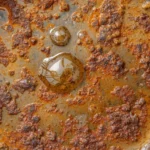
Problem: Heavy carbon deposits that are black, thick, and crusty. Foil scrubbing will barely scratch these. They’ve been baked on through dozens of high‑heat cycles and need chemical softening. A baking soda paste (3 parts soda, 1 part water) applied and left for 30 minutes before scrubbing often helps.
For extreme cases, use a commercial oven cleaner made for racks (not the oven interior), and follow the label's safety instructions carefully.
Problem: Porcelain racks with chipped or flaking coating. Once the glass‑like coating is compromised, any abrasive scrubbing, including foil, will worsen the damage. The only good option here is replacement. Porcelain oven racks aren't expensive, and a new set usually costs between $30 and $60 depending on your model.
Problem: Racks that are too large for any soak container. Standard 30‑inch oven racks don't fit in most kitchen sinks or bathtubs easily. If you can't fully submerge the rack, the soak is less effective. In this case, try the garbage bag method: line a large garbage bag with a few inches of hot soapy water, place the rack inside, seal the bag, and let it sit for an hour.
The steam inside the bag does the work.
Problem: Chrome‑plated racks with rust spots. Chrome is thin and once it rusts, the underlying metal corrodes. Scrubbing with foil can strip the chrome further. Replacement is the safest long‑term fix here too.
Problem: You have a gas oven with exposed burners. Gas ovens have open flame ports at the bottom. If any foil piece falls onto those ports during cleaning, it can block gas flow or cause a flare‑up. For gas ovens, extra care during rinsing and a thorough visual check before reassembly are non‑negotiable.
The foil method is a useful tool, not a universal solution. Know when to switch to a different approach.
Common Questions People Ask (FAQs)
Can I use standard aluminum foil instead of heavy‑duty?
Standard foil tears too easily when crumpled into a scrub pad. You'll end up with tiny foil shreds everywhere and less scrubbing power. Heavy‑duty foil costs about the same and holds its shape for multiple scrubs.
Use heavy‑duty.
Does this method work for self‑cleaning oven racks?
Yes, but only for the manual foil‑scrub method. Do not put foil in the oven during a self‑clean cycle. The self‑clean cycle itself can handle light buildup on racks if you run it with the racks inside (check your manual first), but for heavy carbon, the foil soak and scrub is better.
Will foil damage my oven racks?
Not if you use it correctly. Scrub gently with a damp foil pad, never a dry one. Never wrap foil around the rack or place it on the oven floor.
Rinse thoroughly after scrubbing. Porcelain racks are more fragile than chrome, so use lighter pressure on those.
How often should I clean oven racks with foil?
Every 3, 6 months for most home kitchens, or whenever you notice smoke or smell during preheat. If you roast or broil frequently, you may need to clean them every 2, 3 months.
Can I use this method on grill grates?
Not recommended. Grill grates are typically cast iron, stainless steel, or porcelain, and the high heat of grilling can make foil particles stick harder. A wire brush or grill stone is better.
Foil in a hot grill can also cause flare‑ups.
Final Take: Is This Hack Worth It?
Yes, with clear conditions. The aluminum foil method for cleaning oven racks is cheap, effective, and uses supplies you already have. But it’s only safe when you keep the foil in your hands and the rack in the tub, never inside the oven itself.
Here’s the simple rule to remember: use foil as a scrub pad, not as an oven liner. Respect that boundary, and this hack saves you time and money. Ignore it, and you’re risking a fire or a broken oven.
For light to moderate grease, it’s the best home method we’ve found. For heavy carbon that won't budge after two soak cycles, switch to a baking soda paste or a commercial cleaner. And if your rack coating is already damaged, replace the rack instead of scrubbing it.
Clean racks mean even heat, no smoke, and better cooking results. A little foil and hot water get you there, safely.

Similar Posts