Can You Put Oven Racks in the Dishwasher? Yes, Here’s How
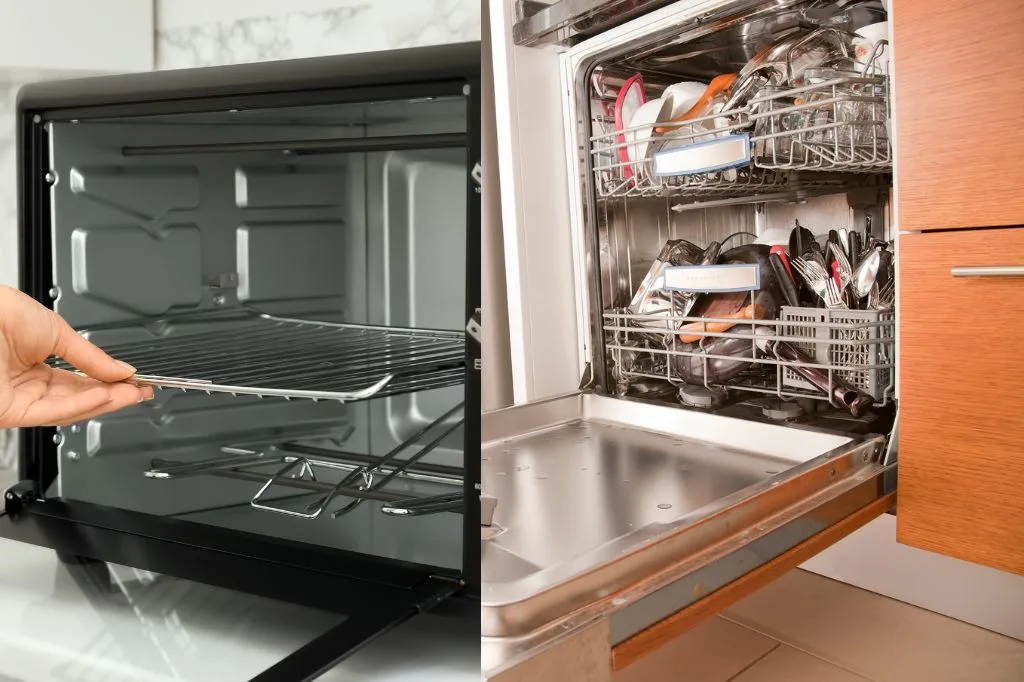
You’ve pulled out a greasy, baked-on oven rack and wondered if you can just toss it in the dishwasher and walk away. The short answer is yes, but only for certain racks, and only if you take a few precautions first. In this guide, you’ll learn how to clean oven racks in dishwasher safely, step by step, so you don’t ruin the rack, the dishwasher, or waste your time.
According to manufacturer specifications from major appliance brands like GE and Whirlpool, as of 2026, most standard dishwashers reach water temperatures of 140°F to 160°F, hot enough to melt baked-on grease when paired with heavy-duty detergent. But your rack’s material and your dishwasher’s dimensions decide whether this method actually works. Let’s walk through the decision tree.
Quick Answer
Clean oven racks in the dishwasher only if they are stainless steel or chrome-plated steel in good condition. Aluminum racks will oxidize and turn gray. Non-stick coatings may peel.
Always measure first. Place racks vertically. Use a heavy-duty cycle.
Add rinse aid. Remove immediately after cycle ends.
Why You’re Here: The Greasy Rack Problem
You’re not lazy, you’re smart. Scrubbing a wire rack with a scouring pad and spray cleaner takes thirty minutes of elbow grease. The dishwasher runs for two hours while you do nothing.
That trade-off makes perfect sense if the rack survives the process and comes out clean.
But not all racks are dishwasher-safe. The problem is that most people learn this the hard way: they open the dishwasher to find a gray aluminum rack, a flaking non-stick coating, or rust spots. You want to avoid that disappointment.
So the real question isn’t “can I do this?”, it’s “should I do this with my specific rack?”
That’s what we’re going to decide together.
Image source: Bing (Web (fair-use with source credit))
Step 1 – Check Your Rack’s Material and Condition
This is the single most important step. If you skip it, you’re gambling. Here’s how to identify your rack’s material just by looking at it.
| Rack Material | Look / Feel | Dishwasher Safe? |
|---|---|---|
| Stainless steel | Silver-gray, non-magnetic or slightly magnetic, smooth surface | Yes |
| Chrome-plated steel | Shiny, reflective, light weight, sometimes has thin seams | Yes, if coating is intact |
| Aluminum | Dull gray, very lightweight, feels cool to touch, may be stamped | No – will oxidize (turn dark gray or black) |
| Enameled steel | Glossy, colored (black, white, blue), thick coating over metal | No – detergent can chip enamel |
| Non-stick coated | Dark matte finish, slick feel (like a non-stick pan), often has a brand name | No – coating will blister and peel |
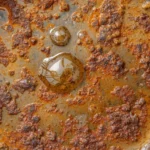
If your rack has any rust, chipped coating, or flaking finish, do not use the dishwasher. Those damaged areas will get worse. You’ll end up with rust stains inside your dishwasher tub and potentially small metal flakes in the pump.
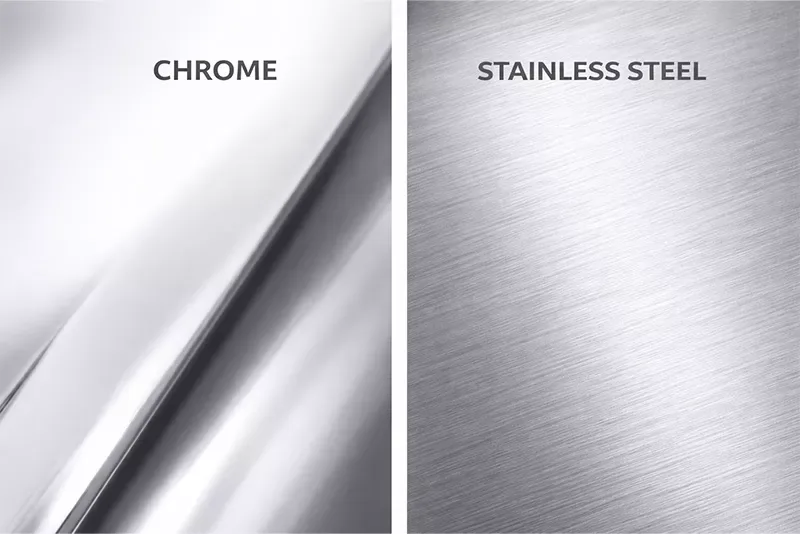
Image source: Bing (Web (fair-use with source credit))
If you’re still unsure: Try the magnet test. Stainless steel is usually non-magnetic or weakly magnetic. Chrome-plated steel is strongly magnetic (the base metal is steel).
Aluminum isn’t magnetic at all. That’s the easiest field test.
Step 2 – Measure and Evaluate Your Dishwasher’s Space
Okay, your rack is stainless or chrome and in good shape. Now you need to see if it physically fits inside your dishwasher without blocking the spray arms.
Grab a tape measure. Standard oven racks are usually 25 to 27 inches long and 16 to 18 inches wide. Most dishwasher baskets have a usable interior width of about 22 to 24 inches at the top basket and 24 to 26 inches at the bottom basket.
The length (front to back) is typically 18 to 20 inches.
The key dimension is the diagonal. If the rack is longer than the basket, it might still fit diagonally, but you have to make sure the spray arm underneath can spin freely. The spray arm needs at least an inch of clearance in all directions.
If the rack touches the arm or blocks its rotation, water won’t reach the upper basket and nothing gets cleaned.
| Checkpoint | Requirement |
|---|---|
| Rack fits flat inside basket | Good – place it lengthwise |
| Rack fits diagonally | Okay – ensure spray arm clearance |
| Rack sticks out above basket rim | Move to bottom basket (if it fits vertically) |
| Rack blocks spray arm | Stop – do not run cycle |
| Rack prevents dishwasher door from closing | Stop – do not force it |

Image source: Bing (Web (fair-use with source credit))
Pro tip from our research: Most racks fit best in the lower basket, placed diagonally with one end resting in a corner and the opposite end near the opposite corner. Fold down any tines that get in the way. If the rack won’t fit without bending or forcing, switch to an alternative cleaning method.
Step 3 – The Dishwasher Cleaning Process (If Both Checks Pass)
You’ve confirmed the material is safe and the rack fits without obstruction. Now you can proceed. Follow this order for best results.
- Scrape off loose debris. Use a plastic scraper to remove any big chunks of burnt food. A quick rinse under the faucet helps, too.
- Load the rack. Place it in the dishwasher as described above. Make sure it doesn’t touch the spray arms.
- Add detergent. Use your regular dishwasher detergent. If the rack is heavily soiled, fill the pre-wash cup too.
- Select a heavy-duty cycle. Choose “Pots & Pans” or “Heavy” with a heated dry option. A normal cycle usually isn’t enough for baked-on grease.
- Add rinse aid. This prevents hard water spots and helps the rack dry faster without streaks.
- Run the cycle. Listen for any unusual clanking or scraping. If you hear it, stop the cycle and reposition the rack.
- Remove immediately after cycle ends. Letting the rack sit inside a hot, humid dishwasher can cause flash rust on chrome surfaces. Take it out as soon as the cycle finishes.
- Inspect and hand-dry. Wipe the rack with a clean towel to remove any residue. If you see greasy spots, a quick hand scrub with a soft sponge and dish soap will finish the job.
Important note: Do not use a heated dry cycle if your rack has any chrome plating that is worn thin. The high heat can accelerate rust. In that case, air dry only.
When Dishwasher Cleaning Isn’t the Answer – Better Alternatives
If your rack failed the material check (aluminum, enameled, non-stick, or damaged) or the size check (won’t fit), don’t force it. You have several effective alternatives that won’t ruin your equipment.
- Self-cleaning oven cycle. Many modern ovens have a clean cycle that heats to about 900°F, turning grease into ash. This works for any rack material that can withstand high heat (chrome and stainless are fine; aluminum may warp). Check your oven manual.
- Ammonia in a garbage bag. Place the rack inside a heavy-duty trash bag, add 1/4 cup of household ammonia, seal the bag, and let it sit outside overnight. The fumes break down grease. Rinse the next day. Wear gloves and work in a ventilated area.
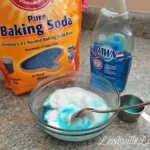
- Baking soda paste. Make a thick paste of baking soda and water. Apply it to the rack, let it sit for 30 minutes, then scrub with a scouring pad. Works well for light to moderate buildup and is safe for all rack materials.
- Professional oven cleaning service. If you have a rack that can’t be cleaned at home (e.g., a very large commercial rack or one with delicate non-stick coating), a professional service will use high-temperature steam or chemical solutions. Cost is usually $30 to $60 per rack.
| Alternative | Best For | Time Required | Cost |
|---|---|---|---|
| Self-cleaning oven | Stainless/chrome racks in good condition | 2–4 hours (oven cycle) | $0 (electricity) |
| Ammonia bag | Heavy grease, all materials | 8–12 hours (overnight) | ~$5 (ammonia) |
| Baking soda paste | Light grease, safe for all | 1 hour (soak + scrub) | ~$1 |
| Professional service | Delicate or oversized racks | 1–2 days turnaround | $30–$60/rack |
Decision point: If your rack is aluminum or has a non-stick coating, the ammonia bag or baking soda method is your safest bet. If it’s chrome but too big for the dishwasher, use the self-cleaning oven cycle (if your oven supports it and you’re willing to deal with the smell).
Mistakes That Can Ruin Your Racks (or Your Dishwasher)
Even if your rack passes the material and size checks, a few common errors can still cause damage. Here’s what to avoid.
Using too much detergent. Dishwasher detergent is alkaline and aggressive. On aluminum or worn chrome, it accelerates oxidation and rust. Stick to the manufacturer’s recommended amount.
If you need more cleaning power, add a pre-wash charge instead of doubling the main dose.
Letting the rack sit overnight after the cycle. Moisture trapped in crevices causes flash rust on chrome-plated racks. Remove the rack as soon as the cycle ends. Wipe it dry with a towel.
If you can’t do that, crack the dishwasher door open to let steam escape.
Forcing a rack that doesn’t fit. If the rack is too long, don’t bend the tines or jam it. You can crack the spray arm, damage the pump seal, or scratch the dishwasher tub. Measure diagonally.
If it still doesn’t work, use an alternative method.
Mixing rack materials in the same load. An aluminum rack next to a stainless steel rack can cause galvanic corrosion. The aluminum may transfer tiny metal particles to the steel. Keep them separate.
Run one rack per cycle if needed.
Using the heated dry cycle on damaged chrome. High heat dries the rack faster, but it also expands tiny cracks in the chrome plating. Moisture gets underneath and rust spreads. Choose an air-dry cycle or no-heat drying instead.
FAQs
Can I put my oven racks in the dishwasher if they are aluminum?
No. Aluminum reacts with dishwasher detergent and turns dark gray or black. The surface becomes rough and porous.
Stick to the baking soda paste or ammonia bag method instead.
How long does a dishwasher cycle take for oven racks?
A heavy-duty cycle with heated dry usually runs 2 to 3 hours. The exact time depends on your dishwasher model and water temperature. Check your machine’s manual for the “Pots & Pans” cycle duration.
Will dishwasher cleaning remove all baked-on grease?
Usually yes, for moderate buildup. Heavy, carbonized grease may need a pre-soak or a second cycle. For best results, scrape off loose debris before loading and use a heavy-duty detergent with extra rinse aid.
Can I wash two oven racks at once?
Only if they fit without touching each other or blocking the spray arms. Overcrowding reduces water flow and leaves greasy spots. One rack per load is safer and more effective.
What should I do if the rack starts rusting after the dishwasher?
Remove the rack immediately. Light rust can be scrubbed with a soft pad and mild soap. Dry it thoroughly.
Apply a thin layer of cooking oil to the affected area to prevent further rust. If flakes appear, replace the rack.
Is it safe to use dishwasher pods for oven racks?
Yes, pods work fine. But make sure you use a heavy-duty or “max clean” formula. Standard pods may not dissolve fully on a long cycle with a large rack blocking the spray.
Place the pod in the main detergent cup, not in the basket.

Similar Posts