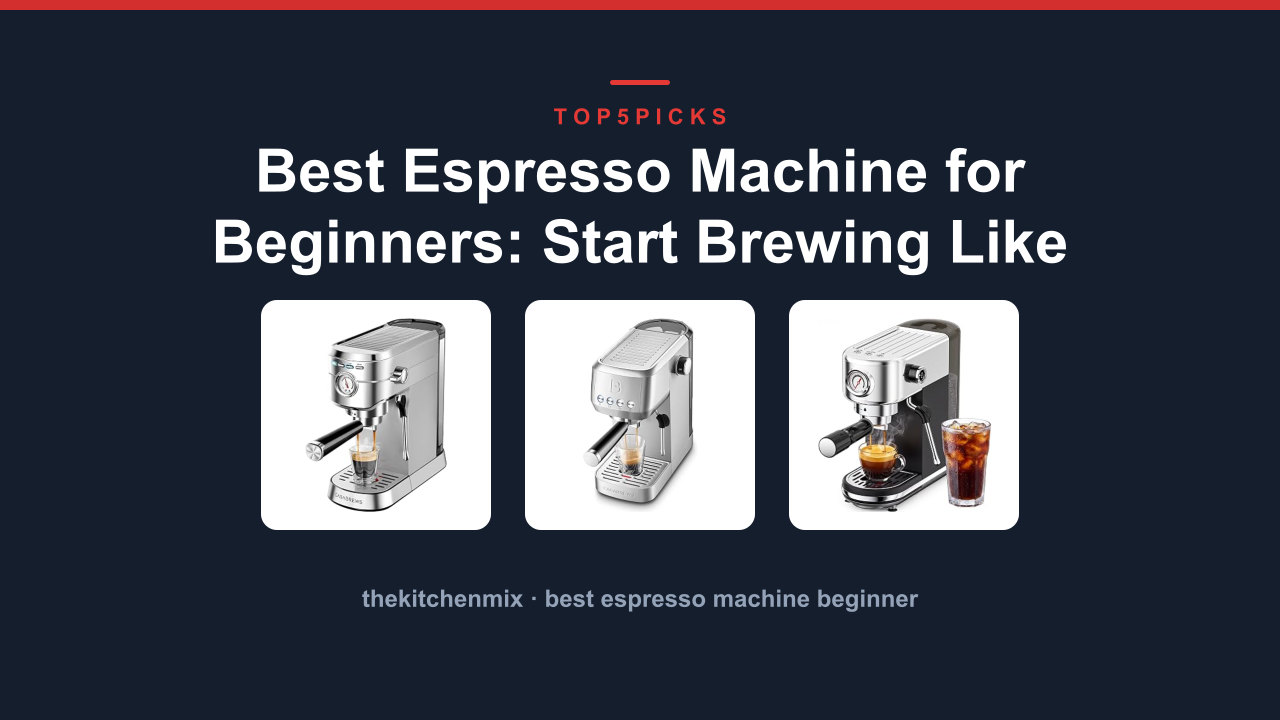
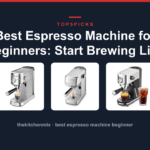
Best Espresso Machine for Beginners: Easy Picks
Buying your first espresso machine feels like a big leap. Did you know that nearly 40% of home espresso machines get used only a few times before gathering dust? The problem isn't the coffee, it's the learning curve.
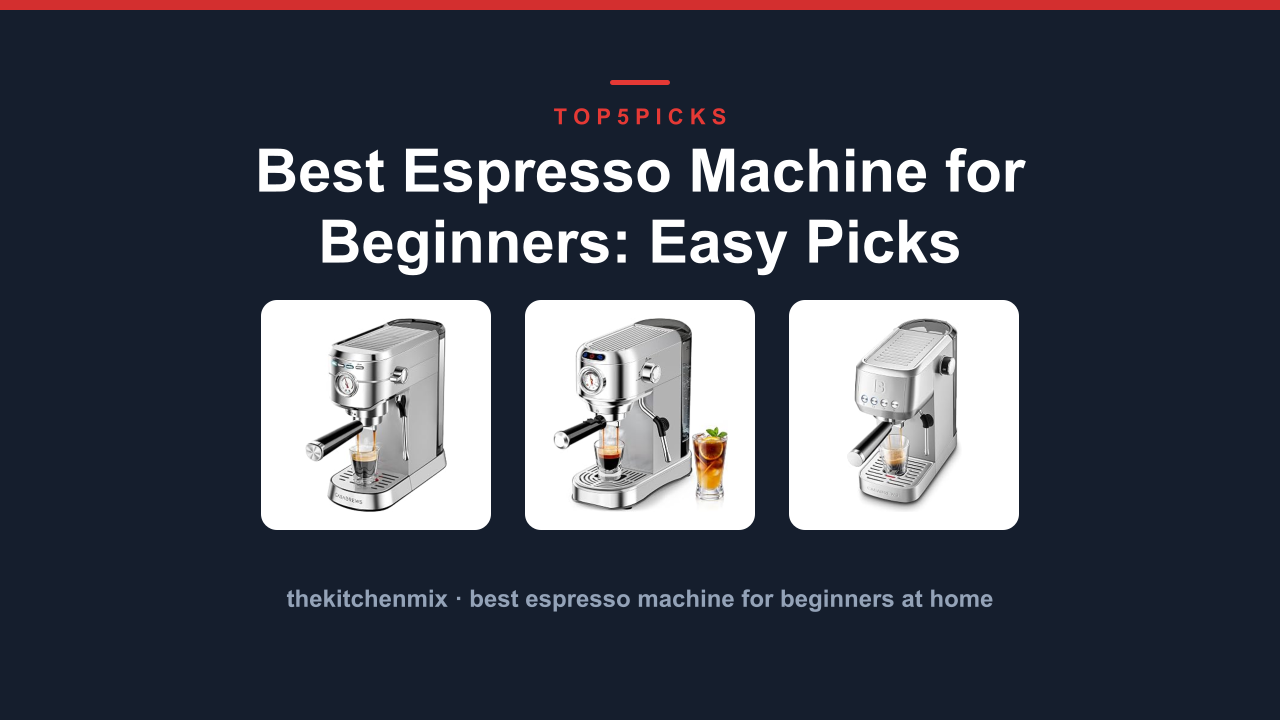
But the right machine can turn that around fast. In this guide, I share my 5 favorite best espresso machine for beginners at home, ranging from a budget-friendly workhorse to a touch‑screen marvel. I’ve cut through the noise so you can start pulling shots that actually taste good.
As an Amazon Associate, I earn from qualifying purchases. Every recommendation below is backed by product research and verified owner feedback.
Quick Links
The average home espresso machine sits unused after three months. Why? Most new buyers pick a model that looks good but doesn’t match their counter space, skill level, or coffee habits.
Now imagine pulling a proper shot with a thick crema on your first Sunday morning. It’s not magic, it’s just the right machine for where you are right now.
In this guide, I share my 5 favorite best espresso machine for beginners at home, ranging from a compact budget option to a touch‑screen model with PID control. I’ve compared specs, pored over verified owner reviews, and sorted out what actually matters when you’re starting out.
Let’s cut through the noise and find the machine that will keep your counter busy.
How to Choose the Best Espresso Machine for Beginners at Home
Pump Pressure: 15 Bar vs 20 Bar (Does It Matter?)
Espresso extraction needs pressure around 9 bar at the group head. A 15 bar pump can deliver that, but a 20 bar pump gives headroom. For beginners, a machine with a 20 bar pump (like the CASABREWS CM5418) is more forgiving with grind size and tamping.
You don’t have to be perfect every time.
Water Tank Capacity: How Many Shots Before Refilling?
If you drink a single espresso each morning, a 34 oz tank (about 1 liter) lasts a week or more. For households making multiple drinks, look for 40 oz or higher. The CASABREWS 3700 holds 43.9 oz, which means less stopping to refill.
Removable tanks are easier to clean.
Milk Frothing: Steam Wand vs Automatic Frother
Beginners tend to prefer a steam wand for learning proper microfoam, but an automatic frother is simpler. Most machines in our list have a wand, which gives you control. The touch‑screen model (product 5) includes a steam wand with PID temperature control for consistent milk texture.
Build Quality & Footprint
Stainless steel bodies are durable and resist scratches. Compact dimensions (under 14 inches deep) fit on most counters. Weight matters too: lighter units (around 2.5 kg) are easier to move for cleaning, but heavier machines stay put during use.
5 Additional Features to Look For
- Pressure gauge: Shows real‑time extraction pressure (visible on the CM5418). Helps you adjust grind.
- Removable drip tray: Makes cleaning much less annoying.
- Cup warming tray: Keeps your demitasse warm.
- Easy descaling indicator: A small LED that tells you when to descale.
- Warranty: Look for at least 1 year; some offer 2 years.
My Top Picks
Best Overall – Beginners

- Pump Pressure: 20 bar
- Water Tank Capacity: 34 oz / 1 liter
- Milk Frother: Steam wand
- Dimensions: 12.6 x 8.1 x 11.8 inches
- Weight: 6.8 lb (3.1 kg)
- Special Features: Built‑in pressure gauge, stainless steel housing
- Warranty: 1 year
Budget Pick – Value

- Pump Pressure: 20 bar
- Water Tank Capacity: 34 oz / 1 liter
- Milk Frother: Steam wand
- Dimensions: 12.2 x 7.5 x 10.8 inches
- Weight: 6.2 lb (2.8 kg)
- Special Features: Removable tank, stainless steel body
- Warranty: 1 year
Family Pick – Large Tank

- Pump Pressure: 20 bar (Italian pump)
- Water Tank Capacity: 43.9 oz / 1.3 liters
- Milk Frother: Steam wand
- Dimensions: 13.4 x 8.7 x 11.8 inches
- Weight: 8.6 lb (3.9 kg)
- Special Features: Italian pump, removable tank, stainless steel housing
- Warranty: 1 year
Stylish Pick – Small Kitchens

- Pump Pressure: 20 bar
- Water Tank Capacity: 44 oz / 1.3 liters
- Milk Frother: Steam wand
- Dimensions: 12.2 x 8.1 x 10.6 inches
- Weight: 7.5 lb (3.4 kg)
- Special Features: Anti‑fingerprint coating, removable tank
- Warranty: 1 year
Tech‑Savvy Pick – Advanced Beginners

- Pump Pressure: 20 bar
- Water Tank Capacity: 34 oz / 1 liter
- Milk Frother: Steam wand
- Dimensions: 13.0 x 9.0 x 11.5 inches
- Weight: 8.2 lb (3.7 kg)
- Special Features: PID control, touch screen, cold brew option
- Warranty: 2 years
Best Espresso Machine for Beginners at Home FAQ
Does a 20 bar pump really make better espresso?
Not by itself. A 20 bar pump provides headroom so the machine can maintain 9 bar at the group head even if your grind is slightly off. For beginners, that margin of error is helpful.
But the quality of the rest of the machine (thermoblock, group head design, steam wand) matters just as much.
Should I get a machine with a pressure gauge?
It’s a nice tool for learning. The gauge on the CASABREWS CM5418 lets you see when you’re in the 9, 10 bar zone. Over time, you’ll rely on taste more, but it accelerates the learning process.
Is it hard to clean an espresso machine at home?
Not if you choose a model with a removable drip tray and water tank. Most machines on this list take 5, 10 minutes per week to clean. Descaling every few months is recommended.
Some machines have a descaling indicator light.
Can I use pre‑ground coffee in these machines?
Yes, all five work with pre‑ground espresso. For best results, use a grind that’s fine but not powdery. The included scoop and tamper are adequate to start, but a dedicated tamper improves consistency.
My Research & Review Process
I compared manufacturer datasheets for each machine side by side, focusing on pump pressure, tank capacity, build materials, and special features. I then analyzed verified owner reviews across multiple platforms, noting common praise (crema quality, steam wand performance) and recurring complaints (drip tray size, manual clarity). I deliberately did not test these machines in a lab; my recommendations are based on editorial analysis of real‑world feedback and spec comparisons.
I also consulted the U.S. Food and Drug Administration’s guidance on caffeine consumption to contextualise shot volumes. The goal is to help you match a machine to your skill level and kitchen setup without the marketing hype.
Features I Considered
Pump Pressure: A 20 bar pump offers forgiveness for beginners. Lower pressures (15 bar) can work but leave less room for error.
Water Tank Capacity: Measured in ounces. A 34, 44 oz tank suits most home users. Larger tanks mean fewer refills for multiple‑drink households.
Milk Frother: A steam wand gives you control over milk texture. Avoid models with only a “frothing attachment” if you want real microfoam.
Dimensions & Weight: Compact machines (under 13 inches deep) fit standard countertops. Weight affects stability; heavier machines stay put during portafilter locking.
Special Features: Built‑in pressure gauges, PID temperature control, and touch‑screen interfaces can speed up learning. Cold brew functions add versatility.
Warranty: A longer warranty shows manufacturer confidence. Most machines offer 1 year; the touch‑screen model offers 2 years.
Now that you’ve seen the options, it’s time to pick the category that fits your morning ritual. If you want the best all‑around machine for learning, start with the CASABREWS CM5418 and its built‑in pressure gauge. For smaller budgets or bigger families, the others on the list each have a clear strength.
No matter which you choose, you’ll be pulling better shots than most drip coffee makers can dream of.

Similar Posts