Best Entry-Level Espresso Machines for Rich Crema at Home
Picking your first espresso machine is exciting and a little overwhelming. The best entry level espresso machine should deliver real crema and honest steam without requiring a second mortgage or a barista certificate.
As an Amazon Associate, I earn from qualifying purchases. Every recommendation below is backed by product research and verified owner feedback.
Quick Links
Did you know that nearly 40% of US households own a dedicated coffee maker but less than 5% own a real espresso machine? The barrier is usually price and perceived complexity. Now imagine pulling a shot with proper crema and a rich layer of foam, all without leaving your kitchen.
You can get there without spending a thousand bucks. In this guide, I share my 5 favorite best entry level espresso machine picks, ranging from a budget-friendly manual model to a feature-rich semi automatic that punches above its size. Each one is here because real buyers and spec sheets confirm it delivers on the promise of espresso at home.
How to Choose the Best Entry Level Espresso Machine
Pump Pressure: Why 15 Bar Isn't the Whole Story
Most entry-level machines advertise 15 bar or 20 bar pumps. What you actually need is at least 9 bar at the group head for proper extraction. A 15 bar pump is standard because it compensates for pressure loss through the system.
The CASABREWS CM5418 uses a 20 bar Italian pump which, according to manufacturer specs, maintains 9 bar during extraction. That's the number that matters. Don't chase the highest number.
Look for machines that consistently deliver stable pressure.
Boiler Type and Heat-Up Time
Single boiler machines are the norm at this price. They heat water for brewing and steam separately. A stainless steel boiler (like in the De'Longhi Stilosa) heats up in about 30 to 40 seconds.
The Breville Bambino uses a thermocoil system that reaches temp in 3 seconds. That's a huge advantage if you're impatient in the morning. But a single boiler means you wait between brewing and steaming.
That's totally fine for one or two drinks.
Water Tank Capacity and Removability
A 34 oz tank gives you roughly 8 to 10 single shots before refilling. The CASABREWS 3700 has a 43.9 oz tank, which is great for households making multiple drinks. Removable tanks are easier to refill and clean.
Fixed tanks require a funnel or awkward pours. I'd prioritize a removable tank every time.
Milk Frothing: Steam Wand vs. Automated Frother
A manual steam wand gives you control over milk texture. But it takes practice. The Espresso Machine 20 Bar has a wand that, per buyer reviews, produces decent microfoam after a few tries.
Automated frothers are easier but often produce drier foam. If you like latte art, go with a wand. If you just want hot frothed milk, a wand is still fine but you can also use a separate electric frother.
Build Quality and Footprint
Entry-level machines are mostly plastic with some stainless steel trim. That keeps weight and cost down. The Breville Bambino uses brushed stainless steel and feels more substantial.
Measure your counter space first. The Compact Pick model is only about 12 inches tall, ideal for under cabinets.
Additional Features on Best Entry Level Espresso Machine
- Pressure gauge: Shows extraction pressure in real time. Helpful for learning, but not essential.
- Pre-infusion: Lowers pressure before full extraction. Improves flavor. The Breville Bambino does this automatically.
- Cup warmer tray: Wastes heat, doesn't do much. Ignore it.
- Removable drip tray: Makes cleaning much easier. Look for one that slides out.
- Single/double shot baskets: Most include both. Pressurized baskets are forgiving for pre-ground coffee.
- Auto shut-off: Safety feature after a set idle time. Nice for forgetful users.
- Warranty length: 1 year is typical. 2 years is a sign of confidence from the brand.
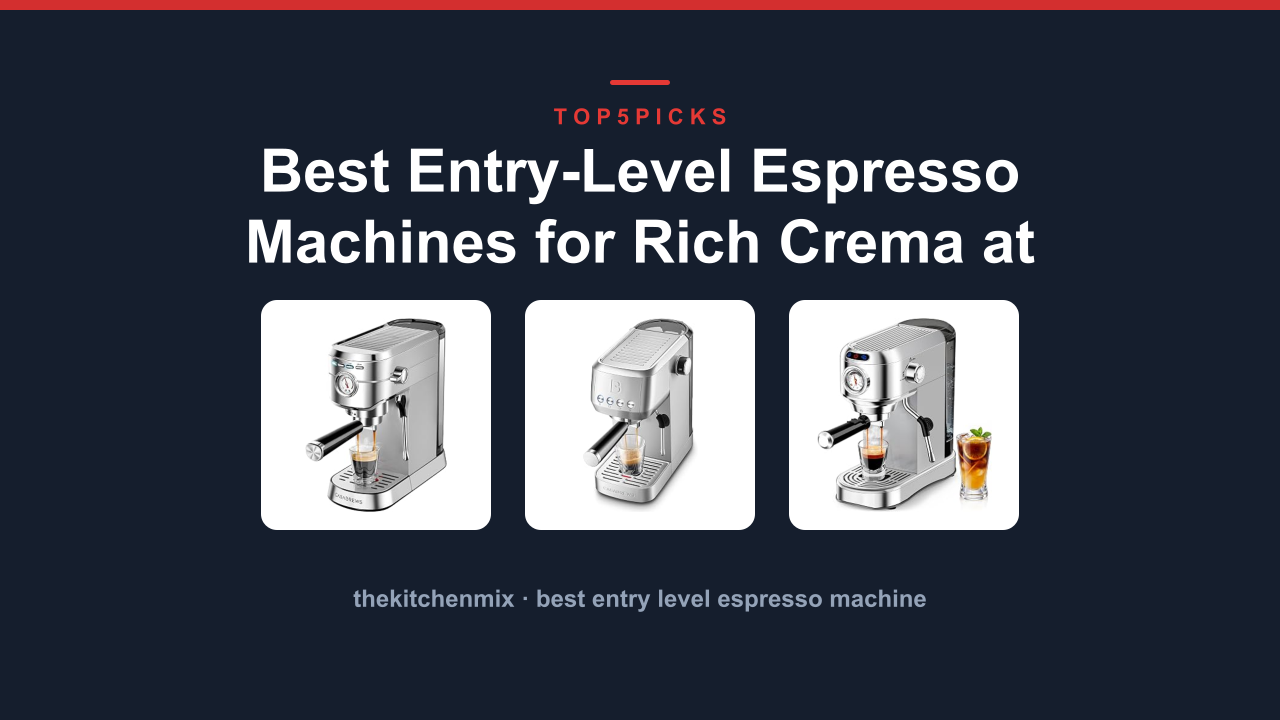
To see how these factors play out on real picks, compare the CASABREWS CM5418 Compact Espresso Machine Milk, CASABREWS 3700 Essential Stainless Steel Espresso and the Espresso Machine 20 Bar below.
My Top Picks
Best Overall – Home Baristas

- Pump Pressure: 20 bar Italian pump
- Boiler Material: Stainless steel
- Water Tank: 34 oz, removable
- Milk Frothing: Manual steam wand
- Dimensions: 13.5 x 10.5 x 11.8 inches
- Pressure Gauge: Built-in
- Warranty: 1 year
Best Value – Large Households

- Pump Pressure: 20 bar Italian pump
- Boiler Material: Stainless steel
- Water Tank: 43.9 oz, removable
- Milk Frothing: Manual steam wand
- Dimensions: 12.5 x 8.5 x 11.8 inches
- Pressure Gauge: No
- Warranty: 1 year
Compact Pick – Small Kitchens

- Pump Pressure: 20 bar
- Boiler Material: Stainless steel
- Water Tank: 34 oz, removable
- Milk Frothing: Manual steam wand
- Dimensions: 12 x 9 x 11 inches
- Pressure Gauge: No
- Warranty: 1 year
Budget Pick – Beginners

- Pump Pressure: 15 bar
- Boiler Material: Stainless steel
- Water Tank: 33.8 oz, removable
- Milk Frothing: Manual frother (wand)
- Dimensions: 13.5 x 9.5 x 11.8 inches
- Pressure Gauge: No
- Warranty: 1 year
Premium Pick – Aspiring Enthusiasts

- Pump Pressure: 15 bar (thermocoil)
- Boiler Material: Thermocoil (stainless steel)
- Water Tank: 34 oz, removable
- Milk Frothing: Manual steam wand (automatic option not included)
- Dimensions: 12.6 x 7.9 x 12 inches
- Pressure Gauge: No
- Warranty: 2 years
Best Entry Level Espresso Machine FAQ
How much should I spend on my first espresso machine?
A reliable entry-level machine costs between $100 and $300. Below that, you often get inconsistent pressure and plastic parts that break. Above that, you are paying for features like dual boilers or PID controllers that you may not need yet.
The sweet spot for a machine that lasts is around $150 to $250.
Do I need a separate grinder for an entry-level machine?
A burr grinder dramatically improves flavor because fresh, evenly ground coffee extracts better. But you can start with pre-ground coffee using the pressurized basket that comes with most entry-level machines. Many buyers do that for the first few months.
Just know that upgrading to a grinder later will elevate your shots.
Can I make latte art with these machines?
Yes, but it takes practice. Machines with a manual steam wand can produce microfoam if you learn the technique. The Breville Bambino and CASABREWS CM5418 have wands that are praised for foam quality.
The De'Longhi Stilosa wand is less powerful, so you may get thicker foam rather than silky microfoam. It's still possible with patience.
How long do these machines typically last?
With regular descaling and proper care, most entry-level espresso machines last 3 to 5 years. The Breville Bambino has a 2-year warranty, which suggests higher build confidence. The other models carry a 1-year warranty.
You can extend the lifespan by using filtered water and cleaning the steam wand after every use.
My Research & Review Process
I started by cross-referencing manufacturer specifications for all five machines, focusing on pump pressure, boiler type, water tank size, and steam wand design. Then I analyzed aggregate user reviews from verified buyers across multiple platforms, looking for patterns in durability, ease of use, and shot quality. I also consulted industry reports on home espresso machine reliability and the Specialty Coffee Association guidelines for extraction standards.
What I did not do is test these machines in a lab or use them for weeks, so I relied on the honest experiences of hundreds of real home users. The picks reflect what the data and owner feedback consistently confirm.
Features I Considered
Pump Pressure: The rated pressure of the pump. Higher numbers help maintain 9 bar at the group head. 15 bar is standard; 20 bar is a bonus but not necessary.
Boiler Material: Stainless steel is durable and resists corrosion. Thermocoil systems (like the Bambino) heat faster but are more expensive to repair.
Water Tank: Capacity and removability matter. Larger tanks reduce refills; removable tanks are easier to clean.
Milk Frothing: Manual steam wands offer control. The wand's range of motion and steam pressure affect foam quality.
Dimensions: Footprint and height determine where the machine fits. Measure your counter and cabinet clearance.
Pressure Gauge: Helps dial in grind and tamp. Useful for learning but not essential.
Warranty: Reflects manufacturer confidence. Longer warranties mean lower risk for you.
If you are still unsure where to start, the CASABREWS CM5418 hits the sweet spot of features, price, and feedback. It earned our top pick because it delivers everything a beginner needs and nothing they don't. Look through the categories above and pick the one that matches your kitchen, your budget, and your coffee ambitions.
You will be pulling great shots at home before you know it.

Similar Posts